


- Energy gel competition is not only about flavor or price. Winning brands combine sports science, athlete trust, endurance-event visibility, and reliable distribution.
- FMI’s Energy Gel Market Share Analysis shows that large multinational players hold 55% share, supported by strong brand awareness, research capability, and broad retail reach.
- Regional leaders hold 25% share by targeting runners, cyclists, triathletes, and endurance communities with more specialized formulations.
- Niche brands and startups hold 15% share, gaining traction through clean-label, plant-based, gut-friendly, fruit-based, and functional energy gels.
- Fruit flavored energy gels lead product demand because they are easy to understand, broadly acceptable, and suitable for everyday endurance use.
- The biggest misconception is that energy gel winners are decided by sweetness or carbohydrate content alone. In reality, repeat purchase depends on performance trust, stomach tolerance, usage occasion, and channel availability.
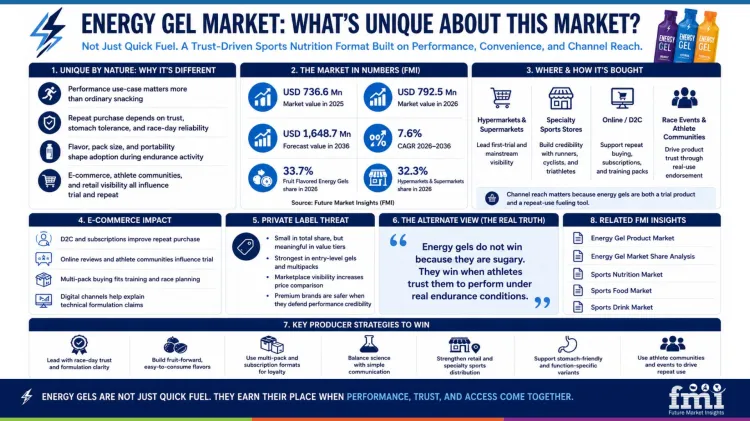
Performance is only one aspect of the value provided by the energy gels product. The energy gels are also an example of brand trust products. An athlete cannot use the energy gels as any other snack product. The athletes purchase these products for their training needs, races, cycling, hiking, and various types of competitions wherein the product's failure may affect the athlete’s performance.
FMI’s Energy Gel Market Share Analysis shows a clear competitive structure. Large multinational players hold 55% of the market, regional leaders hold 25%, niche brands and startups hold 15%, and private labels hold 5%. This structure shows that the category is not fully fragmented. Established brands still have a strong advantage, but specialist endurance brands and niche challengers are creating meaningful pressure.
Leading multinationals and well-known brands succeed by combining distribution, science of sport, and visibility. An athlete will not switch to any new product ahead of or during an important event. A brand, which is seen in retail sporting goods stores, grocery stores, race expos, on the Internet, in training programs, and among athletes, will create credibility more quickly than a good product that is difficult to locate.
FMI’s Energy Gel Product Market identifies fruit flavored energy gels as the leading product segment with 33.7% share in 2026. This matters because flavor remains a practical adoption factor. Fruit flavors are familiar, easy to consume during exertion, and more acceptable to casual and serious athletes alike. Citrus, berry, tropical, and mixed-fruit profiles are easier to position around freshness and quick energy than more indulgent or niche flavors.
Nevertheless, flavor alone does not account for the success of brands. Performance consistency is much more important. It should be easy to consume the gel, stable under high temperatures and activities, and should have a minimal chance of causing any stomach problems. Both pleasant and unpleasant experiences while using an energy gel are remembered by athletes.
The Sports Nutrition Market is useful for understanding the broader competitive context. Energy gels sit within sports nutrition, but they compete differently from powders, bars, hydration tablets, and ready-to-drink products. Gels are highly occasion-specific. They are bought for fast carbohydrate delivery, portability, measured dosing, and ease of use during movement.
The proximity to endurance-oriented markets increases regional shares for leaders. They develop credibility from associations with running clubs, cycling organizations, marathons, triathlons, coaching services, and specialty sport retail stores. These brands may not have the same multinational reach, but they create solid customer loyalty among enthusiasts.
Niche brands and startups have an advantage due to the desire among some athletes for something different than traditional gel. The needs that help them out include those for clean labels, dietary requirements, caffeine-free products, vegetarian/vegan foods, and easy digestion.
The Sports Food Market also supports the idea that athletes are looking for products with clear functional benefits. Energy gels must be positioned around use case: fast energy, endurance fueling, hydration support, caffeine boost, low-GI release, recovery support, or stomach-friendly performance. Brands that define the use case clearly can reduce shopper confusion.
The factor of distribution will remain an essential strength. In the FMI’s Energy Gel Product Market report, it is stated that hypermarket and supermarket distribution channels dominate the market with a share of 32.3%. The fact is very crucial because even when considering the online popularity and specialty-sport application of the energy gel, its distribution through supermarkets helps the product connect to casual sportspeople as well.
The Sports Drink Market is a useful adjacent category because many shoppers compare gels with hydration drinks, electrolyte beverages, and endurance drinks. Brands that can position gels as complementary to hydration products rather than direct substitutes can increase basket size and usage frequency.
The key for brand winners lies in the avoidance of overcomplication. The energy gel buyers are looking for performance, but they don’t always need complexity. Claims about dual carbohydrates, electrolytes, caffeine, sodium, slow GI delivery system, natural fruit puree, or gut tolerance cannot overwhelm the consumers.
The winners are going to be those brands which are able to strike a balance between science and simplicity. These products have to deliver on performance, but they should not be too difficult for casual consumers. At the same time, they need shelf presence and website support.
Bottom line: Energy gel brand winners are not decided by flavor alone. They win by combining sports credibility, formulation performance, athlete trust, retail access, and repeatable race-day reliability.

