


- Plant-based ice cream brand share is shifting less by vegan positioning and more by price tier, freezer access, texture quality, and flavor familiarity.
- Premium winners are brands that make non-dairy feel indulgent, not corrective.
- Mid-tier winners are brands with mainstream grocery reach and recognizable flavor systems.
- Value-tier winners are likely to be private label and large retail-backed brands, although public brand-level disclosure is limited.
- The biggest risk is assuming that every plant-based buyer behaves like a vegan shopper. Most repeat demand comes from flexitarian, lactose-sensitive, and indulgence-seeking consumers.
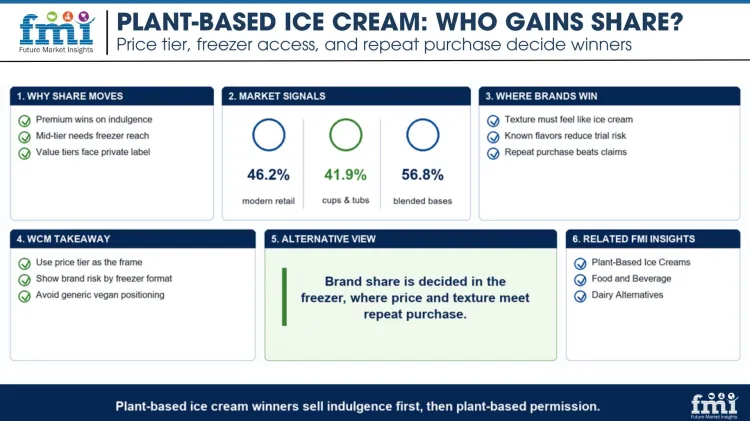
Plant-based ice cream is no longer a simple “dairy-free alternative” market. The competitive question is now sharper: which brands are gaining freezer space, repeat purchase, and wallet share in each price tier, and which brands are losing relevance because they are trapped between premium indulgence and mass-market value:
FMI’s Plant-Based Ice Creams Market shows why this question matters. The category is segmented by form, product type, flavor, source, and sales channel, with supermarkets and hypermarkets playing a central role in category discovery and replenishment. FMI also identifies brands such as Ben & Jerry’s, Oatly, So Delicious, Van Leeuwen, NadaMoo!, Halo Top, Breyers, Alpro, and Eclipse Foods within the competitive market. This confirms that the market is now brand-led at the consumer interface, even when formulation and supply-chain differences sit behind the shelf. Plant-Based Ice Creams Market Plant-Based Ice Creams Market
In the premium tier, the clearest gainers are brands that sell plant-based ice cream as indulgence, not compromise. Ben & Jerry’s is well positioned because its non-dairy line carries the same flavor architecture as its dairy portfolio: chunks, swirls, familiar names, and dessert density. The brand has also moved its non-dairy recipe toward an oat milk base, positioning the change around creamier texture and reduced nut-allergen dependence. That point matters: plant-based ice cream is judged against dairy ice cream, not against other vegan products. When consumers pay a premium, they expect sensory parity.
Van Leeuwen also fits the premium-winner profile, but for a different reason. Its vegan range sits inside a broader craft ice cream identity rather than a narrow dairy-free identity. The brand’s vegan menu includes flavors such as vegan chocolate chip cookie dough, vegan dark chocolate fudge brownie, vegan Sicilian pistachio, and vegan strawberry shortcake. This gives the brand permission to charge for flavor complexity and brand experience. However, premium brands face a constraint: they can gain share in high-income urban channels while remaining exposed to slower velocity in conventional grocery if price gaps become too wide.
Oatly sits between premium and mainstream. Its advantage is base credibility. Oat is already familiar through plant-based milk, and Oatly’s frozen dessert portfolio includes vanilla, chocolate, coffee, salted caramel, mint chip, strawberry, fudge brownie, and cookie dough variants. The brand is gaining when the shopper is looking for an oat-based proposition rather than simply a dairy-free one. Its risk is that solid ingredient-brand equity does not by itself translate into frozen dessert dominance unless freezer visibility and repeat taste performance hold.
In the mid-tier, So Delicious and Breyers-style non-dairy lines are important because they make the category less niche. So Delicious has a broad dairy-free dessert identity and positions products such as plant-based blend frozen dessert around familiar flavors like cookies and crème. These brands gain when consumers want a dependable, accessible dairy-free option without entering boutique pricing. The challenge is differentiation. Mid-tier brands can lose share when premium brands win indulgence and value brands win price.
In the value tier, the most likely share gainers are not always specialist brands. Retailer private label, club formats, and large mainstream brands can win when plant-based ice cream becomes a freezer staple rather than an exploratory purchase. FMI’s Dairy Alternatives Market and Plant-Based Food Market both support a broader reading: plant-based dairy alternatives are moving into routine consumption, but price and channel access remain decisive. Value-tier growth will therefore depend on whether retailers can offer acceptable taste at a lower price point.
The brands most at risk are those stuck in the middle: too expensive for value shoppers, not indulgent enough for premium shoppers, and not distinctive enough for oat, coconut, cashew, or allergen-free buyers. Low-calorie plant-based brands also face a harder environment if they lead with restriction rather than pleasure. In ice cream, “less bad” rarely beats “better tasting.”
Common misread: brand share in plant-based ice cream will follow plant-based awareness. Awareness creates trial. Texture, price tier, freezer access, and flavor familiarity create repeat purchase.
Bottom line: the winners in plant-based ice cream will not be the brands with the loudest vegan claim. They will be the brands that win their price tier clearly, either through indulgence, mainstream availability, or value-led repeat purchase.

