


- Clean-label claims can support premium pricing in plant-based ice cream, but only when taste, creaminess, and indulgence already work.
- Consumers are willing to pay more for cleaner, organic, non-GMO, and preservative-free products, but verified public data does not show one universal plant-based ice cream clean-label premium.
- The clearest premium opportunity sits in premium pints, coconut-based and oat-based products, allergen-friendly recipes, organic positioning, and simple ingredient decks.
- The premium weakens in family tubs, value packs, and mid-tier products where shoppers compare price more directly.
- Clean label helps brands defend price. It does not rescue weak texture, thin flavor, poor scoopability, or an unclear brand promise.
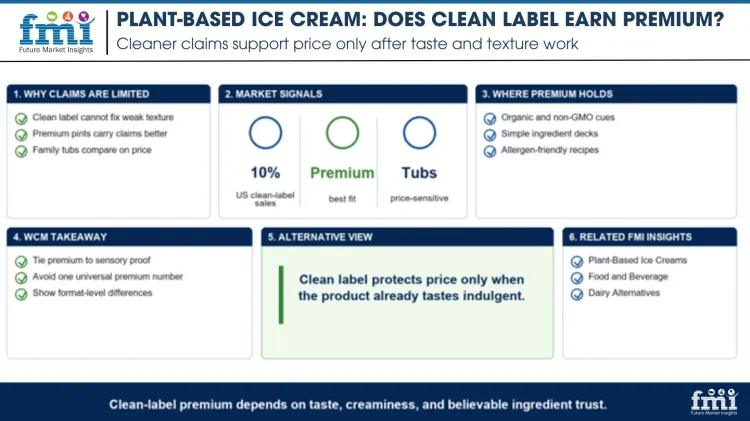
Clean label is becoming a sharper premium lever in the plant-based ice creams market, but it is often misunderstood. Many brands treat clean label as if it by itself creates pricing power. In reality, consumers pay more only when “clean” does not feel like a compromise. In ice cream, indulgence remains the entry ticket. Clean label is the reason to trust the product after the consumer already believes it will taste good. plant-based ice creams market plant-based ice creams market
This pricing distinction matters: plant-based ice cream already carries a higher perceived price burden than conventional dairy ice cream in many retail environments. The consumer is not asking whether clean label is good. They are asking whether this plant-based pint is creamy enough, familiar enough, and satisfying enough to justify the combined premium of dairy-free, clean-label, and often better-for-you positioning.
Verified consumer data supports this direction, but not as a blank check. NIQ reports that clean-label products account for 10% of US sales and are growing faster than total FMCG. NIQ also indicates that more than half of consumers are willing to pay more for fresh products without preservatives, healthier options, and GMO-free, organic, or natural products. This confirms premium willingness, but it does not prove that every clean-label plant-based ice cream SKU can command a higher price. The premium is claim-specific, format-specific, and occasion-specific.
FMI’s view of the plant-based ice creams market helps explain where the premium is most defensible. Hypermarkets and supermarkets account for a large share of plant-based ice cream sales, which means shoppers compare products in the freezer aisle against both dairy and non-dairy alternatives. In that setting, clean label must work quickly. It has to reassure the shopper through visible claims such as organic, non-GMO, no artificial preservatives, dairy-free, lactose-free, and recognizable plant bases.
The premium is clearest in premium pints. These products already compete on indulgence, brand identity, texture, and flavor depth. A clean-label claim can strengthen the value equation when the product feels rich, creamy, and dessert-led. A shopper may accept a higher price for a coconut-based chocolate pint, an oat-based cookie flavor, or an organic vanilla product if the ingredient story feels credible and the eating experience is close to dairy ice cream.
Ingredient base is central to the premium. In the broader non-dairy ice cream market, coconut milk remains important because its natural fat content supports creaminess, scoopability, and texture stability. This matters for clean label because plant-based ice cream cannot simply remove stabilizers or emulsifiers without consequences. A cleaner ingredient list that produces icy texture or weak melt behavior will struggle to earn repeat purchase.
Oat-based products also have pricing logic because oat has become familiar through the milk alternatives market. Consumers who already buy oat milk may more easily accept oat-based frozen desserts, especially when the brand can connect familiar taste, allergen advantages, and a simpler label. However, oat alone is not enough. The product still has to perform as ice cream.
The weaker clean-label opportunity sits in mid-tier and value-tier formats. Family tubs, basic vanilla, simple chocolate, and low-differentiation take-home packs are more exposed to price comparison. In these formats, shoppers may like clean-label claims but still trade down if a cheaper product tastes acceptable. This is especially true when private label or mainstream brands offer similar dairy-free claims at a lower price.
The dairy alternatives market also shows why clean-label pricing cannot be read only through vegan demand. Plant-based dairy alternatives are moving into routine consumption, but ice cream behaves differently from plant-based milk. Milk alternatives often become daily-use products. Plant-based ice cream remains an indulgence product. That means clean label can help justify the purchase, but repeat demand depends on the dessert experience.
For brands, the practical pricing lesson is simple. Clean label should be used to defend premium positioning, not to create it from nothing. Better-positioned brands will combine clean claims with creamy texture, recognizable ingredients, indulgent flavors, trusted bases, and clear pack communication. The weakest brands will overuse vague claims such as “natural” or “better-for-you” without solving the product experience.
The clean-label premium is most defensible in premium pints, organic frozen desserts, oat-based indulgence products, coconut-based creamy formats, allergen-friendly propositions, and products with clear non-GMO or no-artificial-additive claims. It is least defensible in basic family tubs, economy packs, generic vanilla, generic chocolate, and products where the claim feels better than the taste.
Common misread: clean label by itself increases willingness to pay. It does not. Clean label increases willingness to pay only when the consumer believes the product is safer, simpler, more trustworthy, and still indulgent.
Bottom line: consumers will pay more for clean-label plant-based ice cream, but only when clean ingredients protect the dessert experience rather than replacing it.

