


- E-commerce is changing energy gel discovery, trial, and repeat purchase even though hypermarkets and supermarkets still lead sales channels.
- Energy gels are especially suited to online buying because athletes often reorder the same flavors, pack sizes, caffeine levels, and training bundles.
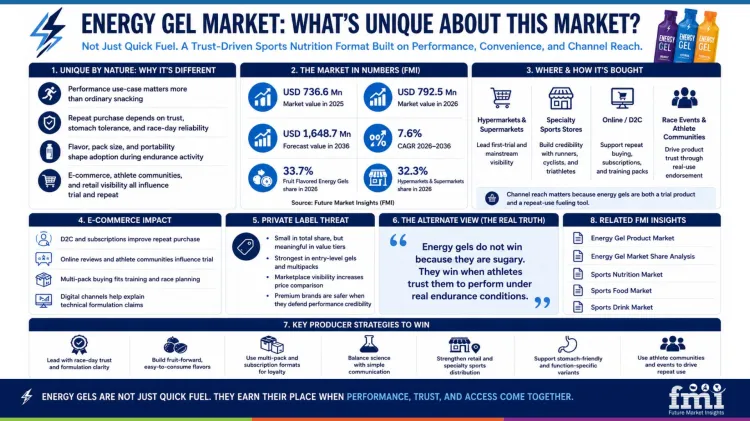
- FMI’s Energy Gel Product Market shows hypermarkets and supermarkets leading sales channels with 32.3% share, but online retail remains important for niche brands and repeat users.
- D2C and subscription models help brands build loyalty through training packs, marathon bundles, cycling packs, mixed flavor boxes, and personalized fueling plans.
- Online communities, endurance influencers, race reviews, and athlete testimonials strongly affect trial because consumers need confidence before using gels during training or events.
- The biggest misconception is that energy gels are only a supermarket or sports-store purchase. In reality, online channels shape education, comparison, and repeat behavior.
Energy gels are small-format products, but their purchasing process is becoming more and more digitalized. Consumers can come across gels for the first time in supermarkets, specialty stores, gyms, marathon expos, and cycling competitions; however, they usually gather information about the content, the potential effect on the stomach, caffeine levels, and different pack sizes via the Internet before buying them again.
FMI’s Energy Gel Product Market states that hypermarkets and supermarkets lead sales channels with 32.3% share. This shows that mainstream retail visibility still matters. Energy gels need physical availability because many users buy them as part of grocery trips, race preparation, gym routines, or last-minute training needs.
However, e-commerce contributes to the marketing effort to another dimension. The impact on the market through e-commerce is in the areas of discovery, comparison, product education, and brand loyalty. Performance products such as energy gels require the consumer to feel assured about their consumption, especially during an athletic event or practice period.
The Energy Gel Market Share Analysis highlights the importance of D2C strategies and monthly subscription services in the future roadmap for the category. This is a strong signal that e-commerce is not only a sales channel. It is becoming a retention model. Once an athlete finds a gel that works, they may prefer automatic replenishment or bulk purchase instead of repeating single-pack purchases.
Multi-serve packs play a very important role in our e-commerce narrative. The share analysis done by FMI reveals that multi-serve packs are leading the way in terms of pack size share with a whopping 60% share. This is due to the habits of endurance athletes, who plan their fuel intake over weeks of training. For example, a marathoner will buy several units of the energy gel packs to help him during his long-distance training, races, and recovery workouts.
The Sports Nutrition Market provides broader context because sports nutrition consumers are already comfortable researching products online. Protein powders, hydration products, supplements, bars, and performance drinks are often compared digitally. Energy gels benefit from the same behavior, especially among consumers who want ingredient transparency, usage instructions, and athlete-specific recommendations.
Another benefit of D2C is that it makes it easier for the company to communicate their technical claims about the product. This may involve a double carbohydrate blend, electrolytes, caffeine, sodium, amino acids, fruit puree, lower GI carbohydrates, no-caffeine positioning, vegan positioning, or gut-friendly formulation among others. Such claims are difficult to fully communicate on the tiny packaging that usually comes with such products. The website will tell consumers when and how to use the product.
E-commerce also allows for personalized products. For example, an athlete might require a caffeine-free energy gel for their evening workout sessions, a caffeinated energy gel on their racing days, a low-GI energy gel for extreme endurance races, or an easy-on-the-stomach energy gel for longer sessions. An e-commerce approach would manage this better than conventional shelf arrangements.
The Sports Food Market is useful because energy gels increasingly compete with chews, bars, powders, and sports foods. E-commerce allows brands to build full fueling systems rather than sell one product. A D2C platform can bundle gels with hydration powders, recovery mixes, endurance bars, and electrolyte products.
There are dangers associated with online retailing as well. For one thing, it allows for greater price transparency and helps lower-value brands, also known as private labels, to go up against more established brands directly. It is very easy to compare things like cost per serving, ingredients listed, reviews, flavors, and packs on an online platform.
On the other hand, e-commerce is instrumental in strengthening specialty brands. A specialty endurance brand does not necessarily require supermarket placement to gain followers. Such a brand can rely on sponsorship deals, social media, brand ambassadors, subscription-based services, and online customer reviews to target serious athletes. Once the product proves effective, repeat purchase can follow suit.
However, the major problem is that of trust. While online platforms may facilitate trial, the energy gel needs to deliver results in practical application. Even though the product looks attractive to the consumer, it will fail to keep the athlete coming back if there are any issues such as nausea, unpalatability, stickiness, or poor consistency.
One should not consider energy gels merely as retail products but as planning products as well. Athletes plan their workout schedule, races, proper use of hydration, caffeine, and recovery. E-commerce caters better to such needs than retail shopping alone can.
Bottom line: E-commerce is reshaping the energy gel market by expanding discovery, supporting subscriptions, enabling bulk buying, and giving niche brands direct access to athlete communities. Offline retail remains important, but online channels increasingly decide education and repeat purchase.

