


Key Takeaways
- Fat Filled Milk Powder is consumed primarily as a cost optimised substitute for whole milk powder in price sensitive food manufacturing applications
- Consumption is highest in price sensitive food applications such as bakery, confectionery and recombined dairy beverages where functional performance meets requirements at lower cost
- Vegetable fat availability and pricing strongly influence formulation decisions and consumption volumes as palm oil and coconut oil cost fluctuations shift ingredient economics
- Import dependent regions rely on Fat Filled Milk Powder to manage dairy supply volatility and extend limited domestic milk production capacity
- Regulatory definitions and labelling rules determine where substitution is commercially viable by establishing product classification boundaries and consumer communication requirements
Why is Fat Filled Milk Powder consumed as a substitute for whole milk powder in many regions?
Fat Filled Milk Powder represents a manufactured dairy ingredient combining skim milk powder with vegetable fats to replicate the fat content and functional properties of whole milk powder at reduced cost. The core economic driver for consumption stems from the substantial price differential between dairy fat and vegetable fat alternatives. Whole milk powder incorporates approximately 26 to 28 percent milk fat, a premium ingredient commanding high prices in global dairy commodity trading. Vegetable fats, particularly palm oil and coconut oil, typically cost 40 to 60 percent less than dairy fat on an equivalent energy basis.
Manufacturers optimise formulation costs by replacing dairy fat with vegetable alternatives while retaining the protein and lactose functionality from skim milk powder. This substitution preserves essential characteristics including protein content, colour development in baking applications and texture contribution in confectionery while significantly reducing raw material expenditure. Cost savings of 20 to 35 percent versus whole milk powder make Fat Filled Milk Powder attractive for price sensitive product categories where dairy authenticity claims are not essential to consumer value perception.
Dairy fat supply constraints in deficit regions create structural incentives for Fat Filled Milk Powder consumption beyond pure cost considerations. Countries with limited domestic dairy production face challenges securing sufficient whole milk powder imports during tight global supply periods. Fat Filled Milk Powder production allows manufacturers to stretch available skim milk powder supplies by incorporating readily available vegetable fats. This supply management benefit proves particularly valuable during seasonal milk production troughs or when dairy export prices surge due to supply shocks in major producing regions.
Formulation flexibility represents an additional consumption driver as Fat Filled Milk Powder enables customisation of fat profiles for specific applications. Manufacturers can blend different vegetable fats or adjust fat percentages to optimise melting characteristics, oxidative stability or texture attributes for particular product requirements. Coconut fat provides tropical oil functionality for confectionery applications requiring sharp melting profiles. Palm oil offers oxidative stability and neutral flavour for extended shelf life products. This technical versatility complements cost advantages in supporting consumption growth.
Dairy processing infrastructure influences consumption patterns as Fat Filled Milk Powder production requires less specialised equipment than whole milk powder manufacturing. Converting skim milk powder and vegetable fats into filled powder demands blending and spray drying capability but avoids the complexity of managing fresh whole milk standardisation and butterfat separation. Regions with established skim milk powder production but limited whole milk drying capacity can more readily produce Fat Filled Milk Powder for domestic consumption or regional export.
How do application requirements influence consumption patterns of Fat Filled Milk Powder?
Bakery applications consume substantial Fat Filled Milk Powder volumes where cost optimisation drives ingredient selection and functional requirements accommodate vegetable fat substitution. Bread, biscuits, cakes and pastries incorporate milk powder primarily for protein enrichment, crust colour development and moisture retention rather than distinctive dairy flavour contribution. Fat Filled Milk Powder delivers these functional benefits at lower cost than whole milk powder. The vegetable fat component contributes to dough conditioning and crumb softness while the milk protein fraction supports structure and browning reactions. High volume bakery production where ingredient costs materially impact profitability favours Fat Filled Milk Powder adoption.
Confectionery applications including chocolate compounds, filled wafers and cream centres demonstrate strong Fat Filled Milk Powder consumption driven by fat functionality requirements and cost sensitivity. Chocolate compound manufacturing for coating applications utilises Fat Filled Milk Powder as a cost effective alternative to whole milk powder when premium milk chocolate positioning is not required. The vegetable fat content, particularly when using lauric fats like coconut oil, provides desirable crystallisation and melting characteristics for compound chocolate applications. Confectionery manufacturers balance cost savings against consumer acceptance thresholds, concentrating Fat Filled Milk Powder usage in mid tier and economy product segments.
Recombined dairy beverage production represents a major consumption channel in import dependent regions where local milk production cannot meet liquid milk demand. Processors reconstitute milk powders with water to produce dairy beverages for retail distribution. Fat Filled Milk Powder enables beverage production at significantly lower cost than whole milk powder while delivering comparable appearance, mouthfeel and nutritional profile when dairy authenticity is not legally or commercially required. Flavoured milk drinks, chocolate beverages and fortified nutrition beverages tolerate vegetable fat inclusion more readily than plain milk categories where consumer expectations demand dairy fat authenticity.
Ice cream and frozen dessert applications consume Fat Filled Milk Powder in cost focused product tiers and developing region formulations where regulatory frameworks permit vegetable fat inclusion. Standard ice cream regulations in many jurisdictions mandate dairy fat content, limiting Fat Filled Milk Powder usage to frozen desserts positioned outside premium ice cream categories. Where regulations allow flexibility, manufacturers use Fat Filled Milk Powder to reduce formulation costs while maintaining protein content for structure and texture. The vegetable fat component influences crystallisation behaviour and mouthfeel characteristics that formulation technologists must optimise for consumer acceptance.
Processed food applications including soups, sauces, ready meals and savoury snacks incorporate Fat Filled Milk Powder primarily for functional properties rather than dairy taste. These applications value protein solubility, emulsification characteristics and colour development more than authentic dairy flavour. Cost advantages of 20 to 35 percent versus whole milk powder prove decisive in formulation decisions for these products where dairy ingredients represent minor components supporting overall product functionality rather than defining sensory attributes.
How do vegetable oil pricing and availability affect Fat Filled Milk Powder consumption?
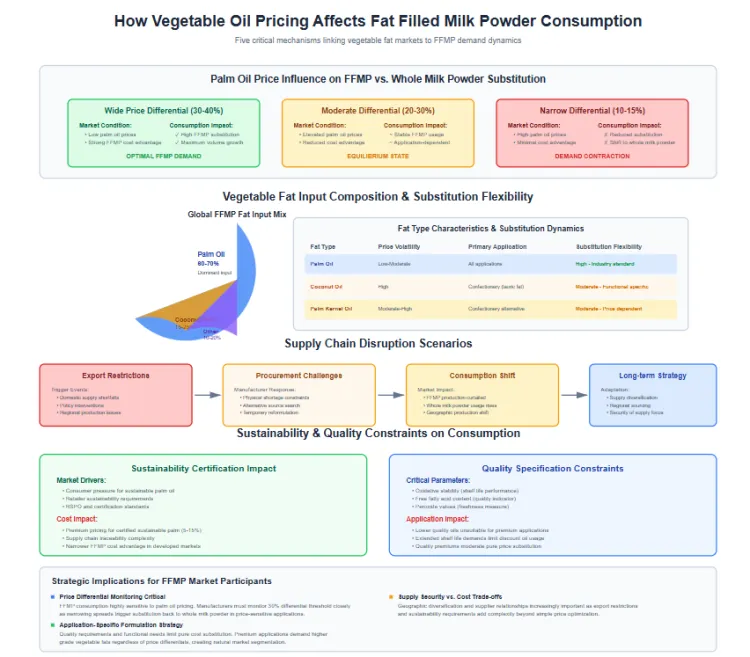
Palm oil pricing exerts dominant influence on Fat Filled Milk Powder consumption economics as palm oil represents the primary vegetable fat used in production globally. Palm oil accounts for approximately 60 to 70 percent of vegetable fats incorporated into Fat Filled Milk Powder manufacturing due to its cost competitiveness, neutral flavour profile and functional versatility. When palm oil prices rise sharply due to production shortfalls, export restrictions or strong competing demand from biodiesel sectors, the cost advantage of Fat Filled Milk Powder versus whole milk powder narrows significantly. Price spikes compressing the differential to 10 to 15 percent reduce incentive for substitution, potentially shifting consumption back toward whole milk powder in applications where functional differences are minimal.
Coconut oil and palm kernel oil serve as alternative vegetable fats in Fat Filled Milk Powder formulations, particularly for confectionery applications requiring lauric fat functionality. These tropical oils demonstrate more volatile pricing than palm oil due to smaller production volumes and regional supply concentration. Coconut oil prices occasionally surge above palm oil levels during Southeast Asian production shortfalls, forcing manufacturers to reformulate toward palm oil based Fat Filled Milk Powder or reconsider whole milk powder usage. This input substitution flexibility moderates but does not eliminate vegetable fat price sensitivity in consumption decisions.
Vegetable oil availability affects consumption patterns independent of pricing when supply disruptions limit physical access to inputs. Export restrictions imposed by major palm oil producing countries during tight domestic supply periods create procurement challenges for Fat Filled Milk Powder manufacturers in importing regions. Physical shortages force temporary reformulation toward available alternatives or increased whole milk powder usage regardless of relative pricing. Supply security considerations influence long term sourcing strategies and may drive geographic diversification of Fat Filled Milk Powder production toward regions with reliable vegetable fat access.
Sustainability concerns and certification requirements increasingly impact vegetable fat sourcing decisions affecting Fat Filled Milk Powder consumption patterns. Consumer and retailer pressure for sustainably produced palm oil adds certification costs and supply chain complexity to vegetable fat procurement. Manufacturers facing stringent sustainability requirements may find the cost advantage of Fat Filled Milk Powder diminishes when premium pricing for certified sustainable palm oil is incorporated. This dynamic particularly affects consumption in developed regions where sustainability claims influence purchasing decisions.
Vegetable fat quality specifications constrain formulation flexibility and influence consumption patterns across different applications. Oxidative stability, free fatty acid content and peroxide values determine shelf life performance of Fat Filled Milk Powder in various food applications. Lower quality vegetable oils available at discount pricing may prove unsuitable for applications demanding extended shelf life or clean flavour profiles. Quality premium requirements for specific applications moderate pure price based substitution decisions.
How do regional dairy production structures shape consumption of Fat Filled Milk Powder?
Import dependent regions in Africa, the Middle East and parts of Asia demonstrate substantially higher Fat Filled Milk Powder consumption intensity compared with dairy surplus regions. Countries lacking adequate domestic milk production to meet nutritional requirements rely heavily on dairy powder imports for both direct consumption and food manufacturing. Fat Filled Milk Powder allows these regions to satisfy dairy ingredient demand while conserving foreign exchange spent on premium whole milk powder imports. The lower import cost per unit of nutrition delivered supports consumption in price sensitive populations where dairy access otherwise remains constrained by purchasing power limitations.
Sub Saharan African consumption reflects severe domestic dairy production deficits relative to nutritional needs and population growth rates. Many African countries produce insufficient milk to meet 20 to 40 percent of potential consumption based on nutritional recommendations. Fat Filled Milk Powder consumption fills this supply gap through imports and local reconstitution into beverages and food products. Government tender procurement of dairy ingredients for school feeding programs and nutrition interventions frequently specifies Fat Filled Milk Powder due to cost effectiveness considerations when budgets must stretch across large beneficiary populations.
Middle Eastern regions demonstrate high Fat Filled Milk Powder consumption driven by hot climate challenges for dairy production and large expatriate populations accustomed to dairy consumption. Extreme temperatures and limited grazing resources constrain milk production relative to demand from growing populations and high per capita dairy consumption preferences. Fat Filled Milk Powder enables economical production of recombined dairy beverages and food manufacturing applications without straining imports of higher cost whole milk powder. Regional dairy processors maintain Fat Filled Milk Powder production capacity to buffer against volatile whole milk powder import pricing.
Southeast Asian consumption patterns reflect tropical climate limitations on dairy production combined with rapidly growing middle class demand for dairy containing processed foods. The Philippines, Indonesia and Vietnam import substantial dairy ingredients despite some domestic production because local supply cannot pace consumption growth. Fat Filled Milk Powder consumption in bakery, confectionery and beverage applications allows manufacturers to scale production economically while preserving limited whole milk powder supplies for premium applications where dairy authenticity commands price premiums.
Dairy surplus regions including the European Union, New Zealand and the United States demonstrate lower Fat Filled Milk Powder consumption relative to whole milk powder due to abundant domestic dairy fat availability. These regions produce milk fat beyond domestic requirements, creating natural preference for whole milk powder utilisation rather than substitution with vegetable fats. Regulatory frameworks in some dairy surplus jurisdictions restrict Fat Filled Milk Powder usage in certain product categories to protect dairy farmer interests. Cultural preferences and established supply chains reinforce whole milk powder dominance in applications where cost differentials prove less decisive than in import dependent regions.
How do regulations, labelling standards and trade rules influence consumption behaviour?
Legal definitions of dairy products establish boundaries determining where Fat Filled Milk Powder substitution remains commercially viable versus prohibited. Many jurisdictions maintain strict compositional standards for products labeled as milk, cheese, yogurt and ice cream requiring dairy fat content above specified thresholds. These standards effectively prohibit Fat Filled Milk Powder usage in products claiming dairy designations, limiting consumption to applications outside regulated dairy categories. Frozen desserts, filled milk beverages and compound chocolate products typically fall outside strict dairy definitions, permitting vegetable fat inclusion and supporting Fat Filled Milk Powder consumption.
Labelling requirements mandating disclosure of vegetable fat inclusion influence consumer acceptance and manufacturer willingness to use Fat Filled Milk Powder in visible applications. Regulations requiring prominent labelling such as contains vegetable fat or filled milk powder affect consumer perception and purchase intent. Negative consumer associations with vegetable fat substitution limit Fat Filled Milk Powder usage in products where ingredient transparency matters to target consumers. Manufacturers concentrate consumption in applications where vegetable fat disclosure presents minimal commercial risk such as bakery, confectionery and institutional food service.
Trade regulations including tariff structures and import quotas affect Fat Filled Milk Powder consumption by influencing relative economics versus whole milk powder. Some countries impose lower import tariffs on Fat Filled Milk Powder compared with whole milk powder, enhancing cost competitiveness. Other jurisdictions protect domestic dairy industries through higher duties on filled powder products. These trade policy variations create geographic differences in consumption intensity independent of underlying supply fundamentals. Preferential trade agreements may specifically include or exclude Fat Filled Milk Powder from concessions affecting regional consumption patterns.
Product standard harmonisation efforts through Codex Alimentarius and regional regulatory bodies influence consumption by establishing internationally recognised definitions and specifications. Codex standards for Fat Filled Milk Powder provide reference points for national regulations and trade negotiations. Regions adopting Codex aligned standards facilitate Fat Filled Milk Powder trade and consumption by reducing regulatory uncertainty. Divergent national approaches create market fragmentation requiring manufacturers to maintain multiple formulations for different regulatory environments.
Child nutrition program specifications affect institutional consumption particularly in developing regions where school feeding and supplementary nutrition represent significant dairy ingredient demand. Programs specifying whole milk powder for nutritional adequacy exclude Fat Filled Milk Powder usage, while cost constrained programs may permit filled powder to maximise beneficiary reach within fixed budgets. These procurement decisions materially impact consumption volumes in regions where institutional programs represent major dairy ingredient channels.
How can Future Market Insights help?
Sources
- FAO and national dairy statistics agencies
- Used for milk production balances, dairy fat availability data, regional supply and demand structures, and trade flow documentation tracking Fat Filled Milk Powder consumption patterns.
- Dairy processor and ingredient supplier disclosures
- Used for application usage patterns, formulation practices documentation, substitution trend analysis and technical performance specifications in various food manufacturing contexts.
- Vegetable oil industry publications
- Used to track palm oil, coconut oil and alternative vegetable fat pricing dynamics, production volumes and availability factors influencing Fat Filled Milk Powder manufacturing economics.
- Food regulation and standards authorities
- Used for labelling requirements, dairy product definitions, compositional standards and product classification guidance determining where Fat Filled Milk Powder usage remains legally permissible.
- Reputable dairy and food ingredient trade media
- Used for reporting on consumption trends, regional trade flows, formulation economics developments and regulatory changes affecting Fat Filled Milk Powder usage across global food manufacturing.

