


Key Takeaways
- Building maintenance in the Middle East is structurally labour intensive, with large migrant workforces and rising expectations on wages, safety and accommodation conditions.
- Materials and spare parts have become more volatile cost drivers as imported HVAC, lift, façade and fire safety components track global commodity and logistics cycles.
- Energy and cooling loads are not a line item in FM contracts alone, but high electricity prices and peak cooling demand shape how maintenance is planned and prioritised.
- Compliance costs - wage protection, health and safety, digital timekeeping, permits and audits - are no longer optional overhead but a growing share of the total cost base.
- The red pill for owners is that compressing FM margins without addressing labour standards, energy efficiency and asset quality usually pushes risk into the grey economy instead of delivering sustainable savings.
How is the cost stack of building maintenance in the Middle East actually structured?
FM cost benchmarking studies and regional handbooks show a familiar pattern: building maintenance is dominated by recurring operating expenditure rather than big one off projects. Within that operating spend, labour, materials and energy sit on top, with compliance and overhead layered underneath. Global facilities management analyses describe the sector as labour intensive, with core service prices rising more slowly than the cost of maintenance materials and supplies, which have been hit harder by commodity and logistics shocks. In Gulf cities and major North African markets, routine maintenance packages typically cover technicians, cleaners and supervisors on multi year contracts, bundled with agreed response times and service levels.
Materials and spare parts for lifts, HVAC, pumps, fire systems and façades are priced either as pass through costs or folded into fixed fees. Energy for common areas and plant rooms is usually billed to the owner, but the way FM teams manage equipment has a direct impact on utility bills, especially around cooling. Overhead costs - management, coordination, software, vehicles, insurance - sit on top, and compliance costs are increasingly visible as a separate dimension rather than buried in general administration.
How do materials, energy and asset age shape maintenance costs?
Materials and spare parts form the second major cost pillar. Middle East FM portfolios are full of imported systems - chillers, variable refrigerant flow units, lifts, fire alarm and suppression systems, façade maintenance rigs - whose parts follow global price cycles. International FM cost trend data indicate that inputs to maintenance and repair services, especially materials and supplies, have risen faster than service charges themselves, forcing contractors either to absorb margin compression or renegotiate terms.
Energy is the third structural driver. The International Energy Agency notes that electricity demand across the Middle East and North Africa is surging, driven by rising cooling needs in a heat stressed region, and that cooling is now the fastest growing end use in buildings globally. For building owners, this means that poorly maintained chillers, blocked filters or misconfigured building management systems quickly translate into higher utility bills and peak demand charges. For FM firms, it means maintenance regimes must prioritise cooling efficiency to protect client budgets, not just basic uptime. Older assets, deferred maintenance and value engineered systems from earlier build cycles increase the frequency of reactive work orders and shorten replacement cycles, tying materials and energy together as a combined pressure point.
Where does compliance create hidden but unavoidable FM costs?
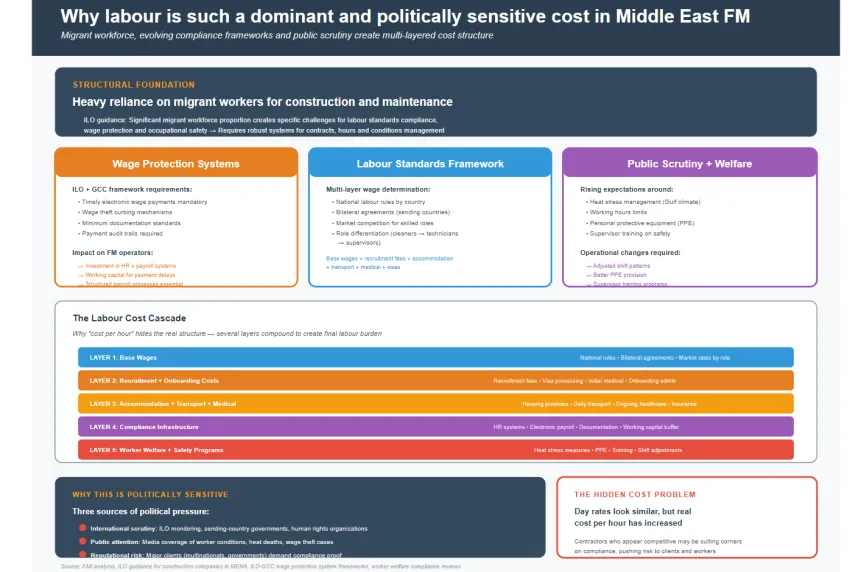
Compliance is the part of the cost stack that most owners underestimate. The ILO and employer organisations have developed detailed guidance tools for construction companies in the Middle East, particularly in GCC states, to help them align with national and international labour standards, from contracts and working hours to health and safety and grievance mechanisms. While written with construction in mind, the same principles apply to building maintenance contractors who field crews on client premises every day.
Concrete compliance costs include electronic wage payment systems, record keeping to demonstrate adherence to working time rules, safety training, personal protective equipment, medical checks for high risk tasks and structured heat stress management plans. Inspection regimes and permit requirements for lifts, pressure vessels, fire systems and electrical installations add another layer: periodic tests, certification fees and the staff time to coordinate them. As governments in the region focus more heavily on occupational safety, digital wages and corporate accountability for migrant workers, these items are moving from optional differentiators to mandatory costs of doing business. Cutting corners may lower headline contract prices in the short term but increases the risk of accidents, fines, project disruption and reputational damage.
- International Labour Organization and International Organisation of Employers. (2020). Guidance tool for construction companies in the Middle East. ILO Regional Office for Arab States.
- International Labour Organization and Gulf Cooperation Council. (2025). Wage protection systems in the GCC countries: Progress and challenges. ILO.
- International Energy Agency. (2025). Electricity demand is surging across the Middle East and North Africa, driven by cooling and desalination needs. IEA Newsroom.
- International Energy Agency. (2023). Middle East - Countries and regions: Buildings and efficiency indicators. IEA.
- CBRE. (2022). Facilities management cost trends report. CBRE Research.
- Middle East Facility Management Association. (2025). Strategic budgeting in facility management: The key to financial efficiency. MEFMA Insights Hub.

