

- Market Size (2026)
- USD 4400.0 Mn
- Forecast (2036)
- USD 8182.2 Mn
- CAGR (2026 to 2036)
- 6.4%
How big is the AI-Designed Surgical Implants Market in 2026?
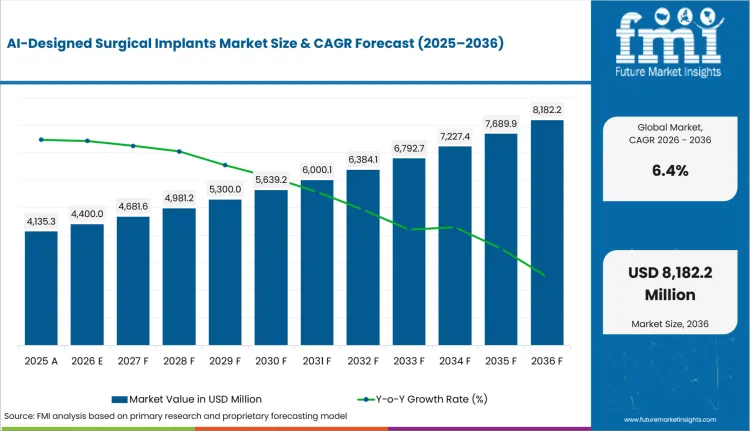
USD 4,400.0 million in 2026 and USD 8,182.2 million by 2036 at a 6.4% CAGR.
The AI-designed surgical implants industry value is anticipated to rise from USD 4,135.3 million in 2025 to USD 8,182.2 million by 2036 at 6.4% CAGR, driven by hospitals shifting selected reconstructive cases toward anatomy-matched planning. Hospitals are projected to secure 68.0% share in 2026, guided by imaging access and multidisciplinary case review. Titanium & alloys are expected to hold 42.0% share in 2026, reflected by surgeon familiarity and load-bearing use.
| Metric | Value |
|---|---|
| 2026 Market Size | USD 4,400.0 million |
| 2036 Market Size | USD 8,182.2 million |
| Forecast CAGR | 6.4% from 2026 to 2036 |
| Leading End User | Hospitals |
| Hospitals Share in 2026 | 68.0% |
| Leading Material | Titanium & Alloys |
| Titanium & Alloys Share in 2026 | 42.0% |
| Leading CAGR Country | China |
| China CAGR | 7.4% by 2036 |
Summary of the AI-Designed Surgical Implants Market
| Market Signal | Commercial Impact |
|---|---|
| Demand and Growth Drivers | AI-designed surgical implant demand is increasing as healthcare providers adopt patient-specific solutions for complex reconstructive and orthopedic procedures.
|
| Product and Segment View | Hospitals, titanium implants, and orthopedic applications dominate the market.
|
| Geography and Growth Outlook | China and India are expected to remain key growth markets for AI-designed surgical implants.
|
| Competitive Landscape | Competition is centered on patient-specific implant design, digital surgical planning, and clinical support capabilities.
|
| Analyst Perspective | AI-designed surgical implants are becoming an integrated component of digital surgical workflows rather than standalone custom devices.
— Anurag Sharma, Principal Consultant, Healthcare, Future Market Insights |
Digital implant planning is gaining commercial depth through orthopedic data systems and additively manufactured patient-specific devices. FDA’s 2025 CDRH report stated 124 novel medical devices were authorized and 21,780 medical-device submissions were received during 2025. FDA also authorized 5,640 marketing submissions during 2025, signaling stronger review activity for device suppliers.
3D Systems’ VSP PEEK Cranial Implant received FDA clearance on April 4, 2024 and includes segmentation software, 3D modeling, EXT 220 MED printing, Evonik VESTAKEEP i4 3DF PEEK, and a pre-defined production process.AI-designed surgical implant demand is forecast to expand through 2036, supported by patient-specific reconstruction and hospital-led surgical planning.
Which factors support expansion in the AI-Designed Surgical Implants Market?
Patient-specific geometry and regulated software-to-implant workflows support market value across complex orthopedic and spinal reconstruction.
- Market value rises as complex revision cases need scan-based designs reducing intraoperative adjustment risk.
- AI-driven planning supports adoption as hospitals seek repeatable segmentation and surgeon approval steps before surgery.
- Titanium and PEEK implant routes influence demand through different clinical needs across load-bearing and cranial repair.
- Specialist surgical centers promote demand for faster planning cycles and supplier support around case documentation.
Why is the AI-Designed Surgical Implants Market growing?
Complex reconstruction increases implant demand as standard catalogs cannot address unusual defects and anatomy-specific cranial repair.
AI-designed surgical implant buyers spend more on validated workflows as complex cases expose fit uncertainty and operating-room adjustment risk. FDA’s April 2024 510(k) summary for VSP PEEK Cranial Implant stated that implants are designed using CT imaging data and surgeon input, with implant sizes from 35 mm x 35 mm to 150 mm x 150 mm and thickness from 3 mm to 6 mm. Such evidence supports hospital review of patient-specific cranial repair. Suppliers linking design approval and certified production gain stronger acceptance in complex surgery investment decisions.
How is the AI-Designed Surgical Implants Market segmented?
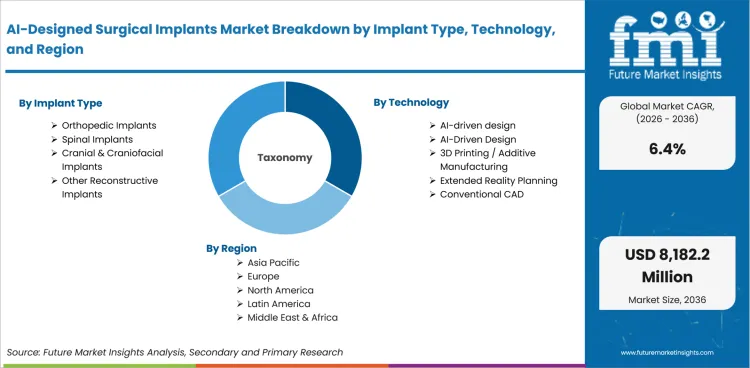
AI-Designed Surgical Implants Market is segmented by implant type, technology, material, end user, and sales model.
- Orthopedic Implants are projected to account for 42.0% share in 2026, influenced by revision burden and recurring reconstruction volume.
- AI-Driven Design is expected to hold 36.0% share in 2026, shaped by faster imaging-to-design decisions and reduced manual planning effort.
- Titanium & Alloys are anticipated to account for 42.0% share in 2026, led by load-bearing use and surgeon familiarity.
- Hospitals are projected to hold 68.0% share in 2026, guided by multidisciplinary review and surgical documentation.
- Direct Enterprise Sales are expected to represent 57.0% share in 2026, supported by hospital account management and technical case support.
Why do Orthopedic Implants lead the AI-Designed Surgical Implants Market by implant type?
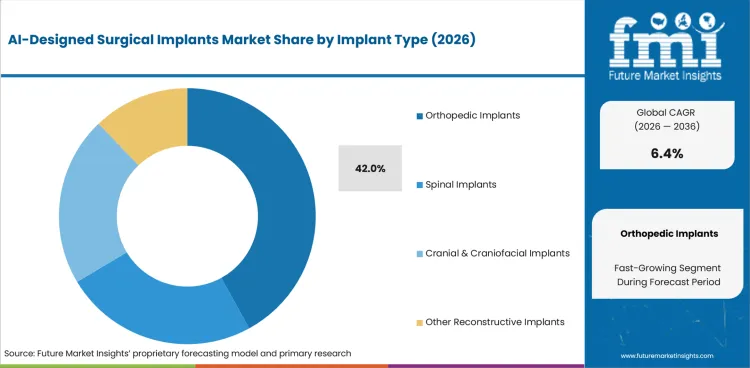
- Orthopedic implants are projected to account for 42.0% share in 2026, driven by trauma and joint reconstruction cases requiring anatomy-matched load-bearing designs.
- Cranial & craniofacial implants gain demand as skull defects and trauma repair need preoperative implant geometry linked to surgeon-approved imaging files.
Which technology leads the AI-Designed Surgical Implants Market?
- AI-driven design is expected to hold 36.0% share in 2026, shaped by software-assisted segmentation and repeatable design-review steps.
- 3D Printing / additive manufacturing gains use as suppliers produce patient-specific contours and complex PEEK or titanium forms.
Which material leads the AI-Designed Surgical Implants Market?
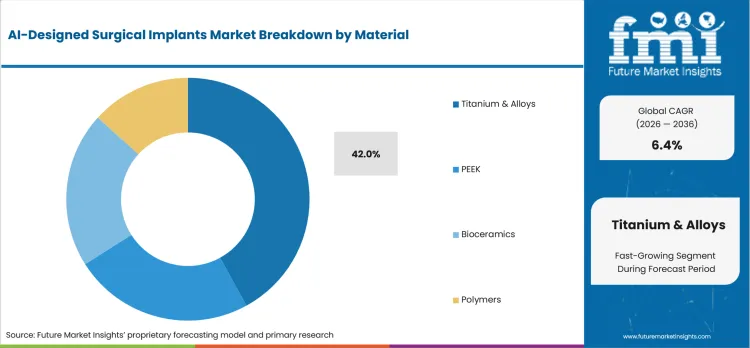
- Titanium & alloys are anticipated to account for 42.0% share in 2026, reflected by strength and long surgeon familiarity.
- PEEK remains active as cranial reconstruction buyers seek lighter polymer implants and radiolucent material options.
Which end user leads the AI-Designed Surgical Implants Market?
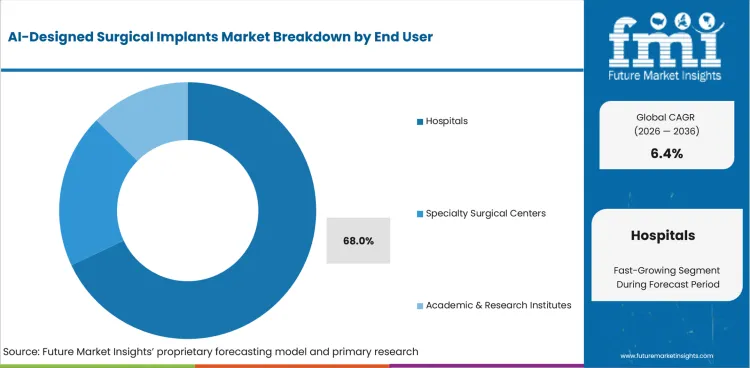
- Hospitals are projected to hold 68.0% share in 2026, led by complex case planning near imaging teams and surgical committees.
- Specialty surgical centers create added demand as orthopedic revision and craniofacial teams seek faster case-specific planning.
Which sales model leads the AI-Designed Surgical Implants Market?
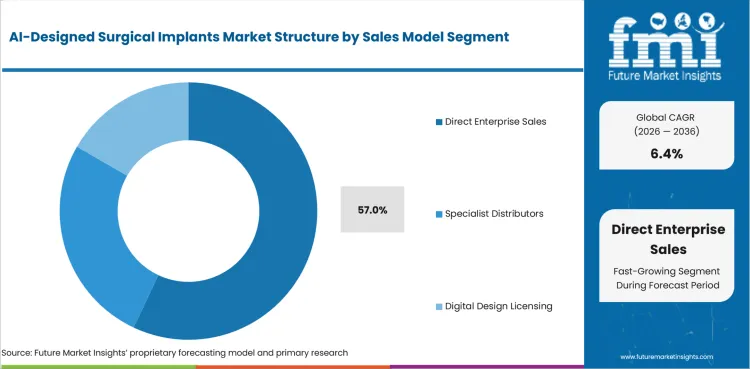
- Direct enterprise sales are expected to represent 57.0% share in 2026, guided by supplier need to support imaging and case documentation.
- Specialist distributors remain active across countries needing local surgeon access and regulated import support.
What are the drivers, restraints, and opportunities in the AI-Designed Surgical Implants Market?
Regulated digital planning and complex reconstruction needs are shaping AI-designed surgical implant purchasing decisions.
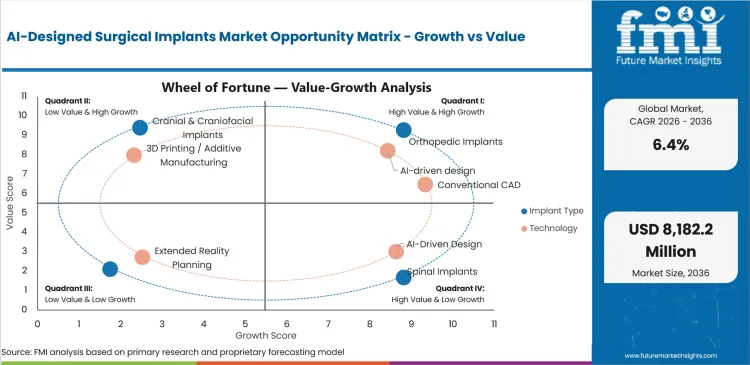
- Driver: Complex cranial and orthopedic cases require patient-specific designs before operating-room adjustment risk can be reduced.
- Restraint: Software validation and update documentation can slow hospital approval for AI-enabled implant workflows.
- Opportunity: Integrated imaging-to-implant platforms can improve supplier renewals as hospitals request fewer handoffs and clearer case records.
Patient-Specific Foot and Cranial Repair Strengthens Implant Demand
Complex reconstruction creates a clear reason for AI-designed implant adoption. FDA’s May 2024 page for restor3d Total Talus Replacement reported device survivorship of 96.3% and an additional-surgery rate of 14.8% in the supplied clinical data. Such figures show how patient-specific implant review now extends beyond design files into early performance evidence. AI-designed surgical implant suppliers gain demand as anatomy-matched repair turns into a clinical documentation issue rather than a simple manufacturing upgrade.
AI Device Review Burden Limits Buyer Approval
Hospital buyers can face slower approval if AI planning tools need frequent software updates or algorithm documentation. FDA stated in January 2025, it had authorized more than 1,000 AI-enabled devices through established premarket pathways before issuing draft guidance for AI-enabled medical-device software functions. Supplier files must explain lifecycle management and marketing submission content before hospital committees approve software-linked implant workflows. Smaller firms may delay expansion until quality teams can manage such evidence.
Post-Approval Evidence Creates Workflow Expansion
Post-approval evidence can create stronger commercial openings as hospitals want patient-specific implants supported by follow-up plans. FDA’s post-approval study database for restor3d Total Talus Replacement lists a study population of adults aged 22 and above, a sample size of 50 subjects, and at least 5 United States centers. Such follow-up structures can help implant suppliers convert specialist interest into repeat purchases through monitored outcomes and surgeon-ready digital review.
Which countries are growing in the AI-Designed Surgical Implants Market?
China 7.4% CAGR, India 7.2% CAGR, South Korea 6.9% CAGR, United States 6.7% CAGR, United Kingdom 6.2% CAGR, Japan 6.1% CAGR, Germany 6.0% CAGR, and France 5.8% CAGR through 2036.
.webp "Top Country Growth Comparison Ai Designed Surgical Implants Market Cagr (2026 2036)")
| Country | CAGR |
|---|---|
| China | 7.4% |
| India | 7.2% |
| South Korea | 6.9% |
| United States | 6.7% |
| United Kingdom | 6.2% |
| Japan | 6.1% |
| Germany | 6.0% |
| France | 5.8% |
Source: Future Market Insights, 2026.
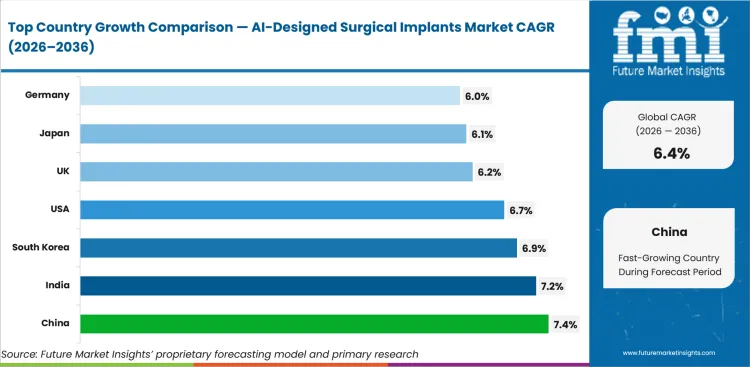
How do country-level CAGRs compare in the AI-Designed Surgical Implants Market?
China records leading country expansion while France shows a more cautious pace among profiled markets.
- China is forecast to record 7.4% CAGR by 2036 due to tertiary hospital upgrades and local advanced-device production.
- India is expected to expand at 7.2% CAGR from 2026 to 2036, led by private hospital networks and medical-device manufacturing policy.
- South Korea is projected to grow at 6.9% CAGR through 2036 as digital hospitals support imaging-linked implant planning.
- United States is estimated to rise at 6.7% CAGR by 2036, reflected by registry depth and regulated software-to-implant workflows.
- United Kingdom is projected to post 6.2% CAGR by 2036, guided by surgical backlog pressure and national joint registry depth.
- Japan is forecast to grow at 6.1% CAGR by 2036, backed by aging-related orthopedic need and strict device-quality expectations.
- Germany is expected to advance at 6.0% CAGR over the forecast period as medtech manufacturing depth supports advanced implant planning.
- France is expected to record 5.8% CAGR by 2036, driven by selective public and private hospital use in complex reconstruction.
How fast is the AI-Designed Surgical Implants Market growing in China?
A 7.4% CAGR through 2036 reflects tertiary hospital upgrades and local advanced-device production.
Country Market Snapshot Table
| Parameter | Value |
|---|---|
| Market Size in 2025 (Value) | USD 491.6 million |
| Market Size in 2026 (Value) | USD 528.0 million |
| Market Forecast in 2036 (Value) | USD 1,078.1 million |
| CAGR (2026 to 2036) | 7.4% |
| Years Considered | 2021 to 2036 |
| Base Year | 2025 |
| Forecast Period | 2026 to 2036 |
| Units Considered | Value (USD million) |
| Leading Sub-Region | Beijing, Shanghai, Guangdong, Jiangsu, and Zhejiang hospital corridors |
China AI-Designed Surgical Implants Market Outlook
- China’s AI-designed surgical implant industry advances through tertiary hospital modernization and domestic advanced-device production. Hospitals need controlled imaging-to-design workflows supporting cranial and spinal reconstruction.
- Buyers are expected to favor suppliers combining local production and responsive technical support. Domestic implant firms will remain influential as public hospital buyers compare local capability against imported premium systems.
Key Growth Drivers
- Medical-device channel oversight creates a wider controlled sales base, influenced by NMPA reporting online medical-device distributors rising from 8,717 to more than 360,000 and third-party platforms rising from 77 to 851.
- Whole-lifecycle regulation supports advanced-device quality review, since State Council reporting stated that by 2027 legal and regulatory frameworks for drug and medical-device supervision will be more enhanced and review efficiency for innovative devices will improve.
- Tertiary hospitals need AI-designed cranial and orthopedic implants as complex surgery moves toward digital planning and local technical service.
- Domestic manufacturers gain scope as hospitals seek price-accessible patient-specific implants with local case support.
Key Restraints
- Provincial tender pressure can compress premium implant pricing if hospitals compare patient-specific devices mainly by upfront cost.
- Imported suppliers can face registration and localization hurdles as buyers request local evidence and service coverage.
- Manufacturing wage pressure can complicate technical-service staffing, reflected by National Bureau of Statistics of China reporting 2024 private-unit manufacturing average annual wages of 71,467 yuan.
What makes China unique
China stands apart for local orthopedic implant production and policy support for high-end medical devices.
Key Companies
- AK Medical
- Chunli Medical
- Weigao Orthopaedic
- Double Medical Technology
- Kangtuo Medical
- Bonovo Orthopedics
- Beijing Libeier Bio-engineering Institute
Sales & Marketing Channels
- Tertiary hospital tender routes
- Provincial purchasing systems
- Local manufacturing partnerships
- Surgeon education programs
- Authorized medical-device distributors
- Design-workflow demonstration centers
Country Segment Breakdown Table
| Segment | Sub-Segments |
|---|---|
| By Implant Type | Cranial & Craniofacial Implants · Orthopedic Implants · Spinal Implants · Other Reconstructive Implants |
| By Technology | AI-Driven Design · 3D Printing / Additive Manufacturing · Extended Reality Planning · Conventional CAD |
| By Material | Titanium & Alloys · PEEK · Bioceramics · Polymers |
| By End User | Hospitals · Specialty Surgical Centers · Academic & Research Institutes |
| By Sales Model | Direct Enterprise Sales · Specialist Distributors · Digital Design Licensing |
| Key Sub-Regions Covered, Hospital Corridors | Beijing · Shanghai · Guangdong · Jiangsu · Zhejiang · Sichuan |
Frequently Asked Questions
How fast is China AI-Designed Surgical Implants Market growing?
China records leading country expansion at an estimated 7.4% CAGR, supported by tertiary hospital upgrades and local advanced-device production.
Who leads China AI-Designed Surgical Implants Market?
AK Medical leads China AI-designed surgical implants market, led by Chunli Medical and Weigao Orthopaedic across local orthopedic implant supply.
What is driving adoption in China AI-Designed Surgical Implants Market?
Hospital modernization and controlled medical-device distribution are moving buyers toward scan-based design workflows.
What is the AI-Designed Surgical Implants Market outlook in India?
A 7.2% CAGR through 2036 reflects private hospital expansion and domestic device manufacturing policy.
Country Market Snapshot Table
| Parameter | Value |
|---|---|
| Market Size in 2025 (Value) | USD 225.7 million |
| Market Size in 2026 (Value) | USD 242.0 million |
| Market Forecast in 2036 (Value) | USD 485.0 million |
| CAGR (2026 to 2036) | 7.2% |
| Years Considered | 2021 to 2036 |
| Base Year | 2025 |
| Forecast Period | 2026 to 2036 |
| Units Considered | Value (USD million) |
| Leading Sub-Region | Delhi-NCR, Mumbai, Bengaluru, Chennai, Hyderabad, and Ahmedabad hospital corridors |
India AI-Designed Surgical Implants Market Outlook
- India’s AI-designed surgical implant demand reflects private specialty hospitals and local device manufacturing ambitions. Buyers need specialized implants supporting complex orthopedic and craniofacial cases while staying acceptable to payment-sensitive patients.
- Hospitals are expected to begin with complex reconstruction and revision cases before wider use in routine orthopedic procedures. Local partners and price-aware product positioning are likely to remain central to supplier selection.
Key Growth Drivers
- Medical-device industry scale supports advanced implant entry, driven by IBEF projecting India’s medical devices market from US$ 15.2 billion in 2025 to US$ 50.1 billion by 2030.
- Domestic manufacturing policy supports local supply, reinforced by India Press Information Bureau reporting 21 PLI medical-device projects manufacturing 54 unique devices in 2025.
- Private hospital chains need AI-designed implants for complex revision and craniofacial repair programs.
- Metro specialty centers influence early demand as surgeons seek anatomy-matched implants for premium procedures.
Key Restraints
- Price-sensitive purchasing can delay patient-specific implant use outside complex or established private cases.
- Smaller suppliers may struggle to provide training and regional surgeon support at scale.
- Import dependence can expose hospitals to cost pressure, reflected by India Press Information Bureau stating in 2026 that medical devices were more than 85% import dependent before domestic policy support began.
What makes India unique
India differs through affordability pressure and domestic medical-device manufacturing momentum.
Key Companies
- Meril Life Sciences
- Shalby Advanced Technologies
- Siora Surgicals
- GPC Medical
- Inor Orthopedics
- Anatomiz3D Medtech
- Adler Mediequip
Sales & Marketing Channels
- Private hospital network sales
- Surgeon education programs
- Distributor-led orthopedic channels
- Public hospital tender routes
- Medical-device park partnerships
- Metro specialty center pilots
Country Segment Breakdown Table
| Segment | Sub-Segments |
|---|---|
| By Implant Type | Cranial & Craniofacial Implants · Orthopedic Implants · Spinal Implants · Other Reconstructive Implants |
| By Technology | AI-Driven Design · 3D Printing / Additive Manufacturing · Extended Reality Planning · Conventional CAD |
| By Material | Titanium & Alloys · PEEK · Bioceramics · Polymers |
| By End User | Hospitals · Specialty Surgical Centers · Academic & Research Institutes |
| By Sales Model | Direct Enterprise Sales · Specialist Distributors · Digital Design Licensing |
| Key Sub-Regions Covered, Hospital Corridors | Delhi-NCR · Mumbai · Bengaluru · Chennai · Hyderabad · Ahmedabad |
Frequently Asked Questions
How fast is India AI-Designed Surgical Implants Market growing?
India shows notable country expansion at an anticipated 7.2% CAGR, guided by private specialty hospitals and domestic medical-device policy.
Who leads India AI-Designed Surgical Implants Market?
Meril Life Sciences leads India AI-designed surgical implants market among local medical-device manufacturers, followed by Shalby Advanced Technologies and Siora Surgicals.
What is driving adoption in India AI-Designed Surgical Implants Market?
Complex revision cases and local implant production are moving hospitals toward patient-specific planning.
What is the AI-Designed Surgical Implants Market outlook in South Korea?
A 6.9% CAGR through 2036 reflects digital hospital readiness and controlled AI medical-device oversight.
Country Market Snapshot Table
| Parameter | Value |
|---|---|
| Market Size in 2025 (Value) | USD 157.2 million |
| Market Size in 2026 (Value) | USD 168.0 million |
| Market Forecast in 2036 (Value) | USD 327.4 million |
| CAGR (2026 to 2036) | 6.9% |
| Years Considered | 2021 to 2036 |
| Base Year | 2025 |
| Forecast Period | 2026 to 2036 |
| Units Considered | Value (USD million) |
| Leading Sub-Region | Seoul, Gyeonggi, Daegu, Daejeon, and Busan hospital corridors |
South Korea AI-Designed Surgical Implants Market Outlook
- South Korea’s adoption path centers on digital hospital capability and strict medical-device oversight. Buyers need scan-based planning systems reflecting clear evidence and post-market follow-up.
- Factories and hospitals are expected to prioritize controlled design workflows and implant traceability. Local companies with surgeon access and regulatory support can gain preference over suppliers selling software or implants alone.
Key Growth Drivers
- Hospital capacity supports inpatient imaging-linked implant planning, led by OECD 2025 reporting that Korea spent US$ 4,797 per capita on health and 8.4% of GDP.
- Digital product regulation supports software-linked implant planning, with an IMDRF 2025 update having recorded 111 innovative medical devices designated in South Korea as of August 2025.
- Digitally advanced hospitals support imaging-to-design surgical workflows across cranial repair and spine reconstruction.
- Specialist orthopedic centers create demand for specialized revision solutions requiring patient-specific implant geometry.
Key Restraints
- Reimbursement review can delay commercial uptake after technical approval for specialty implant cases.
- Smaller firms face high evidence burden if post-market files and surgeon training are incomplete.
- Digital medical-product rules add legal review layers, as Korea Law Translation Center lists Digital Medical Products Act under Act No. 20139 and enactment date January 23, 2024.
What makes South Korea unique
South Korea’s distinction comes from AI-device oversight and strict post-market expectations for implantable devices.
Key Companies
- Corentec
- L&K Biomed
- Medyssey
- CGBio
- T&R Biofab
- Genoss
- OSSTEM Implant
Sales & Marketing Channels
- Direct hospital sales
- Regulatory consulting partnerships
- Distributor-led surgeon education
- University hospital pilots
- Reimbursement support channels
- Digital surgery conferences
Country Segment Breakdown Table
| Segment | Sub-Segments |
|---|---|
| By Implant Type | Cranial & Craniofacial Implants · Orthopedic Implants · Spinal Implants · Other Reconstructive Implants |
| By Technology | AI-Driven Design · 3D Printing / Additive Manufacturing · Extended Reality Planning · Conventional CAD |
| By Material | Titanium & Alloys · PEEK · Bioceramics · Polymers |
| By End User | Hospitals · Specialty Surgical Centers · Academic & Research Institutes |
| By Sales Model | Direct Enterprise Sales · Specialist Distributors · Digital Design Licensing |
| Key Sub-Regions Covered, Hospital Corridors | Seoul · Gyeonggi · Daegu · Daejeon · Busan · Incheon |
Frequently Asked Questions
How fast is South Korea AI-Designed Surgical Implants Market growing?
South Korea shows steady expansion at an expected 6.9% CAGR, led by digital hospital use and controlled AI-device supervision.
Who leads South Korea AI-Designed Surgical Implants Market?
Corentec leads South Korea AI-designed surgical implants market, supported by L&K Biomed and Medyssey across domestic orthopedic implant supply.
What is driving adoption in South Korea AI-Designed Surgical Implants Market?
Software-linked device rules and implant follow-up expectations are pushing hospitals toward documented AI planning workflows.
How is the AI-Designed Surgical Implants Market performing in the United States?
A 6.7% CAGR through 2036 reflects registry depth and regulated software-to-implant workflows.
Country Market Snapshot Table
| Parameter | Value |
|---|---|
| Market Size in 2025 (Value) | USD 1,150.0 million |
| Market Size in 2026 (Value) | USD 1,227.0 million |
| Market Forecast in 2036 (Value) | USD 2,346.9 million |
| CAGR (2026 to 2036) | 6.7% |
| Years Considered | 2021 to 2036 |
| Base Year | 2025 |
| Forecast Period | 2026 to 2036 |
| Units Considered | Value (USD million) |
| Leading Sub-Region | Northeast, Midwest, California, Texas, and Florida specialist hospital corridors |
United States AI-Designed Surgical Implants Market Outlook
- United States demand connects FDA-cleared workflows and registry-backed orthopedic discussion. Buyers focus on evidence and software update history along with custom geometry.
- Hospitals are expected to favor suppliers that control scan conversion and case support. Surgeon education and value-analysis files remain important as each patient-specific case must justify premium pricing.
Key Growth Drivers
- Registry-backed orthopedic benchmarking supports surgeon confidence, supported by AAOS reporting more than 4 million procedures in its American Joint Replacement Registry database.
- FDA review clarity supports AI-enabled medical-device adoption, driven by FDA stating in 2025 that more than 1,000 AI-enabled devices had been authorized through established premarket pathways.
- Specialist hospitals need anatomy-matched implants for foot and ankle reconstruction and complex orthopedic revisions.
- Integrated suppliers gain scope as value-analysis teams request case planning and surgeon approval logs.
Key Restraints
- Hospital approval cycles can slow purchases if every patient-specific implant requires separate cost review.
- Product liability and software update history can lengthen supplier screening before clinical use.
- Cost scrutiny remains high, due to CMS national health expenditure having reached US$ 5.0 trillion in 2024 and accounted for 17.6% of GDP.
What makes the United States unique
United States differs through FDA-cleared workflow evidence and specialist reconstruction demand.
Key Companies
- 3D Systems
- restor3d
- Stryker
- Zimmer Biomet
- Medtronic
- Onkos Surgical
- Conformis
Sales & Marketing Channels
- Direct enterprise sales to hospital systems
- Surgeon education programs
- Group purchasing organization access
- Academic medical center pilots
- FDA-cleared workflow demonstrations
- Specialty orthopedic distributor networks
Country Segment Breakdown Table
| Segment | Sub-Segments |
|---|---|
| By Implant Type | Cranial & Craniofacial Implants · Orthopedic Implants · Spinal Implants · Other Reconstructive Implants |
| By Technology | AI-Driven Design · 3D Printing / Additive Manufacturing · Extended Reality Planning · Conventional CAD |
| By Material | Titanium & Alloys · PEEK · Bioceramics · Polymers |
| By End User | Hospitals · Specialty Surgical Centers · Academic & Research Institutes |
| By Sales Model | Direct Enterprise Sales · Specialist Distributors · Digital Design Licensing |
| Key Sub-Regions Covered, Hospital Corridors | Northeast · Midwest · California · Texas · Florida · North Carolina |
Frequently Asked Questions
How fast is the United States AI-Designed Surgical Implants Market growing?
United States demand is set to rise at 6.7% CAGR as specialist hospitals use registry data and regulated device workflows.
Who leads the United States AI-Designed Surgical Implants Market?
3D Systems leads United States AI-designed surgical implants market in patient-specific additive workflows, followed by restor3d and Stryker.
What is driving adoption in the United States AI-Designed Surgical Implants Market?
FDA-cleared workflows and registry-backed decision files cases are moving hospitals toward AI-designed implant planning.
How is the AI-Designed Surgical Implants Market performing in the United Kingdom?
A 6.2% CAGR through 2036 reflects surgical backlog pressure and national registry depth.
Country Market Snapshot Table
| Parameter | Value |
|---|---|
| Market Size in 2025 (Value) | USD 257.1 million |
| Market Size in 2026 (Value) | USD 273.0 million |
| Market Forecast in 2036 (Value) | USD 498.2 million |
| CAGR (2026 to 2036) | 6.2% |
| Years Considered | 2021 to 2036 |
| Base Year | 2025 |
| Forecast Period | 2026 to 2036 |
| Units Considered | Value (USD million) |
| Leading Sub-Region | London, Cambridge, Oxford, Manchester, Birmingham, and Leeds hospital corridors |
United Kingdom AI-Designed Surgical Implants Market Outlook
- United Kingdom uptake links NHS surgical recovery and private orthopedic care. Buyers are cautious as premium patient-specific devices must pass clinical and economic review.
- Flexible evidence packs and local technical support will decide adoption. Suppliers reducing design handoffs while supporting clinical committees can gain acceptance across complex cranial and orthopedic cases.
Key Growth Drivers
- Elective recovery pressure increases attention on planning efficiency, with NHS England reporting 7.4 million referral-to-treatment pathways waiting at end-January 2025.
- Registry depth supports implant outcome discussions, influenced by National Joint Registry having reported 116,901 hip procedures and 134,652 knee procedures in its 2025 annual report.
- Teaching hospitals can act as early reference sites for patient-specific implant workflows in complex reconstruction.
- Private hospital groups create selective demand for established orthopedic procedures requiring faster surgical planning.
Key Restraints
- NHS budget review limits use to cases with clear clinical and operational justification.
- Trust-level purchasing variation can slow supplier scaling across regions and hospital groups.
- Elective waiting pressure remains material, as NHS England reported 7.11 million patients on the elective waiting list in March 2026.
What makes the United Kingdom unique
United Kingdom stands out for national surgical registry depth and strict public-sector value review.
Key Companies
- Smith+Nephew
- Renishaw
- 3D LifePrints
- MatOrtho
- Corin Group
- Invibio Biomaterial Solutions
- Orthoplastics
Sales & Marketing Channels
- NHS trust purchasing routes
- Framework purchasing channels
- Surgeon-led clinical committees
- Academic hospital reference cases
- Orthopedic distributor partnerships
- Private hospital group engagement
Country Segment Breakdown Table
| Segment | Sub-Segments |
|---|---|
| By Implant Type | Cranial & Craniofacial Implants · Orthopedic Implants · Spinal Implants · Other Reconstructive Implants |
| By Technology | AI-Driven Design · 3D Printing / Additive Manufacturing · Extended Reality Planning · Conventional CAD |
| By Material | Titanium & Alloys · PEEK · Bioceramics · Polymers |
| By End User | Hospitals · Specialty Surgical Centers · Academic & Research Institutes |
| By Sales Model | Direct Enterprise Sales · Specialist Distributors · Digital Design Licensing |
| Key Sub-Regions Covered, Hospital Corridors | London · Cambridge · Oxford · Manchester · Birmingham · Leeds |
Frequently Asked Questions
How fast is United Kingdom AI-Designed Surgical Implants Market growing?
United Kingdom shows steady expansion at an expected 6.2% CAGR, supported by elective recovery needs and registry-led orthopedic review.
Who leads United Kingdom AI-Designed Surgical Implants Market?
Smith+Nephew leads United Kingdom AI-designed surgical implants market, supported by Renishaw and 3D LifePrints across local implant and planning capability.
What is driving adoption in United Kingdom AI-Designed Surgical Implants Market?
Surgical recovery pressure and detailed implant registry evidence are moving buyers toward documented patient-specific planning.
What is the AI-Designed Surgical Implants Market forecast for Japan?
A 6.1% CAGR through 2036 reflects aging-related orthopedic need and strict device-quality expectations.
Country Market Snapshot Table
| Parameter | Value |
|---|---|
| Market Size in 2025 (Value) | USD 274.3 million |
| Market Size in 2026 (Value) | USD 291.0 million |
| Market Forecast in 2036 (Value) | USD 526.1 million |
| CAGR (2026 to 2036) | 6.1% |
| Years Considered | 2021 to 2036 |
| Base Year | 2025 |
| Forecast Period | 2026 to 2036 |
| Units Considered | Value (USD million) |
| Leading Sub-Region | Tokyo, Osaka, Aichi, Kanagawa, Fukuoka, and Hyogo hospital corridors |
Japan AI-Designed Surgical Implants Market Outlook
- Japan’s market advances through aging-related orthopedic need and careful medical-device review. Domestic demand is established, with complex reconstruction and revision procedures creating room for patient-specific planning.
- Hospitals value service records and consistent documentation. Suppliers will keep value through quality engineering and Japanese-language support for case review.
Key Growth Drivers
- Aging-related orthopedic need supports revision and spinal planning, reflected by Statistics Bureau of Japan having reported 36,243 thousand people aged 65 and over at 29.3% of total population in 2024.
- Software-linked device review supports digital planning adoption, influenced by PMDA adding the project team for AI utilization on June 8, 2026 and updated its Software as a Medical Device page on June 4, 2026.
- Advanced hospital systems can integrate CT imaging and surgical planning across complex cranial and orthopedic cases.
- Local authorization partners support imported patient-specific implants through documentation and post-sale service.
Key Restraints
- Foreign suppliers face high documentation and local authorization requirements before hospital access.
- Conservative hospital buying can slow acceptance of new implant workflows until surgeon reference cases support wider clinical use.
- Approval routes can be demanding, as PMDA explains Japan classifies medical devices into 4 risk classes and Class IV devices fall under high-risk classification.
What makes Japan unique
Japan’s profile is defined by aging orthopedic demand and local authorization requirements.
Key Companies
- Teijin Nakashima Medical
- Kyocera
- HOYA Technosurgical
- Mizuho
- Aimedic MMT
- Japan Medical Dynamic Marketing
- Gunze Medical
Sales & Marketing Channels
- Japanese Marketing Authorization Holder partnerships
- Direct specialist hospital engagement
- Distributor-managed surgeon training
- University hospital evaluation programs
- Clinical conference education
- Post-market support teams
Country Segment Breakdown Table
| Segment | Sub-Segments |
|---|---|
| By Implant Type | Cranial & Craniofacial Implants · Orthopedic Implants · Spinal Implants · Other Reconstructive Implants |
| By Technology | AI-Driven Design · 3D Printing / Additive Manufacturing · Extended Reality Planning · Conventional CAD |
| By Material | Titanium & Alloys · PEEK · Bioceramics · Polymers |
| By End User | Hospitals · Specialty Surgical Centers · Academic & Research Institutes |
| By Sales Model | Direct Enterprise Sales · Specialist Distributors · Digital Design Licensing |
| Key Sub-Regions Covered, Hospital Corridors | Tokyo · Osaka · Aichi · Kanagawa · Fukuoka · Hyogo |
Frequently Asked Questions
How fast is Japan AI-Designed Surgical Implants Market growing?
Japan maintains steady expansion at an expected 6.1% CAGR, supported by aging-related orthopedic care and strict device review.
Who leads Japan AI-Designed Surgical Implants Market?
Teijin Nakashima Medical leads Japan AI-designed surgical implants market, followed by Kyocera and HOYA Technosurgical across domestic implant supply.
What is driving adoption in Japan AI-Designed Surgical Implants Market?
Aging-related reconstruction demand and software-device review discipline are supporting patient-specific implant workflows.
What is the AI-Designed Surgical Implants Market forecast for Germany?
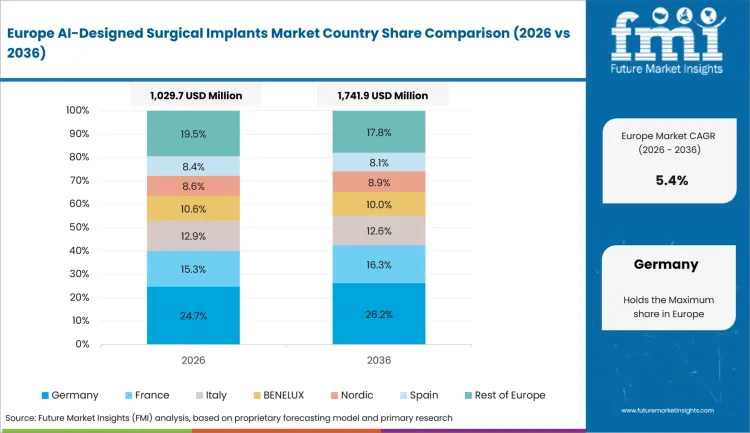
A 6.0% CAGR through 2036 reflects medtech manufacturing depth and engineering-led device validation.
Country Market Snapshot Table
| Parameter | Value |
|---|---|
| Market Size in 2025 (Value) | USD 311.3 million |
| Market Size in 2026 (Value) | USD 330.0 million |
| Market Forecast in 2036 (Value) | USD 591.0 million |
| CAGR (2026 to 2036) | 6.0% |
| Years Considered | 2021 to 2036 |
| Base Year | 2025 |
| Forecast Period | 2026 to 2036 |
| Units Considered | Value (USD million) |
| Leading Sub-Region | Bavaria, Baden-Wurttemberg, North Rhine-Westphalia, Hesse, and Berlin hospital corridors |
Germany AI-Designed Surgical Implants Market Outlook
- Germany demand draws from advanced orthopedic practice and high expectations for technical files. Buyers place value on engineering credibility and local service.
- University hospitals and specialist orthopedic centers are expected to guide early use. Suppliers with additive manufacturing competence and documented design control can gain preference over low-evidence alternatives.
Key Growth Drivers
- Medical technology manufacturing depth supports implant innovation, supported by BVMed and VDGH reporting around 161,000 employees in 1,480 German medical-device manufacturers with more than 20 employees in 2024.
- Smaller engineering suppliers widen specialist support capacity, led by BVMed and VDGH reporting approximately 12,000 micro-enterprises employing another 104,000 people in Germany’s medtech base in 2024.
- University hospitals support trials of advanced planning tools and patient-specific reconstruction.
- German engineering networks improve access to additive manufacturing and technical service.
Key Restraints
- Cost review makes specialized implants difficult outside complex or high-risk reconstruction cases.
- Documentation depth can challenge smaller suppliers lacking German support teams and local technical files.
- Benefit assessment discipline remains strict, as G-BA documents in 2025 showed routine practice data collection can require interim analyses at 18, 36, and 54 months for selected technologies.
What makes Germany unique
Germany draws distinction from engineering-led validation and demanding hospital evidence review.
Key Companies
- aap Implantate
- joimax
- Peter Brehm
- HumanTech Germany
- Karl Leibinger Medizintechnik
- FIT AG
- Waldemar Link
Sales & Marketing Channels
- Direct hospital account teams
- University hospital clinical programs
- Orthopedic distributor networks
- Tender-linked hospital purchasing
- Additive manufacturing service partnerships
- Surgeon training workshops
Country Segment Breakdown Table
| Segment | Sub-Segments |
|---|---|
| By Implant Type | Cranial & Craniofacial Implants · Orthopedic Implants · Spinal Implants · Other Reconstructive Implants |
| By Technology | AI-Driven Design · 3D Printing / Additive Manufacturing · Extended Reality Planning · Conventional CAD |
| By Material | Titanium & Alloys · PEEK · Bioceramics · Polymers |
| By End User | Hospitals · Specialty Surgical Centers · Academic & Research Institutes |
| By Sales Model | Direct Enterprise Sales · Specialist Distributors · Digital Design Licensing |
| Key Sub-Regions Covered, Hospital Corridors | Bavaria · Baden-Wurttemberg · North Rhine-Westphalia · Hesse · Berlin · Hamburg |
Frequently Asked Questions
How fast is Germany AI-Designed Surgical Implants Market growing?
Germany advances at an estimated 6.0% CAGR, supported by medtech engineering depth and technical validation demand.
Who leads Germany AI-Designed Surgical Implants Market?
Waldemar Link leads Germany AI-designed surgical implants market, supported by AAP Implantate and Peter Brehm across local orthopedic implant supply.
What is driving adoption in Germany AI-Designed Surgical Implants Market?
Specialist medtech engineering and hospital evidence discipline are moving buyers toward validated patient-specific implants.
How is the AI-Designed Surgical Implants Market performing in France?
A 5.8% CAGR through 2036 reflects selective use in complex reconstruction and evidence-focused hospital purchasing.
Country Market Snapshot Table
| Parameter | Value |
|---|---|
| Market Size in 2025 (Value) | USD 218.3 million |
| Market Size in 2026 (Value) | USD 231.0 million |
| Market Forecast in 2036 (Value) | USD 405.9 million |
| CAGR (2026 to 2036) | 5.8% |
| Years Considered | 2021 to 2036 |
| Base Year | 2025 |
| Forecast Period | 2026 to 2036 |
| Units Considered | Value (USD million) |
| Leading Sub-Region | Paris, Lyon, Marseille, Toulouse, Lille, and Nantes hospital corridors |
France AI-Designed Surgical Implants Market Outlook
- France adoption remains tied to complex reconstruction rather than routine replacement. Buyers focus on public reimbursement files and surgeon committee review.
- Public hospitals need clear case rationale, with private hospitals being able to move readily for selected specialized procedures. Local language support and surgeon education will remain important for supplier acceptance.
Key Growth Drivers
- Medical-device spending supports implant review, with DREES reporting France medical-device consumption at EUR 21.7 billion in 2024 and volume acceleration of 3.3%.
- Orthopedic procedure pressure supports planning discipline, driven by a 2025 study reporting scheduled total hip arthroplasty activity in France was 17% below expected trend in 2020.
- Public and private hospital mix creates different entry points for suppliers across complex cranial and orthopedic procedures.
- Craniofacial reconstruction offers a focused use case for patient-specific design and imaging-linked implant production.
Key Restraints
- Public-sector budget limits reduce adoption in standard procedures with available conventional implants.
- Local evidence expectations can slow first-time supplier approvals across hospital committees.
- Health accounts show cost scrutiny, reflected by DREES reporting current health expenditure at EUR 325 billion in 2023 after 3.5% annual rise.
What makes France unique
France differs through clinical committee review and public-private hospital demand split.
Key Companies
- Amplitude Surgical
- FH Orthopedics
- SERF
- Evolutis
- Implanet
- Groupe Lépine
- Dedienne Santé
Sales & Marketing Channels
- Public hospital tenders
- Private clinic purchasing groups
- Surgeon referral networks
- Clinical committee submissions
- Distributor-led technical support
- Academic hospital pilots
Country Segment Breakdown Table
| Segment | Sub-Segments |
|---|---|
| By Implant Type | Cranial & Craniofacial Implants · Orthopedic Implants · Spinal Implants · Other Reconstructive Implants |
| By Technology | AI-Driven Design · 3D Printing / Additive Manufacturing · Extended Reality Planning · Conventional CAD |
| By Material | Titanium & Alloys · PEEK · Bioceramics · Polymers |
| By End User | Hospitals · Specialty Surgical Centers · Academic & Research Institutes |
| By Sales Model | Direct Enterprise Sales · Specialist Distributors · Digital Design Licensing |
| Key Sub-Regions Covered, Hospital Corridors | Paris · Lyon · Marseille · Toulouse · Lille · Nantes |
Frequently Asked Questions
How fast is France AI-Designed Surgical Implants Market growing?
France shows measured expansion at a predicted 5.8% CAGR, supported by selective use in complex reconstruction.
Who leads France AI-Designed Surgical Implants Market?
Amplitude Surgical leads France AI-designed surgical implants market among local orthopedic implant companies, followed by FH Orthopedics and SERF.
What is driving adoption in France AI-Designed Surgical Implants Market?
Complex reconstruction demand and rising device consumption are supporting selective patient-specific implant use.
Who are the leading companies in the AI-Designed Surgical Implants Market?
Stryker, Zimmer Biomet, Medtronic, Smith+Nephew, 3D Systems, Materialise, restor3d, and Axial3D.
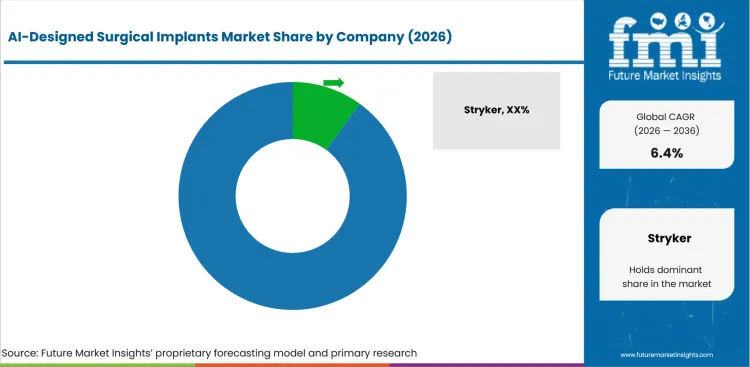
- Established orthopedic companies hold an advantage due to surgeon access and hospital service teams.
- Design-platform suppliers gain stronger acceptance by combining segmentation and additive workflow support.
- Patient-specific implant specialists win in complex cases requiring anatomy-matched geometry and faster design review.
- Service-ready suppliers improve renewal chances led by surgeon education and manufacturing traceability.
AI-designed surgical implant companies compete by combining implant hardware and digital planning. Stryker has a strong position through orthopedic portfolios and hospital relationships. Zimmer Biomet competes based on reconstructive implants and surgical workflow depth. Medtronic holds value across spine planning and patient-specific rods.
Software and additive manufacturing depth have become stronger competitive separators as hospitals move beyond single implant purchases. 3D Systems competes depending on FDA-cleared PEEK cranial workflows and additive manufacturing. Materialise competes through Mimics software and medical image segmentation. Axial3D strengthens competition led by AI-driven segmentation and automated model production.
Smaller specialists are expected to profit through focused indications and surgeon intimacy. China, India, and South Korea create opportunities for local production and technical service. United States, Europe, and Japan promote demand for higher documentation quality and local support. Companies proving design traceability across changing case files should gain more durable hospital relationships.
How do top AI-Designed Surgical Implants companies compare?
3D Systems and Materialise score on design workflow depth while Stryker and Zimmer Biomet lead through orthopedic channel reach.
| Company | Relevance to Market Title | Implant Portfolio Depth | Design Workflow Strength | AI / Software Support | Channel Reach | Geographic Footprint |
|---|---|---|---|---|---|---|
| Stryker | Very High | Very Strong | Strong | Moderate | Very Strong | Global |
| Zimmer Biomet | Very High | Very Strong | Strong | Moderate | Very Strong | Global |
| Medtronic | Very High | Strong | Strong | Strong | Very Strong | Global |
| Smith+Nephew | High | Strong | Moderate | Moderate | Strong | Global |
| 3D Systems | Very High | Moderate | Very Strong | Strong | Strong | United States and global |
| Materialise | Very High | Moderate | Very Strong | Very Strong | Strong | Europe and global |
| restor3d | High | Strong | Strong | Moderate | Moderate | United States |
| Axial3D | High | Moderate | Very Strong | Very Strong | Moderate | United Kingdom and United States |
| Renishaw | Moderate to High | Moderate | Strong | Moderate | Moderate | United Kingdom and global |
| AK Medical | High | Strong | Moderate | Moderate | Strong | China and Asia |
Source: Future Market Insights competitive analysis, 2026.
Who are the key players in the AI-Designed Surgical Implants Market?
Stryker, Zimmer Biomet, Medtronic, Smith+Nephew, 3D Systems, and Materialise are listed with restor3d and Axial3D among other suppliers.
Key global companies leading the AI-Designed Surgical Implants Market include:
- Stryker
- Zimmer Biomet
- Medtronic
- Smith+Nephew
- 3D Systems
- Materialise
- restor3d
- Axial3D
- Renishaw
- AK Medical
Key Developments in AI-Designed Surgical Implants Market
- In April 2024, 3D Systems announced FDA clearance for VSP PEEK Cranial Implant, a patient-specific additively manufactured PEEK cranial implant intended for cranioplasty procedures.
- In December 2024, Materialise launched an integrated Mimics platform supporting faster collaboration and personalized medical design.
- In October 2025, Axial3D announced FDA clearance for a Predetermined Change Control Plan for Axial3D INSIGHT, supporting AI-driven segmentation and surgical planning updates.
Key Players in the AI-Designed Surgical Implants Market
Orthopedic Implant Leaders
- Stryker
- Zimmer Biomet
- Medtronic
- Smith+Nephew
Design and Software Platforms
- 3D Systems
- Materialise
- Axial3D
- Renishaw
Patient-Specific Implant Specialists
- restor3d
- 3D LifePrints
- Anatomiz3D Medtech
- T&R Biofab
Regional Implant Manufacturers
- AK Medical
- Meril Life Sciences
- Corentec
- Waldemar Link
AI-Designed Surgical Implants Market - Scope & Definition
| Attribute | Detail |
|---|---|
| Market Definition | Patient-specific or anatomy-adapted implants whose geometry is shaped with AI-enabled design, image segmentation, simulation, or digital planning tools |
| Functions Covered | Image segmentation, anatomical modeling, implant geometry design, design review, additive manufacturing preparation, material validation, surgeon approval, and case documentation |
| Applications Covered | Cranial repair, craniofacial reconstruction, orthopedic revision, spinal reconstruction, trauma repair, tumor reconstruction, and other anatomy-specific surgical repair |
| End-Use Industries | Hospitals, specialty surgical centers, academic medical centers, reconstructive surgery units, orthopedic centers, craniofacial centers, and medical-device design services |
| Grades Covered | Titanium & alloy implants, PEEK implants, bioceramic implants, polymer implants, AI-designed implants, additive-manufactured implants, and CAD-supported patient-specific implants |
| Inclusions | All commercially traded AI-designed surgical implants across implant type, technology, material, end user, sales model, and country-level surgical use |
| Exclusions | Surgical robots, imaging scanners, dental-only implants, external prosthetics, navigation systems sold alone, and software sold without an implant design link |
AI-Designed Surgical Implants Market - Research Methodology
| Method | Description |
|---|---|
| Primary Research | FMI analyst interviews with orthopedic surgeons, craniofacial specialists, hospital purchasing teams, implant design engineers, additive manufacturing suppliers, and medical-device distributors across selected markets |
| Desk Research | Review of regulator pages, device authorization summaries, clinical registry information, official company product disclosures, and technical references on personalized implant production |
| Market Sizing & Forecasting | Bottom-up implant revenue approach using procedure-linked implant volume, average personalized implant pricing, technology penetration, country readiness, and hospital adoption levels |
| Data Validation | Cross-verification using device authorization activity, company portfolios, clinical registry signals, country-level policy evidence, and regional purchasing behavior |
AI-Designed Surgical Implants Market - Report Scope
| Parameter | Details |
|---|---|
| Forecast period | 2026 to 2036 |
| Historical period | 2021 to 2025 |
| Quantitative unit | Revenue in USD million |
| By implant type | Cranial & Craniofacial Implants, Orthopedic Implants, Spinal Implants, Other Reconstructive Implants |
| By technology | AI-Driven Design, 3D Printing / Additive Manufacturing, Extended Reality Planning, Conventional CAD |
| By material | Titanium & Alloys, PEEK, Bioceramics, Polymers |
| By end user | Hospitals, Specialty Surgical Centers, Academic & Research Institutes |
| By sales model | Direct Enterprise Sales, Specialist Distributors, Digital Design Licensing |
| Regions covered | North America, Latin America, Europe, East Asia, South Asia and Pacific, Middle East and Africa |
| Countries covered | China, India, South Korea, United States, United Kingdom, Japan, Germany, France |
| Key companies profiled | Stryker, Zimmer Biomet, Medtronic, Smith+Nephew, 3D Systems, Materialise, restor3d, Axial3D, Renishaw, AK Medical |
| Approach | Bottom-up implant revenue approach using procedure-linked implant volume, personalized design use, average case pricing, hospital readiness, software penetration, and country-level reconstruction demand |
Source: Future Market Insights competitive analysis, 2026.
AI-Designed Surgical Implants Market Breakdown by Implant Type, Technology, Material, End User, Sales Model, and Region
AI-Designed Surgical Implants Market Segmented by Implant Type
- Cranial & Craniofacial Implants
- Orthopedic Implants
- Spinal Implants
- Other Reconstructive Implants
AI-Designed Surgical Implants Market Segmented by Technology
- AI-Driven Design
- 3D Printing / Additive Manufacturing
- Extended Reality Planning
- Conventional CAD
AI-Designed Surgical Implants Market Segmented by Material
- Titanium & Alloys
- PEEK
- Bioceramics
- Polymers
AI-Designed Surgical Implants Market Segmented by End User
- Hospitals
- Specialty Surgical Centers
- Academic & Research Institutes
AI-Designed Surgical Implants Market Segmented by Sales Model
- Direct Enterprise Sales
- Specialist Distributors
- Digital Design Licensing
AI-Designed Surgical Implants Market by Region
- North America
- Latin America
- Europe
- East Asia
- South Asia and Pacific
- Middle East and Africa
Research Sources and Bibliography
- 3D Systems. (2024, April 15). 3D Systems announces FDA clearance for VSP PEEK Cranial Implant.
- American Academy of Orthopaedic Surgeons. (2025, August 14). American Joint Replacement Registry taps Avant-garde Health and Iz Statistics.
- Axial3D. (2025, October 20). Axial3D INSIGHT receives PCCP approval from the FDA.
- BVMed & VDGH. (2025, June 16). Position paper on medical technology SMEs.
- Centers for Medicare & Medicaid Services. (2025). National health expenditure data for 2024.
- Central Drugs Standard Control Organisation. (2025, November 17). Medical devices licensing circular.
- Department of Pharmaceuticals, India Press Information Bureau. (2025, December 12). Production Linked Incentive Scheme strengthens India’s manufacturing base.
- Department of Pharmaceuticals, India Press Information Bureau. (2026, March 13). Medical devices manufacturers.
- DREES. (2025, October 27). Health expenditure in 2024: Results of the health accounts.
- FDA. (2024, April 4). 510(k) summary: VSP PEEK Cranial Implant.
- FDA. (2024, May 21). Recently approved devices: restor3d Total Talus Replacement.
- FDA. (2025, January 6). FDA issues draft guidance for AI-enabled medical devices.
- FDA. (2026). CDRH Annual Report 2025.
- FDA. (2026). Artificial intelligence-enabled medical devices.
- FDA. (2026). Post-Approval Studies Database: restor3d Total Talus Replacement.
- India Brand Equity Foundation. (2026, February 13). Medical devices industry in India.
- International Medical Device Regulators Forum. (2025, September). Regulatory update on medical devices in the Republic of Korea.
- Korea Law Translation Center. (2025). Digital Medical Products Act.
- Materialise. (2024, December 10). Materialise launches integrated Mimics platform.
- Medtronic. (2024, March 6). Medtronic advances data-driven spine solutions with UNiD ePRO.
- Ministry of Food and Drug Safety, Republic of Korea. (2025). Guidance on review and approval of machine learning-enabled medical devices.
- Ministry of Food and Drug Safety, Republic of Korea. (2026, June 24). 2025 Medical Device Approval Report.
- National Bureau of Statistics of China. (2025, May 20). Average annual wages of persons employed in urban units in 2024.
- National Health Service England. (2025, March 13). Consultant-led referral to treatment waiting times, January 2025.
- National Health Service England. (2026, June). Integrated performance report.
- National Joint Registry. (2025). National Joint Registry annual report 2025.
- National Medical Products Administration. (2025, July 21). Policy interpretation of quality management specifications for online sales of medical devices.
- National Medical Products Administration. (2025, March 25). Opinions on full lifecycle regulation of drugs and medical devices.
- OECD. (2025, November 13). Health at a Glance 2025: Korea.
- Organisation for Economic Co-operation and Development. (2025, November 13). Health at a Glance 2025: Hip and knee replacement.
- Pharmaceuticals and Medical Devices Agency. (2025, July 22). PMDA Updates 2025.
- Pharmaceuticals and Medical Devices Agency. (2026). Regulations and approval/certification of medical devices.
- Pharmaceuticals and Medical Devices Agency. (2026, June 10). What’s new.
- State Council of the People’s Republic of China. (2025, January 6). China deepens comprehensive reform to strengthen drug and medical-device regulation.
- Statistics Bureau of Japan. (2025). Current population estimates as of October 1, 2024.
This bibliography is provided for reader reference and is not exhaustive. The full report contains the complete reference list and detailed citations.
This Report Answers
• Market size estimates for 2026 and forecasts through 2036 for the AI-Designed Surgical Implants Market.
• Insights across regional and country-level patient-specific implant markets.
• Analysis of demand drivers and hospital purchasing behavior.
• Evaluation of implant type, technology, material, end user, and sales model.
• Assessment of AI-enabled design and additive manufacturing requirements.
• Identification of opportunities across cranial and reconstructive implants.
• Evaluation of direct enterprise sales and specialist distributor channels.
• Country-level analysis covering China, India, South Korea, United States, United Kingdom, Japan, Germany, and France.
• Assessment of competition, including orthopedic OEMs and patient-specific implant specialists.
• Analysis of hospital decision drivers and service criteria.
• Regional outlooks across North America, Europe, East Asia, South Asia and Pacific, Latin America, and Middle East and Africa.
• Delivery of market data, forecasts, and supporting analysis in report-ready format.
Frequently Asked Questions
What is the growth prospect for AI-designed surgical implants?
Demand for AI-designed surgical implants is expected to rise at a steady pace as hospitals use scan-based planning for complex reconstruction and revision cases.
Which companies are expected to shape the AI-designed surgical implants market?
Stryker, Zimmer Biomet, Medtronic, Smith+Nephew, 3D Systems, Materialise, restor3d, and Axial3D are expected to shape market competition led by implant portfolios and design workflow support.
Why are medical-device companies investing in AI-designed surgical implants?
Medical-device companies are investing in AI-designed surgical implants to support patient-specific reconstruction and connect imaging files with manufacturing.
Why are direct enterprise sales channels important in the AI-designed surgical implants market?
Direct enterprise sales channels support adoption by combining hospital account access and post-sale technical support.
Which implant formats are gaining attention in AI-designed surgical implants?
Orthopedic implants and cranial implants are gaining attention as surgeons target anatomy-matched designs for revision and skull-defect repair.
How does additive manufacturing influence AI-designed surgical implant demand?
Additive manufacturing influences demand through complex geometry and controlled PEEK or titanium production routes.
Why is material selection important for AI-designed surgical implants?
Material selection is important since titanium and polymers carry different strength, imaging, and surgical handling needs.
What role does hospitals play in AI-designed surgical implant adoption?
Hospitals support adoption by linking imaging teams and clinical documentation into one buying decision.
Preview the report firsthand - request a free sample
Get SampleGet the brochure for pricing and purchase details.
Get PDFTable of Content
- Key Takeaways
- Market Size and CAGR
- Top Growth Driver
- Fastest Growing Segment
- Leading Region
- Key Companies
- Emerging Opportunities
- Executive Summary
- Global Market Outlook
- Demand-side Trends
- Supply-side Trends
- Technology Roadmap Analysis
- Analysis and Recommendations
- Analyst Perspective (What is happening? Why now? What should investors know?)
- Key Questions Answered
- How large is the market?
- What is the CAGR?
- What are key trends?
- Which region dominates?
- Who are the leaders?
- Market Overview
- Market Coverage / Taxonomy
- Market Definition / Scope / Limitations
- Research Methodology
- Chapter Orientation
- Analytical Lens and Working Hypotheses
- Market Structure, Signals, and Trend Drivers
- Benchmarking and Cross-market Comparability
- Market Sizing, Forecasting, and Opportunity Mapping
- Research Design and Evidence Framework
- Desk Research Programme (Secondary Evidence)
- Expert Input and Fieldwork (Primary Evidence)
- Tooling, Models, and Reference Databases
- Data Engineering and Model Build
- Quality Assurance and Audit Trail
- Market Background
- Market Dynamics (Drivers, Restraints, Opportunity, Trends)
- Scenario Forecast (Optimistic, Likely, Conservative)
- Impact Analysis
- AI Impact
- Sustainability Impact
- Regulatory Impact
- Technology Impact
- Consumer / Buyer Analysis
- Purchase Drivers
- Adoption Barriers
- Buyer Journey
- Opportunity Map Analysis
- Product Life Cycle Analysis
- Supply Chain Analysis
- Investment Feasibility Matrix
- Value Chain Analysis
- PESTLE and Porter's Analysis
- Regulatory Landscape
- Regional Parent Market Outlook
- Production and Consumption Statistics
- Import and Export Statistics
- Global Market Analysis and Forecast, 2021 to 2036
- Historical Market Size Value (USD Million) & Volume (Unit) Analysis, 2021 to 2025
- Current and Future Market Size Value (USD Million) & Volume (Unit) Projections, 2026 to 2036
- Y-o-Y Growth Trend Analysis
- Absolute $ Opportunity Analysis
- Global Market Pricing Analysis, 2021 to 2036
- Global Market Analysis and Forecast, By Implant Type, 2021 to 2036
- Introduction / Key Findings
- Historical Market Size Value (USD Million) & Volume (Unit) Analysis By Implant Type, 2021 to 2025
- Current and Future Market Size Value (USD Million) & Volume (Unit) Analysis and Forecast By Implant Type, 2026 to 2036
- Orthopedic Implants
- Spinal Implants
- Cranial & Craniofacial Implants
- Other Reconstructive Implants
- Orthopedic Implants
- Y-o-Y Growth Trend Analysis By Implant Type, 2021 to 2025
- Absolute $ Opportunity Analysis By Implant Type, 2026 to 2036
- Global Market Analysis and Forecast, By Technology, 2021 to 2036
- Introduction / Key Findings
- Historical Market Size Value (USD Million) & Volume (Unit) Analysis By Technology, 2021 to 2025
- Current and Future Market Size Value (USD Million) & Volume (Unit) Analysis and Forecast By Technology, 2026 to 2036
- AI-driven design
- AI-Driven Design
- 3D Printing / Additive Manufacturing
- Extended Reality Planning
- Conventional CAD
- AI-driven design
- Y-o-Y Growth Trend Analysis By Technology, 2021 to 2025
- Absolute $ Opportunity Analysis By Technology, 2026 to 2036
- Global Market Analysis and Forecast, By Material, 2021 to 2036
- Introduction / Key Findings
- Historical Market Size Value (USD Million) & Volume (Unit) Analysis By Material, 2021 to 2025
- Current and Future Market Size Value (USD Million) & Volume (Unit) Analysis and Forecast By Material, 2026 to 2036
- Titanium & Alloys
- PEEK
- Bioceramics
- Polymers
- Titanium & Alloys
- Y-o-Y Growth Trend Analysis By Material, 2021 to 2025
- Absolute $ Opportunity Analysis By Material, 2026 to 2036
- Global Market Analysis and Forecast, By End User, 2021 to 2036
- Introduction / Key Findings
- Historical Market Size Value (USD Million) & Volume (Unit) Analysis By End User, 2021 to 2025
- Current and Future Market Size Value (USD Million) & Volume (Unit) Analysis and Forecast By End User, 2026 to 2036
- Hospitals
- Specialty Surgical Centers
- Academic & Research Institutes
- Hospitals
- Y-o-Y Growth Trend Analysis By End User, 2021 to 2025
- Absolute $ Opportunity Analysis By End User, 2026 to 2036
- Global Market Analysis and Forecast, By Sales Model, 2021 to 2036
- Introduction / Key Findings
- Historical Market Size Value (USD Million) & Volume (Unit) Analysis By Sales Model, 2021 to 2025
- Current and Future Market Size Value (USD Million) & Volume (Unit) Analysis and Forecast By Sales Model, 2026 to 2036
- Direct Enterprise Sales
- Specialist Distributors
- Digital Design Licensing
- Direct Enterprise Sales
- Y-o-Y Growth Trend Analysis By Sales Model, 2021 to 2025
- Absolute $ Opportunity Analysis By Sales Model, 2026 to 2036
- Global Market Analysis and Forecast, By Region, 2021 to 2036
- Introduction
- Historical Market Size Value (USD Million) & Volume (Unit) Analysis By Region, 2021 to 2025
- Current Market Size Value (USD Million) & Volume (Unit) Analysis and Forecast By Region, 2026 to 2036
- North America
- Latin America
- Western Europe
- Eastern Europe
- East Asia
- South Asia and Pacific
- Middle East & Africa
- Market Attractiveness Analysis By Region
- North America Market Analysis and Forecast, By Country, 2021 to 2036
- Historical Market Size Value (USD Million) & Volume (Unit) Trend Analysis By Market Taxonomy, 2021 to 2025
- Market Size Value (USD Million) & Volume (Unit) Forecast By Market Taxonomy, 2026 to 2036
- By Country
- USA
- Canada
- Mexico
- By Implant Type
- By Technology
- By Material
- By End User
- By Sales Model
- By Country
- Market Attractiveness Analysis
- By Country
- By Implant Type
- By Technology
- By Material
- By End User
- By Sales Model
- Key Takeaways
- Latin America Market Analysis and Forecast, By Country
- Historical Market Size Value (USD Million) & Volume (Unit) Trend Analysis By Market Taxonomy, 2021 to 2025
- Market Size Value (USD Million) & Volume (Unit) Forecast By Market Taxonomy, 2026 to 2036
- By Country
- Brazil
- Chile
- Rest of Latin America
- By Implant Type
- By Technology
- By Material
- By End User
- By Sales Model
- By Country
- Market Attractiveness Analysis
- By Country
- By Implant Type
- By Technology
- By Material
- By End User
- By Sales Model
- Key Takeaways
- Western Europe Market Analysis and Forecast, By Country
- Historical Market Size Value (USD Million) & Volume (Unit) Trend Analysis By Market Taxonomy, 2021 to 2025
- Market Size Value (USD Million) & Volume (Unit) Forecast By Market Taxonomy, 2026 to 2036
- By Country
- Germany
- UK
- Italy
- Spain
- France
- Nordic
- BENELUX
- Rest of Western Europe
- By Implant Type
- By Technology
- By Material
- By End User
- By Sales Model
- By Country
- Market Attractiveness Analysis
- By Country
- By Implant Type
- By Technology
- By Material
- By End User
- By Sales Model
- Key Takeaways
- Eastern Europe Market Analysis and Forecast, By Country
- Historical Market Size Value (USD Million) & Volume (Unit) Trend Analysis By Market Taxonomy, 2021 to 2025
- Market Size Value (USD Million) & Volume (Unit) Forecast By Market Taxonomy, 2026 to 2036
- By Country
- Russia
- Poland
- Hungary
- Balkan & Baltic
- Rest of Eastern Europe
- By Implant Type
- By Technology
- By Material
- By End User
- By Sales Model
- By Country
- Market Attractiveness Analysis
- By Country
- By Implant Type
- By Technology
- By Material
- By End User
- By Sales Model
- Key Takeaways
- East Asia Market Analysis and Forecast, By Country
- Historical Market Size Value (USD Million) & Volume (Unit) Trend Analysis By Market Taxonomy, 2021 to 2025
- Market Size Value (USD Million) & Volume (Unit) Forecast By Market Taxonomy, 2026 to 2036
- By Country
- China
- Japan
- South Korea
- By Implant Type
- By Technology
- By Material
- By End User
- By Sales Model
- By Country
- Market Attractiveness Analysis
- By Country
- By Implant Type
- By Technology
- By Material
- By End User
- By Sales Model
- Key Takeaways
- South Asia and Pacific Market Analysis and Forecast, By Country
- Historical Market Size Value (USD Million) & Volume (Unit) Trend Analysis By Market Taxonomy, 2021 to 2025
- Market Size Value (USD Million) & Volume (Unit) Forecast By Market Taxonomy, 2026 to 2036
- By Country
- India
- ASEAN
- Australia & New Zealand
- Rest of South Asia and Pacific
- By Implant Type
- By Technology
- By Material
- By End User
- By Sales Model
- By Country
- Market Attractiveness Analysis
- By Country
- By Implant Type
- By Technology
- By Material
- By End User
- By Sales Model
- Key Takeaways
- Middle East & Africa Market Analysis and Forecast, By Country
- Historical Market Size Value (USD Million) & Volume (Unit) Trend Analysis By Market Taxonomy, 2021 to 2025
- Market Size Value (USD Million) & Volume (Unit) Forecast By Market Taxonomy, 2026 to 2036
- By Country
- Kingdom of Saudi Arabia
- Other GCC Countries
- Türkiye
- South Africa
- Other African Union
- Rest of Middle East & Africa
- By Implant Type
- By Technology
- By Material
- By End User
- By Sales Model
- By Country
- Market Attractiveness Analysis
- By Country
- By Implant Type
- By Technology
- By Material
- By End User
- By Sales Model
- Key Takeaways
- Key Countries Market Analysis
- USA
- Pricing Analysis
- Market Share Analysis, 2025
- By Implant Type
- By Technology
- By Material
- By End User
- By Sales Model
- Canada
- Pricing Analysis
- Market Share Analysis, 2025
- By Implant Type
- By Technology
- By Material
- By End User
- By Sales Model
- Mexico
- Pricing Analysis
- Market Share Analysis, 2025
- By Implant Type
- By Technology
- By Material
- By End User
- By Sales Model
- Brazil
- Pricing Analysis
- Market Share Analysis, 2025
- By Implant Type
- By Technology
- By Material
- By End User
- By Sales Model
- Chile
- Pricing Analysis
- Market Share Analysis, 2025
- By Implant Type
- By Technology
- By Material
- By End User
- By Sales Model
- Germany
- Pricing Analysis
- Market Share Analysis, 2025
- By Implant Type
- By Technology
- By Material
- By End User
- By Sales Model
- UK
- Pricing Analysis
- Market Share Analysis, 2025
- By Implant Type
- By Technology
- By Material
- By End User
- By Sales Model
- Italy
- Pricing Analysis
- Market Share Analysis, 2025
- By Implant Type
- By Technology
- By Material
- By End User
- By Sales Model
- Spain
- Pricing Analysis
- Market Share Analysis, 2025
- By Implant Type
- By Technology
- By Material
- By End User
- By Sales Model
- France
- Pricing Analysis
- Market Share Analysis, 2025
- By Implant Type
- By Technology
- By Material
- By End User
- By Sales Model
- India
- Pricing Analysis
- Market Share Analysis, 2025
- By Implant Type
- By Technology
- By Material
- By End User
- By Sales Model
- ASEAN
- Pricing Analysis
- Market Share Analysis, 2025
- By Implant Type
- By Technology
- By Material
- By End User
- By Sales Model
- Australia & New Zealand
- Pricing Analysis
- Market Share Analysis, 2025
- By Implant Type
- By Technology
- By Material
- By End User
- By Sales Model
- China
- Pricing Analysis
- Market Share Analysis, 2025
- By Implant Type
- By Technology
- By Material
- By End User
- By Sales Model
- Japan
- Pricing Analysis
- Market Share Analysis, 2025
- By Implant Type
- By Technology
- By Material
- By End User
- By Sales Model
- South Korea
- Pricing Analysis
- Market Share Analysis, 2025
- By Implant Type
- By Technology
- By Material
- By End User
- By Sales Model
- Russia
- Pricing Analysis
- Market Share Analysis, 2025
- By Implant Type
- By Technology
- By Material
- By End User
- By Sales Model
- Poland
- Pricing Analysis
- Market Share Analysis, 2025
- By Implant Type
- By Technology
- By Material
- By End User
- By Sales Model
- Hungary
- Pricing Analysis
- Market Share Analysis, 2025
- By Implant Type
- By Technology
- By Material
- By End User
- By Sales Model
- Kingdom of Saudi Arabia
- Pricing Analysis
- Market Share Analysis, 2025
- By Implant Type
- By Technology
- By Material
- By End User
- By Sales Model
- Türkiye
- Pricing Analysis
- Market Share Analysis, 2025
- By Implant Type
- By Technology
- By Material
- By End User
- By Sales Model
- South Africa
- Pricing Analysis
- Market Share Analysis, 2025
- By Implant Type
- By Technology
- By Material
- By End User
- By Sales Model
- USA
- Market Structure Analysis
- Competition Dashboard
- Competition Benchmarking
- Market Share Analysis of Top Players
- By Regional
- By Implant Type
- By Technology
- By Material
- By End User
- By Sales Model
- Emerging Startups
- Innovation Benchmarking
- Competition Analysis
- Competition Deep Dive
- Stryker
- Overview
- Product Portfolio
- Profitability by Market Segments (Product/Region/Sales Channel)
- Sales Footprint
- Strategy Overview
- Marketing Strategy
- Product Strategy
- Channel Strategy
- Zimmer Biomet
- Medtronic
- Smith+Nephew
- 3D Systems
- Materialise
- restor3d
- Axial3D
- Renishaw
- AK Medical
- Stryker
- Case Studies
- Success Stories
- Recent Developments
- Competition Deep Dive
- Assumptions & Acronyms Used


