

- Industry Size (2026)
- USD 4.5 Bn
- Forecast (2036)
- USD 10.9 Bn
- CAGR (2026 to 2036)
- 9.20%
Automotive Interior Polypropylene Laminates Market Forecast and Outlook 2026 to 2036
The global automotive interior polypropylene laminates market is valued at USD 4.5 billion in 2026 and is forecast to reach USD 10.9 billion by 2036, growing at a CAGR of 9.20%. This market holds a significant position within the automotive industry, playing a pivotal role in enhancing the performance, renewability, and design of vehicle interiors. As automakers focus on reducing weight, improving fuel efficiency, and meeting renewability targets, polypropylene laminates are becoming increasingly integral in applications like door panels, instrument covers, and seating components.
The competitive weight of this market is underscored by the strong demand for lightweight, durable, and recyclable materials that align with global environmental initiatives. Leading players in the market, such as Adient plc, Lear Corporation, and Magna International, are strategically positioning themselves with advanced polypropylene laminate solutions, driving innovation and meeting the growing consumer and regulatory expectations for eco-friendlier, cost-effective materials in automotive interiors.
Quick Stats for Automotive Interior Polypropylene Laminates Market
- Automotive Interior Polypropylene Laminates Market Value (2026): USD 4.5 Billion
- Automotive Interior Polypropylene Laminates Market Forecast Value (2036): USD 10.9 Billion
- Automotive Interior Polypropylene Laminates Market Forecast CAGR 2026 to 2036: 9.20%
- Leading Laminate Type in Automotive Interior Polypropylene Laminates Market: PVC‑Based PP Laminates
- Key Growth Regions in Automotive Interior Polypropylene Laminates Market: Asia Pacific, North America
- Top Key Players in Automotive Interior Polypropylene Laminates Market: Adient plc, Lear Corporation, Inteva Products, LLC, Faurecia (Now Exteriors & Interiors Business Unit), Magna International
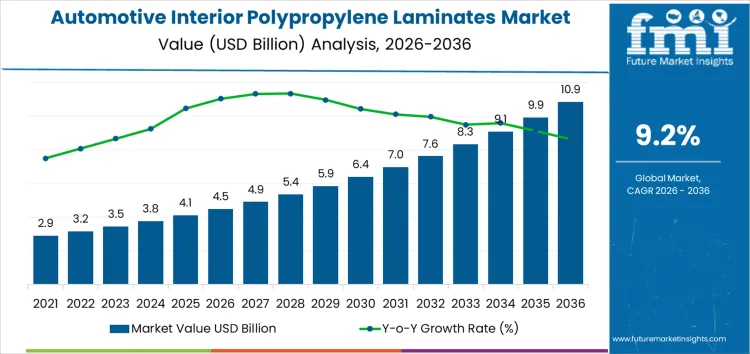
Automotive Interior Polypropylene Laminates Market Key Takeaways
| Metric | Value |
|---|---|
| Industry Value (2026) | USD 4.5 Billion |
| Forecast Value (2036) | USD 10.9 Billion |
| Forecast CAGR 2026 to 2036 | 9.20% |
How is the Global Automotive Interior Polypropylene Laminates Market Advancing?
The global automotive interior polypropylene laminates market is witnessing strong growth, driven by the increasing demand for lightweight, durable, and cost-effective materials in automotive interior applications. Polypropylene laminates, made from polypropylene (PP) resin and used in interior parts such as dashboards, door panels, and seat covers, offer several advantages, including low weight, high resistance to wear and tear, and excellent aesthetics. These properties make them an ideal material for automotive interiors, where reducing weight without compromising on durability or performance is a key focus for manufacturers.
A major driver of the market is the growing demand for more fuel-efficient and environmentally friendly vehicles. Polypropylene laminates help achieve this by reducing the weight of vehicle components, contributing to overall weight reduction and, consequently, improved fuel efficiency. As the automotive industry moves towards renewability, the recyclability of polypropylene laminates is becoming increasingly important. The ability to recycle these materials reduces the environmental footprint of automotive manufacturing and appeals to both manufacturers and consumers who prioritize eco-friendly solutions.
Technological advancements in polypropylene resin formulations and laminate production processes are further driving market growth. Innovations in the development of high-performance PP laminates with improved mechanical properties, surface finishes, and resistance to environmental factors such as UV light and moisture are enhancing their application in automotive interiors. As consumer preferences continue to evolve toward eco-friendlier and aesthetically appealing vehicles, the demand for automotive interior polypropylene laminates is expected to grow, offering a key material solution to automakers looking to enhance vehicle design and performance.
What Is the Segment-Wise Analysis for the Automotive Interior Polypropylene Laminates Market?
The automotive interior polypropylene laminates market is segmented by laminate type and application area. PVC-based PP laminates lead the laminate type segment with a 34% share, followed by TPO PP laminates, ABS PP laminates, NBR PP laminates, and other types. PVC-based PP laminates are widely used in automotive interiors due to their durability and versatility. In terms of application areas, door panels hold the largest share at 28%, followed by instrument panel covers, seat components, headliners, and other applications.
Why Do PVC-Based PP Laminates Lead the Automotive Interior Polypropylene Laminates Market?
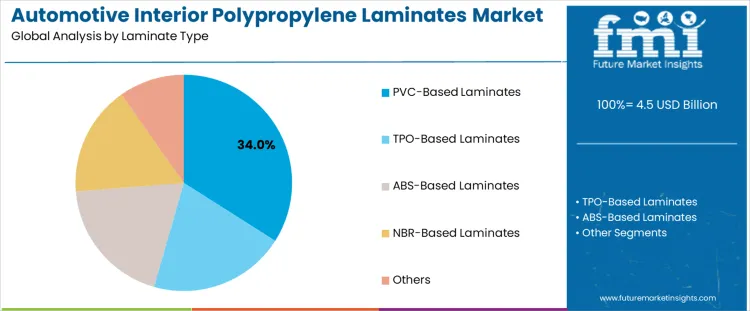
PVC-based PP laminates lead the automotive interior polypropylene laminates market with a 34% share due to their durability, flexibility, and cost-effectiveness. These laminates are widely used in automotive interiors, providing excellent surface finishing and resistance to wear and tear, which makes them ideal for door panels and other interior components. PVC-based PP laminates are also lightweight, which contributes to overall vehicle weight reduction an important consideration in the automotive industry. As manufacturers continue to focus on improving the quality and affordability of automotive interiors, the demand for PVC-based PP laminates remains high, making them the preferred material in the automotive interior segment.
How Does the Door Panel Application Area Contribute to the Automotive Interior Polypropylene Laminates Market?
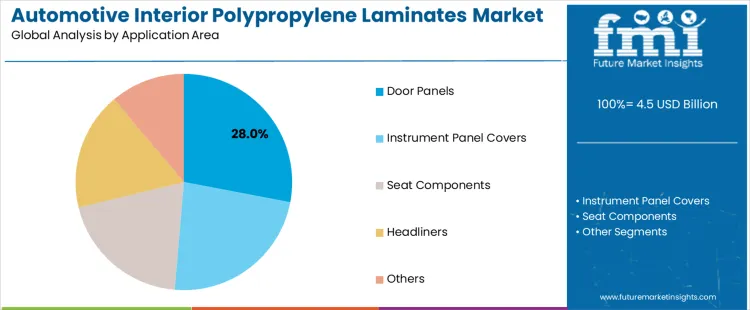
Door panels account for 28% of the application area segment in the automotive interior polypropylene laminates market. Door panels are an essential part of vehicle interiors, requiring materials that offer a combination of durability, aesthetic appeal, and cost-efficiency. Polypropylene laminates, particularly PVC-based PP laminates, are ideal for this application due to their ability to withstand impacts, scratches, and wear while maintaining a smooth finish. As the automotive industry focuses on producing lightweight, cost-effective, and durable interior components, door panels continue to drive the demand for polypropylene laminates in automotive interiors, contributing significantly to the growth of this market segment.
What Are the Key Dynamics for the Automotive Interior Polypropylene Laminates Market?
The automotive interior polypropylene laminates market is driven by the increasing demand for lightweight, durable, and aesthetically pleasing materials in vehicle interiors. Polypropylene laminates are widely used in automotive interiors for their superior mechanical properties, cost-effectiveness, and ability to be molded into complex shapes. These laminates offer excellent resistance to heat, moisture, and UV radiation, making them ideal for automotive applications such as dashboards, door panels, and seating. The growth of the market is also fueled by the need for eco-friendly materials and the automotive industry's shift toward eco-friendlier, lightweight options.
Why Is the Automotive Interior Polypropylene Laminates Market Growing?
The market for automotive interior polypropylene laminates is growing due to the rising demand for lightweight materials that contribute to fuel efficiency and renewability in vehicles. As automakers seek to reduce overall vehicle weight to improve fuel efficiency, polypropylene laminates offer a cost-effective solution without compromising durability or performance. Polypropylene laminates are favored for their environmental benefits, as they are recyclable and contribute to the reduction of automotive waste. The increasing demand for premium vehicle interiors and custom designs further drives the adoption of polypropylene laminates in automotive interior applications.
How Are the Key Drivers Shaping the Automotive Interior Polypropylene Laminates Market?
Key drivers for the Automotive Interior Polypropylene Laminates Market include the need for weight reduction in vehicles to improve fuel efficiency, the increasing focus on renewability in automotive manufacturing, and the growing demand for high-quality interior materials. Polypropylene laminates provide an affordable yet high-performing solution for automakers, offering lightweight properties while maintaining durability and resistance to wear. As consumers seek eco-friendlier options, the use of polypropylene in automotive interiors aligns with the industry's push for recyclable and eco-friendly materials. Furthermore, advancements in material technology are enhancing the appeal of polypropylene laminates in high-end vehicle designs.
What is the Growth Outlook for the Automotive Interior Polypropylene Laminates Market by Country?
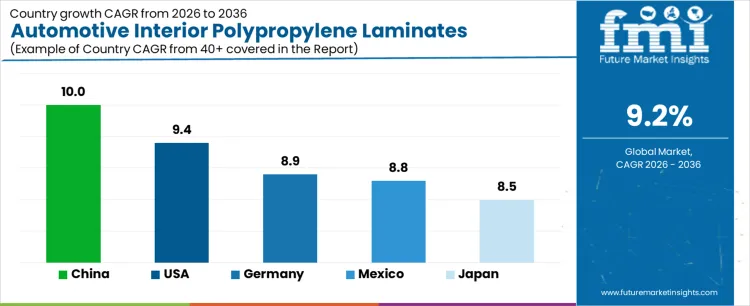
| Country | CAGR (%) |
|---|---|
| China | 10% |
| USA | 9.4% |
| Mexico | 8.8% |
| Germany | 8.9% |
| Japan | 8.5% |
The automotive interior polypropylene laminates market is expanding across key regions, with China leading at 10%, driven by the growth of its automotive industry and the rising demand for lightweight, eco-friendly materials. The USA follows at 9.4%, fueled by consumer preferences for fuel-efficient, eco-friendly vehicles and regulatory demands for renewability. Mexico grows at 8.8%, supported by its strong automotive manufacturing sector and competitive advantage in North American supply chains. Germany’s market expands at 8.9%, driven by its automotive industry’s commitment to innovation and renewability. Japan grows at 8.5%, supported by advancements in fuel-efficient vehicle technologies and the demand for environmentally friendly interior materials.
What is Driving the Growth of the Automotive Interior Polypropylene Laminates Market in China?
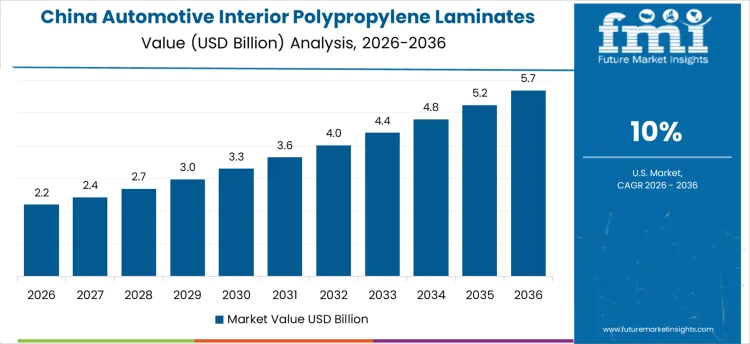
China’s automotive interior polypropylene laminates market is growing at 10%, driven by the rapid expansion of its automotive industry and the increasing demand for lightweight, durable, and eco-friendly materials in vehicle interiors. Polypropylene laminates are gaining popularity due to their cost-effectiveness, durability, and ability to meet environmental regulations. As China becomes a global leader in electric vehicle (EV) production, the demand for eco-friendly materials for vehicle interiors, such as polypropylene laminates, is increasing. The rising focus on fuel efficiency, consumer demand for better aesthetics, and the country’s regulatory push toward greener manufacturing are all contributing to the growth of the market. As the Chinese automotive sector embraces advanced materials and technology, the need for high-performance polypropylene laminates in vehicle interiors will continue to rise.
How is the Automotive Interior Polypropylene Laminates Market Expanding in the USA?
The automotive interior polypropylene laminates market in the USA is growing at 9.4%, supported by the increasing adoption of lightweight and eco-friendly materials in the automotive sector. Polypropylene laminates are being widely used in automotive interiors for their durability, ease of molding, and lightweight properties, which contribute to better fuel efficiency and lower emissions. The USA’s strong focus on reducing the carbon footprint in the automotive industry and improving fuel economy is driving demand for materials like polypropylene. The rise in electric vehicle production and consumer preferences for high-quality, cost-effective interior materials are fueling market expansion. Government regulations promoting renewability and the automotive industry's shift toward eco-friendly solutions further support the demand for polypropylene laminates in automotive interiors.
How is the Automotive Interior Polypropylene Laminates Market Expanding in Mexico?
Mexico’s automotive interior polypropylene laminates market is growing at 8.8%, supported by the country’s strong automotive manufacturing base and its position as a key supplier for major global automakers. As the demand for lightweight and cost-effective materials in vehicle interiors rises, polypropylene laminates are increasingly being used in manufacturing automotive components such as dashboards, door panels, and seat coverings. Mexico’s competitive labor costs, proximity to the United States, and its participation in trade agreements like the USMCA (United States-Mexico-Canada Agreement) are boosting its automotive industry and contributing to market growth. The increasing demand for eco-friendly and eco-friendly automotive solutions in Mexico and North America is further driving the adoption of polypropylene laminates, which offer low environmental impact and are recyclable.
What is Driving the Growth of the Automotive Interior Polypropylene Laminates Market in Germany?
Germany’s automotive interior polypropylene laminates market is growing at 8.9%, driven by the country’s leadership in automotive manufacturing and its commitment to renewability. Germany’s strong automotive industry, with its focus on innovation and fuel-efficient vehicles, is pushing the demand for lightweight materials such as polypropylene laminates. These materials are preferred due to their excellent durability, recyclability, and cost-effectiveness, making them ideal for automotive interiors. The rise in electric vehicle production and Germany’s strict environmental regulations are contributing to the adoption of eco-friendly and eco-friendly materials. As Germany continues to prioritize renewability in its automotive industry, the demand for polypropylene laminates in vehicle interiors is expected to grow, aligning with the country’s broader environmental goals.
How is the Automotive Interior Polypropylene Laminates Market Expanding in Japan?
Japan’s automotive interior polypropylene laminates market is growing at 8.5%, driven by the country’s automotive industry’s push for lightweight and eco-friendly materials. Japan’s automotive manufacturers are increasingly adopting polypropylene laminates in vehicle interiors to reduce weight and improve fuel efficiency, in line with global trends toward energy-efficient and environmentally friendly vehicles. Polypropylene laminates offer advantages such as high durability, recyclability, and low environmental impact, making them ideal for automotive applications. The rising demand for electric vehicles (EVs) and hybrid cars in Japan, along with the government’s emphasis on reducing carbon emissions, is also contributing to the growth of the market. As Japan continues to lead in automotive innovation, the demand for eco-friendly materials like polypropylene laminates will continue to rise.
How Are Companies Competing in the Automotive Interior Polypropylene Laminates Market?
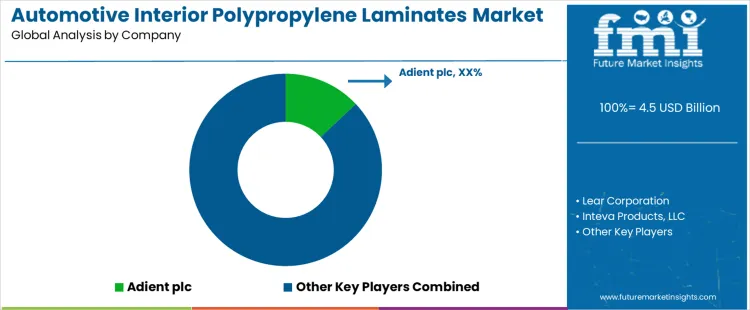
Competition in the Automotive Interior Polypropylene Laminates Market is shaped by material performance (impact resistance, thermal stability, surface quality), integration with interior assemblies, lightweighting potential, and alignment with OEM design and safety requirements. Adient plc positions its polypropylene laminate solutions with a strong focus on comfort, fit and finish, and durable performance in seating and interior trim components. Its product materials emphasize consistent aesthetic quality and reliable long term performance that help automakers meet both design and durability targets.
Lear Corporation competes by offering integrated interior systems where polypropylene laminates are engineered to work seamlessly with foam, textiles, and structural cores; its brochures highlight process compatibility and acoustic performance that enhance perceived quality. Inteva Products, LLC differentiates with custom laminate formulations that balance weight reduction and mechanical robustness, marketed for modular integration into door panels, instrument panels, and consoles.
Major suppliers such as Faurecia (Now Exteriors & Interiors Business Unit) and Magna International bring broad automotive portfolios and global support networks, and their materials stress material tailoring for specific OEM platforms, including surface finish options and improved thermal behavior. Others in the market contribute with specialized compounding services and niche laminate grades that target regional specifications or unique design needs. Across all vendors, product literature underscores lightweight performance, surface quality, integration ease, and compliance with interior safety and durability standards as key differentiators that help interior designers and OEMs select polypropylene laminates that elevate both form and function.
Key Players in Automotive Interior Polypropylene Laminates Market
- Adient plc
- Lear Corporation
- Inteva Products, LLC
- Faurecia (Now Exteriors & Interiors Business Unit)
- Magna International
- Others
Scope of Report
| Attributes | Description |
|---|---|
| Quantitative Unit (2026) | USD Billion |
| Laminate Type | PVC-Based Laminates, TPO-Based Laminates, ABS-Based Laminates, NBR-Based Laminates, Others |
| Application Area | Door Panels, Instrument Panel Covers, Seat Components, Headliners, Others |
| Regions Covered | Asia Pacific, Europe, North America, Latin America, Middle East & Africa |
| Countries Covered | China, Japan, South Korea, India, Australia & New Zealand, ASEAN, Germany, United Kingdom, France, Italy, Spain, Nordic, BENELUX, United States, Canada, Mexico, Brazil, Chile, Turkey, South Africa, Other GCC Countries |
| Key Companies Profiled | Adient plc, Lear Corporation, Inteva Products, LLC, Faurecia (Now Exteriors & Interiors Business Unit), Magna International, Others |
| Additional Attributes | Dollar sales by laminate type, application area, and region; regional CAGR and growth outlook for automotive interior polypropylene laminates market. |
Automotive Interior Polypropylene Laminates Market by Key Segments
Laminate Type
- PVC‑Based Laminates
- TPO‑Based Laminates
- ABS‑Based Laminates
- NBR‑Based Laminates
- Others
Application Area
- Door Panels
- Instrument Panel Covers
- Seat Components
- Headliners
- Others
Region:
- Asia Pacific
- China
- Japan
- South Korea
- India
- Australia & New Zealand
- ASEAN
- Rest of Asia Pacific
- Europe
- Germany
- United Kingdom
- France
- Italy
- Spain
- Nordic
- BENELUX
- Rest of Europe
- North America
- United States
- Canada
- Mexico
- Latin America
- Brazil
- Chile
- Rest of Latin America
- Middle East & Africa
- Kingdom of Saudi Arabia
- Other GCC Countries
- Turkey
- South Africa
- Other African Union
- Rest of Middle East & Africa
Bibliography
- Hossain, M. T. (2024). Research and application of polypropylene: A review. Journal of Polymer Research, 31(2), 1–18.
- Khan, F., Ahmad, S., & Rahman, M. (2024). Advances of composite materials in automobile applications. Materials Today: Proceedings, 72, 3450–3456.
- Zhang, Y., Liu, H., & Wang, X. (2023). Mechanical performance of polypropylene‑based composites for automotive interior panels. European Polymer Journal, 181, 111707.
- Lee, J. H., Park, S. J., & Kim, D. H. (2024). Thermal aging and durability behavior of polypropylene materials for automotive interior applications. Polymer Degradation and Stability, 219, 110431.
- Singh, R., & Verma, A. (2023). Lightweight polymer materials and sustainability considerations in automotive interior design. International Journal of Automotive Technology, 24(6), 1451–1462.
- European Commission – Joint Research Centre (JRC). (2024). Plastics in the automotive sector: Material performance, recycling, and environmental considerations. Publications Office of the European Union.
Frequently Asked Questions
How big is the automotive interior polypropylene laminates market in 2026?
The global automotive interior polypropylene laminates market is estimated to be valued at USD 4.5 billion in 2026.
What will be the size of automotive interior polypropylene laminates market in 2036?
The market size for the automotive interior polypropylene laminates market is projected to reach USD 10.9 billion by 2036.
How much will be the automotive interior polypropylene laminates market growth between 2026 and 2036?
The automotive interior polypropylene laminates market is expected to grow at a 9.2% CAGR between 2026 and 2036.
What are the key product types in the automotive interior polypropylene laminates market?
The key product types in automotive interior polypropylene laminates market are pvc‑based laminates, tpo‑based laminates, abs‑based laminates, nbr‑based laminates and others.
Which application area segment to contribute significant share in the automotive interior polypropylene laminates market in 2026?
In terms of application area, door panels segment to command 28.0% share in the automotive interior polypropylene laminates market in 2026.
Preview the report firsthand - request a free sample
Get SampleGet the brochure for pricing and purchase details.
Get PDFTable of Content
- Executive Summary
- Global Market Outlook
- Demand-side Trends
- Supply-side Trends
- Technology Roadmap Analysis
- Analysis and Recommendations
- Market Overview
- Market Coverage / Taxonomy
- Market Definition / Scope / Limitations
- Market Background
- Market Dynamics
- Drivers
- Restraints
- Opportunity
- Trends
- Scenario Forecast
- Demand in Optimistic Scenario
- Demand in Likely Scenario
- Demand in Conservative Scenario
- Opportunity Map Analysis
- Product Life Cycle Analysis
- Supply Chain Analysis
- Investment Feasibility Matrix
- Value Chain Analysis
- PESTLE and Porter’s Analysis
- Regulatory Landscape
- Regional Parent Market Outlook
- Production and Consumption Statistics
- Import and Export Statistics
- Market Dynamics
- Global Market Analysis 2021 to 2025 and Forecast, 2026 to 2036
- Historical Market Size Value (USD Million) Analysis, 2021 to 2025
- Current and Future Market Size Value (USD Million) Projections, 2026 to 2036
- Y-o-Y Growth Trend Analysis
- Absolute $ Opportunity Analysis
- Global Market Pricing Analysis 2021 to 2025 and Forecast 2026 to 2036
- Global Market Analysis 2021 to 2025 and Forecast 2026 to 2036, By Laminate Type
- Introduction / Key Findings
- Historical Market Size Value (USD Million) Analysis By Laminate Type , 2021 to 2025
- Current and Future Market Size Value (USD Million) Analysis and Forecast By Laminate Type , 2026 to 2036
- PVC‑Based Laminates
- TPO‑Based Laminates
- ABS‑Based Laminates
- NBR‑Based Laminates
- Others
- PVC‑Based Laminates
- Y-o-Y Growth Trend Analysis By Laminate Type , 2021 to 2025
- Absolute $ Opportunity Analysis By Laminate Type , 2026 to 2036
- Global Market Analysis 2021 to 2025 and Forecast 2026 to 2036, By Application Area
- Introduction / Key Findings
- Historical Market Size Value (USD Million) Analysis By Application Area, 2021 to 2025
- Current and Future Market Size Value (USD Million) Analysis and Forecast By Application Area, 2026 to 2036
- Door Panels
- Instrument Panel Covers
- Seat Components
- Headliners
- Others
- Door Panels
- Y-o-Y Growth Trend Analysis By Application Area, 2021 to 2025
- Absolute $ Opportunity Analysis By Application Area, 2026 to 2036
- Global Market Analysis 2021 to 2025 and Forecast 2026 to 2036, By Region
- Introduction
- Historical Market Size Value (USD Million) Analysis By Region, 2021 to 2025
- Current Market Size Value (USD Million) Analysis and Forecast By Region, 2026 to 2036
- North America
- Latin America
- Western Europe
- Eastern Europe
- East Asia
- South Asia and Pacific
- Middle East & Africa
- Market Attractiveness Analysis By Region
- North America Market Analysis 2021 to 2025 and Forecast 2026 to 2036, By Country
- Historical Market Size Value (USD Million) Trend Analysis By Market Taxonomy, 2021 to 2025
- Market Size Value (USD Million) Forecast By Market Taxonomy, 2026 to 2036
- By Country
- USA
- Canada
- Mexico
- By Laminate Type
- By Application Area
- By Country
- Market Attractiveness Analysis
- By Country
- By Laminate Type
- By Application Area
- Key Takeaways
- Latin America Market Analysis 2021 to 2025 and Forecast 2026 to 2036, By Country
- Historical Market Size Value (USD Million) Trend Analysis By Market Taxonomy, 2021 to 2025
- Market Size Value (USD Million) Forecast By Market Taxonomy, 2026 to 2036
- By Country
- Brazil
- Chile
- Rest of Latin America
- By Laminate Type
- By Application Area
- By Country
- Market Attractiveness Analysis
- By Country
- By Laminate Type
- By Application Area
- Key Takeaways
- Western Europe Market Analysis 2021 to 2025 and Forecast 2026 to 2036, By Country
- Historical Market Size Value (USD Million) Trend Analysis By Market Taxonomy, 2021 to 2025
- Market Size Value (USD Million) Forecast By Market Taxonomy, 2026 to 2036
- By Country
- Germany
- UK
- Italy
- Spain
- France
- Nordic
- BENELUX
- Rest of Western Europe
- By Laminate Type
- By Application Area
- By Country
- Market Attractiveness Analysis
- By Country
- By Laminate Type
- By Application Area
- Key Takeaways
- Eastern Europe Market Analysis 2021 to 2025 and Forecast 2026 to 2036, By Country
- Historical Market Size Value (USD Million) Trend Analysis By Market Taxonomy, 2021 to 2025
- Market Size Value (USD Million) Forecast By Market Taxonomy, 2026 to 2036
- By Country
- Russia
- Poland
- Hungary
- Balkan & Baltic
- Rest of Eastern Europe
- By Laminate Type
- By Application Area
- By Country
- Market Attractiveness Analysis
- By Country
- By Laminate Type
- By Application Area
- Key Takeaways
- East Asia Market Analysis 2021 to 2025 and Forecast 2026 to 2036, By Country
- Historical Market Size Value (USD Million) Trend Analysis By Market Taxonomy, 2021 to 2025
- Market Size Value (USD Million) Forecast By Market Taxonomy, 2026 to 2036
- By Country
- China
- Japan
- South Korea
- By Laminate Type
- By Application Area
- By Country
- Market Attractiveness Analysis
- By Country
- By Laminate Type
- By Application Area
- Key Takeaways
- South Asia and Pacific Market Analysis 2021 to 2025 and Forecast 2026 to 2036, By Country
- Historical Market Size Value (USD Million) Trend Analysis By Market Taxonomy, 2021 to 2025
- Market Size Value (USD Million) Forecast By Market Taxonomy, 2026 to 2036
- By Country
- India
- ASEAN
- Australia & New Zealand
- Rest of South Asia and Pacific
- By Laminate Type
- By Application Area
- By Country
- Market Attractiveness Analysis
- By Country
- By Laminate Type
- By Application Area
- Key Takeaways
- Middle East & Africa Market Analysis 2021 to 2025 and Forecast 2026 to 2036, By Country
- Historical Market Size Value (USD Million) Trend Analysis By Market Taxonomy, 2021 to 2025
- Market Size Value (USD Million) Forecast By Market Taxonomy, 2026 to 2036
- By Country
- Kingdom of Saudi Arabia
- Other GCC Countries
- Turkiye
- South Africa
- Other African Union
- Rest of Middle East & Africa
- By Laminate Type
- By Application Area
- By Country
- Market Attractiveness Analysis
- By Country
- By Laminate Type
- By Application Area
- Key Takeaways
- Key Countries Market Analysis
- USA
- Pricing Analysis
- Market Share Analysis, 2025
- By Laminate Type
- By Application Area
- Canada
- Pricing Analysis
- Market Share Analysis, 2025
- By Laminate Type
- By Application Area
- Mexico
- Pricing Analysis
- Market Share Analysis, 2025
- By Laminate Type
- By Application Area
- Brazil
- Pricing Analysis
- Market Share Analysis, 2025
- By Laminate Type
- By Application Area
- Chile
- Pricing Analysis
- Market Share Analysis, 2025
- By Laminate Type
- By Application Area
- Germany
- Pricing Analysis
- Market Share Analysis, 2025
- By Laminate Type
- By Application Area
- UK
- Pricing Analysis
- Market Share Analysis, 2025
- By Laminate Type
- By Application Area
- Italy
- Pricing Analysis
- Market Share Analysis, 2025
- By Laminate Type
- By Application Area
- Spain
- Pricing Analysis
- Market Share Analysis, 2025
- By Laminate Type
- By Application Area
- France
- Pricing Analysis
- Market Share Analysis, 2025
- By Laminate Type
- By Application Area
- India
- Pricing Analysis
- Market Share Analysis, 2025
- By Laminate Type
- By Application Area
- ASEAN
- Pricing Analysis
- Market Share Analysis, 2025
- By Laminate Type
- By Application Area
- Australia & New Zealand
- Pricing Analysis
- Market Share Analysis, 2025
- By Laminate Type
- By Application Area
- China
- Pricing Analysis
- Market Share Analysis, 2025
- By Laminate Type
- By Application Area
- Japan
- Pricing Analysis
- Market Share Analysis, 2025
- By Laminate Type
- By Application Area
- South Korea
- Pricing Analysis
- Market Share Analysis, 2025
- By Laminate Type
- By Application Area
- Russia
- Pricing Analysis
- Market Share Analysis, 2025
- By Laminate Type
- By Application Area
- Poland
- Pricing Analysis
- Market Share Analysis, 2025
- By Laminate Type
- By Application Area
- Hungary
- Pricing Analysis
- Market Share Analysis, 2025
- By Laminate Type
- By Application Area
- Kingdom of Saudi Arabia
- Pricing Analysis
- Market Share Analysis, 2025
- By Laminate Type
- By Application Area
- Turkiye
- Pricing Analysis
- Market Share Analysis, 2025
- By Laminate Type
- By Application Area
- South Africa
- Pricing Analysis
- Market Share Analysis, 2025
- By Laminate Type
- By Application Area
- USA
- Market Structure Analysis
- Competition Dashboard
- Competition Benchmarking
- Market Share Analysis of Top Players
- By Regional
- By Laminate Type
- By Application Area
- Competition Analysis
- Competition Deep Dive
- Adient plc
- Overview
- Product Portfolio
- Profitability by Market Segments (Product/Age /Sales Channel/Region)
- Sales Footprint
- Strategy Overview
- Marketing Strategy
- Product Strategy
- Channel Strategy
- Lear Corporation
- Inteva Products, LLC
- Faurecia (Now Exteriors & Interiors Business Value (USD Million))
- Magna International
- Others
- Adient plc
- Competition Deep Dive
- Assumptions & Acronyms Used
- Research Methodology


