

- Industry Size (2026)
- USD 2.1 Bn
- Forecast (2036)
- USD 3.7 Bn
- CAGR (2026 to 2036)
- 5.80%
Canine Pyoderma Treatment Market Forecast and Outlook 2026 to 2036
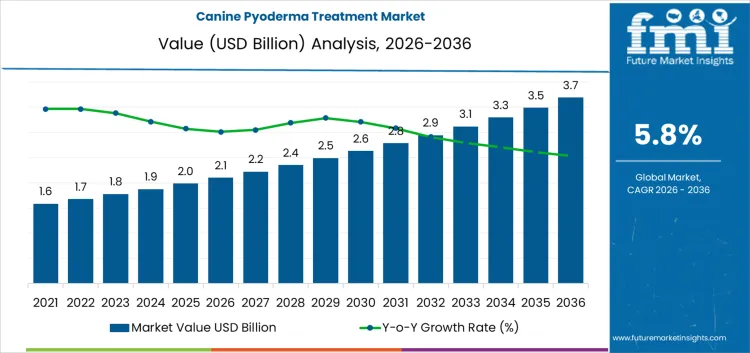
The canine pyoderma treatment market is projected to reach from USD 2.1 billion in 2026 to USD 3.7 billion by 2036, with a CAGR of 5.8%. Regional demand for pyoderma treatments shows significant concentration in North America, Europe, and parts of Asia Pacific, where awareness of pet healthcare and access to veterinary services are more established.
However, adoption patterns vary considerably, with advanced markets like the United States and Germany leading in treatment adoption, while developing regions such as India and Brazil are experiencing rapid growth as veterinary care becomes more accessible. Geographic cost advantages also play a role, as pricing for treatments can differ across regions based on local economic factors and availability of specialized care. Uneven access to veterinary dermatology services, particularly in rural or underserved regions, continues to affect the pace of market growth in certain areas.
Quick Stats for Canine Pyoderma Treatment Market
- Canine Pyoderma Treatment Market Value (2026): USD 2.1 Billion
- Canine Pyoderma Treatment Market Forecast Value (2036): USD 3.7 Billion
- Canine Pyoderma Treatment Market Forecast CAGR 2026 to 2036: 5.80%
- Leading Product Type in Canine Pyoderma Treatment Market: Systemic Antibiotics
- Leading Application in Canine Pyoderma Treatment Market: Superficial Pyoderma
- Key Growth Regions in Canine Pyoderma Treatment Market: North America, Asia Pacific, Europe
- Top Key Players in Canine Pyoderma Treatment Market: Zoetis, Elanco, Virbac, Boehringer Ingelheim, Ceva
Canine Pyoderma Treatment Market Key Takeaways
| Metric | Value |
|---|---|
| Canine Pyoderma Treatment Market Value (2026) | USD 2.1 Billion |
| Canine Pyoderma Treatment Market Forecast Value (2036) | USD 3.7 Billion |
| Canine Pyoderma Treatment Market Forecast CAGR 2026 to 2036 | 5.80% |
Why Is the Canine Pyoderma Treatment Market Growing?
The canine pyoderma treatment market is growing as veterinary care for skin infections in pets becomes a higher priority. Pyoderma, a bacterial skin infection common in dogs, often results from underlying conditions such as allergies, flea infestations, or hormonal imbalances. As awareness of these conditions rises, pet owners are seeking effective treatment options to alleviate symptoms and prevent recurrence, driving market demand.
Advancements in veterinary dermatology are supporting the growth of the canine pyoderma treatment market. New topical and systemic antibiotics, anti-inflammatory agents, and immunotherapy treatments are improving the management of pyoderma in dogs. The development of more targeted, less invasive therapies that reduce side effects and speed up recovery time has contributed to higher adoption rates among veterinary professionals and pet owners.
Increasing pet ownership, along with a rising focus on pet wellness and preventative care, is reinforcing the market’s growth. Pet owners are more willing to invest in advanced treatment options for skin conditions to improve their pets' quality of life. As the veterinary dermatology field continues to innovate, the demand for effective pyoderma treatments is expected to rise, leading to sustained market expansion over the forecast period.
What Does The Segment Overview Indicate About The Canine Pyoderma Treatment Market?
The canine pyoderma treatment market is segmented by product type and application, reflecting the variety of therapeutic options for managing this common skin infection in dogs. Systemic antibiotics lead the product segment with 38% share, as they are essential for treating bacterial infections in deeper layers of the skin. Topical antiseptics, medicated shampoos, and adjunct immunomodulators cater to specific forms of pyoderma or as complementary treatments. On the application side, superficial pyoderma accounts for 48% share, as it is the most common form of pyoderma. Other applications, including deep and recurrent pyoderma, require targeted therapies based on infection severity and recurrence rates.
Why Do Systemic Antibiotics Hold The Leading Product Share In The Canine Pyoderma Treatment Market?
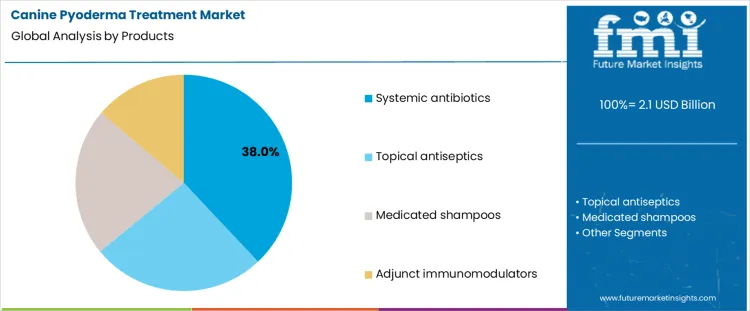
Systemic antibiotics hold the largest 38% share in the canine pyoderma treatment market due to their broad-spectrum effectiveness in treating deeper and more extensive skin infections caused by bacteria such as Staphylococcus spp. These antibiotics are critical for managing more severe cases of pyoderma, where the infection has spread beneath the surface of the skin. They are often prescribed as the first-line treatment for moderate to severe pyoderma, and their ability to target a wide range of bacterial pathogens makes them essential in providing comprehensive treatment. The increasing incidence of antibiotic-resistant strains highlights the need for new and effective antibiotic treatments, further reinforcing the dominant role of systemic antibiotics in the market.
How Does Superficial Pyoderma Drive Application Demand In The Canine Pyoderma Treatment Market?
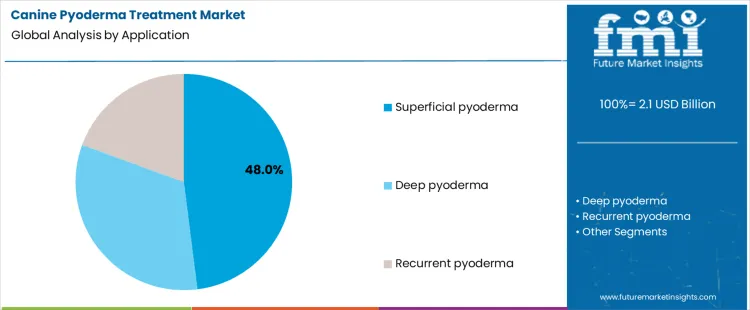
Superficial pyoderma accounts for the largest 48% share in the canine pyoderma treatment market, as it is the most common form of pyoderma affecting dogs. This condition involves infections in the upper layers of the skin, often triggered by factors such as allergies, insect bites, or environmental irritants. Superficial pyoderma is frequently treated with a combination of topical and systemic therapies, including antibiotics and antiseptics. Early diagnosis and prompt treatment are critical to preventing progression to deeper or recurrent pyoderma. As the most common form, superficial pyoderma treatment solutions, particularly systemic antibiotics and medicated shampoos, make up the majority of the treatment market, ensuring steady demand in the segment.
What Are the Key Dynamics for the Canine Pyoderma Treatment Market?
The canine pyoderma treatment market is driven by increasing pet healthcare awareness, the rise in skin infections, and the development of more targeted treatments. As pet owners become more proactive about their pets' health and well-being, the demand for effective treatments for common conditions like pyoderma continues to rise. Advancements in diagnostic tools and treatment options, including antibiotics, topical therapies, and new biologic treatments, are further fueling market growth. Challenges such as antibiotic resistance, high treatment costs, and limited access to specialized dermatological care remain obstacles to widespread adoption. As awareness increases and alternative treatments become more accessible, the market is expected to expand.
What Are the Challenges in the Canine Pyoderma Treatment Market?
The canine pyoderma treatment market faces challenges related to antibiotic resistance, misdiagnosis, and high treatment costs. Overuse of antibiotics, particularly in common veterinary practices, has led to the development of resistant strains of bacteria, making treatment more difficult and requiring alternative therapies. Misdiagnosis of pyoderma, as it shares symptoms with other dermatological conditions, can lead to improper treatment and recurrence of infections. The costs associated with ongoing treatments, especially for severe or chronic cases, can be high, creating financial barriers for pet owners. Limited availability of specialized dermatological treatments in rural or underserved areas also restricts market growth.
How Are Technological Advancements Shaping the Canine Pyoderma Treatment Market?
Technological advancements are shaping the canine pyoderma treatment market by improving diagnostic methods and treatment options. Advances in molecular diagnostics, such as PCR and culture-based methods, are enabling more accurate identification of the bacterial strains responsible for pyoderma, allowing for targeted therapy. New dermatology-specific devices, including laser therapy and photodynamic therapy, are being explored for managing chronic skin infections in dogs. The development of biologically-based treatments, such as probiotics and immunotherapy, is expanding the range of options available for long-term management. These technological advancements are improving treatment outcomes and helping veterinarians offer more effective and personalized care to pets.
What Is the Country-Wise Growth Outlook for the Canine Pyoderma Treatment Market?
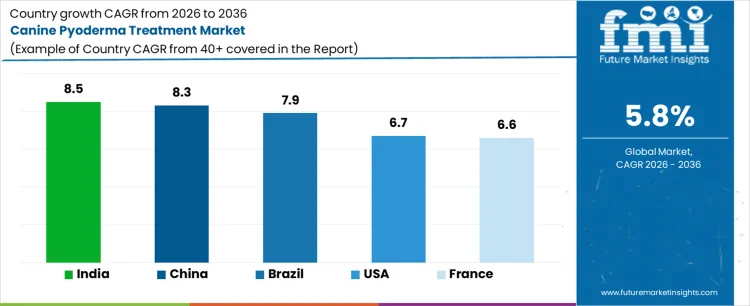
The canine pyoderma treatment market is growing steadily, driven by increasing awareness of canine skin conditions, rising pet ownership, and the demand for effective treatment solutions. India leads with a CAGR of 8.5%, driven by a rapidly expanding pet care industry, growing awareness of pet health, and increasing access to veterinary services. China follows with a CAGR of 8.3%, supported by the rising number of pet owners, improving healthcare infrastructure, and growing demand for skin care treatments in pets. Brazil shows a CAGR of 7.9%, as increasing pet ownership and awareness of pyoderma-related conditions drive market growth. The USA records a CAGR of 6.7%, fueled by an established pet care industry, a high prevalence of skin conditions, and strong adoption of veterinary treatments. France shows a CAGR of 6.6%, benefiting from its advanced veterinary care system, rising demand for pet health products, and focus on managing skin diseases in pets.
| Country | CAGR |
|---|---|
| India | 8.5% |
| China | 8.3% |
| Brazil | 7.9% |
| USA | 6.7% |
| France | 6.6% |
What Is Driving Growth in the Canine Pyoderma Treatment Market in the USA?
Demand for canine pyoderma treatment in the USA is growing at a CAGR of 6.7%, supported by the country’s strong pet healthcare market and increasing awareness of skin conditions in pets. As the pet population continues to rise, pet owners are becoming more focused on managing common dermatological issues like pyoderma. The well-established veterinary infrastructure and widespread availability of diagnostic and treatment options are contributing to the market’s growth. The increasing emphasis on early diagnosis and effective management of infections is helping to drive demand for pyoderma treatments. Moreover, the rising popularity of pet insurance, which often covers dermatological treatments, is increasing the affordability of these treatments for pet owners. With an expanding pet care market, the USA is set to experience steady growth in the canine pyoderma treatment market.
What Is Supporting Growth in the Canine Pyoderma Treatment Market in Brazil?
The canine pyoderma treatment market in Brazil is expanding at a CAGR of 7.9%, driven by increasing pet ownership, expanding access to veterinary care, and growing awareness of skin conditions in pets. Brazil’s large pet population has created a significant demand for effective treatments for conditions like pyoderma. The Brazilian pet healthcare market has seen improvements in service availability and affordability, which has contributed to increased access to dermatological treatments. Rising awareness of the importance of early diagnosis and treatment of skin conditions is also contributing to market growth. The increasing availability of specialized medications and therapies through online platforms is helping pet owners access pyoderma treatments more easily. Brazil’s strong pet care industry ensures that demand for pyoderma treatments will continue to rise, driven by greater awareness and growing healthcare access.
Why Is the Canine Pyoderma Treatment Market Growing in China?
Demand for canine pyoderma treatment in China is growing at a CAGR of 8.3%, fueled by the rapid expansion of the pet care industry, rising disposable incomes, and greater awareness of pet health issues. As pet ownership continues to increase, especially in urban areas, the demand for effective treatments for common conditions like pyoderma is also growing. China’s pet healthcare market is benefiting from improvements in veterinary services and the increasing availability of specialized dermatological treatments. The growing recognition of the importance of early intervention and comprehensive care for pets is further driving market growth. China’s expanding e-commerce market allows pet owners to easily access treatments for pyoderma, making these products more affordable and accessible. With a rapidly growing pet care sector, China is expected to continue its strong growth in the canine pyoderma treatment market.
What Is Contributing to the Growth of the Canine Pyoderma Treatment Market in India?
Sales for canine pyoderma treatment in India are growing at a CAGR of 8.5%, driven by rising pet ownership, increasing healthcare spending, and growing awareness of common skin conditions in pets. India’s pet care market is expanding rapidly, with more households adopting pets and a growing focus on their health. As awareness of skin conditions like pyoderma increases, demand for effective treatments has surged. The increasing availability of veterinary care services and specialized medications has contributed to market growth. India’s growing e-commerce market and improved access to affordable pet healthcare products ensure that pyoderma treatments are more accessible to pet owners across the country. As pet health awareness continues to rise, India’s canine pyoderma treatment market is set to experience continued growth.
Why Is the Canine Pyoderma Treatment Market Expanding in France?
The canine pyoderma treatment market in France is growing at a CAGR of 6.6%, supported by France’s strong veterinary care system and increasing awareness of pet health. France has one of the highest pet ownership rates in Europe, and as more pet owners become aware of the importance of managing skin conditions like pyoderma, demand for treatments has increased. The availability of specialized care in veterinary clinics and the growing emphasis on preventative healthcare are key drivers of this market. France’s well-developed pet care infrastructure, coupled with increasing access to online pet healthcare products, is making pyoderma treatments more accessible. With a steady increase in pet health awareness, France is expected to continue its growth in the canine pyoderma treatment market.
What Is the Competitive Landscape for the Canine Pyoderma Treatment Market?
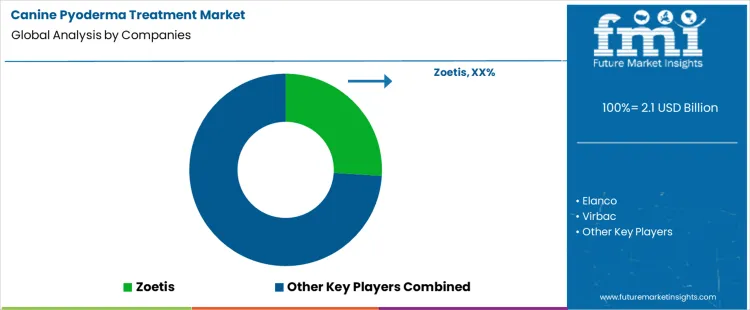
Competition in the canine pyoderma treatment market is shaped by therapeutic efficacy, formulation diversity, and veterinary confidence. Zoetis is prominent with brochures for antibacterial shampoos, topical sprays, and systemic agents. Literature highlights spectrum of activity and clinical outcome data with clear dosing guides. Elanco’s Onto-Derm and other dermatologic portfolios are presented in structured collateral emphasizing ease of use and skin barrier support. Virbac materials for topical and oral therapies focus on formulation benefits and practical application steps. Boehringer Ingelheim showcases systemic and adjunctive options in product sheets with safety profiles and usage charts. Ceva’s brochures for antimicrobial and soothing dermatologic therapies display comparative efficacy tables and breed-specific guidance. Others in the market distribute targeted flyers for niche formulations and regional treatment preferences.
Strategic positioning appears in product brochure narratives and supporting visuals. Zoetis literature is data-oriented, with case outcomes and clinical study snapshots placed alongside step-by-step dosing instructions. Elanco’s collateral is clinician-focused, with simplified treatment algorithms and client communication aids integrated into brochures. Virbac emphasizes application versatility, using diagrams and quick reference guides for topical versus systemic choices. Boehringer Ingelheim’s materials balance therapeutic breadth and safety messaging with clear reference tables. Ceva positions its offerings around efficacy and irritant minimization, with side-by-side product comparisons and texture descriptions.
Market presence is reinforced through multichannel brochure distribution, including digital catalogs, QR-enabled datasheets, and point-of-care posters. All competitors highlight clinical indications, contraindications, and expected timelines for improvement in their literature. Competitive differentiation emerges in formulation types, ease of client compliance, and adjunctive care guidance. Regional adaptations in brochures reflect disease prevalence and practice standards. Product literature is crafted to support veterinary decision making and client education, with emphasis on real-world outcomes and practical treatment pathways across the market landscape.
Key Players in Canine Pyoderma Treatment Market
- Zoetis
- Elanco
- Virbac
- Boehringer Ingelheim
- Ceva
- Others
Scope of Report
| Attributes | Description |
|---|---|
| Quantitative Unit | USD Billion |
| Products | Systemic antibiotics, Topical antiseptics, Medicated shampoos, Adjunct immunomodulators |
| Application | Superficial pyoderma, Deep pyoderma, Recurrent pyoderma |
| Regions Covered | Asia Pacific, Europe, North America, Latin America, Middle East & Africa |
| Countries Covered | China, Japan, South Korea, India, Australia & New Zealand, ASEAN, Rest of Asia Pacific, Germany, United Kingdom, France, Italy, Spain, Nordic, BENELUX, Rest of Europe, United States, Canada, Mexico, Brazil, Chile, Rest of Latin America, Kingdom of Saudi Arabia, Other GCC Countries, Turkey, South Africa, Other African Union, Rest of Middle East & Africa |
| Key Companies Profiled | Zoetis, Elanco, Virbac, Boehringer Ingelheim, Ceva |
| Additional Attributes | Market revenue by product type; adoption trends across superficial, deep, and recurrent pyoderma treatments; projected market size and CAGR for 2026-2036; competitive landscape with strategy and portfolio analysis of leading players; emerging drug innovations and market shifts in canine pyoderma treatment. |
Canine Pyoderma Treatment Market by Key Segments
Products
- Systemic antibiotics
- Topical antiseptics
- Medicated shampoos
- Adjunct immunomodulators
Application
- Superficial pyoderma
- Deep pyoderma
- Recurrent pyoderma
Region
- Asia Pacific
- China
- Japan
- South Korea
- India
- Australia & New Zealand
- ASEAN
- Rest of Asia Pacific
- Europe
- Germany
- United Kingdom
- France
- Italy
- Spain
- Nordic
- BENELUX
- Rest of Europe
- North America
- United States
- Canada
- Mexico
- Latin America
- Brazil
- Chile
- Rest of Latin America
- Middle East & Africa
- Kingdom of Saudi Arabia
- Other GCC Countries
- Turkey
- South Africa
- Other African Union
- Rest of Middle East & Africa
Bibliography
- Centers for Disease Control and Prevention. (2024). Fleas and external parasites: Pet prevention and control. USA Department of Health & Human Services.
- American Veterinary Medical Association. (2024). Parasite prevention and control in dogs and cats. AVMA.
- National Institutes of Health, MedlinePlus. (2024). Dermatitis and eczema (includes pet skin infection context). USA National Library of Medicine.
- USA Food and Drug Administration. (2024). Animal & veterinary: Device and drug regulation overview. USA Department of Health & Human Services.
- Centers for Disease Control and Prevention. (2024). One Health: Zoonotic diseases and companion animals. USA Department of Health & Human Services.
Frequently Asked Questions
How big is the canine pyoderma treatment market in 2026?
The global canine pyoderma treatment market is estimated to be valued at USD 2.1 billion in 2026.
What will be the size of canine pyoderma treatment market in 2036?
The market size for the canine pyoderma treatment market is projected to reach USD 3.7 billion by 2036.
How much will be the canine pyoderma treatment market growth between 2026 and 2036?
The canine pyoderma treatment market is expected to grow at a 5.8% CAGR between 2026 and 2036.
What are the key product types in the canine pyoderma treatment market?
The key product types in canine pyoderma treatment market are systemic antibiotics, topical antiseptics, medicated shampoos and adjunct immunomodulators.
Which application segment to contribute significant share in the canine pyoderma treatment market in 2026?
In terms of application, superficial pyoderma segment to command 48.0% share in the canine pyoderma treatment market in 2026.
Preview the report firsthand - request a free sample
Get SampleGet the brochure for pricing and purchase details.
Get PDFTable of Content
- Executive Summary
- Global Market Outlook
- Demand-side Trends
- Supply-side Trends
- Technology Roadmap Analysis
- Analysis and Recommendations
- Market Overview
- Market Coverage / Taxonomy
- Market Definition / Scope / Limitations
- Market Background
- Market Dynamics
- Drivers
- Restraints
- Opportunity
- Trends
- Scenario Forecast
- Demand in Optimistic Scenario
- Demand in Likely Scenario
- Demand in Conservative Scenario
- Opportunity Map Analysis
- Product Life Cycle Analysis
- Supply Chain Analysis
- Investment Feasibility Matrix
- Value Chain Analysis
- PESTLE and Porter’s Analysis
- Regulatory Landscape
- Regional Parent Market Outlook
- Production and Consumption Statistics
- Import and Export Statistics
- Market Dynamics
- Global Market Analysis 2021 to 2025 and Forecast, 2026 to 2036
- Historical Market Size Value (USD Million) Analysis, 2021 to 2025
- Current and Future Market Size Value (USD Million) Projections, 2026 to 2036
- Y-o-Y Growth Trend Analysis
- Absolute $ Opportunity Analysis
- Global Market Pricing Analysis 2021 to 2025 and Forecast 2026 to 2036
- Global Market Analysis 2021 to 2025 and Forecast 2026 to 2036, By Products
- Introduction / Key Findings
- Historical Market Size Value (USD Million) Analysis By Products, 2021 to 2025
- Current and Future Market Size Value (USD Million) Analysis and Forecast By Products, 2026 to 2036
- Systemic antibiotics
- Topical antiseptics
- Medicated shampoos
- Adjunct immunomodulators
- Systemic antibiotics
- Y-o-Y Growth Trend Analysis By Products, 2021 to 2025
- Absolute $ Opportunity Analysis By Products, 2026 to 2036
- Global Market Analysis 2021 to 2025 and Forecast 2026 to 2036, By Application
- Introduction / Key Findings
- Historical Market Size Value (USD Million) Analysis By Application, 2021 to 2025
- Current and Future Market Size Value (USD Million) Analysis and Forecast By Application, 2026 to 2036
- Superficial pyoderma
- Deep pyoderma
- Recurrent pyoderma
- Superficial pyoderma
- Y-o-Y Growth Trend Analysis By Application, 2021 to 2025
- Absolute $ Opportunity Analysis By Application, 2026 to 2036
- Global Market Analysis 2021 to 2025 and Forecast 2026 to 2036, By Region
- Introduction
- Historical Market Size Value (USD Million) Analysis By Region, 2021 to 2025
- Current Market Size Value (USD Million) Analysis and Forecast By Region, 2026 to 2036
- North America
- Latin America
- Western Europe
- Eastern Europe
- East Asia
- South Asia and Pacific
- Middle East & Africa
- Market Attractiveness Analysis By Region
- North America Market Analysis 2021 to 2025 and Forecast 2026 to 2036, By Country
- Historical Market Size Value (USD Million) Trend Analysis By Market Taxonomy, 2021 to 2025
- Market Size Value (USD Million) Forecast By Market Taxonomy, 2026 to 2036
- By Country
- USA
- Canada
- Mexico
- By Products
- By Application
- By Country
- Market Attractiveness Analysis
- By Country
- By Products
- By Application
- Key Takeaways
- Latin America Market Analysis 2021 to 2025 and Forecast 2026 to 2036, By Country
- Historical Market Size Value (USD Million) Trend Analysis By Market Taxonomy, 2021 to 2025
- Market Size Value (USD Million) Forecast By Market Taxonomy, 2026 to 2036
- By Country
- Brazil
- Chile
- Rest of Latin America
- By Products
- By Application
- By Country
- Market Attractiveness Analysis
- By Country
- By Products
- By Application
- Key Takeaways
- Western Europe Market Analysis 2021 to 2025 and Forecast 2026 to 2036, By Country
- Historical Market Size Value (USD Million) Trend Analysis By Market Taxonomy, 2021 to 2025
- Market Size Value (USD Million) Forecast By Market Taxonomy, 2026 to 2036
- By Country
- Germany
- UK
- Italy
- Spain
- France
- Nordic
- BENELUX
- Rest of Western Europe
- By Products
- By Application
- By Country
- Market Attractiveness Analysis
- By Country
- By Products
- By Application
- Key Takeaways
- Eastern Europe Market Analysis 2021 to 2025 and Forecast 2026 to 2036, By Country
- Historical Market Size Value (USD Million) Trend Analysis By Market Taxonomy, 2021 to 2025
- Market Size Value (USD Million) Forecast By Market Taxonomy, 2026 to 2036
- By Country
- Russia
- Poland
- Hungary
- Balkan & Baltic
- Rest of Eastern Europe
- By Products
- By Application
- By Country
- Market Attractiveness Analysis
- By Country
- By Products
- By Application
- Key Takeaways
- East Asia Market Analysis 2021 to 2025 and Forecast 2026 to 2036, By Country
- Historical Market Size Value (USD Million) Trend Analysis By Market Taxonomy, 2021 to 2025
- Market Size Value (USD Million) Forecast By Market Taxonomy, 2026 to 2036
- By Country
- China
- Japan
- South Korea
- By Products
- By Application
- By Country
- Market Attractiveness Analysis
- By Country
- By Products
- By Application
- Key Takeaways
- South Asia and Pacific Market Analysis 2021 to 2025 and Forecast 2026 to 2036, By Country
- Historical Market Size Value (USD Million) Trend Analysis By Market Taxonomy, 2021 to 2025
- Market Size Value (USD Million) Forecast By Market Taxonomy, 2026 to 2036
- By Country
- India
- ASEAN
- Australia & New Zealand
- Rest of South Asia and Pacific
- By Products
- By Application
- By Country
- Market Attractiveness Analysis
- By Country
- By Products
- By Application
- Key Takeaways
- Middle East & Africa Market Analysis 2021 to 2025 and Forecast 2026 to 2036, By Country
- Historical Market Size Value (USD Million) Trend Analysis By Market Taxonomy, 2021 to 2025
- Market Size Value (USD Million) Forecast By Market Taxonomy, 2026 to 2036
- By Country
- Kingdom of Saudi Arabia
- Other GCC Countries
- Turkiye
- South Africa
- Other African Union
- Rest of Middle East & Africa
- By Products
- By Application
- By Country
- Market Attractiveness Analysis
- By Country
- By Products
- By Application
- Key Takeaways
- Key Countries Market Analysis
- USA
- Pricing Analysis
- Market Share Analysis, 2025
- By Products
- By Application
- Canada
- Pricing Analysis
- Market Share Analysis, 2025
- By Products
- By Application
- Mexico
- Pricing Analysis
- Market Share Analysis, 2025
- By Products
- By Application
- Brazil
- Pricing Analysis
- Market Share Analysis, 2025
- By Products
- By Application
- Chile
- Pricing Analysis
- Market Share Analysis, 2025
- By Products
- By Application
- Germany
- Pricing Analysis
- Market Share Analysis, 2025
- By Products
- By Application
- UK
- Pricing Analysis
- Market Share Analysis, 2025
- By Products
- By Application
- Italy
- Pricing Analysis
- Market Share Analysis, 2025
- By Products
- By Application
- Spain
- Pricing Analysis
- Market Share Analysis, 2025
- By Products
- By Application
- France
- Pricing Analysis
- Market Share Analysis, 2025
- By Products
- By Application
- India
- Pricing Analysis
- Market Share Analysis, 2025
- By Products
- By Application
- ASEAN
- Pricing Analysis
- Market Share Analysis, 2025
- By Products
- By Application
- Australia & New Zealand
- Pricing Analysis
- Market Share Analysis, 2025
- By Products
- By Application
- China
- Pricing Analysis
- Market Share Analysis, 2025
- By Products
- By Application
- Japan
- Pricing Analysis
- Market Share Analysis, 2025
- By Products
- By Application
- South Korea
- Pricing Analysis
- Market Share Analysis, 2025
- By Products
- By Application
- Russia
- Pricing Analysis
- Market Share Analysis, 2025
- By Products
- By Application
- Poland
- Pricing Analysis
- Market Share Analysis, 2025
- By Products
- By Application
- Hungary
- Pricing Analysis
- Market Share Analysis, 2025
- By Products
- By Application
- Kingdom of Saudi Arabia
- Pricing Analysis
- Market Share Analysis, 2025
- By Products
- By Application
- Turkiye
- Pricing Analysis
- Market Share Analysis, 2025
- By Products
- By Application
- South Africa
- Pricing Analysis
- Market Share Analysis, 2025
- By Products
- By Application
- USA
- Market Structure Analysis
- Competition Dashboard
- Competition Benchmarking
- Market Share Analysis of Top Players
- By Regional
- By Products
- By Application
- Competition Analysis
- Competition Deep Dive
- Zoetis
- Overview
- Product Portfolio
- Profitability by Market Segments (Product/Age /Sales Channel/Region)
- Sales Footprint
- Strategy Overview
- Marketing Strategy
- Product Strategy
- Channel Strategy
- Elanco
- Virbac
- Boehringer Ingelheim
- Ceva
- Others
- Zoetis
- Competition Deep Dive
- Assumptions & Acronyms Used
- Research Methodology


