

- Industry Size (2026)
- USD 2.4 Bn
- Forecast (2036)
- USD 4.3 Bn
- CAGR (2026 to 2036)
- 6%
Canine Urolithiasis Treatment Market Forecast and Outlook 2026 to 2036
The canine urolithiasis treatment market is projected to grow from USD 2.4 billion in 2026 to USD 4.3 billion by 2036, reflecting a compound annual growth rate (CAGR) of 6%. The growth is driven by the increasing prevalence of urinary tract disorders, particularly bladder stones, in dogs, alongside rising awareness of pet health and advances in veterinary care. Prescription diets dominate the market, especially for treating struvite stones, which are the most common type of urolithiasis.
The market also benefits from innovations in non-invasive treatments, such as stone dissolution drugs and minimally invasive surgical techniques. Key players like Hill’s Pet Nutrition and Royal Canin are capitalizing on their expertise in specialized treatments for managing urolithiasis. Regional growth is significant in India, China, and Brazil, where increasing pet ownership and expanding veterinary care infrastructure contribute to the rising demand for urolithiasis treatments.
Quick Stats for Canine Urolithiasis Treatment Market
- Canine Urolithiasis Treatment Market Value (2026): USD 2.4 Billion
- Canine Urolithiasis Treatment Market Forecast Value (2036): USD 4.3 Billion
- Canine Urolithiasis Treatment Market Forecast CAGR 2026 to 2036: 6%
- Leading Product Type in Canine Urolithiasis Treatment Market: Prescription Diets
- Leading Application in Canine Urolithiasis Treatment Market: Struvite Stones
- Key Growth Regions in Canine Urolithiasis Treatment Market: India, China, Brazil, North America
- Top Key Players in Canine Urolithiasis Treatment Market: Hill’s Pet Nutrition, Royal Canin, Purina, Zoetis, Virbac
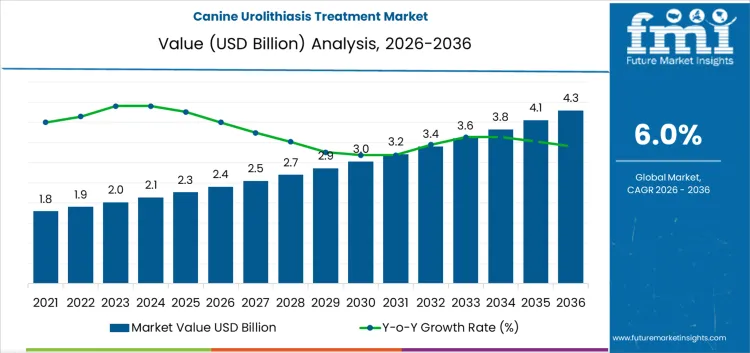
Metric
| Metric | Value |
|---|---|
| Canine Urolithiasis Treatment Market Value (2026) | USD 2.4 Billion |
| Canine Urolithiasis Treatment Market Forecast Value (2036) | USD 4.3 Billion |
| Canine Urolithiasis Treatment Market Forecast CAGR 2026 to 2036 | 6% |
Why Is the Canine Urolithiasis Treatment Market Growing?
The canine urolithiasis treatment market is experiencing steady growth, primarily due to the increasing incidence of urinary tract disorders, specifically urolithiasis, among dogs. This condition, which involves the formation of bladder stones, can lead to discomfort, urinary blockages, and even life-threatening complications if untreated. As pet ownership continues to rise and pet owners become more aware of health conditions affecting their pets, there is greater demand for effective treatment solutions. Advances in veterinary medicine have made it easier to diagnose and treat urolithiasis, leading to improved management and outcomes for affected dogs.
Innovations in treatment methods are driving the market’s expansion. The development of more effective medications, such as those that dissolve urinary stones, as well as the adoption of minimally invasive surgical procedures, has made treatment more accessible and less traumatic for pets. The increased availability of advanced diagnostic tools, such as ultrasound and urine analysis, allows veterinarians to detect and address urolithiasis earlier, further promoting the demand for timely interventions. Additionally, growing awareness of pet health and the increasing focus on preventive care contribute to the rising demand for treatments. As pet owners seek ways to improve the quality of life for their pets, the market for canine urolithiasis treatment is expected to continue expanding over the forecast period.
What Does The Segment Overview Indicate About The Canine Urolithiasis Treatment Market?
The canine urolithiasis treatment market is segmented by product type and application, highlighting the diversity of treatment options available for different types of bladder stones in dogs. Prescription diets lead the product segment with a 38% share, as they are specifically formulated to dissolve certain types of stones, such as struvite stones, and help prevent recurrence. Urinary alkalinizing agents, which are often used in combination with other treatments, target the chemical balance in the urine to prevent the formation of stones. Surgical intervention devices and stone dissolution drugs cater to more severe cases, where stones need to be physically removed or dissolved for immediate relief. On the application side, struvite stones dominate with a 42% share, as they are the most common type of urolithiasis in dogs.
Why Do Prescription Diets Hold the Leading Product Share in the Canine Urolithiasis Treatment Market?
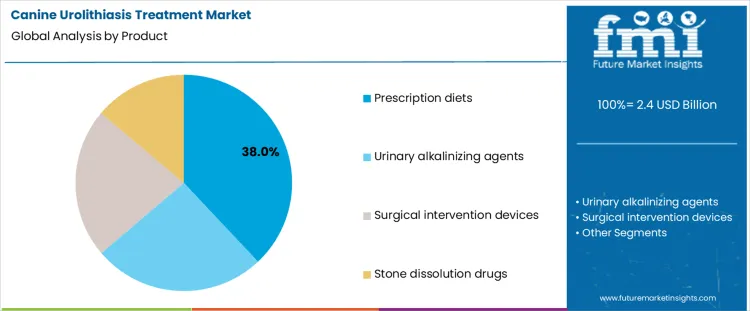
Prescription diets hold the largest 38% share in the canine urolithiasis treatment market due to their proven effectiveness in both dissolving and preventing bladder stones in dogs. These specially formulated diets help modify the pH of the urine, which can help dissolve struvite stones, the most common type of bladder stone in dogs. Prescription diets are non-invasive and easy for pet owners to administer, making them a popular first-line treatment option. Their ability to provide a targeted, long-term solution for managing urolithiasis while preventing recurrence makes them the preferred choice among veterinarians and pet owners alike. As the focus on preventive pet healthcare increases, prescription diets continue to dominate the treatment landscape.
How Does the Struvite Stones Application Drive Demand in the Canine Urolithiasis Treatment Market?
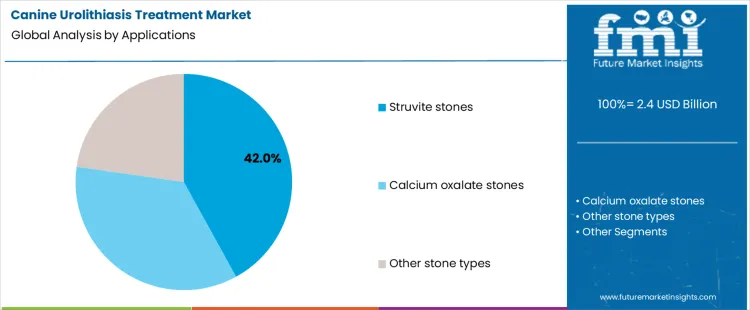
Struvite stones lead the application segment with a 42% share in the canine urolithiasis treatment market, reflecting the high prevalence of these stones in dogs. Struvite urolithiasis is commonly associated with urinary tract infections, and treatment typically involves a combination of prescription diets, urinary alkalinizing agents, and, in some cases, surgical intervention. Since struvite stones are often susceptible to dissolution through dietary modifications, prescription diets specifically designed to dissolve these stones are in high demand. The treatment of struvite stones also involves preventing recurrence through diet and medication, which further supports ongoing demand. As veterinarians focus on the early detection and non-invasive management of struvite stones, the demand for effective treatment options continues to rise.
What Are the Key Dynamics for the Canine Urolithiasis Treatment Market?
The canine urolithiasis treatment market is primarily driven by the increasing prevalence of urinary tract disorders in dogs, particularly urolithiasis, which is commonly caused by bladder stones. The rising awareness among pet owners regarding the health and well-being of their pets is leading to a higher demand for effective treatment options. As pet ownership continues to grow and as pets live longer, there is a greater emphasis on preventive care, which drives the demand for treatments like prescription diets, urinary alkalinizing agents, and stone dissolution drugs. Advancements in veterinary care and more efficient treatment options, such as minimally invasive surgical techniques and improved diagnostic tools, are contributing to market growth. The rise of pet healthcare awareness and the increasing availability of veterinary services across regions further support the demand for canine urolithiasis treatment.
What Are the Key Challenges in the Canine Urolithiasis Treatment Market?
The canine urolithiasis treatment market faces several challenges, such as the high cost of treatment, limited access to specialized care, and the potential recurrence of bladder stones in pets. The cost of prescription diets, medications, and surgical interventions can be prohibitive for some pet owners, particularly in developing regions, limiting access to care. Additionally, while medical advancements have improved treatment outcomes, there is still a lack of awareness among pet owners about the importance of early diagnosis and prevention, which can impact the effectiveness of treatment. Another challenge is the risk of recurrence of bladder stones after treatment, requiring ongoing management and monitoring, which can be stressful and costly for pet owners.
How Are Technological Innovations Shaping the Canine Urolithiasis Treatment Market?
Technological innovations are playing an important role in shaping the canine urolithiasis treatment market, particularly in the areas of diagnostics and treatment delivery. Advancements in non-invasive diagnostic tools, such as advanced imaging techniques and urine analysis tests, are helping veterinarians identify and monitor the condition more effectively. These innovations are allowing for earlier detection, which is crucial for preventing severe complications and enabling targeted treatment. Additionally, the development of more efficient and less invasive surgical techniques, such as laser lithotripsy, is improving treatment outcomes and reducing recovery time for dogs. Furthermore, advancements in drug formulations and the introduction of medications that specifically target stone dissolution are enhancing treatment efficacy. These technological improvements are increasing the accessibility and effectiveness of treatment options, driving the market forward.
What Is the Country-Wise Growth Outlook for the Canine Urolithiasis Treatment Market?
The canine urolithiasis treatment market is experiencing growth across various regions, with significant contributions from countries such as India, China, and Brazil. India leads with a CAGR of 8.4%, driven by rising pet ownership, increasing awareness of pet health, and expanding access to veterinary services. As urbanization increases and disposable incomes rise, pet care, including treatment for conditions like urolithiasis, is becoming more accessible. China follows with a CAGR of 8.2%, supported by rapid urbanization, rising disposable incomes, and a growing pet care industry. With the expansion of pet healthcare infrastructure and increasing knowledge of preventive pet care, demand for effective urolithiasis treatment options is increasing. Brazil shows a solid CAGR of 7.8%, driven by growing pet ownership and rising awareness about pet health. The USA and France are growing at more moderate rates of 6.6% and 6.5%, respectively, due to their well-established pet care markets, where demand for effective urolithiasis treatments is supported by a high focus on preventive care and improving quality of life for pets.
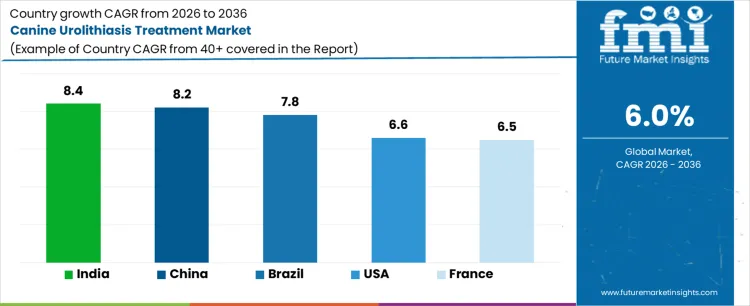
| Country | CAGR (%) |
|---|---|
| India | 8.4% |
| China | 8.2% |
| Brazil | 7.8% |
| USA | 6.6% |
| France | 6.5% |
Why Is India Leading in the Canine Urolithiasis Treatment Market?
India is leading the canine urolithiasis treatment market with a CAGR of 8.4%, driven by increasing pet ownership, rising disposable incomes, and growing awareness about pet health. The country’s expanding middle class and urbanization have led to a higher number of pet adoptions, particularly in cities, increasing the demand for veterinary care and specialized treatments like urolithiasis management. As pet owners become more proactive in addressing health conditions in their pets, preventive care, including dietary solutions and treatment for bladder stones, is gaining traction. India’s evolving pet care infrastructure, with more veterinary clinics and online pet care services, has improved access to treatment options. The rise of e-commerce platforms has made prescription diets and medications for urolithiasis more accessible to a wider population. As the Indian pet care market continues to grow, so does the demand for effective and affordable urolithiasis treatments, making India a key player in this sector.
Why Is China Leading in the Canine Urolithiasis Treatment Market?
China is experiencing rapid growth in the canine urolithiasis treatment market with a CAGR of 8.2%, driven by increasing pet ownership, rising disposable incomes, and growing awareness about pet health. As the pet population in urban areas expands, pet owners are becoming more proactive about seeking medical care for their pets, including addressing conditions like urolithiasis. The growing middle class in China has led to higher spending on pet healthcare, making advanced treatment options more accessible. Additionally, the development of veterinary services, along with an expanding pet care retail market, has made it easier for pet owners to access products like prescription diets and medications for managing urinary health. Increasingly, Chinese pet owners are focusing on preventing urinary tract disorders through specialized diets and medications, contributing to the demand for urolithiasis treatments. With the rise of e-commerce platforms and improved accessibility to veterinary services, the market for canine urolithiasis treatment in China is poised for sustained growth.
What Is Contributing to the Growth of the Canine Urolithiasis Treatment Market in Brazil?
Brazil is seeing significant growth in the canine urolithiasis treatment market, with a CAGR of 7.8%. The expansion is largely driven by rising pet ownership, increasing awareness of pet health, and a growing focus on treating and preventing conditions like urolithiasis. As Brazilian pet owners become more invested in their pets' well-being, demand for specialized treatments such as prescription diets and stone dissolution drugs has surged. The country’s growing middle class and urbanization contribute to increased disposable income, leading to higher spending on pet healthcare. Brazil’s growing veterinary care sector, coupled with the availability of online pet care products, has made treatments for urolithiasis more accessible. The increasing awareness of urinary tract issues and the importance of timely treatment has also contributed to this market’s growth. As Brazilian pet owners seek to improve the health of their pets, demand for urolithiasis treatment is expected to continue rising, driving the expansion of the market.
What Is Supporting Growth in the Canine Urolithiasis Treatment Market in the USA?
The USA’s canine urolithiasis treatment market is growing at a CAGR of 6.6%, supported by its well-established pet care industry, a growing focus on pet health, and an increasing emphasis on preventive care. The country’s large and affluent pet-owning population is contributing to a higher demand for specialized treatments like prescription diets and stone dissolution drugs for managing conditions such as urolithiasis. Veterinary clinics are focusing on early diagnosis and preventive treatments to avoid more invasive procedures, thus boosting the demand for non-invasive urolithiasis management options. The presence of a robust veterinary infrastructure, widespread access to pet insurance, and a high level of awareness among pet owners regarding the health of their pets are driving the market’s growth. With more pet owners prioritizing their pets’ health and convenience, the demand for effective, convenient treatment options for urolithiasis is expected to continue rising, contributing to the market's expansion in the USA.
What Is Supporting Growth in France’s Canine Urolithiasis Treatment Market?
France is witnessing steady growth in the canine urolithiasis treatment market with a CAGR of 6.5%, driven by a high focus on pet health, increasing pet ownership, and rising awareness of urinary tract issues in dogs. France’s established veterinary infrastructure ensures that pet owners have access to high-quality treatment options, including prescription diets and medications for managing urolithiasis. The growing trend of treating pets as family members has led to increased spending on pet healthcare, with many pet owners seeking specialized treatments to improve their pets' quality of life. With an increasing emphasis on preventive healthcare, French pet owners are adopting more proactive approaches to managing urinary health, including dietary modifications and regular veterinary visits. Additionally, the convenience of accessing pet healthcare products through both physical retail stores and e-commerce platforms has made urolithiasis treatment more readily available to a broader population. As pet care awareness continues to grow, France’s market for canine urolithiasis treatment is expected to expand steadily.
How Are Leading Companies Competing and Differentiating in the Canine Urolithiasis Treatment Market?
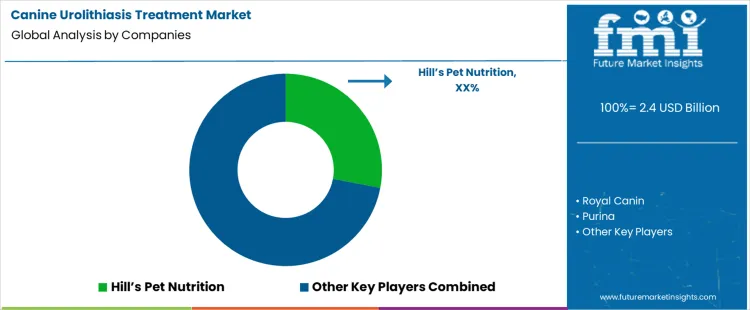
Competition in the canine urolithiasis treatment market is fueled by product innovation, clinical efficacy, and strong brand reputations. Hill’s Pet Nutrition stands out with its scientifically backed prescription diets that target specific types of bladder stones, such as struvite and calcium oxalate, helping to dissolve stones and prevent their recurrence. The company’s focus on offering comprehensive, multi-stage nutritional solutions tailored for dogs with urolithiasis gives it a competitive edge in promoting long-term urinary health. Additionally, Hill’s Pet Nutrition maintains strong relationships with veterinarians, which solidifies its position in the market.
Royal Canin differentiates itself by offering specialized prescription diets developed through extensive research. The company provides targeted solutions designed to manage different types of urolithiasis, focusing on the prevention of stone formation and the promotion of healthy urine pH levels. Their emphasis on veterinary recommendations and advanced clinical science positions Royal Canin as a trusted leader in the pet healthcare space. Royal Canin also invests heavily in educating veterinarians about the benefits of its formulations, further enhancing its influence in the market.
Purina, Zoetis, and Virbac are also key players offering a range of treatments for urolithiasis. Purina focuses on urinary health and hydration, developing diets that support kidney function and prevent stone formation. Zoetis and Virbac specialize in pharmaceuticals, providing urinary alkalinizing agents and stone dissolution drugs to complement dietary treatments. These companies compete by offering innovative, effective, and tailored solutions to improve the management and prevention of urolithiasis. Their diverse product portfolios and emphasis on veterinary partnerships strengthen their market presence, differentiating them in the competitive landscape.
Key Players in Canine Urolithiasis Treatment Market
- Hill’s Pet Nutrition
- Royal Canin
- Purina
- Zoetis
- Virbac
- Others
Scope of Report
| Attribute | Description |
|---|---|
| Quantitative Unit | USD Billion |
| Product | Prescription Diets, Urinary Alkalinizing Agents, Surgical Intervention Devices, Stone Dissolutioan Drugs |
| Applications | Struvite Stones, Calcium Oxalate Stones, Other Stone Types |
| Regions Covered | Asia Pacific, Europe, North America, Latin America, Middle East & Africa |
| Countries Covered | China, Japan, South Korea, India, Australia & New Zealand, ASEAN, Rest of Asia Pacific, Germany, United Kingdom, France, Italy, Spain, Nordic, BENELUX, United States, Canada, Mexico, Brazil, Chile, Rest of Latin America, Kingdom of Saudi Arabia, Other GCC Countries, Turkey, South Africa, Other African Union |
| Key Companies Profiled | Hill’s Pet Nutrition, Royal Canin, Purina, Zoetis, Virbac, Others |
| Additional Attributes | Market revenue by product and application; growth projections for 2026-2036; competitive analysis and market share of key players; technological advancements in canine urolithiasis treatment. |
Canine Urolithiasis Treatment Market by Key Segments
Product
- Prescription diets
- Urinary alkalinizing agents
- Surgical intervention devices
- Stone dissolution drugs
Applications
- Struvite stones
- Calcium oxalate stones
- Other stone types
Region
- Asia Pacific
- China
- Japan
- South Korea
- India
- Australia & New Zealand
- ASEAN
- Rest of Asia Pacific
- Europe
- Germany
- United Kingdom
- France
- Italy
- Spain
- Nordic
- BENELUX
- Rest of Europe
- North America
- United States
- Canada
- Mexico
- Latin America
- Brazil
- Chile
- Rest of Latin America
- Middle East & Africa
- Kingdom of Saudi Arabia
- Other GCC Countries
- Turkey
- South Africa
- Other African Union
Bibliography
- Cornell University College of Veterinary Medicine. (2024). Urolithiasis (bladder stones) in dogs. Cornell University.
- American Veterinary Medical Association. (2024). Lower urinary tract disorders in dogs. AVMA.
- International Renal Interest Society. (2024). Canine urolithiasis (struvite and oxalate) management guidelines. IRIS.
Frequently Asked Questions
How big is the canine urolithiasis treatment market in 2026?
The global canine urolithiasis treatment market is estimated to be valued at USD 2.4 billion in 2026.
What will be the size of canine urolithiasis treatment market in 2036?
The market size for the canine urolithiasis treatment market is projected to reach USD 4.3 billion by 2036.
How much will be the canine urolithiasis treatment market growth between 2026 and 2036?
The canine urolithiasis treatment market is expected to grow at a 6.0% CAGR between 2026 and 2036.
What are the key product types in the canine urolithiasis treatment market?
The key product types in canine urolithiasis treatment market are prescription diets, urinary alkalinizing agents, surgical intervention devices and stone dissolution drugs.
Which applications segment to contribute significant share in the canine urolithiasis treatment market in 2026?
In terms of applications, struvite stones segment to command 42.0% share in the canine urolithiasis treatment market in 2026.
Preview the report firsthand - request a free sample
Get SampleGet the brochure for pricing and purchase details.
Get PDFTable of Content
- Executive Summary
- Global Market Outlook
- Demand-side Trends
- Supply-side Trends
- Technology Roadmap Analysis
- Analysis and Recommendations
- Market Overview
- Market Coverage / Taxonomy
- Market Definition / Scope / Limitations
- Market Background
- Market Dynamics
- Drivers
- Restraints
- Opportunity
- Trends
- Scenario Forecast
- Demand in Optimistic Scenario
- Demand in Likely Scenario
- Demand in Conservative Scenario
- Opportunity Map Analysis
- Product Life Cycle Analysis
- Supply Chain Analysis
- Investment Feasibility Matrix
- Value Chain Analysis
- PESTLE and Porter’s Analysis
- Regulatory Landscape
- Regional Parent Market Outlook
- Production and Consumption Statistics
- Import and Export Statistics
- Market Dynamics
- Global Market Analysis 2021 to 2025 and Forecast, 2026 to 2036
- Historical Market Size Value (USD Million) Analysis, 2021 to 2025
- Current and Future Market Size Value (USD Million) Projections, 2026 to 2036
- Y-o-Y Growth Trend Analysis
- Absolute $ Opportunity Analysis
- Global Market Pricing Analysis 2021 to 2025 and Forecast 2026 to 2036
- Global Market Analysis 2021 to 2025 and Forecast 2026 to 2036, By Product
- Introduction / Key Findings
- Historical Market Size Value (USD Million) Analysis By Product, 2021 to 2025
- Current and Future Market Size Value (USD Million) Analysis and Forecast By Product, 2026 to 2036
- Prescription diets
- Urinary alkalinizing agents
- Surgical intervention devices
- Stone dissolution drugs
- Prescription diets
- Y-o-Y Growth Trend Analysis By Product, 2021 to 2025
- Absolute $ Opportunity Analysis By Product, 2026 to 2036
- Global Market Analysis 2021 to 2025 and Forecast 2026 to 2036, By Applications
- Introduction / Key Findings
- Historical Market Size Value (USD Million) Analysis By Applications, 2021 to 2025
- Current and Future Market Size Value (USD Million) Analysis and Forecast By Applications, 2026 to 2036
- Struvite stones
- Calcium oxalate stones
- Other stone types
- Struvite stones
- Y-o-Y Growth Trend Analysis By Applications, 2021 to 2025
- Absolute $ Opportunity Analysis By Applications, 2026 to 2036
- Global Market Analysis 2021 to 2025 and Forecast 2026 to 2036, By Region
- Introduction
- Historical Market Size Value (USD Million) Analysis By Region, 2021 to 2025
- Current Market Size Value (USD Million) Analysis and Forecast By Region, 2026 to 2036
- North America
- Latin America
- Western Europe
- Eastern Europe
- East Asia
- South Asia and Pacific
- Middle East & Africa
- Market Attractiveness Analysis By Region
- North America Market Analysis 2021 to 2025 and Forecast 2026 to 2036, By Country
- Historical Market Size Value (USD Million) Trend Analysis By Market Taxonomy, 2021 to 2025
- Market Size Value (USD Million) Forecast By Market Taxonomy, 2026 to 2036
- By Country
- USA
- Canada
- Mexico
- By Product
- By Applications
- By Country
- Market Attractiveness Analysis
- By Country
- By Product
- By Applications
- Key Takeaways
- Latin America Market Analysis 2021 to 2025 and Forecast 2026 to 2036, By Country
- Historical Market Size Value (USD Million) Trend Analysis By Market Taxonomy, 2021 to 2025
- Market Size Value (USD Million) Forecast By Market Taxonomy, 2026 to 2036
- By Country
- Brazil
- Chile
- Rest of Latin America
- By Product
- By Applications
- By Country
- Market Attractiveness Analysis
- By Country
- By Product
- By Applications
- Key Takeaways
- Western Europe Market Analysis 2021 to 2025 and Forecast 2026 to 2036, By Country
- Historical Market Size Value (USD Million) Trend Analysis By Market Taxonomy, 2021 to 2025
- Market Size Value (USD Million) Forecast By Market Taxonomy, 2026 to 2036
- By Country
- Germany
- UK
- Italy
- Spain
- France
- Nordic
- BENELUX
- Rest of Western Europe
- By Product
- By Applications
- By Country
- Market Attractiveness Analysis
- By Country
- By Product
- By Applications
- Key Takeaways
- Eastern Europe Market Analysis 2021 to 2025 and Forecast 2026 to 2036, By Country
- Historical Market Size Value (USD Million) Trend Analysis By Market Taxonomy, 2021 to 2025
- Market Size Value (USD Million) Forecast By Market Taxonomy, 2026 to 2036
- By Country
- Russia
- Poland
- Hungary
- Balkan & Baltic
- Rest of Eastern Europe
- By Product
- By Applications
- By Country
- Market Attractiveness Analysis
- By Country
- By Product
- By Applications
- Key Takeaways
- East Asia Market Analysis 2021 to 2025 and Forecast 2026 to 2036, By Country
- Historical Market Size Value (USD Million) Trend Analysis By Market Taxonomy, 2021 to 2025
- Market Size Value (USD Million) Forecast By Market Taxonomy, 2026 to 2036
- By Country
- China
- Japan
- South Korea
- By Product
- By Applications
- By Country
- Market Attractiveness Analysis
- By Country
- By Product
- By Applications
- Key Takeaways
- South Asia and Pacific Market Analysis 2021 to 2025 and Forecast 2026 to 2036, By Country
- Historical Market Size Value (USD Million) Trend Analysis By Market Taxonomy, 2021 to 2025
- Market Size Value (USD Million) Forecast By Market Taxonomy, 2026 to 2036
- By Country
- India
- ASEAN
- Australia & New Zealand
- Rest of South Asia and Pacific
- By Product
- By Applications
- By Country
- Market Attractiveness Analysis
- By Country
- By Product
- By Applications
- Key Takeaways
- Middle East & Africa Market Analysis 2021 to 2025 and Forecast 2026 to 2036, By Country
- Historical Market Size Value (USD Million) Trend Analysis By Market Taxonomy, 2021 to 2025
- Market Size Value (USD Million) Forecast By Market Taxonomy, 2026 to 2036
- By Country
- Kingdom of Saudi Arabia
- Other GCC Countries
- Turkiye
- South Africa
- Other African Union
- Rest of Middle East & Africa
- By Product
- By Applications
- By Country
- Market Attractiveness Analysis
- By Country
- By Product
- By Applications
- Key Takeaways
- Key Countries Market Analysis
- USA
- Pricing Analysis
- Market Share Analysis, 2025
- By Product
- By Applications
- Canada
- Pricing Analysis
- Market Share Analysis, 2025
- By Product
- By Applications
- Mexico
- Pricing Analysis
- Market Share Analysis, 2025
- By Product
- By Applications
- Brazil
- Pricing Analysis
- Market Share Analysis, 2025
- By Product
- By Applications
- Chile
- Pricing Analysis
- Market Share Analysis, 2025
- By Product
- By Applications
- Germany
- Pricing Analysis
- Market Share Analysis, 2025
- By Product
- By Applications
- UK
- Pricing Analysis
- Market Share Analysis, 2025
- By Product
- By Applications
- Italy
- Pricing Analysis
- Market Share Analysis, 2025
- By Product
- By Applications
- Spain
- Pricing Analysis
- Market Share Analysis, 2025
- By Product
- By Applications
- France
- Pricing Analysis
- Market Share Analysis, 2025
- By Product
- By Applications
- India
- Pricing Analysis
- Market Share Analysis, 2025
- By Product
- By Applications
- ASEAN
- Pricing Analysis
- Market Share Analysis, 2025
- By Product
- By Applications
- Australia & New Zealand
- Pricing Analysis
- Market Share Analysis, 2025
- By Product
- By Applications
- China
- Pricing Analysis
- Market Share Analysis, 2025
- By Product
- By Applications
- Japan
- Pricing Analysis
- Market Share Analysis, 2025
- By Product
- By Applications
- South Korea
- Pricing Analysis
- Market Share Analysis, 2025
- By Product
- By Applications
- Russia
- Pricing Analysis
- Market Share Analysis, 2025
- By Product
- By Applications
- Poland
- Pricing Analysis
- Market Share Analysis, 2025
- By Product
- By Applications
- Hungary
- Pricing Analysis
- Market Share Analysis, 2025
- By Product
- By Applications
- Kingdom of Saudi Arabia
- Pricing Analysis
- Market Share Analysis, 2025
- By Product
- By Applications
- Turkiye
- Pricing Analysis
- Market Share Analysis, 2025
- By Product
- By Applications
- South Africa
- Pricing Analysis
- Market Share Analysis, 2025
- By Product
- By Applications
- USA
- Market Structure Analysis
- Competition Dashboard
- Competition Benchmarking
- Market Share Analysis of Top Players
- By Regional
- By Product
- By Applications
- Competition Analysis
- Competition Deep Dive
- Hill’s Pet Nutrition
- Overview
- Product Portfolio
- Profitability by Market Segments (Product/Age /Sales Channel/Region)
- Sales Footprint
- Strategy Overview
- Marketing Strategy
- Product Strategy
- Channel Strategy
- Royal Canin
- Purina
- Zoetis
- Virbac
- Others
- Hill’s Pet Nutrition
- Competition Deep Dive
- Assumptions & Acronyms Used
- Research Methodology


