

- Industry Size (2026)
- USD 1056.4 Mn
- Forecast (2036)
- USD 2238.8 Mn
- CAGR (2026 to 2036)
- 7.8%
Canine Fungal Infection Treatment Market Forecast and Outlook 2026 to 2036
The canine fungal infection treatment market is expected to be valued at USD 1,056.4 million in 2026 and reach USD 2,238.8 million by 2036, at a 7.8% CAGR. Value formation is closely linked to routine veterinary management of dermatophytosis and opportunistic yeast infections that require confirmed diagnosis and extended treatment courses rather than short-term intervention. Superficial fungal infections account for a large proportion of treated cases due to high visibility, transmission risk, and recurrence potential, while systemic mycoses contribute lower volumes but longer therapy duration. Demand intensity reflects environmental exposure, climate conditions, and household pet density, which collectively influence infection frequency and reinfection cycles. Treatment economics are shaped by repeated prescribing, follow-up visits, and hygiene management rather than one-time curative outcomes.
Treatment adoption follows a clinically conservative pattern where veterinarians prioritize broad-spectrum efficacy, safety margins, and predictable dosing over rapid innovation. Product selection favors agents with established performance across common fungal species, supporting consistent use in primary care clinics. Market expansion depends on diagnostic access, owner adherence to full treatment duration, and availability of formulations suitable for both topical and systemic administration. Distribution remains largely clinic-centered, reinforcing repeat purchasing through prescription refills and monitored follow-up. Regional progression aligns with veterinary service penetration and preventive dermatology practices instead of episodic disease outbreaks. The value growth reflects steady scaling of treated canine populations, prolonged therapy timelines, and integration of antifungal management into standard companion animal care protocols.
Quick Stats for Canine Fungal Infection Treatment Market
- Canine Fungal Infection Treatment Market Value (2026): USD 1,056.4 million
- Canine Fungal Infection Treatment Market Forecast Value (2036): USD 2,238.8 million
- Canine Fungal Infection Treatment Market Forecast CAGR 2026 to 2036: 7.8%
- Leading Product Type by Demand Share: Azole antifungals
- Fastest-Growing Countries: India, China, Brazil, USA, UK
- Top Players in Global Demand: Zoetis, Elanco, Virbac, Boehringer Ingelheim, Dechra
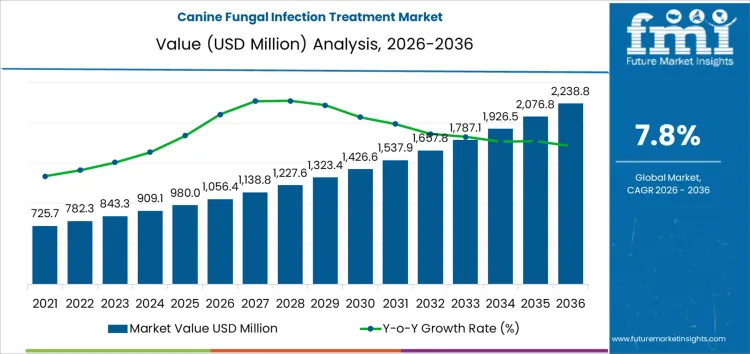
Canine Fungal Infection Treatment Market Key Takeaways
| Metric | Value |
|---|---|
| Market Value (2026) | USD 1,056.4 million |
| Market Forecast Value (2036) | USD 2,238.8 million |
| Forecast CAGR 2026 to 2036 | 7.8% |
Why is the Demand for Canine Fungal Infection Treatment Growing?
Demand for canine fungal infection treatments is increasing as veterinary practices encounter a broader range of dermatologic and systemic mycoses that affect companion dogs across diverse climates and living conditions. Canine fungal infections such as ringworm, blastomycosis, and histoplasmosis can compromise skin integrity, induce pruritus, and lead to systemic illness if not managed promptly. Veterinarians specify antifungal agents with proven efficacy against target pathogens and acceptable safety profiles for long-term use in dogs because pharmacologic tolerance and reduced adverse effects influence treatment adherence and clinical outcomes.
Procurement teams in clinics and specialty hospitals assess formulation stability, spectrum of antifungal activity, and ease of dosing to support predictable therapeutic intervention across outpatient and inpatient settings. Diagnostic improvements in fungal identification through skin cytology, culture techniques, and molecular testing facilitate earlier detection and tailored therapy selection, reinforcing use of evidence-guided antifungal regimens.
Pet owners are increasingly proactive in seeking veterinary care for dermatologic and systemic health issues, which elevates presentation rates for fungal conditions that were once underdiagnosed. Growth in indoor-outdoor pet lifestyles and variable environmental exposures contributes to a diverse caseload of fungal presentations.
Veterinary practices invest in continuing education to refine treatment protocols that balance efficacy with minimization of hepatotoxicity and drug interactions, especially in patients with concurrent disease. Retail and clinical distribution channels respond by stocking a range of topical and systemic antifungal products designed specifically for canine use, which supports timely treatment initiation. These veterinary-specific clinical and operational factors are contributing to sustained demand growth in the canine fungal infection treatment market.
How Is the Canine Fungal Infection Treatment Industry Segmented by Product Type, Application, and End User?
Demand for canine fungal infection treatments is shaped by dermatological disease prevalence, increased companion animal diagnostics, and emphasis on early therapeutic intervention. Veterinary care pathways focus on eliminating fungal pathogens, preventing recurrence, and limiting transmission within households. Adoption aligns with routine skin examinations, breed-related susceptibility awareness, and availability of prescription antifungals. Treatment selection considers pathogen type, treatment duration, and animal tolerance. Segmentation clarifies how antifungal class, infection presentation, and care delivery setting influence prescribing intensity, procurement patterns, and continuity of treatment in veterinary practice.
Which Product Type Holds the Largest Share in Canine Fungal Infection Treatment?
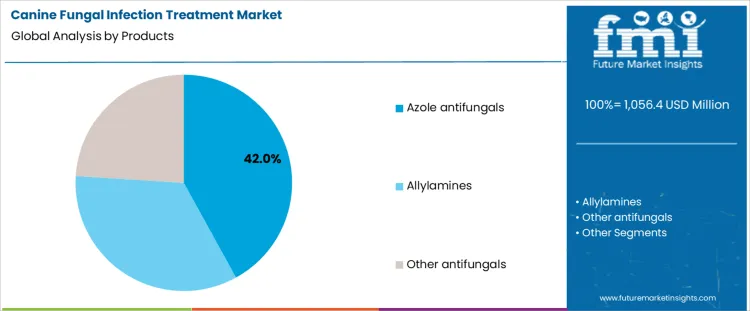
Azole antifungals account for 42.0%, representing the largest share among product categories used in canine fungal infection management. Broad-spectrum activity supports effectiveness against common dermatophytes and yeast species. Topical and systemic formulations allow flexibility across mild and moderate infections. Established dosing protocols and familiarity among veterinarians support routine prescribing. Allylamines follow with targeted action against dermatophytes, often applied in localized infections. Other antifungals address resistant organisms or systemic involvement. Product segmentation reflects preference for versatile agents offering broad coverage, predictable response, and suitability for both topical and systemic administration.
Key Points:
- Azoles provide broad-spectrum antifungal coverage.
- Formulation flexibility supports varied infection severity.
- Other agents address targeted or resistant infections.
Why Does Dermatophytosis Represent the Largest Application Segment?
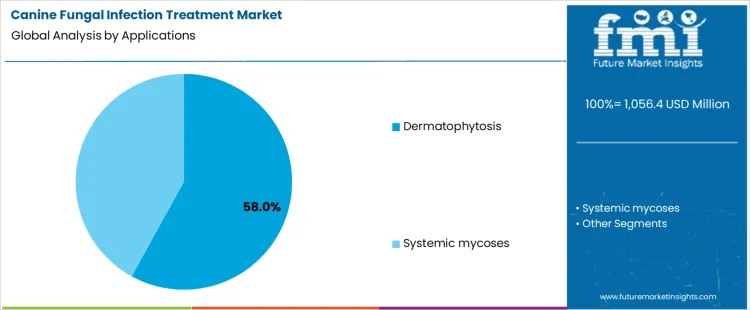
Dermatophytosis accounts for 58.0%, representing the largest share among clinical applications. Superficial fungal infections of the skin, hair, and claws occur frequently in dogs. Close contact with humans and other animals increases detection and treatment urgency. Visible lesions prompt earlier veterinary consultation. Systemic mycoses follow with lower incidence and more complex diagnostic requirements. These infections require prolonged therapy and monitoring. Application segmentation highlights concentration where prevalence, visibility of symptoms, and transmission concerns drive higher treatment volumes for dermatophytosis in veterinary settings.
Key Points:
- Superficial infections are commonly diagnosed.
- Visible symptoms prompt early treatment initiation.
- Systemic infections involve fewer cases with higher complexity.
Which End User Accounts for the Highest Share of Treatment Delivery?
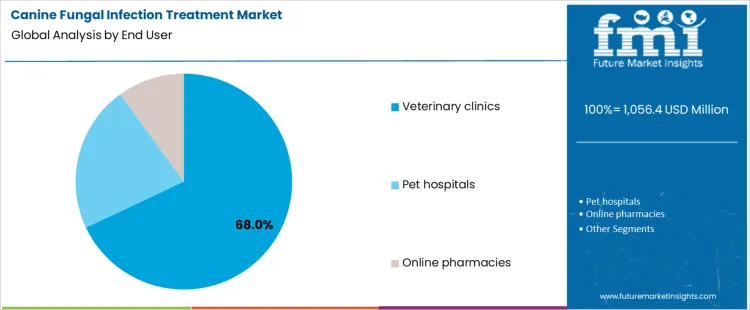
Veterinary clinics account for 68.0%, representing the largest share among end-user settings. Initial diagnosis, fungal culture, and treatment planning typically occur during clinic visits. Clinics dispense prescription antifungals and guide treatment duration and hygiene measures. Follow-up visits support assessment of clinical resolution and recurrence prevention. Pet hospitals manage referral cases and systemic infections with lower routine volume. Online pharmacies supply refills after veterinary prescription. End-user segmentation reflects dominance where diagnostic capability, prescription authority, and continuity of care support effective management of canine fungal infections.
Key Points:
- Clinics serve as primary diagnostic and treatment sites.
- Follow-up care supports resolution and recurrence control.
- Other channels support complex care or medication refills.
What are the Key Dynamics in the Canine Fungal Infection Treatment Market?
Demand for canine fungal infection treatments reflects veterinary need to manage dermatophytosis and opportunistic yeast infections affecting skin, ears, and mucosal surfaces in dogs. Adoption concentrates in companion animal clinics, referral dermatology practices, and owner-administered home care under prescription guidance. Global scope aligns with pet population growth and increased diagnosis of chronic skin disorders. Usage centers on topical antifungals, systemic azoles, shampoos, and adjunct anti-inflammatory therapies.
How do infection persistence and diagnostic specificity shape adoption?
Canine fungal infections often present with recurrent lesions, pruritus, and secondary bacterial involvement that complicate resolution. Demand increases where environmental exposure, immunosuppression, or breed predisposition drives repeated outbreaks. Accurate diagnosis through cytology, culture, or PCR guides targeted antifungal selection and treatment duration. Topical therapies address localized lesions and reduce environmental contamination, while systemic agents support control of deep or widespread infection. Treatment protocols emphasize sustained administration to prevent relapse. Owner compliance influences therapy choice, favoring regimens compatible with routine grooming and handling. Adoption reflects clinical focus on pathogen eradication, reinfection prevention, and restoration of skin barrier function.
How do resistance risk, treatment duration, and access variability influence market scalability?
Extended antifungal use increases risk of reduced sensitivity and incomplete clearance. Demand sensitivity rises where long treatment courses challenge owner adherence and increase cost exposure. Systemic therapies carry hepatic monitoring requirements that limit use in vulnerable animals. Environmental decontamination needs add complexity to household management. Limited availability of advanced diagnostics affects early intervention accuracy in some regions. Evidence-based dosing protocols vary across pathogens, affecting outcome consistency. Distribution depends on veterinary prescribing channels and regulated dispensing. Scalability remains constrained by resistance management needs, prolonged therapy requirements, and uneven access to specialized veterinary dermatology services.
How Is Demand for Canine Fungal Infection Treatments Evolving Globally?
Demand for canine fungal infection treatments is expanding globally as veterinary dermatology shifts toward early diagnosis, longer treatment courses, and preventive skin health management. Rising companion animal ownership, humid urban environments, and improved awareness of zoonotic risks support treatment uptake. Topical antifungals, systemic therapies, and medicated shampoos remain core across care settings. E-commerce and organized veterinary retail improve product access. Growth rates in India at 9.5%, China at 9.3%, Brazil at 9.0%, USA at 8.4%, and the UK at 7.3% indicate sustained expansion driven by veterinary service access, owner compliance, and chronic skin infection management rather than short-term outbreak response.
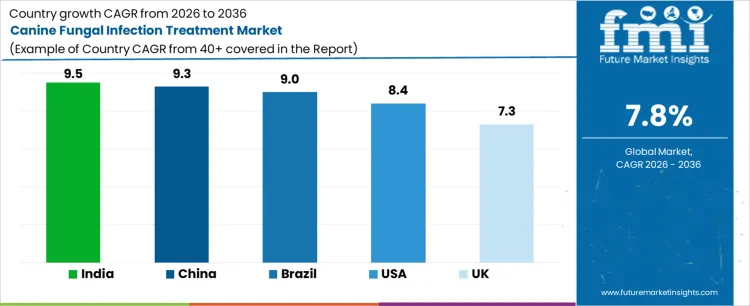
| Country | CAGR (%) |
|---|---|
| India | 9.5% |
| China | 9.3% |
| Brazil | 9.0% |
| USA | 8.4% |
| UK | 7.3% |
What Is Driving Expansion of Canine Fungal Infection Treatment Demand in India?
Demand for canine fungal infection treatments in India is growing at a CAGR of 9.5%, shaped by rising pet ownership and improved veterinary outreach. Urban clinics report higher incidence of dermatophytosis and yeast infections linked to humidity and overcrowded living conditions. Increased frequency of grooming and boarding raises infection detection. Organized veterinary chains expand access to antifungal topicals and oral therapies. Owner education improves adherence to full treatment courses. Growth reflects service availability, environmental exposure, and compliance improvement rather than reliance on advanced prescription-only interventions.
- Urban humidity increasing fungal skin incidence
- Expanded grooming and boarding detection
- Organized veterinary retail availability
- Improved owner adherence to treatment courses
Why Is China Experiencing Strong Uptake of Canine Antifungal Therapies?
Canine fungal infection treatment demand in China is expanding at a CAGR of 9.3%, supported by rapid growth in companion animal healthcare spending. Veterinary hospitals integrate routine skin examinations within preventive care visits. Dense urban living and indoor pet environments elevate fungal transmission risk. Domestic manufacturers scale production of affordable antifungal formulations. Online veterinary pharmacies improve continuity of supply. Growth reflects preventive care integration and access scaling rather than episodic treatment of severe infections.
- Preventive skin screening during clinic visits
- Urban indoor pet living increasing exposure
- Scaled domestic antifungal product supply
- Online pharmacy-driven treatment continuity
How Is Brazil Sustaining Growth in Canine Fungal Infection Treatments?
Demand for canine fungal infection treatments in Brazil is growing at a CAGR of 9.0%, influenced by climatic conditions and strong pet care culture. Warm and humid environments increase prevalence of fungal dermatitis. Veterinary clinics emphasize early topical intervention to prevent spread. High engagement with grooming services supports early symptom identification. Retail access to medicated shampoos and sprays improves compliance. Growth reflects climate-linked disease burden and service-led detection rather than expansion of specialty veterinary dermatology.
- Climate-driven fungal skin prevalence
- Veterinary emphasis on early topical treatment
- Grooming services aiding early detection
- Broad retail access to antifungal products
What Factors Are Driving Canine Antifungal Treatment Growth in United States?
Canine fungal infection treatment demand in the United States is expanding at a CAGR of 8.4%, driven by preventive veterinary care and owner compliance. Routine wellness exams include dermatologic assessments for common fungal conditions. High awareness of zoonotic transmission increases prompt treatment initiation. Broad availability of prescription and OTC antifungals supports sustained therapy. Subscription-based pet health platforms encourage adherence. Growth reflects treatment persistence and preventive focus rather than rising incidence severity.
- Routine dermatologic screening in wellness exams
- Zoonotic risk awareness prompting early treatment
- Wide availability of antifungal formulations
- Subscription models supporting adherence
Why Is the UK Showing Measured Growth in Canine Fungal Infection Treatments?
Demand for canine fungal infection treatments in United Kingdom is growing at a CAGR of 7.3%, supported by structured veterinary care and preventive health culture. General practice veterinarians routinely screen for fungal skin conditions. Pet insurance coverage supports timely treatment initiation. Preference for evidence-based antifungal products shapes prescribing. Cooler climate moderates incidence compared with tropical regions. Growth remains measured, reflecting guideline-aligned care delivery and consistent owner compliance rather than rapid expansion of specialty treatments.
- Preventive screening in general veterinary practice
- Pet insurance enabling early intervention
- Preference for evidence-based antifungals
- Climate moderating overall infection incidence
What is the competitive landscape of demand for the canine fungal infection treatment market globally?
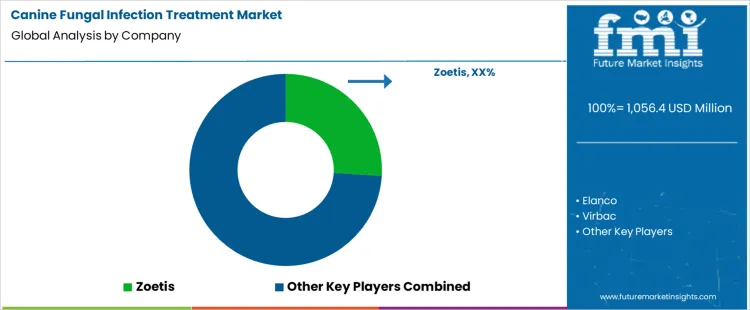
Demand for canine fungal infection treatments reflects rising companion animal ownership, climate-driven pathogen exposure, and increased veterinary diagnostic confirmation. Veterinarians assess spectrum coverage, antifungal resistance risk, formulation safety, dosing duration, and suitability for localized versus systemic infections.
Buyer evaluation considers compliance with treatment protocols, ease of owner administration, palatability, and compatibility with concurrent dermatologic therapies. Procurement behavior centers on clinic formularies, repeat prescription reliability, regulatory labeling clarity, and predictable supply across geographies. Trend in the canine fungal infection treatment market shows sustained topical use with selective escalation toward systemic therapy.
Zoetis leads competitive positioning through veterinary antifungal portfolios supported by clinical familiarity and broad companion animal distribution networks. Elanco competes with antifungal therapies integrated within wider companion animal health offerings and established veterinary relationships. Virbac maintains relevance through dermatology specialization, topical expertise, and frequent engagement with veterinary dermatologists and clinics. Boehringer Ingelheim supports demand with skin infection treatments aligned with preventive care strategies and chronic management protocols.
Dechra participates by supplying antifungal solutions suited for primary care clinics managing recurrent and mixed fungal conditions. Competitive differentiation depends on clinical trust, safety margins, repeat-use suitability, and dependable clinic-level availability.
Key Players in the Canine Fungal Infection Treatment Market
- Zoetis
- Elanco
- Virbac
- Boehringer Ingelheim
- Dechra
- Others
Scope of the Report
| Items | Values |
|---|---|
| Quantitative Units | USD million |
| Products | Azole antifungals; Allylamines; Other antifungals |
| Applications | Dermatophytosis; Systemic mycoses |
| End User | Veterinary clinics; Pet hospitals; Online pharmacies |
| Regions Covered | Asia Pacific, Europe, North America, Latin America, Middle East & Africa |
| Countries Covered | India, China, Brazil, USA, UK, and 40+ countries |
| Key Companies Profiled | Zoetis; Elanco; Virbac; Boehringer Ingelheim; Dechra; Others |
| Additional Attributes | Dollar sales by product type, application, end user, and sales channel; antifungal efficacy and spectrum coverage across azoles, allylamines, and alternative agents for canine dermatological and systemic infections; formulation preferences for topical versus systemic administration; treatment duration and compliance considerations in companion animals; veterinary prescribing practices and resistance monitoring; procurement dynamics shaped by clinic dispensing, hospital treatment protocols, and online pharmacy fulfillment. |
Canine Fungal Infection Treatment Market by Segment
Products:
- Azole antifungals
- Allylamines
- Other antifungals
Applications:
- Dermatophytosis
- Systemic mycoses
End User:
- Veterinary clinics
- Pet hospitals
- Online pharmacies
Region:
- Asia Pacific
- China
- Japan
- South Korea
- India
- Australia & New Zealand
- ASEAN
- Rest of Asia Pacific
- Europe
- Germany
- United Kingdom
- France
- Italy
- Spain
- Nordic
- BENELUX
- Rest of Europe
- North America
- United States
- Canada
- Mexico
- Latin America
- Brazil
- Chile
- Rest of Latin America
- Middle East & Africa
- Kingdom of Saudi Arabia
- Other GCC Countries
- Turkey
- South Africa
- Other African Union
- Rest of Middle East & Africa
Bibliography
- Centers for Disease Control and Prevention. (2024). Zoonotic fungal diseases and companion animal transmission risks. U.S. Department of Health and Human Services.
- World Organisation for Animal Health. (2024). Manual of diagnostic tests and vaccines for terrestrial animals: Fungal diseases of dogs. WOAH.
- National Institute for Occupational Safety and Health. (2024). Fungal exposure, environmental reservoirs, and zoonotic considerations. Centers for Disease Control and Prevention.
Frequently Asked Questions
How big is the canine fungal infection treatment market in 2026?
The global canine fungal infection treatment market is estimated to be valued at USD 1,056.4 million in 2026.
What will be the size of canine fungal infection treatment market in 2036?
The market size for the canine fungal infection treatment market is projected to reach USD 2,238.8 million by 2036.
How much will be the canine fungal infection treatment market growth between 2026 and 2036?
The canine fungal infection treatment market is expected to grow at a 7.8% CAGR between 2026 and 2036.
What are the key product types in the canine fungal infection treatment market?
The key product types in canine fungal infection treatment market are azole antifungals, allylamines and other antifungals.
Which applications segment to contribute significant share in the canine fungal infection treatment market in 2026?
In terms of applications, dermatophytosis segment to command 58.0% share in the canine fungal infection treatment market in 2026.
Preview the report firsthand - request a free sample
Get SampleGet the brochure for pricing and purchase details.
Get PDFTable of Content
- Executive Summary
- Global Market Outlook
- Demand-side Trends
- Supply-side Trends
- Technology Roadmap Analysis
- Analysis and Recommendations
- Market Overview
- Market Coverage / Taxonomy
- Market Definition / Scope / Limitations
- Market Background
- Market Dynamics
- Drivers
- Restraints
- Opportunity
- Trends
- Scenario Forecast
- Demand in Optimistic Scenario
- Demand in Likely Scenario
- Demand in Conservative Scenario
- Opportunity Map Analysis
- Product Life Cycle Analysis
- Supply Chain Analysis
- Investment Feasibility Matrix
- Value Chain Analysis
- PESTLE and Porter’s Analysis
- Regulatory Landscape
- Regional Parent Market Outlook
- Production and Consumption Statistics
- Import and Export Statistics
- Market Dynamics
- Global Market Analysis 2021 to 2025 and Forecast, 2026 to 2036
- Historical Market Size Value (USD Million) Analysis, 2021 to 2025
- Current and Future Market Size Value (USD Million) Projections, 2026 to 2036
- Y-o-Y Growth Trend Analysis
- Absolute $ Opportunity Analysis
- Global Market Pricing Analysis 2021 to 2025 and Forecast 2026 to 2036
- Global Market Analysis 2021 to 2025 and Forecast 2026 to 2036, By Products
- Introduction / Key Findings
- Historical Market Size Value (USD Million) Analysis By Products , 2021 to 2025
- Current and Future Market Size Value (USD Million) Analysis and Forecast By Products , 2026 to 2036
- Azole antifungals
- Allylamines
- Other antifungals
- Azole antifungals
- Y-o-Y Growth Trend Analysis By Products , 2021 to 2025
- Absolute $ Opportunity Analysis By Products , 2026 to 2036
- Global Market Analysis 2021 to 2025 and Forecast 2026 to 2036, By Applications
- Introduction / Key Findings
- Historical Market Size Value (USD Million) Analysis By Applications, 2021 to 2025
- Current and Future Market Size Value (USD Million) Analysis and Forecast By Applications, 2026 to 2036
- Dermatophytosis
- Systemic mycoses
- Dermatophytosis
- Y-o-Y Growth Trend Analysis By Applications, 2021 to 2025
- Absolute $ Opportunity Analysis By Applications, 2026 to 2036
- Global Market Analysis 2021 to 2025 and Forecast 2026 to 2036, By End User
- Introduction / Key Findings
- Historical Market Size Value (USD Million) Analysis By End User, 2021 to 2025
- Current and Future Market Size Value (USD Million) Analysis and Forecast By End User, 2026 to 2036
- Veterinary clinics
- Pet hospitals
- Online pharmacies
- Veterinary clinics
- Y-o-Y Growth Trend Analysis By End User, 2021 to 2025
- Absolute $ Opportunity Analysis By End User, 2026 to 2036
- Global Market Analysis 2021 to 2025 and Forecast 2026 to 2036, By Region
- Introduction
- Historical Market Size Value (USD Million) Analysis By Region, 2021 to 2025
- Current Market Size Value (USD Million) Analysis and Forecast By Region, 2026 to 2036
- North America
- Latin America
- Western Europe
- Eastern Europe
- East Asia
- South Asia and Pacific
- Middle East & Africa
- Market Attractiveness Analysis By Region
- North America Market Analysis 2021 to 2025 and Forecast 2026 to 2036, By Country
- Historical Market Size Value (USD Million) Trend Analysis By Market Taxonomy, 2021 to 2025
- Market Size Value (USD Million) Forecast By Market Taxonomy, 2026 to 2036
- By Country
- USA
- Canada
- Mexico
- By Products
- By Applications
- By End User
- By Country
- Market Attractiveness Analysis
- By Country
- By Products
- By Applications
- By End User
- Key Takeaways
- Latin America Market Analysis 2021 to 2025 and Forecast 2026 to 2036, By Country
- Historical Market Size Value (USD Million) Trend Analysis By Market Taxonomy, 2021 to 2025
- Market Size Value (USD Million) Forecast By Market Taxonomy, 2026 to 2036
- By Country
- Brazil
- Chile
- Rest of Latin America
- By Products
- By Applications
- By End User
- By Country
- Market Attractiveness Analysis
- By Country
- By Products
- By Applications
- By End User
- Key Takeaways
- Western Europe Market Analysis 2021 to 2025 and Forecast 2026 to 2036, By Country
- Historical Market Size Value (USD Million) Trend Analysis By Market Taxonomy, 2021 to 2025
- Market Size Value (USD Million) Forecast By Market Taxonomy, 2026 to 2036
- By Country
- Germany
- UK
- Italy
- Spain
- France
- Nordic
- BENELUX
- Rest of Western Europe
- By Products
- By Applications
- By End User
- By Country
- Market Attractiveness Analysis
- By Country
- By Products
- By Applications
- By End User
- Key Takeaways
- Eastern Europe Market Analysis 2021 to 2025 and Forecast 2026 to 2036, By Country
- Historical Market Size Value (USD Million) Trend Analysis By Market Taxonomy, 2021 to 2025
- Market Size Value (USD Million) Forecast By Market Taxonomy, 2026 to 2036
- By Country
- Russia
- Poland
- Hungary
- Balkan & Baltic
- Rest of Eastern Europe
- By Products
- By Applications
- By End User
- By Country
- Market Attractiveness Analysis
- By Country
- By Products
- By Applications
- By End User
- Key Takeaways
- East Asia Market Analysis 2021 to 2025 and Forecast 2026 to 2036, By Country
- Historical Market Size Value (USD Million) Trend Analysis By Market Taxonomy, 2021 to 2025
- Market Size Value (USD Million) Forecast By Market Taxonomy, 2026 to 2036
- By Country
- China
- Japan
- South Korea
- By Products
- By Applications
- By End User
- By Country
- Market Attractiveness Analysis
- By Country
- By Products
- By Applications
- By End User
- Key Takeaways
- South Asia and Pacific Market Analysis 2021 to 2025 and Forecast 2026 to 2036, By Country
- Historical Market Size Value (USD Million) Trend Analysis By Market Taxonomy, 2021 to 2025
- Market Size Value (USD Million) Forecast By Market Taxonomy, 2026 to 2036
- By Country
- India
- ASEAN
- Australia & New Zealand
- Rest of South Asia and Pacific
- By Products
- By Applications
- By End User
- By Country
- Market Attractiveness Analysis
- By Country
- By Products
- By Applications
- By End User
- Key Takeaways
- Middle East & Africa Market Analysis 2021 to 2025 and Forecast 2026 to 2036, By Country
- Historical Market Size Value (USD Million) Trend Analysis By Market Taxonomy, 2021 to 2025
- Market Size Value (USD Million) Forecast By Market Taxonomy, 2026 to 2036
- By Country
- Kingdom of Saudi Arabia
- Other GCC Countries
- Turkiye
- South Africa
- Other African Union
- Rest of Middle East & Africa
- By Products
- By Applications
- By End User
- By Country
- Market Attractiveness Analysis
- By Country
- By Products
- By Applications
- By End User
- Key Takeaways
- Key Countries Market Analysis
- USA
- Pricing Analysis
- Market Share Analysis, 2025
- By Products
- By Applications
- By End User
- Canada
- Pricing Analysis
- Market Share Analysis, 2025
- By Products
- By Applications
- By End User
- Mexico
- Pricing Analysis
- Market Share Analysis, 2025
- By Products
- By Applications
- By End User
- Brazil
- Pricing Analysis
- Market Share Analysis, 2025
- By Products
- By Applications
- By End User
- Chile
- Pricing Analysis
- Market Share Analysis, 2025
- By Products
- By Applications
- By End User
- Germany
- Pricing Analysis
- Market Share Analysis, 2025
- By Products
- By Applications
- By End User
- UK
- Pricing Analysis
- Market Share Analysis, 2025
- By Products
- By Applications
- By End User
- Italy
- Pricing Analysis
- Market Share Analysis, 2025
- By Products
- By Applications
- By End User
- Spain
- Pricing Analysis
- Market Share Analysis, 2025
- By Products
- By Applications
- By End User
- France
- Pricing Analysis
- Market Share Analysis, 2025
- By Products
- By Applications
- By End User
- India
- Pricing Analysis
- Market Share Analysis, 2025
- By Products
- By Applications
- By End User
- ASEAN
- Pricing Analysis
- Market Share Analysis, 2025
- By Products
- By Applications
- By End User
- Australia & New Zealand
- Pricing Analysis
- Market Share Analysis, 2025
- By Products
- By Applications
- By End User
- China
- Pricing Analysis
- Market Share Analysis, 2025
- By Products
- By Applications
- By End User
- Japan
- Pricing Analysis
- Market Share Analysis, 2025
- By Products
- By Applications
- By End User
- South Korea
- Pricing Analysis
- Market Share Analysis, 2025
- By Products
- By Applications
- By End User
- Russia
- Pricing Analysis
- Market Share Analysis, 2025
- By Products
- By Applications
- By End User
- Poland
- Pricing Analysis
- Market Share Analysis, 2025
- By Products
- By Applications
- By End User
- Hungary
- Pricing Analysis
- Market Share Analysis, 2025
- By Products
- By Applications
- By End User
- Kingdom of Saudi Arabia
- Pricing Analysis
- Market Share Analysis, 2025
- By Products
- By Applications
- By End User
- Turkiye
- Pricing Analysis
- Market Share Analysis, 2025
- By Products
- By Applications
- By End User
- South Africa
- Pricing Analysis
- Market Share Analysis, 2025
- By Products
- By Applications
- By End User
- USA
- Market Structure Analysis
- Competition Dashboard
- Competition Benchmarking
- Market Share Analysis of Top Players
- By Regional
- By Products
- By Applications
- By End User
- Competition Analysis
- Competition Deep Dive
- Zoetis
- Overview
- Product Portfolio
- Profitability by Market Segments (Product/Age /Sales Channel/Region)
- Sales Footprint
- Strategy Overview
- Marketing Strategy
- Product Strategy
- Channel Strategy
- Elanco
- Virbac
- Boehringer Ingelheim
- Dechra
- Others
- Zoetis
- Competition Deep Dive
- Assumptions & Acronyms Used
- Research Methodology


