

- Industry Size (2026)
- USD 1040.0 Mn
- Forecast (2036)
- USD 2329.8 Mn
- CAGR (2026 to 2036)
- 8.4%
Aquaculture Fungal Infection Treatment Market Forecast and Outlook 2026 to 2036
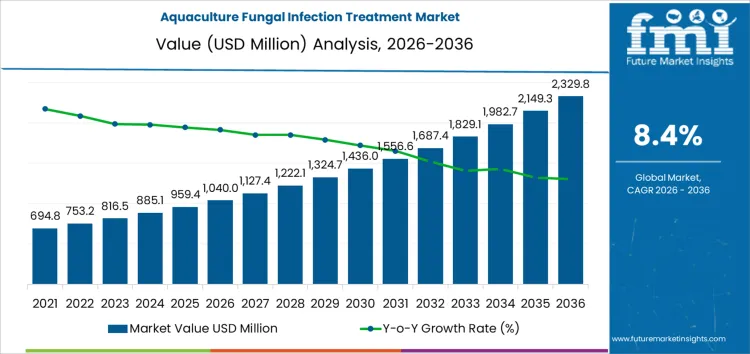
The aquaculture fungal infection treatment market is likely to be valued at USD 1,040.0 million in 2026, and reach USD 2,329.8 million by 2036, at a 8.4% CAGR. Expansion is closely tied to structural vulnerabilities within hatchery and nursery stages, where fungal pathogens exploit handling stress, fluctuating water parameters, and physical damage to eggs or juvenile stock. Unlike bacterial outbreaks that often escalate during grow-out, fungal infections concentrate economic risk at the earliest lifecycle points, where losses translate directly into reduced stocking volumes and downstream yield gaps. Spending therefore aligns less with total biomass under culture and more with hatchery throughput, broodstock value, and genetic investment protection. Treatment demand reflects the need to safeguard survival rates during biologically fragile stages rather than routine intervention across mature production units.
Demand patterns continue to be shaped by regulatory pressure on legacy antifungal chemistries, environmental discharge constraints, and limited availability of broadly approved alternatives. Producers prioritize treatments that deliver predictable control without compromising water systems, filtration performance, or compliance thresholds tied to export certification. Adoption remains highest in systems where egg and larval losses cannot be offset by scale, forcing operators to intervene early and decisively. Diagnostic confirmation increasingly precedes treatment, particularly in regulated regions, reinforcing selective rather than repetitive application. Market expansion therefore remains disciplined, anchored in hatchery risk management, survival optimization, and compliance-driven product selection, rather than volume-led escalation of antifungal usage across aquaculture operations.
Quick Stats for Aquaculture Fungal Infection Treatment Market
- Aquaculture Fungal Infection Treatment Market Value (2026): USD 1,040.0 million
- Aquaculture Fungal Infection Treatment Market Forecast Value (2036): USD 2,329.8 million
- Aquaculture Fungal Infection Treatment Market Forecast CAGR 2026 to 2036: 8.4%
- Leading Therapy Type by Utilization: Formalin-based treatments
- Fastest-Growing Countries: India, China, Brazil, USA, UK
- Top Players in Global Demand: Neogen, Zoetis, Kemin Industries, Elanco, Ceva
Aquaculture Fungal Infection Treatment Market Key Takeaways
| Metric | Value |
|---|---|
| Market Value (2026) | USD 1,040.0 million |
| Market Forecast Value (2036) | USD 2,329.8 million |
| Forecast CAGR 2026 to 2036 | 8.4% |
Why is the Demand for Aquaculture Fungal Infection Treatment Growing?
Demand for aquaculture fungal infection treatments is increasing as fish and shellfish producers confront persistent and emerging mycotic diseases that jeopardize stock health, growth performance, and commercial viability in both freshwater and marine production systems. Fungal pathogens such as Saprolegnia and Aphanomyces species often exploit compromised skin and gill tissue following physical injury, stress events, or water quality fluctuations, leading to cotton-like lesions, impaired respiration, and elevated mortalities.
Aquatic veterinarians and farm health specialists specify antifungal agents and therapeutic baths with proven efficacy under specific salinity and temperature conditions because effective pathogen suppression supports survival rates and prevents secondary bacterial infections that compound production losses. Procurement teams at hatcheries and grow-out facilities evaluate active ingredient profiles, species-appropriate dosing regimens, and application logistics to ensure treatment protocols align with operational workflows and minimize disruptions to feeding and growth cycles.
Growth in intensive aquaculture production and expanded global seafood demand reinforces adoption of targeted fungal treatment strategies integrated with routine health monitoring and water quality management practices. Producers coordinate with diagnostic services that identify fungal pathogens early, enabling timely intervention that mitigates spread within densely stocked enclosures and recirculating systems. Treatment decisions also consider regulations governing residue limits and withdrawal periods to meet food safety standards for human consumption.
Distribution networks and veterinary suppliers maintain inventories of approved antifungal therapeutics and provide technical guidance on effective application under varied farming conditions. These aquaculture-specific clinical and operational requirements are contributing to sustained demand growth in the aquaculture fungal infection treatment market.
How Is the Aquaculture Fungal Infection Treatment Market Segmented by Therapy Type, Application, and End User?
Demand for aquaculture fungal infection treatments is shaped by hatchery losses, egg mortality risk, and water quality variability in intensive systems. Health management emphasizes early-stage control to prevent spread across tanks, ponds, or raceways. Adoption reflects regulatory constraints on legacy chemicals, availability of safer alternatives, and integration with hatchery biosecurity protocols. Treatment selection considers efficacy against waterborne fungi, compatibility with life stages, and ease of application. Segmentation explains how therapy choice, fungal disease profile, and operational setting influence treatment deployment and purchasing behavior.
Which Therapy Category Is Most Widely Used for Aquaculture Fungal Infections?
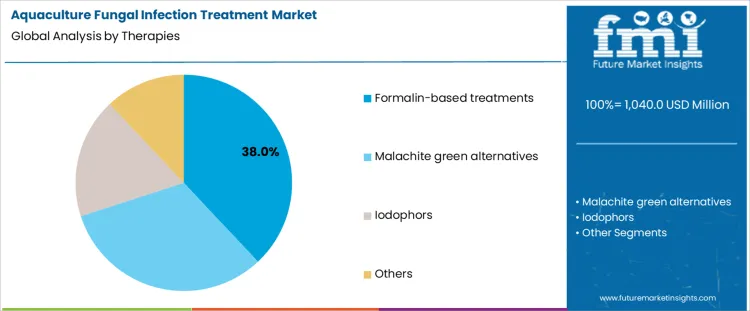
Utilization remains highest for formalin-based treatments at 38.0%, reflecting their effectiveness against water molds affecting fish and eggs. These treatments are applied through bath or flow-through methods, supporting broad coverage in production units. Established protocols and predictable outcomes reinforce continued use under controlled conditions. Malachite green alternatives at 32.0% reflect transition toward safer formulations addressing regulatory restrictions. Iodophors at 18.0% are commonly used for egg disinfection and surface-level control. Other therapies at 12.0% address niche applications. Therapy segmentation reflects reliance on proven agents adapted to evolving compliance requirements.
Key Points:
- Formalin remains widely applied for active fungal control.
- Alternatives address regulatory and safety considerations.
- Iodophors support egg-level disease prevention.
How Do Specific Fungal Diseases Shape Application-Level Treatment Demand?

Treatment demand concentrates around saprolegniasis at 62.0%, driven by its high prevalence in freshwater systems and egg incubation stages. Fungal growth on damaged tissue and eggs increases mortality without prompt intervention. Continuous water exposure accelerates spread, necessitating routine treatment protocols. Branchiomycosis at 22.0% involves gill infection under poor water conditions, requiring targeted response. Other fungal conditions at 16.0% occur sporadically with localized impact. Application segmentation highlights concentration where disease frequency, transmission speed, and lifecycle vulnerability elevate treatment intensity.
Key Points:
- Saprolegniasis frequently affects eggs and stressed fish.
- Rapid spread increases need for routine intervention.
- Other fungal diseases present lower incidence rates.
Which End User Segment Drives Treatment Deployment in Aquaculture?
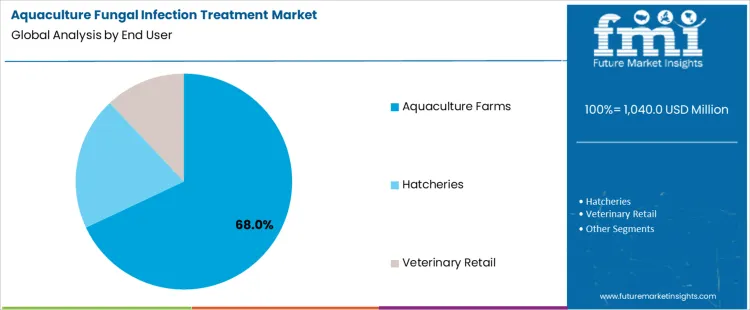
Aquaculture farms account for 68.0% of treatment deployment due to direct management of stock health and water systems. On-site treatment capability allows rapid response during visible fungal outbreaks. Hatcheries at 20.0% prioritize preventive treatment to protect early life stages and ensure survival rates. Veterinary retail at 12.0% supports access to approved products and technical guidance. End-user segmentation reflects concentration where operational control, lifecycle responsibility, and immediacy of intervention govern fungal treatment utilization.
Key Points:
- Farms administer treatments directly across production units.
- Hatcheries focus on egg and larval protection.
- Retail channels support access and advisory services.
What are the Key Dynamics in the Aquaculture Fungal Infection Treatment Market?
Demand for aquaculture fungal infection treatments reflects need to control saprolegniasis and related fungal conditions affecting eggs, larvae, and stressed stock. Adoption concentrates in freshwater hatcheries, salmonid farms, and shrimp production systems with early life stage exposure. Global scope aligns with intensification of aquaculture and hatchery-based seed production. Usage centers on antifungal bath treatments, egg disinfectants, and supportive health management solutions applied during high-risk production phases.
How do hatchery vulnerability and early life stage survival requirements shape adoption?
Fungal infections primarily affect eggs and juvenile stages where immune defenses remain underdeveloped. Demand increases where fungal colonization causes mass egg loss, reduced hatch rates, and deformities. Hatchery operators rely on preventive and therapeutic treatments to protect high-value spawning batches. Treatment timing aligns closely with egg incubation, handling stress, and water quality fluctuations. Species sensitivity influences compound selection and exposure duration. Continuous-flow and recirculating systems require treatments compatible with filtration and biosecurity protocols. Adoption reflects operational focus on preserving survival rates during biologically vulnerable stages that determine downstream production volume and genetic yield.
How do regulatory restrictions, environmental exposure, and efficacy limits influence market scalability?
Approved antifungal options in aquaculture remain limited due to environmental toxicity concerns. Demand sensitivity rises where historically effective compounds face usage bans or strict discharge controls. Treatment efficacy varies with water temperature, organic load, and pathogen strain. Repeated bath treatments increase labor and water management complexity. Non-target organism exposure constrains dosing flexibility in open systems. Limited availability of species-specific approvals complicates broader adoption. Cost tolerance remains narrow in hatchery operations with tight margins. Scalability remains constrained by regulatory limitations, environmental compliance pressure, and lack of widely accepted, high-efficacy antifungal alternatives.
How Is Demand for Aquaculture Fungal Infection Treatments Evolving Globally?
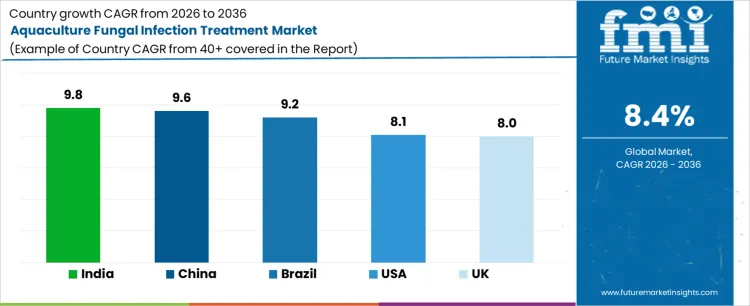
Demand for aquaculture fungal infection treatments is expanding globally as intensive farming raises exposure to waterborne fungi across hatchery and grow-out stages. Mortality risk during egg, larval, and juvenile phases increases reliance on targeted antifungal interventions. Treatment strategies emphasize rapid containment, water quality management, and compliance with residue limits. Veterinary oversight and diagnostics shape product choice and dosing discipline. Growth rates in India at 9.8%, China at 9.6%, Brazil at 9.2%, USA at 8.1%, and the UK at 8.0% indicate steady expansion driven by productivity protection, hatchery survival optimization, and biosecurity economics rather than routine prophylactic application.
| Country | CAGR (%) |
|---|---|
| India | 9.8% |
| China | 9.6% |
| Brazil | 9.2% |
| USA | 8.1% |
| UK | 8.0% |
What Is Driving Growth of Aquaculture Fungal Infection Treatment Demand in India?
Aquaculture fungal infection treatment demand in India is growing at a CAGR of 9.8%, reflecting rapid hatchery expansion and shrimp seed production intensity. High organic load and fluctuating salinity elevate fungal outbreaks during early life stages. Export-oriented hatcheries prioritize antifungal treatments to protect survival rates and stocking schedules. Veterinary advisory services promote targeted application aligned with residue compliance. Domestic suppliers improve access to approved formulations across coastal regions. Growth reflects hatchery risk management and production scaling rather than preventive mass treatment across ponds.
- Hatchery-stage fungal exposure risks
- Salinity and organic load variability
- Export-driven survival rate protection
- Improved coastal access to approved treatments
Why Is China Sustaining Strong Expansion in Aquaculture Fungal Disease Treatments?
Aquaculture fungal infection treatment demand in China is expanding at a CAGR of 9.6%, supported by large-scale hatchery systems and intensive freshwater aquaculture. Temperature shifts and high biomass density increase susceptibility to fungal pathogens. Central oversight emphasizes diagnosis-based treatment rather than routine use. Domestic manufacturing ensures supply continuity and cost stability. Farm-level monitoring enables early detection and intervention. Growth reflects scale-driven disease management and regulatory alignment rather than escalation of unrestricted antifungal usage.
- Large-scale hatchery and pond operations
- Temperature-driven fungal proliferation risks
- Diagnosis-based regulated treatment protocols
- Reliable domestic manufacturing supply
How Is Brazil Supporting Growth in Aquaculture Fungal Infection Treatment Utilization?
Aquaculture fungal infection treatment demand in Brazil is growing at a CAGR of 9.2%, influenced by warm-water farming and inland aquaculture development. Climatic conditions increase fungal load in hatchery and nursery environments. Producers apply antifungal treatments to protect fry survival and reduce early-stage losses. Veterinary oversight supports dosing accuracy and environmental compliance. Regional supply networks improve access in emerging production zones. Growth reflects climate-linked exposure management and productivity protection rather than widespread prophylactic application.
- Warm-water conditions elevating fungal pressure
- Fry and juvenile survival protection focus
- Veterinary-guided compliant dosing
- Expanding regional supply networks
What Factors Are Driving Aquaculture Fungal Treatment Growth in United States?
Aquaculture fungal infection treatment demand in the United States is expanding at a CAGR of 8.1%, driven by regulated hatchery operations and species-specific management. Hatcheries treat confirmed fungal outbreaks under veterinary supervision. Regulatory frameworks restrict non-essential use, emphasizing targeted intervention. High-value species production supports investment in compliant antifungal solutions. Diagnostic capacity enables precise timing and dosage. Growth reflects controlled utilization and biosecurity discipline rather than increased treatment frequency.
- Veterinary-supervised outbreak management
- Regulatory limits on non-essential use
- High-value species hatchery protection
- Diagnostic-supported treatment precision
Why Is the UK Experiencing Measured Growth in Aquaculture Fungal Infection Treatments?
Aquaculture fungal infection treatment demand in United Kingdom is growing at a CAGR of 8.0%, shaped by stewardship principles and intensive monitoring. Marine and freshwater hatcheries apply antifungals selectively following laboratory confirmation. Environmental compliance and residue control guide product selection. Biosecurity and water management reduce recurrence risk. Cost sensitivity encourages judicious deployment. Growth remains measured, reflecting governance-led disease containment and hatchery survival protection rather than volume-driven expansion.
- Selective treatment after laboratory confirmation
- Strong environmental and residue compliance
- Biosecurity reducing recurrence risk
- Cost discipline guiding treatment deployment
What is the competitive landscape of demand for the aquaculture fungal infection treatment market globally?
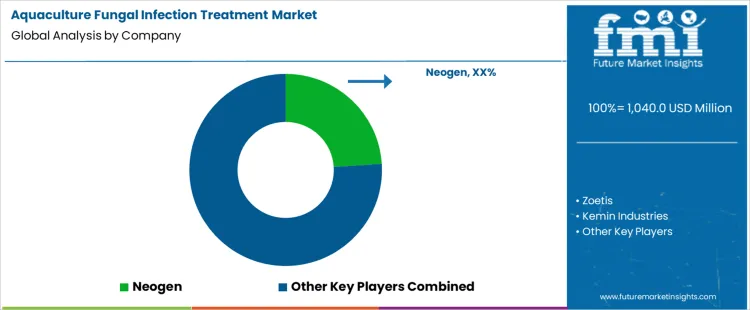
Demand for aquaculture fungal infection treatments is shaped by hatchery losses, egg mortality risk, and waterborne pathogen exposure. Aquaculture veterinarians evaluate antifungal efficacy against saprolegnia species, safety margins for larvae, residue behavior, and compatibility with water treatment protocols. Buyer assessment includes application method suitability, stability under varying water temperatures, and impact on non-target organisms. Procurement behavior reflects hatchery-scale purchasing, regulatory approvals by species, and preference for preventive treatment regimes. Purchasing decisions emphasize predictable hatch rates, treatment consistency, and ease of integration into routine biosecurity practices. Trend in the aquaculture fungal infection treatment market shows emphasis on early-stage prevention.
Zoetis leads competitive positioning through aquaculture health portfolios supporting fungal control within broader disease management programs. Neogen competes via biosecurity-aligned antifungal solutions integrated with diagnostics and water hygiene strategies. Kemin Industries supports demand with functional ingredients and antifungal technologies positioned for hatchery and early lifecycle protection. Elanco maintains relevance through aquatic health offerings aligned with regulated treatment frameworks and veterinary oversight. Ceva participates by supplying accessible antifungal solutions suited for routine hatchery use. Competitive differentiation centers on hatchery performance impact, safety confidence, regulatory acceptance, and alignment with preventive aquaculture health models.
Key Players in the Aquaculture Fungal Infection Treatment Market
- Neogen
- Zoetis
- Kemin Industries
- Elanco
- Ceva
- Others
Scope of the Report
| Items | Values |
|---|---|
| Quantitative Units | USD million |
| Therapies | Formalin-based treatments; Malachite green alternatives; Iodophors; Others |
| Applications | Saprolegniasis; Branchiomycosis; Others |
| End User | Aquaculture Farms; Hatcheries; Veterinary Retail |
| Regions Covered | Asia Pacific, Europe, North America, Latin America, Middle East & Africa |
| Countries Covered | India, China, Brazil, USA, UK, and 40+ countries |
| Key Companies Profiled | Neogen; Zoetis; Kemin Industries; Elanco; Ceva; Others |
| Additional Attributes | Dollar sales by therapy type, application, end user, and sales channel; antifungal efficacy and water safety performance across formalin-based, iodophor, and alternative treatment solutions; regulatory compliance following restrictions on malachite green usage; treatment protocols for hatchery and farm-level fungal outbreaks; residue management and environmental impact considerations; procurement dynamics driven by hatchery operations, farm biosecurity programs, and veterinary retail distribution. |
Aquaculture Fungal Infection Treatment Market by Segment
Therapies:
- Formalin-based treatments
- Malachite green alternatives
- Iodophors
- Others
Applications:
- Saprolegniasis
- Branchiomycosis
- Others
End User:
- Aquaculture Farms
- Hatcheries
- Veterinary Retail
Region:
- Asia Pacific
- China
- Japan
- South Korea
- India
- Australia & New Zealand
- ASEAN
- Rest of Asia Pacific
- Europe
- Germany
- United Kingdom
- France
- Italy
- Spain
- Nordic
- BENELUX
- Rest of Europe
- North America
- United States
- Canada
- Mexico
- Latin America
- Brazil
- Chile
- Rest of Latin America
- Middle East & Africa
- Kingdom of Saudi Arabia
- Other GCC Countries
- Turkey
- South Africa
- Other African Union
- Rest of Middle East & Africa
Bibliography
- Food and Agriculture Organization of the United Nations. (2023). Aquaculture health management: Prevention and control of fungal diseases in aquatic animals. FAO Fisheries and Aquaculture Division.
- World Organisation for Animal Health. (2024). Guidelines on responsible use of antifungal agents in aquaculture. WOAH.
- European Food Safety Authority. (2023). Environmental and food safety considerations for antifungal treatments used in aquaculture. EFSA Journal.
- European Commission. (2024). Implementation of veterinary medicinal product controls for antifungal use in aquaculture species under Regulation (EU) 2019/6. Official Journal of the European Union.
Frequently Asked Questions
How big is the aquaculture fungal infection treatment market in 2026?
The global aquaculture fungal infection treatment market is estimated to be valued at USD 1,040.0 million in 2026.
What will be the size of aquaculture fungal infection treatment market in 2036?
The market size for the aquaculture fungal infection treatment market is projected to reach USD 2,329.8 million by 2036.
How much will be the aquaculture fungal infection treatment market growth between 2026 and 2036?
The aquaculture fungal infection treatment market is expected to grow at a 8.4% CAGR between 2026 and 2036.
What are the key product types in the aquaculture fungal infection treatment market?
The key product types in aquaculture fungal infection treatment market are formalin-based treatments, malachite green alternatives, iodophors and others.
Which applications segment to contribute significant share in the aquaculture fungal infection treatment market in 2026?
In terms of applications, saprolegniasis segment to command 62.0% share in the aquaculture fungal infection treatment market in 2026.
Preview the report firsthand - request a free sample
Get SampleGet the brochure for pricing and purchase details.
Get PDFTable of Content
- Executive Summary
- Global Market Outlook
- Demand-side Trends
- Supply-side Trends
- Technology Roadmap Analysis
- Analysis and Recommendations
- Market Overview
- Market Coverage / Taxonomy
- Market Definition / Scope / Limitations
- Market Background
- Market Dynamics
- Drivers
- Restraints
- Opportunity
- Trends
- Scenario Forecast
- Demand in Optimistic Scenario
- Demand in Likely Scenario
- Demand in Conservative Scenario
- Opportunity Map Analysis
- Product Life Cycle Analysis
- Supply Chain Analysis
- Investment Feasibility Matrix
- Value Chain Analysis
- PESTLE and Porter’s Analysis
- Regulatory Landscape
- Regional Parent Market Outlook
- Production and Consumption Statistics
- Import and Export Statistics
- Market Dynamics
- Global Market Analysis 2021 to 2025 and Forecast, 2026 to 2036
- Historical Market Size Value (USD Million) Analysis, 2021 to 2025
- Current and Future Market Size Value (USD Million) Projections, 2026 to 2036
- Y-o-Y Growth Trend Analysis
- Absolute $ Opportunity Analysis
- Global Market Pricing Analysis 2021 to 2025 and Forecast 2026 to 2036
- Global Market Analysis 2021 to 2025 and Forecast 2026 to 2036, By Therapies
- Introduction / Key Findings
- Historical Market Size Value (USD Million) Analysis By Therapies , 2021 to 2025
- Current and Future Market Size Value (USD Million) Analysis and Forecast By Therapies , 2026 to 2036
- Formalin-based treatments
- Malachite green alternatives
- Iodophors
- Others
- Formalin-based treatments
- Y-o-Y Growth Trend Analysis By Therapies , 2021 to 2025
- Absolute $ Opportunity Analysis By Therapies , 2026 to 2036
- Global Market Analysis 2021 to 2025 and Forecast 2026 to 2036, By Applications
- Introduction / Key Findings
- Historical Market Size Value (USD Million) Analysis By Applications, 2021 to 2025
- Current and Future Market Size Value (USD Million) Analysis and Forecast By Applications, 2026 to 2036
- Saprolegniasis
- Branchiomycosis
- Others
- Saprolegniasis
- Y-o-Y Growth Trend Analysis By Applications, 2021 to 2025
- Absolute $ Opportunity Analysis By Applications, 2026 to 2036
- Global Market Analysis 2021 to 2025 and Forecast 2026 to 2036, By End User
- Introduction / Key Findings
- Historical Market Size Value (USD Million) Analysis By End User, 2021 to 2025
- Current and Future Market Size Value (USD Million) Analysis and Forecast By End User, 2026 to 2036
- Aquaculture Farms
- Hatcheries
- Veterinary Retail
- Aquaculture Farms
- Y-o-Y Growth Trend Analysis By End User, 2021 to 2025
- Absolute $ Opportunity Analysis By End User, 2026 to 2036
- Global Market Analysis 2021 to 2025 and Forecast 2026 to 2036, By Region
- Introduction
- Historical Market Size Value (USD Million) Analysis By Region, 2021 to 2025
- Current Market Size Value (USD Million) Analysis and Forecast By Region, 2026 to 2036
- North America
- Latin America
- Western Europe
- Eastern Europe
- East Asia
- South Asia and Pacific
- Middle East & Africa
- Market Attractiveness Analysis By Region
- North America Market Analysis 2021 to 2025 and Forecast 2026 to 2036, By Country
- Historical Market Size Value (USD Million) Trend Analysis By Market Taxonomy, 2021 to 2025
- Market Size Value (USD Million) Forecast By Market Taxonomy, 2026 to 2036
- By Country
- USA
- Canada
- Mexico
- By Therapies
- By Applications
- By End User
- By Country
- Market Attractiveness Analysis
- By Country
- By Therapies
- By Applications
- By End User
- Key Takeaways
- Latin America Market Analysis 2021 to 2025 and Forecast 2026 to 2036, By Country
- Historical Market Size Value (USD Million) Trend Analysis By Market Taxonomy, 2021 to 2025
- Market Size Value (USD Million) Forecast By Market Taxonomy, 2026 to 2036
- By Country
- Brazil
- Chile
- Rest of Latin America
- By Therapies
- By Applications
- By End User
- By Country
- Market Attractiveness Analysis
- By Country
- By Therapies
- By Applications
- By End User
- Key Takeaways
- Western Europe Market Analysis 2021 to 2025 and Forecast 2026 to 2036, By Country
- Historical Market Size Value (USD Million) Trend Analysis By Market Taxonomy, 2021 to 2025
- Market Size Value (USD Million) Forecast By Market Taxonomy, 2026 to 2036
- By Country
- Germany
- UK
- Italy
- Spain
- France
- Nordic
- BENELUX
- Rest of Western Europe
- By Therapies
- By Applications
- By End User
- By Country
- Market Attractiveness Analysis
- By Country
- By Therapies
- By Applications
- By End User
- Key Takeaways
- Eastern Europe Market Analysis 2021 to 2025 and Forecast 2026 to 2036, By Country
- Historical Market Size Value (USD Million) Trend Analysis By Market Taxonomy, 2021 to 2025
- Market Size Value (USD Million) Forecast By Market Taxonomy, 2026 to 2036
- By Country
- Russia
- Poland
- Hungary
- Balkan & Baltic
- Rest of Eastern Europe
- By Therapies
- By Applications
- By End User
- By Country
- Market Attractiveness Analysis
- By Country
- By Therapies
- By Applications
- By End User
- Key Takeaways
- East Asia Market Analysis 2021 to 2025 and Forecast 2026 to 2036, By Country
- Historical Market Size Value (USD Million) Trend Analysis By Market Taxonomy, 2021 to 2025
- Market Size Value (USD Million) Forecast By Market Taxonomy, 2026 to 2036
- By Country
- China
- Japan
- South Korea
- By Therapies
- By Applications
- By End User
- By Country
- Market Attractiveness Analysis
- By Country
- By Therapies
- By Applications
- By End User
- Key Takeaways
- South Asia and Pacific Market Analysis 2021 to 2025 and Forecast 2026 to 2036, By Country
- Historical Market Size Value (USD Million) Trend Analysis By Market Taxonomy, 2021 to 2025
- Market Size Value (USD Million) Forecast By Market Taxonomy, 2026 to 2036
- By Country
- India
- ASEAN
- Australia & New Zealand
- Rest of South Asia and Pacific
- By Therapies
- By Applications
- By End User
- By Country
- Market Attractiveness Analysis
- By Country
- By Therapies
- By Applications
- By End User
- Key Takeaways
- Middle East & Africa Market Analysis 2021 to 2025 and Forecast 2026 to 2036, By Country
- Historical Market Size Value (USD Million) Trend Analysis By Market Taxonomy, 2021 to 2025
- Market Size Value (USD Million) Forecast By Market Taxonomy, 2026 to 2036
- By Country
- Kingdom of Saudi Arabia
- Other GCC Countries
- Turkiye
- South Africa
- Other African Union
- Rest of Middle East & Africa
- By Therapies
- By Applications
- By End User
- By Country
- Market Attractiveness Analysis
- By Country
- By Therapies
- By Applications
- By End User
- Key Takeaways
- Key Countries Market Analysis
- USA
- Pricing Analysis
- Market Share Analysis, 2025
- By Therapies
- By Applications
- By End User
- Canada
- Pricing Analysis
- Market Share Analysis, 2025
- By Therapies
- By Applications
- By End User
- Mexico
- Pricing Analysis
- Market Share Analysis, 2025
- By Therapies
- By Applications
- By End User
- Brazil
- Pricing Analysis
- Market Share Analysis, 2025
- By Therapies
- By Applications
- By End User
- Chile
- Pricing Analysis
- Market Share Analysis, 2025
- By Therapies
- By Applications
- By End User
- Germany
- Pricing Analysis
- Market Share Analysis, 2025
- By Therapies
- By Applications
- By End User
- UK
- Pricing Analysis
- Market Share Analysis, 2025
- By Therapies
- By Applications
- By End User
- Italy
- Pricing Analysis
- Market Share Analysis, 2025
- By Therapies
- By Applications
- By End User
- Spain
- Pricing Analysis
- Market Share Analysis, 2025
- By Therapies
- By Applications
- By End User
- France
- Pricing Analysis
- Market Share Analysis, 2025
- By Therapies
- By Applications
- By End User
- India
- Pricing Analysis
- Market Share Analysis, 2025
- By Therapies
- By Applications
- By End User
- ASEAN
- Pricing Analysis
- Market Share Analysis, 2025
- By Therapies
- By Applications
- By End User
- Australia & New Zealand
- Pricing Analysis
- Market Share Analysis, 2025
- By Therapies
- By Applications
- By End User
- China
- Pricing Analysis
- Market Share Analysis, 2025
- By Therapies
- By Applications
- By End User
- Japan
- Pricing Analysis
- Market Share Analysis, 2025
- By Therapies
- By Applications
- By End User
- South Korea
- Pricing Analysis
- Market Share Analysis, 2025
- By Therapies
- By Applications
- By End User
- Russia
- Pricing Analysis
- Market Share Analysis, 2025
- By Therapies
- By Applications
- By End User
- Poland
- Pricing Analysis
- Market Share Analysis, 2025
- By Therapies
- By Applications
- By End User
- Hungary
- Pricing Analysis
- Market Share Analysis, 2025
- By Therapies
- By Applications
- By End User
- Kingdom of Saudi Arabia
- Pricing Analysis
- Market Share Analysis, 2025
- By Therapies
- By Applications
- By End User
- Turkiye
- Pricing Analysis
- Market Share Analysis, 2025
- By Therapies
- By Applications
- By End User
- South Africa
- Pricing Analysis
- Market Share Analysis, 2025
- By Therapies
- By Applications
- By End User
- USA
- Market Structure Analysis
- Competition Dashboard
- Competition Benchmarking
- Market Share Analysis of Top Players
- By Regional
- By Therapies
- By Applications
- By End User
- Competition Analysis
- Competition Deep Dive
- Neogen
- Overview
- Product Portfolio
- Profitability by Market Segments (Product/Age /Sales Channel/Region)
- Sales Footprint
- Strategy Overview
- Marketing Strategy
- Product Strategy
- Channel Strategy
- Zoetis
- Kemin Industries
- Elanco
- Ceva
- Others
- Neogen
- Competition Deep Dive
- Assumptions & Acronyms Used
- Research Methodology


