

- Market Size (2026)
- USD 78.6 Mn
- Forecast (2036)
- USD 112.4 Mn
- CAGR (2026 to 2036)
- 4.2%
Chlorine Trifluoride Market Size, Market Forecast and Outlook by FMI
Summary of the Chlorine Trifluoride Market
- Demand and Growth Drivers
- Semiconductor chamber cleaning keeps chlorine trifluoride relevant where high-reactivity cleaning is needed inside process tools.
- Electronic grade demand is expected to dominate with 78.0% share in 2026 as fabs need high-purity gas handling.
- Asia-based semiconductor capacity supports country growth, with China and South Korea forecast above the 4.2% global CAGR.
- Safety limits adoption because chlorine trifluoride is highly toxic, corrosive and a powerful oxidizer under recognized hazard guidance.
- Product and Segment View
- Electronic grade chlorine trifluoride is projected to account for 78.0% share in 2026 as semiconductor use requires tighter impurity control.
- Semiconductor chamber cleaning is estimated to represent 72.0% share in 2026 as LP-CVD tool cleaning drives the main application.
- Cylinder supply is expected to hold 64.0% share in 2026 because smaller controlled batches suit hazardous gas handling.
- Geography and Competitive Outlook
- China is projected to record 6.8% CAGR by 2036 as semiconductor production and specialty gas localization expand together.
- South Korea is expected to expand at 5.9% CAGR by 2036 as memory and advanced chip manufacturing require chamber-cleaning materials.
- Kanto Denka, Central Glass and Air Liquide hold visible positions through electronic specialty gas exposure and semiconductor customer access.
- Competition is shaped by safety record, purity control and the ability to supply fabs without logistics disruption.
- Analyst Opinion
- Nandini Roy Choudhury, Principal Consultant at FMI, observes, chlorine trifluoride is a market where volume is less important than permission to operate. The material is valuable because it cleans certain semiconductor chambers without plasma activation, but the same reactivity makes handling unforgiving.
- Chlorine Trifluoride Market Value Analysis
- Semiconductor cleaning use supports stable value because ClF3 serves high-control process environments rather than bulk industrial demand.
- Electronic grade pricing remains above industrial grade since purity, cylinder conditioning and delivery controls carry higher cost.
- Display and specialty fluorination uses add selective demand but do not match semiconductor cleaning volumes.
- Safety restrictions keep the supplier base narrow and reduce the chance of fast price-led commoditization.
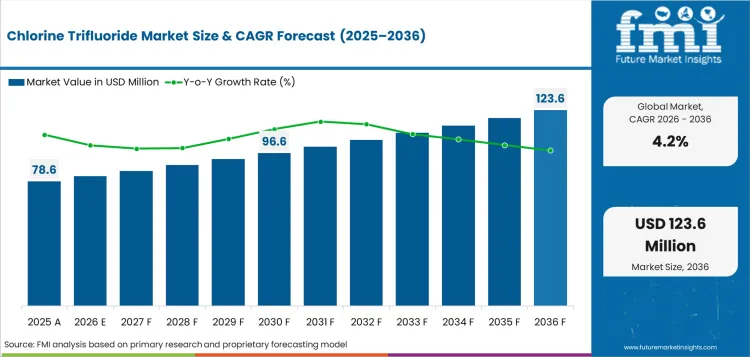
Key Takeaways, Market Size, and Forecast
- The chlorine trifluoride market value is estimated at USD 74.2 million in 2025.
- Global chlorine trifluoride market is projected to reach USD 112.4 million by 2036 as semiconductor chamber cleaning remains the main demand center.
- The market is expected to expand at 4.2% CAGR from 2026 to 2036 across semiconductor, display, specialty fluorination and limited aerospace research uses.
- The market is projected to create an incremental opportunity of USD 37.9 million between 2026 and 2036.
- Electronic grade chlorine trifluoride is expected to account for 78.0% share in 2026 due to purity needs in semiconductor cleaning.
- Semiconductor chamber cleaning is estimated to represent 72.0% share in 2026 as ClF3 is used for LP-CVD and related tool cleaning.
- China at 6.8% CAGR and South Korea at 5.9% CAGR are expected to record the fastest country-level pace by 2036.
Chlorine trifluoride is a narrow specialty gas market tied closely to semiconductor process equipment. Kanto Denka lists chlorine trifluoride as a cleaning gas for semiconductor manufacturing, while Central Glass lists ClF3 for LP-CVD chamber cleaning targeting titanium nitride and tungsten with purity of 99.9% or higher. That use case keeps the market small but technically demanding. Semiconductor growth supports the demand base, with SIA reporting global semiconductor sales of USD 791.7 billion in 2025 and SEMI reporting semiconductor equipment billings of USD 135.1 billion in 2025.
Chlorine Trifluoride Market Definition
The sector covers commercially supplied chlorine trifluoride gas and liquefied chlorine trifluoride used as a high-reactivity fluorinating and cleaning agent. Included products cover electronic grade and industrial grade ClF3 supplied mainly in controlled cylinders or bulk specialty gas systems. The scope includes semiconductor chamber cleaning, display manufacturing, specialty fluorination and limited aerospace or research uses.
The study excludes chlorine, fluorine, nitrogen trifluoride, sulfur hexafluoride, hydrogen fluoride and other fluorinated gases that do not contain chlorine trifluoride as the named product. Military oxidizer research is excluded unless the material enters commercial specialty chemical supply.
Chlorine Trifluoride Market Inclusions
The study includes electronic grade chlorine trifluoride, industrial grade chlorine trifluoride, cylinder supply, bulk specialty supply, semiconductor chamber cleaning, display manufacturing, specialty fluorination, direct supplier sales, specialty gas distributors and global geography.
Market scope covers commercially traded chlorine trifluoride by grade, including electronic and industrial grades; application, including chamber cleaning and fluorination; end use, including semiconductor and display manufacturing; and supply format, including cylinders and bulk specialty supply.
Revenue scope covers 2026 to 2036. The key stakeholders include electronic specialty gas producers, semiconductor fabs, display manufacturers, fluorochemical companies, hazardous gas logistics firms, cylinder suppliers, safety regulators and fab gas system integrators.
Chlorine Trifluoride Market Exclusions
The study excludes nitrogen trifluoride, fluorine gas mixtures, hydrogen fluoride, sulfur hexafluoride, chlorine pentafluoride, bromine trifluoride, commodity chlorine and laboratory-scale ClF3 not sold into commercial industrial channels.
Chlorine Trifluoride Market Research Methodology
- Primary Research: FMI analysts reviewed electronic specialty gas suppliers, semiconductor materials buyers, fab gas engineers and hazardous gas logistics providers. Interviews focused on cleaning gas qualification, cylinder safety, impurity control and substitution risk.
- Desk Research: The desk review used official supplier product pages, semiconductor equipment data, semiconductor sales data and chemical hazard references. Product scope was checked against ClF3 use in chamber cleaning and specialty fluorination.
- Market Sizing and Forecasting: The forecast combined estimated semiconductor tool cleaning demand, average specialty gas pricing, grade mix and regional fab activity. Segment shares were checked against supplier portfolios and process-use evidence.
- Data Validation: Final values were checked against semiconductor equipment billings, electronic gas supplier activity, hazard-controlled logistics and country-level semiconductor production strength.
Why is the Chlorine Trifluoride Market Growing?
- Semiconductor chamber cleaning supports demand as fabs need highly reactive gases for selected process tools.
- LP-CVD chamber use creates a quality-sensitive application for ClF3 in titanium nitride and tungsten cleaning.
- Electronic grade demand rises with advanced semiconductor production because impurity tolerance is low.
- Asia-Pacific fab expansion supports consumption as China, South Korea and Taiwan account for major semiconductor production activity.
- Safety risk restrains broader use because the material is toxic, corrosive and reacts violently with water.
Market Segmentation
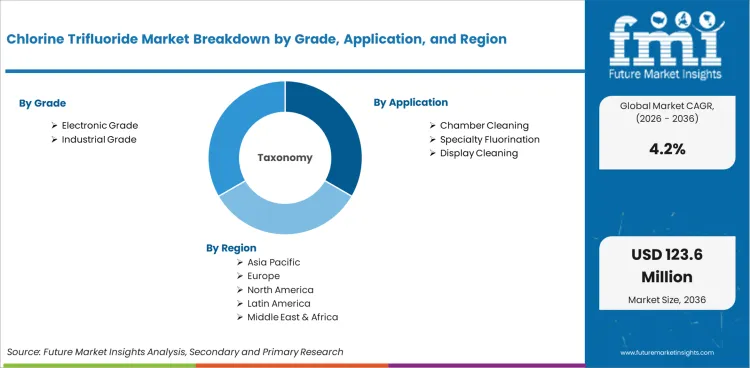
The chlorine trifluoride market is segmented by grade into electronic grade and industrial grade. By application, the market is divided into chamber cleaning, specialty fluorination, display cleaning and research use.
Based on end use, the market is segmented into semiconductor manufacturing, display manufacturing, specialty chemicals and aerospace research. By supply format, the market is categorized into cylinders, bulk specialty supply and onsite handling systems.
Chlorine trifluoride grows through very specific process needs rather than broad chemical demand. Central Glass states that ClF3 is used as an LP-CVD chamber cleaning gas targeting TiN and W, with purity of 99.9% or higher. That points to a narrow but demanding use case in semiconductor process equipment. The wider semiconductor cycle supports the growth case, with WSTS forecasting the global semiconductor market at USD 700.9 billion in 2025 in its Spring 2025 forecast.
Chlorine Trifluoride Market Analysis by Grade
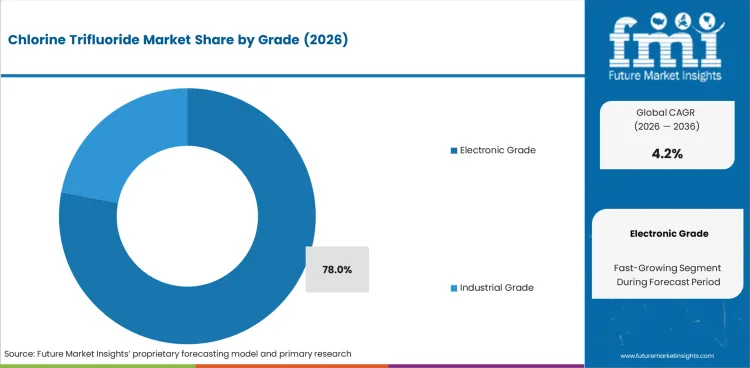
- Electronic grade chlorine trifluoride is expected to account for 78.0% share in 2026 as semiconductor fabs need controlled impurity levels.
- Industrial grade chlorine trifluoride serves limited fluorination and research uses where semiconductor-level purity is not required.
Insights into Industrial Grade Segment
- Industrial grade demand remains selective because the material is too hazardous for casual substitution into normal fluorination work.
- Buyers compare industrial grade ClF3 with fluorine mixtures, bromine trifluoride and hydrogen fluoride depending on the reaction route.
Chlorine Trifluoride Market Analysis by Application
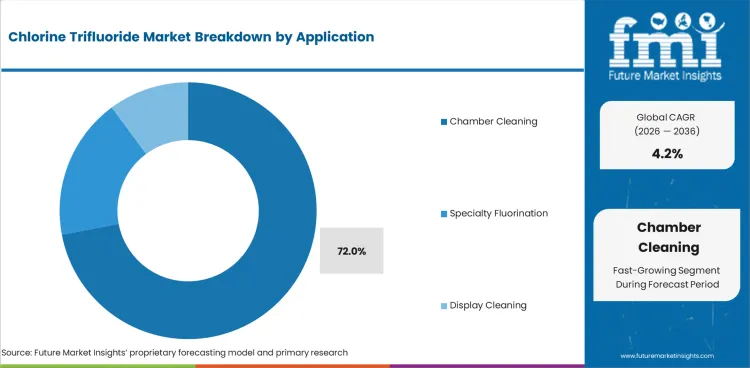
- Semiconductor chamber cleaning is estimated to represent 72.0% share in 2026 as ClF3 is used for selected CVD cleaning tasks.
- Specialty fluorination gains limited use where strong fluorinating power matters more than handling simplicity.
Insights into Specialty Fluorination Segment
- Specialty fluorination demand is limited by safety controls and by alternative reagents that are easier to store and transport.
- ClF3’s strongest non-semiconductor role stays in tightly controlled fluorochemical environments with trained operators and purpose-built equipment.
Chlorine Trifluoride Market Analysis by End Use
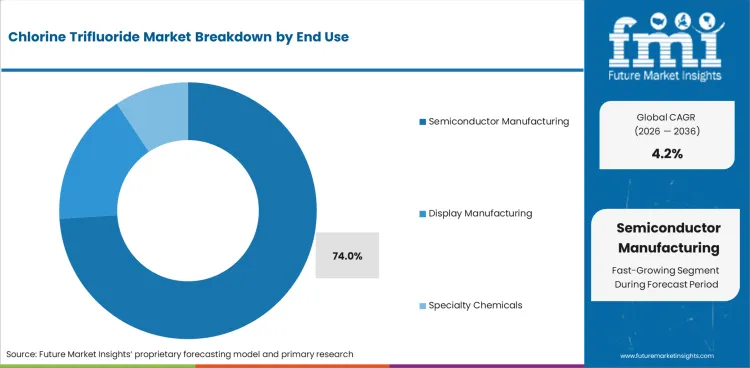
- Semiconductor manufacturing is projected to hold 74.0% share in 2026 as wafer fabrication drives most electronic gas demand.
- Display manufacturing creates smaller demand because process breadth and cleaning-gas choices vary by panel technology.
Insights into Display Manufacturing Segment
- Display use is more selective than semiconductor use because cleaning requirements differ across FPD process steps and equipment generations.
- Kanto Denka lists several gases for semiconductor and FPD manufacturing, but ClF3 is identified specifically for semiconductor cleaning.
Chlorine Trifluoride Market Analysis by Supply Format
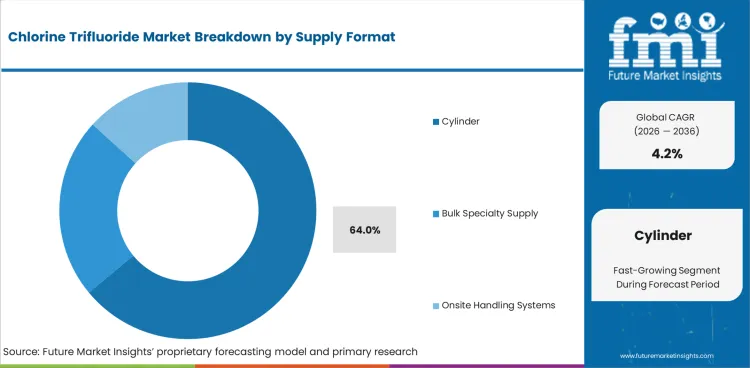
- Cylinder supply is expected to hold 64.0% share in 2026 as hazardous gas handling favors controlled smaller-volume delivery.
- Bulk specialty supply fits large fabs that have stronger gas cabinets, abatement systems and emergency response procedures.
Insights into Bulk Specialty Supply Segment
- Bulk specialty supply becomes viable only when fab demand justifies dedicated handling systems and tighter logistics planning.
- Suppliers must prove cylinder conditioning and delivery reliability before large fabs shift away from smaller controlled supply.
Chlorine Trifluoride Market Drivers, Restraints, and Opportunities
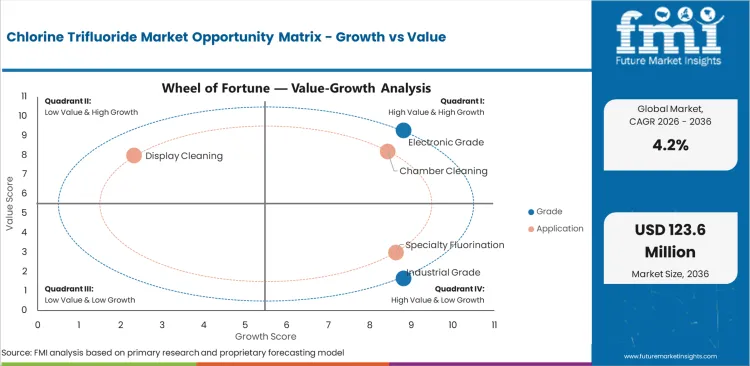
- LP-CVD cleaning drives demand because ClF3 can remove difficult chamber residues in selected semiconductor tools.
- Advanced fab expansion supports electronic grade consumption as wafer output needs more specialty gases.
- Safety compliance limits supplier entry since handling errors can create severe corrosion and toxic exposure events.
- Substitution risk persists because NF3, F2 mixtures and other cleaning chemistries serve adjacent applications.
- Regional localization creates opportunity as Asian fabs seek dependable electronic gas supply closer to production hubs.
LP-CVD Chamber Cleaning
Semiconductor chamber cleaning is the main commercial reason chlorine trifluoride remains relevant. The gas is used where high reactivity can remove selected films and residues without the same activation steps used by some alternatives. Central Glass identifies ClF3 as an LP-CVD chamber cleaning gas targeting titanium nitride and tungsten. The product remains tied to tool uptime and process cleanliness rather than general chemical consumption. Buyers treat the gas as a qualified process material, favoring suppliers with proven purity control and fab documentation.
Electronic Gas Purity
Electronic grade demand is shaped by the quality expectations of semiconductor materials. ClF3 cannot be supplied like a normal industrial gas because impurities and cylinder condition affect fab confidence. Kanto Denka lists chlorine trifluoride under specialty gases as a cleaning gas for semiconductor manufacturing. That product positioning places it beside NF3, WF6 and other high-control electronic materials. A premium supplier environment exists with long qualification cycles. New suppliers need technical credibility before they can win fab accounts.
Safety And Substitution Risk
Handling risk, not end-market demand, is the primary restraint. Chlorine trifluoride is described in chemical hazard references as very toxic, very corrosive, a powerful oxidizer and violently reactive with water. Its safety profile limits casual use and raises logistics costs. Substitution pressure persists where fabs can use NF3, fluorine mixtures or other chamber-cleaning routes. Suppliers benefit from demonstrating safe packaging, trained support teams and reliable emergency procedures.
Regional Analysis
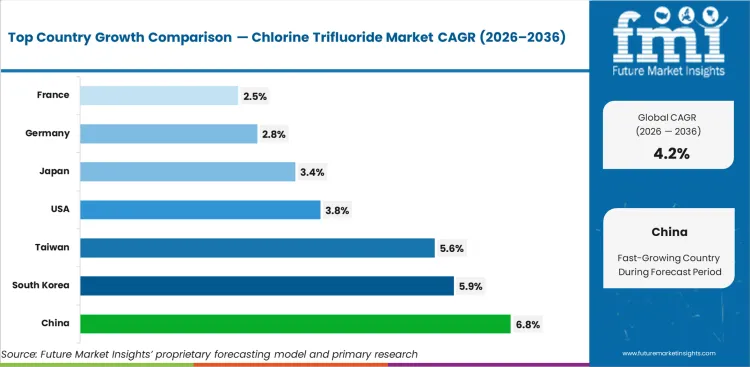
.webp "Top Country Growth Comparison Chlorine Trifluoride Market Cagr (2026 2036)")
| Country | CAGR 2026 to 2036 |
|---|---|
| China | 6.8% |
| South Korea | 5.9% |
| Taiwan | 5.6% |
| United States | 3.8% |
| Japan | 3.4% |
| Germany | 2.8% |
| France | 2.5% |
Source: Future Market Insights analysis based on semiconductor manufacturing demand and specialty gas supplier checks in 2026.
Analysis of Chlorine Trifluoride Market by Key Countries
- China is expected to grow at 6.8% CAGR by 2036, led by semiconductor capacity expansion and electronic gas localization.
- South Korea is projected to follow at 5.9% CAGR by 2036 as memory and foundry production support chamber-cleaning gas demand.
- Taiwan demand is expected to advance at 5.6% CAGR by 2036 as leading-edge wafer fabrication keeps electronic gas use high.
- The United States is forecast at 3.8% CAGR by 2036 through new fab projects and domestic semiconductor incentives.
- Japan is expected to expand at 3.4% CAGR by 2036 as specialty gas producers retain strong semiconductor materials positions.
- Germany at 2.8% CAGR expands through automotive semiconductor and specialty electronics manufacturing.
- France at 2.5% CAGR grows through specialty electronics and European semiconductor manufacturing support.
Country growth differs by wafer fabrication intensity and local specialty gas capacity. China, South Korea and Taiwan are forecast above the global pace because fab expansion and high-volume chip production raise cleaning gas demand. The United States grows at a steadier rate due to new fabs and longer qualification timelines. Germany and France remain smaller but important European specialty electronics markets.
Demand Outlook for Chlorine Trifluoride Market in China
Demand for chlorine trifluoride in China is projected to rise at 6.8% CAGR by 2036, supported by semiconductor manufacturing expansion and local gas supply development. China’s growth is tied to process materials used in wafer fabrication and display-linked electronics. Domestic fabs need stable access to high-purity gases as equipment intensity rises. ClF3 demand will concentrate around large semiconductor clusters such as Shanghai, Wuxi and Shenzhen. Growth depends on whether local suppliers can meet purity and safety requirements accepted by advanced fabs.
- Shanghai semiconductor clusters support ClF3 use through wafer fabs that need qualified chamber-cleaning gases.
- Wuxi and Suzhou strengthen demand through memory and electronics manufacturing supply chains.
- Shenzhen supports downstream electronics demand that keeps pressure on domestic semiconductor production.
Demand Outlook for Chlorine Trifluoride Market in South Korea
The sector in South Korea is expected to expand at 5.9% CAGR by 2036 due to memory and logic semiconductor activity. Samsung Electronics and SK hynix keep the country central to advanced wafer production. Recurring demand exists for process gases used in deposition and cleaning steps. ClF3 demand remains tied to qualified applications rather than broad chemical use. Suppliers must satisfy fab safety checks and impurity specifications. Incremental growth will follow capacity additions and the replacement rhythm of cleaning-gas contracts.
- Pyeongtaek supports demand through Samsung’s large semiconductor production complex and supplier network.
- Icheon and Cheongju support specialty gas consumption through SK hynix memory manufacturing activity.
- Korean fabs place high weight on delivery continuity because gas disruption can affect tool uptime.
Demand Outlook for Chlorine Trifluoride Market in Taiwan
Sales of chlorine trifluoride in Taiwan are projected to increase at 5.6% CAGR by 2036 as foundry capacity drives high-purity gas consumption. Taiwan’s semiconductor base is highly process-intensive and supplier qualification is strict. ClF3 demand is therefore concentrated in fabs with advanced chamber-cleaning needs. Hsinchu and Tainan remain the most relevant manufacturing areas. Growth is expected to follow wafer starts and tool additions, but safety approvals can slow supplier switching. Established specialty gas providers retain an advantage through customer qualification history.
- Hsinchu Science Park supports electronic gas demand through advanced semiconductor manufacturing activity.
- Tainan fabs require dependable specialty gas logistics due to high utilization and process complexity.
- Kaohsiung can add demand as semiconductor investment spreads to southern Taiwan.
Demand Outlook for Chlorine Trifluoride Market in the United States
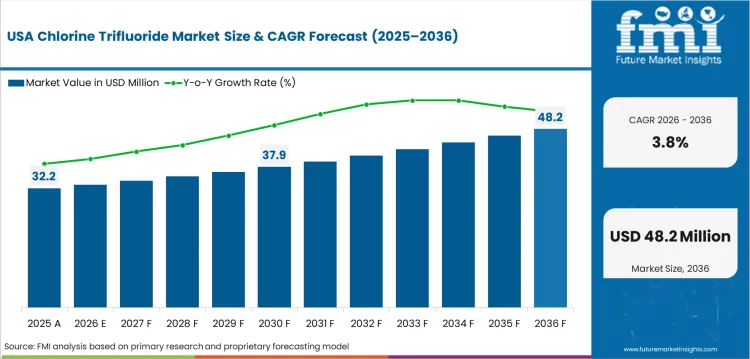
The United States market is expected to grow at 3.8% CAGR by 2036 as new fab investments increase domestic specialty gas demand. The Semiconductor Industry Association reported USD 791.7 billion in global semiconductor sales in 2025. That scale supports U.S. process material demand, but ClF3 remains a narrow tool-cleaning gas. Arizona, Texas and New York are the key demand anchors for advanced manufacturing. Growth will depend on fab ramp timing and gas qualification. Safety compliance will keep supplier additions slower than headline fab announcements.
- Arizona supports demand through new leading-edge fab projects and specialty materials infrastructure.
- Texas remains relevant through semiconductor production, equipment suppliers and industrial gas access.
- New York supports demand through advanced semiconductor research and manufacturing clusters around Albany.
Demand Outlook for Chlorine Trifluoride Market in Japan
Chlorine trifluoride demand in Japan is projected to record 3.4% CAGR by 2036 as specialty gas producers serve semiconductor customers. Japan has a strong electronic materials base and established gas suppliers. Kanto Denka and Central Glass show local product visibility in cleaning gases used for semiconductor manufacturing. Demand grows more slowly than China because the market is mature. The advantage is supplier credibility. Japanese producers can win on purity consistency, quality systems and long-standing customer approval.
- Gunma-based Kanto Denka supports the local specialty gas ecosystem through semiconductor cleaning gas offerings.
- Central Glass lists ClF3 for LP-CVD chamber cleaning, which supports Japan’s electronic gas supply position.
- Kyushu semiconductor activity supports demand as Japan rebuilds domestic chip manufacturing capacity.
Demand Outlook for Chlorine Trifluoride Market in Germany
The sector in Germany is expected to expand at 2.8% CAGR by 2036 through specialty electronics and automotive semiconductor demand. Germany is not the largest ClF3 market, but its industrial electronics and automotive chips create steady materials demand. The market is shaped by strict safety requirements and conservative qualification cycles. Suppliers that already serve European semiconductor and specialty chemical customers are better placed. Growth will remain moderate unless new wafer capacity accelerates in Dresden or other electronics clusters.
- Dresden supports electronic gas demand through Germany’s strongest semiconductor manufacturing cluster.
- Bavaria’s automotive electronics ecosystem creates downstream demand for reliable semiconductor supply.
- German chemical safety culture raises barriers for new hazardous gas suppliers.
Demand Outlook for Chlorine Trifluoride Market in France
The sector in France is expected to expand at 2.5% CAGR by 2036 through specialty electronics and European chip supply initiatives. France has smaller direct ClF3 demand than Asian semiconductor hubs. Its role is more selective, tied to specialty electronics and research-driven manufacturing. Grenoble and Crolles are the most relevant anchors for semiconductor materials demand. Adoption will remain focused on approved process steps with clear safety controls. Growth depends on European fab investment and cross-border specialty gas supply stability.
- Crolles supports demand through semiconductor manufacturing activity and advanced electronics supply chains.
- Grenoble gives France a research and microelectronics anchor for specialty material qualification.
- European hazardous-gas rules favor established suppliers with documented safety procedures and logistics control.
Competitive Landscape
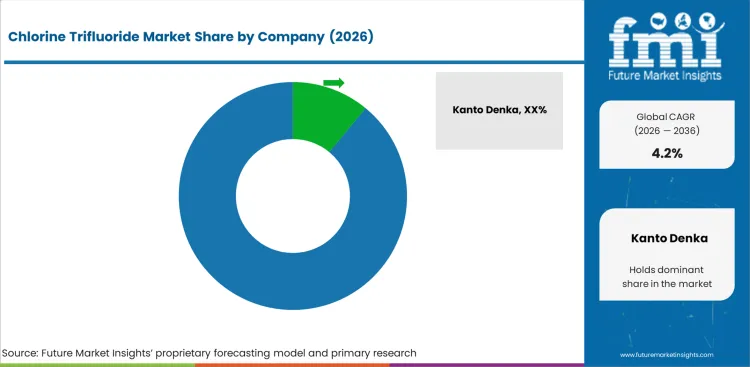
- Market concentration reflects the need for chemical handling skill and semiconductor customer qualification.
- Kanto Denka and Central Glass hold visible Japanese positions through listed semiconductor cleaning gas products.
- Global industrial gas firms compete where customer access and electronic materials logistics are strongest.
- Smaller suppliers face entry barriers tied to safety documentation, purity control and fab qualification.
- Substitution pressure remains active because NF3 and fluorine mixtures serve adjacent chamber-cleaning roles.
Competition in chlorine trifluoride is defined by trust more than by broad distribution. The material is hazardous enough that fabs will not switch suppliers casually. Kanto Denka lists ClF3 as a semiconductor cleaning gas, while Central Glass identifies ClF3 for LP-CVD chamber cleaning. These public product positions matter because they show actual participation in the relevant application. Buyers will evaluate impurity control, cylinder conditioning and incident history before price. The competitive field remains narrower than most specialty gas categories.
Established electronic gas suppliers gain from fab relationships and safety systems. Air Liquide, Linde and Merck have broad semiconductor materials platforms even where ClF3 product visibility varies by region. Large fabs prefer suppliers that can support multiple gases, emergency response and documentation. Firms with regional electronics gas infrastructure hold an advantage. ClF3 remains a niche product, so suppliers must evaluate whether the risk profile justifies expansion beyond qualified demand centers.
Japanese producers remain important because the country has deep specialty gas and semiconductor materials know-how. Kanto Denka’s portfolio includes NF3, ClF3, WF6 and other electronic gases used in semiconductor manufacturing. Central Glass lists ClF3 with stated purity of 99.9% or higher for LP-CVD chamber cleaning. ClF3 sits inside a broader electronic materials portfolio. Suppliers offering multiple cleaning and etching gases can serve fabs more effectively than single-product entrants.
Key Companies in the Chlorine Trifluoride Market
- Kanto Denka
- Central Glass
- Air Liquide
- Linde
- Merck KGaA
- Solvay
- Mitsui Chemicals
Specialty Electronic Gas Producers
- Kanto Denka
- Central Glass
- Air Liquide
- Linde
Competitive Benchmarking: Chlorine Trifluoride Market
| Company | Electronic Gas Portfolio Depth | ClF3 Application Visibility | Hazardous Gas Handling Strength | Geographic Footprint |
|---|---|---|---|---|
| Kanto Denka | High | High | Strong | Japan and Asia |
| Central Glass | High | High | Strong | Japan and Asia |
| Air Liquide | High | Medium | High | Global |
| Linde | High | Medium | High | Global |
| Merck KGaA | High | Low to Medium | Strong | Global |
| Solvay | Medium | Low to Medium | Strong | Europe and Global |
| Mitsui Chemicals | Medium | Low | Medium | Japan and Asia |
Source: Future Market Insights competitive analysis, 2026. Ratings reflect relative positioning based on electronic gas portfolio depth, ClF3 application visibility and hazardous gas handling strength.
Key Developments in Chlorine Trifluoride Market
- In 2025, SIA reported global semiconductor sales of USD 791.7 billion, up 25.6% from 2024. These sales figures support process material demand tied to fab activity.
- In 2025, SEMI reported semiconductor equipment billings of USD 135.1 billion, up 15% year over year. These billings signal stronger demand for process tools and chamber-cleaning materials.
- In 2025, WSTS projected the global semiconductor market to reach USD 700.9 billion in its Spring 2025 forecast. This supports near-term demand for electronic specialty gases.
- Central Glass lists ClF3 as an LP-CVD chamber cleaning gas targeting TiN and W. The product reference supports semiconductor-specific use.
- Kanto Denka lists chlorine trifluoride as a cleaning gas for semiconductor manufacturing. The listing confirms active commercial positioning in electronic specialty gases.
Report Scope and Coverage
| Parameter | Details |
|---|---|
| Quantitative Units | USD 78.6 million in 2026 to USD 112.4 million in 2036, at a CAGR of 4.2% |
| Market Definition | Commercial chlorine trifluoride supplied as a high-reactivity fluorinating and cleaning gas for semiconductor, display and specialty chemical uses. |
| Regions Covered | North America, Latin America, Europe, East Asia, South Asia and Pacific, Middle East and Africa |
| Countries Covered | China, South Korea, Taiwan, United States, Japan, Germany, France and 30+ countries |
| Key Companies Profiled | Kanto Denka, Central Glass, Air Liquide, Linde, Merck KGaA, Solvay and Mitsui Chemicals |
| Forecast Period | 2026 to 2036 |
| Approach | Hybrid bottom-up and top-down methodology based on semiconductor cleaning demand, electronic gas pricing, supplier qualification and country-level fab activity |
Chlorine Trifluoride Market by Segments
Chlorine Trifluoride Market Segmented by Grade:
- Electronic Grade
- Industrial Grade
Chlorine Trifluoride Market Segmented by Application:
- Chamber Cleaning
- Specialty Fluorination
- Display Cleaning
- Research Use
Chlorine Trifluoride Market Segmented by End Use:
- Semiconductor Manufacturing
- Display Manufacturing
- Specialty Chemicals
- Aerospace Research
Chlorine Trifluoride Market Segmented by Supply Format:
- Cylinders
- Bulk Specialty Supply
- Onsite Handling Systems
Chlorine Trifluoride Market by Region:
- North America
- United States
- Canada
- Mexico
- Latin America
- Brazil
- Chile
- Rest of Latin America
- Western Europe
- Germany
- UK
- France
- Italy
- Spain
- BENELUX
- Nordic
- Rest of Western Europe
- Eastern Europe
- Russia
- Poland
- Hungary
- Balkan and Baltic
- Rest of Eastern Europe
- East Asia
- China
- Japan
- South Korea
- South Asia and Pacific
- India
- ASEAN
- Australia and New Zealand
- Rest of South Asia and Pacific
- Middle East and Africa
- Kingdom of Saudi Arabia
- Other GCC Countries
- Turkiye
- South Africa
- Other African Union
- Rest of Middle East and Africa
Research Sources and Bibliography
- Kanto Denka Kogyo Co., Ltd. Specialty gases product information.
- Central Glass Co., Ltd. Cleaning gases for semiconductor manufacturing equipment.
- Semiconductor Industry Association. 2026. Global annual semiconductor sales increase 25.6% to USD 791.7 billion in 2025.
- SEMI. 2026. Global semiconductor equipment billings reached USD 135 billion in 2025.
- World Semiconductor Trade Statistics. 2025. WSTS semiconductor market forecast spring 2025.
- National Institute for Occupational Safety and Health. Chlorine trifluoride chemical hazard guidance.
- PubChem. Chlorine trifluoride compound data.
- Google Patents. Process for chlorine trifluoride chamber cleaning.
This Report Answers
- How large is the chlorine trifluoride market in 2026 and how much incremental value is expected by 2036?
- What factors are shaping demand for electronic grade and industrial grade chlorine trifluoride?
- Which applications are expected to lead adoption across chamber cleaning, fluorination and display cleaning?
- How does semiconductor equipment growth affect demand for ClF3 chamber-cleaning gas?
- Which countries are forecast to grow faster than the global average and why?
- How do safety requirements and substitution risks affect chlorine trifluoride adoption?
- Which companies are best positioned across electronic specialty gases and hazardous gas handling?
Frequently Asked Questions
What is the current value of the chlorine trifluoride market?
The chlorine trifluoride market is estimated at USD 78.6 million in 2026.
What is the projected value of the chlorine trifluoride market by 2036?
The market is forecast to reach USD 112.4 million by 2036.
What CAGR is expected for the chlorine trifluoride market?
The market is projected to expand at 4.2% CAGR from 2026 to 2036.
Which grade is expected to lead the chlorine trifluoride market?
Electronic grade chlorine trifluoride is expected to lead with 78.0% share in 2026.
Which application is expected to lead the market?
Semiconductor chamber cleaning is projected to lead with 72.0% share in 2026.
Which country is expected to grow fastest?
China is projected to grow fastest at 6.8% CAGR by 2036.
What is the main competitive shift in this market?
The main competitive shift is toward fab-qualified electronic gas suppliers with stronger safety, purity and logistics controls.
What is chlorine trifluoride used for?
Chlorine trifluoride is mainly used as a high-reactivity cleaning and fluorinating gas, especially in selected semiconductor chamber cleaning applications.
Why is chlorine trifluoride dangerous?
Chlorine trifluoride is dangerous because it is highly toxic, corrosive and a powerful oxidizer that reacts violently with water.
What is the difference between ClF3 and NF3?
ClF3 is more reactive and can clean selected chambers without plasma activation, while NF3 is more widely used in plasma-assisted chamber cleaning.
What limits chlorine trifluoride market growth?
The main limits are severe handling risk, strict transport controls, high safety cost and substitution by other fluorinated cleaning gases.
Preview the report firsthand - request a free sample
Get SampleGet the brochure for pricing and purchase details.
Get PDFTable of Content
- Executive Summary
- Global Market Outlook
- Demand-side Trends
- Supply-side Trends
- Technology Roadmap Analysis
- Analysis and Recommendations
- Market Overview
- Market Coverage / Taxonomy
- Market Definition / Scope / Limitations
- Research Methodology
- Chapter Orientation
- Analytical Lens and Working Hypotheses
- Market Structure, Signals, and Trend Drivers
- Benchmarking and Cross-market Comparability
- Market Sizing, Forecasting, and Opportunity Mapping
- Research Design and Evidence Framework
- Desk Research Programme (Secondary Evidence)
- Company Annual and Sustainability Reports
- Peer-reviewed Journals and Academic Literature
- Corporate Websites, Product Literature, and Technical Notes
- Earnings Decks and Investor Briefings
- Statutory Filings and Regulatory Disclosures
- Technical White Papers and Standards Notes
- Trade Journals, Industry Magazines, and Analyst Briefs
- Conference Proceedings, Webinars, and Seminar Materials
- Government Statistics Portals and Public Data Releases
- Press Releases and Reputable Media Coverage
- Specialist Newsletters and Curated Briefings
- Sector Databases and Reference Repositories
- FMI Internal Proprietary Databases and Historical Market Datasets
- Subscription Datasets and Paid Sources
- Social Channels, Communities, and Digital Listening Inputs
- Additional Desk Sources
- Expert Input and Fieldwork (Primary Evidence)
- Primary Modes
- Qualitative Interviews and Expert Elicitation
- Quantitative Surveys and Structured Data Capture
- Blended Approach
- Why Primary Evidence is Used
- Field Techniques
- Interviews
- Surveys
- Focus Groups
- Observational and In-context Research
- Social and Community Interactions
- Stakeholder Universe Engaged
- C-suite Leaders
- Board Members
- Presidents and Vice Presidents
- R&D and Innovation Heads
- Technical Specialists
- Domain Subject-matter Experts
- Scientists
- Physicians and Other Healthcare Professionals
- Governance, Ethics, and Data Stewardship
- Research Ethics
- Data Integrity and Handling
- Primary Modes
- Tooling, Models, and Reference Databases
- Desk Research Programme (Secondary Evidence)
- Data Engineering and Model Build
- Data Acquisition and Ingestion
- Cleaning, Normalisation, and Verification
- Synthesis, Triangulation, and Analysis
- Quality Assurance and Audit Trail
- Market Background
- Market Dynamics
- Drivers
- Restraints
- Opportunity
- Trends
- Scenario Forecast
- Demand in Optimistic Scenario
- Demand in Likely Scenario
- Demand in Conservative Scenario
- Opportunity Map Analysis
- Product Life Cycle Analysis
- Supply Chain Analysis
- Investment Feasibility Matrix
- Value Chain Analysis
- PESTLE and Porter’s Analysis
- Regulatory Landscape
- Regional Parent Market Outlook
- Production and Consumption Statistics
- Import and Export Statistics
- Market Dynamics
- Global Market Analysis 2021 to 2025 and Forecast, 2026 to 2036
- Historical Market Size Value (USD Million) Analysis, 2021 to 2025
- Current and Future Market Size Value (USD Million) Projections, 2026 to 2036
- Y-o-Y Growth Trend Analysis
- Absolute $ Opportunity Analysis
- Global Market Pricing Analysis 2021 to 2025 and Forecast 2026 to 2036
- Global Market Analysis 2021 to 2025 and Forecast 2026 to 2036, By Grade
- Introduction / Key Findings
- Historical Market Size Value (USD Million) Analysis By Grade , 2021 to 2025
- Current and Future Market Size Value (USD Million) Analysis and Forecast By Grade , 2026 to 2036
- Electronic Grade
- Industrial Grade
- Electronic Grade
- Y-o-Y Growth Trend Analysis By Grade , 2021 to 2025
- Absolute $ Opportunity Analysis By Grade , 2026 to 2036
- Global Market Analysis 2021 to 2025 and Forecast 2026 to 2036, By Application
- Introduction / Key Findings
- Historical Market Size Value (USD Million) Analysis By Application, 2021 to 2025
- Current and Future Market Size Value (USD Million) Analysis and Forecast By Application, 2026 to 2036
- Chamber Cleaning
- Specialty Fluorination
- Display Cleaning
- Chamber Cleaning
- Y-o-Y Growth Trend Analysis By Application, 2021 to 2025
- Absolute $ Opportunity Analysis By Application, 2026 to 2036
- Global Market Analysis 2021 to 2025 and Forecast 2026 to 2036, By End Use
- Introduction / Key Findings
- Historical Market Size Value (USD Million) Analysis By End Use, 2021 to 2025
- Current and Future Market Size Value (USD Million) Analysis and Forecast By End Use, 2026 to 2036
- Semiconductor Manufacturing
- Display Manufacturing
- Specialty Chemicals
- Semiconductor Manufacturing
- Y-o-Y Growth Trend Analysis By End Use, 2021 to 2025
- Absolute $ Opportunity Analysis By End Use, 2026 to 2036
- Global Market Analysis 2021 to 2025 and Forecast 2026 to 2036, By Supply Format
- Introduction / Key Findings
- Historical Market Size Value (USD Million) Analysis By Supply Format, 2021 to 2025
- Current and Future Market Size Value (USD Million) Analysis and Forecast By Supply Format, 2026 to 2036
- Cylinder
- Bulk Specialty Supply
- Onsite Handling Systems
- Cylinder
- Y-o-Y Growth Trend Analysis By Supply Format, 2021 to 2025
- Absolute $ Opportunity Analysis By Supply Format, 2026 to 2036
- Global Market Analysis 2021 to 2025 and Forecast 2026 to 2036, By Region
- Introduction
- Historical Market Size Value (USD Million) Analysis By Region, 2021 to 2025
- Current Market Size Value (USD Million) Analysis and Forecast By Region, 2026 to 2036
- North America
- Latin America
- Western Europe
- Eastern Europe
- East Asia
- South Asia and Pacific
- Middle East & Africa
- Market Attractiveness Analysis By Region
- North America Market Analysis 2021 to 2025 and Forecast 2026 to 2036, By Country
- Historical Market Size Value (USD Million) Trend Analysis By Market Taxonomy, 2021 to 2025
- Market Size Value (USD Million) Forecast By Market Taxonomy, 2026 to 2036
- By Country
- USA
- Canada
- Mexico
- By Grade
- By Application
- By End Use
- By Supply Format
- By Country
- Market Attractiveness Analysis
- By Country
- By Grade
- By Application
- By End Use
- By Supply Format
- Key Takeaways
- Latin America Market Analysis 2021 to 2025 and Forecast 2026 to 2036, By Country
- Historical Market Size Value (USD Million) Trend Analysis By Market Taxonomy, 2021 to 2025
- Market Size Value (USD Million) Forecast By Market Taxonomy, 2026 to 2036
- By Country
- Brazil
- Chile
- Rest of Latin America
- By Grade
- By Application
- By End Use
- By Supply Format
- By Country
- Market Attractiveness Analysis
- By Country
- By Grade
- By Application
- By End Use
- By Supply Format
- Key Takeaways
- Western Europe Market Analysis 2021 to 2025 and Forecast 2026 to 2036, By Country
- Historical Market Size Value (USD Million) Trend Analysis By Market Taxonomy, 2021 to 2025
- Market Size Value (USD Million) Forecast By Market Taxonomy, 2026 to 2036
- By Country
- Germany
- UK
- Italy
- Spain
- France
- Nordic
- BENELUX
- Rest of Western Europe
- By Grade
- By Application
- By End Use
- By Supply Format
- By Country
- Market Attractiveness Analysis
- By Country
- By Grade
- By Application
- By End Use
- By Supply Format
- Key Takeaways
- Eastern Europe Market Analysis 2021 to 2025 and Forecast 2026 to 2036, By Country
- Historical Market Size Value (USD Million) Trend Analysis By Market Taxonomy, 2021 to 2025
- Market Size Value (USD Million) Forecast By Market Taxonomy, 2026 to 2036
- By Country
- Russia
- Poland
- Hungary
- Balkan & Baltic
- Rest of Eastern Europe
- By Grade
- By Application
- By End Use
- By Supply Format
- By Country
- Market Attractiveness Analysis
- By Country
- By Grade
- By Application
- By End Use
- By Supply Format
- Key Takeaways
- East Asia Market Analysis 2021 to 2025 and Forecast 2026 to 2036, By Country
- Historical Market Size Value (USD Million) Trend Analysis By Market Taxonomy, 2021 to 2025
- Market Size Value (USD Million) Forecast By Market Taxonomy, 2026 to 2036
- By Country
- China
- Japan
- South Korea
- By Grade
- By Application
- By End Use
- By Supply Format
- By Country
- Market Attractiveness Analysis
- By Country
- By Grade
- By Application
- By End Use
- By Supply Format
- Key Takeaways
- South Asia and Pacific Market Analysis 2021 to 2025 and Forecast 2026 to 2036, By Country
- Historical Market Size Value (USD Million) Trend Analysis By Market Taxonomy, 2021 to 2025
- Market Size Value (USD Million) Forecast By Market Taxonomy, 2026 to 2036
- By Country
- India
- ASEAN
- Australia & New Zealand
- Rest of South Asia and Pacific
- By Grade
- By Application
- By End Use
- By Supply Format
- By Country
- Market Attractiveness Analysis
- By Country
- By Grade
- By Application
- By End Use
- By Supply Format
- Key Takeaways
- Middle East & Africa Market Analysis 2021 to 2025 and Forecast 2026 to 2036, By Country
- Historical Market Size Value (USD Million) Trend Analysis By Market Taxonomy, 2021 to 2025
- Market Size Value (USD Million) Forecast By Market Taxonomy, 2026 to 2036
- By Country
- Kingdom of Saudi Arabia
- Other GCC Countries
- Turkiye
- South Africa
- Other African Union
- Rest of Middle East & Africa
- By Grade
- By Application
- By End Use
- By Supply Format
- By Country
- Market Attractiveness Analysis
- By Country
- By Grade
- By Application
- By End Use
- By Supply Format
- Key Takeaways
- Key Countries Market Analysis
- USA
- Pricing Analysis
- Market Share Analysis, 2025
- By Grade
- By Application
- By End Use
- By Supply Format
- Canada
- Pricing Analysis
- Market Share Analysis, 2025
- By Grade
- By Application
- By End Use
- By Supply Format
- Mexico
- Pricing Analysis
- Market Share Analysis, 2025
- By Grade
- By Application
- By End Use
- By Supply Format
- Brazil
- Pricing Analysis
- Market Share Analysis, 2025
- By Grade
- By Application
- By End Use
- By Supply Format
- Chile
- Pricing Analysis
- Market Share Analysis, 2025
- By Grade
- By Application
- By End Use
- By Supply Format
- Germany
- Pricing Analysis
- Market Share Analysis, 2025
- By Grade
- By Application
- By End Use
- By Supply Format
- UK
- Pricing Analysis
- Market Share Analysis, 2025
- By Grade
- By Application
- By End Use
- By Supply Format
- Italy
- Pricing Analysis
- Market Share Analysis, 2025
- By Grade
- By Application
- By End Use
- By Supply Format
- Spain
- Pricing Analysis
- Market Share Analysis, 2025
- By Grade
- By Application
- By End Use
- By Supply Format
- France
- Pricing Analysis
- Market Share Analysis, 2025
- By Grade
- By Application
- By End Use
- By Supply Format
- India
- Pricing Analysis
- Market Share Analysis, 2025
- By Grade
- By Application
- By End Use
- By Supply Format
- ASEAN
- Pricing Analysis
- Market Share Analysis, 2025
- By Grade
- By Application
- By End Use
- By Supply Format
- Australia & New Zealand
- Pricing Analysis
- Market Share Analysis, 2025
- By Grade
- By Application
- By End Use
- By Supply Format
- China
- Pricing Analysis
- Market Share Analysis, 2025
- By Grade
- By Application
- By End Use
- By Supply Format
- Japan
- Pricing Analysis
- Market Share Analysis, 2025
- By Grade
- By Application
- By End Use
- By Supply Format
- South Korea
- Pricing Analysis
- Market Share Analysis, 2025
- By Grade
- By Application
- By End Use
- By Supply Format
- Russia
- Pricing Analysis
- Market Share Analysis, 2025
- By Grade
- By Application
- By End Use
- By Supply Format
- Poland
- Pricing Analysis
- Market Share Analysis, 2025
- By Grade
- By Application
- By End Use
- By Supply Format
- Hungary
- Pricing Analysis
- Market Share Analysis, 2025
- By Grade
- By Application
- By End Use
- By Supply Format
- Kingdom of Saudi Arabia
- Pricing Analysis
- Market Share Analysis, 2025
- By Grade
- By Application
- By End Use
- By Supply Format
- Turkiye
- Pricing Analysis
- Market Share Analysis, 2025
- By Grade
- By Application
- By End Use
- By Supply Format
- South Africa
- Pricing Analysis
- Market Share Analysis, 2025
- By Grade
- By Application
- By End Use
- By Supply Format
- USA
- Market Structure Analysis
- Competition Dashboard
- Competition Benchmarking
- Market Share Analysis of Top Players
- By Regional
- By Grade
- By Application
- By End Use
- By Supply Format
- Competition Analysis
- Competition Deep Dive
- Kanto Denka
- Overview
- Product Portfolio
- Profitability by Market Segments (Product/Age /Sales Channel/Region)
- Sales Footprint
- Strategy Overview
- Marketing Strategy
- Product Strategy
- Channel Strategy
- Central Glass
- Air Liquide
- Linde
- Merck KGaA
- Solvay
- Mitsui Chemicals
- Kanto Denka
- Competition Deep Dive
- Assumptions & Acronyms Used


