

- Industry Size (2026)
- USD 1555.3 Mn
- Forecast (2036)
- USD 3784.7 Mn
- CAGR (2026 to 2036)
- 9.3%
Dehydrated Meat Product Market Forecast and Outlook 2026 to 2036
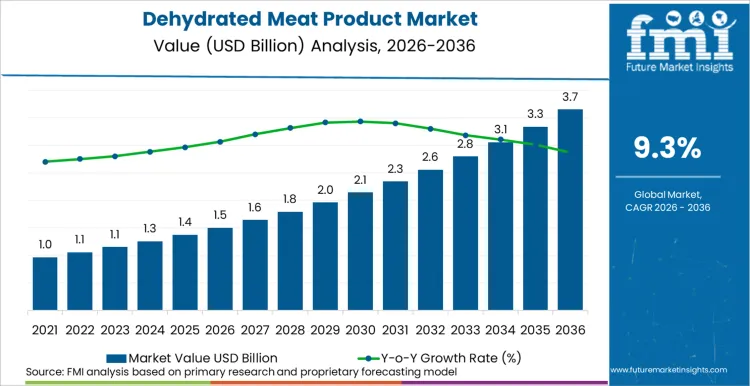
In 2025, the dehydrated meat product market was valued at USD 1,423.0 million. Based on Future Market Insights' analysis, demand is estimated to grow to USD 1,555.3 million in 2026 and USD 3,784.7 million by 2036. FMI projects a CAGR of 9.3% during the forecast period.
Absolute dollar growth of USD 2,229.3 million over the decade reflects an accelerating shift in snacking behaviour toward high-protein, portable formats. Clean-label formulations featuring grass-fed beef, no artificial preservatives, and globally inspired flavour profiles are commanding premium retail pricing in developed markets. Simultaneously, freeze-drying and microwave vacuum dehydration technologies are improving rehydration quality and production energy efficiency, lowering unit costs for mass-market producers.
As David Brandes, CEO of Planetary, stated regarding the cost structure of mycoprotein-blended dehydrated snacks, 'An equivalent chicken product can be offered at over 20% discount without having to make concessions on taste.
North America (9.8% CAGR) leads through premium jerky brand expansion and clean-label reformulation. Asia Pacific (10.5% CAGR) is the fastest-growing region, driven by protein snacking adoption in China and India. Europe (8.5% CAGR) grows through artisanal charcuterie and biltong import demand. Latin America (8.0% CAGR) benefits from domestic beef production advantages and snack food distribution expansion.
Dehydrated Meat Product Market Market Definition
The dehydrated meat product market covers the production, sale, and distribution of shelf-stable meat products processed through moisture removal techniques including air-drying, freeze-drying, spray-drying, and microwave vacuum dehydration. Products include beef jerky, poultry jerky, pork jerky, meat sticks, biltong, and other dried or cured meat snack formats.
Dehydrated Meat Product Market Market Inclusions
The report covers global and regional market sizes by revenue for the 2026 to 2036 forecast period. It includes segmental breakdowns by product type, technology, and distribution channel. Pricing analysis by premium versus mass-market positioning, competitive landscape mapping, and flavour trend tracking are included.
Dehydrated Meat Product Market Market Exclusions
The scope excludes fresh, frozen, or canned meat products. It also omits plant-based meat alternatives unless blended with animal protein in a dehydrated format. Pet food jerky treats are outside scope.
Dehydrated Meat Product Market Research Methodology
- Primary Research: Interviews were conducted with jerky and dried meat manufacturers, retail buyers, flavour houses, dehydration equipment suppliers, and protein snack category managers across the United States, Europe, and Asia Pacific.
- Desk Research: USDA meat production statistics, retail scanner data from syndicated research, trade show product launch databases, and international meat trade statistics supported demand benchmarking.
- Market-Sizing and Forecasting: A hybrid model combined top-down protein snack category spend with bottom-up manufacturer revenue and retail shelf-space allocation data, validated against dehydration equipment capacity shipments.
- Data Validation and Update Cycle: Outputs undergo anomaly screening, variance checks across meat production and retail sales datasets, and structured peer review prior to release.
Summary of Dehydrated Meat Product Market
- Power in the dehydrated meat product value chain is split between large CPG companies and raw meat processors. Tyson Foods and Hormel Foods control both raw material supply and branded jerky distribution, giving them vertical integration advantages that independent brands cannot replicate. As per FMI, brands like Jack Link's and Chomps differentiate on flavour innovation and clean-label positioning, but remain dependent on commodity beef pricing that large processors can hedge more effectively.
- Pricing asymmetry is acute between premium and mass-market segments. Craft-style grass-fed beef jerky retails at USD 8 to 12 per ounce, while mass-market conventional jerky sells at USD 2 to 4 per ounce. FMI analysts note that the premium segment carries gross margins above 50%, while mass-market producers operate at 20 to 30% margins, creating a structural incentive for brand investment in clean-label reformulation and direct-to-consumer channels.
- Sourcing fragility centres on raw beef pricing volatility and spice supply chain disruptions. Beef prices are subject to cattle cycle dynamics, drought, and feed cost fluctuations that directly affect jerky production economics. Specialty spices used in globally inspired flavour profiles, such as gochujang, chimichurri, and habanero blends, depend on agricultural supply chains that face climate and logistics risks.
- Brand and compliance risks are tied to food safety, labelling accuracy, and cross-border trade standards. The USDA and French authorities strengthened bilateral trade agreements in November 2025 to streamline dried meat export certification, but compliance with both origin-country and destination-country food safety standards remains costly for smaller producers. FMI opines that brands with USDA and EU dual certification will access the widest export markets and command premium wholesale pricing.
- Geographic leverage differs by consumption pattern. North America is the largest market by revenue, anchored by the jerky and meat stick category. Europe is a premium import market for biltong and artisanal dried meats. Asia Pacific is volume-growth-driven, with protein snacking emerging as a new category in China and India. Latin America holds a raw material cost advantage through domestic beef production, supporting export-oriented dried meat manufacturing
- For C-suite executives in food and snacking, the dehydrated meat product market through 2036 rewards companies that invest in clean-label reformulation, secure dual-certification for cross-border trade, and build direct-to-consumer channels that bypass traditional retail margin structures. Flavour innovation and protein-density claims are the primary shelf-space differentiators.
Analyzing Dehydrated Meat Product Market by Top Investment Segments
Hydrated Chicken: Shaping Consumer Preferences & Innovation
| Segment | Value share (2026) |
|---|---|
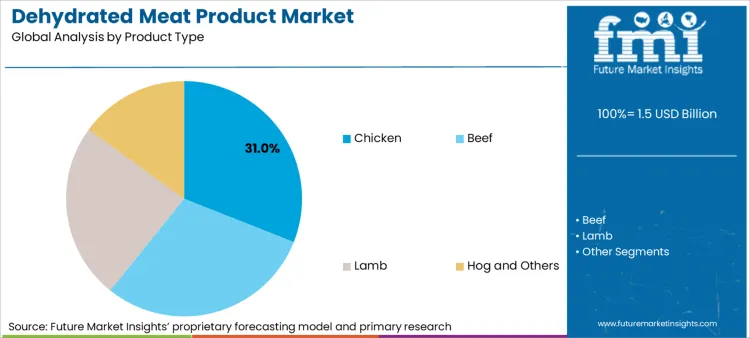
| Product Type - Chicken | 31% |
The categories of the hydrated meat products are as follows The hydrated meat products market, especially that of chicken. It follows that whole birds and other retail cuts of frozen chicken dominate the market because they offer considerable benefits to both the suppliers and the consumers in terms of shelf-life. Both nuggets, sausages and chicken with marinated cuts are increasingly being consumed because of their convenience of preparation and the growing demand for ready to prepare meals.
The use of the organic chicken is also growing as customer demand for products that contain no antibiotics or hormones increases. Further, processed chicken, especially canned chicken that is frequently used in ready-to-serve meals including soups, is becoming a popular product with increases in lifespans and demand for convenience foods in specific world locations.
Why Pouches are Becoming the Preferred Packaging for Hydrated Meat Products
| Segment | Value share |
|---|---|
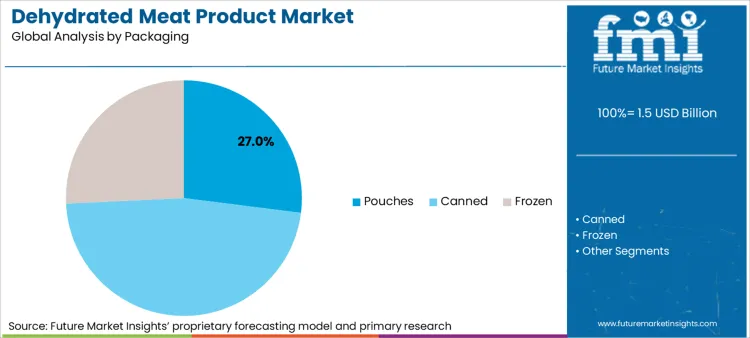
| Packaging - Pouches | 27% |
The market for the hydrated meat product is transitioning from using pouches as packaging materials are more convenient and economical while offering extended shelf life at the same time. The pouches especially the stand up pouches with zippers are therefore becoming popular since they are easy to store and use as well as being resealable to meet consumers convenience.
These forms are usually applied to meat snacks, marinated products and single portions especially in some areas in North American and Europe. Moreover, there is a trend towards developing the poly pouch in the market that is recyclable and biodegradable to increase the environmental consciousness. But, one of the biggest factor which holds a concern for the manufacturers is how to maintain the quality and taste of the meat in pouch packaging.
Key Industry Highlights
Growing Demand for Convenience Foods:
The increasing demand for dehydrated meat products stems from customers' busy lifestyles, pursuing appropriate, protein-rich snacks. These shelf-stable foods offer general storage and active preparation, attractive to outdoor enthusiasts and health-conscious things. A type of flavors improves their attraction, while sustainable sourcing practices can draw in environmentally informed customers, making them a well-known choice in the convenience food industry.
Slim Jim is a famous brand of dehydrated meat snacks, generally featuring beef and pork sticks in diverse flavors. Key factors involve meat, soy protein, seasonings, and preservatives. Slim Jims are available, high in protein, have a long shelf life, and determine a good origin of iron, making them a delicious choice for on-the-go snacking.
Oberto is a well-known brand contribution dehydrated meat products like beef jerky and meat snacks. Their brand feature superior factors, different flavor choices. Oberto products are again rich in protein, low in fat, and include essential fiber like vitamin B12, zinc, and iron, making them a healthy and available benefit for health-conscious customers.
Technological Advancements:
Vacuum drying and freeze drying are transfering the food production by reaching shelf life as well as maintaining flavor. These innovative patterns away moisture to prevent spoilage and retain nutrition, while more helping to purchasers' demand for appropriate, high-quality food alternatives.
Henningsen Foods is a key brand in the dehydrated meat market, specializing in freeze-dried production such as beef jerky and chicken bite*. Known for its high-quality snacks, the business indicates organic elements and sustainable practices. Their freeze-drying process preserves the flavor and vitamins, engaging to fitness-conscious users and outdoor enthusiasts pursuing convenient, healthy meal alternatives.
Jack Link's is a dominant brand in the dehydrated meat product display, great for its high-quality beef jerky and snacks. Utilizing leading vacuum drying and freeze drying technologies, Jack Link's efficiently erases moisture from its products, reaching shelf life while continuing flavor and digestive content. exemplifying how technological progresses are change the dehydrated meat industry to meet developing consumer demands.
Increased Focus on Protein-Rich Diets:
The growing flow of high-protein diets, in the way that keto, paleo, and reduced-carb, is inflaming demand for protein-rich dried out core products as an essential dietary supplement.Tyson Foods' Grilled & Ready Chicken Breasts indulge high-protein diets like keto and paleo.
These ready-to-erode products are rich in lean protein, reduced in carbs, and available for food prepare, making authority a well-known choice for health-conscious customers.Hormel Foods' Applegate Cut offers protein-rich products like natural turkey bacon and chicken sausages. These are keto and paleo-intimate, minimally prepared, and empty artificial ingredients, making them a approved choice for customers concentrated on clean, high-protein diets.
2021 to 2025 Global Dehydrated Meat Product Market Sales Analysis Compared to Demand Forecasts for 2026 to 2036
The global dehydrated meat product display shown stable improvement from 2021 to 2025, compelled by growing demand for available, protein-rich meals accompanying longer shelf life. The pandemic played a important role in sustaining market growth, as buyers sought long-lasting, ready-to-eat alternatives for stockpiling.
North America waited the dominant display on account of the recognition of beef jerky and additional snackable meat products, while Asia-Pacific granted speedy progress, compelled by urbanization and growing disposable incomes. Beef, chicken, pork, and fish were the underlying merchandise divisions, accompanying meat leading the sector. However, extreme result costs and increasing competition from plant-based options presented challenges to the market's development during this duration.
Looking forward to 2026 to 2036, the dehydrated meat product advertise be necessary to continue its development trajectory The industry will benefit from the growing focus on extreme-protein diets and technological promotions in dehydration processes that improve flavor and nutritional advantage.
Demand will rise in appearing domains, specifically Asia-Pacific, place middle-class growth and Western digestive habits are influencing food advantages. Product modernization, containing natural and clean-label choices, as well the rise of e-commerce, will further drive display demand. However, challenges such as contest from plant-based protein produce and supervisory hurdles concerning sustainability standards will shape the market's future trajectory.
Market Concentration
The Dehydrated meat product companies with only a few large players. Firms that are multinational and well established, with strong production capabilities and extensive distribution networks. The Tier 1 companies holding about 50% market share and sector comprises like Hormel Foods, and Tyson Food. Due to their strong brand image, extensive operations, and innovative mindset, they remain at the forefront of both global industry.
In comparison, the Tier 2 sector accounts for roughly 30% of the sector, which includes mid-sized companies that have a significant presence but do not possess enough market share to compete with the leading players. This group is known as Tier 2. This level includes companies such as Jack Link's, which sells jerky products, and Country Archer Provisions (known for its natural, high-quality meat snacks).
These businesses typically target specific geographic areas or niche sector, offering specialized products that cater to specific consumer preferences. The remaining 20% are Tier 3 companies, which are smaller and less established businesses with a small market share like Stryve or local specialty brands, that may face competition from larger firms due to their more restricted product range and distribution network.
Country-wise Insights
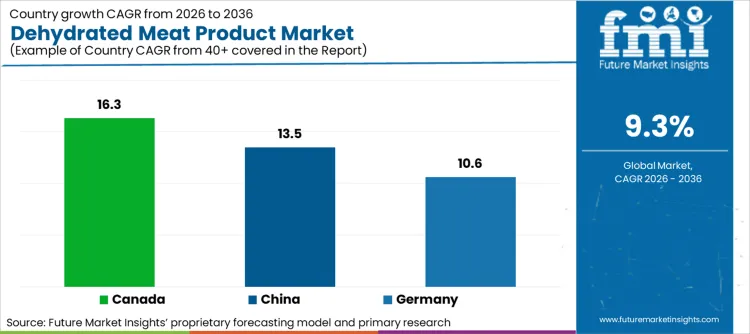
The following table shows the estimated growth rates of the top three territories. Canada, Germany and China are few attractive countries to look upon.
| Countries | CAGR,2025 to 2035 |
|---|---|
| Canada | 16.3% |
| Germany | 10.6% |
| China | 13.5% |
Canada’s Dehydrated Meat Market: A Fast-Growing Segment in the Snack Industry
The dehydrated meat product industry in Canada is growing at compound annual growth rate CAGR of 16.3% due to the rising demand for convenient, high-protein and ready to eat meal products coupled with a shift towards dry products from fresh ones. The specific target groups driving the market growth are health conscious buyers as well as outdoor users like hikers or campers, etc.
The need for easy to eat, healthy snack products will continue to drive growth in this sector and new products and flavour formats. Limitations facing the industry include high costs of production as well as meeting food safety standards. However, prospects exist in rising trends of protein-snacking products and the internet selling techniques, which enables firms to sell their products to a large number of consumers.
Germany: Rising Demand Among Health-conscious Consumers
The dehydrated meat product market in Germany is estimates to experience a compound annual growth rate of roughly 10.6% over the following years due to increased predisposition amongst consumers towards a healthy dietary intake of dried meats, particularly as snacks. The most common products are mainly grounded meals from beef, pork, and chicken accompanied by what can be assumed to be European spices.
E-commerce is on the rise and being an important sales type, the consumers shift to prefer online shopping and turn their attention to the preferred popular formats like jerky, freeze-dried meat products, and meat snack bars. Also, more people are beginning to show concern for using environmentally friendly products and hence affecting the industry as local and even international companies and designers switch to accommodate the changing preferences.
Rising Popularity of Meat Snacks and Evolving Dietary Choices in China
The dehydrated meat market in China is expected to grow at an approximate CAGR of 13.5% over the next few year awareness of health and wellbeing, and the growing consumer trend of consuming convenient, high protein snacks. Some of the most consumed meats are beef, pork and chicken and most are prepared with Chinese seasonings, though recently people have demanded vegetarian recipes as well.
The move to online marketplaces is changing sales formats, as powered by the e-payment solutions and online shopping applications and as consumer demand pushes to new formats including meat snack bars and freeze-dried meal platforms. Besides, there is also a clear tendency to increase the share of premium quality products that are produced using organic ingredients, This can be explained by the fact that a younger generation of people, millennials and Generation Z, focuses on the functional and environmental characteristics of products.
Competition Outlook
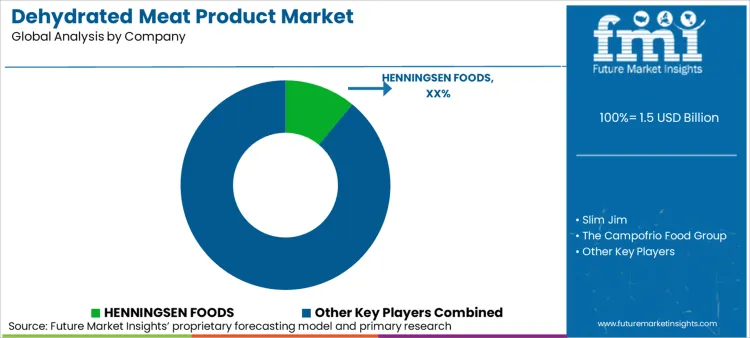
Higher competition is observed in the industry for the hydrated meat products due to the rising consumption level of value added products, proteins & healthier foods. The industry leaders like Hormel Foods Corporation, Tyson Foods, Inc. and others are developing new products like Hormel Real Bacon Bits and Tyson Grilled & Ready Chicken to facilitate customers busy lifestyle and to satisfy their need of ready to eat food products.
These brands also seeking product differentiation aiming to add value added products such as organic, antibiotic free and halal meats which cater to the health conscious and multicultural sector. Also, the company known as Jack Link’s Protein Snacks focuses on protein-rich dehydrated meats, especially on jerky as products from this company are targeting individuals on the go.
According to the same research, to tap into the growing industry for plant-based protein, the Conagra Brands company Gardein, a product that is a mixture of plant protein and animal products, best suited the flexitarian industry.
Being dominated by huge heavyweights because of an elaborate distribution network, some specialized and small players can still focus on unique diet segments and the green consumers. Local brands are also proving popular in areas such as Hormone free and Organic meats where branded farms such as Beretta Farms has adopted the trends.
That, combined with changing consumer preferences towards convenience, enhanced texture, and durability of rehydrated meat products, future indicates high growth opportunities where both existing and new entrants are expected to have significant roles.
Recent Developments:
- The report includes full coverage of key trends from competitive benchmarking. Some of the recent developments covered in the report
- In June 2025, Jack Link's launched a new line of clean-label beef jerky featuring no artificial preservatives and grass-fed beef sourcing, targeting the premium health-conscious snacker segment.
- In November 2025, Tyson Foods invested in energy-efficient microwave vacuum dehydration technology to reduce the carbon footprint of its jerky production operations.
- In January 2026, Planetary partnered with DCM Shriram to scale mycoprotein production in India, targeting the blended and dehydrated protein snack market
- In September 2025, Chomps expanded its range with Habanero Beef Sticks, utilizing layered spice-and-fruit profiles to target Gen Z flavour preferences.
- In November 2025, the USDA and French authorities strengthened bilateral trade agreements to streamline export certification for high-quality dried meats entering North American retail chains.
Leading Brands
- HENNINGSEN FOODS
- Slim Jim
- The Campofrio Food Group
- Tyson Foods, Inc
- Nu Harvest Foods
- Kublei Company LLP
- Hormel Foods
- Pinnacle Foods Group LLC
- Jack Link's
Scope of the Report
| Items | Values |
|---|---|
| Quantitative Units | USD 1,555.3 million (2026) to USD 3,784.7 million (2036), at a CAGR of 9.3% |
| Market Definition | Covers production, sale, and distribution of shelf-stable meat products processed through moisture removal techniques including air-drying, freeze-drying, spray-drying, and microwave vacuum dehydration. |
| Product Type Segmentation | Beef Jerky, Poultry Jerky, Pork Jerky, Meat Sticks, Biltong, Others |
| Technology Segmentation | Air-dried, Freeze-dried, Spray-dried, Microwave Vacuum Dehydration |
| Regions Covered | North America, Latin America, Europe, East Asia, South Asia, Oceania, Middle East and Africa |
| Countries Covered | United States, Canada, Brazil, Argentina, Germany, France, United Kingdom, China, India, Japan, Australia, South Africa and 30 plus countries |
| Key Companies Profiled | Jack Link's, Tyson Foods, Hormel Foods, Chomps, Tillamook Country Smoker, Planetary, Nestle S.A., Oberto Snacks, Country Archer Provisions, Conagra Brands |
| Forecast Period | 2026 to 2036 |
| Approach | Hybrid top-down and bottom-up modeling validated through primary interviews with jerky manufacturers, retail buyers, and dehydration equipment suppliers |
Key Segments Of The Report
By End User:
The End user of the product by Hotel, restaurants, Cafes, Cloud kitchens and Domestic Purpose.
By Region:
The wild Rice industry analysis has been carried out in key countries of North America, Latin America, Asia Pacific, Europe, Middle East and Africa , oceania.
By packaging Type:
The product appear a variety of packaging options, such as pouches, Canned Frozen.
By Product Type:
By product type, is Fermented sausage and Dried sausage.
By Type:
By type, is chicken, beef, lamb , Hog And other.
By Technology:
By technology for the product involve Sun dried, Solar dried, Hot air dried and vacuum dried providing to diverse segments of the industry.
Bibliography
- Jack Link's. (2025). Clean-Label Beef Jerky Line Launch. June 2025.
- Tyson Foods. (2025). Microwave Vacuum Dehydration Technology Investment. November 2025.
- Planetary / DCM Shriram. (2026). Mycoprotein Production Partnership in India. January 2026.
- Chomps. (2025). Habanero Beef Sticks Range Expansion. September 2025.
- USDA / French Authorities. (2025). Bilateral Dried Meat Export Trade Agreement. November 2025.
- Multivac. (2025). High-Protein Meat Snacks Shaping Food Trends.
- USDA. (2025). Meat Production and Trade Statistics.
- Cargill. (2025). Protein Profile Report: Consumer Preferences.
- Van Drunen Farms. (2025). Meat Snacks Modernized: Flavor and Function.
- Euromonitor. (2025). Global Savoury Snacks Category Analysis.
This Report Addresses
- Market intelligence for protein snacking, jerky manufacturing, and dried meat retail
- Market size estimation and 10-year revenue forecasts from 2026 to 2036
- Growth opportunity mapping across beef jerky, poultry, pork, meat sticks, and biltong formats
- Segment and regional revenue forecasts covering retail, online, convenience, and foodservice channels
- Competition strategy assessment including clean-label positioning, flavour innovation, and DTC channels
- Technology tracking including freeze-drying, microwave vacuum dehydration, and energy-efficiency improvements
- Regulatory impact analysis covering cross-border trade certification, labelling standards, and food safety compliance
- Market report delivery in PDF, Excel, PPT, and interactive dashboard formats
Frequently Asked Questions
How large is the dehydrated meat product market in 2026?
The global market is estimated at USD 1,555.3 million in 2026.
What will the market size be by 2036?
The market is projected to reach USD 3,784.7 million by 2036.
What is the expected CAGR?
Demand is expected to grow at a CAGR of 9.3% between 2026 and 2036.
Which product type leads?
Beef jerky holds the largest product share by revenue, particularly in North America.
Which region is growing fastest?
Asia Pacific at 10.5% CAGR, driven by protein snacking adoption in China and India.
What technology is gaining traction?
Freeze-drying and microwave vacuum dehydration are gaining share due to superior rehydration quality and energy efficiency.
Preview the report firsthand - request a free sample
Get SampleGet the brochure for pricing and purchase details.
Get PDFTable of Content
- Executive Summary
- Global Market Outlook
- Demand-side Trends
- Supply-side Trends
- Technology Roadmap Analysis
- Analysis and Recommendations
- Market Overview
- Market Coverage / Taxonomy
- Market Definition / Scope / Limitations
- Research Methodology
- Chapter Orientation
- Analytical Lens and Working Hypotheses
- Market Structure, Signals, and Trend Drivers
- Benchmarking and Cross-market Comparability
- Market Sizing, Forecasting, and Opportunity Mapping
- Research Design and Evidence Framework
- Desk Research Programme (Secondary Evidence)
- Company Annual and Sustainability Reports
- Peer-reviewed Journals and Academic Literature
- Corporate Websites, Product Literature, and Technical Notes
- Earnings Decks and Investor Briefings
- Statutory Filings and Regulatory Disclosures
- Technical White Papers and Standards Notes
- Trade Journals, Industry Magazines, and Analyst Briefs
- Conference Proceedings, Webinars, and Seminar Materials
- Government Statistics Portals and Public Data Releases
- Press Releases and Reputable Media Coverage
- Specialist Newsletters and Curated Briefings
- Sector Databases and Reference Repositories
- FMI Internal Proprietary Databases and Historical Market Datasets
- Subscription Datasets and Paid Sources
- Social Channels, Communities, and Digital Listening Inputs
- Additional Desk Sources
- Expert Input and Fieldwork (Primary Evidence)
- Primary Modes
- Qualitative Interviews and Expert Elicitation
- Quantitative Surveys and Structured Data Capture
- Blended Approach
- Why Primary Evidence is Used
- Field Techniques
- Interviews
- Surveys
- Focus Groups
- Observational and In-context Research
- Social and Community Interactions
- Stakeholder Universe Engaged
- C-suite Leaders
- Board Members
- Presidents and Vice Presidents
- R&D and Innovation Heads
- Technical Specialists
- Domain Subject-matter Experts
- Scientists
- Physicians and Other Healthcare Professionals
- Governance, Ethics, and Data Stewardship
- Research Ethics
- Data Integrity and Handling
- Primary Modes
- Tooling, Models, and Reference Databases
- Desk Research Programme (Secondary Evidence)
- Data Engineering and Model Build
- Data Acquisition and Ingestion
- Cleaning, Normalisation, and Verification
- Synthesis, Triangulation, and Analysis
- Quality Assurance and Audit Trail
- Market Background
- Market Dynamics
- Drivers
- Restraints
- Opportunity
- Trends
- Scenario Forecast
- Demand in Optimistic Scenario
- Demand in Likely Scenario
- Demand in Conservative Scenario
- Opportunity Map Analysis
- Product Life Cycle Analysis
- Supply Chain Analysis
- Investment Feasibility Matrix
- Value Chain Analysis
- PESTLE and Porter’s Analysis
- Regulatory Landscape
- Regional Parent Market Outlook
- Production and Consumption Statistics
- Import and Export Statistics
- Market Dynamics
- Global Market Analysis 2021 to 2025 and Forecast, 2026 to 2036
- Historical Market Size Value (USD Million) Analysis, 2021 to 2025
- Current and Future Market Size Value (USD Million) Projections, 2026 to 2036
- Y-o-Y Growth Trend Analysis
- Absolute $ Opportunity Analysis
- Global Market Pricing Analysis 2021 to 2025 and Forecast 2026 to 2036
- Global Market Analysis 2021 to 2025 and Forecast 2026 to 2036, By Product Type
- Introduction / Key Findings
- Historical Market Size Value (USD Million) Analysis By Product Type , 2021 to 2025
- Current and Future Market Size Value (USD Million) Analysis and Forecast By Product Type , 2026 to 2036
- Chicken
- Beef
- Lamb
- Hog and Others
- Chicken
- Y-o-Y Growth Trend Analysis By Product Type , 2021 to 2025
- Absolute $ Opportunity Analysis By Product Type , 2026 to 2036
- Global Market Analysis 2021 to 2025 and Forecast 2026 to 2036, By Packaging
- Introduction / Key Findings
- Historical Market Size Value (USD Million) Analysis By Packaging, 2021 to 2025
- Current and Future Market Size Value (USD Million) Analysis and Forecast By Packaging, 2026 to 2036
- Pouches
- Canned
- Frozen
- Pouches
- Y-o-Y Growth Trend Analysis By Packaging, 2021 to 2025
- Absolute $ Opportunity Analysis By Packaging, 2026 to 2036
- Global Market Analysis 2021 to 2025 and Forecast 2026 to 2036, By Region
- Introduction
- Historical Market Size Value (USD Million) Analysis By Region, 2021 to 2025
- Current Market Size Value (USD Million) Analysis and Forecast By Region, 2026 to 2036
- North America
- Latin America
- Western Europe
- Eastern Europe
- East Asia
- South Asia and Pacific
- Middle East & Africa
- Market Attractiveness Analysis By Region
- North America Market Analysis 2021 to 2025 and Forecast 2026 to 2036, By Country
- Historical Market Size Value (USD Million) Trend Analysis By Market Taxonomy, 2021 to 2025
- Market Size Value (USD Million) Forecast By Market Taxonomy, 2026 to 2036
- By Country
- USA
- Canada
- Mexico
- By Product Type
- By Packaging
- By Country
- Market Attractiveness Analysis
- By Country
- By Product Type
- By Packaging
- Key Takeaways
- Latin America Market Analysis 2021 to 2025 and Forecast 2026 to 2036, By Country
- Historical Market Size Value (USD Million) Trend Analysis By Market Taxonomy, 2021 to 2025
- Market Size Value (USD Million) Forecast By Market Taxonomy, 2026 to 2036
- By Country
- Brazil
- Chile
- Rest of Latin America
- By Product Type
- By Packaging
- By Country
- Market Attractiveness Analysis
- By Country
- By Product Type
- By Packaging
- Key Takeaways
- Western Europe Market Analysis 2021 to 2025 and Forecast 2026 to 2036, By Country
- Historical Market Size Value (USD Million) Trend Analysis By Market Taxonomy, 2021 to 2025
- Market Size Value (USD Million) Forecast By Market Taxonomy, 2026 to 2036
- By Country
- Germany
- UK
- Italy
- Spain
- France
- Nordic
- BENELUX
- Rest of Western Europe
- By Product Type
- By Packaging
- By Country
- Market Attractiveness Analysis
- By Country
- By Product Type
- By Packaging
- Key Takeaways
- Eastern Europe Market Analysis 2021 to 2025 and Forecast 2026 to 2036, By Country
- Historical Market Size Value (USD Million) Trend Analysis By Market Taxonomy, 2021 to 2025
- Market Size Value (USD Million) Forecast By Market Taxonomy, 2026 to 2036
- By Country
- Russia
- Poland
- Hungary
- Balkan & Baltic
- Rest of Eastern Europe
- By Product Type
- By Packaging
- By Country
- Market Attractiveness Analysis
- By Country
- By Product Type
- By Packaging
- Key Takeaways
- East Asia Market Analysis 2021 to 2025 and Forecast 2026 to 2036, By Country
- Historical Market Size Value (USD Million) Trend Analysis By Market Taxonomy, 2021 to 2025
- Market Size Value (USD Million) Forecast By Market Taxonomy, 2026 to 2036
- By Country
- China
- Japan
- South Korea
- By Product Type
- By Packaging
- By Country
- Market Attractiveness Analysis
- By Country
- By Product Type
- By Packaging
- Key Takeaways
- South Asia and Pacific Market Analysis 2021 to 2025 and Forecast 2026 to 2036, By Country
- Historical Market Size Value (USD Million) Trend Analysis By Market Taxonomy, 2021 to 2025
- Market Size Value (USD Million) Forecast By Market Taxonomy, 2026 to 2036
- By Country
- India
- ASEAN
- Australia & New Zealand
- Rest of South Asia and Pacific
- By Product Type
- By Packaging
- By Country
- Market Attractiveness Analysis
- By Country
- By Product Type
- By Packaging
- Key Takeaways
- Middle East & Africa Market Analysis 2021 to 2025 and Forecast 2026 to 2036, By Country
- Historical Market Size Value (USD Million) Trend Analysis By Market Taxonomy, 2021 to 2025
- Market Size Value (USD Million) Forecast By Market Taxonomy, 2026 to 2036
- By Country
- Kingdom of Saudi Arabia
- Other GCC Countries
- Turkiye
- South Africa
- Other African Union
- Rest of Middle East & Africa
- By Product Type
- By Packaging
- By Country
- Market Attractiveness Analysis
- By Country
- By Product Type
- By Packaging
- Key Takeaways
- Key Countries Market Analysis
- USA
- Pricing Analysis
- Market Share Analysis, 2025
- By Product Type
- By Packaging
- Canada
- Pricing Analysis
- Market Share Analysis, 2025
- By Product Type
- By Packaging
- Mexico
- Pricing Analysis
- Market Share Analysis, 2025
- By Product Type
- By Packaging
- Brazil
- Pricing Analysis
- Market Share Analysis, 2025
- By Product Type
- By Packaging
- Chile
- Pricing Analysis
- Market Share Analysis, 2025
- By Product Type
- By Packaging
- Germany
- Pricing Analysis
- Market Share Analysis, 2025
- By Product Type
- By Packaging
- UK
- Pricing Analysis
- Market Share Analysis, 2025
- By Product Type
- By Packaging
- Italy
- Pricing Analysis
- Market Share Analysis, 2025
- By Product Type
- By Packaging
- Spain
- Pricing Analysis
- Market Share Analysis, 2025
- By Product Type
- By Packaging
- France
- Pricing Analysis
- Market Share Analysis, 2025
- By Product Type
- By Packaging
- India
- Pricing Analysis
- Market Share Analysis, 2025
- By Product Type
- By Packaging
- ASEAN
- Pricing Analysis
- Market Share Analysis, 2025
- By Product Type
- By Packaging
- Australia & New Zealand
- Pricing Analysis
- Market Share Analysis, 2025
- By Product Type
- By Packaging
- China
- Pricing Analysis
- Market Share Analysis, 2025
- By Product Type
- By Packaging
- Japan
- Pricing Analysis
- Market Share Analysis, 2025
- By Product Type
- By Packaging
- South Korea
- Pricing Analysis
- Market Share Analysis, 2025
- By Product Type
- By Packaging
- Russia
- Pricing Analysis
- Market Share Analysis, 2025
- By Product Type
- By Packaging
- Poland
- Pricing Analysis
- Market Share Analysis, 2025
- By Product Type
- By Packaging
- Hungary
- Pricing Analysis
- Market Share Analysis, 2025
- By Product Type
- By Packaging
- Kingdom of Saudi Arabia
- Pricing Analysis
- Market Share Analysis, 2025
- By Product Type
- By Packaging
- Turkiye
- Pricing Analysis
- Market Share Analysis, 2025
- By Product Type
- By Packaging
- South Africa
- Pricing Analysis
- Market Share Analysis, 2025
- By Product Type
- By Packaging
- USA
- Market Structure Analysis
- Competition Dashboard
- Competition Benchmarking
- Market Share Analysis of Top Players
- By Regional
- By Product Type
- By Packaging
- Competition Analysis
- Competition Deep Dive
- HENNINGSEN FOODS
- Overview
- Product Portfolio
- Profitability by Market Segments (Product/Age /Sales Channel/Region)
- Sales Footprint
- Strategy Overview
- Marketing Strategy
- Product Strategy
- Channel Strategy
- Slim Jim
- The Campofrio Food Group
- Tyson Foods, Inc
- Nu Harvest Foods
- Kublei Company LLP
- HENNINGSEN FOODS
- Competition Deep Dive
- Assumptions & Acronyms Used


