

- Industry Size (2026)
- USD 715.4 Mn
- Forecast (2036)
- USD 1530.2 Mn
- CAGR (2026 to 2036)
- 7.9%
Depolymerization Catalysts for PET and Polyesters Market Forecast and Outlook 2026 to 2036
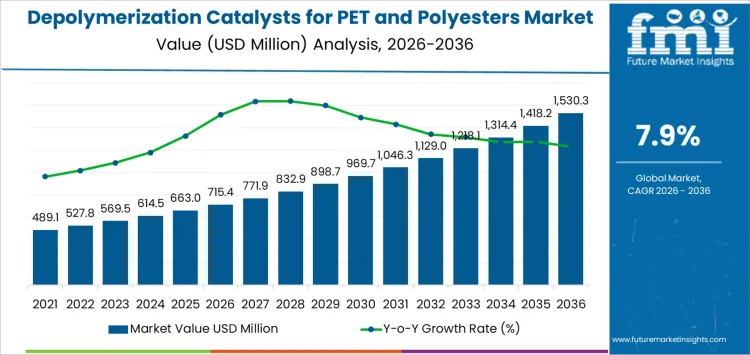
The global depolymerization catalysts for PET and polyesters market is growing, driven by innovative processes and end-product recovery methods. The market value in 2025 is USD 715.4 million, with a forecasted growth to USD 773.0 million by 2026 and USD 1,530.2 million by 2035, reflecting a forecasted CAGR of 7.9%. Glycolysis, particularly the BHET to monomer recovery method, holds the largest share at 36%, due to its efficiency in breaking down PET waste into high-purity monomers for reuse. This method is crucial for producing bottle-grade PET monomers, especially in food-contact applications, which hold a 40% share of the market. Glycolysis ensures the recovery of high-quality PET for packaging, aligning with the global push for sustainable, closed-loop recycling systems. Other methods, such as methanolysis, enzymatic hydrolysis, and solvolysis, also contribute to the market's growth by providing alternative routes for polyester recycling, each targeting different types of polymer waste.
Quick Stats for Depolymerization Catalysts for PET and Polyesters Market
- Depolymerization Catalysts for PET and Polyesters Market Value (2025): USD 715.4 million
- Depolymerization Catalysts for PET and Polyesters Market Forecast Value (2035): USD 1,530.2 million
- Depolymerization Catalysts for PET and Polyesters Market Forecast CAGR: 7.9%
- Leading Depolymerization Route in Depolymerization Catalysts for PET and Polyesters Market: Glycolysis (BHET → monomer recovery)
- Key Growth Regions in Depolymerization Catalysts for PET and Polyesters Market: Asia Pacific, Europe, North America
- Top Players in Depolymerization Catalysts for PET and Polyesters Market: Ioniqa Technologies, Carbios, Loop Industries, Eastmans, Gr3n
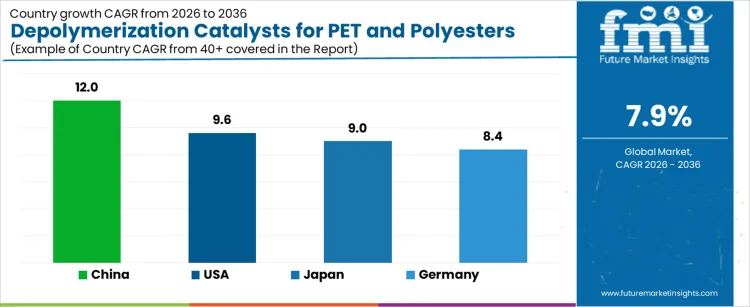
End-product targets like fiber & textile-grade polyester feedstock, packaging film grades, and specialty chemicals are vital for industries seeking sustainable solutions. As the market expands, countries such as China, the United States, and Japan lead in adopting depolymerization catalysts, with China growing at a 12.0% CAGR. The country’s focus on sustainability and its large manufacturing sector make it the largest market for these catalysts. Other key markets, including the United States, Germany, and Japan, also see significant growth driven by strict environmental regulations and demand for eco-friendly recycling practices in textiles, packaging, and automotive industries. As the need for circular economy solutions rises globally, the demand for depolymerization catalysts will continue to increase.
Depolymerization Catalysts for PET and Polyesters Market Key Takeaways
| Metric | Value |
|---|---|
| Industry Value (2025) | USD 715.4 million |
| Forecast Value (2035) | USD 1,530.2 million |
| Forecast CAGR (2025-2035) | 7.9% |
How is the Global Depolymerization Catalysts for PET and Polyesters Sector Advancing?
The global depolymerization catalysts for PET and polyesters market is expanding due to the increasing focus on sustainable recycling methods for polyester-based materials, especially PET (polyethylene terephthalate). Depolymerization catalysts are crucial in breaking down PET and other polyesters into their monomers, enabling their reuse in producing new high-quality polyester products. This process enhances the circularity of polyester recycling, as it allows for the recycling of materials without losing quality, unlike traditional methods. As concerns over plastic waste and the environmental impact of single-use plastics rise, the demand for advanced recycling technologies like depolymerization is growing.
The market for depolymerization catalysts is set to expand, driven by the growing adoption of circular economy principles and stricter environmental regulations. Innovations in catalyst technologies that improve the efficiency and cost-effectiveness of the depolymerization process will further boost market growth. As the demand for sustainable plastic solutions in the textile, packaging, and automotive industries rises, the role of depolymerization catalysts will become even more critical. However, challenges such as high development costs, scaling up production, and ensuring the long-term stability of catalysts in industrial applications will influence market dynamics. As polyester recycling becomes an essential part of waste management and sustainability efforts, depolymerization catalysts will play a key role in advancing efficient and eco-friendly recycling practices.
What Is the Segment-Wise Analysis for the Global Depolymerization Catalysts for PET and Polyesters Market?
The global depolymerization catalysts for PET and polyesters market is driven by depolymerization routes and end-product targets. Glycolysis (BHET → monomer recovery) leads the market with a 36% share due to its effectiveness in recovering monomers from PET waste, making it a preferred method for recycling. Other significant routes include methanolysis, enzymatic hydrolysis, aminolysis, microwave-assisted thermal depolymerization, and solvolysis with novel solvents like DES/IL-assisted processes. In terms of end-product targets, bottle-grade PET monomer recovery (food-contact) leads with 40% share, driven by the need for high-quality monomers for food-safe packaging.
Why Does Glycolysis Lead the Global Depolymerization Catalysts for PET and Polyesters Market?
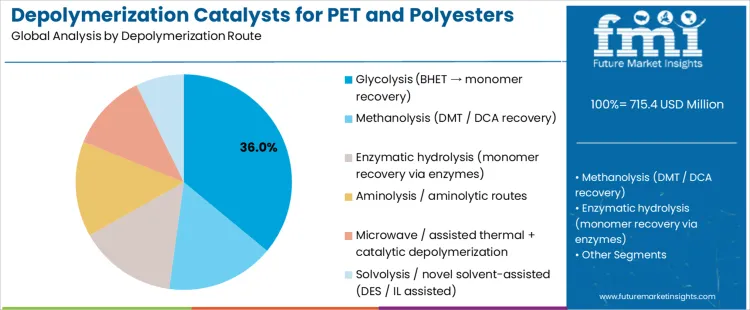
Glycolysis (BHET → monomer recovery) holds a 36% share of the global depolymerization catalysts for PET and polyesters market due to its efficiency in breaking down PET waste into its monomers, which can then be reused to produce new PET products. This process is particularly valued for its effectiveness in recovering high-purity monomers, making it ideal for producing food-contact grade PET. Glycolysis is widely adopted because it offers a reliable, cost-effective solution for recycling PET waste into valuable monomers, supporting the sustainable circular economy for PET and polyester products. The high demand for recyclable, food-safe packaging continues to drive the growth of glycolysis-based depolymerization methods.
Why Does Bottle-Grade PET Monomer Recovery Lead the Global Depolymerization Catalysts Market?
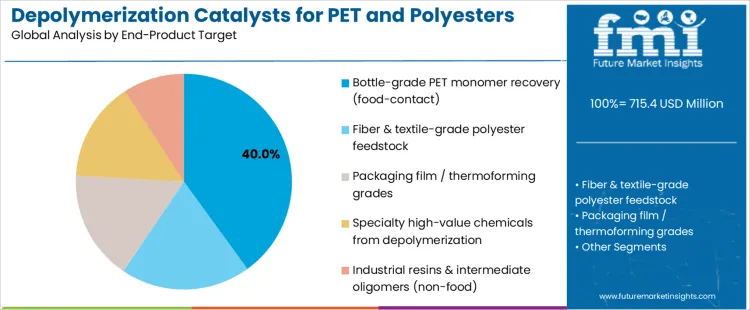
Bottle-grade PET monomer recovery (food-contact) holds the largest share of 40% in the global depolymerization catalysts for PET and polyesters market due to its crucial role in recycling PET bottles into high-quality, food-safe materials. As the demand for sustainable packaging solutions grows, the need for efficient recovery of PET monomers from post-consumer bottles becomes increasingly important. This process ensures that recycled PET can meet the stringent regulatory requirements for food-contact materials. As global awareness of environmental impact rises, the focus on recycling and reusing PET in closed-loop systems continues to drive demand for bottle-grade PET monomer recovery, solidifying its leading position in the market.
What is Shaping the Depolymerization Catalysts for PET and Polyesters Market?
The depolymerization catalysts for PET and polyesters market is shaped by the rising global emphasis on recycling and circular economy initiatives for plastics. Depolymerization catalysts are key to efficient chemical recycling, breaking down polyethylene terephthalate (PET) and other polyesters into monomers for reuse as virgin grade materials. Increasing regulatory pressure to reduce plastic waste and improve recycling rates is accelerating the adoption of advanced catalyst technologies. Innovations that enhance reaction speed, yield, and energy efficiency are influencing demand.
What Factors Are Driving the Depolymerization Catalysts for PET and Polyesters Market?
The market is driven by the need for high performance catalysts that support scalable and economically viable chemical recycling of PET and polyester waste. Increasing production of packaging, textiles, and bottles has led to growing stockpiles of polyester waste, creating demand for technologies that can recover high quality monomers. Regulatory frameworks promoting recycled content and extended producer responsibility further encourage investment in chemical recycling infrastructure. Catalyst innovations that improve selectivity, lower energy requirements, and enable compatibility with mixed waste streams are key growth drivers. Industry commitments to sustainability and circular plastics solutions are also boosting market momentum.
What Challenges Are Limiting the Adoption of Depolymerization Catalysts for PET and Polyesters?
Adoption of depolymerization catalysts faces challenges related to cost, process complexity, and feedstock variability. Advanced catalysts can be expensive, and integration into existing recycling infrastructure requires capital investment and technical expertise. The efficiency of catalysts can vary with the quality and composition of polyester waste, complicating process control for mixed or contaminated streams. Scale up from pilot to commercial scale operations remains a barrier for many recyclers. Regulatory and certification requirements for recycled materials can vary by region, creating uncertainty and slowing widespread implementation of chemical recycling solutions.
What is the Growth Outlook for the Depolymerization Catalysts for PET and Polyesters Market by Country?
| Country | CAGR (%) |
|---|---|
| China | 12.0% |
| United States | 9.6% |
| Germany | 8.4% |
| Japan | 9.0% |
The depolymerization catalysts for PET and polyesters market is experiencing strong growth globally, with China leading at a 12.0% CAGR, driven by its significant manufacturing base and increasing focus on sustainable recycling solutions. The United States shows steady growth at 9.6%, supported by growing demand for eco-friendly polyester recycling methods in industries like fashion and packaging. Japan’s market grows at 9.0%, driven by a focus on advancing recycling technologies and reducing plastic waste. Germany follows with 8.4% growth, supported by stringent environmental regulations and the adoption of sustainable polyester recycling solutions.
Why is China Leading in the Depolymerization Catalysts for PET and Polyesters Market?
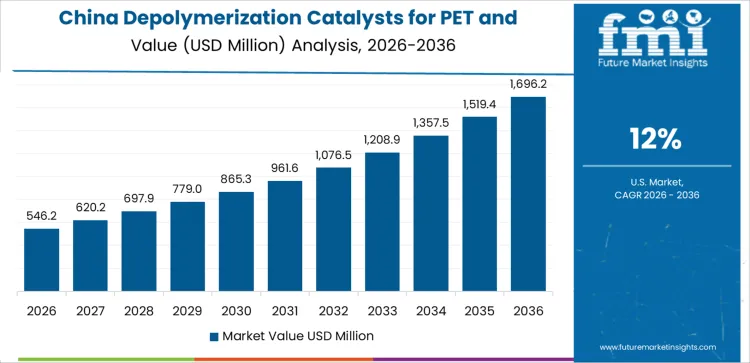
China’s depolymerization catalysts for PET and polyesters market is growing at 12.0%, driven by the country’s dominance in global manufacturing and rapidly increasing focus on sustainable recycling technologies. As one of the world’s largest producers and consumers of PET and polyester products, China faces significant pressure to address plastic waste and improve recycling efficiency. The government’s commitment to reducing plastic pollution, along with initiatives to promote the circular economy, is accelerating the adoption of depolymerization catalysts for polyester recycling. China’s expanding textile and packaging industries are key drivers of market demand. As China continues to invest heavily in green technologies and sustainability, the market for depolymerization catalysts is expected to maintain robust growth.
What is Contributing to the Growth of the Depolymerization Catalysts for PET and Polyesters Market in the United States?
The United States’ depolymerization catalysts for PET and polyesters market is growing at 9.6%, driven by rising demand for sustainable recycling solutions in the packaging and textile industries. As the focus on reducing plastic waste and promoting recycling intensifies, the use of depolymerization catalysts to recycle PET and polyesters efficiently is becoming more prevalent. Government incentives and regulations to increase recycling rates, particularly in the plastic and polyester sectors, are contributing to the market’s growth. With the growing adoption of circular economy principles and consumer demand for eco-friendly products, the market for depolymerization catalysts is expected to expand steadily. The continued rise in demand for recycled PET in packaging and fashion industries will further drive market adoption.
How is the Depolymerization Catalysts for PET and Polyesters Market Expanding in Japan?
Japan’s depolymerization catalysts for PET and polyesters market is growing at 9.0%, driven by the country’s commitment to sustainability and innovation in recycling technologies. Japan has a strong focus on environmental conservation and waste management, and depolymerization catalysts are gaining traction as part of efforts to recycle polyester more efficiently. Japan’s recycling initiatives, particularly in the textile and packaging sectors, are fueling demand for these catalysts. With stringent waste management regulations and an emphasis on reducing environmental impact, Japan is adopting more sustainable methods of recycling polyester materials. As the market for eco-friendly solutions grows, Japan’s use of depolymerization catalysts in polyester recycling is set to continue expanding in line with the country’s environmental goals.
What is Driving the Depolymerization Catalysts for PET and Polyesters Market in Germany?
Germany’s depolymerization catalysts for PET and polyesters market is growing at 8.4%, driven by the country’s commitment to sustainability and circular economy practices. Germany’s strict environmental regulations, coupled with increasing pressure to reduce plastic waste, are pushing the adoption of innovative recycling solutions, including depolymerization catalysts. These catalysts are essential for improving the efficiency of recycling processes, especially in polyester production, which is commonly used in textiles and packaging. Germany’s established recycling infrastructure and focus on energy-efficient and eco-friendly technologies make it a leading market for depolymerization catalysts. With growing consumer demand for sustainable products and increasing government support for green technologies, the market for these catalysts is expected to continue its steady growth.
How Are Companies Competing in the Depolymerization Catalysts for PET and Polyesters Market?
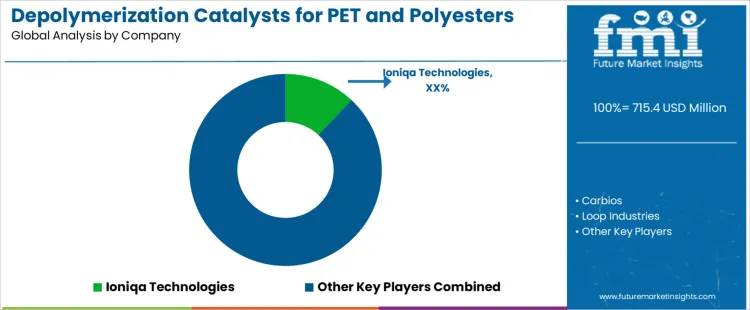
Ioniqa Technologies, Carbios, Loop Industries, Eastman, and Gr3n pursue distinct strategies in the depolymerization catalysts for PET and polyesters market with a shared aim of enabling efficient chemical recycling. Ioniqa Technologies highlights patented catalyst systems that convert PET waste into high‑purity monomers, emphasizing scalability and integration with existing recycling infrastructure. Carbios positions its enzyme‑based depolymerization catalysts as breakthrough solutions that selectively break down polyester chains with minimal energy input, with product literature focused on circularity and reduced environmental footprint. Loop Industries promotes its advanced catalyst processes that enable depolymerization at lower temperatures, expanding feedstock flexibility to include colored and mixed PET streams while maintaining consistent monomer quality.
Eastman differentiates with its chemically recycled content strategy that pairs proprietary catalysts with its industrial recycling facilities to deliver sustainable polyester feedstocks for branded polymers. Gr3n focuses on bio‑inspired catalysts designed for high efficiency and reduced processing costs, with collateral that highlights innovation and potential for integration into diverse polyester waste streams. Across all firms, brochures stress catalyst performance metrics such as conversion rates, energy efficiency, and compatibility with various polyester waste types. Competitive strategies center on technical validation, alignment with sustainability goals, regulatory compliance, and partnerships that accelerate adoption by polymer producers and recycling operations seeking high‑value circular solutions.
Key Players in Depolymerization Catalysts for PET and Polyesters Market
- Ioniqa Technologies
- Carbios
- Loop Industries
- Eastmans
- Gr3n
Scope of Report
| Items | Values |
|---|---|
| Quantitative Units (2025) | USD million |
| End-Product Target | Bottle-Grade PET Monomer Recovery (Food-Contact), Fiber & Textile-Grade Polyester Feedstock, Packaging Film / Thermoforming Grades, Specialty High-Value Chemicals from Depolymerization, Industrial Resins & Intermediate Oligomers (Non-Food) |
| Depolymerization Route | Glycolysis (BHET → Monomer Recovery), Methanolysis (DMT / DCA Recovery), Enzymatic Hydrolysis (Monomer Recovery via Enzymes), Aminolysis / Aminolytic Routes, Microwave / Assisted Thermal + Catalytic Depolymerization, Solvolysis / Novel Solvent-Assisted (DES / IL Assisted) |
| Regions Covered | Asia Pacific, Europe, North America, Latin America, Middle East & Africa |
| Countries Covered | USA, China, Japan, South Korea, India, Australia & New Zealand, ASEAN, Germany, UK, France, Italy, Spain, Nordic, BENELUX, Brazil, Chile, Mexico, Saudi Arabia, Other GCC Countries, Turkey, South Africa, Other African Union |
| Key Companies Profiled | Ioniqa Technologies, Carbios, Loop Industries, Eastman, Gr3n |
| Additional Attributes | Dollar sales by depolymerization route, end-product target, and region; regional CAGR and growth outlook; distribution channels including direct sales and industrial suppliers; innovation trends in enzymatic and solvolysis routes; competitive positioning of global vs regional suppliers. |
Depolymerization Catalysts for PET and Polyesters Market by Segmenst
Depolymerization Route
- Glycolysis (BHET → monomer recovery)
- Methanolysis (DMT / DCA recovery)
- Enzymatic hydrolysis (monomer recovery via enzymes)
- Aminolysis / aminolytic routes
- Microwave / assisted thermal + catalytic depolymerization
- Solvolysis / novel solvent-assisted (DES / IL assisted)
End-Product Target
- Bottle-grade PET monomer recovery (food-contact)
- Fiber & textile-grade polyester feedstock
- Packaging film / thermoforming grades
- Specialty high-value chemicals from depolymerization
- Industrial resins & intermediate oligomers (non-food)
Region:
- Asia Pacific
- China
- Japan
- South Korea
- India
- Australia & New Zealand
- ASEAN
- Rest of Asia Pacific
- Europe
- Germany
- United Kingdom
- France
- Italy
- Spain
- Nordic
- BENELUX
- Rest of Europe
- North America
- United States
- Canada
- Mexico
- Latin America
- Brazil
- Chile
- Rest of Latin America
- Middle East & Africa
- Kingdom of Saudi Arabia
- Other GCC Countries
- Turkey
- South Africa
- Other African Union
- Rest of Middle East & Africa
Frequently Asked Questions
How big is the depolymerization catalysts for PET and polyesters market in 2026?
The global depolymerization catalysts for PET and polyesters market is estimated to be valued at USD 715.4 million in 2026.
What will be the size of depolymerization catalysts for PET and polyesters market in 2036?
The market size for the depolymerization catalysts for PET and polyesters market is projected to reach USD 1,530.3 million by 2036.
How much will be the depolymerization catalysts for PET and polyesters market growth between 2026 and 2036?
The depolymerization catalysts for PET and polyesters market is expected to grow at a 7.9% CAGR between 2026 and 2036.
What are the key product types in the depolymerization catalysts for PET and polyesters market?
The key product types in depolymerization catalysts for PET and polyesters market are glycolysis (bhet → monomer recovery), methanolysis (dmt / dca recovery), enzymatic hydrolysis (monomer recovery via enzymes), aminolysis / aminolytic routes, microwave / assisted thermal + catalytic depolymerization and solvolysis / novel solvent-assisted (des / il assisted).
Which end-product target segment to contribute significant share in the depolymerization catalysts for PET and polyesters market in 2026?
In terms of end-product target, bottle-grade PET monomer recovery (food-contact) segment to command 40.0% share in the depolymerization catalysts for PET and polyesters market in 2026.
Preview the report firsthand - request a free sample
Get SampleGet the brochure for pricing and purchase details.
Get PDFTable of Content
- Executive Summary
- Global Market Outlook
- Demand-side Trends
- Supply-side Trends
- Technology Roadmap Analysis
- Analysis and Recommendations
- Market Overview
- Market Coverage / Taxonomy
- Market Definition / Scope / Limitations
- Market Background
- Market Dynamics
- Drivers
- Restraints
- Opportunity
- Trends
- Scenario Forecast
- Demand in Optimistic Scenario
- Demand in Likely Scenario
- Demand in Conservative Scenario
- Opportunity Map Analysis
- Product Life Cycle Analysis
- Supply Chain Analysis
- Investment Feasibility Matrix
- Value Chain Analysis
- PESTLE and Porter’s Analysis
- Regulatory Landscape
- Regional Parent Market Outlook
- Production and Consumption Statistics
- Import and Export Statistics
- Market Dynamics
- Global Market Analysis 2021 to 2025 and Forecast, 2026 to 2036
- Historical Market Size Value (USD Million) Analysis, 2021 to 2025
- Current and Future Market Size Value (USD Million) Projections, 2026 to 2036
- Y-o-Y Growth Trend Analysis
- Absolute $ Opportunity Analysis
- Global Market Pricing Analysis 2021 to 2025 and Forecast 2026 to 2036
- Global Market Analysis 2021 to 2025 and Forecast 2026 to 2036, By Depolymerization Route
- Introduction / Key Findings
- Historical Market Size Value (USD Million) Analysis By Depolymerization Route , 2021 to 2025
- Current and Future Market Size Value (USD Million) Analysis and Forecast By Depolymerization Route , 2026 to 2036
- Glycolysis (BHET → monomer recovery)
- Methanolysis (DMT / DCA recovery)
- Enzymatic hydrolysis (monomer recovery via enzymes)
- Aminolysis / aminolytic routes
- Microwave / assisted thermal + catalytic depolymerization
- Solvolysis / novel solvent-assisted (DES / IL assisted)
- Y-o-Y Growth Trend Analysis By Depolymerization Route , 2021 to 2025
- Absolute $ Opportunity Analysis By Depolymerization Route , 2026 to 2036
- Global Market Analysis 2021 to 2025 and Forecast 2026 to 2036, By End-Product Target
- Introduction / Key Findings
- Historical Market Size Value (USD Million) Analysis By End-Product Target, 2021 to 2025
- Current and Future Market Size Value (USD Million) Analysis and Forecast By End-Product Target, 2026 to 2036
- Bottle-grade PET monomer recovery (food-contact)
- Fiber & textile-grade polyester feedstock
- Packaging film / thermoforming grades
- Specialty high-value chemicals from depolymerization
- Industrial resins & intermediate oligomers (non-food)
- Y-o-Y Growth Trend Analysis By End-Product Target, 2021 to 2025
- Absolute $ Opportunity Analysis By End-Product Target, 2026 to 2036
- Global Market Analysis 2021 to 2025 and Forecast 2026 to 2036, By Region
- Introduction
- Historical Market Size Value (USD Million) Analysis By Region, 2021 to 2025
- Current Market Size Value (USD Million) Analysis and Forecast By Region, 2026 to 2036
- North America
- Latin America
- Western Europe
- Eastern Europe
- East Asia
- South Asia and Pacific
- Middle East & Africa
- Market Attractiveness Analysis By Region
- North America Market Analysis 2021 to 2025 and Forecast 2026 to 2036, By Country
- Historical Market Size Value (USD Million) Trend Analysis By Market Taxonomy, 2021 to 2025
- Market Size Value (USD Million) Forecast By Market Taxonomy, 2026 to 2036
- By Country
- USA
- Canada
- Mexico
- By Depolymerization Route
- By End-Product Target
- By Country
- Market Attractiveness Analysis
- By Country
- By Depolymerization Route
- By End-Product Target
- Key Takeaways
- Latin America Market Analysis 2021 to 2025 and Forecast 2026 to 2036, By Country
- Historical Market Size Value (USD Million) Trend Analysis By Market Taxonomy, 2021 to 2025
- Market Size Value (USD Million) Forecast By Market Taxonomy, 2026 to 2036
- By Country
- Brazil
- Chile
- Rest of Latin America
- By Depolymerization Route
- By End-Product Target
- By Country
- Market Attractiveness Analysis
- By Country
- By Depolymerization Route
- By End-Product Target
- Key Takeaways
- Western Europe Market Analysis 2021 to 2025 and Forecast 2026 to 2036, By Country
- Historical Market Size Value (USD Million) Trend Analysis By Market Taxonomy, 2021 to 2025
- Market Size Value (USD Million) Forecast By Market Taxonomy, 2026 to 2036
- By Country
- Germany
- UK
- Italy
- Spain
- France
- Nordic
- BENELUX
- Rest of Western Europe
- By Depolymerization Route
- By End-Product Target
- By Country
- Market Attractiveness Analysis
- By Country
- By Depolymerization Route
- By End-Product Target
- Key Takeaways
- Eastern Europe Market Analysis 2021 to 2025 and Forecast 2026 to 2036, By Country
- Historical Market Size Value (USD Million) Trend Analysis By Market Taxonomy, 2021 to 2025
- Market Size Value (USD Million) Forecast By Market Taxonomy, 2026 to 2036
- By Country
- Russia
- Poland
- Hungary
- Balkan & Baltic
- Rest of Eastern Europe
- By Depolymerization Route
- By End-Product Target
- By Country
- Market Attractiveness Analysis
- By Country
- By Depolymerization Route
- By End-Product Target
- Key Takeaways
- East Asia Market Analysis 2021 to 2025 and Forecast 2026 to 2036, By Country
- Historical Market Size Value (USD Million) Trend Analysis By Market Taxonomy, 2021 to 2025
- Market Size Value (USD Million) Forecast By Market Taxonomy, 2026 to 2036
- By Country
- China
- Japan
- South Korea
- By Depolymerization Route
- By End-Product Target
- By Country
- Market Attractiveness Analysis
- By Country
- By Depolymerization Route
- By End-Product Target
- Key Takeaways
- South Asia and Pacific Market Analysis 2021 to 2025 and Forecast 2026 to 2036, By Country
- Historical Market Size Value (USD Million) Trend Analysis By Market Taxonomy, 2021 to 2025
- Market Size Value (USD Million) Forecast By Market Taxonomy, 2026 to 2036
- By Country
- India
- ASEAN
- Australia & New Zealand
- Rest of South Asia and Pacific
- By Depolymerization Route
- By End-Product Target
- By Country
- Market Attractiveness Analysis
- By Country
- By Depolymerization Route
- By End-Product Target
- Key Takeaways
- Middle East & Africa Market Analysis 2021 to 2025 and Forecast 2026 to 2036, By Country
- Historical Market Size Value (USD Million) Trend Analysis By Market Taxonomy, 2021 to 2025
- Market Size Value (USD Million) Forecast By Market Taxonomy, 2026 to 2036
- By Country
- Kingdom of Saudi Arabia
- Other GCC Countries
- Turkiye
- South Africa
- Other African Union
- Rest of Middle East & Africa
- By Depolymerization Route
- By End-Product Target
- By Country
- Market Attractiveness Analysis
- By Country
- By Depolymerization Route
- By End-Product Target
- Key Takeaways
- Key Countries Market Analysis
- USA
- Pricing Analysis
- Market Share Analysis, 2025
- By Depolymerization Route
- By End-Product Target
- Canada
- Pricing Analysis
- Market Share Analysis, 2025
- By Depolymerization Route
- By End-Product Target
- Mexico
- Pricing Analysis
- Market Share Analysis, 2025
- By Depolymerization Route
- By End-Product Target
- Brazil
- Pricing Analysis
- Market Share Analysis, 2025
- By Depolymerization Route
- By End-Product Target
- Chile
- Pricing Analysis
- Market Share Analysis, 2025
- By Depolymerization Route
- By End-Product Target
- Germany
- Pricing Analysis
- Market Share Analysis, 2025
- By Depolymerization Route
- By End-Product Target
- UK
- Pricing Analysis
- Market Share Analysis, 2025
- By Depolymerization Route
- By End-Product Target
- Italy
- Pricing Analysis
- Market Share Analysis, 2025
- By Depolymerization Route
- By End-Product Target
- Spain
- Pricing Analysis
- Market Share Analysis, 2025
- By Depolymerization Route
- By End-Product Target
- France
- Pricing Analysis
- Market Share Analysis, 2025
- By Depolymerization Route
- By End-Product Target
- India
- Pricing Analysis
- Market Share Analysis, 2025
- By Depolymerization Route
- By End-Product Target
- ASEAN
- Pricing Analysis
- Market Share Analysis, 2025
- By Depolymerization Route
- By End-Product Target
- Australia & New Zealand
- Pricing Analysis
- Market Share Analysis, 2025
- By Depolymerization Route
- By End-Product Target
- China
- Pricing Analysis
- Market Share Analysis, 2025
- By Depolymerization Route
- By End-Product Target
- Japan
- Pricing Analysis
- Market Share Analysis, 2025
- By Depolymerization Route
- By End-Product Target
- South Korea
- Pricing Analysis
- Market Share Analysis, 2025
- By Depolymerization Route
- By End-Product Target
- Russia
- Pricing Analysis
- Market Share Analysis, 2025
- By Depolymerization Route
- By End-Product Target
- Poland
- Pricing Analysis
- Market Share Analysis, 2025
- By Depolymerization Route
- By End-Product Target
- Hungary
- Pricing Analysis
- Market Share Analysis, 2025
- By Depolymerization Route
- By End-Product Target
- Kingdom of Saudi Arabia
- Pricing Analysis
- Market Share Analysis, 2025
- By Depolymerization Route
- By End-Product Target
- Turkiye
- Pricing Analysis
- Market Share Analysis, 2025
- By Depolymerization Route
- By End-Product Target
- South Africa
- Pricing Analysis
- Market Share Analysis, 2025
- By Depolymerization Route
- By End-Product Target
- USA
- Market Structure Analysis
- Competition Dashboard
- Competition Benchmarking
- Market Share Analysis of Top Players
- By Regional
- By Depolymerization Route
- By End-Product Target
- Competition Analysis
- Competition Deep Dive
- Ioniqa Technologies
- Overview
- Product Portfolio
- Profitability by Market Segments (Product/Age /Sales Channel/Region)
- Sales Footprint
- Strategy Overview
- Marketing Strategy
- Product Strategy
- Channel Strategy
- Carbios
- Loop Industries
- Eastmans
- Gr3n
- Ioniqa Technologies
- Competition Deep Dive
- Assumptions & Acronyms Used
- Research Methodology


