

- Market Size (2026)
- USD 36.39 Bn
- Forecast (2036)
- USD 67.67 Bn
- CAGR (2026 to 2036)
- 6.4%
Destination Wedding Market Size, Market Forecast and Outlook By FMI
The destination wedding market was valued at USD 34.2 billion in 2025. The market is set to reach USD 36.4 billion by 2026-end and grow at a CAGR of 6.4% between 2026-2036 to reach USD 67.7 billion by 2036. Beach Weddings will dominate with a 30.0% share, while Full Service Planning will lead with a 55.0% share.
Summary of the Destination Wedding Market
- Demand and Growth Drivers
- Rising disposable incomes and evolving consumer preferences toward experiential spending are likely to support demand growth for destination wedding services during the forecast period.
- Digital booking platforms and social media influence are expected to lower discovery barriers and expand the addressable market across new demographics.
- Demand in China reflects increasing middle class spending power and cultural shifts toward premium, personalized service experiences.
- Product and Segment View
- Full Service Planning is expected to continue to lead the service planning segment with a 55.0% share, buoyed by well-established procurement channels and consistent demand from end users.
- Beach Weddings accounts for 30.0% of the wedding type segment, reflecting the increasing buyer preference for specialized product configurations.
- Patterns of demand by wedding type, service planning and organization of stay categories reveal a market trending toward application specific procurement rather than commodity buying.
- Geography and Competitive Outlook
- China is likely to remain a key growth market at 8.2%, supported by expanding production capacity and increasing domestic consumption.
- North America and Europe account for a significant share of global demand, with procurement shaped by regulatory standards and premiumization trends.
- Companies with integrated manufacturing, multi region distribution, and regulatory compliance capabilities are likely to consolidate market position during the forecast period.
- Analyst Opinion
- Nandini Roy Choudhury, Principal Consultant at FMI says, 'The destination wedding market is transitioning from volume driven growth toward value led differentiation. Companies that can align product development with regulatory requirements, end use specifications, and regional procurement preferences are likely to strengthen their competitive position through 2036. Cost competitiveness, reliability of the supply chain and certification compliance remain the key factors influencing buyer decisions in core markets.'
- The destination wedding market is transitioning from a commodity supply category to a more organized, specification-driven procurement segment.
- Growing emphasis on supply chain traceability, stringent quality requirements and expanding end use applications are driving the adoption.
- Growth in regional capacities, regulatory harmonization and increasing investment in product development further supports the demand.
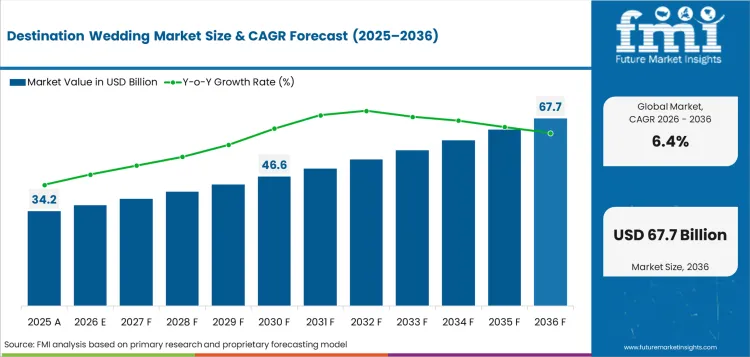
Key Takeaways, Market Size, and Forecast
| Metric | Value |
|---|---|
| Market Size (2025) | USD 34.20 Billion |
| Market Size (2036) | USD 67.67 Billion |
| CAGR (2026–2036) | 6.4% |
| Incremental Opportunity (2026–2036) | USD 31.28 Billion |
| Leading Service Planning (2026) | Full Service Planning |
| Full Service Planning Share (2026) | 55.0% |
| Fastest-Growing Country | China |
| China CAGR | 8.2% |
| 2nd Fastest-Growing Country | India |
| India CAGR | 7.6% |
Destination Wedding Market Definition
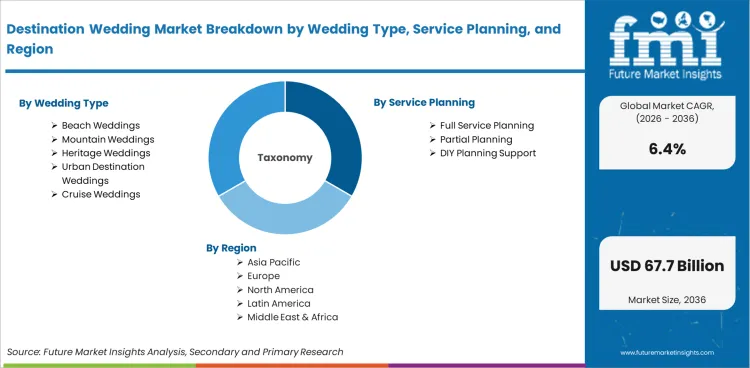
The destination wedding market encompasses all commercially traded products and services classified under this category, including Beach Weddings, Mountain Weddings, Heritage Weddings, Urban Destination Weddings, and Cruise Weddings. The market scope covers procurement, manufacturing, and distribution activities across wedding type, service planning, organization of stay dimensions, with revenue tracked from 2026 to 2036.
Destination Wedding Market Inclusions
Market scope encompasses all commercially traded products categorized by wedding type (Beach Weddings, Mountain Weddings, Heritage Weddings, Urban Destination Weddings); service planning (Full Service Planning, Partial Planning, DIY Planning Support); organization of stay (Luxury Resorts, Hotels, Guest Houses and Homestays, Cruise Accommodation); guest capacity (Small Weddings, Mid Size Weddings, Large Weddings, Very Large Weddings). Revenue coverage spans from 2026 to 2036 across all major regions.
Destination Wedding Market Exclusions
The scope does not include unprocessed raw materials sold without commercial grading, products manufactured exclusively for internal consumption without commercial distribution, or adjacent categories that fall outside the defined segmentation taxonomy.
Destination Wedding Market Research Methodology
- Primary Research: FMI analysts spoke with manufacturers, distributors, procurement specialists and end use operators in key markets to validate demand patterns and pricing structures.
- Desk Research: Aggregated data from industry associations, regulatory filings, trade publications and manufacturer disclosures to set baseline market parameters.
- Market sizing and forecasting: Bottom-up aggregation across product segments, end use categories and regional markets calibrated to top-down macro-economic and industry production data
- Data Validation: Weekly cross checks against production statistics, trade data and manufacturer reported figures to maintain forecast accuracy.
Why is the Destination Wedding Market Growing?
- The rising disposable incomes, changing consumer preferences towards experiential spending and increasing digital accessibility are some of the factors driving the demand for premium destination wedding services.
- Social media influence and digital booking platforms are expanding market reach, decreasing customer acquisition costs and allowing service providers to target new demographic segments.
- China at 8.2% is the story of a rapidly expanding middle class, urbanization and cultural change towards premium, personalized service consumption.
The destination wedding market is growing at a CAGR of 6.4% from 2026 to 2036, driven by structural demand shifts across end use categories and regions. Growth is driven by higher specification requirements, formalization of procurement and a shift from commodity sourcing to value driven supplier selection. The service planning segment is dominated by Full Service Planning with a share of 55.0%, suggesting a concentrated demand in existing product configurations.
Pricing dynamics are still driven by destination accessibility, service complexity and seasonal demand patterns. With a history of vendor networks, multi-destination presence and digital booking capabilities, service providers are positioned to gain market share as consumers consolidate spending with trusted, full-service platforms. Geographic demand is responding to income growth trends with growth in China and India suggesting an increase in consumer willingness to spend on premium, experience led services.
Market Segmentation Analysis
- Full Service Planning holds 55.0% of the service planning segment, reflecting concentrated demand in established product configurations with proven end use performance.
- Beach Weddings accounts for 30.0% of wedding type demand, indicating growing procurement preference for specialized formats.
- Segmentation patterns indicate a market transitioning toward specification driven procurement across wedding type, service planning, organization of stay categories.
The destination wedding market is segmented by wedding type, service planning, organization of stay, guest capacity, wedding services, distribution channel. Demand concentration in full service planning reflects established supply chain positioning and consistent buyer preference for proven product configurations.
Insights into the Wedding Type Segment
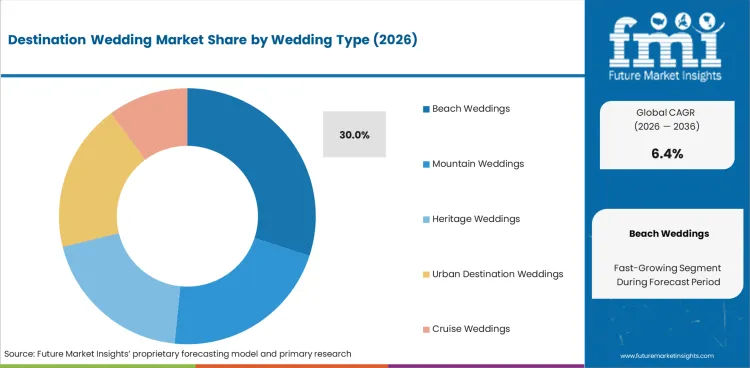
In 2026, Beach Weddings accounts for 30.0% of wedding type demand. This concentration reflects established procurement patterns and consistent end use requirements across key application areas.
Other categories of wedding types, such as Mountain Weddings, Heritage Weddings and Urban Destination Weddings, also reflect the expanding application scope and diversifying buyer requirements. Growth in these sub segments are indicative of market maturity beyond single format dependency.
Insights into the Service Planning Segment
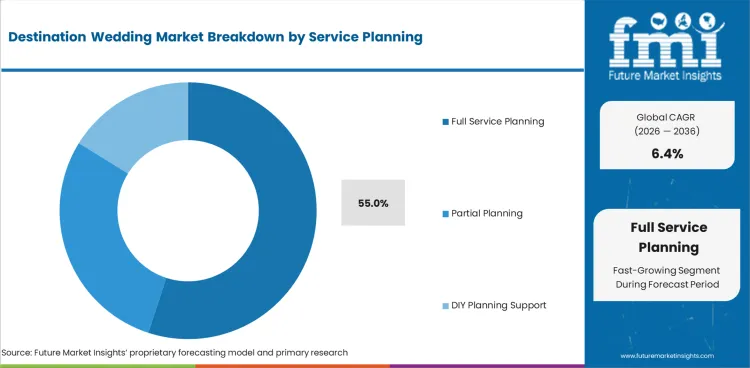
In 2026, Full Service Planning accounts for 55.0% of service planning demand. This concentration reflects established procurement patterns and consistent end use requirements across key application areas.
Partial Planning and DIY Planning Support are other categories of service planning reflecting expanding scope of application and diversification of buyer requirements. The growth in these sub segments is an indication of market maturity beyond single format dependency.
Destination Wedding Market Drivers, Restraints, and Opportunities
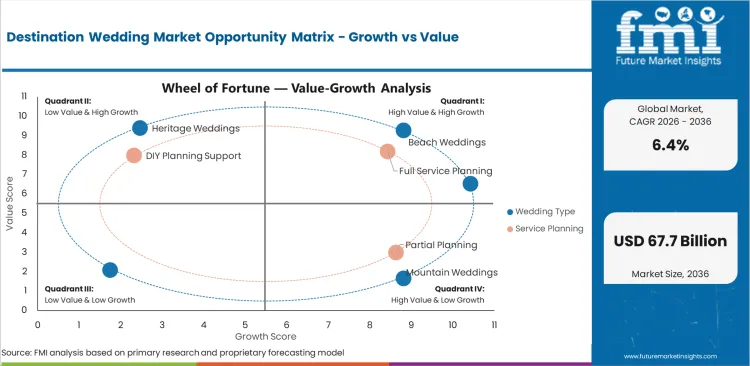
- Experiential spending preferences, rising disposable incomes and digital platform accessibility are fuelling demand for premium, personalized service offerings.
- In competitive markets, provider’s ability to grow margins is limited by seasonal concentration of demand, destination accessibility constraints and high customer acquisition costs.
- Scalable multi-destination service providers can leverage growth opportunities from digital booking platforms and demand generation via social media.
The destination wedding market continues to grow on the back of structural demand drivers, regulatory frameworks and changing end use requirements. Limitations imposed by cost, scale and the complexity of compliance shape the competitive landscape, directing growth to established players with integrated capabilities.
Experiential Spending and Consumer Premiumization
Demand is the change in consumer spending from material goods to experiences and services. The market for premium, personalized service offerings is expanding with rising disposable incomes and changing lifestyle preferences. Consumers are consolidating spending to trusted platforms and service providers with strong brand positioning, curated experiences and multi destination presence are gaining share.
Digital Platform Accessibility and Discovery
Digital booking platforms, social media influence and online review ecosystems are lowering barriers to discovery and enabling direct-to-consumer engagement to support growth. Digital channels are opening the market far beyond the traditional geographic and demographic borders. Providers with a strong digital presence, integrated booking experiences and user generated content strategies are well positioned for accelerated customer acquisition.
Seasonal Demand and Operational Scalability
Adoption patterns are still influenced by the concentration of demand during the seasons, the capacity of the destinations, and the operational complexity of providing consistent service quality at scale. The Providers are under margin pressure in the off peak periods while coping with the capacity constraints in the peak demand. Companies with diverse destination portfolios, yield management capabilities and flexible operational models are well positioned to maximize revenues across demand cycles.
Analysis of Destination Wedding Market by Key Countries
.webp "Top Country Growth Comparison Destination Wedding Market Cagr (2026 2036)")
| Country | CAGR |
|---|---|
| China | 8.2% |
| India | 7.6% |
| Germany | 7.0% |
| Brazil | 6.4% |
| USA | 5.8% |
| UK | 5.2% |
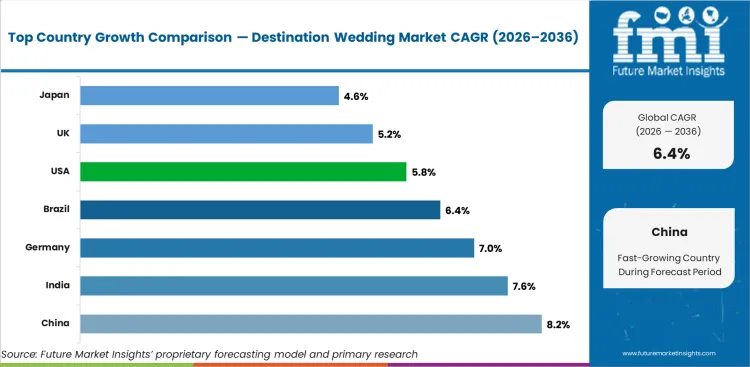
- China at 8.2% reflects strong structural demand supported by expanding end use capacity, regulatory investment, and procurement modernization.
- India at 7.6% reflects strong structural demand supported by expanding end use capacity, regulatory investment, and procurement modernization.
- Germany at 7.0% reflects strong structural demand supported by expanding end use capacity, regulatory investment, and procurement modernization.
- Brazil (6.4%) and USA (5.8%) show sustained growth supported by regulatory alignment and increasing market formalization.
The global destination wedding market is projected to expand at 6.4% from 2026 to 2036. The analysis covers more than 30 countries, with the key markets detailed below.
Demand Outlook for Destination Wedding Market in China
China is projected to grow 8.2% until 2036. Growth is a result of large scale manufacturing capacity, rapid industrialization and government investment in production modernization.
- Large scale manufacturing capacity and government industrial policy create sustained procurement demand across applications.
- Domestic consumption expansion and urbanization trends support volume growth in consumer facing segments.
- Export oriented production capabilities position manufacturers for increasing international market share.
Future Outlook for Destination Wedding Market in the India
India is projected to grow at 7.6% until 2036. The growth is driven by the expansion of industrial capacity, the rise in domestic consumption and government led infrastructure development programs.
- Government led infrastructure investment programs and manufacturing incentives support capacity expansion.
- Growing organized retail and domestic consumption create demand pull across consumer and industrial applications.
- Cost competitive production capabilities position manufacturers for both domestic supply and export opportunities.
Opportunity Analysis of Destination Wedding Market in Germany
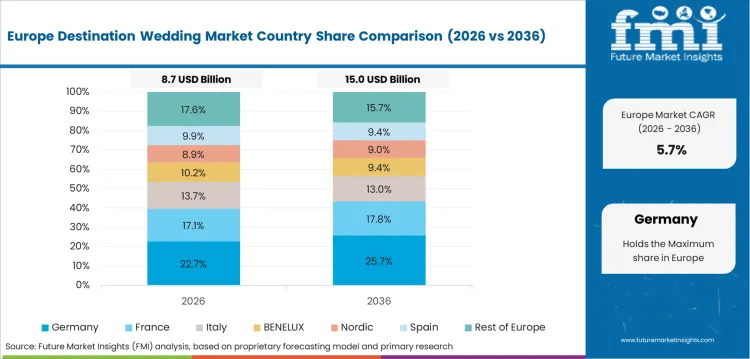
Germany is projected to grow at 7.0% through 2036. Demand reflects rising outbound travel spending among German couples, increasing preference for Southern European and Southeast Asian wedding destinations, and the growing influence of wedding planning platforms in the DACH region.
- Germany's high disposable income levels and generous annual leave allowances support sustained spending on premium destination wedding experiences.
- DACH region wedding planning platforms and specialized travel agencies create structured procurement channels for destination wedding packages.
- Growing preference among German couples for personalized, non traditional ceremony formats accelerates demand for curated, full service destination wedding offerings.
In-depth Analysis of Destination Wedding Market in Brazil
Brazil is projected to grow at 6.4% until 2036. Growth is an indicator of increased agricultural and industrial capacity, increased domestic consumption, and availability of natural resources.
- Agricultural and industrial capacity expansion support growing procurement demand across multiple end use segments.
- Natural resource availability and cost competitive production position the market for increasing export activity.
- Domestic consumption growth and urbanization trends create sustained demand in consumer facing applications.
Sales Analysis of Destination Wedding Market in USA
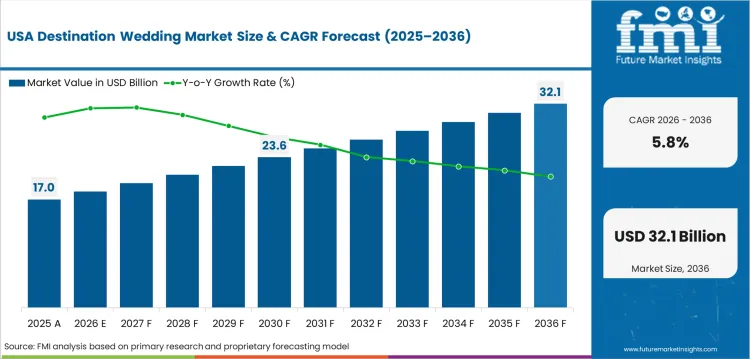
The USA is expected to grow at 5.8% through 2036. Growth is suggestive of advanced regulatory regimes, developed end use industries and emphasis on quality and compliance standards.
- Regulatory compliance standards and quality certification requirements shape supplier selection across procurement channels.
- Premiumization trends in end use applications support demand for high specification product configurations.
- Established distribution infrastructure enables efficient multi region supply chain coverage.
Growth Analysis of Destination Wedding Market in UK
UK expected to grow at 5.2% through 2036. Mature regulatory environment supporting growth Premiumization trends Established procurement channels.
- Stringent regulatory standards and sustainability mandates shape procurement specifications and supplier qualification.
- Premium market positioning supports demand for high specification, certified product configurations.
- Established manufacturing infrastructure and distribution networks enable efficient supply chain coverage.
Competitive Landscape and Strategic Positioning
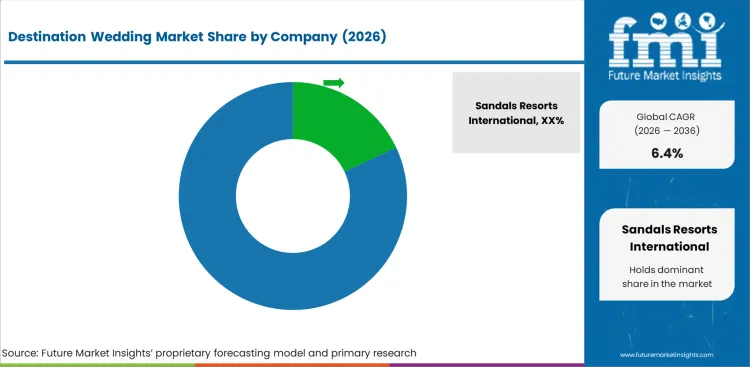
- Sandals Resorts International maintains a leadership position through integrated manufacturing capabilities, multi region distribution and established end use relationships.
- Excellence Group and Dreams Resorts & Spas are competing on breadth of product, technical capability and geographic coverage across key demand markets.
- New entrants are targeting niche product configurations and regional market penetration for establishing competitive positions in specialized applications.
Sandals Resorts International is a market leader in destination weddings with integrated manufacturing capabilities and established distribution relationships in key markets. The company differentiates itself through its broad product portfolio, scale of production and its coverage of multi-region supply chains.
Excellence Group and Dreams Resorts & Spas compete on technical capability, customer relationships and geographic presence, and have diversified product portfolios. Targeting specific application segments, Palace Resorts leverages expertise and knowledge of regional markets.
Competitive barriers include scale requirements for production, regulatory approval complexity, existing supply chain relationships, and capital intensity of capacity expansion. The key players are focusing on strategic priorities such as cost optimization, geographic expansion, widening product portfolio and fortifying the relationships with end use customers.
Key Companies in the Destination Wedding Market
Key global companies leading the destination wedding market include:
- Sandals Resorts International, Excellence Group, Dreams Resorts & Spas, Palace Resorts maintain leading positions through integrated manufacturing infrastructure, established distribution networks, and broad product portfolios serving multiple end use segments and geographies.
- AMResorts, Beaches Resorts, Iberostar Group have established regional leadership through specialized product capabilities, local market knowledge, and targeted application expertise.
- Barceló Hotel Group, Secrets Resorts & Spas represent emerging competitive positions, focusing on niche applications, advanced technology, and specialized product configurations.
Competitive Benchmarking: Destination Wedding Market
| Company | Service Portfolio | Destination Network | Digital Capability | Brand Positioning |
|---|---|---|---|---|
| Sandals Resorts International | High | High | Strong | Global |
| Excellence Group | High | Medium | Strong | Global |
| Dreams Resorts & Spas | Medium | High | Moderate | Regional |
| Palace Resorts | High | High | Strong | Global |
| AMResorts | Medium | Medium | Moderate | Regional |
| Beaches Resorts | Medium | High | Moderate | Regional |
| Iberostar Group | Low | High | Low | Regional |
| Barceló Hotel Group | Medium | High | Low | Regional |
| Secrets Resorts & Spas | Low | Medium | Low | Regional |
Source: Future Market Insights competitive analysis, 2026.
Key Developments in Destination Wedding Market
- In 2025, Sandals Resorts International expanded its luxury destination wedding and all-inclusive resort offerings through new resort developments and enhanced customizable wedding packages across Caribbean locations.
- In 2025, Excellence Group expanded resort development and hospitality infrastructure investments to support rising demand for premium destination weddings and group travel experiences in the Caribbean and Mexico.
Key Players in the Destination Wedding Market
Major Global Players
- Sandals Resorts International
- Excellence Group
- Dreams Resorts & Spas
- Palace Resorts
- AMResorts
- Beaches Resorts
- Iberostar Group
Emerging Players/Startups
- Barceló Hotel Group
- Secrets Resorts & Spas
Report Scope and Coverage
| Parameter | Details |
|---|---|
| Quantitative Units | USD 36.39 billion to USD 67.67 billion, at a CAGR of 6.4% |
| Market Definition | The destination wedding market encompasses all commercially traded products and services within the defined segmentation scope, covering wedding type, service planning, organization of stay categories across major global markets. |
| Regions Covered | North America, Latin America, Europe, East Asia, South Asia and Pacific, Middle East and Africa |
| Countries Covered | China, India, Germany, Brazil, USA, UK, Japan, 30 plus countries |
| Key Companies Profiled | Sandals Resorts International, Excellence Group, Dreams Resorts & Spas, Palace Resorts, AMResorts, Beaches Resorts, Iberostar Group, Barceló Hotel Group, Secrets Resorts & Spas |
| Forecast Period | 2026 to 2036 |
| Approach | Hybrid bottom up and top down methodology starting with verified transaction data, projecting adoption velocity across segments and regions. |
Market Segmentation Analysis
Destination Wedding Market Segmented by Wedding Type:
- Beach Weddings
- Resort Beach Weddings
- All Inclusive Packages
- Luxury Beachfront Events
- Private Beach Ceremonies
- Intimate Weddings
- Exclusive Venues
- Resort Beach Weddings
- Mountain Weddings
- Hill Station Weddings
- Scenic Outdoor Ceremonies
- Destination Resorts
- Alpine Weddings
- Luxury Chalets
- Seasonal Weddings
- Hill Station Weddings
- Heritage Weddings
- Palace Weddings
- Royal Theme Weddings
- Historic Venues
- Fort Weddings
- Traditional Ceremonies
- Cultural Events
- Palace Weddings
- Urban Destination Weddings
- Hotel Weddings
- Five Star Properties
- Ballroom Ceremonies
- Rooftop Weddings
- City Skyline Events
- Modern Luxury Themes
- Hotel Weddings
- Cruise Weddings
- Onboard Weddings
- Luxury Cruise Packages
- Ocean Ceremonies
- Destination Port Weddings
- Multi Location Experiences
- Onboard Weddings
Destination Wedding Market Segmented by Service Planning:
- Full Service Planning
- End to End Planning
- Venue Selection
- Vendor Coordination
- Luxury Wedding Planning
- Premium Decor
- Celebrity Management
- End to End Planning
- Partial Planning
- Event Coordination
- Day Of Management
- Vendor Assistance
- Design Only Services
- Theme and Decor Planning
- Styling Services
- Event Coordination
- DIY Planning Support
- Consultation Services
- Budget Planning
- Vendor Guidance
- Digital Planning Tools
- Apps and Platforms
- Virtual Assistance
- Consultation Services
Destination Wedding Market Segmented by Organization of Stay:
- Luxury Resorts
- Five Star Resorts
- All Inclusive Packages
- Premium Hospitality
- Private Villas
- Exclusive Stays
- High End Privacy
- Five Star Resorts
- Hotels
- Boutique Hotels
- Themed Accommodation
- Small Guest Groups
- Large Chain Hotels
- Standardized Packages
- Group Booking Options
- Boutique Hotels
- Guest Houses and Homestays
- Heritage Stays
- Cultural Experience
- Local Immersion
- Budget Accommodation
- Cost Efficient Stay
- Group Lodging
- Heritage Stays
- Cruise Accommodation
- Onboard Cabins
- Luxury Suites
- Event Integration
- Port Stay Packages
- Hybrid Travel Events
- Onboard Cabins
Destination Wedding Market Segmented by Guest Capacity:
- Small Weddings
- Below 50 Guests
- Intimate Ceremonies
- Private Gatherings
- Below 50 Guests
- Mid Size Weddings
- 50 to 150 Guests
- Destination Packages
- Family Focused Events
- 50 to 150 Guests
- Large Weddings
- 150 to 300 Guests
- Luxury Destination Events
- Multi Vendor Coordination
- 150 to 300 Guests
- Very Large Weddings
- Above 300 Guests
- High Scale Destination Events
- Celebrity Weddings
- Mass Coordination Events
- Above 300 Guests
Destination Wedding Market Segmented by Wedding Services:
- Venue Management
- Site Selection
- Destination Scouting
- Contract Negotiation
- Site Selection
- Decor and Styling
- Theme Based Decor
- Floral Arrangements
- Stage Design
- Theme Based Decor
- Catering Services
- Multi Cuisine Catering
- Local Cuisine
- International Cuisine
- Multi Cuisine Catering
- Entertainment Services
- Live Performances
- Music and DJs
- Cultural Shows
- Live Performances
- Photography and Videography
- Pre Wedding Shoots
- Drone Coverage
- Destination Coverage
- Pre Wedding Shoots
Destination Wedding Market Segmented by Distribution Channel:
- Direct Booking
- Wedding Planners
- Luxury Agencies
- Boutique Planners
- Wedding Planners
- Online Platforms
- Wedding Marketplaces
- Booking Portals
- Digital Planning Apps
- Wedding Marketplaces
- Travel Agencies
- Destination Travel Planners
- Package Bundling
- Tour and Wedding Combos
- Destination Travel Planners
Destination Wedding Market by Region:
- North America
- USA
- Canada
- Mexico
- Latin America
- Brazil
- Chile
- Rest of Latin America
- Western Europe
- Germany
- UK
- Italy
- Spain
- France
- Nordic
- BENELUX
- Rest of Western Europe
- Eastern Europe
- Russia
- Poland
- Hungary
- Balkan & Baltic
- Rest of Eastern Europe
- East Asia
- China
- Japan
- South Korea
- South Asia and Pacific
- India
- ASEAN
- Australia & New Zealand
- Rest of South Asia and Pacific
- Middle East & Africa
- Kingdom of Saudi Arabia
- Other GCC Countries
- Turkiye
- South Africa
- Other African Union
- Rest of Middle East & Africa
Research Sources and Bibliography
- 1. United Nations World Tourism Organization. (2025). UNWTO Tourism Highlights. UNWTO.
- 2. World Travel and Tourism Council. (2025). WTTC Economic Impact Report. WTTC.
- 3. International Air Transport Association. (2025). IATA Global Passenger Data. IATA.
- 4. Organisation for Economic Cooperation and Development. (2025). OECD Tourism Trends and Policies. OECD.
- 5. World Bank. (2025). International Tourism Expenditure Data. World Bank.
This bibliography is provided for reader reference. The full Future Market Insights report contains the complete reference list with publication dates, URLs, and supporting data for all cited works.
This Report Answers
- Estimating the size of the destination wedding market and revenue projections from 2026 to 2036.
- Segmentation analysis by wedding type, service planning, organization of stay, guest capacity.
- Regional and country level market insights covering more than 30 markets.
- Competitive landscape assessment including market positioning and strategic benchmarking.
- Identification of growth drivers, restraints, and commercial opportunities across segments.
- Technology and production analysis across key manufacturing and distribution channels.
- Investment opportunity identification across high growth segments and geographies.
- Supply chain and procurement pattern analysis.
- Delivery of data in PDF and Excel formats.
Frequently Asked Questions
What is the global market demand for Destination Wedding Market in 2026?
In 2026, the global destination wedding market is expected to be worth USD 36.39 billion.
How big will the Destination Wedding Market be in 2036?
By 2036, the destination wedding market is expected to be worth USD 67.67 billion.
How much is demand for Destination Wedding Market expected to grow between 2026 and 2036?
Between 2026 and 2036, demand for destination wedding market is expected to grow at a CAGR of 6.4%.
Which service planning segment is likely to lead globally by 2026?
Full Service Planning is projected to account for 55.0% of service planning demand in 2026, reflecting established procurement patterns and consistent end use requirements.
What is causing demand to rise in China?
China is projected to grow at 8.2% through 2036, reflecting expanding production capacity, increasing domestic consumption, and government led investment in quality infrastructure.
What is causing demand to rise in India?
India is projected to grow at 7.6% through 2036, supported by regulatory modernization, premiumization trends, and increasing emphasis on supply chain quality.
What does this report mean by Destination Wedding Market definition?
The destination wedding market encompasses all commercially traded products and services within the defined segmentation scope, covering wedding type, service planning, organization of stay categories across major global markets.
How does FMI make the Destination Wedding Market forecast and validate it?
Forecasting models use a hybrid bottom up and top down approach, starting with verified transaction data and validating against industry production statistics, trade data, and manufacturer disclosures.
Preview the report firsthand - request a free sample
Get SampleGet the brochure for pricing and purchase details.
Get PDFTable of Content
- Executive Summary
- Global Market Outlook
- Demand-side Trends
- Supply-side Trends
- Technology Roadmap Analysis
- Analysis and Recommendations
- Market Overview
- Market Coverage / Taxonomy
- Market Definition / Scope / Limitations
- Research Methodology
- Chapter Orientation
- Analytical Lens and Working Hypotheses
- Market Structure, Signals, and Trend Drivers
- Benchmarking and Cross-market Comparability
- Market Sizing, Forecasting, and Opportunity Mapping
- Research Design and Evidence Framework
- Desk Research Programme (Secondary Evidence)
- Company Annual and Sustainability Reports
- Peer-reviewed Journals and Academic Literature
- Corporate Websites, Product Literature, and Technical Notes
- Earnings Decks and Investor Briefings
- Statutory Filings and Regulatory Disclosures
- Technical White Papers and Standards Notes
- Trade Journals, Industry Magazines, and Analyst Briefs
- Conference Proceedings, Webinars, and Seminar Materials
- Government Statistics Portals and Public Data Releases
- Press Releases and Reputable Media Coverage
- Specialist Newsletters and Curated Briefings
- Sector Databases and Reference Repositories
- FMI Internal Proprietary Databases and Historical Market Datasets
- Subscription Datasets and Paid Sources
- Social Channels, Communities, and Digital Listening Inputs
- Additional Desk Sources
- Expert Input and Fieldwork (Primary Evidence)
- Primary Modes
- Qualitative Interviews and Expert Elicitation
- Quantitative Surveys and Structured Data Capture
- Blended Approach
- Why Primary Evidence is Used
- Field Techniques
- Interviews
- Surveys
- Focus Groups
- Observational and In-context Research
- Social and Community Interactions
- Stakeholder Universe Engaged
- C-suite Leaders
- Board Members
- Presidents and Vice Presidents
- R&D and Innovation Heads
- Technical Specialists
- Domain Subject-matter Experts
- Scientists
- Physicians and Other Healthcare Professionals
- Governance, Ethics, and Data Stewardship
- Research Ethics
- Data Integrity and Handling
- Primary Modes
- Tooling, Models, and Reference Databases
- Desk Research Programme (Secondary Evidence)
- Data Engineering and Model Build
- Data Acquisition and Ingestion
- Cleaning, Normalisation, and Verification
- Synthesis, Triangulation, and Analysis
- Quality Assurance and Audit Trail
- Market Background
- Market Dynamics
- Drivers
- Restraints
- Opportunity
- Trends
- Scenario Forecast
- Demand in Optimistic Scenario
- Demand in Likely Scenario
- Demand in Conservative Scenario
- Opportunity Map Analysis
- Product Life Cycle Analysis
- Supply Chain Analysis
- Investment Feasibility Matrix
- Value Chain Analysis
- PESTLE and Porter’s Analysis
- Introduction / Key Findings
- Historical Market Size Value (USD Million) Analysis By Wedding Type, 2021 to 2025
- Current and Future Market Size Value (USD Million) Analysis and Forecast By Wedding Type, 2026 to 2036
- Beach Weddings
- Resort Beach Weddings
- All Inclusive Packages
- Luxury Beachfront Events
- Private Beach Ceremonies
- Intimate Weddings
- Exclusive Venues
- Mountain Weddings
- Hill Station Weddings
- Scenic Outdoor Ceremonies
- Destination Resorts
- Alpine Weddings
- Luxury Chalets
- Heritage Weddings
- Palace Weddings
- Royal Theme Weddings
- Historic Venues
- Fort Weddings
- Traditional Ceremonies
- Urban Destination Weddings
- Hotel Weddings
- Five Star Properties
- Ballroom Ceremonies
- Rooftop Weddings
- City Skyline Events
- Cruise Weddings
- Onboard Weddings
- Luxury Cruise Packages
- Ocean Ceremonies
- Multi Location Experiences
- Beach Weddings
- Y-o-Y Growth Trend Analysis By Wedding Type, 2021 to 2025
- Absolute $ Opportunity Analysis By Wedding Type, 2026 to 2036
- Market Dynamics
- Global Market Analysis 2021 to 2025 and Forecast 2026 to 2036, By Service Planning
- Introduction / Key Findings
- Historical Market Size Value (USD Million) Analysis By Service Planning, 2021 to 2025
- Current and Future Market Size Value (USD Million) Analysis and Forecast By Service Planning, 2026 to 2036
- Full Service Planning
- End to End Planning
- Venue Selection
- Vendor Coordination
- Luxury Wedding Planning
- Premium Decor
- Celebrity Management
- Partial Planning
- Event Coordination
- Day Of Management
- Vendor Assistance
- Design Only Services
- Theme and Decor Planning
- DIY Planning Support
- Consultation Services
- Budget Planning
- Vendor Guidance
- Digital Planning Tools
- Apps and Platforms
- Full Service Planning
- Y-o-Y Growth Trend Analysis By Service Planning, 2021 to 2025
- Absolute $ Opportunity Analysis By Service Planning, 2026 to 2036
- Global Market Analysis 2021 to 2025 and Forecast 2026 to 2036, By Organization of Stay
- Introduction / Key Findings
- Historical Market Size Value (USD Million) Analysis By Organization of Stay, 2021 to 2025
- Current and Future Market Size Value (USD Million) Analysis and Forecast By Organization of Stay, 2026 to 2036
- Luxury Resorts
- Five Star Resorts
- All Inclusive Packages
- Premium Hospitality
- Private Villas
- Exclusive Stays
- High End Privacy
- Hotels
- Boutique Hotels
- Themed Accommodation
- Small Guest Groups
- Large Chain Hotels
- Standardized Packages
- Guest Houses and Homestays
- Heritage Stays
- Cultural Experience
- Local Immersion
- Budget Accommodation
- Cost Efficient Stay
- Cruise Accommodation
- Onboard Cabins
- Luxury Suites
- Event Integration
- Port Stay Packages
- Hybrid Travel Events
- Y-o-Y Growth Trend Analysis By Organization of Stay, 2021 to 2025
- Absolute $ Opportunity Analysis By Organization of Stay, 2026 to 2036
- Luxury Resorts
- Global Market Analysis 2021 to 2025 and Forecast 2026 to 2036, By Guest Capacity
- Introduction / Key Findings
- Historical Market Size Value (USD Million) Analysis By Guest Capacity, 2021 to 2025
- Current and Future Market Size Value (USD Million) Analysis and Forecast By Guest Capacity, 2026 to 2036
- Small Weddings
- Below 50 Guests
- Intimate Ceremonies
- Private Gatherings
- Mid Size Weddings
- 50 to 150 Guests
- Destination Packages
- Family Focused Events
- Large Weddings
- 150 to 300 Guests
- Luxury Destination Events
- Multi Vendor Coordination
- Very Large Weddings
- Above 300 Guests
- High Scale Destination Events
- Celebrity Weddings
- Mass Coordination Events
- Y-o-Y Growth Trend Analysis By Guest Capacity, 2021 to 2025
- Absolute $ Opportunity Analysis By Guest Capacity, 2026 to 2036
- Small Weddings
- Global Market Analysis 2021 to 2025 and Forecast 2026 to 2036, By Wedding Services
- Introduction / Key Findings
- Historical Market Size Value (USD Million) Analysis By Wedding Services, 2021 to 2025
- Current and Future Market Size Value (USD Million) Analysis and Forecast By Wedding Services, 2026 to 2036
- Venue Management
- Site Selection
- Destination Scouting
- Contract Negotiation
- Decor and Styling
- Theme Based Decor
- Floral Arrangements
- Stage Design
- Catering Services
- Multi Cuisine Catering
- Local Cuisine
- International Cuisine
- Entertainment Services
- Live Performances
- Music and DJs
- Cultural Shows
- Photography and Videography
- Pre Wedding Shoots
- Drone Coverage
- Destination Coverage
- Y-o-Y Growth Trend Analysis By Wedding Services, 2021 to 2025
- Absolute $ Opportunity Analysis By Wedding Services, 2026 to 2036
- Venue Management
- Global Market Analysis 2021 to 2025 and Forecast 2026 to 2036, By Distribution Channel
- Introduction / Key Findings
- Historical Market Size Value (USD Million) Analysis By Distribution Channel, 2021 to 2025
- Current and Future Market Size Value (USD Million) Analysis and Forecast By Distribution Channel, 2026 to 2036
- Direct Booking
- Wedding Planners
- Luxury Agencies
- Boutique Planners
- Online Platforms
- Wedding Marketplaces
- Booking Portals
- Digital Planning Apps
- Travel Agencies
- Destination Travel Planners
- Package Bundling
- Tour and Wedding Combos
- Y-o-Y Growth Trend Analysis By Distribution Channel, 2021 to 2025
- Absolute $ Opportunity Analysis By Distribution Channel, 2026 to 2036
- Direct Booking
- Global Market Analysis 2021 to 2025 and Forecast 2026 to 2036, By Region
- Introduction
- Historical Market Size Value (USD Million) Analysis By Region, 2021 to 2025
- Current Market Size Value (USD Million) Analysis and Forecast By Region, 2026 to 2036
- North America
- Latin America
- Western Europe
- Eastern Europe
- East Asia
- South Asia and Pacific
- Middle East & Africa
- Market Attractiveness Analysis By Region
- North America Market Analysis 2021 to 2025 and Forecast 2026 to 2036, By Country
- Historical Market Size Value (USD Million) Trend Analysis By Market Taxonomy, 2021 to 2025
- Market Size Value (USD Million) Forecast By Market Taxonomy, 2026 to 2036
- By Country
- USA
- Canada
- Mexico
- By Wedding Type
- By Service Planning
- By Organization of Stay
- By Guest Capacity
- By Wedding Services
- By Distribution Channel
- By Country
- Market Attractiveness Analysis
- By Country
- By Wedding Type
- By Service Planning
- By Organization of Stay
- By Guest Capacity
- By Wedding Services
- By Distribution Channel
- Key Takeaways
- Latin America Market Analysis 2021 to 2025 and Forecast 2026 to 2036, By Country
- Historical Market Size Value (USD Million) Trend Analysis By Market Taxonomy, 2021 to 2025
- Market Size Value (USD Million) Forecast By Market Taxonomy, 2026 to 2036
- By Country
- Brazil
- Chile
- Rest of Latin America
- By Wedding Type
- By Service Planning
- By Organization of Stay
- By Guest Capacity
- By Wedding Services
- By Distribution Channel
- By Country
- Market Attractiveness Analysis
- By Country
- By Wedding Type
- By Service Planning
- By Organization of Stay
- By Guest Capacity
- By Wedding Services
- By Distribution Channel
- Key Takeaways
- Western Europe Market Analysis 2021 to 2025 and Forecast 2026 to 2036, By Country
- Historical Market Size Value (USD Million) Trend Analysis By Market Taxonomy, 2021 to 2025
- Market Size Value (USD Million) Forecast By Market Taxonomy, 2026 to 2036
- By Country
- Germany
- UK
- Italy
- Spain
- France
- Nordic
- BENELUX
- Rest of Western Europe
- By Wedding Type
- By Service Planning
- By Organization of Stay
- By Guest Capacity
- By Wedding Services
- By Distribution Channel
- By Country
- Market Attractiveness Analysis
- By Country
- By Wedding Type
- By Service Planning
- By Organization of Stay
- By Guest Capacity
- By Wedding Services
- By Distribution Channel
- Key Takeaways
- Eastern Europe Market Analysis 2021 to 2025 and Forecast 2026 to 2036, By Country
- Historical Market Size Value (USD Million) Trend Analysis By Market Taxonomy, 2021 to 2025
- Market Size Value (USD Million) Forecast By Market Taxonomy, 2026 to 2036
- By Country
- Russia
- Poland
- Hungary
- Balkan & Baltic
- Rest of Eastern Europe
- By Wedding Type
- By Service Planning
- By Organization of Stay
- By Guest Capacity
- By Wedding Services
- By Distribution Channel
- By Country
- Market Attractiveness Analysis
- By Country
- By Wedding Type
- By Service Planning
- By Organization of Stay
- By Guest Capacity
- By Wedding Services
- By Distribution Channel
- Key Takeaways
- East Asia Market Analysis 2021 to 2025 and Forecast 2026 to 2036, By Country
- Historical Market Size Value (USD Million) Trend Analysis By Market Taxonomy, 2021 to 2025
- Market Size Value (USD Million) Forecast By Market Taxonomy, 2026 to 2036
- By Country
- China
- Japan
- South Korea
- By Wedding Type
- By Service Planning
- By Organization of Stay
- By Guest Capacity
- By Wedding Services
- By Distribution Channel
- By Country
- Market Attractiveness Analysis
- By Country
- By Wedding Type
- By Service Planning
- By Organization of Stay
- By Guest Capacity
- By Wedding Services
- By Distribution Channel
- Key Takeaways
- South Asia and Pacific Market Analysis 2021 to 2025 and Forecast 2026 to 2036, By Country
- Historical Market Size Value (USD Million) Trend Analysis By Market Taxonomy, 2021 to 2025
- Market Size Value (USD Million) Forecast By Market Taxonomy, 2026 to 2036
- By Country
- India
- ASEAN
- Australia & New Zealand
- Rest of South Asia and Pacific
- By Wedding Type
- By Service Planning
- By Organization of Stay
- By Guest Capacity
- By Wedding Services
- By Distribution Channel
- By Country
- Market Attractiveness Analysis
- By Country
- By Wedding Type
- By Service Planning
- By Organization of Stay
- By Guest Capacity
- By Wedding Services
- By Distribution Channel
- Key Takeaways
- Middle East & Africa Market Analysis 2021 to 2025 and Forecast 2026 to 2036, By Country
- Historical Market Size Value (USD Million) Trend Analysis By Market Taxonomy, 2021 to 2025
- Market Size Value (USD Million) Forecast By Market Taxonomy, 2026 to 2036
- By Country
- Kingdom of Saudi Arabia
- Other GCC Countries
- Turkiye
- South Africa
- Other African Union
- Rest of Middle East & Africa
- By Wedding Type
- By Service Planning
- By Organization of Stay
- By Guest Capacity
- By Wedding Services
- By Distribution Channel
- By Country
- Market Attractiveness Analysis
- By Country
- By Wedding Type
- By Service Planning
- By Organization of Stay
- By Guest Capacity
- By Wedding Services
- By Distribution Channel
- Key Takeaways
- Key Countries Market Analysis
- USA
- Pricing Analysis
- Market Share Analysis, 2025
- By Wedding Type
- By Service Planning
- By Organization of Stay
- By Guest Capacity
- By Wedding Services
- By Distribution Channel
- Canada
- Pricing Analysis
- Market Share Analysis, 2025
- By Wedding Type
- By Service Planning
- By Organization of Stay
- By Guest Capacity
- By Wedding Services
- By Distribution Channel
- Mexico
- Pricing Analysis
- Market Share Analysis, 2025
- By Wedding Type
- By Service Planning
- By Organization of Stay
- By Guest Capacity
- By Wedding Services
- By Distribution Channel
- Brazil
- Pricing Analysis
- Market Share Analysis, 2025
- By Wedding Type
- By Service Planning
- By Organization of Stay
- By Guest Capacity
- By Wedding Services
- By Distribution Channel
- Chile
- Pricing Analysis
- Market Share Analysis, 2025
- By Wedding Type
- By Service Planning
- By Organization of Stay
- By Guest Capacity
- By Wedding Services
- By Distribution Channel
- Germany
- Pricing Analysis
- Market Share Analysis, 2025
- By Wedding Type
- By Service Planning
- By Organization of Stay
- By Guest Capacity
- By Wedding Services
- By Distribution Channel
- UK
- Pricing Analysis
- Market Share Analysis, 2025
- By Wedding Type
- By Service Planning
- By Organization of Stay
- By Guest Capacity
- By Wedding Services
- By Distribution Channel
- Italy
- Pricing Analysis
- Market Share Analysis, 2025
- By Wedding Type
- By Service Planning
- By Organization of Stay
- By Guest Capacity
- By Wedding Services
- By Distribution Channel
- Spain
- Pricing Analysis
- Market Share Analysis, 2025
- By Wedding Type
- By Service Planning
- By Organization of Stay
- By Guest Capacity
- By Wedding Services
- By Distribution Channel
- France
- Pricing Analysis
- Market Share Analysis, 2025
- By Wedding Type
- By Service Planning
- By Organization of Stay
- By Guest Capacity
- By Wedding Services
- By Distribution Channel
- India
- Pricing Analysis
- Market Share Analysis, 2025
- By Wedding Type
- By Service Planning
- By Organization of Stay
- By Guest Capacity
- By Wedding Services
- By Distribution Channel
- ASEAN
- Pricing Analysis
- Market Share Analysis, 2025
- By Wedding Type
- By Service Planning
- By Organization of Stay
- By Guest Capacity
- By Wedding Services
- By Distribution Channel
- Australia & New Zealand
- Pricing Analysis
- Market Share Analysis, 2025
- By Wedding Type
- By Service Planning
- By Organization of Stay
- By Guest Capacity
- By Wedding Services
- By Distribution Channel
- China
- Pricing Analysis
- Market Share Analysis, 2025
- By Wedding Type
- By Service Planning
- By Organization of Stay
- By Guest Capacity
- By Wedding Services
- By Distribution Channel
- Japan
- Pricing Analysis
- Market Share Analysis, 2025
- By Wedding Type
- By Service Planning
- By Organization of Stay
- By Guest Capacity
- By Wedding Services
- By Distribution Channel
- South Korea
- Pricing Analysis
- Market Share Analysis, 2025
- By Wedding Type
- By Service Planning
- By Organization of Stay
- By Guest Capacity
- By Wedding Services
- By Distribution Channel
- Russia
- Pricing Analysis
- Market Share Analysis, 2025
- By Wedding Type
- By Service Planning
- By Organization of Stay
- By Guest Capacity
- By Wedding Services
- By Distribution Channel
- Poland
- Pricing Analysis
- Market Share Analysis, 2025
- By Wedding Type
- By Service Planning
- By Organization of Stay
- By Guest Capacity
- By Wedding Services
- By Distribution Channel
- Hungary
- Pricing Analysis
- Market Share Analysis, 2025
- By Wedding Type
- By Service Planning
- By Organization of Stay
- By Guest Capacity
- By Wedding Services
- By Distribution Channel
- Kingdom of Saudi Arabia
- Pricing Analysis
- Market Share Analysis, 2025
- By Wedding Type
- By Service Planning
- By Organization of Stay
- By Guest Capacity
- By Wedding Services
- By Distribution Channel
- Turkiye
- Pricing Analysis
- Market Share Analysis, 2025
- By Wedding Type
- By Service Planning
- By Organization of Stay
- By Guest Capacity
- By Wedding Services
- By Distribution Channel
- South Africa
- Pricing Analysis
- Market Share Analysis, 2025
- By Wedding Type
- By Service Planning
- By Organization of Stay
- By Guest Capacity
- By Wedding Services
- By Distribution Channel
- USA
- Market Structure Analysis
- Competition Dashboard
- Competition Benchmarking
- Market Share Analysis of Top Players
- By Regional
- By Wedding Type
- By Service Planning
- By Organization of Stay
- By Guest Capacity
- By Wedding Services
- By Distribution Channel
- Competition Analysis
- Competition Deep Dive
- Sandals Resorts International
- Overview
- Product Portfolio
- Profitability by Market Segments (Product/Age /Sales Channel/Region)
- Sales Footprint
- Strategy Overview
- Marketing Strategy
- Product Strategy
- Channel Strategy
- Excellence Group
- Dreams Resorts & Spas
- Palace Resorts
- AMResorts
- Beaches Resorts
- Iberostar Group
- Barceló Hotel Group
- Secrets Resorts & Spas
- Sandals Resorts International
- Competition Deep Dive
- Assumptions & Acronyms Used


