

- Industry Size (2026)
- USD 1 Bn
- Forecast (2036)
- USD 2.2 Bn
- CAGR (2026 to 2036)
- 8.1%
Dust Suppression Chemicals for Mining and Construction Market Forecast and Outlook 2026 to 2036
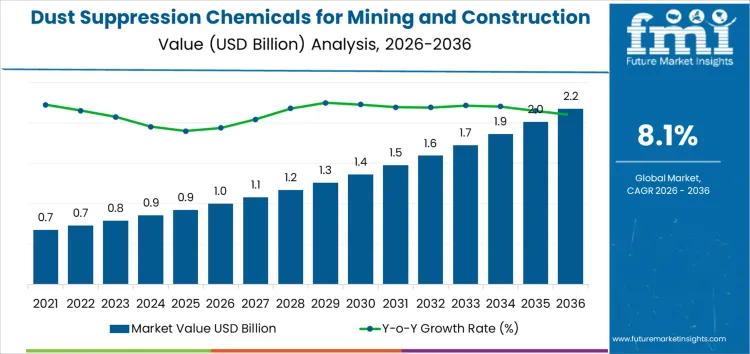
The dust suppression chemicals for mining and construction market is projected to grow steadily from 2026 to 2036. In 2026, the market value is expected to be USD 1 billion, with growth expected to reach USD 2.2 billion by 2036. The compound annual growth rate (CAGR) for the market is forecasted at 8.1%, driven by increasing demand for effective dust control solutions in the mining and construction industries. Dust suppression chemicals are critical for reducing airborne dust particles, improving air quality, ensuring worker safety, and meeting environmental regulations.
The market’s growth is supported by stricter environmental regulations, rising awareness of the health hazards associated with dust exposure, and a growing focus on sustainable and eco-friendly solutions. As the construction and mining sectors expand globally, especially in emerging economies, the demand for dust suppression chemicals is expected to increase. Additionally, advancements in chemical formulations that improve the efficiency and safety of dust control products will further drive market growth. Over the forecast period, the market is expected to experience consistent growth, driven by these key trends.
Quick Stats of the Dust Suppression Chemicals for Mining and Construction Market
- Dust Suppression Chemicals for Mining and Construction Market Value (2026): USD 1 billion
- Dust Suppression Chemicals for Mining and Construction Market Forecast Value (2036): USD 2.2 billion
- Dust Suppression Chemicals for Mining and Construction Market Global Forecast CAGR (2026 to 2036): 8.1%
- Dust Suppression Chemicals for Mining and Construction Market Leading Segment: End-User Industry (Mining) 36%
- Key Growth Regions in Dust Suppression Chemicals for Mining and Construction Market: India
- Top Players in Dust Suppression Chemicals for Mining and Construction Market: Soilworks, Benetech Inc., Quaker Houghton, Ecolab, BASF SE
What is the Growth Forecast for the Dust Suppression Chemicals for Mining and Construction Market through 2036?
The compound absolute growth analysis of the dust suppression chemicals market reveals a consistent and steady increase in market value over the forecast period. Starting from USD 1 billion in 2026, the market experiences incremental growth each year. By 2031, the market value will reach approximately USD 1.7 billion, reflecting an increase of about USD 700 million. In the later stages of the forecast, from 2032 to 2036, the market continues to grow at a steady rate, with an additional USD 500 million growth observed from 2031 to 2036. This consistent absolute growth highlights the ongoing demand for dust suppression chemicals, particularly in the mining and construction sectors, driven by regulatory requirements, environmental concerns, and technological innovations. The gradual and predictable growth pattern indicates a mature, expanding market with sustained long-term demand.
Dust Suppression Chemicals for Mining and Construction Market Key Takeaways
| Metric | Value |
|---|---|
| Industry Sales Value (2026) | USD 1 billion |
| Industry Forecast Value (2036) | USD 2.2 billion |
| Industry Forecast CAGR (2026 to 2036) | 8.1% |
What Is Driving the Demand for the Dust Suppression Chemicals for Mining and Construction Market Globally?
The global demand for dust suppression chemicals in mining and construction is driven by increasing regulatory enforcement of air quality standards, heightened awareness of occupational health risks, and the need to control particulate emissions in large scale earthmoving and material handling operations. Dust generated from blasting, excavation, hauling, and stockpile activities contributes to airborne particulate matter that can impair visibility, damage equipment, and pose respiratory hazards to workers and nearby communities.
Regulatory bodies in Europe, North America, Asia Pacific, and the Middle East have adopted or tightened limits on particulate emissions, compelling site operators to implement effective dust control measures. Dust suppression chemicals, including hygroscopic salts, surfactants, polymers, and environmentally benign binding agents, are applied to roadways, stockpiles, and open areas to enhance moisture retention, agglomerate fine particles, and reduce wind borne dispersion. Mining operations use these additives to comply with environmental permits, protect worker health, and maintain continuity of operations in arid or windy conditions.
In the construction sector, urbanisation and expansion of infrastructure projects in densely populated regions intensify scrutiny of dust emissions, leading contractors to adopt suppression strategies as part of environmental management plans. Growth in mining output and construction activity, particularly in countries experiencing industrialisation and urban expansion, further reinforces uptake of dust suppression solutions that help meet compliance and community expectations.
Future demand for dust suppression chemicals is expected to grow as environmental regulation, sustainability reporting, and community engagement continue to influence operational practices in mining and construction. Advances in additive chemistry are producing more efficient, longer lasting suppression agents that can reduce application frequency and water use, addressing both performance and resource conservation objectives. Suppliers are also developing formulations that are biodegradable and compatible with sensitive ecosystems, which is important for operations near waterways, agricultural land, or protected areas. Integration of dust sensors and real time environmental monitoring with dust suppression strategies enables more targeted chemical application, reducing material use and operational cost.
Mechanisation of construction equipment and expansion of large scale mining projects in emerging markets will maintain pressure for scalable dust control solutions that support safe, compliant sites. As operators increasingly embed environmental, social, and governance (ESG) criteria into capital planning and daily operations, demand for dust suppression chemicals that balance efficacy, cost, and environmental impact is expected to expand steadily across global mining and construction markets.
What are the Leading Segments in the Global Dust Suppression Chemicals for Mining and Construction Market?
The global dust suppression chemicals for mining and construction market is segmented by application area and end-user industry. Among application areas, mining haul roads & pits lead the market, capturing 34% of the share, followed by construction sites & earthworks, quarry & aggregate operations, material handling & stockpiles, andunpaved roads & infrastructure projects. Mining haul roads & pits dominate due to the large-scale dust generation in these areas, requiring effective dust control solutions. On the end-user industry side, mining dominates the market, holding 36% of the share, followed by construction & civil engineering, cement & aggregates, oil & gas, and public infrastructure & municipal sectors. The mining industry is the largest user of dust suppression chemicals due to the significant dust-related challenges in mining operations.
What Drives the Growth of Mining Haul Roads & Pits in the Dust Suppression Chemicals for Mining and Construction Market?
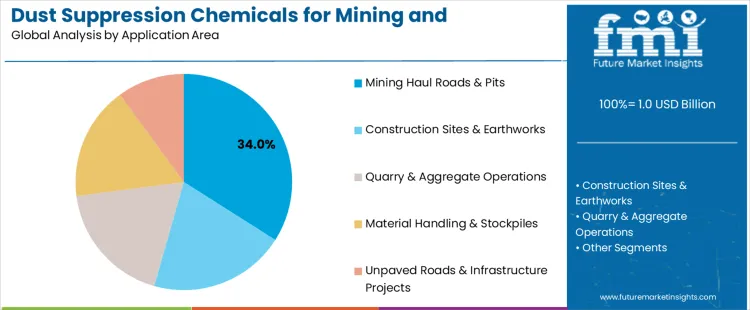
Mining haul roads & pits are the leading application area in the dust suppression chemicals for mining and construction market, holding 34% of the share. The mining industry generates substantial amounts of dust, particularly in haul roads and pits where heavy machinery and vehicles are constantly in operation. Dust suppression chemicals are critical in minimizing airborne dust, which can pose significant health risks to workers, reduce visibility, and cause equipment wear. The increasing demand for sustainable dust control solutions in mining, along with stricter environmental regulations, is driving the growth of this segment. By using dust suppression chemicals, mining companies can improve safety, comply with regulatory standards, and enhance operational efficiency, further supporting the adoption of these solutions in haul roads & pits.
What is Driving the Demand for Mining in the Dust Suppression Chemicals for Mining and Construction Market?
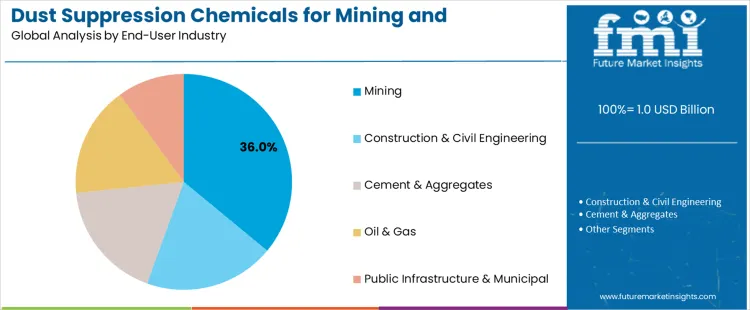
Mining is the leading end-user industry in the dust suppression chemicals for mining and construction market, capturing 36% of the share. The mining industry is the primary source of dust generation, particularly in open-pit mines, haul roads, and processing areas. Dust poses serious challenges to worker health, environmental safety, and operational efficiency. As mining companies face increasing pressure to meet environmental regulations and ensure worker safety, the demand for effective dust suppression solutions has risen. Dust suppression chemicals are widely used in mining operations to mitigate dust generation, improve air quality, and enhance worker productivity. The need to maintain regulatory compliance, reduce environmental impact, and protect workers' health is expected to continue driving the demand for dust suppression chemicals in the mining sector, solidifying its position as the dominant end-user industry in the market.
What are the Key Dynamics in the Global Dust Suppression Chemicals for Mining and Construction Market?
The global dust suppression chemicals market for mining and construction is expanding as operators prioritise worker safety, environmental compliance and air quality management at industrial sites. Dust generated from blasting, excavation, haul roads and material handling contributes to respiratory hazards, visibility issues and regulatory exposure. Chemical dust suppressants such as surfactants, polymers, chloride compounds and hygroscopic agents help bind particulates and reduce airborne dust. Growth reflects rising infrastructure development, stricter air emissions standards and increased adoption of proactive dust control strategies in open pit mines, quarries, roads and heavy construction zones across regions worldwide.
What are the Key Drivers for the Global Dust Suppression Chemicals for Mining and Construction Market?
One key driver is regulatory pressure to meet ambient air quality standards and workplace safety requirements, which motivates use of effective dust control measures. Mining and construction companies seek chemical solutions that lower particulate matter (PM2.5 and PM10) levels to protect workers and nearby communities. Demand increases with growth in large scale infrastructure projects, urban development and mineral extraction activities that disturb soil and generate dust. Advances in formulation technology improve performance of suppressants under varied climatic conditions, enhancing moisture retention and binding on surfaces. Rising corporate sustainability commitments and environmental, social and governance (ESG) reporting also push site managers toward documented dust mitigation practices.
What are the Restraints for the Global Dust Suppression Chemicals for Mining and Construction Market?
A restraint is the cost and logistical complexity of applying chemical suppressants on extensive mine haul roads and vast construction sites, which may limit adoption in price sensitive projects. Effectiveness of dust suppression chemicals can vary with soil type, weather conditions and application methodology, requiring field testing and technical expertise that some operators lack. Concerns about runoff water quality and potential impacts on soil and groundwater demand careful selection of environmentally acceptable chemistries and adherence to local regulations. Procurement cycles and budget constraints in smaller contractors or regional operators may delay investment in advanced dust control systems.
What are the Key Trends in the Global Dust Suppression Chemicals for Mining and Construction Market?
A key trend is development of greener, non toxic dust suppression products that align with environmental stewardship goals and reduce ecological footprint. Manufacturers are introducing biodegradable surfactants, natural polymers and low chloride blends that minimise residual impact while maintaining performance. Integration of dust suppressants with digital site management tools and sensor based monitoring helps optimise application rates and timing to match traffic patterns and weather forecasts. Increased emphasis on multi functional solutions that offer dust control, soil stabilisation and erosion prevention is influencing product choice. Collaboration between chemical suppliers, equipment OEMs and site engineers is advancing best practices for effective, compliant dust mitigation across mining and heavy construction operations.
What is the Country-Wise Analysis of the Dust Suppression Chemicals for Mining and Construction Market?
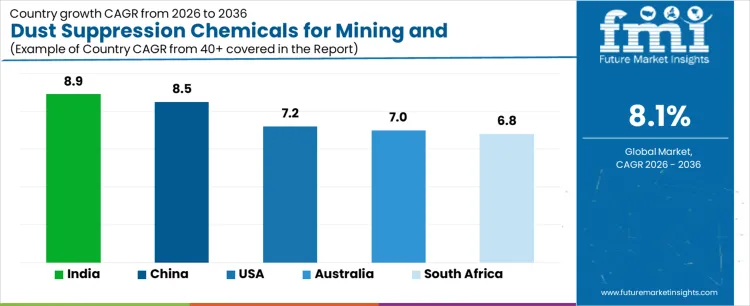
The dust suppression chemicals for mining and construction market is expected to grow steadily, driven by increasing demand for safer and more efficient methods of controlling dust in industrial operations. These chemicals are crucial in mining, construction, and other heavy industries to improve air quality, reduce health risks, and comply with stringent environmental regulations. High-growth markets such as India and China are seeing strong demand due to their large-scale industrial activities, rapid urbanization, and increasing focus on health and environmental safety. Developed markets such as the United States, Australia, and South Africa are also experiencing steady growth, supported by stringent regulatory requirements and a growing emphasis on sustainability in industrial practices.
| Country | CAGR (2026-2036) |
|---|---|
| India | 8.9% |
| China | 8.5% |
| United States | 7.2% |
| Australia | 7% |
| South Africa | 6.8% |
What is the Growth Outlook for the Dust Suppression Chemicals for Mining and Construction Market in India?
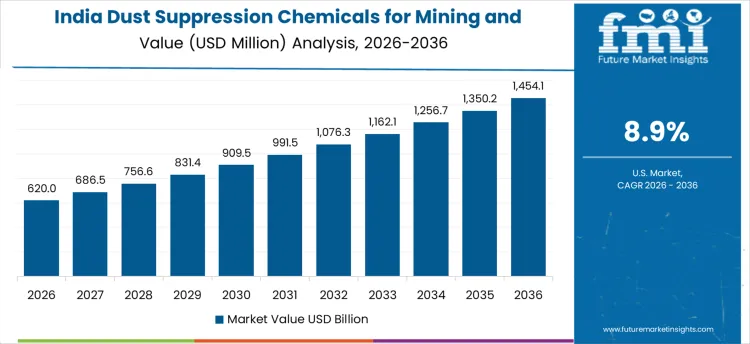
The dust suppression chemicals for mining and construction market in India is expected to grow at the highest rate, with a projected CAGR of 8.9%. India’s rapidly expanding mining and construction industries, driven by ongoing infrastructure development, urbanization, and industrialization, are creating strong demand for dust control solutions. As the government introduces more stringent environmental regulations and safety standards, industries are increasingly turning to effective dust suppression chemicals to comply with these rules. Additionally, the growing awareness of the health risks associated with dust inhalation, particularly in urban construction sites and mining operations, is driving market growth. With significant investments in infrastructure and urban development across the country, India is poised to see strong demand for dust suppression chemicals in the coming years, particularly in sectors like mining, road construction, and real estate development.
What is the Market Outlook for the Dust Suppression Chemicals for Mining and Construction Market in China?
The dust suppression chemicals for mining and construction market in China is projected to grow steadily, with a projected CAGR of 8.5%. China’s extensive mining and construction sectors, which are among the largest in the world, are driving the demand for dust suppression solutions to address health and environmental concerns. As environmental regulations become stricter and the government continues to push for cleaner industrial practices, the use of dust suppression chemicals is expected to increase. China’s growing focus on improving air quality and reducing the impact of mining and construction activities on local environments is further supporting market growth. With a rising focus on worker safety and the adoption of international environmental standards, the market for dust suppression chemicals in China is expected to continue to expand at a steady pace.
What is the Growth Forecast for the Dust Suppression Chemicals for Mining and Construction Market in the United States?
The dust suppression chemicals for mining and construction market in the United States is expected to grow steadily, with a projected CAGR of 7.2%. The USA mining and construction industries are increasingly adopting dust control technologies to comply with stringent environmental regulations and to address health concerns related to dust exposure. Regulatory frameworks such as the Clean Air Act and OSHA standards are pushing industries to invest in safer, more effective dust suppression solutions. Additionally, rising awareness of the health risks posed by dust inhalation in construction zones, particularly in urban areas, is contributing to the growing demand for these chemicals. The USA market is also driven by the need for sustainable practices in industrial operations, as well as the increasing demand for worker safety and environmental responsibility in mining and construction sectors.
What is the Market Outlook for the Dust Suppression Chemicals for Mining and Construction Market in Australia?
The dust suppression chemicals for mining and construction market in Australia is projected to grow at a moderate pace, with a projected CAGR of 7%. Australia’s mining and construction industries are integral to the national economy, and with the country’s significant mining activities and construction projects, the need for dust suppression solutions is high. The growing focus on health and safety in these industries, along with stricter environmental regulations, is driving the adoption of dust control chemicals. As the Australian government continues to implement and enforce stringent dust control policies, the demand for effective dust suppression chemicals is expected to rise steadily. Additionally, the increasing awareness of the environmental and health risks associated with mining and construction dust is expected to further support market growth in the country.
What are the Growth Prospects for the Dust Suppression Chemicals for Mining and Construction Market in South Africa?
The dust suppression chemicals for mining and construction market in South Africa is expected to grow steadily, with a projected CAGR of 6.8%. South Africa’s mining industry, which is one of the largest in Africa, is a key driver of demand for dust suppression chemicals. The country’s strong mining sector, combined with increasing construction activities, particularly in urban development and infrastructure projects, is fueling the market for dust control solutions. As regulations on dust emissions become stricter and health concerns related to dust exposure grow, industries in South Africa are increasingly adopting dust suppression chemicals. Furthermore, South Africa’s focus on improving the safety and environmental performance of its mining and construction industries will continue to drive the demand for these chemicals. The market growth is further supported by the country’s commitment to meeting international environmental standards and improving worker health and safety conditions.
What is the Competitive Landscape for the Dust Suppression Chemicals for Mining and Construction Market?
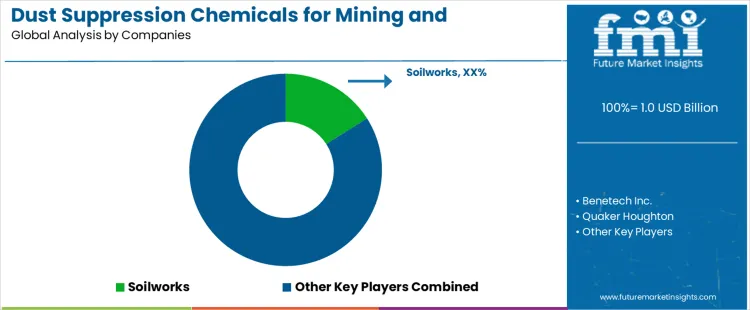
The dust suppression chemicals for mining and construction market is growing rapidly due to increasing regulatory pressure on industries to control dust emissions, improve air quality, and ensure worker safety at mining and construction sites. Soilworks leads the market with its innovative dust suppression solutions, offering a range of effective, eco-friendly chemicals that reduce dust and particulate matter on construction and mining sites. Their products are designed to perform well in extreme conditions while minimizing environmental impact, positioning them as a dominant player in the industry.
Benetech Inc., Quaker Houghton, and Ecolab are significant competitors, each providing specialized dust control chemicals. Benetech Inc. offers effective solutions designed to meet the specific needs of the mining and construction sectors, while Quaker Houghton and Ecolab provide high-performance products that help manage dust emissions while focusing on sustainability and safety.
BASF SE further contributes to the competitive landscape with its range of dust suppression chemicals designed for various applications in mining, construction, and industrial sectors. BASF SE emphasizes product performance and environmental responsibility in its formulations, providing solutions that enhance dust control without harming the surrounding ecosystem.
These companies compete by focusing on product innovation, environmental compliance, and safety, offering solutions that help reduce dust emissions, protect workers, and comply with increasingly stringent environmental regulations. The market for dust suppression chemicals is expected to continue growing as industries prioritize sustainable practices and dust management becomes a key aspect of site safety and regulatory compliance.
Key Players of the Dust Suppression Chemicals for Mining and Construction Market
- Soilworks
- Benetech Inc.
- Quaker Houghton
- Ecolab
- BASF SE
Scope of the Report
| Items | Values |
|---|---|
| Quantitative Units (2026) | USD Billion |
| Chemical Type | Surfactant-Based Dust Suppressants, Lignosulfonate & Bio-Binders, Polymer Emulsions & Acrylic Copolymers, Salt-Based (MgCl₂, CaCl₂) Suppressants, Other Specialty Dust Control Additives |
| Application Area | Mining Haul Roads & Pits, Construction Sites & Earthworks, Quarry & Aggregate Operations, Material Handling & Stockpiles, Unpaved Roads & Infrastructure Projects |
| End-User Industry | Mining, Construction & Civil Engineering, Cement & Aggregates, Oil & Gas, Public Infrastructure & Municipal |
| Companies | Soilworks, Benetech Inc., Quaker Houghton, Ecolab, BASF SE |
| Regions Covered | North America, Latin America, Western Europe, Eastern Europe, South Asia and Pacific, East Asia, Middle East & Africa |
| Countries Covered | United States, Canada, Mexico, Brazil, Argentina, Germany, France, United Kingdom, Italy, Spain, Netherlands, China, India, Japan, South Korea, ANZ, GCC Countries, South Africa |
| Additional Attributes | Dollar by sales by chemical type, application area, end-user industry, and region. Includes market trends in dust suppression chemicals, focusing on surfactant-based, lignosulfonate, polymer emulsions, and salt-based suppressants. Highlights the role of mining, construction, and public infrastructure in dust control. Focus on sustainability, cost-effectiveness, regulatory compliance, market share, and competitive positioning of key companies in the dust suppression market. |
Dust Suppression Chemicals for Mining and Construction Market Segmentation
By Chemical Type:
- Surfactant-Based Dust Suppressants
- Lignosulfonate & Bio-Binders
- Polymer Emulsions & Acrylic Copolymers
- Salt-Based (MgCl₂, CaCl₂) Suppressants
- Other Specialty Dust Control Additives
By Application Area:
- Mining Haul Roads & Pits
- Construction Sites & Earthworks
- Quarry & Aggregate Operations
- Material Handling & Stockpiles
- Unpaved Roads & Infrastructure Projects
By End-User Industry:
- Mining
- Construction & Civil Engineering
- Cement & Aggregates
- Oil & Gas
- Public Infrastructure & Municipal
By Region:
- Asia Pacific
- China
- Japan
- South Korea
- India
- Australia & New Zealand
- ASEAN
- Rest of Asia Pacific
- Europe
- Germany
- United Kingdom
- France
- Italy
- Spain
- Nordic
- BENELUX
- Rest of Europe
- North America
- United States
- Canada
- Mexico
- Latin America
- Brazil
- Chile
- Rest of Latin America
- Middle East & Africa
- Kingdom of Saudi Arabia
- Other GCC Countries
- Turkey
- South Africa
- Other African Union
- Rest of Middle East & Africa
Bibliography
- Soilworks. (n.d.). Innovative dust suppression solutions for mining and construction industries.
- Benetech Inc. (n.d.). Effective dust control chemicals for mining and construction sectors.
Frequently Asked Questions
How big is the dust suppression chemicals for mining and construction market in 2026?
The global dust suppression chemicals for mining and construction market is estimated to be valued at USD 1.0 billion in 2026.
What will be the size of dust suppression chemicals for mining and construction market in 2036?
The market size for the dust suppression chemicals for mining and construction market is projected to reach USD 2.2 billion by 2036.
How much will be the dust suppression chemicals for mining and construction market growth between 2026 and 2036?
The dust suppression chemicals for mining and construction market is expected to grow at a 8.1% CAGR between 2026 and 2036.
What are the key product types in the dust suppression chemicals for mining and construction market?
The key product types in dust suppression chemicals for mining and construction market are surfactant-based dust suppressants, lignosulfonate & bio-binders, polymer emulsions & acrylic copolymers, salt-based (mgcl₂, cacl₂) suppressants and other specialty dust control additives.
Which application area segment to contribute significant share in the dust suppression chemicals for mining and construction market in 2026?
In terms of application area, mining haul roads & pits segment to command 34.0% share in the dust suppression chemicals for mining and construction market in 2026.
Preview the report firsthand - request a free sample
Get SampleGet the brochure for pricing and purchase details.
Get PDFTable of Content
- Executive Summary
- Global Market Outlook
- Demand-side Trends
- Supply-side Trends
- Technology Roadmap Analysis
- Analysis and Recommendations
- Market Overview
- Market Coverage / Taxonomy
- Market Definition / Scope / Limitations
- Market Background
- Market Dynamics
- Drivers
- Restraints
- Opportunity
- Trends
- Scenario Forecast
- Demand in Optimistic Scenario
- Demand in Likely Scenario
- Demand in Conservative Scenario
- Opportunity Map Analysis
- Product Life Cycle Analysis
- Supply Chain Analysis
- Investment Feasibility Matrix
- Value Chain Analysis
- PESTLE and Porter’s Analysis
- Regulatory Landscape
- Regional Parent Market Outlook
- Production and Consumption Statistics
- Import and Export Statistics
- Market Dynamics
- Global Market Analysis 2021 to 2025 and Forecast, 2026 to 2036
- Historical Market Size Value (USD Million) Analysis, 2021 to 2025
- Current and Future Market Size Value (USD Million) Projections, 2026 to 2036
- Y-o-Y Growth Trend Analysis
- Absolute $ Opportunity Analysis
- Global Market Pricing Analysis 2021 to 2025 and Forecast 2026 to 2036
- Global Market Analysis 2021 to 2025 and Forecast 2026 to 2036, By Chemical Type
- Introduction / Key Findings
- Historical Market Size Value (USD Million) Analysis By Chemical Type , 2021 to 2025
- Current and Future Market Size Value (USD Million) Analysis and Forecast By Chemical Type , 2026 to 2036
- Surfactant-Based Dust Suppressants
- Lignosulfonate & Bio-Binders
- Polymer Emulsions & Acrylic Copolymers
- Salt-Based (MgCl₂, CaCl₂) Suppressants
- Other Specialty Dust Control Additives
- Surfactant-Based Dust Suppressants
- Y-o-Y Growth Trend Analysis By Chemical Type , 2021 to 2025
- Absolute $ Opportunity Analysis By Chemical Type , 2026 to 2036
- Global Market Analysis 2021 to 2025 and Forecast 2026 to 2036, By Application Area
- Introduction / Key Findings
- Historical Market Size Value (USD Million) Analysis By Application Area, 2021 to 2025
- Current and Future Market Size Value (USD Million) Analysis and Forecast By Application Area, 2026 to 2036
- Mining Haul Roads & Pits
- Construction Sites & Earthworks
- Quarry & Aggregate Operations
- Material Handling & Stockpiles
- Unpaved Roads & Infrastructure Projects
- Mining Haul Roads & Pits
- Y-o-Y Growth Trend Analysis By Application Area, 2021 to 2025
- Absolute $ Opportunity Analysis By Application Area, 2026 to 2036
- Global Market Analysis 2021 to 2025 and Forecast 2026 to 2036, By End-User Industry
- Introduction / Key Findings
- Historical Market Size Value (USD Million) Analysis By End-User Industry, 2021 to 2025
- Current and Future Market Size Value (USD Million) Analysis and Forecast By End-User Industry, 2026 to 2036
- Mining
- Construction & Civil Engineering
- Cement & Aggregates
- Oil & Gas
- Public Infrastructure & Municipal
- Mining
- Y-o-Y Growth Trend Analysis By End-User Industry, 2021 to 2025
- Absolute $ Opportunity Analysis By End-User Industry, 2026 to 2036
- Global Market Analysis 2021 to 2025 and Forecast 2026 to 2036, By Region
- Introduction
- Historical Market Size Value (USD Million) Analysis By Region, 2021 to 2025
- Current Market Size Value (USD Million) Analysis and Forecast By Region, 2026 to 2036
- North America
- Latin America
- Western Europe
- Eastern Europe
- East Asia
- South Asia and Pacific
- Middle East & Africa
- Market Attractiveness Analysis By Region
- North America Market Analysis 2021 to 2025 and Forecast 2026 to 2036, By Country
- Historical Market Size Value (USD Million) Trend Analysis By Market Taxonomy, 2021 to 2025
- Market Size Value (USD Million) Forecast By Market Taxonomy, 2026 to 2036
- By Country
- USA
- Canada
- Mexico
- By Chemical Type
- By Application Area
- By End-User Industry
- By Country
- Market Attractiveness Analysis
- By Country
- By Chemical Type
- By Application Area
- By End-User Industry
- Key Takeaways
- Latin America Market Analysis 2021 to 2025 and Forecast 2026 to 2036, By Country
- Historical Market Size Value (USD Million) Trend Analysis By Market Taxonomy, 2021 to 2025
- Market Size Value (USD Million) Forecast By Market Taxonomy, 2026 to 2036
- By Country
- Brazil
- Chile
- Rest of Latin America
- By Chemical Type
- By Application Area
- By End-User Industry
- By Country
- Market Attractiveness Analysis
- By Country
- By Chemical Type
- By Application Area
- By End-User Industry
- Key Takeaways
- Western Europe Market Analysis 2021 to 2025 and Forecast 2026 to 2036, By Country
- Historical Market Size Value (USD Million) Trend Analysis By Market Taxonomy, 2021 to 2025
- Market Size Value (USD Million) Forecast By Market Taxonomy, 2026 to 2036
- By Country
- Germany
- UK
- Italy
- Spain
- France
- Nordic
- BENELUX
- Rest of Western Europe
- By Chemical Type
- By Application Area
- By End-User Industry
- By Country
- Market Attractiveness Analysis
- By Country
- By Chemical Type
- By Application Area
- By End-User Industry
- Key Takeaways
- Eastern Europe Market Analysis 2021 to 2025 and Forecast 2026 to 2036, By Country
- Historical Market Size Value (USD Million) Trend Analysis By Market Taxonomy, 2021 to 2025
- Market Size Value (USD Million) Forecast By Market Taxonomy, 2026 to 2036
- By Country
- Russia
- Poland
- Hungary
- Balkan & Baltic
- Rest of Eastern Europe
- By Chemical Type
- By Application Area
- By End-User Industry
- By Country
- Market Attractiveness Analysis
- By Country
- By Chemical Type
- By Application Area
- By End-User Industry
- Key Takeaways
- East Asia Market Analysis 2021 to 2025 and Forecast 2026 to 2036, By Country
- Historical Market Size Value (USD Million) Trend Analysis By Market Taxonomy, 2021 to 2025
- Market Size Value (USD Million) Forecast By Market Taxonomy, 2026 to 2036
- By Country
- China
- Japan
- South Korea
- By Chemical Type
- By Application Area
- By End-User Industry
- By Country
- Market Attractiveness Analysis
- By Country
- By Chemical Type
- By Application Area
- By End-User Industry
- Key Takeaways
- South Asia and Pacific Market Analysis 2021 to 2025 and Forecast 2026 to 2036, By Country
- Historical Market Size Value (USD Million) Trend Analysis By Market Taxonomy, 2021 to 2025
- Market Size Value (USD Million) Forecast By Market Taxonomy, 2026 to 2036
- By Country
- India
- ASEAN
- Australia & New Zealand
- Rest of South Asia and Pacific
- By Chemical Type
- By Application Area
- By End-User Industry
- By Country
- Market Attractiveness Analysis
- By Country
- By Chemical Type
- By Application Area
- By End-User Industry
- Key Takeaways
- Middle East & Africa Market Analysis 2021 to 2025 and Forecast 2026 to 2036, By Country
- Historical Market Size Value (USD Million) Trend Analysis By Market Taxonomy, 2021 to 2025
- Market Size Value (USD Million) Forecast By Market Taxonomy, 2026 to 2036
- By Country
- Kingdom of Saudi Arabia
- Other GCC Countries
- Turkiye
- South Africa
- Other African Union
- Rest of Middle East & Africa
- By Chemical Type
- By Application Area
- By End-User Industry
- By Country
- Market Attractiveness Analysis
- By Country
- By Chemical Type
- By Application Area
- By End-User Industry
- Key Takeaways
- Key Countries Market Analysis
- USA
- Pricing Analysis
- Market Share Analysis, 2025
- By Chemical Type
- By Application Area
- By End-User Industry
- Canada
- Pricing Analysis
- Market Share Analysis, 2025
- By Chemical Type
- By Application Area
- By End-User Industry
- Mexico
- Pricing Analysis
- Market Share Analysis, 2025
- By Chemical Type
- By Application Area
- By End-User Industry
- Brazil
- Pricing Analysis
- Market Share Analysis, 2025
- By Chemical Type
- By Application Area
- By End-User Industry
- Chile
- Pricing Analysis
- Market Share Analysis, 2025
- By Chemical Type
- By Application Area
- By End-User Industry
- Germany
- Pricing Analysis
- Market Share Analysis, 2025
- By Chemical Type
- By Application Area
- By End-User Industry
- UK
- Pricing Analysis
- Market Share Analysis, 2025
- By Chemical Type
- By Application Area
- By End-User Industry
- Italy
- Pricing Analysis
- Market Share Analysis, 2025
- By Chemical Type
- By Application Area
- By End-User Industry
- Spain
- Pricing Analysis
- Market Share Analysis, 2025
- By Chemical Type
- By Application Area
- By End-User Industry
- France
- Pricing Analysis
- Market Share Analysis, 2025
- By Chemical Type
- By Application Area
- By End-User Industry
- India
- Pricing Analysis
- Market Share Analysis, 2025
- By Chemical Type
- By Application Area
- By End-User Industry
- ASEAN
- Pricing Analysis
- Market Share Analysis, 2025
- By Chemical Type
- By Application Area
- By End-User Industry
- Australia & New Zealand
- Pricing Analysis
- Market Share Analysis, 2025
- By Chemical Type
- By Application Area
- By End-User Industry
- China
- Pricing Analysis
- Market Share Analysis, 2025
- By Chemical Type
- By Application Area
- By End-User Industry
- Japan
- Pricing Analysis
- Market Share Analysis, 2025
- By Chemical Type
- By Application Area
- By End-User Industry
- South Korea
- Pricing Analysis
- Market Share Analysis, 2025
- By Chemical Type
- By Application Area
- By End-User Industry
- Russia
- Pricing Analysis
- Market Share Analysis, 2025
- By Chemical Type
- By Application Area
- By End-User Industry
- Poland
- Pricing Analysis
- Market Share Analysis, 2025
- By Chemical Type
- By Application Area
- By End-User Industry
- Hungary
- Pricing Analysis
- Market Share Analysis, 2025
- By Chemical Type
- By Application Area
- By End-User Industry
- Kingdom of Saudi Arabia
- Pricing Analysis
- Market Share Analysis, 2025
- By Chemical Type
- By Application Area
- By End-User Industry
- Turkiye
- Pricing Analysis
- Market Share Analysis, 2025
- By Chemical Type
- By Application Area
- By End-User Industry
- South Africa
- Pricing Analysis
- Market Share Analysis, 2025
- By Chemical Type
- By Application Area
- By End-User Industry
- USA
- Market Structure Analysis
- Competition Dashboard
- Competition Benchmarking
- Market Share Analysis of Top Players
- By Regional
- By Chemical Type
- By Application Area
- By End-User Industry
- Competition Analysis
- Competition Deep Dive
- Soilworks
- Overview
- Product Portfolio
- Profitability by Market Segments (Product/Age /Sales Channel/Region)
- Sales Footprint
- Strategy Overview
- Marketing Strategy
- Product Strategy
- Channel Strategy
- Benetech Inc.
- Quaker Houghton
- Ecolab
- BASF SE
- Soilworks
- Competition Deep Dive
- Assumptions & Acronyms Used
- Research Methodology


