

- Industry Size (2026)
- USD 1.1 Bn
- Forecast (2036)
- USD 2.3 Bn
- CAGR (2026 to 2036)
- 7.70%
Dynamic Measurement System Market Forecast and Outlook 2026 to 2036
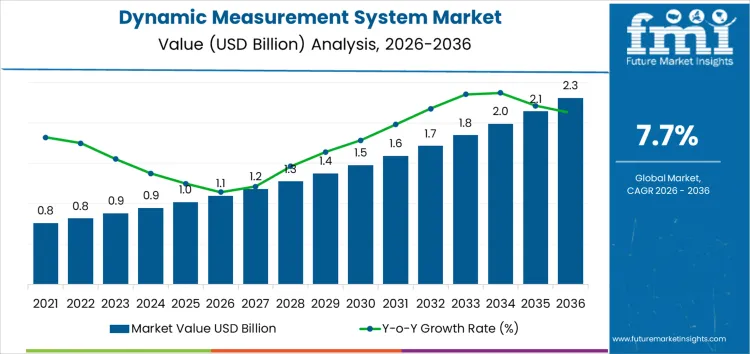
The dynamic measurement system market, valued at USD 1.1 billion in 2026 and projected to reach USD 2.3 billion by 2036, is growing at a CAGR of 7.70%. The market is driven by the increasing need for accurate real-time data collection across industries like automotive, aerospace, energy, manufacturing, and research. Dynamic measurement systems are essential for capturing time-varying data such as force, pressure, acceleration, and temperature, which are critical in product development, testing, and maintenance to ensure system efficiency, reliability, and safety. The demand for these systems is especially high in applications such as vibration analysis, load testing, and real-time monitoring of complex systems. Industries with high-performance equipment rely on dynamic measurement systems to detect failures, reduce downtime, and optimize performance.
Quick Stats for Dynamic Measurement System Market
- Dynamic Measurement System Market Value (2026): USD 1.1 Billion
- Dynamic Measurement System Market Forecast Value (2036): USD 2.3 Billion
- Dynamic Measurement System Market Forecast CAGR (2026 to 2036): 7.70%
- Leading Segment in Dynamic Measurement System Market: System Type: DAQ Hardware & Modules
- Key Growth Regions in Dynamic Measurement System Market: Asia Pacific, Europe, North America
- Top Key Players in Dynamic Measurement System Market: National Instruments (NI), HBK, Keysight, Teledyne Technologies, Dewesoft, Siemens, MathWorks, ABB, Honeywell, Rockwell Automation
Key segments in the market include DAQ hardware & modules, which lead the market with a 36% share, followed by sensors & transducers, software or analytics, and calibration or services. The industrial & process sectors dominate the end-user market with 30% share, driven by the need for precise measurement systems to enhance production efficiency and quality control. The market benefits from advancements in sensor technology, real-time processing, and the integration of IoT, enabling wider use of dynamic measurement systems for remote monitoring and performance optimization. Growth in industrial automation, smart manufacturing, and Industry 4.0 further propels the demand for these systems, making them indispensable in modern production environments.
Dynamic Measurement System Market Key Takeaways
| Metric | Value |
|---|---|
| Industry Value (2026) | USD 1.1 Billion |
| Forecast Value (2036) | USD 2.3 Billion |
| Forecast CAGR (2026 to 2036) | 7.70% |
How is the Global Dynamic Measurement System Market Advancing?
The global dynamic measurement system market is witnessing strong growth driven by the increasing need for accurate, real-time data collection and analysis across industries such as automotive, aerospace, energy, manufacturing, and research. Dynamic measurement systems are designed to capture time-varying data, such as force, pressure, acceleration, and temperature, which are critical for testing and monitoring the performance of dynamic systems. These systems are used extensively in product development, testing, and maintenance to ensure system efficiency, reliability, and safety.
As industries continue to push for greater automation, improved quality control, and enhanced product performance, the demand for dynamic measurement systems has surged. These systems are indispensable in applications such as vibration analysis, load testing, and real-time monitoring of complex systems in sectors like automotive engineering, aerospace testing, and industrial manufacturing. In particular, industries with heavy machinery or high-performance equipment rely on dynamic measurement systems to detect and prevent failures, reduce downtime, and optimize performance.
The market is further supported by advancements in sensor technology, data acquisition systems, and real-time processing capabilities, which have enhanced the accuracy and efficiency of dynamic measurement systems. These improvements have enabled industries to capture more precise data from complex, high-speed systems and integrate these measurements into broader data analytics platforms for predictive maintenance and performance optimization.
The growing integration of Internet of Things (IoT) technologies is playing a key role in the market's expansion, enabling remote monitoring and the use of dynamic measurement systems in a wider range of environments. The ability to access real-time data from anywhere in the world is transforming how industries approach system testing, performance monitoring, and maintenance.
What Is the Segment-Wise Analysis for the Dynamic Measurement System Market?
The dynamic measurement system market is segmented by system type and end user. DAQ Hardware & Modules lead the market with a 36% share, followed by Sensors & Transducers, Software or Analytics, and Calibration or Services. These system types are crucial for capturing, processing, and analyzing dynamic data in real-time applications. In terms of end users, Industrial & Process industries hold the largest share at 30%, driven by the need for precise measurement systems to ensure operational efficiency.
How Does DAQ Hardware & Modules Lead the Dynamic Measurement System Market?
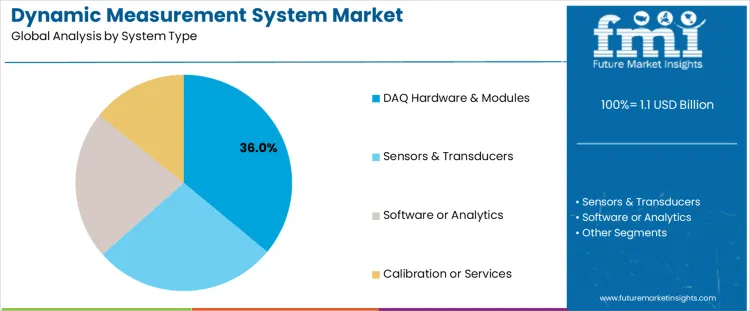
DAQ Hardware & Modules account for 36% of the dynamic measurement system market share due to their essential role in data acquisition and real-time monitoring. These systems capture analog signals from sensors and transducers and convert them into digital data for analysis. DAQ hardware is widely used across industries such as manufacturing, automotive, and aerospace for testing and monitoring machinery, systems, and components. The need for high-quality and accurate data collection drives the demand for DAQ hardware and modules. As industries continue to prioritize operational efficiency, quality control, and safety, DAQ hardware remains a critical component in dynamic measurement systems, supporting its market leadership.
How Do Industrial & Process Sectors Contribute to the Dynamic Measurement System Market?
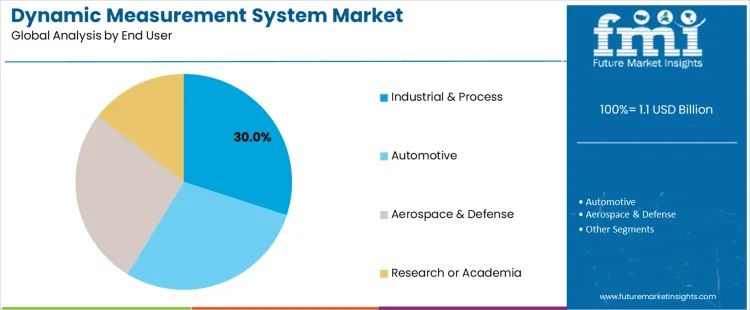
The Industrial & Process sector accounts for 30% of the dynamic measurement system market share, driven by the increasing demand for precise and reliable measurement solutions to enhance production efficiency and ensure quality control. Dynamic measurement systems are crucial in monitoring and optimizing industrial processes, including manufacturing, power generation, and chemical production. These systems help monitor variables such as temperature, pressure, and vibration in real time, identifying inefficiencies or potential hazards. As industries continue to adopt automation and improve operational precision, the demand for dynamic measurement systems in industrial and process applications grows, further solidifying their importance in this sector.
What Are the Key Dynamics for the Dynamic Measurement System Market?
The dynamic measurement system market is influenced by several factors driving demand for accurate and real-time monitoring of physical parameters, such as acceleration, force, pressure, and displacement. Industries like automotive, aerospace, manufacturing, and industrial automation are increasingly adopting dynamic measurement systems to monitor and optimize performance, ensure safety, and meet regulatory standards. The rise of smart manufacturing, automation, and Industry 4.0 initiatives is propelling the need for more sophisticated measurement systems that can capture dynamic data in real time and feed it into predictive maintenance and process optimization strategies.
What Are the Key Drivers for the Dynamic Measurement System Market?
A major driver is the increasing demand for accurate measurement systems in industries like automotive and aerospace, where real-time data collection and analysis are critical to ensuring safety, performance, and compliance with regulatory standards. The adoption of smart sensors, automation, and IoT technologies is enabling the integration of dynamic measurement systems with real-time monitoring solutions for predictive maintenance, reducing downtime and enhancing operational efficiency. The growing emphasis on product quality assurance, research, and development, as well as the increasing need for precision in testing complex materials and systems, is fostering the market’s growth.
What Are the Key Restraints Impacting the Dynamic Measurement System Market?
A key restraint is the high cost of advanced dynamic measurement systems, especially for small and medium-sized enterprises (SMEs), which may not have the resources to invest in high-end equipment. The complexity of integrating these systems into existing manufacturing or testing setups can also be a barrier, especially in industries with legacy infrastructure. The need for skilled personnel to operate these sophisticated systems and interpret the dynamic data accurately may limit the scalability of adoption. Variability in industry standards and regulations across different regions or sectors can lead to customization requirements, which increases the cost and complexity of implementation.
What is the Growth Outlook for the Dynamic Measurement System Market by Country?
| Country | CAGR (%) |
|---|---|
| USA | 7.5% |
| South Korea | 7.2% |
| Germany | 7.1% |
| China | 8.8% |
| Brazil | 8.4% |
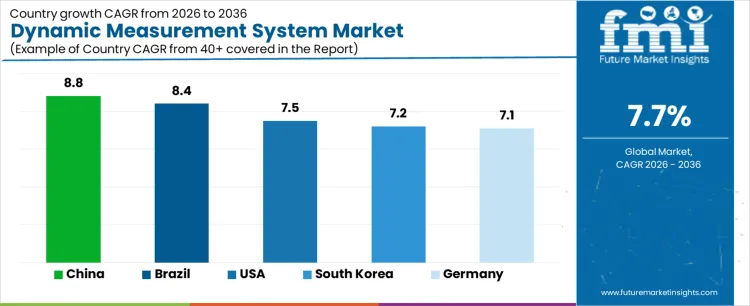
The dynamic measurement system market is experiencing steady growth, with China leading at an 8.8% CAGR, driven by rapid industrialization, technological advancements, and the expansion of sectors like automotive and electronics. Brazil follows with an 8.4% growth rate, supported by investments in industrial automation and infrastructure modernization. The USA’s market grows at 7.5%, fueled by advancements in precision manufacturing and strong demand from aerospace and automotive industries. South Korea’s market grows at 7.2%, driven by technological innovation in electronics and smart manufacturing. Germany’s market grows at 7.1%, backed by the country’s leadership in Industry 4.0, automotive, and manufacturing sectors.
What is Driving the Growth of the Dynamic Measurement System Market in China?
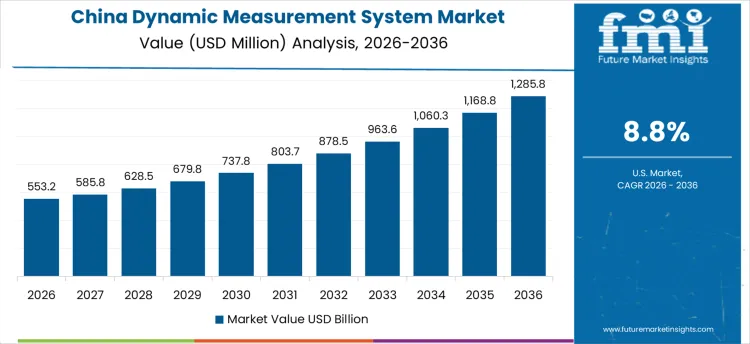
China’s dynamic measurement system market is growing at 8.8%, driven by rapid industrialization, technological advancements, and investments in smart manufacturing. The country’s focus on upgrading its manufacturing capabilities, including automation and robotics, significantly boosts the demand for dynamic measurement systems to ensure accuracy and efficiency. China’s rapid adoption of Industry 4.0 technologies and the development of sectors such as automotive, aerospace, and electronics require precise measurement tools for quality control and performance validation. The growing demand for environmental monitoring and sustainability initiatives further fuels the market. With the continued expansion of infrastructure projects and the Chinese government’s commitment to advancing innovation in manufacturing, the dynamic measurement system market is expected to thrive in the coming years.
What is Contributing to the Growth of the Dynamic Measurement System Market in Brazil?
Brazil’s dynamic measurement system market is growing at 8.4%, supported by investments in industrial automation and infrastructure modernization. As the country strengthens its manufacturing and automotive sectors, the need for precise measurement systems to monitor production processes, quality control, and system performance grows. The government’s push to enhance digital infrastructure and modernize industries, particularly in sectors like energy, mining, and agriculture, further drives the market. The rise of smart factories and IoT-based solutions in Brazil’s industrial landscape is also contributing to the increased demand for dynamic measurement systems. As Brazil continues to focus on improving efficiency, safety, and environmental sustainability, the market for dynamic measurement systems will likely see robust growth.
How is the Dynamic Measurement System Market Expanding in the USA?
The USA’s dynamic measurement system market is growing at 7.5%, driven by technological advancements in manufacturing, automotive, and aerospace industries. With the country’s focus on Industry 4.0, automation, and precision manufacturing, there is an increasing demand for dynamic measurement systems to ensure the performance and reliability of various systems and equipment. The USA’s robust investment in research and development, particularly in aerospace and defense sectors, also boosts the need for accurate and reliable measurement tools. The growing adoption of IoT devices and connected systems in industries such as automotive and energy further drives the demand for dynamic measurement systems. The USA’s commitment to innovation and quality control in manufacturing continues to support this market’s steady growth.
Why is the Dynamic Measurement System Market Growing in South Korea?
South Korea’s dynamic measurement system market is growing at 7.2%, driven by its focus on technological innovation, particularly in electronics, automotive, and semiconductor industries. As South Korea continues to integrate automation and smart manufacturing technologies into its industrial sectors, the demand for dynamic measurement systems to ensure accurate performance and quality control rises. The country’s leadership in electronics and automotive production requires advanced measurement solutions to monitor and test a wide range of complex systems. Additionally, South Korea’s push for high-quality manufacturing standards and sustainability initiatives contributes to the increasing demand for these systems. With the continuous expansion of the IoT ecosystem and smart technologies, the dynamic measurement system market in South Korea is poised for continued growth.
What is Driving the Growth of the Dynamic Measurement System Market in Germany?
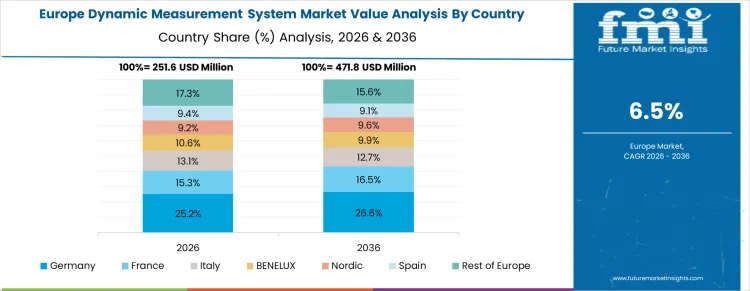
Germany’s dynamic measurement system market is growing at 7.1%, supported by its commitment to innovation in manufacturing, automotive, and industrial automation. As Germany leads in Industry 4.0 implementation, the demand for precise and reliable dynamic measurement systems continues to rise. The country’s highly developed automotive and manufacturing sectors rely on accurate measurement tools for quality control, system validation, and performance monitoring. Germany’s focus on sustainability and energy efficiency in manufacturing processes contributes to the growing need for dynamic measurement systems. The market is also fueled by the country’s push for digital transformation, smart factory solutions, and IoT integration across industries. Germany’s strong industrial base and emphasis on high-quality standards ensure a steady expansion of the dynamic measurement system market.
How Do Key Players Compete in the Dynamic Measurement System Market?
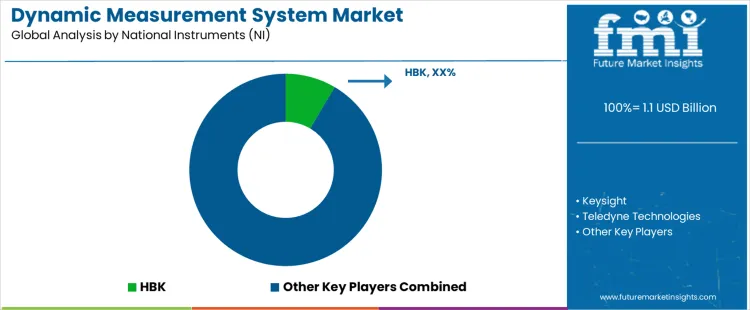
Competition in the dynamic measurement system market is driven by accuracy, integration, flexibility, and software centric solutions that help users convert raw sensor data into actionable insights. HBK leads with high precision measurement hardware paired with advanced analysis software that supports vibration, strain, and dynamic response testing across industrial and R&D environments. Its product materials stress modular platforms that scale from portable units to enterprise systems.
Keysight competes with state of the art signal acquisition and analysis hardware, often bundled with software that enables deep time domain and frequency domain diagnostics. Teledyne Technologies differentiates through rugged, high performance sensing and data acquisition products tailored for aerospace, defense, and industrial test applications, with brochures highlighting robustness and long term reliability. Dewesoft positions itself with intuitive user interfaces and plug and play measurement systems that appeal to engineers seeking rapid setup and comprehensive data visualization.
Siemens competes by embedding dynamic measurement capabilities into broader automation and digital twin platforms, connecting test data to simulation and plant optimization workflows. MathWorks adds value through software (e.g., MATLAB and Simulink) that supports model based design and real time data analysis, often referenced in product brochures as the backbone for custom measurement algorithms. ABB, Honeywell, and Rockwell Automation approach the market from an industrial automation perspective, integrating dynamic measurement systems with control architectures, predictive maintenance tools, and asset performance management suites. Their documentation emphasizes reliability, connectivity, and seamless integration into plant wide systems.
Key Players in Dynamic Measurement System Market
- National Instruments (NI)
- HBK
- Keysight
- Teledyne Technologies
- Dewesoft
- Siemens
- MathWorks
- ABB
- Honeywell
- Rockwell Automation
Scope of Report
| Items | Values |
|---|---|
| Quantitative Unit (2026) | USD billion |
| System Type | DAQ Hardware & Modules, Sensors & Transducers, Software or Analytics, Calibration or Services |
| Deployment | Lab or Bench Systems, Field Portable Systems, Embedded or On-Board, Hybrid |
| End User | Industrial & Process, Automotive, Aerospace & Defense, Research or Academia |
| Regions Covered | Asia Pacific, Europe, North America, Latin America, Middle East & Africa |
| Countries Covered | USA, China, Japan, South Korea, India, Australia & New Zealand, ASEAN, Germany, UK, France, Italy, Spain, Nordic, BENELUX, Brazil, Chile, Mexico, Saudi Arabia, Other GCC Countries, Turkey, South Africa, Other African Union |
| Key Companies Profiled | National Instruments (NI), HBK, Keysight, Teledyne Technologies, Dewesoft, Siemens, MathWorks, ABB, Honeywell, Rockwell Automation |
| Additional Attributes | Dollar sales by system type, deployment, end user, and region; regional CAGR and growth outlook. |
Dynamic Measurement System Market by Segments
By System Type:
- DAQ Hardware & Modules
- Sensors & Transducers
- Software or Analytics
- Calibration or Services
By Deployment:
- Lab or Bench Systems
- Field Portable Systems
- Embedded or On-Board
- Hybrid
By End User:
- Industrial & Process
- Automotive
- Aerospace & Defense
- Research or Academia
By Region:
- Asia Pacific
- China
- Japan
- South Korea
- India
- Australia & New Zealand
- ASEAN
- Rest of Asia Pacific
- Europe
- Germany
- United Kingdom
- France
- Italy
- Spain
- Nordic
- BENELUX
- Rest of Europe
- North America
- United States
- Canada
- Mexico
- Latin America
- Brazil
- Chile
- Rest of Latin America
- Middle East & Africa
- Kingdom of Saudi Arabia
- Other GCC Countries
- Turkey
- South Africa
- Other African Union
- Rest of Middle East & Africa
Bibliography
- HBK. (2023). High precision measurement hardware and advanced analysis software for dynamic testing. HBK.
- National Instruments (NI). (2023). Signal acquisition and analysis hardware for time and frequency domain diagnostics. National Instruments.
- Keysight Technologies. (2023). State-of-the-art dynamic measurement systems for signal acquisition and analysis. Keysight Technologies.
- Teledyne Technologies. (2023). Rugged data acquisition products for aerospace, defense, and industrial test applications. Teledyne Technologies.
Frequently Asked Questions
How big is the dynamic measurement system market in 2026?
The global dynamic measurement system market is estimated to be valued at USD 1.1 billion in 2026.
What will be the size of dynamic measurement system market in 2036?
The market size for the dynamic measurement system market is projected to reach USD 2.3 billion by 2036.
How much will be the dynamic measurement system market growth between 2026 and 2036?
The dynamic measurement system market is expected to grow at a 7.7% CAGR between 2026 and 2036.
What are the key product types in the dynamic measurement system market?
The key product types in dynamic measurement system market are daq hardware & modules, sensors & transducers, software or analytics and calibration or services.
Which deployment segment to contribute significant share in the dynamic measurement system market in 2026?
In terms of deployment, lab or bench systems segment to command 40.0% share in the dynamic measurement system market in 2026.
Preview the report firsthand - request a free sample
Get SampleGet the brochure for pricing and purchase details.
Get PDFTable of Content
- Executive Summary
- Global Market Outlook
- Demand-side Trends
- Supply-side Trends
- Technology Roadmap Analysis
- Analysis and Recommendations
- Market Overview
- Market Coverage / Taxonomy
- Market Definition / Scope / Limitations
- Market Background
- Market Dynamics
- Drivers
- Restraints
- Opportunity
- Trends
- Scenario Forecast
- Demand in Optimistic Scenario
- Demand in Likely Scenario
- Demand in Conservative Scenario
- Opportunity Map Analysis
- Product Life Cycle Analysis
- Supply Chain Analysis
- Investment Feasibility Matrix
- Value Chain Analysis
- PESTLE and Porter’s Analysis
- Regulatory Landscape
- Regional Parent Market Outlook
- Production and Consumption Statistics
- Import and Export Statistics
- Market Dynamics
- Global Market Analysis 2021 to 2025 and Forecast, 2026 to 2036
- Historical Market Size Value (USD Million) Analysis, 2021 to 2025
- Current and Future Market Size Value (USD Million) Projections, 2026 to 2036
- Y-o-Y Growth Trend Analysis
- Absolute $ Opportunity Analysis
- Global Market Pricing Analysis 2021 to 2025 and Forecast 2026 to 2036
- Global Market Analysis 2021 to 2025 and Forecast 2026 to 2036, By System Type
- Introduction / Key Findings
- Historical Market Size Value (USD Million) Analysis By System Type , 2021 to 2025
- Current and Future Market Size Value (USD Million) Analysis and Forecast By System Type , 2026 to 2036
- DAQ Hardware & Modules
- Sensors & Transducers
- Software or Analytics
- Calibration or Services
- DAQ Hardware & Modules
- Y-o-Y Growth Trend Analysis By System Type , 2021 to 2025
- Absolute $ Opportunity Analysis By System Type , 2026 to 2036
- Global Market Analysis 2021 to 2025 and Forecast 2026 to 2036, By Deployment
- Introduction / Key Findings
- Historical Market Size Value (USD Million) Analysis By Deployment, 2021 to 2025
- Current and Future Market Size Value (USD Million) Analysis and Forecast By Deployment, 2026 to 2036
- Lab or Bench Systems
- Field Portable Systems
- Embedded or On-Board
- Hybrid
- Lab or Bench Systems
- Y-o-Y Growth Trend Analysis By Deployment, 2021 to 2025
- Absolute $ Opportunity Analysis By Deployment, 2026 to 2036
- Global Market Analysis 2021 to 2025 and Forecast 2026 to 2036, By End User
- Introduction / Key Findings
- Historical Market Size Value (USD Million) Analysis By End User, 2021 to 2025
- Current and Future Market Size Value (USD Million) Analysis and Forecast By End User, 2026 to 2036
- Industrial & Process
- Automotive
- Aerospace & Defense
- Research or Academia
- Industrial & Process
- Y-o-Y Growth Trend Analysis By End User, 2021 to 2025
- Absolute $ Opportunity Analysis By End User, 2026 to 2036
- Global Market Analysis 2021 to 2025 and Forecast 2026 to 2036, By Region
- Introduction
- Historical Market Size Value (USD Million) Analysis By Region, 2021 to 2025
- Current Market Size Value (USD Million) Analysis and Forecast By Region, 2026 to 2036
- North America
- Latin America
- Western Europe
- Eastern Europe
- East Asia
- South Asia and Pacific
- Middle East & Africa
- Market Attractiveness Analysis By Region
- North America Market Analysis 2021 to 2025 and Forecast 2026 to 2036, By Country
- Historical Market Size Value (USD Million) Trend Analysis By Market Taxonomy, 2021 to 2025
- Market Size Value (USD Million) Forecast By Market Taxonomy, 2026 to 2036
- By Country
- USA
- Canada
- Mexico
- By System Type
- By Deployment
- By End User
- By Country
- Market Attractiveness Analysis
- By Country
- By System Type
- By Deployment
- By End User
- Key Takeaways
- Latin America Market Analysis 2021 to 2025 and Forecast 2026 to 2036, By Country
- Historical Market Size Value (USD Million) Trend Analysis By Market Taxonomy, 2021 to 2025
- Market Size Value (USD Million) Forecast By Market Taxonomy, 2026 to 2036
- By Country
- Brazil
- Chile
- Rest of Latin America
- By System Type
- By Deployment
- By End User
- By Country
- Market Attractiveness Analysis
- By Country
- By System Type
- By Deployment
- By End User
- Key Takeaways
- Western Europe Market Analysis 2021 to 2025 and Forecast 2026 to 2036, By Country
- Historical Market Size Value (USD Million) Trend Analysis By Market Taxonomy, 2021 to 2025
- Market Size Value (USD Million) Forecast By Market Taxonomy, 2026 to 2036
- By Country
- Germany
- UK
- Italy
- Spain
- France
- Nordic
- BENELUX
- Rest of Western Europe
- By System Type
- By Deployment
- By End User
- By Country
- Market Attractiveness Analysis
- By Country
- By System Type
- By Deployment
- By End User
- Key Takeaways
- Eastern Europe Market Analysis 2021 to 2025 and Forecast 2026 to 2036, By Country
- Historical Market Size Value (USD Million) Trend Analysis By Market Taxonomy, 2021 to 2025
- Market Size Value (USD Million) Forecast By Market Taxonomy, 2026 to 2036
- By Country
- Russia
- Poland
- Hungary
- Balkan & Baltic
- Rest of Eastern Europe
- By System Type
- By Deployment
- By End User
- By Country
- Market Attractiveness Analysis
- By Country
- By System Type
- By Deployment
- By End User
- Key Takeaways
- East Asia Market Analysis 2021 to 2025 and Forecast 2026 to 2036, By Country
- Historical Market Size Value (USD Million) Trend Analysis By Market Taxonomy, 2021 to 2025
- Market Size Value (USD Million) Forecast By Market Taxonomy, 2026 to 2036
- By Country
- China
- Japan
- South Korea
- By System Type
- By Deployment
- By End User
- By Country
- Market Attractiveness Analysis
- By Country
- By System Type
- By Deployment
- By End User
- Key Takeaways
- South Asia and Pacific Market Analysis 2021 to 2025 and Forecast 2026 to 2036, By Country
- Historical Market Size Value (USD Million) Trend Analysis By Market Taxonomy, 2021 to 2025
- Market Size Value (USD Million) Forecast By Market Taxonomy, 2026 to 2036
- By Country
- India
- ASEAN
- Australia & New Zealand
- Rest of South Asia and Pacific
- By System Type
- By Deployment
- By End User
- By Country
- Market Attractiveness Analysis
- By Country
- By System Type
- By Deployment
- By End User
- Key Takeaways
- Middle East & Africa Market Analysis 2021 to 2025 and Forecast 2026 to 2036, By Country
- Historical Market Size Value (USD Million) Trend Analysis By Market Taxonomy, 2021 to 2025
- Market Size Value (USD Million) Forecast By Market Taxonomy, 2026 to 2036
- By Country
- Kingdom of Saudi Arabia
- Other GCC Countries
- Turkiye
- South Africa
- Other African Union
- Rest of Middle East & Africa
- By System Type
- By Deployment
- By End User
- By Country
- Market Attractiveness Analysis
- By Country
- By System Type
- By Deployment
- By End User
- Key Takeaways
- Key Countries Market Analysis
- USA
- Pricing Analysis
- Market Share Analysis, 2025
- By System Type
- By Deployment
- By End User
- Canada
- Pricing Analysis
- Market Share Analysis, 2025
- By System Type
- By Deployment
- By End User
- Mexico
- Pricing Analysis
- Market Share Analysis, 2025
- By System Type
- By Deployment
- By End User
- Brazil
- Pricing Analysis
- Market Share Analysis, 2025
- By System Type
- By Deployment
- By End User
- Chile
- Pricing Analysis
- Market Share Analysis, 2025
- By System Type
- By Deployment
- By End User
- Germany
- Pricing Analysis
- Market Share Analysis, 2025
- By System Type
- By Deployment
- By End User
- UK
- Pricing Analysis
- Market Share Analysis, 2025
- By System Type
- By Deployment
- By End User
- Italy
- Pricing Analysis
- Market Share Analysis, 2025
- By System Type
- By Deployment
- By End User
- Spain
- Pricing Analysis
- Market Share Analysis, 2025
- By System Type
- By Deployment
- By End User
- France
- Pricing Analysis
- Market Share Analysis, 2025
- By System Type
- By Deployment
- By End User
- India
- Pricing Analysis
- Market Share Analysis, 2025
- By System Type
- By Deployment
- By End User
- ASEAN
- Pricing Analysis
- Market Share Analysis, 2025
- By System Type
- By Deployment
- By End User
- Australia & New Zealand
- Pricing Analysis
- Market Share Analysis, 2025
- By System Type
- By Deployment
- By End User
- China
- Pricing Analysis
- Market Share Analysis, 2025
- By System Type
- By Deployment
- By End User
- Japan
- Pricing Analysis
- Market Share Analysis, 2025
- By System Type
- By Deployment
- By End User
- South Korea
- Pricing Analysis
- Market Share Analysis, 2025
- By System Type
- By Deployment
- By End User
- Russia
- Pricing Analysis
- Market Share Analysis, 2025
- By System Type
- By Deployment
- By End User
- Poland
- Pricing Analysis
- Market Share Analysis, 2025
- By System Type
- By Deployment
- By End User
- Hungary
- Pricing Analysis
- Market Share Analysis, 2025
- By System Type
- By Deployment
- By End User
- Kingdom of Saudi Arabia
- Pricing Analysis
- Market Share Analysis, 2025
- By System Type
- By Deployment
- By End User
- Turkiye
- Pricing Analysis
- Market Share Analysis, 2025
- By System Type
- By Deployment
- By End User
- South Africa
- Pricing Analysis
- Market Share Analysis, 2025
- By System Type
- By Deployment
- By End User
- USA
- Market Structure Analysis
- Competition Dashboard
- Competition Benchmarking
- Market Share Analysis of Top Players
- By Regional
- By System Type
- By Deployment
- By End User
- Competition Analysis
- Competition Deep Dive
- HBK
- Overview
- Product Portfolio
- Profitability by Market Segments (Product/Age /Sales Channel/Region)
- Sales Footprint
- Strategy Overview
- Marketing Strategy
- Product Strategy
- Channel Strategy
- Keysight
- Teledyne Technologies
- Dewesoft
- Siemens
- MathWorks
- ABB
- Honeywell
- Rockwell Automation
- HBK
- Competition Deep Dive
- Assumptions & Acronyms Used
- Research Methodology


