

- Industry Size (2026)
- USD 492.1 Mn
- Forecast (2036)
- USD 1023.7 Mn
- CAGR (2026 to 2036)
- 7.60%
Ground Recorder System Market Forecast and Outlook 2026 to 2036
The ground recorder system market is valued at USD 492.1 million in 2026 and is projected to reach USD 1023.7 million by 2036, growing at a CAGR of 7.60%. The performance of this market is primarily influenced by production concentration and regional manufacturing control, as well as the reliability of supply chains. A small group of global manufacturers dominate production, leading to concerns about capacity limitations and potential supply disruptions. As the demand for high-precision, durable ground recorder systems increases, companies face pressures to scale their manufacturing capabilities while ensuring the integrity of product quality and performance.
Quick Stats for Ground Recorder System Market
- Ground Recorder System Market Value (2026): USD 492.1 Million
- Ground Recorder System Market Forecast Value (2036): USD 1023.7 Million
- Ground Recorder System Market Forecast CAGR (2026 to 2036): 7.60%
- Leading Deployment Type in Ground Recorder System Market: Fixed Installations
- Key Growth Regions in Ground Recorder System Market: Asia Pacific, North America
- Top Key Players in Ground Recorder System Market: Curtiss-Wright, Safran Data Systems, Teledyne, HBK, National Instruments (NI), Dewesoft, Keysight, Spirent, VIAVI, Rohde & Schwarz
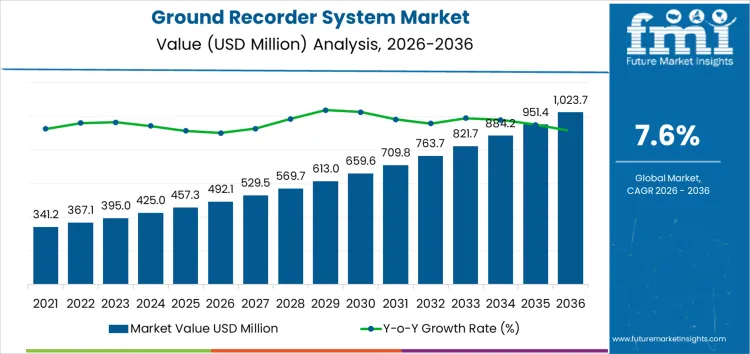
Geographical dependencies also play a significant role in shaping market outcomes. With key suppliers concentrated in specific regions, such as North America and Europe, companies must navigate risks tied to political, economic, and logistical uncertainties. The reliance on specialized components, such as ruggedized hardware and high-speed data acquisition systems, increases vulnerability to disruptions in the supply chain. These factors contribute to the complexity of ensuring timely delivery of advanced systems. Manufacturers must maintain robust relationships with suppliers to minimize lead times and protect against shortages, while also balancing the need for cost control with maintaining high-quality standards. These constraints drive careful planning and demand forecasting, making reliable supply chains a critical performance driver.
Ground Recorder System Market Key Takeaways
| Metric | Value |
|---|---|
| Industry Value (2026) | USD 492.1 Million |
| Forecast Value (2036) | USD 1023.7 Million |
| Forecast CAGR (2026 to 2036) | 7.60% |
How is the Global Ground Recorder System Market Advancing?
The global ground recorder system market is advancing as industries across sectors such as telecommunications, utilities, and transportation increasingly rely on ground-based systems for monitoring and recording electrical and environmental parameters. Ground recorder systems are crucial for ensuring the safety and integrity of power distribution networks, utility systems, and transportation infrastructure. These systems record vital data such as voltage, current, and environmental conditions, providing insights for predictive maintenance, fault detection, and overall system performance.
The demand for ground recorder systems is being fueled by the increasing adoption of smart grid technologies and the need for enhanced monitoring and management of power infrastructure. With the rise of renewable energy integration and the growing complexity of electrical networks, utilities require more sophisticated tools to monitor and optimize the performance of power transmission and distribution systems. Ground recorder systems help to ensure system reliability, minimize downtime, and improve energy efficiency.
Technological innovations, such as the incorporation of IoT connectivity, wireless data transmission, and real-time monitoring capabilities, are further enhancing the functionality and appeal of ground recorder systems. These advancements allow for better integration with centralized monitoring platforms and enable faster response times to potential issues. As industries continue to prioritize safety, efficiency, and operational resilience, the ground recorder system market is expected to experience steady growth, with the demand for high-performance, reliable monitoring solutions remaining strong over the next decade.
What is the Segment-Wise Analysis for the Ground Recorder System Market?
The ground recorder system market is segmented by end user and deployment. Defense Ranges dominate the market with a 30% share, followed by Aerospace OEMs, Space or Launch Sites, and Industrial or Research sectors. These end users rely on ground recorder systems for high-precision data recording and analysis. In terms of deployment, Fixed Installations lead with a 36% share, followed by Mobile Deployable, Temporary Campaign, and Other deployment types. These deployment modes cater to various operational needs, from permanent setups to flexible, mobile solutions for specific missions.
How Do Defense Ranges Lead the Ground Recorder System Market?
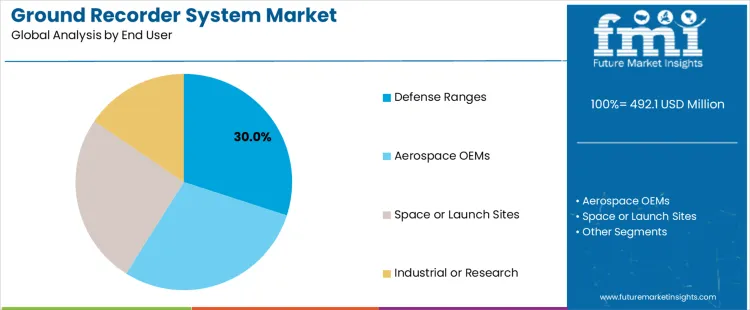
Defense Ranges account for 30% of the ground recorder system market share, primarily due to their vital role in military and defense operations. Ground recorder systems are essential for collecting, storing, and analyzing data during tests such as missile launches, weapon trials, and equipment calibration. These systems ensure the accuracy and reliability of the data, which is critical for assessing the performance of defense technologies and ensuring operational readiness. With advancements in defense technologies and the increasing complexity of military operations, the need for high-performance, robust ground recorder systems that can handle large amounts of data has intensified. This growing demand further solidifies defense ranges as a key end user in the market.
How Do Fixed Installations Contribute to the Ground Recorder System Market?
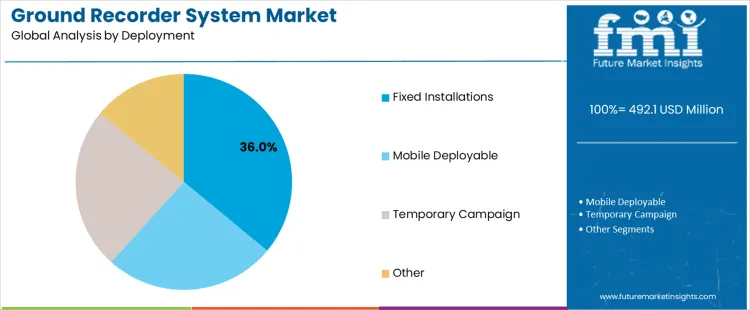
Fixed Installations represent 36% of the ground recorder system market share, highlighting their importance in providing stable, long-term solutions for data collection and monitoring. These systems are typically installed in permanent locations, such as research laboratories, aerospace testing centers, and military bases, where continuous and reliable data collection is essential. Fixed installations offer the advantage of offering robust infrastructure capable of handling complex, high-volume testing over long periods. Their ability to provide consistent and precise monitoring makes them ideal for sectors requiring ongoing analysis and precision, such as aerospace and defense. As industries continue to invest in advanced testing systems, the demand for fixed installations in ground recorder systems continues to grow.
What Are the Key Dynamics for the Ground Recorder System Market?
Ground recorder systems capture, store, and analyze critical operational and performance data from equipment, vehicles, and infrastructure. With rising emphasis on safety, predictive maintenance, and performance optimization, organizations are investing in advanced recorders that provide high-resolution, real-time data. Regulatory requirements for data logging and compliance, especially in aviation and defense, are driving the adoption of sophisticated ground recorder solutions that support enhanced analytics and long-term data integrity.
Why Are There Restraints Impacting the Ground Recorder System Market?
Despite growing opportunities, the ground recorder system market faces several restraints. A major challenge is the high cost of advanced recording hardware and software, especially for high-channel count systems with robust storage and processing capabilities, which can limit adoption by smaller firms. Integration complexity with existing IT infrastructure, data management platforms, and analytical tools also poses implementation challenges. The need for skilled personnel to configure, maintain, and interpret recorder data can deter organizations without specialized technical expertise. Regulatory variations across regions further complicate standardization and can slow cross-border adoption.
What Are the Key Trends Shaping the Ground Recorder System Market?
One major trend is the integration of cloud-based storage and analytics, which enables remote access, scalable data retention, and powerful post-processing. This supports predictive maintenance and longer-term performance tracking. Another trend is the incorporation of real-time data streaming and IoT connectivity, allowing systems to transmit telemetry for live monitoring and decision-making. There is also growing demand for modular, scalable ground recorder platforms that users can customize for specific applications from low-channel to high-channel configurations. Advancements in AI-assisted analytics are helping organizations derive more actionable insights from large, complex datasets captured by these systems.
What is the Growth Outlook for the Ground Recorder System Market by Country?
| Country | CAGR (%) |
|---|---|
| USA | 7% |
| South Korea | 6.7% |
| Germany | 6.6% |
| China | 8.4% |
| Brazil | 7.9% |
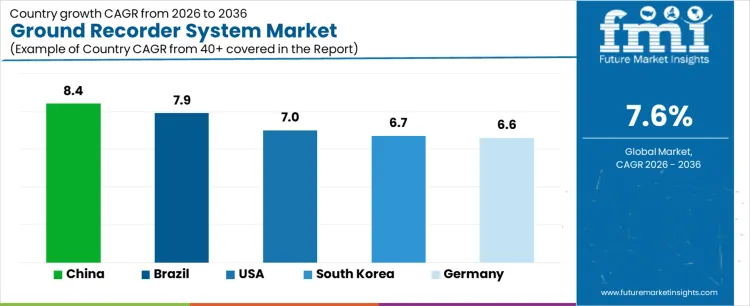
The ground recorder system market is experiencing strong growth, with China leading at 8.4%, driven by its ongoing infrastructure development, industrial expansion, and investments in renewable energy. Brazil follows with 7.9%, supported by modernization efforts in its transportation, energy, and telecommunications sectors. The USA’s market grows at 7%, fueled by upgrades to aging infrastructure and the rise of smart grid and renewable energy projects. South Korea’s market grows at 6.7%, driven by its rapid urbanization, smart city initiatives, and focus on sustainable energy. Germany’s market grows at 6.6%, supported by investments in transportation, renewable energy, and smart city development.
What is Driving the Growth of the Ground Recorder System Market in China?
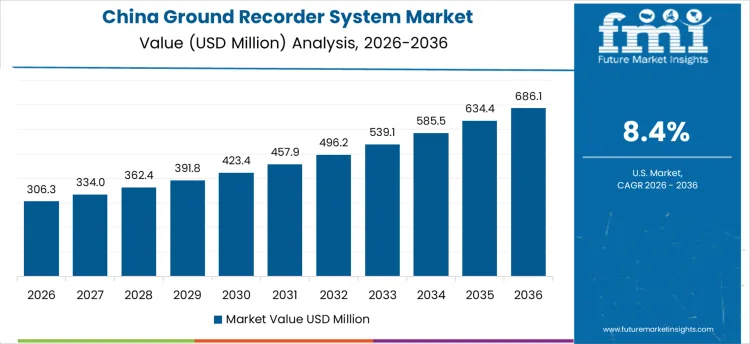
China’s ground recorder system market is growing at 8.4%, driven by the rapid expansion of its infrastructure, industrial development, and energy sectors. As China continues to build and modernize its infrastructure, particularly in urbanization and smart city projects, the demand for reliable ground recording systems to monitor and manage energy systems, utilities, and construction activities is increasing. China’s growing focus on renewable energy sources, such as wind and solar power, also contributes to the need for advanced ground monitoring solutions. The country’s extensive investment in rail, transportation, and telecommunications infrastructure further accelerates the demand for ground recorder systems. With continued industrial expansion and a focus on infrastructure modernization, the market for ground recorder systems in China is expected to experience strong growth.
What is Contributing to the Growth of the Ground Recorder System Market in Brazil?
Brazil’s ground recorder system market is growing at 7.9%, supported by the country’s efforts to expand and modernize its infrastructure, energy, and telecommunications sectors. As Brazil invests in upgrading its transportation networks, including railways and highways, the need for advanced ground monitoring systems becomes increasingly important for safety and operational efficiency. Brazil’s focus on improving its energy infrastructure, including investments in renewable energy, also contributes to the demand for ground recording systems. The growing demand for reliable data collection and real-time monitoring solutions in various sectors, such as agriculture, mining, and utilities, further boosts the market. As Brazil continues to develop its infrastructure and industrial base, the market for ground recorder systems is poised for continued growth.
How is the Ground Recorder System Market Expanding in the USA?
The USA’s ground recorder system market is growing at 7%, driven by increasing infrastructure development and modernization efforts across various sectors, including energy, transportation, and telecommunications. The USA’s focus on maintaining and upgrading its aging infrastructure, particularly in rail, highways, and utilities, has led to a greater need for ground monitoring systems to ensure safety and operational efficiency. The rise of renewable energy projects and the continued expansion of the smart grid system also contribute to the demand for ground recorder systems. As the country embraces more sustainable and smart technologies in construction and urbanization, the need for accurate, real-time data on ground conditions will drive the market forward.
Why is the Ground Recorder System Market Growing in South Korea?
South Korea’s ground recorder system market is growing at 6.7%, driven by the country’s rapid urbanization and focus on infrastructure development. As South Korea continues to invest in smart cities, transportation networks, and renewable energy projects, the need for precise ground monitoring systems increases to ensure safety, reliability, and sustainability. The growing adoption of smart grid technology, alongside infrastructure projects such as high-speed rail and urban construction, contributes to the demand for ground recorder systems. South Korea’s leadership in technology and manufacturing, combined with its commitment to high-quality construction standards, supports the increasing use of ground monitoring solutions across various sectors. The market is expected to maintain steady growth as South Korea continues to innovate in infrastructure and energy systems.
What is Driving the Growth of the Ground Recorder System Market in Germany?
Germany’s ground recorder system market is growing at 6.6%, supported by the country’s strong industrial base, infrastructure investments, and focus on renewable energy. As Germany continues to modernize its transportation networks, including railways and highways, the demand for ground monitoring systems to ensure structural integrity and safety increases. The expansion of Germany’s renewable energy infrastructure, including wind and solar power, contributes to the market’s growth, as ground recording systems are essential for managing and monitoring energy production. Germany’s focus on environmental sustainability and smart city projects also fuels the demand for ground monitoring solutions. With its robust industrial and technological capabilities, Germany’s ground recorder system market is expected to grow steadily in the coming years.
How Do Key Players Compete in the Ground Recorder System Market?
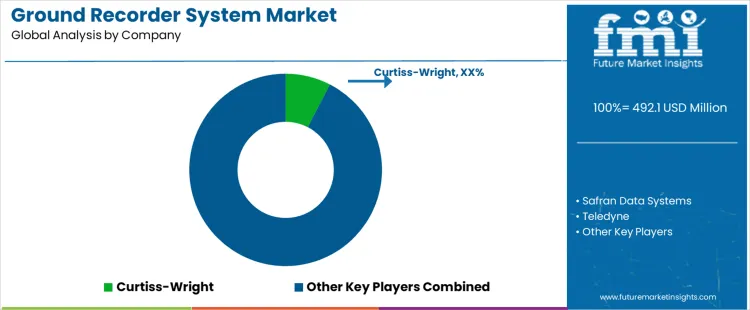
Competition in the ground recorder system market revolves around data integrity, channel capacity, signal fidelity, rugged design, and software-enabled analysis. Curtiss-Wright positions itself with high-performance recorder systems tailored for aerospace and defense applications where mission-critical data capture and secure storage are paramount. Its product brochures highlight rugged hardware certified for harsh environments and scalable configurations that support long-duration test campaigns.
Safran Data Systems focuses on high-reliability recorder architectures that integrate seamlessly with telemetry and data acquisition systems. Its literature emphasizes modular recorder designs that support a wide range of input types and synchronization options, appealing to complex flight test and space missions. Teledyne competes with robust recorder platforms that combine high channel count capability with durable hardware suited for industrial and defense test ranges. HBK differentiates through precision data acquisition and recorder systems paired with advanced analytics software, marketed as complete solutions for structural and environmental testing.
National Instruments (NI) remains strong with software-defined recorder systems built on modular PXI hardware and flexible programming frameworks, highlighting synchronized multi-channel capture and custom processing workflows. Dewesoft brings intuitive recorder platforms with easy setup and real-time visualization tools that reduce test turnaround times. Keysight, Spirent, VIAVI, and Rohde & Schwarz compete by bundling recorder systems with comprehensive test suites, support for wide frequency ranges, and integrated analysis software that transforms raw data into actionable insights. Their brochures stress high sample rates, dependable time stamping, and seamless integration into broader test environments.
Key Players in Ground Recorder System Market
- Curtiss-Wright
- Safran Data Systems
- Teledyne
- HBK
- National Instruments (NI)
- Dewesoft
- Keysight
- Spirent
- VIAVI
- Rohde & Schwarz
Scope of Report
| Items | Values |
|---|---|
| Quantitative Unit (2026) | USD million |
| Recording Capability | High-Speed Multi-Channel, Long-Duration Continuous, Ruggedized Field Recorders, Other |
| End User | Defense Ranges, Aerospace OEMs, Space/Launch Sites, Industrial/Research |
| Deployment | Fixed Installations, Mobile Deployable, Temporary Campaign, Other |
| Regions Covered | Asia Pacific, Europe, North America, Latin America, Middle East & Africa |
| Countries Covered | USA, China, Japan, South Korea, India, Australia & New Zealand, ASEAN, Germany, UK, France, Italy, Spain, Nordic, BENELUX, Brazil, Chile, Mexico, Saudi Arabia, Other GCC Countries, Turkey, South Africa, Other African Union |
| Key Companies Profiled | Curtiss-Wright, Safran Data Systems, Teledyne, HBK, National Instruments (NI), Dewesoft, Keysight, Spirent, VIAVI, Rohde & Schwarz |
| Additional Attributes | Dollar sales segmented by recording capability, end user, deployment, and region. The report also provides regional CAGR and growth outlook, offering detailed insights into the expected market dynamics and trends across different segments and regions. |
Ground Recorder System Market by Segments
Recording Capability
- High-Speed Multi-Channel
- Long-Duration Continuous
- Ruggedized Field Recorders
- Other
End User
- Defense Ranges
- Aerospace OEMs
- Space/Launch Sites
- Industrial/Research
Deployment
- Fixed Installations
- Mobile Deployable
- Temporary Campaign
- Other
Region:
- Asia Pacific
- China
- Japan
- South Korea
- India
- Australia & New Zealand
- ASEAN
- Rest of Asia Pacific
- Europe
- Germany
- United Kingdom
- France
- Italy
- Spain
- Nordic
- BENELUX
- Rest of Europe
- North America
- United States
- Canada
- Mexico
- Latin America
- Brazil
- Chile
- Rest of Latin America
- Middle East & Africa
- Kingdom of Saudi Arabia
- Other GCC Countries
- Turkey
- South Africa
- Other African Union
- Rest of Middle East & Africa
Frequently Asked Questions
How big is the ground recorder system market in 2026?
The global ground recorder system market is estimated to be valued at USD 492.1 million in 2026.
What will be the size of ground recorder system market in 2036?
The market size for the ground recorder system market is projected to reach USD 1,023.7 million by 2036.
How much will be the ground recorder system market growth between 2026 and 2036?
The ground recorder system market is expected to grow at a 7.6% CAGR between 2026 and 2036.
What are the key product types in the ground recorder system market?
The key product types in ground recorder system market are high-speed multi-channel, long-duration continuous, ruggedized field recorders and other.
Which end user segment to contribute significant share in the ground recorder system market in 2026?
In terms of end user, defense ranges segment to command 30.0% share in the ground recorder system market in 2026.
Preview the report firsthand - request a free sample
Get SampleGet the brochure for pricing and purchase details.
Get PDFTable of Content
- Executive Summary
- Global Market Outlook
- Demand-side Trends
- Supply-side Trends
- Technology Roadmap Analysis
- Analysis and Recommendations
- Market Overview
- Market Coverage / Taxonomy
- Market Definition / Scope / Limitations
- Market Background
- Market Dynamics
- Drivers
- Restraints
- Opportunity
- Trends
- Scenario Forecast
- Demand in Optimistic Scenario
- Demand in Likely Scenario
- Demand in Conservative Scenario
- Opportunity Map Analysis
- Product Life Cycle Analysis
- Supply Chain Analysis
- Investment Feasibility Matrix
- Value Chain Analysis
- PESTLE and Porter’s Analysis
- Regulatory Landscape
- Regional Parent Market Outlook
- Production and Consumption Statistics
- Import and Export Statistics
- Market Dynamics
- Global Market Analysis 2021 to 2025 and Forecast, 2026 to 2036
- Historical Market Size Value (USD Million) Analysis, 2021 to 2025
- Current and Future Market Size Value (USD Million) Projections, 2026 to 2036
- Y-o-Y Growth Trend Analysis
- Absolute $ Opportunity Analysis
- Global Market Pricing Analysis 2021 to 2025 and Forecast 2026 to 2036
- Global Market Analysis 2021 to 2025 and Forecast 2026 to 2036, By Recording Capability
- Introduction / Key Findings
- Historical Market Size Value (USD Million) Analysis By Recording Capability , 2021 to 2025
- Current and Future Market Size Value (USD Million) Analysis and Forecast By Recording Capability , 2026 to 2036
- High-Speed Multi-Channel
- Long-Duration Continuous
- Ruggedized Field Recorders
- Other
- High-Speed Multi-Channel
- Y-o-Y Growth Trend Analysis By Recording Capability , 2021 to 2025
- Absolute $ Opportunity Analysis By Recording Capability , 2026 to 2036
- Global Market Analysis 2021 to 2025 and Forecast 2026 to 2036, By End User
- Introduction / Key Findings
- Historical Market Size Value (USD Million) Analysis By End User, 2021 to 2025
- Current and Future Market Size Value (USD Million) Analysis and Forecast By End User, 2026 to 2036
- Defense Ranges
- Aerospace OEMs
- Space or Launch Sites
- Industrial or Research
- Defense Ranges
- Y-o-Y Growth Trend Analysis By End User, 2021 to 2025
- Absolute $ Opportunity Analysis By End User, 2026 to 2036
- Global Market Analysis 2021 to 2025 and Forecast 2026 to 2036, By Deployment
- Introduction / Key Findings
- Historical Market Size Value (USD Million) Analysis By Deployment, 2021 to 2025
- Current and Future Market Size Value (USD Million) Analysis and Forecast By Deployment, 2026 to 2036
- Fixed Installations
- Mobile Deployable
- Temporary Campaign
- Other
- Fixed Installations
- Y-o-Y Growth Trend Analysis By Deployment, 2021 to 2025
- Absolute $ Opportunity Analysis By Deployment, 2026 to 2036
- Global Market Analysis 2021 to 2025 and Forecast 2026 to 2036, By Region
- Introduction
- Historical Market Size Value (USD Million) Analysis By Region, 2021 to 2025
- Current Market Size Value (USD Million) Analysis and Forecast By Region, 2026 to 2036
- North America
- Latin America
- Western Europe
- Eastern Europe
- East Asia
- South Asia and Pacific
- Middle East & Africa
- Market Attractiveness Analysis By Region
- North America Market Analysis 2021 to 2025 and Forecast 2026 to 2036, By Country
- Historical Market Size Value (USD Million) Trend Analysis By Market Taxonomy, 2021 to 2025
- Market Size Value (USD Million) Forecast By Market Taxonomy, 2026 to 2036
- By Country
- USA
- Canada
- Mexico
- By Recording Capability
- By End User
- By Deployment
- By Country
- Market Attractiveness Analysis
- By Country
- By Recording Capability
- By End User
- By Deployment
- Key Takeaways
- Latin America Market Analysis 2021 to 2025 and Forecast 2026 to 2036, By Country
- Historical Market Size Value (USD Million) Trend Analysis By Market Taxonomy, 2021 to 2025
- Market Size Value (USD Million) Forecast By Market Taxonomy, 2026 to 2036
- By Country
- Brazil
- Chile
- Rest of Latin America
- By Recording Capability
- By End User
- By Deployment
- By Country
- Market Attractiveness Analysis
- By Country
- By Recording Capability
- By End User
- By Deployment
- Key Takeaways
- Western Europe Market Analysis 2021 to 2025 and Forecast 2026 to 2036, By Country
- Historical Market Size Value (USD Million) Trend Analysis By Market Taxonomy, 2021 to 2025
- Market Size Value (USD Million) Forecast By Market Taxonomy, 2026 to 2036
- By Country
- Germany
- UK
- Italy
- Spain
- France
- Nordic
- BENELUX
- Rest of Western Europe
- By Recording Capability
- By End User
- By Deployment
- By Country
- Market Attractiveness Analysis
- By Country
- By Recording Capability
- By End User
- By Deployment
- Key Takeaways
- Eastern Europe Market Analysis 2021 to 2025 and Forecast 2026 to 2036, By Country
- Historical Market Size Value (USD Million) Trend Analysis By Market Taxonomy, 2021 to 2025
- Market Size Value (USD Million) Forecast By Market Taxonomy, 2026 to 2036
- By Country
- Russia
- Poland
- Hungary
- Balkan & Baltic
- Rest of Eastern Europe
- By Recording Capability
- By End User
- By Deployment
- By Country
- Market Attractiveness Analysis
- By Country
- By Recording Capability
- By End User
- By Deployment
- Key Takeaways
- East Asia Market Analysis 2021 to 2025 and Forecast 2026 to 2036, By Country
- Historical Market Size Value (USD Million) Trend Analysis By Market Taxonomy, 2021 to 2025
- Market Size Value (USD Million) Forecast By Market Taxonomy, 2026 to 2036
- By Country
- China
- Japan
- South Korea
- By Recording Capability
- By End User
- By Deployment
- By Country
- Market Attractiveness Analysis
- By Country
- By Recording Capability
- By End User
- By Deployment
- Key Takeaways
- South Asia and Pacific Market Analysis 2021 to 2025 and Forecast 2026 to 2036, By Country
- Historical Market Size Value (USD Million) Trend Analysis By Market Taxonomy, 2021 to 2025
- Market Size Value (USD Million) Forecast By Market Taxonomy, 2026 to 2036
- By Country
- India
- ASEAN
- Australia & New Zealand
- Rest of South Asia and Pacific
- By Recording Capability
- By End User
- By Deployment
- By Country
- Market Attractiveness Analysis
- By Country
- By Recording Capability
- By End User
- By Deployment
- Key Takeaways
- Middle East & Africa Market Analysis 2021 to 2025 and Forecast 2026 to 2036, By Country
- Historical Market Size Value (USD Million) Trend Analysis By Market Taxonomy, 2021 to 2025
- Market Size Value (USD Million) Forecast By Market Taxonomy, 2026 to 2036
- By Country
- Kingdom of Saudi Arabia
- Other GCC Countries
- Turkiye
- South Africa
- Other African Union
- Rest of Middle East & Africa
- By Recording Capability
- By End User
- By Deployment
- By Country
- Market Attractiveness Analysis
- By Country
- By Recording Capability
- By End User
- By Deployment
- Key Takeaways
- Key Countries Market Analysis
- USA
- Pricing Analysis
- Market Share Analysis, 2025
- By Recording Capability
- By End User
- By Deployment
- Canada
- Pricing Analysis
- Market Share Analysis, 2025
- By Recording Capability
- By End User
- By Deployment
- Mexico
- Pricing Analysis
- Market Share Analysis, 2025
- By Recording Capability
- By End User
- By Deployment
- Brazil
- Pricing Analysis
- Market Share Analysis, 2025
- By Recording Capability
- By End User
- By Deployment
- Chile
- Pricing Analysis
- Market Share Analysis, 2025
- By Recording Capability
- By End User
- By Deployment
- Germany
- Pricing Analysis
- Market Share Analysis, 2025
- By Recording Capability
- By End User
- By Deployment
- UK
- Pricing Analysis
- Market Share Analysis, 2025
- By Recording Capability
- By End User
- By Deployment
- Italy
- Pricing Analysis
- Market Share Analysis, 2025
- By Recording Capability
- By End User
- By Deployment
- Spain
- Pricing Analysis
- Market Share Analysis, 2025
- By Recording Capability
- By End User
- By Deployment
- France
- Pricing Analysis
- Market Share Analysis, 2025
- By Recording Capability
- By End User
- By Deployment
- India
- Pricing Analysis
- Market Share Analysis, 2025
- By Recording Capability
- By End User
- By Deployment
- ASEAN
- Pricing Analysis
- Market Share Analysis, 2025
- By Recording Capability
- By End User
- By Deployment
- Australia & New Zealand
- Pricing Analysis
- Market Share Analysis, 2025
- By Recording Capability
- By End User
- By Deployment
- China
- Pricing Analysis
- Market Share Analysis, 2025
- By Recording Capability
- By End User
- By Deployment
- Japan
- Pricing Analysis
- Market Share Analysis, 2025
- By Recording Capability
- By End User
- By Deployment
- South Korea
- Pricing Analysis
- Market Share Analysis, 2025
- By Recording Capability
- By End User
- By Deployment
- Russia
- Pricing Analysis
- Market Share Analysis, 2025
- By Recording Capability
- By End User
- By Deployment
- Poland
- Pricing Analysis
- Market Share Analysis, 2025
- By Recording Capability
- By End User
- By Deployment
- Hungary
- Pricing Analysis
- Market Share Analysis, 2025
- By Recording Capability
- By End User
- By Deployment
- Kingdom of Saudi Arabia
- Pricing Analysis
- Market Share Analysis, 2025
- By Recording Capability
- By End User
- By Deployment
- Turkiye
- Pricing Analysis
- Market Share Analysis, 2025
- By Recording Capability
- By End User
- By Deployment
- South Africa
- Pricing Analysis
- Market Share Analysis, 2025
- By Recording Capability
- By End User
- By Deployment
- USA
- Market Structure Analysis
- Competition Dashboard
- Competition Benchmarking
- Market Share Analysis of Top Players
- By Regional
- By Recording Capability
- By End User
- By Deployment
- Competition Analysis
- Competition Deep Dive
- Curtiss-Wright
- Overview
- Product Portfolio
- Profitability by Market Segments (Product/Age /Sales Channel/Region)
- Sales Footprint
- Strategy Overview
- Marketing Strategy
- Product Strategy
- Channel Strategy
- Safran Data Systems
- Teledyne
- HBK
- National Instruments (NI)
- Dewesoft
- Keysight
- Spirent
- VIAVI
- Rohde & Schwarz
- Curtiss-Wright
- Competition Deep Dive
- Assumptions & Acronyms Used
- Research Methodology


