

- Industry Size (2026)
- USD 1.9 Bn
- Forecast (2036)
- USD 4.5 Bn
- CAGR (2026 to 2036)
- 9.0%
Physical AI Systems for Adaptive Torque and Pressure Control Demand Forecast and Outlook 2026 to 2036
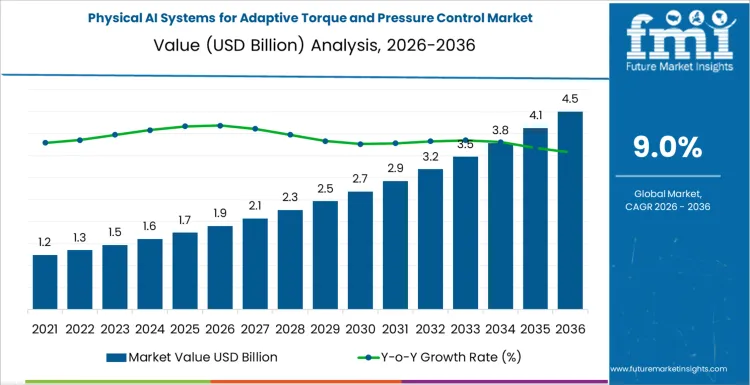
The demand for physical AI systems for adaptive torque and pressure control is estimated to reach USD 1.9 billion in 2026 and expand to USD 4.5 billion by 2036, growing at a CAGR of 9.0%. Demand for physical AI systems that adapt torque and pressure in real time is shifting from isolated trials into planned spending tied to productivity, quality, and safety outcomes. Buyers are prioritizing contact rich operations where fixed settings break down under part variation or changing materials, such as precision assembly, fastening, press fitting, dispensing, finishing, and controlled pressing or clamping.
Quick Stats for Physical AI Systems for Adaptive Torque and Pressure Control Demand
- Demand for Physical AI Systems for Adaptive Torque and Pressure Control Value (2026): USD 1.9 billion
- Demand for Physical AI Systems for Adaptive Torque and Pressure Control Forecast Value (2036): USD 4.5 billion
- Demand for Physical AI Systems for Adaptive Torque and Pressure Control Forecast CAGR 2026 to 2036: 9.0%
- Leading Technology Type by Demand Share: Reinforcement learning control systems
- Fastest-Growing Applications: Collaborative robotics, surgical automation, precision assembly
- Top Players in Global Demand: NVIDIA Corporation, Siemens AG, ABB Ltd., Honeywell International Inc., Boston Dynamics, In
The near term spending outlook favors practical upgrades that can be validated quickly: higher fidelity force and pressure sensing, tighter closed loop control at the edge, improved safety monitoring, and software that can learn acceptable force profiles and detect drift early. A common pattern is hybrid investment, keeping existing automation and adding adaptive control layers, which lowers disruption risk while delivering measurable scrap reduction, fewer tool break events, and more consistent cycle stability.
Integrators and automation teams are seeing growing budget allocation for commissioning, verification, and maintenance routines because adaptive control only holds value when calibration, monitoring, and change management are formalized. In parallel, spending is rising for digital traceability around torque and pressure outcomes, since regulated or warranty sensitive products increasingly demand auditable process evidence. Adoption is strongest where human robot interaction is close or where delicate parts are involved, since adaptive torque and pressure control improves compliance and reduces incident risk. The near term demand is characterized by disciplined, application led purchasing, with buyers funding staged rollouts, clear acceptance criteria, and tooling upgrades that make adaptive control repeatable across lines and sites.
Demand for Physical AI Systems for Adaptive Torque and Pressure Control Key Takeaways
| Metric | Value |
|---|---|
| Demand Value (2026) | USD 1.9 billion |
| Demand Forecast Value (2036) | USD 4.5 billion |
| Forecast CAGR 2026 to 2036 | 9.0% |
What Enterprise Spending Patterns Are Expected Over The Next Years For Physical AI Systems For Adaptive Torque And Pressure Control?
Over the next one to two years, enterprise spending on physical AI systems for adaptive torque and pressure control is expected to look phased and application led, with most budgets flowing to specific stations where contact quality drives scrap, rework, tool wear, or operator safety. Plants will typically fund an initial deployment that upgrades sensing, controller loop performance, and edge inference for one torque or pressure critical operation, then expand to adjacent steps once acceptance tests prove repeatability. Procurement will bundle hardware with integration, commissioning, and verification services, since these systems must be tuned to the process and validated against clear force and pressure envelopes.
Operating budgets will rise alongside capital purchases as buyers add monitoring, calibration routines, remote support, spares, and performance reporting to keep drift under control. Safety and governance spend will increase in parallel, driven by expectations in collaborative operation guidance and functional safety practice, so risk assessment, documented thresholds, and change control become part of the purchase. Standards and measurement work referenced by ISO, IEC, and NIST will keep influencing buying behavior, pushing enterprises to pay for test methods and traceability, not only for the robot or actuator itself. In short, near term spending will favor practical modernization packages that can be qualified quickly, scaled predictably across lines, and maintained with auditable control of torque and pressure outcomes.
How Will the Demand for Physical AI Systems for Adaptive Torque and Pressure Control Structure?
Physical AI systems for adaptive torque and pressure control play a critical role in delivering precise force management, real-time responsiveness, and operational safety in automated and human-collaborative environments. Adoption is influenced by control accuracy requirements, processing speed demands, integration complexity, and safety certification needs. Segmentation by technology type, control function, and application highlights how manufacturers select specific AI control architectures to meet force precision targets, response time specifications, and safety standards across diverse industrial categories.
Which Technology Type Holds the Largest Share in Physical AI Systems for Adaptive Torque and Pressure Control?
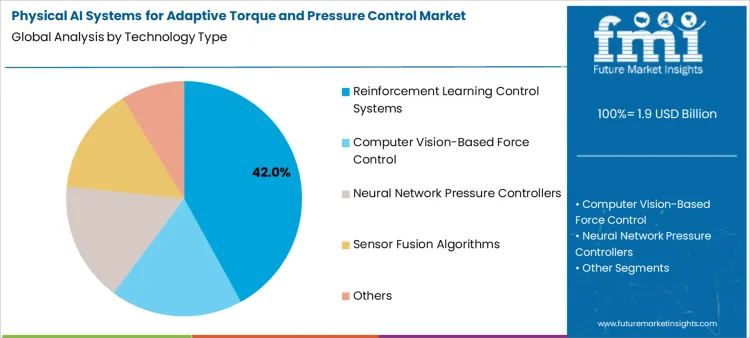
Reinforcement learning control systems account for 42.0%, driven by their ability to learn optimal control policies through trial-and-error interaction with physical processes. Computer vision-based force control holds 28.0%, supporting visual feedback systems that monitor component positioning and surface contact during assembly operations. Neural network pressure controllers represent 18.0%, favored for their capability to model complex non-linear pressure-flow relationships in hydraulic and pneumatic systems. Sensor fusion algorithms contribute 8.0%, used where multiple input streams require integration for comprehensive force and pressure monitoring. Other AI control technologies account for 4.0%.
Key Points
- Reinforcement learning dominates adaptive control applications.
- Computer vision enables precision force feedback systems.
- Neural networks excel in complex pressure control scenarios.
How Do Control Functions Influence Technology Selection?
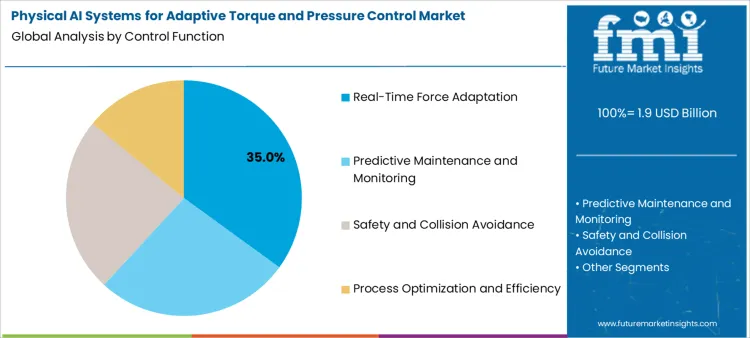
Real-time force adaptation represents 35.0%, reflecting priority on dynamic torque adjustment and pressure regulation during manufacturing operations. Predictive maintenance and monitoring account for 27.0%, essential for equipment protection, failure prevention, and operational continuity. Safety and collision avoidance hold 22.0%, supporting human-robot collaboration and automated safety systems in shared workspaces. Process optimization and efficiency represent 16.0%, addressing productivity targets through intelligent control algorithms and performance learning.
Key Points
- Real-time adaptation remains the primary control objective.
- Predictive maintenance directly impacts operational reliability.
- Safety functions enable human-machine collaboration.
Which Applications Are Driving Demand for These Systems?
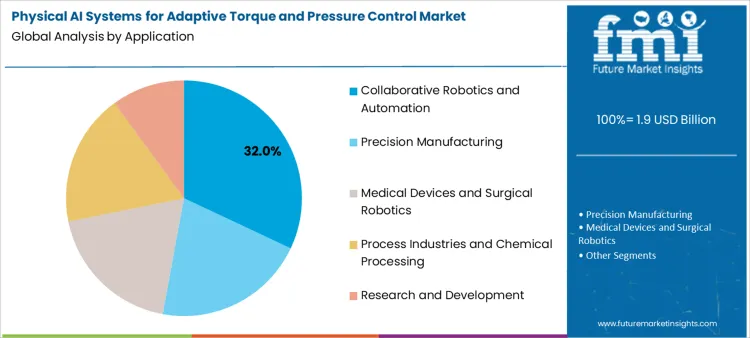
Collaborative robotics and automation lead with 32.0%, requiring sophisticated force control for safe human-robot interaction and precision assembly tasks. Precision manufacturing applications account for 26.0%, using adaptive control for material handling, component insertion, and quality assurance operations. Medical devices and surgical robotics represent 18.0%, relying on precise pressure control for patient safety and procedural accuracy. Process industries and chemical processing hold 14.0%, focused on pressure regulation and flow control in automated systems. Research and development activities account for 10.0%, where advanced control experimentation drives innovation.
Key Points
- Collaborative robotics remains the strongest growth application.
- Manufacturing applications emphasize precision and reliability.
- Medical sectors prioritize safety and regulatory compliance.
What adoption horizon and timing milestones are being indicated by current deployments?
Current deployments indicate an adoption horizon driven by clear qualification gates rather than a single go live date. A typical early milestone is a bounded pilot in one torque or pressure critical task, where the system proves stable closed loop behavior across real part variation, temperature shifts, tool wear, and speed changes while meeting defined quality limits. A second milestone is the safety case, covering risk assessment, validated force and pressure envelopes, stop performance, and documented recovery behavior in abnormal contact or collision scenarios. After that, teams move into production hardening, where sensor calibration routines, drift detection, exception handling, and change control are formalized so adaptivity stays within verified bounds over normal maintenance cycles.
A further milestone is operational integration, linking control outcomes to traceability, alarms, and maintenance workflows so deviations trigger predictable responses rather than operator workarounds. The point where adoption accelerates is standardization: internal specifications, acceptance tests, and reusable parameter sets that cut integration time for similar stations. Replication across lines or sites follows once the playbook is proven, suppliers are qualified, and service coverage is in place to sustain performance through upgrades and component replacements.
How Is Demand for the Physical AI Systems for Adaptive Torque and Pressure Control Evolving Globally?
Global demand for Physical AI systems for adaptive torque and pressure control is increasing as manufacturers expand automation capabilities while maintaining force precision, safety compliance, and process reliability. Growth reflects rising adoption of intelligent control systems, edge computing platforms, and real-time learning algorithms across robotics, manufacturing automation, and medical devices. Technology selection focuses on adaptive algorithms, sensor integration, and safety certification under dynamic loading conditions and collaborative environments. USA. records 8.7% CAGR, China records 10.2% CAGR, Germany records 7.9% CAGR, Japan records 7.1% CAGR, and South Korea records 9.4% CAGR. Adoption remains driven by control performance requirements and safety standards rather than automation volume expansion alone.
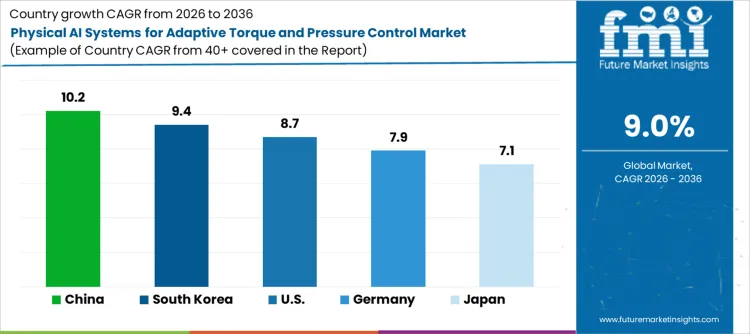
| Country | CAGR (%) |
|---|---|
| China | 10.2% |
| South Korea | 9.4% |
| USA. | 8.7% |
| Germany | 7.9% |
| Japan | 7.1% |
What is Driving Growth of Physical AI Systems For Adaptive Torque And Pressure Control Demand In China?
Demand for Physical AI systems for adaptive torque and pressure control in China is slated to expand as manufacturers scale production of intelligent automation systems, collaborative robotics, and precision manufacturing equipment. Growth at 10.2% CAGR reflects rising adoption of adaptive control technologies in electronics assembly, automotive manufacturing, and industrial robotics applications. Force control precision under high-speed production conditions remains critical for quality assurance and equipment protection. Cost efficiency drives selection of AI control systems delivering precision and adaptability at competitive price points. Domestic technology companies prioritize systems compatible with existing automation infrastructure and local sensor suppliers. Demand concentrates within export-oriented manufacturing sectors, automotive production facilities, and electronics assembly operations targeting international quality standards.
- Expansion of intelligent manufacturing systems
- Need for high-speed precision control
- Cost-competitive adaptive solutions
- Growth of collaborative robotics deployment
Why is South Korea Seeing Expansion in Physical AI Systems for Adaptive Torque and Pressure Control Adoption?
Physical AI systems for adaptive torque and pressure control demand in South Korea is slated to grow as advanced manufacturing sectors integrate intelligent automation technologies. Growth at 9.4% CAGR reflects strong activity in semiconductor manufacturing, precision machinery, and robotics development. Complex assembly operations require adaptive force control for component handling and quality protection. Technology leadership drives adoption of cutting-edge AI control algorithms and sensor fusion systems. Leading electronics and automotive companies invest in advanced control systems for competitive differentiation and process innovation. Demand remains centered on high-precision manufacturing applications serving global technology markets.
- Advancement in semiconductor manufacturing processes
- Investment in precision machinery automation
- Leadership in robotics technology development
- Focus on high-precision control applications
What Factors are Shaping Physical AI Systems for Adaptive Torque and Pressure Control Sales in the USA.?
Demand for physical AI systems for adaptive torque and pressure control in the USA. is poised to bolster as manufacturers integrate intelligent automation across aerospace, medical devices, and advanced manufacturing sectors. Growth at 8.7% CAGR reflects rising adoption in collaborative robotics, surgical automation, and precision assembly applications. Safety regulations and certification requirements drive selection of validated AI control systems. Advanced research institutions and technology companies lead development of next-generation adaptive control algorithms. Large corporations prioritize control systems supporting both operational efficiency and regulatory compliance. Demand remains strongest within regulated industries requiring documented safety performance and traceability.
- Growth in collaborative robotics applications
- Expansion of medical automation systems
- Regulatory compliance driving technology selection
- Investment in advanced manufacturing capabilities
How is Germany supporting growth of Physical AI systems for adaptive torque and pressure control demand?
Physical AI systems for adaptive torque and pressure control demand in Germany is anticipated to grow as manufacturers integrate intelligent automation across automotive, machinery, and industrial equipment sectors. Growth at 7.9% CAGR reflects strong adoption in precision manufacturing, automated assembly, and quality control applications. Industry 4.0 initiatives drive integration of adaptive control systems with existing automation infrastructure. Engineering excellence standards influence selection of high-performance AI control technologies. Established automation companies invest in adaptive control capabilities for competitive positioning. Demand is driven by precision requirements and operational efficiency rather than cost considerations alone.
- Implementation of Industry 4.0 initiatives
- Integration with existing automation systems
- Focus on precision manufacturing applications
- Investment in adaptive control technologies
What are the Opportunities for Physical AI Systems for Adaptive Torque And Pressure Control in Japan?
Demand for physical AI systems for adaptive torque and pressure control in Japan is poised to rise as precision manufacturing and robotics sectors adopt intelligent control technologies. Growth at 7.1% CAGR reflects integration in automotive manufacturing, precision machinery, and medical device production. Quality control standards drive adoption of adaptive force control systems for consistent production outcomes. Established robotics industry provides foundation for advanced AI control system deployment. Manufacturing companies prioritize systems supporting both automation efficiency and worker safety. Demand remains focused on applications requiring high precision and long-term reliability rather than rapid expansion.
- Advanced robotics industry foundation
- Integration in automotive manufacturing
- Focus on quality control applications
- Emphasis on precision and reliability
What is the competitive landscape of demand for the Physical AI systems for adaptive torque and pressure control globally?
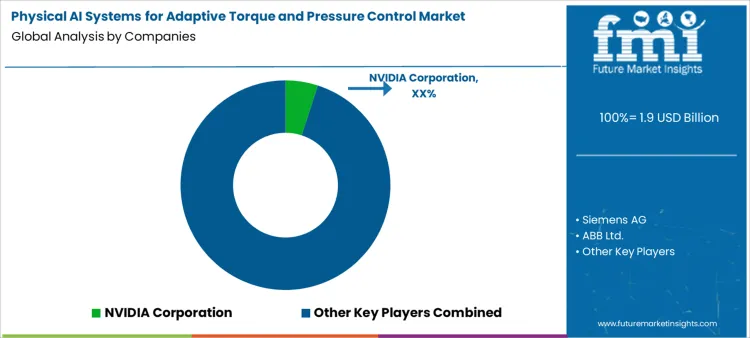
Key companies and organizations active in the ecosystem for adaptive torque and pressure control within physical AI systems include major industrial robotics OEMs like ABB, FANUC, KUKA, Yaskawa, and Universal Robots, which offer robots with integrated force and torque sensing capabilities. Automation leaders such as Siemens, Rockwell Automation, and Schneider Electric provide control systems and motion technologies supporting real-time adaptive behavior. Sensor specialists like Sick and Keyence offer high-precision sensors crucial for torque and pressure regulation.
System integrators, both large global firms and smaller, regionally focused automation houses, specialize in implementing these advanced control systems within production lines. Standards bodies like ISO/TC 299 and national metrology labs guide safety and performance benchmarks for these technologies. Research institutions and manufacturers' consortia also play a key role in advancing interoperability and setting best practices for deploying adaptive control in dynamic manufacturing environments.
Key Players in the Physical AI Systems for Adaptive Torque and Pressure Control Demand
- NVIDIA Corporation
- Siemens AG
- ABB Ltd.
- Honeywell International Inc.
- Boston Dynamics, Inc.
Scope of the Report
| Items | Values |
|---|---|
| Quantitative Units | USD billion |
| Technology Type | Reinforcement Learning Control Systems; Computer Vision-Based Force Control; Neural Network Pressure Controllers; Sensor Fusion Algorithms; Others |
| Control Function | Real-Time Force Adaptation; Predictive Maintenance and Monitoring; Safety and Collision Avoidance; Process Optimization and Efficiency |
| Application | Collaborative Robotics and Automation; Precision Manufacturing; Medical Devices and Surgical Robotics; Process Industries and Chemical Processing; Research and Development |
| Regions Covered | Asia Pacific, Europe, North America, Latin America, Middle East & Africa |
| Countries Covered | China, South Korea, USA., Germany, Japan, and 40+ countries |
| Key Companies Profiled | NVIDIA Corporation; Siemens AG; ABB Ltd.; Honeywell International Inc.; Boston Dynamics, Inc.; Others |
| Additional Attributes | Dollar sales by technology type, control function, and application; performance in force precision and real-time adaptation across collaborative robotics, manufacturing, and medical automation; control accuracy, response time, and safety compliance under dynamic loading conditions; impact on operational efficiency, quality consistency, and worker safety during human-robot collaboration; compatibility with edge computing platforms and industrial automation infrastructure; procurement dynamics driven by safety certification requirements, validation cycles, and long-term technology partnerships. |
Physical AI Systems for Adaptive Torque and Pressure Control Demand by Segment
Technology Type:
- Reinforcement Learning Control Systems
- Computer Vision-Based Force Control
- Neural Network Pressure Controllers
- Sensor Fusion Algorithms
- Others
Control Function:
- Real-Time Force Adaptation
- Predictive Maintenance and Monitoring
- Safety and Collision Avoidance
- Process Optimization and Efficiency
Application:
- Collaborative Robotics and Automation
- Precision Manufacturing
- Medical Devices and Surgical Robotics
- Process Industries and Chemical Processing
- Research and Development
Region:
- Asia Pacific
- China
- Japan
- South Korea
- India
- Australia & New Zealand
- ASEAN
- Rest of Asia Pacific
- Europe
- Germany
- United Kingdom
- France
- Italy
- Spain
- Nordic
- BENELUX
- Rest of Europe
- North America
- USA.
- Canada
- Mexico
- Latin America
- Brazil
- Chile
- Rest of Latin America
- Middle East & Africa
- Kingdom of Saudi Arabia
- Other GCC Countries
- Turkey
- South Africa
- Other African Union
- Rest of Middle East & Africa
Bibliography
- Institute of Electrical and Electronics Engineers. (2023). IEEE Standards for Robotics and Automation: Force and Torque Control Systems (IEEE 1872-2023). IEEE.
- International Organization for Standardization. (2024). ISO 10218: Robots and robotic devices - Safety requirements for industrial robots (revised edition). ISO.
- International Organization for Standardization. (2023). ISO 15066: Robots and robotic devices - Collaborative robots (updated guidelines for force and pressure limits). ISO.
- Kumar, S., & Chen, L. (2024). Adaptive force control in physical AI systems: Real-time learning algorithms for robotic manipulation. IEEE Transactions on Robotics, 40(3), 234-251.
- Zhang, W., Martinez, R., & Thompson, K. (2023). Neural network approaches to pressure control in automated manufacturing systems. Journal of Manufacturing Science and Engineering, 145(8), 081005.
Frequently Asked Questions
How big is the physical ai systems for adaptive torque and pressure control market in 2026?
The global physical ai systems for adaptive torque and pressure control market is estimated to be valued at USD 1.9 billion in 2026.
What will be the size of physical ai systems for adaptive torque and pressure control market in 2036?
The market size for the physical ai systems for adaptive torque and pressure control market is projected to reach USD 4.5 billion by 2036.
How much will be the physical ai systems for adaptive torque and pressure control market growth between 2026 and 2036?
The physical ai systems for adaptive torque and pressure control market is expected to grow at a 9.0% CAGR between 2026 and 2036.
What are the key product types in the physical ai systems for adaptive torque and pressure control market?
The key product types in physical ai systems for adaptive torque and pressure control market are reinforcement learning control systems, computer vision-based force control, neural network pressure controllers, sensor fusion algorithms and others.
Which control function segment to contribute significant share in the physical ai systems for adaptive torque and pressure control market in 2026?
In terms of control function, real-time force adaptation segment to command 35.0% share in the physical ai systems for adaptive torque and pressure control market in 2026.
Preview the report firsthand - request a free sample
Get SampleGet the brochure for pricing and purchase details.
Get PDFTable of Content
- Executive Summary
- Global Market Outlook
- Demand-side Trends
- Supply-side Trends
- Technology Roadmap Analysis
- Analysis and Recommendations
- Market Overview
- Market Coverage / Taxonomy
- Market Definition / Scope / Limitations
- Market Background
- Market Dynamics
- Drivers
- Restraints
- Opportunity
- Trends
- Scenario Forecast
- Demand in Optimistic Scenario
- Demand in Likely Scenario
- Demand in Conservative Scenario
- Opportunity Map Analysis
- Product Life Cycle Analysis
- Supply Chain Analysis
- Investment Feasibility Matrix
- Value Chain Analysis
- PESTLE and Porter’s Analysis
- Regulatory Landscape
- Regional Parent Market Outlook
- Production and Consumption Statistics
- Import and Export Statistics
- Market Dynamics
- Global Market Analysis 2021 to 2025 and Forecast, 2026 to 2036
- Historical Market Size Value (USD Million) Analysis, 2021 to 2025
- Current and Future Market Size Value (USD Million) Projections, 2026 to 2036
- Y-o-Y Growth Trend Analysis
- Absolute $ Opportunity Analysis
- Global Market Pricing Analysis 2021 to 2025 and Forecast 2026 to 2036
- Global Market Analysis 2021 to 2025 and Forecast 2026 to 2036, By Technology Type
- Introduction / Key Findings
- Historical Market Size Value (USD Million) Analysis By Technology Type, 2021 to 2025
- Current and Future Market Size Value (USD Million) Analysis and Forecast By Technology Type, 2026 to 2036
- Reinforcement Learning Control Systems
- Computer Vision-Based Force Control
- Neural Network Pressure Controllers
- Sensor Fusion Algorithms
- Others
- Reinforcement Learning Control Systems
- Y-o-Y Growth Trend Analysis By Technology Type, 2021 to 2025
- Absolute $ Opportunity Analysis By Technology Type, 2026 to 2036
- Global Market Analysis 2021 to 2025 and Forecast 2026 to 2036, By Control Function
- Introduction / Key Findings
- Historical Market Size Value (USD Million) Analysis By Control Function, 2021 to 2025
- Current and Future Market Size Value (USD Million) Analysis and Forecast By Control Function, 2026 to 2036
- Real-Time Force Adaptation
- Predictive Maintenance and Monitoring
- Safety and Collision Avoidance
- Process Optimization and Efficiency
- Real-Time Force Adaptation
- Y-o-Y Growth Trend Analysis By Control Function, 2021 to 2025
- Absolute $ Opportunity Analysis By Control Function, 2026 to 2036
- Global Market Analysis 2021 to 2025 and Forecast 2026 to 2036, By Application
- Introduction / Key Findings
- Historical Market Size Value (USD Million) Analysis By Application, 2021 to 2025
- Current and Future Market Size Value (USD Million) Analysis and Forecast By Application, 2026 to 2036
- Collaborative Robotics and Automation
- Precision Manufacturing
- Medical Devices and Surgical Robotics
- Process Industries and Chemical Processing
- Research and Development
- Collaborative Robotics and Automation
- Y-o-Y Growth Trend Analysis By Application, 2021 to 2025
- Absolute $ Opportunity Analysis By Application, 2026 to 2036
- Global Market Analysis 2021 to 2025 and Forecast 2026 to 2036, By Region
- Introduction
- Historical Market Size Value (USD Million) Analysis By Region, 2021 to 2025
- Current Market Size Value (USD Million) Analysis and Forecast By Region, 2026 to 2036
- North America
- Latin America
- Western Europe
- Eastern Europe
- East Asia
- South Asia and Pacific
- Middle East & Africa
- Market Attractiveness Analysis By Region
- North America Market Analysis 2021 to 2025 and Forecast 2026 to 2036, By Country
- Historical Market Size Value (USD Million) Trend Analysis By Market Taxonomy, 2021 to 2025
- Market Size Value (USD Million) Forecast By Market Taxonomy, 2026 to 2036
- By Country
- USA
- Canada
- Mexico
- By Technology Type
- By Control Function
- By Application
- By Country
- Market Attractiveness Analysis
- By Country
- By Technology Type
- By Control Function
- By Application
- Key Takeaways
- Latin America Market Analysis 2021 to 2025 and Forecast 2026 to 2036, By Country
- Historical Market Size Value (USD Million) Trend Analysis By Market Taxonomy, 2021 to 2025
- Market Size Value (USD Million) Forecast By Market Taxonomy, 2026 to 2036
- By Country
- Brazil
- Chile
- Rest of Latin America
- By Technology Type
- By Control Function
- By Application
- By Country
- Market Attractiveness Analysis
- By Country
- By Technology Type
- By Control Function
- By Application
- Key Takeaways
- Western Europe Market Analysis 2021 to 2025 and Forecast 2026 to 2036, By Country
- Historical Market Size Value (USD Million) Trend Analysis By Market Taxonomy, 2021 to 2025
- Market Size Value (USD Million) Forecast By Market Taxonomy, 2026 to 2036
- By Country
- Germany
- UK
- Italy
- Spain
- France
- Nordic
- BENELUX
- Rest of Western Europe
- By Technology Type
- By Control Function
- By Application
- By Country
- Market Attractiveness Analysis
- By Country
- By Technology Type
- By Control Function
- By Application
- Key Takeaways
- Eastern Europe Market Analysis 2021 to 2025 and Forecast 2026 to 2036, By Country
- Historical Market Size Value (USD Million) Trend Analysis By Market Taxonomy, 2021 to 2025
- Market Size Value (USD Million) Forecast By Market Taxonomy, 2026 to 2036
- By Country
- Russia
- Poland
- Hungary
- Balkan & Baltic
- Rest of Eastern Europe
- By Technology Type
- By Control Function
- By Application
- By Country
- Market Attractiveness Analysis
- By Country
- By Technology Type
- By Control Function
- By Application
- Key Takeaways
- East Asia Market Analysis 2021 to 2025 and Forecast 2026 to 2036, By Country
- Historical Market Size Value (USD Million) Trend Analysis By Market Taxonomy, 2021 to 2025
- Market Size Value (USD Million) Forecast By Market Taxonomy, 2026 to 2036
- By Country
- China
- Japan
- South Korea
- By Technology Type
- By Control Function
- By Application
- By Country
- Market Attractiveness Analysis
- By Country
- By Technology Type
- By Control Function
- By Application
- Key Takeaways
- South Asia and Pacific Market Analysis 2021 to 2025 and Forecast 2026 to 2036, By Country
- Historical Market Size Value (USD Million) Trend Analysis By Market Taxonomy, 2021 to 2025
- Market Size Value (USD Million) Forecast By Market Taxonomy, 2026 to 2036
- By Country
- India
- ASEAN
- Australia & New Zealand
- Rest of South Asia and Pacific
- By Technology Type
- By Control Function
- By Application
- By Country
- Market Attractiveness Analysis
- By Country
- By Technology Type
- By Control Function
- By Application
- Key Takeaways
- Middle East & Africa Market Analysis 2021 to 2025 and Forecast 2026 to 2036, By Country
- Historical Market Size Value (USD Million) Trend Analysis By Market Taxonomy, 2021 to 2025
- Market Size Value (USD Million) Forecast By Market Taxonomy, 2026 to 2036
- By Country
- Kingdom of Saudi Arabia
- Other GCC Countries
- Turkiye
- South Africa
- Other African Union
- Rest of Middle East & Africa
- By Technology Type
- By Control Function
- By Application
- By Country
- Market Attractiveness Analysis
- By Country
- By Technology Type
- By Control Function
- By Application
- Key Takeaways
- Key Countries Market Analysis
- USA
- Pricing Analysis
- Market Share Analysis, 2025
- By Technology Type
- By Control Function
- By Application
- Canada
- Pricing Analysis
- Market Share Analysis, 2025
- By Technology Type
- By Control Function
- By Application
- Mexico
- Pricing Analysis
- Market Share Analysis, 2025
- By Technology Type
- By Control Function
- By Application
- Brazil
- Pricing Analysis
- Market Share Analysis, 2025
- By Technology Type
- By Control Function
- By Application
- Chile
- Pricing Analysis
- Market Share Analysis, 2025
- By Technology Type
- By Control Function
- By Application
- Germany
- Pricing Analysis
- Market Share Analysis, 2025
- By Technology Type
- By Control Function
- By Application
- UK
- Pricing Analysis
- Market Share Analysis, 2025
- By Technology Type
- By Control Function
- By Application
- Italy
- Pricing Analysis
- Market Share Analysis, 2025
- By Technology Type
- By Control Function
- By Application
- Spain
- Pricing Analysis
- Market Share Analysis, 2025
- By Technology Type
- By Control Function
- By Application
- France
- Pricing Analysis
- Market Share Analysis, 2025
- By Technology Type
- By Control Function
- By Application
- India
- Pricing Analysis
- Market Share Analysis, 2025
- By Technology Type
- By Control Function
- By Application
- ASEAN
- Pricing Analysis
- Market Share Analysis, 2025
- By Technology Type
- By Control Function
- By Application
- Australia & New Zealand
- Pricing Analysis
- Market Share Analysis, 2025
- By Technology Type
- By Control Function
- By Application
- China
- Pricing Analysis
- Market Share Analysis, 2025
- By Technology Type
- By Control Function
- By Application
- Japan
- Pricing Analysis
- Market Share Analysis, 2025
- By Technology Type
- By Control Function
- By Application
- South Korea
- Pricing Analysis
- Market Share Analysis, 2025
- By Technology Type
- By Control Function
- By Application
- Russia
- Pricing Analysis
- Market Share Analysis, 2025
- By Technology Type
- By Control Function
- By Application
- Poland
- Pricing Analysis
- Market Share Analysis, 2025
- By Technology Type
- By Control Function
- By Application
- Hungary
- Pricing Analysis
- Market Share Analysis, 2025
- By Technology Type
- By Control Function
- By Application
- Kingdom of Saudi Arabia
- Pricing Analysis
- Market Share Analysis, 2025
- By Technology Type
- By Control Function
- By Application
- Turkiye
- Pricing Analysis
- Market Share Analysis, 2025
- By Technology Type
- By Control Function
- By Application
- South Africa
- Pricing Analysis
- Market Share Analysis, 2025
- By Technology Type
- By Control Function
- By Application
- USA
- Market Structure Analysis
- Competition Dashboard
- Competition Benchmarking
- Market Share Analysis of Top Players
- By Regional
- By Technology Type
- By Control Function
- By Application
- Competition Analysis
- Competition Deep Dive
- NVIDIA Corporation
- Overview
- Product Portfolio
- Profitability by Market Segments (Product/Age /Sales Channel/Region)
- Sales Footprint
- Strategy Overview
- Marketing Strategy
- Product Strategy
- Channel Strategy
- Siemens AG
- ABB Ltd.
- Honeywell International Inc.
- Boston Dynamics, Inc.
- NVIDIA Corporation
- Competition Deep Dive
- Assumptions & Acronyms Used
- Research Methodology


