

- Industry Size (2026)
- USD 0.9 Bn
- Forecast (2036)
- USD 1.7 Bn
- CAGR (2026 to 2036)
- 6.60%
Dynamic Signal Analyzer Market Forecast and Outlook 2026 to 2036
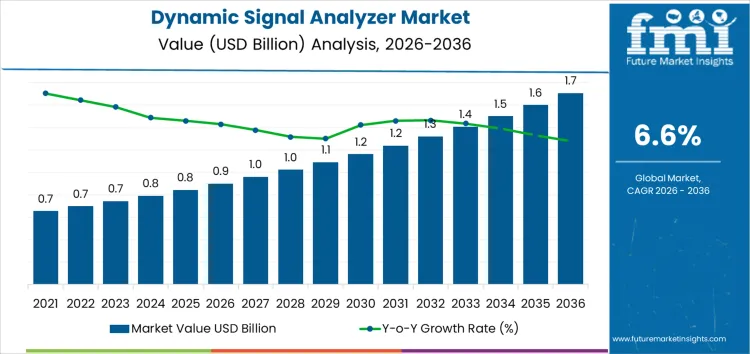
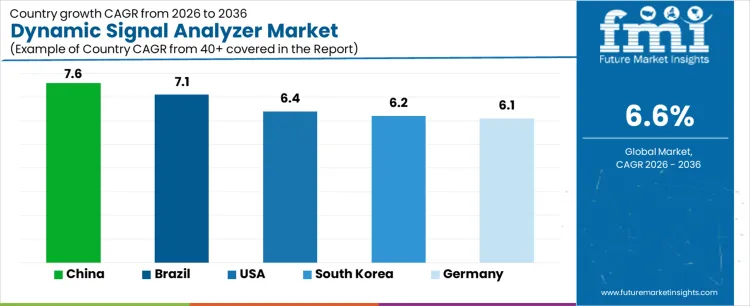
The dynamic signal analyzer market, valued at USD 0.9 billion in 2026 and projected to reach USD 1.7 billion by 2036, is growing at a CAGR of 6.60%. Growth is driven by technological advancements and the increasing demand for precise testing solutions across sectors such as telecommunications, aerospace, automotive, and industrial automation. China leads the market with a 7.6% CAGR, spurred by its rapid technological advancements and the growing need for testing solutions across telecommunications, electronics, and aerospace. The expansion of 5G networks and smart city initiatives is further boosting demand for dynamic signal analyzers in the country. Brazil follows closely with a 7.1% growth, driven by investments in industrial automation, telecommunications, and infrastructure.
Quick Stats for Dynamic Signal Analyzer Market
- Dynamic Signal Analyzer Market Value (2026): USD 0.9 Billion
- Dynamic Signal Analyzer Market Forecast Value (2036): USD 1.7 Billion
- Dynamic Signal Analyzer Market Forecast CAGR (2026 to 2036): 6.60%
- Leading Segment by Frequency Range in Dynamic Signal Analyzer Market: Audio or Low Frequency (<20 kHz)
- Key Growth Regions in Dynamic Signal Analyzer Market: Asia Pacific, Europe, North America
- Top Key Players in Dynamic Signal Analyzer Market: HBK (Hottinger Brüel & Kjær), National Instruments (NI), Siemens (Simcenter), Rohde & Schwarz, Keysight, DEWESoft, m+p international, Crystal Instruments, Kistler, imc Test & Measurement
In North America, the USA is experiencing steady growth at a 6.4% CAGR, largely fueled by advancements in aerospace, defense, telecommunications, and the increasing adoption of 5G technologies. The USA's strong focus on aerospace and defense technologies also contributes to the demand for precise testing solutions. South Korea is seeing a 6.2% CAGR, driven by its leadership in electronics, telecommunications, and automotive industries. The country’s push for smart city development and IoT technologies is contributing to the rising demand for dynamic signal analyzers. Germany, with a 6.1% growth rate, benefits from its robust industrial base, particularly in manufacturing and automotive sectors, while its continued investment in digital infrastructure, including 5G networks, supports the demand for dynamic signal analyzers.
Dynamic Signal Analyzer Market Key Takeaways
| Metric | Value |
|---|---|
| Industry Value (2026) | USD 0.9 Billion |
| Forecast Value (2036) | USD 1.7 Billion |
| Forecast CAGR (2026 to 2036) | 6.60% |
How Is the Global Dynamic Signal Analyzer Market Advancing?
The global dynamic signal analyzer market is experiencing steady growth as demand for high-performance testing and measurement tools in industries such as telecommunications, aerospace, automotive, and electronics continues to increase. Dynamic signal analyzers are critical tools used to measure and analyze the frequency spectrum, signal integrity, and various characteristics of signals in both time and frequency domains. These tools are essential for the design, testing, and optimization of complex electronic systems.
The market for dynamic signal analyzers is being driven by advancements in wireless communication, where the need for signal analysis and interference detection is paramount. The increasing deployment of 5G networks, for instance, has boosted the demand for these analyzers, as they are required for testing and ensuring the reliability of high-speed, high-frequency signals in communication systems.
Industries such as automotive and aerospace are incorporating dynamic signal analyzers into their R&D processes, particularly for testing radar, sonar, and other sensors that operate in dynamic environments. These tools help to ensure that these systems meet strict performance standards, especially in safety-critical applications.
The growing use of digital technologies and the proliferation of smart devices are also contributing to the demand for dynamic signal analyzers. As companies move toward more complex electronic systems, there is a higher need for precise signal measurement and analysis to ensure the optimal performance and reliability of the devices.
What is the Segment-Wise Analysis for the Dynamic Signal Analyzer Market?
The dynamic signal analyzer market is segmented by frequency range and application. Audio or Low Frequency (<20 kHz) leads the market with a 22% share, followed by Ultrasonic (20–200 kHz), RF/Microwave (>=200 kHz), and Broadband Multi-Range. These frequency ranges play a crucial role in various signal analysis applications, ensuring accurate data capture across a range of testing conditions. In terms of application, Vibration or NVH (Noise, Vibration, Harshness) dominates with a 34% market share, driven by the demand for signal analysis solutions in automotive and industrial sectors.
How Does Audio or Low Frequency (<20 kHz) Lead the Dynamic Signal Analyzer Market?
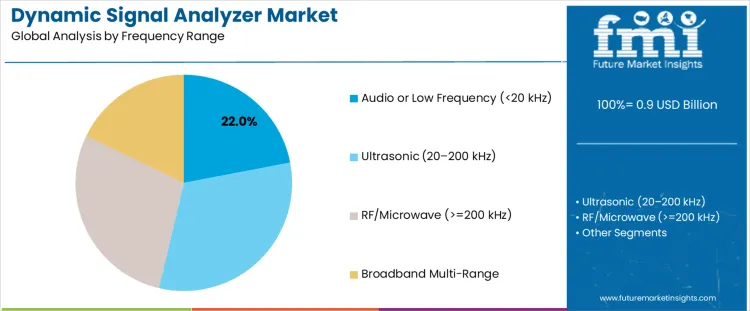
Audio or Low Frequency (<20 kHz) holds a 22% share in the dynamic signal analyzer market, reflecting its widespread use in industries that require precise measurements of low-frequency signals, such as automotive, consumer electronics, and industrial sectors. This frequency range is particularly important for applications involving vibration analysis, acoustic measurement, and noise testing, which are essential in the design and testing of automotive components, machinery, and electronic devices. As the demand for quality control and performance optimization increases in these industries, the need for accurate dynamic signal analyzers in the low-frequency range continues to grow, solidifying its leadership in the market.
How Do Vibration or NVH Applications Contribute to the Dynamic Signal Analyzer Market?
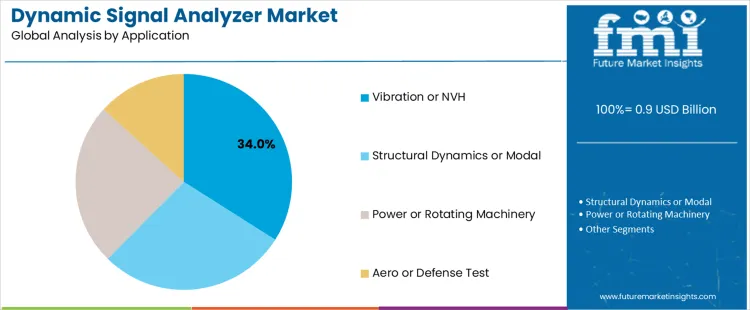
Vibration or NVH (Noise, Vibration, Harshness) applications account for 34% of the dynamic signal analyzer market share, driven by their critical role in various industries such as automotive, aerospace, and industrial machinery. NVH testing is essential for ensuring product quality, safety, and comfort, especially in the automotive sector where vibration and noise levels directly affect user experience. Dynamic signal analyzers are used to measure and analyze vibrations and acoustic signals to optimize product designs, reduce noise, and improve performance. As industries continue to focus on enhancing efficiency and product quality, the demand for signal analyzers for vibration and NVH testing remains strong, fueling market growth.
What Are the Key Dynamics for the Dynamic Signal Analyzer Market?
The dynamic signal analyzer market is driven by the growing need for precise vibration, acoustic, and dynamic analysis across industries like automotive, aerospace, manufacturing, and electronics. As products and systems become more complex, engineers and technicians rely on dynamic signal analyzers to diagnose noise, vibration, harshness (NVH), and structural behavior to enhance performance and reliability. Increased adoption of predictive maintenance and condition monitoring strategies also fuels demand for analyzers that can capture, process, and interpret real time dynamic data.
What Are the Key Drivers for the Dynamic Signal Analyzer Market?
A key driver is the rising adoption of advanced testing and diagnostic technologies across sectors such as automotive and aerospace, where vibration and acoustic analysis are critical for product performance and safety. The shift toward predictive and condition based maintenance practices encourages the integration of dynamic signal analysis into routine equipment evaluation to prevent failures and optimize uptime. Rapid technological advancements in data acquisition, sensor technologies, and software analytics enhance the capabilities of modern analyzers, making them more efficient and attractive to end users looking to gain deep insights from complex signal data.
What Are the Key Restraints Impacting the Dynamic Signal Analyzer Market?
One significant restraint is the high cost of advanced dynamic signal analyzer systems, which can be prohibitive for small and mid sized organizations. The complexity of interpreting dynamic data and the need for trained specialists to operate sophisticated analyzers also limit broader adoption. Compatibility issues between analyzers and existing data acquisition systems or sensors can complicate implementation. Variability in industry standards and testing requirements across different regions and applications may lead to additional customization costs, reducing the appeal of standardized analyzer solutions for a diverse customer base.
What is the Growth Outlook for the Dynamic Signal Analyzer Market by Country?
| Country | CAGR (%) |
|---|---|
| USA | 6.4% |
| South Korea | 6.2% |
| Germany | 6.1% |
| China | 7.6% |
| Brazil | 7.1% |
The dynamic signal analyzer market is experiencing steady growth, with China leading at a 7.6% CAGR, driven by the country’s growing demand for advanced testing solutions in telecommunications and electronics. Brazil follows with a 7.1% growth rate, supported by increasing investments in industrial automation and infrastructure development. The USA’s market grows at 6.4%, fueled by its ongoing advancements in aerospace, defense, and communications technologies. South Korea’s market grows at 6.2%, driven by its leadership in electronics and automotive sectors, where dynamic signal analyzers are crucial for precise testing and monitoring. Germany’s market grows at 6.1%, backed by its strong industrial base and focus on innovation in manufacturing and telecommunications.
What is Driving the Growth of the Dynamic Signal Analyzer Market in China?
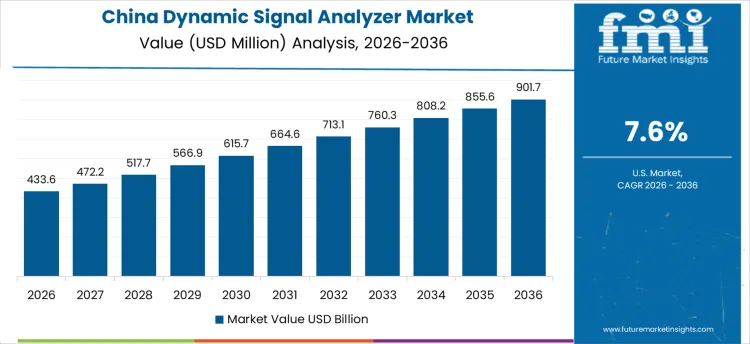
China’s dynamic signal analyzer market is growing at 7.6%, driven by the country’s rapid technological advancements and the expanding demand for testing solutions across industries like telecommunications, electronics, and aerospace. China’s strong focus on expanding its 5G networks and developing advanced wireless communication systems is driving the need for precise testing equipment, including dynamic signal analyzers. The rise of smart cities, IoT applications, and automotive technologies in China contributes to the growing demand for accurate signal testing solutions. The country’s ongoing investments in infrastructure and the expansion of the electronics and semiconductor industries further increase the need for dynamic signal analyzers to ensure the reliability and performance of complex systems. These factors position China as a key player in the global growth of the dynamic signal analyzer market.
What is Contributing to the Growth of the Dynamic Signal Analyzer Market in Brazil?
Brazil’s dynamic signal analyzer market is growing at 7.1%, supported by expanding infrastructure and industrial automation efforts. The country’s increasing investment in telecommunications, manufacturing, and automotive sectors drives the demand for precise testing and analysis solutions. With the rise of connected systems and IoT technologies, Brazil’s industries require advanced testing equipment to ensure the optimal performance of communication networks and electronic systems. The government’s focus on improving digital infrastructure and promoting technological innovation in sectors like energy and automotive further contributes to market growth. As Brazil modernizes its industries and strengthens its communication networks, the need for dynamic signal analyzers grows, driving the market forward. The combination of industrial growth and infrastructure investment continues to fuel the demand for advanced testing equipment across the country.
How is the Dynamic Signal Analyzer Market Expanding in the USA?
The USA’s dynamic signal analyzer market is growing at 6.4%, driven by advancements in aerospace, defense, telecommunications, and electronics sectors. The country’s continued investment in 5G technology and the increasing demand for high-performance communication systems are fueling the need for accurate testing and analysis equipment. Dynamic signal analyzers play a crucial role in validating the performance of these systems, ensuring their reliability and efficiency. USA’s leadership in aerospace and defense technologies requires robust testing solutions for complex systems, further driving the market. The growing adoption of IoT, automotive technologies, and industrial automation in the USA also contributes to the demand for dynamic signal analyzers. With the country’s focus on technological innovation, the market for dynamic signal analyzers is expected to continue its steady growth.
Why is the Dynamic Signal Analyzer Market Growing in South Korea?
South Korea’s dynamic signal analyzer market is growing at 6.2%, driven by its leadership in electronics, telecommunications, and automotive sectors. As South Korea continues to develop its 5G networks and advances in IoT technologies, the demand for dynamic signal analyzers is increasing to ensure the performance and reliability of these systems. The country’s strong automotive and electronics industries, particularly in areas like semiconductor testing and smart devices, require precise signal testing solutions. The rise of smart city initiatives and the push for digital transformation in various industries also contributes to the market growth. South Korea’s focus on technological innovation and high-quality standards across its industries ensures a steady demand for dynamic signal analyzers, positioning it as a key player in the market’s expansion in Asia.
What is Driving the Growth of the Dynamic Signal Analyzer Market in Germany?
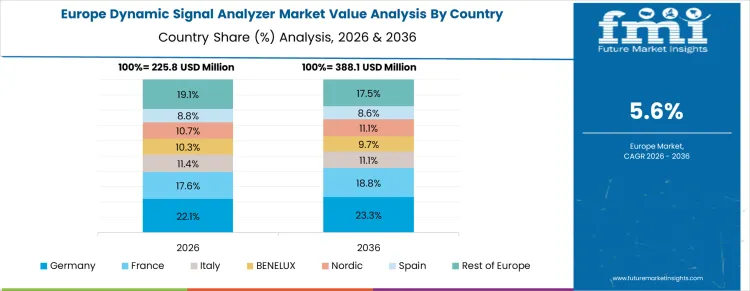
Germany’s dynamic signal analyzer market is growing at 6.1%, driven by the country’s strong industrial base and focus on innovation in sectors like manufacturing, telecommunications, and automotive. As Germany leads the way in industrial automation and the integration of smart manufacturing technologies, the demand for dynamic signal analyzers continues to rise. These analyzers are critical for monitoring the performance of complex electrical and communication systems, ensuring their accuracy and efficiency. The country’s ongoing efforts to enhance its digital infrastructure, particularly with 5G network rollouts and the adoption of IoT technologies, further contribute to the growth of the market. Germany’s emphasis on high-quality testing solutions and its strong presence in automotive engineering play a crucial role in driving the demand for dynamic signal analyzers in the European market.
What Are the Competition Strategies in the Dynamic Signal Analyzer Market?
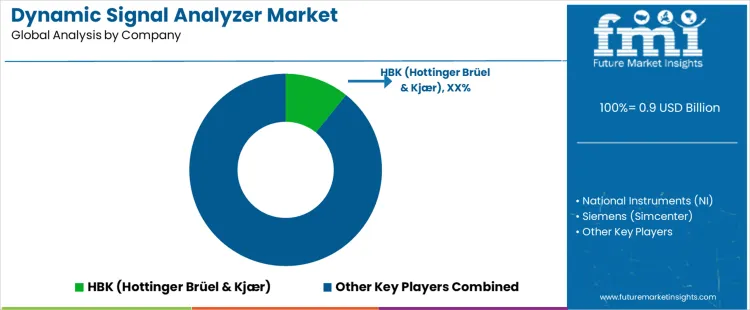
Competition in the dynamic signal analyzer market centers on breadth of measurement capabilities, real time data fidelity, modularity, and ease of integration into complex test systems. HBK (Hottinger Brüel & Kjær) positions itself as a leader in precision vibration and acoustic analysis with analyzer platforms ranging from portable units to advanced multichannel DAQ systems that accommodate diverse testing environments. National Instruments (NI) differentiates through modular, software defined test systems that leverage flexible hardware and LabVIEW driven analysis tools, appealing to R&D and industrial test engineers. Siemens (Simcenter) blends dynamic signal analysis with digital engineering simulation environments, helping customers connect test measurements to virtual models for holistic system validation.
Rohde & Schwarz and Keysight compete with robust instrument portfolios that span lab and field applications; their dynamic analyzers pair high sampling rates with broad frequency range analysis, supporting both frequency and time domain diagnostics. DEWESoft emphasizes intuitive interfaces and high channel count systems that simplify complex measurement tasks, while m+p international focuses on real time noise and vibration acquisition with extensive standard measurement functions. Crystal Instruments offers scalable hardware from handheld to high channel systems with sophisticated spectral tools. Kistler brings expertise in piezoelectric sensor integration for high precision dynamic tests. imc Test & Measurement rounds out the field with real time data acquisition platforms designed for automotive, aerospace, and industrial environments where synchronized multichannel analysis is critical.
Key Players in Dynamic Signal Analyzer Market
- HBK (Hottinger Brüel & Kjær)
- National Instruments (NI)
- Siemens (Simcenter)
- Rohde & Schwarz
- Keysight
- DEWESoft
- m+p international
- Crystal Instruments
- Kistler
- imc Test & Measurement
Scope of Report
| Items | Values |
|---|---|
| Quantitative Unit (2026) | USD billion |
| Frequency Range | Audio or Low Frequency (<20 kHz), Ultrasonic (20-200 kHz), RF/Microwave (>=200 kHz), Broadband Multi-Range |
| Channel Count | 2-4 Channels, 8-16 Channels, 32+ Channels, Modular or Scalable |
| Application | Vibration or NVH, Structural Dynamics or Modal, Power or Rotating Machinery, Aero or Defense Test |
| Regions Covered | Asia Pacific, Europe, North America, Latin America, Middle East & Africa |
| Countries Covered | USA, China, Japan, South Korea, India, Australia & New Zealand, ASEAN, Germany, UK, France, Italy, Spain, Nordic, BENELUX, Brazil, Chile, Mexico, Saudi Arabia, Other GCC Countries, Turkey, South Africa, Other African Union |
| Key Companies Profiled | HBK (Hottinger Brüel & Kjær), National Instruments (NI), Siemens (Simcenter), Rohde & Schwarz, Keysight, DEWESoft, m+p international, Crystal Instruments, Kistler, imc Test & Measurement |
| Additional Attributes | Dollar sales by frequency range, channel count, application, and region; regional CAGR and growth outlook. |
Dynamic Signal Analyzer Market by Segments
By Frequency Range:
- Audio or Low Frequency (<20 kHz)
- Ultrasonic (20-200 kHz)
- RF/Microwave (>=200 kHz)
- Broadband Multi-Range
By Channel Count:
- 2-4 Channels
- 8-16 Channels
- 32+ Channels
- Modular or Scalable
By Application:
- Vibration or NVH
- Structural Dynamics or Modal
- Power or Rotating Machinery
- Aero or Defense Test
By Region:
- Asia Pacific
- China
- Japan
- South Korea
- India
- Australia & New Zealand
- ASEAN
- Rest of Asia Pacific
- Europe
- Germany
- United Kingdom
- France
- Italy
- Spain
- Nordic
- BENELUX
- Rest of Europe
- North America
- United States
- Canada
- Mexico
- Latin America
- Brazil
- Chile
- Rest of Latin America
- Middle East & Africa
- Kingdom of Saudi Arabia
- Other GCC Countries
- Turkey
- South Africa
- Other African Union
- Rest of Middle East & Africa
Frequently Asked Questions
How big is the dynamic signal analyzer market in 2026?
The global dynamic signal analyzer market is estimated to be valued at USD 0.9 billion in 2026.
What will be the size of dynamic signal analyzer market in 2036?
The market size for the dynamic signal analyzer market is projected to reach USD 1.7 billion by 2036.
How much will be the dynamic signal analyzer market growth between 2026 and 2036?
The dynamic signal analyzer market is expected to grow at a 6.6% CAGR between 2026 and 2036.
What are the key product types in the dynamic signal analyzer market?
The key product types in dynamic signal analyzer market are audio or low frequency (<20 khz), ultrasonic (20–200 khz), rf/microwave (>=200 khz) and broadband multi-range.
Which channel count segment to contribute significant share in the dynamic signal analyzer market in 2026?
In terms of channel count, 2–4 channels segment to command 34.0% share in the dynamic signal analyzer market in 2026.
Preview the report firsthand - request a free sample
Get SampleGet the brochure for pricing and purchase details.
Get PDFTable of Content
- Executive Summary
- Global Market Outlook
- Demand-side Trends
- Supply-side Trends
- Technology Roadmap Analysis
- Analysis and Recommendations
- Market Overview
- Market Coverage / Taxonomy
- Market Definition / Scope / Limitations
- Market Background
- Market Dynamics
- Drivers
- Restraints
- Opportunity
- Trends
- Scenario Forecast
- Demand in Optimistic Scenario
- Demand in Likely Scenario
- Demand in Conservative Scenario
- Opportunity Map Analysis
- Product Life Cycle Analysis
- Supply Chain Analysis
- Investment Feasibility Matrix
- Value Chain Analysis
- PESTLE and Porter’s Analysis
- Regulatory Landscape
- Regional Parent Market Outlook
- Production and Consumption Statistics
- Import and Export Statistics
- Market Dynamics
- Global Market Analysis 2021 to 2025 and Forecast, 2026 to 2036
- Historical Market Size Value (USD Million) Analysis, 2021 to 2025
- Current and Future Market Size Value (USD Million) Projections, 2026 to 2036
- Y-o-Y Growth Trend Analysis
- Absolute $ Opportunity Analysis
- Global Market Pricing Analysis 2021 to 2025 and Forecast 2026 to 2036
- Global Market Analysis 2021 to 2025 and Forecast 2026 to 2036, By Frequency Range
- Introduction / Key Findings
- Historical Market Size Value (USD Million) Analysis By Frequency Range , 2021 to 2025
- Current and Future Market Size Value (USD Million) Analysis and Forecast By Frequency Range , 2026 to 2036
- Audio or Low Frequency (<20 kHz)
- Ultrasonic (20–200 kHz)
- RF/Microwave (>=200 kHz)
- Broadband Multi-Range
- Audio or Low Frequency (<20 kHz)
- Y-o-Y Growth Trend Analysis By Frequency Range , 2021 to 2025
- Absolute $ Opportunity Analysis By Frequency Range , 2026 to 2036
- Global Market Analysis 2021 to 2025 and Forecast 2026 to 2036, By Channel Count
- Introduction / Key Findings
- Historical Market Size Value (USD Million) Analysis By Channel Count, 2021 to 2025
- Current and Future Market Size Value (USD Million) Analysis and Forecast By Channel Count, 2026 to 2036
- 2–4 Channels
- 8–16 Channels
- 32+ Channels
- Modular or Scalable
- 2–4 Channels
- Y-o-Y Growth Trend Analysis By Channel Count, 2021 to 2025
- Absolute $ Opportunity Analysis By Channel Count, 2026 to 2036
- Global Market Analysis 2021 to 2025 and Forecast 2026 to 2036, By Application
- Introduction / Key Findings
- Historical Market Size Value (USD Million) Analysis By Application, 2021 to 2025
- Current and Future Market Size Value (USD Million) Analysis and Forecast By Application, 2026 to 2036
- Vibration or NVH
- Structural Dynamics or Modal
- Power or Rotating Machinery
- Aero or Defense Test
- Vibration or NVH
- Y-o-Y Growth Trend Analysis By Application, 2021 to 2025
- Absolute $ Opportunity Analysis By Application, 2026 to 2036
- Global Market Analysis 2021 to 2025 and Forecast 2026 to 2036, By Region
- Introduction
- Historical Market Size Value (USD Million) Analysis By Region, 2021 to 2025
- Current Market Size Value (USD Million) Analysis and Forecast By Region, 2026 to 2036
- North America
- Latin America
- Western Europe
- Eastern Europe
- East Asia
- South Asia and Pacific
- Middle East & Africa
- Market Attractiveness Analysis By Region
- North America Market Analysis 2021 to 2025 and Forecast 2026 to 2036, By Country
- Historical Market Size Value (USD Million) Trend Analysis By Market Taxonomy, 2021 to 2025
- Market Size Value (USD Million) Forecast By Market Taxonomy, 2026 to 2036
- By Country
- USA
- Canada
- Mexico
- By Frequency Range
- By Channel Count
- By Application
- By Country
- Market Attractiveness Analysis
- By Country
- By Frequency Range
- By Channel Count
- By Application
- Key Takeaways
- Latin America Market Analysis 2021 to 2025 and Forecast 2026 to 2036, By Country
- Historical Market Size Value (USD Million) Trend Analysis By Market Taxonomy, 2021 to 2025
- Market Size Value (USD Million) Forecast By Market Taxonomy, 2026 to 2036
- By Country
- Brazil
- Chile
- Rest of Latin America
- By Frequency Range
- By Channel Count
- By Application
- By Country
- Market Attractiveness Analysis
- By Country
- By Frequency Range
- By Channel Count
- By Application
- Key Takeaways
- Western Europe Market Analysis 2021 to 2025 and Forecast 2026 to 2036, By Country
- Historical Market Size Value (USD Million) Trend Analysis By Market Taxonomy, 2021 to 2025
- Market Size Value (USD Million) Forecast By Market Taxonomy, 2026 to 2036
- By Country
- Germany
- UK
- Italy
- Spain
- France
- Nordic
- BENELUX
- Rest of Western Europe
- By Frequency Range
- By Channel Count
- By Application
- By Country
- Market Attractiveness Analysis
- By Country
- By Frequency Range
- By Channel Count
- By Application
- Key Takeaways
- Eastern Europe Market Analysis 2021 to 2025 and Forecast 2026 to 2036, By Country
- Historical Market Size Value (USD Million) Trend Analysis By Market Taxonomy, 2021 to 2025
- Market Size Value (USD Million) Forecast By Market Taxonomy, 2026 to 2036
- By Country
- Russia
- Poland
- Hungary
- Balkan & Baltic
- Rest of Eastern Europe
- By Frequency Range
- By Channel Count
- By Application
- By Country
- Market Attractiveness Analysis
- By Country
- By Frequency Range
- By Channel Count
- By Application
- Key Takeaways
- East Asia Market Analysis 2021 to 2025 and Forecast 2026 to 2036, By Country
- Historical Market Size Value (USD Million) Trend Analysis By Market Taxonomy, 2021 to 2025
- Market Size Value (USD Million) Forecast By Market Taxonomy, 2026 to 2036
- By Country
- China
- Japan
- South Korea
- By Frequency Range
- By Channel Count
- By Application
- By Country
- Market Attractiveness Analysis
- By Country
- By Frequency Range
- By Channel Count
- By Application
- Key Takeaways
- South Asia and Pacific Market Analysis 2021 to 2025 and Forecast 2026 to 2036, By Country
- Historical Market Size Value (USD Million) Trend Analysis By Market Taxonomy, 2021 to 2025
- Market Size Value (USD Million) Forecast By Market Taxonomy, 2026 to 2036
- By Country
- India
- ASEAN
- Australia & New Zealand
- Rest of South Asia and Pacific
- By Frequency Range
- By Channel Count
- By Application
- By Country
- Market Attractiveness Analysis
- By Country
- By Frequency Range
- By Channel Count
- By Application
- Key Takeaways
- Middle East & Africa Market Analysis 2021 to 2025 and Forecast 2026 to 2036, By Country
- Historical Market Size Value (USD Million) Trend Analysis By Market Taxonomy, 2021 to 2025
- Market Size Value (USD Million) Forecast By Market Taxonomy, 2026 to 2036
- By Country
- Kingdom of Saudi Arabia
- Other GCC Countries
- Turkiye
- South Africa
- Other African Union
- Rest of Middle East & Africa
- By Frequency Range
- By Channel Count
- By Application
- By Country
- Market Attractiveness Analysis
- By Country
- By Frequency Range
- By Channel Count
- By Application
- Key Takeaways
- Key Countries Market Analysis
- USA
- Pricing Analysis
- Market Share Analysis, 2025
- By Frequency Range
- By Channel Count
- By Application
- Canada
- Pricing Analysis
- Market Share Analysis, 2025
- By Frequency Range
- By Channel Count
- By Application
- Mexico
- Pricing Analysis
- Market Share Analysis, 2025
- By Frequency Range
- By Channel Count
- By Application
- Brazil
- Pricing Analysis
- Market Share Analysis, 2025
- By Frequency Range
- By Channel Count
- By Application
- Chile
- Pricing Analysis
- Market Share Analysis, 2025
- By Frequency Range
- By Channel Count
- By Application
- Germany
- Pricing Analysis
- Market Share Analysis, 2025
- By Frequency Range
- By Channel Count
- By Application
- UK
- Pricing Analysis
- Market Share Analysis, 2025
- By Frequency Range
- By Channel Count
- By Application
- Italy
- Pricing Analysis
- Market Share Analysis, 2025
- By Frequency Range
- By Channel Count
- By Application
- Spain
- Pricing Analysis
- Market Share Analysis, 2025
- By Frequency Range
- By Channel Count
- By Application
- France
- Pricing Analysis
- Market Share Analysis, 2025
- By Frequency Range
- By Channel Count
- By Application
- India
- Pricing Analysis
- Market Share Analysis, 2025
- By Frequency Range
- By Channel Count
- By Application
- ASEAN
- Pricing Analysis
- Market Share Analysis, 2025
- By Frequency Range
- By Channel Count
- By Application
- Australia & New Zealand
- Pricing Analysis
- Market Share Analysis, 2025
- By Frequency Range
- By Channel Count
- By Application
- China
- Pricing Analysis
- Market Share Analysis, 2025
- By Frequency Range
- By Channel Count
- By Application
- Japan
- Pricing Analysis
- Market Share Analysis, 2025
- By Frequency Range
- By Channel Count
- By Application
- South Korea
- Pricing Analysis
- Market Share Analysis, 2025
- By Frequency Range
- By Channel Count
- By Application
- Russia
- Pricing Analysis
- Market Share Analysis, 2025
- By Frequency Range
- By Channel Count
- By Application
- Poland
- Pricing Analysis
- Market Share Analysis, 2025
- By Frequency Range
- By Channel Count
- By Application
- Hungary
- Pricing Analysis
- Market Share Analysis, 2025
- By Frequency Range
- By Channel Count
- By Application
- Kingdom of Saudi Arabia
- Pricing Analysis
- Market Share Analysis, 2025
- By Frequency Range
- By Channel Count
- By Application
- Turkiye
- Pricing Analysis
- Market Share Analysis, 2025
- By Frequency Range
- By Channel Count
- By Application
- South Africa
- Pricing Analysis
- Market Share Analysis, 2025
- By Frequency Range
- By Channel Count
- By Application
- USA
- Market Structure Analysis
- Competition Dashboard
- Competition Benchmarking
- Market Share Analysis of Top Players
- By Regional
- By Frequency Range
- By Channel Count
- By Application
- Competition Analysis
- Competition Deep Dive
- HBK (Hottinger Brüel & Kjær)
- Overview
- Product Portfolio
- Profitability by Market Segments (Product/Age /Sales Channel/Region)
- Sales Footprint
- Strategy Overview
- Marketing Strategy
- Product Strategy
- Channel Strategy
- National Instruments (NI)
- Siemens (Simcenter)
- Rohde & Schwarz
- Keysight
- DEWESoft
- m+p international
- Crystal Instruments
- Kistler
- imc Test & Measurement
- HBK (Hottinger Brüel & Kjær)
- Competition Deep Dive
- Assumptions & Acronyms Used
- Research Methodology


