

- Industry Size (2026)
- USD 540 Mn
- Forecast (2036)
- USD 1740 Mn
- CAGR (2026 to 2036)
- 12.40%
Dynamic Zone-Skipping and Injection Logistics Market Forecast and Outlook 2026 to 2036
The market for dynamic zone-skipping and injection logistics is expected to grow from USD 540 million in 2026 to USD 1,740 million by 2036, reflecting a compound annual growth rate (CAGR) of 12.4%. Dynamic zone-skipping and injection logistics refer to advanced strategies where goods bypass certain points in the supply chain (zones) and are injected into a more optimal location for quicker, more cost-effective delivery. This method is particularly valuable in the e-commerce industry, where companies are focused on reducing delivery times and optimizing transportation costs. The market growth is driven by the increasing demand for faster deliveries, improved efficiency in last-mile delivery, and the rise of consumer expectations for quick, reliable shipping.
The adoption of zone-skipping and injection strategies is supported by the ongoing development of logistics technologies and data analytics, which allow for more effective route planning and operational decision-making. As logistics companies and e-commerce businesses look for ways to optimize their networks and reduce costs, the demand for these advanced logistics solutions is expected to grow steadily over the next decade. The market will also benefit from the increasing demand for environmentally sustainable logistics solutions, as zone-skipping can help reduce the carbon footprint associated with traditional delivery methods.
Quick Stats for Dynamic Zone-Skipping and Injection Logistics Market
- Dynamic Zone-Skipping and Injection Logistics Market Value (2026): USD 540 million
- Dynamic Zone-Skipping and Injection Logistics Market Forecast Value (2036): USD 1,740 million
- Dynamic Zone-Skipping and Injection Logistics Market Global Forecast CAGR (2026-2036): 12.40%
- Top End Use by Share in Dynamic Zone-Skipping and Injection Logistics Market: E-commerce & Retail (48%)
- Key Growth Regions in Dynamic Zone-Skipping and Injection Logistics Market: India, China, USA, Brazil, Germany
- Top Players in Dynamic Zone-Skipping and Injection Logistics Market: Blue Yonder, project44, Flexport, Oracle, Manhattan Associates
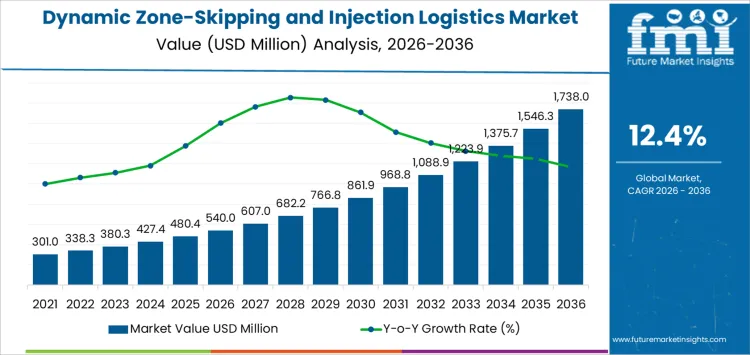
What is the Growth Forecast for the Dynamic Zone-Skipping and Injection Logistics Market through 2036?
The peak-to-trough analysis for the dynamic zone-skipping and injection logistics market shows steady, consistent growth with noticeable acceleration in the middle years of the forecast period. Starting at USD 540 million in 2026, the market grows to USD 607.8 million in 2027 and USD 685.1 million in 2028. These early years represent gradual adoption as businesses begin to explore zone-skipping strategies to optimize logistics operations.
From 2028 to 2030, the market experiences a sharper increase, reaching USD 773.5 million in 2029 and USD 874.1 million in 2030. This acceleration is driven by the increasing use of advanced technologies in logistics, improved demand for faster e-commerce delivery, and growing consumer expectations for optimized shipping solutions. From 2030 to 2035, the market continues to grow rapidly, reaching USD 1,116.60 million in 2031, USD 1,261.30 million in 2032, and USD 1,424 million in 2033.
By 2035, the market is projected to reach USD 1,606.70 million, with the final value of USD 1,740 million expected in 2036. The peak-to-trough analysis reveals that while the market experiences steady growth, the pace of expansion significantly accelerates in the middle of the forecast period, driven by the wider adoption of zone-skipping and injection logistics strategies across industries such as e-commerce, retail, and supply chain management.
Dynamic Zone-Skipping and Injection Logistics Market Key Takeaways
| Metric | Value |
|---|---|
| Industry Sales Value (2026) | USD 540 million |
| Industry Forecast Value (2036) | USD 1,740 million |
| Industry Forecast CAGR (2026-2036) | 12.4% |
What Is Driving the Demand for Dynamic Zone Skipping and Injection Logistics Globally?
The global demand for dynamic zone skipping and injection logistics services is driven by rising e commerce volumes and the need to reduce delivery costs and transit times. Zone skipping bypasses multiple postal or carrier zones by grouping parcels and entering them deeper into a carrier’s network closer to the delivery destination. Dynamic models use real time data to determine optimal skip points and injection hubs based on demand, load, and cost, enabling more efficient routing than traditional parcel flows. Retailers, third party logistics providers, and carriers are adopting these services to lower per package shipping costs, reduce mileage and fuel usage, and improve delivery speed and predictability. High variability in package volumes, fluctuating demand patterns, and pressure to meet narrow delivery windows have made flexible, data driven zone skipping more attractive than static routing approaches. This trend is reinforced in regions with dense population centres and expensive last mile delivery costs, including North America, Europe, and parts of Asia Pacific, where logistics providers seek ways to balance cost and service quality.
Future demand for dynamic zone skipping and injection logistics is expected to grow as retail networks and parcel flows continue to expand. Continued investment in digital platforms, predictive analytics, and machine learning will improve the ability to identify optimal injection points in real time, increasing the efficiency and responsiveness of logistics networks. As same day and next day delivery expectations rise, zone skipping can help reduce transit distances and improve service levels while containing costs. Integration with transportation management systems, visibility tools, and carrier networks will be key to adoption at scale. Market expansion will also depend on the ability of service providers to demonstrate measurable benefits such as cost reduction, improved delivery performance, and lower carbon footprint, encouraging broader uptake across carriers, retailers, and logistics partners globally.
What Are the Key Segments in Dynamic Zone-Skipping and Injection Logistics Market?
Overview The dynamic zone-skipping and injection logistics market is segmented by service type and end use. Zone-skipping services lead the service type segment with 44% of the market share, offering cost-effective, fast delivery solutions by bypassing certain transportation zones. E-commerce & retail dominate the end-use segment with 48%, driven by the need for efficient, timely deliveries in the fast-paced e-commerce sector. The market is growing as businesses increasingly adopt dynamic logistics solutions to optimize delivery speed, cost efficiency, and overall supply chain performance.
Which Service Type Drives Dynamic Zone-Skipping and Injection Logistics Market Demand Globally?
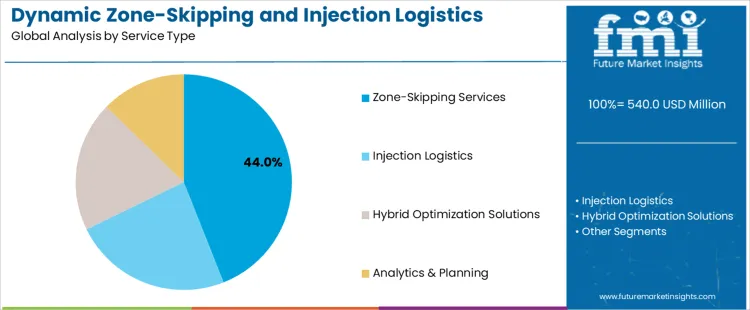
Zone-skipping services account for 44% of the market share. This logistics strategy involves bypassing intermediate zones in the shipping process, allowing for faster and more cost-effective delivery, particularly for long-distance shipments. By skipping certain zones, companies reduce transportation times and costs, making zone-skipping an attractive option for businesses seeking to improve supply chain efficiency. It is particularly beneficial in e-commerce and retail logistics, where speed and cost-effectiveness are crucial to meet customer expectations. Zone-skipping enables businesses to reduce reliance on traditional, slower shipping routes and optimize their operations for quicker deliveries, leading to improved customer satisfaction and reduced operational costs. The demand for zone-skipping services is growing as more companies embrace the need for dynamic and flexible logistics solutions to keep up with rising customer expectations for rapid delivery.
Which End-Use Industry Drives Dynamic Zone-Skipping and Injection Logistics Market Demand Globally?
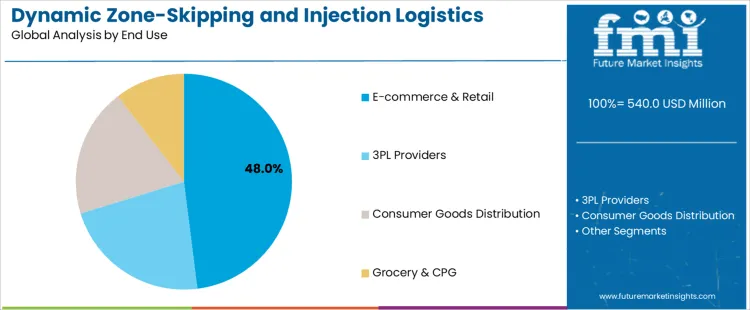
E-commerce & retail lead the end-use segment with 48% of the market share. The e-commerce and retail sectors require highly efficient and fast delivery systems to meet the increasing demand for quick shipping. Dynamic zone-skipping and injection logistics provide these sectors with a way to bypass slower transportation zones, ensuring faster delivery times, which is essential for customer satisfaction. E-commerce companies, in particular, are increasingly looking for innovative logistics solutions that can reduce delivery times and cut costs. By leveraging zone-skipping services, e-commerce retailers can improve their operational efficiency and offer more competitive shipping options. Other industries, such as 3PL providers, consumer goods distribution, and grocery & CPG, also contribute to the market but remain smaller compared to the e-commerce sector, which remains the dominant driver due to the high volume of goods being shipped and the constant push for quicker and cheaper delivery solutions.
What are the Key Dynamics of the Global Dynamic Zone Skipping and Injection Logistics Market?
The global dynamic zone skipping and injection logistics market is expanding as shippers and carriers seek ways to reduce transit times and distribution cost in parcel and freight networks. Zone skipping involves bypassing traditional sorting zones by injecting aggregated shipments closer to their destination, while dynamic planning aligns shipments with optimal injection points. Growth is supported by rising e commerce volumes, demand for fast delivery windows and need for flexible network operations that balance cost and speed. Logistics providers and third party networks are investing in systems and partnerships that enable efficient skip zone routing across regions worldwide.
What are the Key Drivers for the Global Dynamic Zone Skipping and Injection Logistics Market?
A key driver is the continued growth of e commerce and rapid fulfilment expectations that increase demand for logistics strategies that shorten delivery cycles and reduce last mile cost. Shippers adopt dynamic zone skipping to consolidate freight and inject it into carrier networks at points closer to delivery destinations, lowering overall shipping expense and improving service levels. Technological advancements in routing, load optimisation and real time tracking enhance decision support for injection logistics. Collaboration between retailers, logistics service providers and carriers helps develop shared cross dock and transfer facilities that strengthen zone skipping networks and support broader service coverage.
What are the Restraints for the Global Dynamic Zone Skipping and Injection Logistics Market?
One restraint is the complexity of coordinating shipments across multiple carriers and hubs, which requires alignment of systems and data flows for visibility and accuracy. Shippers and carriers may face challenges integrating proprietary routing engines, tracking platforms and partner networks to support dynamic injection strategies. Variable reliability of last mile partners and inconsistent service performance can affect the overall value of zone skipping plans. Investment in technology infrastructure, training and process change management can be significant, especially for smaller logistics providers. Regulatory differences in cross border transit and customs handling can add planning complexity that slows implementation in certain regions.
What is the Key Trends in the Global Dynamic Zone Skipping and Injection Logistics Market?
A key trend is increased use of advanced analytics and real time data to guide shipment consolidation, injection point selection and adaptive routing that responds to changing demand patterns and network conditions. Platforms that integrate telematics, warehouse status, delivery windows and cost factors support more precise injection decisions. Logistics networks are moving toward shared facilities that serve as flexible transfer points for cross dock consolidation and zone skipping activity. Growth of collaboration models where carriers and service providers share capacity and routing information is enabling broader coverage and efficiency. Sustainability considerations are influencing planning, with networks optimising routes to reduce fuel use and emissions while maintaining delivery targets.
What is the Country-Wise Outlook for Dynamic Zone-Skipping and Injection Logistics?
The dynamic zone-skipping and injection logistics market is witnessing strong growth due to the increasing demand for faster, more cost-efficient, and flexible logistics solutions. Countries such as India, China, and the USA are driving this market’s expansion, fueled by the rapid rise of e-commerce, globalization, and the increasing need for optimizing supply chains. Dynamic zone-skipping and injection logistics allow companies to skip certain regions in a delivery route to optimize transportation costs and reduce delivery times, making logistics operations more efficient. As businesses and logistics providers look for ways to streamline their networks, the demand for these advanced logistics models is expected to grow significantly.
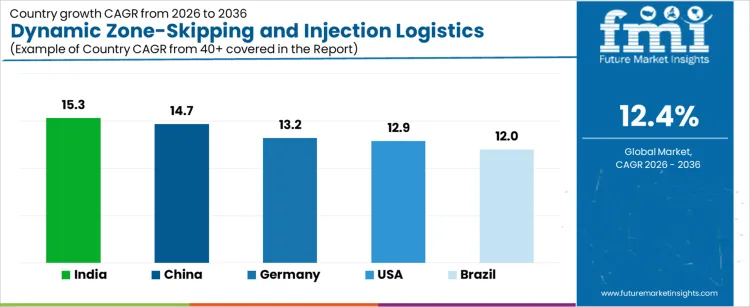
| Country | CAGR (2026–2036) |
|---|---|
| India | 15.3% |
| China | 14.7% |
| USA | 12.9% |
| Brazil | 12% |
| Germany | 13.2% |
What is Driving the Growth of Dynamic Zone-Skipping and Injection Logistics in India?
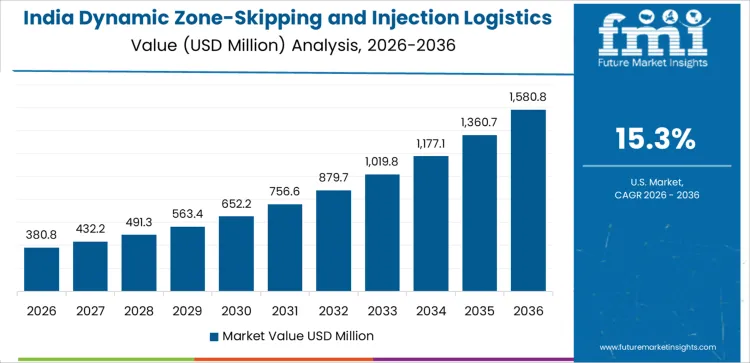
India’s Dynamic Zone-Skipping and Injection Logistics market is projected to grow at a CAGR of 15.3%. The growth of e-commerce, along with the expanding consumer base and demand for faster deliveries, is a significant driver for this market. As India’s logistics infrastructure modernizes and companies seek more efficient ways to optimize their supply chains, dynamic zone-skipping and injection logistics provide a valuable solution. These methods reduce transportation costs by bypassing specific regions and directly injecting goods into key delivery points, improving delivery speed and cost-effectiveness. The Indian government’s push for logistics sector reforms and improved infrastructure also supports the growth of these logistics models.
What is Contributing to the Growth of Dynamic Zone-Skipping and Injection Logistics in China?
China’s Dynamic Zone-Skipping and Injection Logistics market is expected to grow at a CAGR of 14.7%. As one of the largest e-commerce markets in the world, China is experiencing a rapid increase in demand for faster and more efficient delivery solutions. Dynamic zone-skipping and injection logistics provide significant advantages in terms of optimizing transportation routes, reducing costs, and improving delivery times. These logistics solutions are becoming essential as China continues to expand its e-commerce infrastructure and improve logistics efficiency. The Chinese government’s focus on developing smarter and more efficient logistics networks further contributes to the growth of these advanced logistics solutions.
What is Driving the Dynamic Zone-Skipping and Injection Logistics Market Growth in the USA?
The USA’s Dynamic Zone-Skipping and Injection Logistics market is projected to grow at a CAGR of 12.9%. The growing demand for faster deliveries and more cost-efficient logistics solutions, driven by the expansion of e-commerce, is one of the key factors fueling this market’s growth. Dynamic zone-skipping and injection logistics offer an effective way to bypass certain regions in a supply chain, allowing companies to streamline operations and reduce transportation costs. As consumers continue to demand faster shipping and businesses look for ways to optimize their logistics networks, the adoption of these advanced logistics models is expected to rise, contributing to continued market growth in the USA.
What is Influencing the Growth of Dynamic Zone-Skipping and Injection Logistics in Brazil?
Brazil’s Dynamic Zone-Skipping and Injection Logistics market is projected to grow at a CAGR of 12%. The growth of e-commerce and the increasing demand for more efficient delivery solutions are driving the adoption of dynamic zone-skipping and injection logistics in Brazil. These logistics models help businesses optimize their supply chain networks by reducing unnecessary regional stops and improving delivery efficiency. As Brazil’s logistics infrastructure improves and the need for faster and more cost-effective deliveries increases, the market for these innovative logistics models is expected to grow. The rising demand for sustainable and efficient logistics solutions further accelerates this trend in Brazil.
What is Contributing to the Growth of Dynamic Zone-Skipping and Injection Logistics in Germany?
Germany’s Dynamic Zone-Skipping and Injection Logistics market is expected to grow at a CAGR of 13.2%. Germany’s strong logistics infrastructure, combined with its position as a leading hub for e-commerce in Europe, is driving the adoption of advanced logistics models like dynamic zone-skipping and injection logistics. These solutions enable businesses to streamline their operations, reduce transportation costs, and meet the increasing demand for faster deliveries. With growing regulatory pressure to reduce emissions and improve supply chain efficiency, Germany’s logistics companies are increasingly turning to these advanced solutions to optimize their networks. The country’s focus on sustainability and efficiency further supports the market’s growth.
What is the Competitive Landscape for the Dynamic Zone Skipping and Injection Logistics Market?
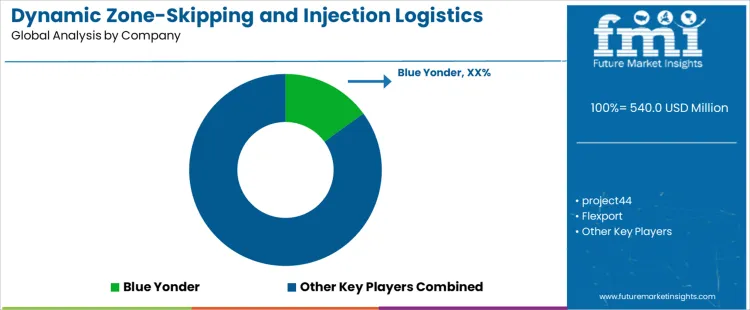
Global demand for dynamic zone skipping and injection logistics services is growing as shippers, carriers and logistics providers seek ways to speed delivery, lower network costs and improve parcel flow efficiency in e commerce and omnichannel fulfilment. Zone skipping lets parcels bypass intermediate sorting hubs and be transported directly into distant zones, reducing handling, transit time and cost. When paired with real time dynamic planning and injection strategies that place shipments into optimal carrier lanes, networks gain flexibility and responsiveness. Growth in direct to consumer orders, tighter delivery windows, rising parcel volumes and pressure on transportation budgets are key demand drivers across North America, Europe and Asia Pacific. Retailers and third party logistics partners increasingly prioritise solutions that blend predictive analytics with execution level control to respond to fluctuating demand and carrier capacity constraints.
On the supply side, a set of logistics technology and supply chain planning firms competes to lead this evolving segment. Blue Yonder is recognised as a leading player with strong optimisation and network planning capabilities that support zone skipping and dynamic injection strategies. Other competitors include project44, which focuses on real time visibility and data driven transport optimisation; Flexport, which provides integrated freight forwarding and logistics services with planning insights; Oracle, with its global trade and transportation suite; and Manhattan Associates, offering advanced supply chain and transportation management engines. Competition among these suppliers centres on the sophistication of optimisation algorithms, integration with carrier networks and order management systems, real time data access, ease of use and scalability across regions and modes. Providers that combine high performance analytics, seamless integration with enterprise systems and strong customer support are best positioned to capture growth as dynamic zone skipping and injection logistics become more central to agile, cost efficient fulfilment strategies.
Key Players of the Dynamic Zone-Skipping and Injection Logistics Market
- Blue Yonder
- project44
- Flexport
- Oracle
- Manhattan Associates
Scope of the Report
| Items | Values |
|---|---|
| Quantitative Units (2026) | USD Million |
| Service Type | Zone-Skipping Services, Injection Logistics, Hybrid Optimization Solutions, Analytics & Planning |
| End Use | E-commerce & Retail, 3PL Providers, Consumer Goods Distribution, Grocery & CPG |
| Companies | Blue Yonder, project44, Flexport, Oracle, Manhattan Associates |
| Regions Covered | North America, Latin America, Western Europe, Eastern Europe, South Asia and Pacific, East Asia, Middle East & Africa |
| Countries Covered | United States, Canada, Mexico, Brazil, Argentina, Germany, France, United Kingdom, Italy, Spain, Netherlands, China, India, Japan, South Korea, ANZ, GCC Countries, South Africa |
| Additional Attributes | Dollar by sales by service type, end-use, and region. Includes market trends in dynamic zone-skipping and injection logistics services, performance in e-commerce, 3PL, and consumer goods distribution, demand for hybrid and analytics-based optimization solutions, cost-effectiveness, sustainability practices, regulatory compliance, market share and competitive positioning of key companies, and the role of zone-skipping and injection logistics in improving last-mile delivery efficiency, reducing shipping costs, and enhancing operational flexibility. |
Key Segments in the Dynamic Zone-Skipping and Injection Logistics Market
Service Type
- Zone-Skipping Services
- Injection Logistics
- Hybrid Optimization Solutions
- Analytics & Planning
End Use
- E-commerce & Retail
- 3PL Providers
- Consumer Goods Distribution
- Grocery & CPG
Region
- Asia Pacific
- China
- India
- Japan
- South Korea
- ASEAN
- Rest of Asia Pacific
- Europe
- Germany
- United Kingdom
- France
- Italy
- Spain
- Nordic
- BENELUX
- Rest of Europe
- North America
- United States
- Canada
- Mexico
- Latin America
- Brazil
- Chile
- Rest of Latin America
- Middle East & Africa
- Kingdom of Saudi Arabia
- Other GCC Countries
- Turkey
- South Africa
- Other African Union
- Rest of Middle East & Africa
Frequently Asked Questions
How big is the dynamic zone-skipping and injection logistics market in 2026?
The global dynamic zone-skipping and injection logistics market is estimated to be valued at USD 540.0 million in 2026.
What will be the size of dynamic zone-skipping and injection logistics market in 2036?
The market size for the dynamic zone-skipping and injection logistics market is projected to reach USD 1,738.0 million by 2036.
How much will be the dynamic zone-skipping and injection logistics market growth between 2026 and 2036?
The dynamic zone-skipping and injection logistics market is expected to grow at a 12.4% CAGR between 2026 and 2036.
What are the key product types in the dynamic zone-skipping and injection logistics market?
The key product types in dynamic zone-skipping and injection logistics market are zone-skipping services, injection logistics, hybrid optimization solutions and analytics & planning.
Which end use segment to contribute significant share in the dynamic zone-skipping and injection logistics market in 2026?
In terms of end use, e-commerce & retail segment to command 48.0% share in the dynamic zone-skipping and injection logistics market in 2026.
Preview the report firsthand - request a free sample
Get SampleGet the brochure for pricing and purchase details.
Get PDFTable of Content
- Executive Summary
- Global Market Outlook
- Demand-side Trends
- Supply-side Trends
- Technology Roadmap Analysis
- Analysis and Recommendations
- Market Overview
- Market Coverage / Taxonomy
- Market Definition / Scope / Limitations
- Market Background
- Market Dynamics
- Drivers
- Restraints
- Opportunity
- Trends
- Scenario Forecast
- Demand in Optimistic Scenario
- Demand in Likely Scenario
- Demand in Conservative Scenario
- Opportunity Map Analysis
- Product Life Cycle Analysis
- Supply Chain Analysis
- Investment Feasibility Matrix
- Value Chain Analysis
- PESTLE and Porter’s Analysis
- Regulatory Landscape
- Regional Parent Market Outlook
- Production and Consumption Statistics
- Import and Export Statistics
- Market Dynamics
- Global Market Analysis 2021 to 2025 and Forecast, 2026 to 2036
- Historical Market Size Value (USD Million) Analysis, 2021 to 2025
- Current and Future Market Size Value (USD Million) Projections, 2026 to 2036
- Y-o-Y Growth Trend Analysis
- Absolute $ Opportunity Analysis
- Global Market Pricing Analysis 2021 to 2025 and Forecast 2026 to 2036
- Global Market Analysis 2021 to 2025 and Forecast 2026 to 2036, By Service Type
- Introduction / Key Findings
- Historical Market Size Value (USD Million) Analysis By Service Type , 2021 to 2025
- Current and Future Market Size Value (USD Million) Analysis and Forecast By Service Type , 2026 to 2036
- Zone-Skipping Services
- Injection Logistics
- Hybrid Optimization Solutions
- Analytics & Planning
- Y-o-Y Growth Trend Analysis By Service Type , 2021 to 2025
- Absolute $ Opportunity Analysis By Service Type , 2026 to 2036
- Global Market Analysis 2021 to 2025 and Forecast 2026 to 2036, By End Use
- Introduction / Key Findings
- Historical Market Size Value (USD Million) Analysis By End Use, 2021 to 2025
- Current and Future Market Size Value (USD Million) Analysis and Forecast By End Use, 2026 to 2036
- E-commerce & Retail
- 3PL Providers
- Consumer Goods Distribution
- Grocery & CPG
- Y-o-Y Growth Trend Analysis By End Use, 2021 to 2025
- Absolute $ Opportunity Analysis By End Use, 2026 to 2036
- Global Market Analysis 2021 to 2025 and Forecast 2026 to 2036, By Region
- Introduction
- Historical Market Size Value (USD Million) Analysis By Region, 2021 to 2025
- Current Market Size Value (USD Million) Analysis and Forecast By Region, 2026 to 2036
- North America
- Latin America
- Western Europe
- Eastern Europe
- East Asia
- South Asia and Pacific
- Middle East & Africa
- Market Attractiveness Analysis By Region
- North America Market Analysis 2021 to 2025 and Forecast 2026 to 2036, By Country
- Historical Market Size Value (USD Million) Trend Analysis By Market Taxonomy, 2021 to 2025
- Market Size Value (USD Million) Forecast By Market Taxonomy, 2026 to 2036
- By Country
- USA
- Canada
- Mexico
- By Service Type
- By End Use
- By Country
- Market Attractiveness Analysis
- By Country
- By Service Type
- By End Use
- Key Takeaways
- Latin America Market Analysis 2021 to 2025 and Forecast 2026 to 2036, By Country
- Historical Market Size Value (USD Million) Trend Analysis By Market Taxonomy, 2021 to 2025
- Market Size Value (USD Million) Forecast By Market Taxonomy, 2026 to 2036
- By Country
- Brazil
- Chile
- Rest of Latin America
- By Service Type
- By End Use
- By Country
- Market Attractiveness Analysis
- By Country
- By Service Type
- By End Use
- Key Takeaways
- Western Europe Market Analysis 2021 to 2025 and Forecast 2026 to 2036, By Country
- Historical Market Size Value (USD Million) Trend Analysis By Market Taxonomy, 2021 to 2025
- Market Size Value (USD Million) Forecast By Market Taxonomy, 2026 to 2036
- By Country
- Germany
- UK
- Italy
- Spain
- France
- Nordic
- BENELUX
- Rest of Western Europe
- By Service Type
- By End Use
- By Country
- Market Attractiveness Analysis
- By Country
- By Service Type
- By End Use
- Key Takeaways
- Eastern Europe Market Analysis 2021 to 2025 and Forecast 2026 to 2036, By Country
- Historical Market Size Value (USD Million) Trend Analysis By Market Taxonomy, 2021 to 2025
- Market Size Value (USD Million) Forecast By Market Taxonomy, 2026 to 2036
- By Country
- Russia
- Poland
- Hungary
- Balkan & Baltic
- Rest of Eastern Europe
- By Service Type
- By End Use
- By Country
- Market Attractiveness Analysis
- By Country
- By Service Type
- By End Use
- Key Takeaways
- East Asia Market Analysis 2021 to 2025 and Forecast 2026 to 2036, By Country
- Historical Market Size Value (USD Million) Trend Analysis By Market Taxonomy, 2021 to 2025
- Market Size Value (USD Million) Forecast By Market Taxonomy, 2026 to 2036
- By Country
- China
- Japan
- South Korea
- By Service Type
- By End Use
- By Country
- Market Attractiveness Analysis
- By Country
- By Service Type
- By End Use
- Key Takeaways
- South Asia and Pacific Market Analysis 2021 to 2025 and Forecast 2026 to 2036, By Country
- Historical Market Size Value (USD Million) Trend Analysis By Market Taxonomy, 2021 to 2025
- Market Size Value (USD Million) Forecast By Market Taxonomy, 2026 to 2036
- By Country
- India
- ASEAN
- Australia & New Zealand
- Rest of South Asia and Pacific
- By Service Type
- By End Use
- By Country
- Market Attractiveness Analysis
- By Country
- By Service Type
- By End Use
- Key Takeaways
- Middle East & Africa Market Analysis 2021 to 2025 and Forecast 2026 to 2036, By Country
- Historical Market Size Value (USD Million) Trend Analysis By Market Taxonomy, 2021 to 2025
- Market Size Value (USD Million) Forecast By Market Taxonomy, 2026 to 2036
- By Country
- Kingdom of Saudi Arabia
- Other GCC Countries
- Turkiye
- South Africa
- Other African Union
- Rest of Middle East & Africa
- By Service Type
- By End Use
- By Country
- Market Attractiveness Analysis
- By Country
- By Service Type
- By End Use
- Key Takeaways
- Key Countries Market Analysis
- USA
- Pricing Analysis
- Market Share Analysis, 2025
- By Service Type
- By End Use
- Canada
- Pricing Analysis
- Market Share Analysis, 2025
- By Service Type
- By End Use
- Mexico
- Pricing Analysis
- Market Share Analysis, 2025
- By Service Type
- By End Use
- Brazil
- Pricing Analysis
- Market Share Analysis, 2025
- By Service Type
- By End Use
- Chile
- Pricing Analysis
- Market Share Analysis, 2025
- By Service Type
- By End Use
- Germany
- Pricing Analysis
- Market Share Analysis, 2025
- By Service Type
- By End Use
- UK
- Pricing Analysis
- Market Share Analysis, 2025
- By Service Type
- By End Use
- Italy
- Pricing Analysis
- Market Share Analysis, 2025
- By Service Type
- By End Use
- Spain
- Pricing Analysis
- Market Share Analysis, 2025
- By Service Type
- By End Use
- France
- Pricing Analysis
- Market Share Analysis, 2025
- By Service Type
- By End Use
- India
- Pricing Analysis
- Market Share Analysis, 2025
- By Service Type
- By End Use
- ASEAN
- Pricing Analysis
- Market Share Analysis, 2025
- By Service Type
- By End Use
- Australia & New Zealand
- Pricing Analysis
- Market Share Analysis, 2025
- By Service Type
- By End Use
- China
- Pricing Analysis
- Market Share Analysis, 2025
- By Service Type
- By End Use
- Japan
- Pricing Analysis
- Market Share Analysis, 2025
- By Service Type
- By End Use
- South Korea
- Pricing Analysis
- Market Share Analysis, 2025
- By Service Type
- By End Use
- Russia
- Pricing Analysis
- Market Share Analysis, 2025
- By Service Type
- By End Use
- Poland
- Pricing Analysis
- Market Share Analysis, 2025
- By Service Type
- By End Use
- Hungary
- Pricing Analysis
- Market Share Analysis, 2025
- By Service Type
- By End Use
- Kingdom of Saudi Arabia
- Pricing Analysis
- Market Share Analysis, 2025
- By Service Type
- By End Use
- Turkiye
- Pricing Analysis
- Market Share Analysis, 2025
- By Service Type
- By End Use
- South Africa
- Pricing Analysis
- Market Share Analysis, 2025
- By Service Type
- By End Use
- USA
- Market Structure Analysis
- Competition Dashboard
- Competition Benchmarking
- Market Share Analysis of Top Players
- By Regional
- By Service Type
- By End Use
- Competition Analysis
- Competition Deep Dive
- Blue Yonder
- Overview
- Product Portfolio
- Profitability by Market Segments (Product/Age /Sales Channel/Region)
- Sales Footprint
- Strategy Overview
- Marketing Strategy
- Product Strategy
- Channel Strategy
- project44
- Flexport
- Oracle
- Manhattan Associates
- Blue Yonder
- Competition Deep Dive
- Assumptions & Acronyms Used
- Research Methodology


