

- Industry Size (2026)
- USD 680.0 Mn
- Forecast (2036)
- USD 1639.6 Mn
- CAGR (2026 to 2036)
- 9.2%
Injection Molding Systems for Processing Paper-Pearl and Fiber-Based Composites Market Forecast and Outlook 2026 to 2036
The injection molding systems for processing paper-pearl and fiber-based composites market is valued at USD 680.0 million in 2026 and is projected to reach USD 1,639.6 million by 2036, reflecting a CAGR of 9.2%. Performance across this period is governed by how effectively equipment platforms absorb material variability rather than by overall machinery shipment growth.
Paper-pearl and fiber-rich compounds introduce challenges around moisture control, fiber attrition, and inconsistent rheology, shifting value toward systems engineered for stable melt behavior and controlled shear profiles. Revenue concentration favors suppliers whose platforms reduce reject rates, tooling damage, and cycle instability when processing heterogeneous composite inputs. Price realization remains strongest where machine design directly lowers operating risk, since downstream cost exposure from inconsistent composite processing outweighs initial equipment price sensitivity.
Quick Stats for Injection Molding Systems for Processing Paper-Pearl and Fiber-Based Composites Market
- Injection Molding Systems for Processing Paper-Pearl and Fiber-Based Composites Market Value (2026): USD 680.0 million
- Injection Molding Systems for Processing Paper-Pearl and Fiber-Based Composites Market Forecast Value (2036): USD 1,639.6 million
- Injection Molding Systems for Processing Paper-Pearl and Fiber-Based Composites Market Forecast CAGR (2026 to 2036): 9.2%
- Leading System Configuration Type in Global Demand: Standard Injection Molding Systems
- Fastest-Growing Countries: China, India, Germany, USA, Japan
- Key Players in Global Demand: KraussMaffei, Engel, Arburg, Milacron, Sumitomo (SHI) Demag
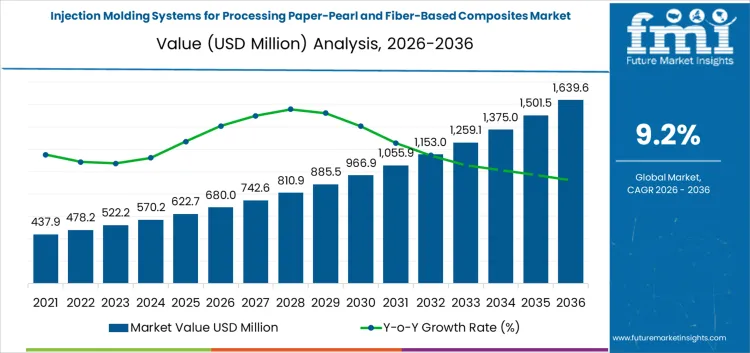
Expansion dynamics between 2026 and 2036 remain tied to material transition pacing within packaging, automotive interiors, and consumer goods manufacturing. Adoption accelerates where composite substitution aligns with regulatory mandates or brand-led sustainability redesigns already embedded in production roadmaps. Equipment relevance depends on compatibility with evolving fiber formulations, recyclate inclusion, and gradual bio-content increases rather than fixed material specifications. Incremental upgrades in screw metallurgy, venting architecture, and control software sustain replacement demand without triggering rapid capacity expansion. Growth quality improves where composite programs persist beyond pilot scale into repeat production, reinforcing equipment utilization over extended asset lifecycles. Market progression therefore reflects engineering resilience and process stability under material change, not short-term shifts in manufacturing volume or price-led equipment turnover.
Injection Molding Systems for Processing Paper-Pearl and Fiber-Based Composites Market Key Takeaways
| Metric | Value |
|---|---|
| Market Value (2026) | USD 680.0 million |
| Market Forecast Value (2036) | USD 1,639.6 million |
| Forecast CAGR (2026-2036) | 9.2% |
Why is the Demand for Injection Molding Systems for Processing Paper-Pearl and Fiber-Based Composites Market Growing Globally?
Demand for injection molding systems configured for processing paper-pearl and fiber-based composites is growing globally due to expanding interest in sustainable materials and lightweight structural components across automotive, consumer goods, electronics, and industrial manufacturing sectors. Paper-pearl and fiber-reinforced composite materials offer favorable strength-to-weight ratios, recyclability, and reduced carbon footprint compared with traditional thermoplastics and metal parts. Manufacturers adopt specialized injection molding systems that accommodate the rheological characteristics, fiber orientation requirements, and thermal sensitivities intrinsic to these composite materials, ensuring consistent part quality and cycle efficiency.
Regulatory frameworks in multiple regions promote circular economy principles, reduced emissions, and use of renewable feedstocks, which motivates procurement of molding platforms capable of processing environmentally preferable composites. Growth in electric vehicle production and demand for lightweight parts reinforces adoption of advanced systems that maintain dimensional accuracy and mechanical performance while integrating natural or recycled fiber components. Advances in machine control, screw and barrel design, and mold technologies improve dispersion, minimize fiber breakage, and enhance reproducibility under industrial throughput conditions. Global manufacturing expansion, coupled with sustainability priorities and material innovation, continues to drive uptake of injection molding systems that support efficient processing of paper-pearl and fiber-based composites.
How Is the Global Injection Molding Systems for Processing Paper-Pearl and Fiber-Based Composites Market Structured?
Global demand for injection molding systems capable of processing paper-pearl and fiber-based composites is shaped by sustainability mandates, lightweighting requirements, and material circularity objectives across multiple industries. Manufacturers are transitioning from mineral-filled and glass-reinforced plastics toward bio-fiber and paper-derived composite feedstocks. This shift requires molding platforms that preserve fiber integrity, manage moisture sensitivity, and maintain dimensional stability during processing. Adoption is concentrated in applications where aesthetic differentiation, reduced carbon intensity, and recyclability claims must align with industrial-scale throughput and repeatable part quality.
Which System Configuration Type Leads Adoption in Composite Injection Molding Systems?
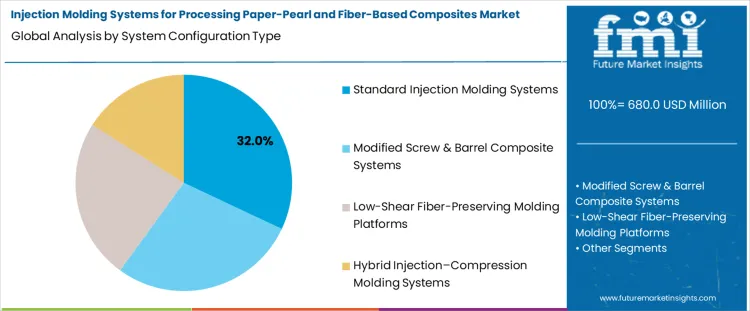
Standard injection molding systems hold the largest share at 32.0%, reflecting their continued use where paper-pearl and fiber loadings remain moderate and processing conditions stay within conventional operating windows. These systems benefit from existing installed bases, operator familiarity, and lower capital modification requirements. Modified screw and barrel composite systems account for 28.0%, driven by demand for improved dispersion and reduced fiber degradation during melting and injection. Low-shear fiber-preserving molding platforms represent 24.0%, addressing challenges related to fiber length retention, surface finish consistency, and mechanical performance in high bio-content parts. Hybrid injection-compression molding systems hold 16.0%, used where reduced internal stress, improved surface quality, and thinner wall sections are required for premium composite components.
Key Points
- Standard systems dominate due to compatibility with existing infrastructure
- Modified screw designs improve composite dispersion control
- Low-shear platforms protect fiber morphology during processing
Which Composite Feedstock Type Accounts for the Largest Share of System Demand?
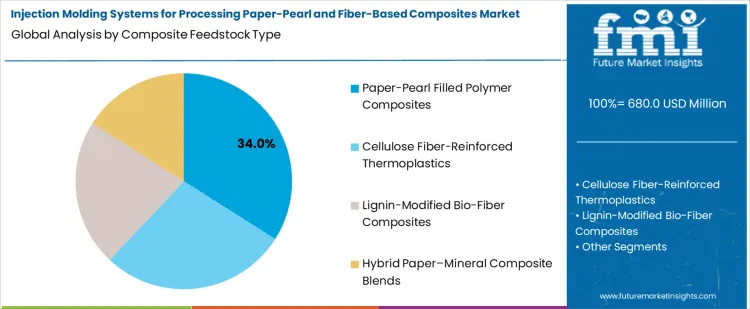
Paper-pearl filled polymer composites represent the largest share at 34.0%, supported by their balance of visual aesthetics, stiffness enhancement, and partial bio-content substitution. These materials are widely adopted in packaging and consumer goods requiring tactile differentiation and matte finishes. Cellulose fiber-reinforced thermoplastics account for 28.0%, driven by applications prioritizing weight reduction and renewable material content without compromising processability. Lignin-modified bio-fiber composites hold 22.0%, reflecting growing interest in valorizing industrial lignin streams while improving thermal stability and UV resistance. Hybrid paper-mineral composite blends account for 16.0%, used where dimensional stability and processing robustness are required alongside sustainability positioning.
Key Points
- Paper-pearl composites lead due to aesthetics and stiffness benefits
- Cellulose fibers support lightweight structural applications
- Lignin-based systems expand bio-feedstock utilization
Which Application Segment Generates the Highest Global Demand for These Systems?
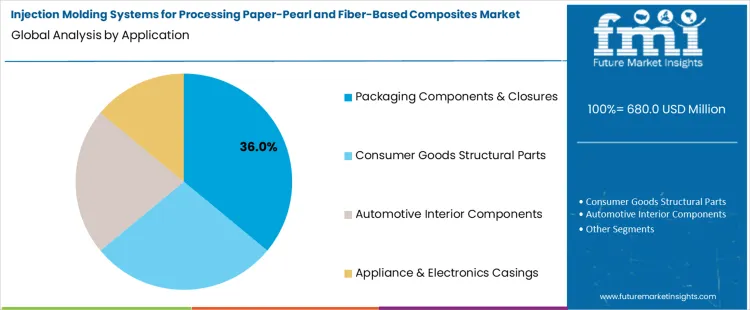
Packaging components and closures account for 36.0% of global demand, driven by brand commitments to reduce plastic intensity and improve recyclability while maintaining high production volumes. Injection molding systems enable consistent wall thickness, tight tolerances, and scalable output for caps, closures, and rigid packaging elements. Consumer goods structural parts represent 28.0%, including housings, handles, and durable items where bio-composites deliver visual and sustainability differentiation. Automotive interior components hold 22.0%, reflecting use in trim panels and non-load-bearing parts where weight reduction and material storytelling are valued. Appliance and electronics casings account for 14.0%, constrained by heat resistance and regulatory performance requirements.
Key Points
- Packaging leads due to volume scale and sustainability targets
- Consumer goods adopt composites for differentiation
- Automotive interiors balance weight reduction and aesthetics
What are the Key Dynamics in the Injection Molding Systems for Processing Paper-Pearl and Fiber-Based Composites Market?
Global demand rises as manufacturers across automotive, appliances, consumer goods, and packaging sectors adopt injection molding systems tailored for paper-pearl and fiber-based composites. These systems enable processing of cellulosic fiber blends, natural fiber reinforcements, and hybrid biomaterials into complex geometry parts with improved strength-to-weight ratios. Adoption aligns with sustainability commitments, lightweighting objectives, and regulatory emphasis on renewable and recyclable materials across North America, Europe, Asia-Pacific, and Latin America. Usage spans interior panels, structural components, housings, and consumer products requiring bio-sourced composite solutions.
How do sustainability requirements and performance expectations shape adoption?
Customers increasingly prioritize materials and production methods that reduce carbon footprint and reliance on fossil-derived plastics. Injection molding systems for paper-pearl and fiber-based composites support integration of natural reinforcements that enhance mechanical properties while maintaining design flexibility. OEMs in automotive and appliance sectors deploy these systems to meet corporate sustainability goals and emerging material standards that reward bio-based content and end-of-life recoverability. Process engineers optimize molding parameters to balance fiber dispersion, compounding quality, and cavity fill performance, ensuring parts meet structural, aesthetic, and consistency criteria. Retail and brand owners emphasize product narratives tied to renewable content and reduced environmental impact, reinforcing demand for molded fiber composite components.
How do equipment cost, processing complexity, and material variability influence market scalability?
Injection molding systems for fiber composites require specialized screw designs, barrel constructions, and thermal management capabilities to handle variable fiber loadings, moisture sensitivities, and shear profiles not typical of conventional thermoplastics. Capital cost for tailored equipment and auxiliary systems influences adoption, particularly among small and mid-sized processors. Process complexity increases with the need to stabilize fiber orientation, control degradation, and mitigate flow irregularities, requiring skilled operators and precise control systems. Variability in fiber feedstock quality, moisture content, and compatibility with matrix resins adds formulation and processing challenges that can affect throughput and yield. Regulatory frameworks governing renewable content claims, fiber composite safety, and recyclability differ across regions, shaping compliance and labeling strategies. Long-term growth depends on continued innovation in robust, energy-efficient injection systems and harmonized standards that support broader adoption of bio-based composites in global manufacturing.
How Is Demand for Injection Molding Systems for Processing Paper-Pearl and Fiber-Based Composites Evolving Globally?
Demand for injection molding systems for processing paper-pearl and fiber-based composites is increasing globally due to lightweighting requirements, plastic reduction mandates, and adoption of hybrid bio-composite materials. China leads with a 9.8% CAGR, supported by industrial packaging substitution and materials localization. India follows at 9.5%, driven by cost-sensitive lightweight components and regulatory pressure on plastics. Germany records 9.2%, reflecting engineering precision and sustainable materials integration. USA posts an 8.9% CAGR, shaped by automotive and consumer goods lightweighting programs. Japan records 8.7%, supported by advanced materials processing and high-performance molding standards. Growth reflects shift toward molding systems capable of handling fiber dispersion, thermal sensitivity, and heterogeneous composite rheology.
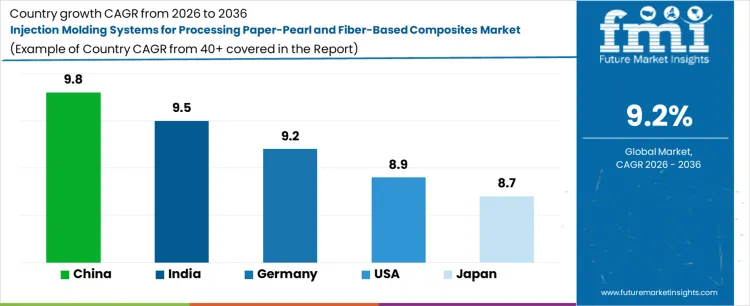
| Country | CAGR (%) |
|---|---|
| China | 9.8% |
| India | 9.5% |
| Germany | 9.2% |
| USA | 8.9% |
| Japan | 8.7% |
What is driving strong adoption of composite-capable injection molding systems in China?
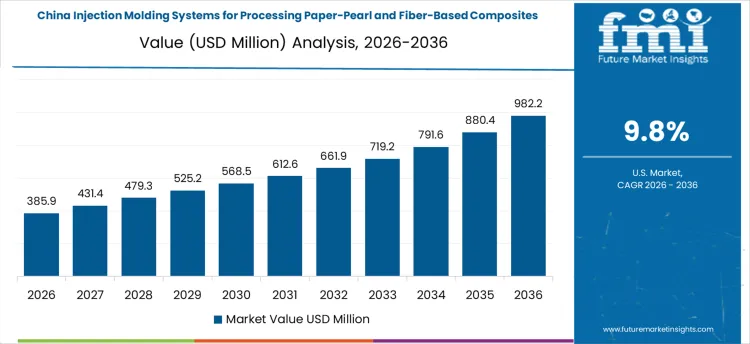
China demand is driven by industrial-scale substitution of conventional plastics with fiber-based and paper-pearl composites. CAGR of 9.8% reflects increasing deployment of molding systems engineered for abrasive fibers, moisture-sensitive feedstocks, and variable melt behavior. Manufacturers supplying packaging, consumer goods, and electronics housings require equipment capable of maintaining dimensional stability and surface quality. Regulatory pressure on plastic reduction accelerates material transition. Domestic machine builders adapt screw design, temperature zoning, and venting systems for composite processing. Growth remains scale-driven and policy-aligned, supported by manufacturing localization and rapid material adoption.
- Expansion of fiber-based composite manufacturing
- Plastic reduction regulations influencing material choice
- Need for abrasion-resistant and vented molding systems
- Localization of composite-capable machinery production
How is India sustaining growth in composite processing injection molding systems?
India demand reflects cost-driven lightweighting and substitution of plastics in packaging and consumer products. CAGR of 9.5% is supported by adoption of molding systems capable of processing mixed fiber and mineral-filled composites at lower operating costs. Manufacturers prioritize robustness, flexibility, and energy efficiency. Government sustainability initiatives influence material selection. Domestic processors adopt simplified composite formulations requiring adaptable machinery. Equipment suppliers offer modular retrofits and localized service support. Growth remains manufacturing-led and cost-aligned, supported by material experimentation and gradual scaling of composite use.
- Cost-sensitive adoption of fiber-based composites
- Demand for flexible and energy-efficient machinery
- Influence of sustainability and plastic reduction policies
- Use of modular and adaptable molding systems
What factors support Germany’s steady expansion in composite injection molding systems?
Germany demand reflects advanced engineering standards and emphasis on material performance consistency. CAGR of 9.2% is supported by use of injection molding systems in automotive interiors, technical components, and sustainable packaging. Processors require precise control over fiber orientation, melt temperature, and cycle repeatability. Regulatory frameworks favor validated material transitions. Machine builders integrate advanced monitoring and wear-resistant components. Growth remains technology-led and quality-focused, supported by strong collaboration between material developers and equipment manufacturers.
- Advanced engineering requirements for composite processing
- Use in automotive and technical components
- Emphasis on precision and process repeatability
- Integration of monitoring and wear-resistant systems
What is shaping demand growth in the USA for composite-capable injection molding systems?
USA demand is shaped by lightweighting initiatives, sustainability commitments, and diversification of composite materials. CAGR of 8.9% reflects adoption of molding systems capable of processing paper-pearl and fiber-based compounds in consumer goods and transportation components. Manufacturers emphasize scalability, compatibility with existing lines, and maintenance predictability. Regulatory and brand-driven sustainability targets influence equipment upgrades. Domestic suppliers develop application-specific machinery configurations. Growth remains operations-led and compliance-aligned, supported by gradual material transition and equipment modernization.
- Lightweighting and sustainability-driven material shifts
- Demand for scalable and retrofit-compatible machinery
- Adoption in consumer and transportation components
- Focus on maintenance and operational predictability
Why is Japan showing measured growth in fiber-based composite injection molding systems?
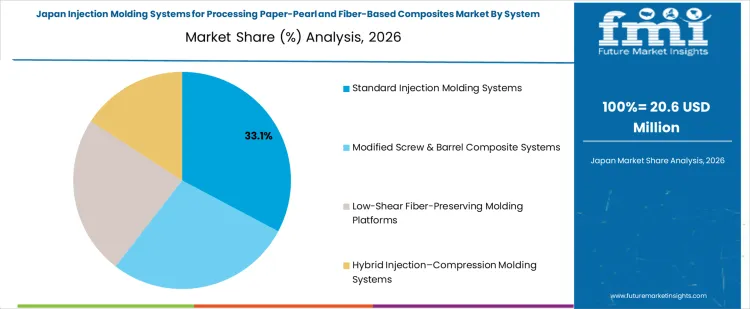
Japan demand reflects high-performance manufacturing culture and controlled material adoption. CAGR of 8.7% is supported by use of injection molding systems in precision components and sustainable consumer products. Manufacturers prioritize surface finish, dimensional accuracy, and process stability when processing fiber-based composites. Equipment selection favors advanced control systems and long-term reliability. Material qualification cycles remain rigorous. Growth remains quality-driven and technology-aligned, supported by disciplined engineering standards and selective scaling of composite applications.
- High standards for precision and surface quality
- Focus on process stability and control
- Selective adoption of fiber-based composites
- Emphasis on long-term equipment reliability
What is the competitive landscape of demand for injection molding systems for paper-pearl and fiber-based composites globally?
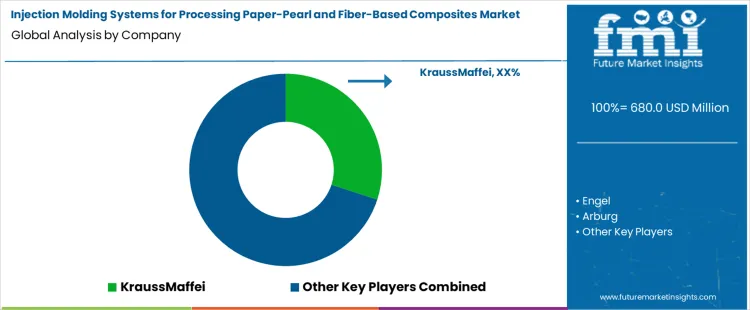
Demand for injection molding systems for fiber-based composites rises with lightweighting and circular packaging material adoption. Buyers require machinery that ensures fiber alignment, consistent cavity filling, and minimal fiber breakage during processing. Procurement teams evaluate clamp force, screw design, mold temperature control, and automation readiness for high-throughput lines. Material handling for cellulose-rich feedstock and in-line compounding capabilities significantly influence supplier selection decisions.
KraussMaffei holds strong positioning through specialized systems for glass, natural fiber, and hybrid composite molding applications. Engel supplies turnkey automation and hot-runner integration used in continuous production of sheet- and pellet-based fiber composites. Arburg provides modular injection and overmolding platforms suited to small-format packaging and functional component consolidation. Milacron offers high-pressure systems and screw technologies optimized for short cycle times and reduced fiber attrition. Sumitomo (SHI) Demag supports demand with electric presses and process controls favored for energy-efficient composite molding production. Competitive differentiation depends on process robustness, contamination control, after-sales service, and capability to support closed-loop recyclate integration.
Key Players in the Injection Molding Systems for Processing Paper-Pearl and Fiber-Based Composites Market
- KraussMaffei
- Engel
- Arburg
- Milacron
- Sumitomo (SHI) Demag
Scope of the Report
| Items | Values |
|---|---|
| Quantitative Units | USD million |
| System Configuration Type | Standard Injection Molding Systems; Modified Screw & Barrel Composite Systems; Low-Shear Fiber-Preserving Molding Platforms; Hybrid Injection-Compression Molding Systems |
| Composite Feedstock Type | Paper-Pearl Filled Polymer Composites; Cellulose Fiber-Reinforced Thermoplastics; Lignin-Modified Bio-Fiber Composites; Hybrid Paper-Mineral Composite Blends |
| Application | Packaging Components & Closures; Consumer Goods Structural Parts; Automotive Interior Components; Appliance & Electronics Casings |
| Regions Covered | Asia Pacific, Europe, North America, Latin America, Middle East & Africa |
| Countries Covered | China, India, Germany, USA, Japan, and 40+ countries |
| Key Companies Profiled | KraussMaffei; Engel; Arburg; Milacron; Sumitomo (SHI) Demag |
| Additional Attributes | Dollar sales by system configuration type and composite feedstock; adoption trends for low-shear and fiber-preserving molding platforms in bio-composite processing; melt homogeneity, fiber length retention, and cycle-time performance metrics; compatibility with paper-pearl, cellulose, and lignin-modified composite formulations; tooling wear, screw design, and process stability considerations; compliance with lightweighting, recyclability, and sustainable materials standards influencing system selection. |
Injection Molding Systems for Processing Paper-Pearl and Fiber-Based Composites Market by Segment
System Configuration Type:
- Standard Injection Molding Systems
- Modified Screw & Barrel Composite Systems
- Low-Shear Fiber-Preserving Molding Platforms
- Hybrid Injection Compression Molding Systems
Composite Feedstock Type:
- Paper-Pearl Filled Polymer Composites
- Cellulose Fiber-Reinforced Thermoplastics
- Lignin-Modified Bio-Fiber Composites
- Hybrid Paper-Mineral Composite Blends
Application:
- Packaging Components & Closures
- Consumer Goods Structural Parts
- Automotive Interior Components
- Appliance & Electronics Casings
Region:
- Asia Pacific
- China
- Japan
- South Korea
- India
- Australia & New Zealand
- ASEAN
- Rest of Asia Pacific
- Europe
- Germany
- United Kingdom
- France
- Italy
- Spain
- Nordic
- BENELUX
- Rest of Europe
- North America
- United States
- Canada
- Mexico
- Latin America
- Brazil
- Chile
- Rest of Latin America
- Middle East & Africa
- Kingdom of Saudi Arabia
- Other GCC Countries
- Turkey
- South Africa
- Other African Union
- Rest of Middle East & Africa
Frequently Asked Questions
How big is the injection molding systems for processing paper-pearl and fiber-based composites market in 2026?
The global injection molding systems for processing paper-pearl and fiber-based composites market is estimated to be valued at USD 680.0 million in 2026.
What will be the size of injection molding systems for processing paper-pearl and fiber-based composites market in 2036?
The market size for the injection molding systems for processing paper-pearl and fiber-based composites market is projected to reach USD 1,639.6 million by 2036.
How much will be the injection molding systems for processing paper-pearl and fiber-based composites market growth between 2026 and 2036?
The injection molding systems for processing paper-pearl and fiber-based composites market is expected to grow at a 9.2% CAGR between 2026 and 2036.
What are the key product types in the injection molding systems for processing paper-pearl and fiber-based composites market?
The key product types in injection molding systems for processing paper-pearl and fiber-based composites market are standard injection molding systems, modified screw & barrel composite systems, low-shear fiber-preserving molding platforms and hybrid injection–compression molding systems.
Which composite feedstock type segment to contribute significant share in the injection molding systems for processing paper-pearl and fiber-based composites market in 2026?
In terms of composite feedstock type, paper-pearl filled polymer composites segment to command 34.0% share in the injection molding systems for processing paper-pearl and fiber-based composites market in 2026.
Preview the report firsthand - request a free sample
Get SampleGet the brochure for pricing and purchase details.
Get PDFTable of Content
- Executive Summary
- Global Market Outlook
- Demand-side Trends
- Supply-side Trends
- Technology Roadmap Analysis
- Analysis and Recommendations
- Market Overview
- Market Coverage / Taxonomy
- Market Definition / Scope / Limitations
- Market Background
- Market Dynamics
- Drivers
- Restraints
- Opportunity
- Trends
- Scenario Forecast
- Demand in Optimistic Scenario
- Demand in Likely Scenario
- Demand in Conservative Scenario
- Opportunity Map Analysis
- Product Life Cycle Analysis
- Supply Chain Analysis
- Investment Feasibility Matrix
- Value Chain Analysis
- PESTLE and Porter’s Analysis
- Regulatory Landscape
- Regional Parent Market Outlook
- Production and Consumption Statistics
- Import and Export Statistics
- Market Dynamics
- Global Market Analysis 2021 to 2025 and Forecast, 2026 to 2036
- Historical Market Size Value (USD Million) Analysis, 2021 to 2025
- Current and Future Market Size Value (USD Million) Projections, 2026 to 2036
- Y-o-Y Growth Trend Analysis
- Absolute $ Opportunity Analysis
- Global Market Pricing Analysis 2021 to 2025 and Forecast 2026 to 2036
- Global Market Analysis 2021 to 2025 and Forecast 2026 to 2036, By System Configuration Type
- Introduction / Key Findings
- Historical Market Size Value (USD Million) Analysis By System Configuration Type , 2021 to 2025
- Current and Future Market Size Value (USD Million) Analysis and Forecast By System Configuration Type , 2026 to 2036
- Standard Injection Molding Systems
- Modified Screw & Barrel Composite Systems
- Low-Shear Fiber-Preserving Molding Platforms
- Hybrid Injection-Compression Molding Systems
- Standard Injection Molding Systems
- Y-o-Y Growth Trend Analysis By System Configuration Type , 2021 to 2025
- Absolute $ Opportunity Analysis By System Configuration Type , 2026 to 2036
- Global Market Analysis 2021 to 2025 and Forecast 2026 to 2036, By Composite Feedstock Type
- Introduction / Key Findings
- Historical Market Size Value (USD Million) Analysis By Composite Feedstock Type, 2021 to 2025
- Current and Future Market Size Value (USD Million) Analysis and Forecast By Composite Feedstock Type, 2026 to 2036
- Paper-Pearl Filled Polymer Composites
- Cellulose Fiber-Reinforced Thermoplastics
- Lignin-Modified Bio-Fiber Composites
- Hybrid Paper Mineral Composite Blends
- Paper-Pearl Filled Polymer Composites
- Y-o-Y Growth Trend Analysis By Composite Feedstock Type, 2021 to 2025
- Absolute $ Opportunity Analysis By Composite Feedstock Type, 2026 to 2036
- Global Market Analysis 2021 to 2025 and Forecast 2026 to 2036, By Application
- Introduction / Key Findings
- Historical Market Size Value (USD Million) Analysis By Application, 2021 to 2025
- Current and Future Market Size Value (USD Million) Analysis and Forecast By Application, 2026 to 2036
- Packaging Components & Closures
- Consumer Goods Structural Parts
- Automotive Interior Components
- Appliance & Electronics Casings
- Packaging Components & Closures
- Y-o-Y Growth Trend Analysis By Application, 2021 to 2025
- Absolute $ Opportunity Analysis By Application, 2026 to 2036
- Global Market Analysis 2021 to 2025 and Forecast 2026 to 2036, By Region
- Introduction
- Historical Market Size Value (USD Million) Analysis By Region, 2021 to 2025
- Current Market Size Value (USD Million) Analysis and Forecast By Region, 2026 to 2036
- North America
- Latin America
- Western Europe
- Eastern Europe
- East Asia
- South Asia and Pacific
- Middle East & Africa
- Market Attractiveness Analysis By Region
- North America Market Analysis 2021 to 2025 and Forecast 2026 to 2036, By Country
- Historical Market Size Value (USD Million) Trend Analysis By Market Taxonomy, 2021 to 2025
- Market Size Value (USD Million) Forecast By Market Taxonomy, 2026 to 2036
- By Country
- USA
- Canada
- Mexico
- By System Configuration Type
- By Composite Feedstock Type
- By Application
- By Country
- Market Attractiveness Analysis
- By Country
- By System Configuration Type
- By Composite Feedstock Type
- By Application
- Key Takeaways
- Latin America Market Analysis 2021 to 2025 and Forecast 2026 to 2036, By Country
- Historical Market Size Value (USD Million) Trend Analysis By Market Taxonomy, 2021 to 2025
- Market Size Value (USD Million) Forecast By Market Taxonomy, 2026 to 2036
- By Country
- Brazil
- Chile
- Rest of Latin America
- By System Configuration Type
- By Composite Feedstock Type
- By Application
- By Country
- Market Attractiveness Analysis
- By Country
- By System Configuration Type
- By Composite Feedstock Type
- By Application
- Key Takeaways
- Western Europe Market Analysis 2021 to 2025 and Forecast 2026 to 2036, By Country
- Historical Market Size Value (USD Million) Trend Analysis By Market Taxonomy, 2021 to 2025
- Market Size Value (USD Million) Forecast By Market Taxonomy, 2026 to 2036
- By Country
- Germany
- UK
- Italy
- Spain
- France
- Nordic
- BENELUX
- Rest of Western Europe
- By System Configuration Type
- By Composite Feedstock Type
- By Application
- By Country
- Market Attractiveness Analysis
- By Country
- By System Configuration Type
- By Composite Feedstock Type
- By Application
- Key Takeaways
- Eastern Europe Market Analysis 2021 to 2025 and Forecast 2026 to 2036, By Country
- Historical Market Size Value (USD Million) Trend Analysis By Market Taxonomy, 2021 to 2025
- Market Size Value (USD Million) Forecast By Market Taxonomy, 2026 to 2036
- By Country
- Russia
- Poland
- Hungary
- Balkan & Baltic
- Rest of Eastern Europe
- By System Configuration Type
- By Composite Feedstock Type
- By Application
- By Country
- Market Attractiveness Analysis
- By Country
- By System Configuration Type
- By Composite Feedstock Type
- By Application
- Key Takeaways
- East Asia Market Analysis 2021 to 2025 and Forecast 2026 to 2036, By Country
- Historical Market Size Value (USD Million) Trend Analysis By Market Taxonomy, 2021 to 2025
- Market Size Value (USD Million) Forecast By Market Taxonomy, 2026 to 2036
- By Country
- China
- Japan
- South Korea
- By System Configuration Type
- By Composite Feedstock Type
- By Application
- By Country
- Market Attractiveness Analysis
- By Country
- By System Configuration Type
- By Composite Feedstock Type
- By Application
- Key Takeaways
- South Asia and Pacific Market Analysis 2021 to 2025 and Forecast 2026 to 2036, By Country
- Historical Market Size Value (USD Million) Trend Analysis By Market Taxonomy, 2021 to 2025
- Market Size Value (USD Million) Forecast By Market Taxonomy, 2026 to 2036
- By Country
- India
- ASEAN
- Australia & New Zealand
- Rest of South Asia and Pacific
- By System Configuration Type
- By Composite Feedstock Type
- By Application
- By Country
- Market Attractiveness Analysis
- By Country
- By System Configuration Type
- By Composite Feedstock Type
- By Application
- Key Takeaways
- Middle East & Africa Market Analysis 2021 to 2025 and Forecast 2026 to 2036, By Country
- Historical Market Size Value (USD Million) Trend Analysis By Market Taxonomy, 2021 to 2025
- Market Size Value (USD Million) Forecast By Market Taxonomy, 2026 to 2036
- By Country
- Kingdom of Saudi Arabia
- Other GCC Countries
- Turkiye
- South Africa
- Other African Union
- Rest of Middle East & Africa
- By System Configuration Type
- By Composite Feedstock Type
- By Application
- By Country
- Market Attractiveness Analysis
- By Country
- By System Configuration Type
- By Composite Feedstock Type
- By Application
- Key Takeaways
- Key Countries Market Analysis
- USA
- Pricing Analysis
- Market Share Analysis, 2025
- By System Configuration Type
- By Composite Feedstock Type
- By Application
- Canada
- Pricing Analysis
- Market Share Analysis, 2025
- By System Configuration Type
- By Composite Feedstock Type
- By Application
- Mexico
- Pricing Analysis
- Market Share Analysis, 2025
- By System Configuration Type
- By Composite Feedstock Type
- By Application
- Brazil
- Pricing Analysis
- Market Share Analysis, 2025
- By System Configuration Type
- By Composite Feedstock Type
- By Application
- Chile
- Pricing Analysis
- Market Share Analysis, 2025
- By System Configuration Type
- By Composite Feedstock Type
- By Application
- Germany
- Pricing Analysis
- Market Share Analysis, 2025
- By System Configuration Type
- By Composite Feedstock Type
- By Application
- UK
- Pricing Analysis
- Market Share Analysis, 2025
- By System Configuration Type
- By Composite Feedstock Type
- By Application
- Italy
- Pricing Analysis
- Market Share Analysis, 2025
- By System Configuration Type
- By Composite Feedstock Type
- By Application
- Spain
- Pricing Analysis
- Market Share Analysis, 2025
- By System Configuration Type
- By Composite Feedstock Type
- By Application
- France
- Pricing Analysis
- Market Share Analysis, 2025
- By System Configuration Type
- By Composite Feedstock Type
- By Application
- India
- Pricing Analysis
- Market Share Analysis, 2025
- By System Configuration Type
- By Composite Feedstock Type
- By Application
- ASEAN
- Pricing Analysis
- Market Share Analysis, 2025
- By System Configuration Type
- By Composite Feedstock Type
- By Application
- Australia & New Zealand
- Pricing Analysis
- Market Share Analysis, 2025
- By System Configuration Type
- By Composite Feedstock Type
- By Application
- China
- Pricing Analysis
- Market Share Analysis, 2025
- By System Configuration Type
- By Composite Feedstock Type
- By Application
- Japan
- Pricing Analysis
- Market Share Analysis, 2025
- By System Configuration Type
- By Composite Feedstock Type
- By Application
- South Korea
- Pricing Analysis
- Market Share Analysis, 2025
- By System Configuration Type
- By Composite Feedstock Type
- By Application
- Russia
- Pricing Analysis
- Market Share Analysis, 2025
- By System Configuration Type
- By Composite Feedstock Type
- By Application
- Poland
- Pricing Analysis
- Market Share Analysis, 2025
- By System Configuration Type
- By Composite Feedstock Type
- By Application
- Hungary
- Pricing Analysis
- Market Share Analysis, 2025
- By System Configuration Type
- By Composite Feedstock Type
- By Application
- Kingdom of Saudi Arabia
- Pricing Analysis
- Market Share Analysis, 2025
- By System Configuration Type
- By Composite Feedstock Type
- By Application
- Turkiye
- Pricing Analysis
- Market Share Analysis, 2025
- By System Configuration Type
- By Composite Feedstock Type
- By Application
- South Africa
- Pricing Analysis
- Market Share Analysis, 2025
- By System Configuration Type
- By Composite Feedstock Type
- By Application
- USA
- Market Structure Analysis
- Competition Dashboard
- Competition Benchmarking
- Market Share Analysis of Top Players
- By Regional
- By System Configuration Type
- By Composite Feedstock Type
- By Application
- Competition Analysis
- Competition Deep Dive
- KraussMaffei
- Overview
- Product Portfolio
- Profitability by Market Segments (Product/Age /Sales Channel/Region)
- Sales Footprint
- Strategy Overview
- Marketing Strategy
- Product Strategy
- Channel Strategy
- Engel
- Arburg
- Milacron
- Sumitomo (SHI) Demag
- KraussMaffei
- Competition Deep Dive
- Assumptions & Acronyms Used
- Research Methodology


