

- Industry Size (2026)
- USD 5.6 Bn
- Forecast (2036)
- USD 10.2 Bn
- CAGR (2026 to 2036)
- 6.2%
EV Optimized Seating Components Market Forecast and Outlook 2026 to 2036
The EV optimized seating components market is likely to be valued at USD 5.6 billion in 2026 and is expected to reach USD 10.2 billion by 2036, reflecting a CAGR of 6.20%. In electric vehicles, seat systems are engineered as part of the vehicle energy and packaging equation rather than as trim items. Weight reduction, module integration, and space efficiency matter because they affect range, battery layout, and interior architecture. This shifts design emphasis toward lightweight frames, thinner comfort layers, and integrated electronics. Demand therefore follows platform redesign cycles and battery packaging strategies more closely than overall vehicle production volumes.
Sourcing decisions are shaped by platform commonality and by the desire to reduce part variation across global EV programs. Once a seat structure and component set are validated for crash, durability, and comfort targets, it is typically locked for the life of the vehicle architecture. Automakers and tier suppliers prioritize suppliers that can support synchronized launches across regions and manage mixed material systems at scale. Cost control focuses on bill of materials stability and assembly efficiency rather than on single component pricing. The market grows through EV platform proliferation and interior re packaging, not through short cycle styling refreshes or incremental feature additions.
Quick Stats for EV Optimized Seating Components Market
- EV Optimized Seating Components Market Value (2026): USD 5.6 billion
- EV Optimized Seating Components Market Forecast Value (2036): USD 10.2 billion
- EV Optimized Seating Components Market Forecast CAGR 2026 to 2036: 6.2%
- Leading Component Type in EV Optimized Seating Components Market: Seat frames and structures
- Key Growth Regions in EV Optimized Seating Components Market: Asia Pacific, Europe, North America
- Top Players in EV Optimized Seating Components Market: Magna International, Lear Corporation, Faurecia, Adient, Toyota Boshoku, NHK Seating, TS TECH Co., Ltd.

What is the Growth Forecast for the EV Optimized Seating Components Market through 2036?
The EV optimized seating components segment is driven less by overall vehicle production growth and more by how electric vehicle platforms reshape cabin layout, weight distribution, and electrical architecture. In the early stage, many electric vehicles still use seat structures adapted from internal combustion vehicle designs. As EV platforms mature, seating systems are increasingly engineered specifically for electric architectures, taking advantage of flat floors, different crash load paths, and higher electrical integration within the cabin.
Over time, optimization shifts toward reducing weight, using thinner yet stronger structures, and integrating features such as heating, ventilation, powered adjustments, sensors, and electronic controls directly into the seat system. Growth is further supported by EV platform standardization and rising consumer expectations for longer range, better interior space utilization, and enhanced digital functionality. As adoption expands, more vehicle programs move toward dedicated EV seat frames, modular substructures, and integrated wiring harnesses to simplify assembly and improve packaging efficiency.
In the long term, value growth is supported by increasing electronic content per seat, more complex safety integration, and wider use of lightweight materials such as advanced alloys and engineered polymers. Purchasing decisions remain focused on mass reduction, space efficiency, crash performance, and seamless system integration rather than traditional trim-level differentiation alone.
EV Optimized Seating Components Market Key Takeaways
| Metric | Value |
|---|---|
| Market Value (2026) | USD 5.6 billion |
| Forecast Value (2036) | USD 10.2 billion |
| Forecast CAGR 2026 to 2036 | 6.2% |
How Is the EV-Optimized Seating Components Market Shaping Vehicle Comfort and Efficiency?
EV-optimized seating components are increasingly adopted to meet the unique requirements of electric vehicles, balancing weight reduction, thermal management, and passenger comfort. Traditional automotive seats were designed for internal combustion vehicles, often with heavier frames and limited integration of advanced energy-efficient materials. Modern EV seating incorporates lightweight composites, energy-absorbing foams, integrated heating/cooling elements, and modular frames to reduce overall vehicle weight, enhance occupant safety, and improve cabin comfort. Automotive OEMs, tier-1 suppliers, and interior design specialists prioritize material selection, structural integrity, and adaptability to electric vehicle layouts. Early adoption focused on premium EV models, while current demand spans mass-market electric sedans, SUVs, and commercial electric fleets, driven by range optimization, interior ergonomics, and regulatory crash standards. Material strength, thermal performance, and modularity influence supplier selection.
Reducing vehicle mass while enhancing passenger experience is shaping market expansion. Compared with conventional seats, EV-optimized components emphasize lightweight construction, integrated thermal comfort, and modular adaptability to interior designs. Cost considerations include material sourcing, manufacturing complexity, and integration of electronic systems, concentrating margins among suppliers capable of delivering high-performance, durable components. OEMs adopt these seating solutions to improve driving range, enhance cabin comfort, and meet safety requirements. Over the next decade, EV-optimized seating components are expected to play a key role in electric vehicle development, supporting lightweight vehicle architectures, improved occupant comfort, and adaptable interior design for diverse EV platforms.
What Factors Are Shaping the Demand for EV Optimized Seating Components Market, Segment wise by Component Type and Vehicle Type, in 2026?
The EV Optimized Seating Components Market in 2026 is structured primarily by electric vehicle platform architecture, mass optimization targets, and interior packaging constraints rather than by conventional seat comfort considerations alone. By component type, demand in the EV Optimized Seating Components Market is distributed across seat frames and structures, cushioning and foams, smart and connected seating systems, and trim and upholstery. By vehicle type, demand in the EV Optimized Seating Components Market is concentrated in battery electric vehicles, plug-in hybrid electric vehicles, hybrid electric vehicles, and commercial electric vehicles.
These segments reflect differences in vehicle range sensitivity, interior space utilization, and cost allocation priorities. In electric vehicles, seating systems are not treated as isolated interior modules but as structural and functional elements that interact with battery placement, floor height, and crash load paths. As a result, component selection and design are closely linked to platform engineering decisions, supply chain integration strategies, and long-term modularization plans rather than to short-term model refresh cycles.
How Do Weight, Packaging, and Structural Integration Requirements Shape Component Type Demand in the EV Optimized Seating Components Market?

Seat frames and structures account for approximately 45% of demand in the EV Optimized Seating Components Market because they play a central role in meeting vehicle mass targets and structural integration requirements. In battery electric vehicles, every kilogram saved in seating systems contributes directly to range, payload flexibility, or battery downsizing potential. This has increased the use of lightweight metals, mixed-material structures, and integrated mounting concepts that connect seats more directly to the vehicle floor architecture. Cushioning and foams are increasingly engineered for thickness efficiency and thermal management rather than for comfort alone, reflecting constraints imposed by raised floor heights and battery packaging.
Smart and connected seating systems are adopted selectively in higher-end vehicles, where they support occupant monitoring, memory functions, and integration with vehicle software platforms, but they carry cost and complexity penalties. Trim and upholstery remain important for brand differentiation, but their material choices are increasingly influenced by weight, recyclability, and thermal behavior. The structure of the EV Optimized Seating Components Market is therefore determined by how effectively each component category contributes to mass reduction, space efficiency, and platform-level integration.
Why Do Battery Electric Vehicles Represent the Largest Vehicle Type Segment in the EV Optimized Seating Components Market?

Battery electric vehicles account for approximately 50% of demand in the EV Optimized Seating Components Market because they face the most stringent constraints on mass, packaging, and energy efficiency. Unlike hybrid architectures, which can rely on existing vehicle platforms with incremental electrification, battery electric vehicles are increasingly developed on dedicated platforms that reorganize floor structures, crash zones, and interior proportions. This creates both the need and the opportunity to redesign seating systems as integrated elements of the overall vehicle architecture. Plug-in hybrid and hybrid electric vehicles continue to use more conventional seating structures, as their platforms must accommodate both electric and combustion components, which limits the scope for radical interior reconfiguration.
Commercial electric vehicles prioritize durability, ease of cleaning, and lifecycle cost, which constrains the adoption of advanced seating concepts. Battery electric vehicles, by contrast, combine high production growth, strong sensitivity to weight and range, and active platform redesign cycles. This combination sustains the highest level of component innovation and sourcing activity and explains why battery electric vehicles remain the dominant demand center in the EV Optimized Seating Components Market.
How Are the Key Dynamics Reshaping the EV Optimized Seating Components Market?
The EV Optimized Seating Components Market is being reshaped by how electric vehicle platforms are being standardized, stretched, and repurposed across many models. Unlike combustion vehicles, EVs are built around flat battery packs and modular floor architectures, which changes seat mounting, packaging, and weight distribution logic. At the same time, automakers are trying to reduce variant complexity across global platforms. This turns seating components into architectural elements rather than trim items. The EV Optimized Seating Components Market grows when seating becomes a structural and modular subsystem of the vehicle platform, not just an interior furnishing choice.
Why the EV Optimized Seating Components Market Is Platform-Architecture Driven?
EV platforms are designed to spawn many body styles from one floor. That forces seat frames, rails, anchoring systems, and under-seat components to work across multiple wheelbases and rooflines. A seat design that cannot scale across variants becomes a cost problem. The EV Optimized Seating Components Market therefore follows platform engineering decisions made years before a vehicle launches. When a seating architecture is approved for a platform, it propagates across many models and regions. Demand is created by platform multiplication, not by individual vehicle programs or refresh cycles.
Why the EV Optimized Seating Components Market Is a Weight-Budget Negotiation?
In EVs, kilograms are traded like currency. Battery mass consumes a huge part of the weight budget, which puts pressure on every other subsystem. Seating is one of the heaviest interior assemblies. This forces constant negotiation between comfort, structure, adjustability, and mass. Lighter frames, integrated functions, and thinner mechanisms are not chosen because they are elegant, but because something else needs the weight. The EV Optimized Seating Components Market is therefore driven by internal vehicle weight politics, not by consumer awareness or feature fashion.
Why the EV Optimized Seating Components Market Follows Variant Complexity?
Every additional seat option multiplies certification, logistics, and assembly complexity. EV programs try to limit this by using modular components that can be configured late in the line. This shifts value toward common frames, shared substructures, and interchangeable modules. The EV Optimized Seating Components Market benefits when manufacturers aggressively reduce build combinations and push differentiation into software or trim layers. Where variant counts stay high, seating architectures stay conservative. Growth therefore follows how seriously automakers pursue platform simplification and late-stage configuration strategies.
What is the Demand for EV Optimized Seating Components by Country?

| Country | CAGR (%) |
|---|---|
| USA | 5.8% |
| UK | 5.5% |
| China | 6.8% |
| India | 7.0% |
| Brazil | 6.0% |
Demand for EV optimized seating components is rising as electric vehicle manufacturers adopt lightweight, ergonomic, and durable seating solutions to improve passenger comfort, safety, and vehicle efficiency. India leads with a 7.0% CAGR, driven by increasing electric vehicle production, adoption of advanced seating technologies, and growth in domestic EV demand. China follows at 6.8%, supported by large-scale EV manufacturing and integration of optimized seating systems. Brazil records 6.0% growth, shaped by adoption in EV production and replacement demand. The USA grows at 5.8%, influenced by upgrades in vehicle interiors and ergonomic seating solutions. The UK shows 5.5% CAGR, reflecting steady adoption across electric vehicle manufacturing and automotive retrofitting.
How do vehicle platform redesigns shape demand in the EV Optimized Seating Components Market in the United States?
Vehicle platform redesign and cabin weight targets keep EV optimized seating components demand in United States on a 5.8% CAGR path. Sourcing decisions sit with seat system integrators and vehicle program teams. Components include lightweight frames, thin foam structures, integrated heating, and wiring optimized for low power draw. Once a platform freezes, volumes follow vehicle output for many years. Material choices balance crash performance, comfort metrics, and cost stability. Tooling investment and validation workload shape supplier entry. Local manufacturing supports delivery schedules. Import parts serve premium trims. Pricing pressure reflects multi-year contracts. Replacement channels contribute little volume. Commercial success depends on design wins inside new programs and steady launch execution. Safety testing and durability targets guide final approvals today.
How do interior refresh cycles influence demand in the EV Optimized Seating Components Market in the United Kingdom?
Vehicle interior refresh cycles keep EV optimized seating components demand in United Kingdom on a 5.5% CAGR path. Sourcing decisions sit with seat system integrators and vehicle program offices. Component scope includes frames, recliner mechanisms, tracks, trim carriers, heaters, and wiring. Weight targets and packaging envelopes guide early engineering tradeoffs. Once a platform freezes, volumes follow model output for many years. Local assembly supports logistics and sequence delivery. Import content appears in premium trims and limited runs. Tooling investment and validation schedules shape supplier entry windows. Pricing reflects multi-year agreements and productivity commitments. Aftermarket channels contribute minimal volume. Commercial success depends on early design participation and launch stability. Quality audits and durability targets govern final approvals.
What manufacturing scale factors drive demand in the EV Optimized Seating Components Market in China?
High vehicle output and platform standardization keep EV optimized seating components demand in China on a 6.8% CAGR path. Large OEM groups and tier one suppliers control most nomination decisions. Platform sharing across multiple models multiplies volume per design win. Domestic suppliers dominate structural parts through scale and cost structure. International suppliers retain positions in comfort systems and advanced mechanisms. Once designs are approved, production runs remain stable for many years. Engineering change frequency stays low after launch. Tooling localization supports supply security. Pricing reflects long term volume commitments. Replacement demand remains limited. Commercial success depends on access to major platform families and early involvement in architecture definition rather than sales through fragmented channels.
Why does localization strategy shape growth in the EV Optimized Seating Components Market in India?
Expansion of local EV assembly programs keeps EV optimized seating components demand in India on a 7% growth track. OEMs and tier one seat suppliers manage sourcing lists and nomination timing. Localization targets push more content toward domestic production. Import parts remain present in higher trim levels and export oriented programs. Component design freezes occur early in vehicle development. Once production starts, volumes follow model life cycles. Cost control and durability testing shape supplier selection. Tooling readiness and ramp up capability influence award timing. Replacement sales contribute little volume. Commercial success depends on alignment with upcoming vehicle programs and participation in localization roadmaps rather than spot supply to independent assemblers.
How do vehicle mix changes affect demand in the EV Optimized Seating Components Market in Brazil?
Shifts in vehicle mix and local assembly programs keep EV optimized seating components demand in Brazil on a 6% CAGR path. Passenger cars and light commercial vehicles drive most volume. Tier one seat system suppliers control nomination and integration. Local content rules influence supplier access. Import parts serve premium trims and low volume variants. Platform continuity supports stable multi-year order flow once designs are approved. Engineering changes occur mainly during model refresh cycles. Pricing reflects cost targets and long term supply agreements. Replacement channels add limited incremental volume. Commercial success depends on participation in local vehicle programs and consistent launch execution rather than short cycle aftermarket activity.
How Are Manufacturers Advancing Seating Components Designed for Electric Vehicles?
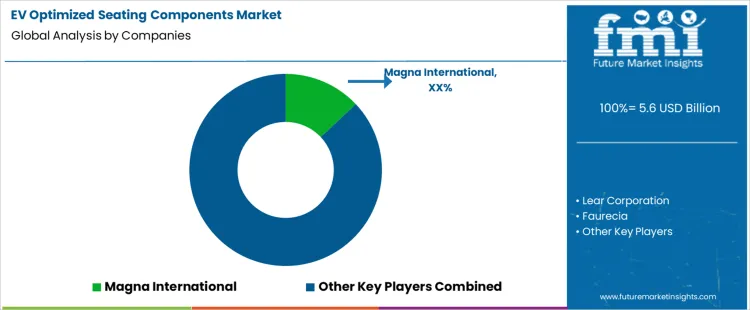
Suppliers in the EV optimized seating components market focus on weight reduction, integration with battery packaging, and occupant comfort tailored to electric powertrain characteristics. Magna International develops lightweight seat structures and trim systems engineered to reduce vehicle mass while maintaining structural integrity, aiding range performance. Lear Corporation provides modular seat architectures that facilitate thermal management and occupancy sensing for EV safety systems. Faurecia supplies seating components refined for EV interiors with emphasis on material selection that balances comfort and recyclability. Adient delivers seat systems that integrate motion control and ergonomic cushioning designed for the unique vibration profiles of electric drivetrains. Toyota Boshoku contributes seating assemblies that emphasize breathability and occupant support over long driving cycles. NHK Seating supplies tailored solutions that address compact packaging and comfort in smaller EV segments.
Other regional and niche manufacturers offer components optimized for specific cabin layouts or brand led comfort profiles. Suppliers distinguish themselves through foam formulations, frame designs, and integration with airbag systems and seat based electronics. Lightweight materials such as high strength steels, aluminum, and composite reinforcements feature prominently where mass savings contribute directly to EV efficiency. Seating systems that support active thermal management, power saving actuators, and advanced adjustability address emerging consumer expectations for personalized comfort. Competitive differentiation arises from product durability, ease of integration with body electronics, and adherence to global safety standards. Manufacturers with validated test data, robust supply chains, and capability to support rapid design cycles maintain relevance as EV platforms evolve and demand for differentiated seating experiences grows.
Key Players in the EV Optimized Seating Components Market
- Magna International
- Lear Corporation
- Faurecia
- Adient
- Toyota Boshoku
- NHK Seating
- TS TECH Co., Ltd.
Scope of the Report
| Items | Values |
|---|---|
| Quantitative Units (2026) | USD billion |
| Component Type | Seat frames and structures, Cushioning and foams, Smart and connected seating systems, Trim and upholstery |
| Vehicle Type | Battery electric vehicles (BEVs), Plug-in hybrid electric vehicles (PHEVs), Hybrid electric vehicles (HEVs), Commercial electric vehicles |
| Region | Asia Pacific, Europe, North America, Latin America, Middle East & Africa |
| Countries Covered | China, Japan, South Korea, India, Australia & New Zealand, ASEAN, Germany, United Kingdom, France, Italy, Spain, Nordic, BENELUX, United States, Canada, Mexico, Brazil, Chile, Saudi Arabia, Turkey, South Africa, and other regional markets |
| Key Companies Profiled | Magna International, Lear Corporation, Faurecia, Adient, Toyota Boshoku, NHK Seating, TS TECH Co., Ltd. |
| Additional Attributes | Dollar sales by component type and vehicle type; demand driven by EV platform redesign, weight budgets, and packaging constraints; growth led by higher electronic content and lightweight structures per seat; purchasing shaped by platform standardization, crash and durability validation, assembly efficiency, and system integration rather than trim differentiation. |
EV Optimized Seating Components Market Segmentation
Component Type:
- Seat frames and structures
- Cushioning and foams
- Smart and connected seating systems
- Trim and upholstery
Vehicle Type:
- Battery electric vehicles (BEVs)
- Plug-in hybrid electric vehicles (PHEVs)
- Hybrid electric vehicles (HEVs)
- Commercial electric vehicles
Region:
- Asia Pacific
- China
- Japan
- South Korea
- India
- Australia & New Zealand
- ASEAN
- Rest of Asia Pacific
- Europe
- Germany
- United Kingdom
- France
- Italy
- Spain
- Nordic
- BENELUX
- Rest of Europe
- North America
- United States
- Canada
- Mexico
- Latin America
- Brazil
- Chile
- Rest of Latin America
- Middle East & Africa
- Kingdom of Saudi Arabia
- Other GCC Countries
- Turkey
- South Africa
- Other African Union
- Rest of Middle East & Africa
Bibliography
- Bureau of Indian Standards. (2024). IS 18590:2024 and IS 18606:2024 — Electric vehicle safety standards. BIS.
- UNECE World Forum for Harmonization of Vehicle Regulations (WP.29). (2024). Vehicle safety regulations and amendments relevant to seating and occupant protection. United Nations Economic Commission for Europe.
- Organisation for Economic Co-operation and Development. (2024). OECD science, technology and industry scoreboard 2024: Innovation and competitiveness in manufacturing and transport. OECD Publishing.
Frequently Asked Questions
How big is the ev optimized seating components market in 2026?
The global ev optimized seating components market is estimated to be valued at USD 5.6 billion in 2026.
What will be the size of ev optimized seating components market in 2036?
The market size for the ev optimized seating components market is projected to reach USD 10.2 billion by 2036.
How much will be the ev optimized seating components market growth between 2026 and 2036?
The ev optimized seating components market is expected to grow at a 6.2% CAGR between 2026 and 2036.
What are the key product types in the ev optimized seating components market?
The key product types in ev optimized seating components market are seat frames and structures , cushioning and foams, smart and connected seating systems and trim and upholstery.
Which vehicle type segment to contribute significant share in the ev optimized seating components market in 2026?
In terms of vehicle type, battery electric vehicles (bevs) segment to command 50.0% share in the ev optimized seating components market in 2026.
Preview the report firsthand - request a free sample
Get SampleGet the brochure for pricing and purchase details.
Get PDFTable of Content
- Executive Summary
- Global Market Outlook
- Demand-side Trends
- Supply-side Trends
- Technology Roadmap Analysis
- Analysis and Recommendations
- Market Overview
- Market Coverage / Taxonomy
- Market Definition / Scope / Limitations
- Market Background
- Market Dynamics
- Drivers
- Restraints
- Opportunity
- Trends
- Scenario Forecast
- Demand in Optimistic Scenario
- Demand in Likely Scenario
- Demand in Conservative Scenario
- Opportunity Map Analysis
- Product Life Cycle Analysis
- Supply Chain Analysis
- Investment Feasibility Matrix
- Value Chain Analysis
- PESTLE and Porter’s Analysis
- Regulatory Landscape
- Regional Parent Market Outlook
- Production and Consumption Statistics
- Import and Export Statistics
- Market Dynamics
- Global Market Analysis 2021 to 2025 and Forecast, 2026 to 2036
- Historical Market Size Value (USD Million) Analysis, 2021 to 2025
- Current and Future Market Size Value (USD Million) Projections, 2026 to 2036
- Y-o-Y Growth Trend Analysis
- Absolute $ Opportunity Analysis
- Global Market Pricing Analysis 2021 to 2025 and Forecast 2026 to 2036
- Global Market Analysis 2021 to 2025 and Forecast 2026 to 2036, By Component Type
- Introduction / Key Findings
- Historical Market Size Value (USD Million) Analysis By Component Type , 2021 to 2025
- Current and Future Market Size Value (USD Million) Analysis and Forecast By Component Type , 2026 to 2036
- Seat frames and structures
- Cushioning and foams
- Smart and connected seating systems
- Trim and upholstery
- Seat frames and structures
- Y-o-Y Growth Trend Analysis By Component Type , 2021 to 2025
- Absolute $ Opportunity Analysis By Component Type , 2026 to 2036
- Global Market Analysis 2021 to 2025 and Forecast 2026 to 2036, By Vehicle Type
- Introduction / Key Findings
- Historical Market Size Value (USD Million) Analysis By Vehicle Type, 2021 to 2025
- Current and Future Market Size Value (USD Million) Analysis and Forecast By Vehicle Type, 2026 to 2036
- Battery electric vehicles (BEVs)
- Plug‑in hybrid electric vehicles (PHEVs)
- Hybrid electric vehicles (HEVs)
- Commercial electric vehicles
- Battery electric vehicles (BEVs)
- Y-o-Y Growth Trend Analysis By Vehicle Type, 2021 to 2025
- Absolute $ Opportunity Analysis By Vehicle Type, 2026 to 2036
- Global Market Analysis 2021 to 2025 and Forecast 2026 to 2036, By Region
- Introduction
- Historical Market Size Value (USD Million) Analysis By Region, 2021 to 2025
- Current Market Size Value (USD Million) Analysis and Forecast By Region, 2026 to 2036
- North America
- Latin America
- Western Europe
- Eastern Europe
- East Asia
- South Asia and Pacific
- Middle East & Africa
- Market Attractiveness Analysis By Region
- North America Market Analysis 2021 to 2025 and Forecast 2026 to 2036, By Country
- Historical Market Size Value (USD Million) Trend Analysis By Market Taxonomy, 2021 to 2025
- Market Size Value (USD Million) Forecast By Market Taxonomy, 2026 to 2036
- By Country
- USA
- Canada
- Mexico
- By Component Type
- By Vehicle Type
- By Country
- Market Attractiveness Analysis
- By Country
- By Component Type
- By Vehicle Type
- Key Takeaways
- Latin America Market Analysis 2021 to 2025 and Forecast 2026 to 2036, By Country
- Historical Market Size Value (USD Million) Trend Analysis By Market Taxonomy, 2021 to 2025
- Market Size Value (USD Million) Forecast By Market Taxonomy, 2026 to 2036
- By Country
- Brazil
- Chile
- Rest of Latin America
- By Component Type
- By Vehicle Type
- By Country
- Market Attractiveness Analysis
- By Country
- By Component Type
- By Vehicle Type
- Key Takeaways
- Western Europe Market Analysis 2021 to 2025 and Forecast 2026 to 2036, By Country
- Historical Market Size Value (USD Million) Trend Analysis By Market Taxonomy, 2021 to 2025
- Market Size Value (USD Million) Forecast By Market Taxonomy, 2026 to 2036
- By Country
- Germany
- UK
- Italy
- Spain
- France
- Nordic
- BENELUX
- Rest of Western Europe
- By Component Type
- By Vehicle Type
- By Country
- Market Attractiveness Analysis
- By Country
- By Component Type
- By Vehicle Type
- Key Takeaways
- Eastern Europe Market Analysis 2021 to 2025 and Forecast 2026 to 2036, By Country
- Historical Market Size Value (USD Million) Trend Analysis By Market Taxonomy, 2021 to 2025
- Market Size Value (USD Million) Forecast By Market Taxonomy, 2026 to 2036
- By Country
- Russia
- Poland
- Hungary
- Balkan & Baltic
- Rest of Eastern Europe
- By Component Type
- By Vehicle Type
- By Country
- Market Attractiveness Analysis
- By Country
- By Component Type
- By Vehicle Type
- Key Takeaways
- East Asia Market Analysis 2021 to 2025 and Forecast 2026 to 2036, By Country
- Historical Market Size Value (USD Million) Trend Analysis By Market Taxonomy, 2021 to 2025
- Market Size Value (USD Million) Forecast By Market Taxonomy, 2026 to 2036
- By Country
- China
- Japan
- South Korea
- By Component Type
- By Vehicle Type
- By Country
- Market Attractiveness Analysis
- By Country
- By Component Type
- By Vehicle Type
- Key Takeaways
- South Asia and Pacific Market Analysis 2021 to 2025 and Forecast 2026 to 2036, By Country
- Historical Market Size Value (USD Million) Trend Analysis By Market Taxonomy, 2021 to 2025
- Market Size Value (USD Million) Forecast By Market Taxonomy, 2026 to 2036
- By Country
- India
- ASEAN
- Australia & New Zealand
- Rest of South Asia and Pacific
- By Component Type
- By Vehicle Type
- By Country
- Market Attractiveness Analysis
- By Country
- By Component Type
- By Vehicle Type
- Key Takeaways
- Middle East & Africa Market Analysis 2021 to 2025 and Forecast 2026 to 2036, By Country
- Historical Market Size Value (USD Million) Trend Analysis By Market Taxonomy, 2021 to 2025
- Market Size Value (USD Million) Forecast By Market Taxonomy, 2026 to 2036
- By Country
- Kingdom of Saudi Arabia
- Other GCC Countries
- Turkiye
- South Africa
- Other African Union
- Rest of Middle East & Africa
- By Component Type
- By Vehicle Type
- By Country
- Market Attractiveness Analysis
- By Country
- By Component Type
- By Vehicle Type
- Key Takeaways
- Key Countries Market Analysis
- USA
- Pricing Analysis
- Market Share Analysis, 2025
- By Component Type
- By Vehicle Type
- Canada
- Pricing Analysis
- Market Share Analysis, 2025
- By Component Type
- By Vehicle Type
- Mexico
- Pricing Analysis
- Market Share Analysis, 2025
- By Component Type
- By Vehicle Type
- Brazil
- Pricing Analysis
- Market Share Analysis, 2025
- By Component Type
- By Vehicle Type
- Chile
- Pricing Analysis
- Market Share Analysis, 2025
- By Component Type
- By Vehicle Type
- Germany
- Pricing Analysis
- Market Share Analysis, 2025
- By Component Type
- By Vehicle Type
- UK
- Pricing Analysis
- Market Share Analysis, 2025
- By Component Type
- By Vehicle Type
- Italy
- Pricing Analysis
- Market Share Analysis, 2025
- By Component Type
- By Vehicle Type
- Spain
- Pricing Analysis
- Market Share Analysis, 2025
- By Component Type
- By Vehicle Type
- France
- Pricing Analysis
- Market Share Analysis, 2025
- By Component Type
- By Vehicle Type
- India
- Pricing Analysis
- Market Share Analysis, 2025
- By Component Type
- By Vehicle Type
- ASEAN
- Pricing Analysis
- Market Share Analysis, 2025
- By Component Type
- By Vehicle Type
- Australia & New Zealand
- Pricing Analysis
- Market Share Analysis, 2025
- By Component Type
- By Vehicle Type
- China
- Pricing Analysis
- Market Share Analysis, 2025
- By Component Type
- By Vehicle Type
- Japan
- Pricing Analysis
- Market Share Analysis, 2025
- By Component Type
- By Vehicle Type
- South Korea
- Pricing Analysis
- Market Share Analysis, 2025
- By Component Type
- By Vehicle Type
- Russia
- Pricing Analysis
- Market Share Analysis, 2025
- By Component Type
- By Vehicle Type
- Poland
- Pricing Analysis
- Market Share Analysis, 2025
- By Component Type
- By Vehicle Type
- Hungary
- Pricing Analysis
- Market Share Analysis, 2025
- By Component Type
- By Vehicle Type
- Kingdom of Saudi Arabia
- Pricing Analysis
- Market Share Analysis, 2025
- By Component Type
- By Vehicle Type
- Turkiye
- Pricing Analysis
- Market Share Analysis, 2025
- By Component Type
- By Vehicle Type
- South Africa
- Pricing Analysis
- Market Share Analysis, 2025
- By Component Type
- By Vehicle Type
- USA
- Market Structure Analysis
- Competition Dashboard
- Competition Benchmarking
- Market Share Analysis of Top Players
- By Regional
- By Component Type
- By Vehicle Type
- Competition Analysis
- Competition Deep Dive
- Magna International
- Overview
- Product Portfolio
- Profitability by Market Segments (Product/Age /Sales Channel/Region)
- Sales Footprint
- Strategy Overview
- Marketing Strategy
- Product Strategy
- Channel Strategy
- Lear Corporation
- Faurecia
- Adient
- Toyota Boshoku
- NHK Seating
- TS TECH Co., Ltd.
- Magna International
- Competition Deep Dive
- Assumptions & Acronyms Used
- Research Methodology


