

- Industry Size (2025)
- USD 1.3 Bn
- Forecast (2035)
- USD 2.2 Bn
- CAGR (2025 to 2035)
- 5.5%
Flatback Tape Market Outlook (2025 to 2035)
The flatback tape market is showing consistent growth, driven by rising demand in packaging, splicing, labeling, and masking applications across various industries. Known for its smooth backing and strong adhesion, flatback tape is widely utilized in industrial and commercial settings requiring clean removal and reliable performance.
The market benefits from increasing automation in packaging operations and growing preference for eco-friendly paper-based tapes. Advancements in adhesive chemistry have enhanced temperature resistance, tensile strength, and surface compatibility, expanding its application range.
Moreover, the shift toward recyclable and biodegradable materials aligns with sustainability goals, further supporting demand. With expanding logistics and e-commerce activities, coupled with continuous product innovation, the market is expected to maintain steady growth globally..
Quick Stats for Flatback Tape Market
- Flatback Tape Market Industry Value (2025): USD 1.3 billion
- Flatback Tape Market Forecast Value (2035): USD 2.2 billion
- Flatback Tape Market Forecast CAGR: 5.5%
- Leading Segment in Flatback Tape Market in 2025: Single Side (31.6%)
- Key Growth Region in Flatback Tape Market: North America, Asia-Pacific, Europe
- Top Key Players in Flatback Tape Market: 3M Company, Nitto Denko Corporation, Intertape Polymer Group Inc., Tesa SE, Scapa Group plc, Shurtape Technologies, LLC, Pro Tapes & Specialties, Inc., Adhesives Research, Inc., Berry Global Group, Inc., Advance Tapes International Ltd.
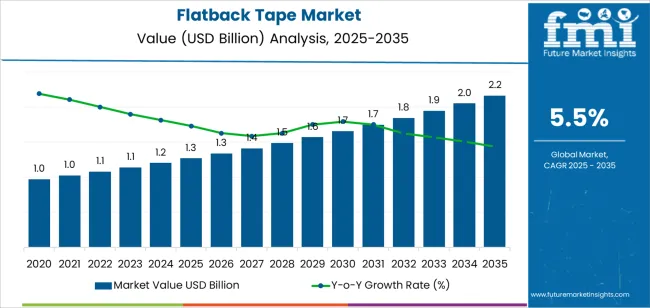
| Metric | Value |
|---|---|
| Flatback Tape Market Estimated Value in (2025 E) | USD 1.3 billion |
| Flatback Tape Market Forecast Value in (2035 F) | USD 2.2 billion |
| Forecast CAGR (2025 to 2035) | 5.5% |
Segmental Analysis
The market is segmented by Type, Adhesive Type, Application, and Thickness and region. By Type, the market is divided into Single Side and Double Side. In terms of Adhesive Type, the market is classified into Rubber, Acrylic, Silicon, and Others. Based on Application, the market is segmented into Splicing, Packaging, Masking, and Tabbing. By Thickness, the market is divided into 5 To 10, <5, and >10. Regionally, the market is classified into North America, Latin America, Western Europe, Eastern Europe, Balkan & Baltic Countries, Russia & Belarus, Central Asia, East Asia, South Asia & Pacific, and the Middle East & Africa.
Insights into the Single Side Segment
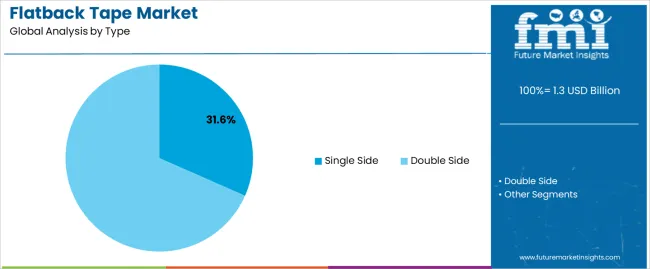
The single side segment leads the type category, representing approximately 31.60% share of the flatback tape market. This segment’s dominance is attributed to its wide application in packaging, splicing, and general-purpose industrial uses where high adhesion and easy removal are required.
Single side flatback tapes offer better compatibility with automated dispensers and provide consistent performance across diverse substrates. The segment benefits from extensive adoption in manufacturing and printing industries due to its clean tearing and high-temperature stability.
With continued investment in sustainable tape formulations and the growth of industrial automation, the single side segment is anticipated to maintain its leading market share..
Insights into the Rubber Segment
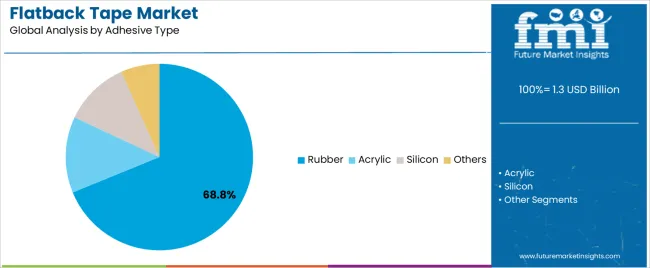
The rubber segment dominates the adhesive type category with approximately 68.80% share, supported by its superior tack and quick adhesion to various surfaces. Rubber-based adhesives provide excellent initial bond strength, making them suitable for high-speed packaging and masking operations.
The segment’s growth is reinforced by cost efficiency and the ability to perform well in both high and low temperatures. Continuous improvements in synthetic rubber formulations have enhanced durability and resistance to aging, further strengthening demand.
With the packaging and paper industries expanding globally, rubber adhesive flatback tapes are expected to sustain strong market traction..
Insights into the Splicing Segment
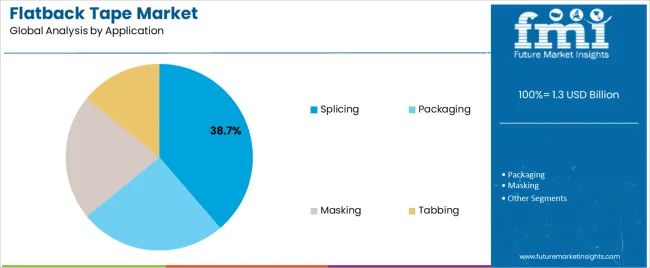
The splicing segment holds approximately 38.70% share within the application category, owing to its extensive use in paper mills, printing, and film processing industries. The need for reliable, high-performance tapes that provide secure and residue-free splicing drives segment growth.
Flatback tapes used in splicing applications offer strong adhesion, dimensional stability, and clean removability under varying temperature and pressure conditions. The segment’s prominence is also linked to increasing automation in converting and manufacturing processes, which demand consistent bonding quality.
With continued emphasis on operational efficiency and reduced downtime, the splicing segment is expected to retain a major share throughout the forecast period..
Key Market Highlights
Surging Supply Chain Digitalization Presents Opportunities in the Market
There is a transformational potential in using digital technologies, like blockchain or digital platforms, to improve the transparency of supply chains and traceability. End-to-end supply chain transparency can be achieved by businesses offering flatback tapes with inbuilt digital tracking features.
In addition to satisfying the rising demand for data-driven decision-making in logistics, this presents companies as progressive partners for customers looking to streamline their supply chain processes. The digitization of the supply chain gives businesses a competitive edge in sectors where traceability and transparency are critical, as well as improved operational efficiency and compliance with regulations.
Elastic and Stretchable Tapes Witness Increased Demand in the Market
Stretchable and elastic flatback tapes are growing more popular to implement environmentally friendly packaging techniques. Due to their strength and flexibility, these tapes enable firms to improve their packaging operations by allowing for variances in package sizes without sacrificing security.
The trend is consistent with the industry's larger drive for resource efficiency and waste minimization. Employing elastic and flexible flatback tapes demonstrates a company's dedication to economical, eco-friendly operations and its understanding of sustainable packaging.
Rise in Online Grocery Shopping Fuels Sales in the Market
The advent of online grocery shopping, fueled by convenience, time savings, and shifting lifestyle preferences, signifies a profound paradigm change in consumer behavior.
As more people choose to buy their groceries online, there is a corresponding rise in the need for packing materials like flatback paper tapes that can efficiently protect perishable foods while they are being transported and stored.
Strong adhesive, moisture-resistant, and temperature-resistant packaging tapes are crucial for sealing food packages, preventing contamination, and guaranteeing the freshness and quality of goods that are delivered to customers' doorsteps.
Businesses must invest in suitable packaging solutions to satisfy the particular needs of this quickly expanding market sector and take advantage of its potential for revenue development and market expansion as online grocery shopping continues to gain popularity.
Flatback Tape Market Trends Analysis
| Attribute | Details |
|---|---|
| Trends |
|
| Opportunities |
|
| Challenges |
|
Category-wise Insights
Rubber Dominates as the Leading Adhesive Type
| Segment | Rubber (Adhesive Type) |
|---|---|
| Value Share (2025) | 68.8% |
Based on adhesive type, the rubber segment holds 68.8% of the flatback tape market shares in 2025.
- Rubber adhesives are used in numerous industries, including consumer products, automotive, woodworking, and packaging. Their capacity to adapt to various surfaces and materials makes them a popular option in various industries, which fuels demand across the market.
- In terms of adhesive technology, rubber adhesives are a trusted solution. This adhesives' ongoing demand is high because plenty of manufacturers and sectors are familiar with them and have historically relied on them.
Splicing Continues to be the Top Application for Flatback Tapes
| Segment | Splicing (Application) |
|---|---|
| Value Share (2025) | 38.7% |
Based on application, the splicing segment captured 38.7% of the flatback tape market shares in 2025.
- Industries requiring continuous operations, including printing, paper and pulp, and packaging, are expanding. Splicing flatback tape demand is rising in accordance with the growth of these sectors, where steady output is critical.
- Splicing tape consumption is correlated with the growing automation adoption in industrial processes. Automated systems can smoothly integrate splicing tapes to sustain continuous production without human intervention, thereby increasing efficiency.
Country-wise Insights
| Countries | Value CAGR (2025 to 2035) |
|---|---|
| United States | 4.1% |
| United Kingdom | 5.4% |
| China | 7.1% |
| Japan | 4.4% |
| India | 7.6% |
Resurgence of Manufacturing Sector Boosts Sales in the United States
The demand for flatback tapes in the United States is projected to rise at a 4.1% CAGR through 2035.
- The improving state of the American manufacturing sector, fuelled by attempts to reshore output and minimize reliance on foreign suppliers, is boosting demand for packaging materials. As businesses concentrate on bolstering local manufacturing capabilities, there is a growing demand for flatback tapes, which are crucial for packaging applications in several industrial industries.
- Advanced application methods, such as automated tape application systems, are increasingly popular. Companies are investing in technology that streamline manual labor, improves efficiency, and optimizes tape application procedures. Sales for flatback tapes are increasing due to the trend towards automation, particularly those made to work with sophisticated application techniques. This represents a distinct growth driver for the United States industry.
High-end Retail Packaging Trends Fuel Market Growth in the United Kingdom
The flatback tape sales in the United Kingdom are expected to surge at a 5.4% CAGR through 2035.
- Exquisite and visually appealing packaging is highly valued in the United Kingdom's upscale retail market. Flatback tapes are becoming more popular among luxury businesses because of their capacity to be customized and fit for high-end packaging. The ability to meet the particular needs of the upscale retail sector is driving the flatback tape industry growth.
- Enterprises are being impacted by the changing consumer trends in the United Kingdom regarding e-commerce packaging, such as a predilection for eco-friendly, aesthetically pleasing, and easily accessible packaging. Demand for flatback tapes is rising because they satisfy these particular e-commerce needs and provide customization choices. Companies that modify their packaging techniques to satisfy the evolving demands of online buyers are largely driving market progress.
Automation Integration in Manufacturing Drives Market Expansion in China
The flatback tape market growth in China is estimated at a 7.1% CAGR through 2035.
- The growing incorporation of automation and smart manufacturing approaches is revamping production processes in China. Manufacturers of flatback tape are cutting costs and increasing manufacturing efficiency by implementing automated technology. Organizations using automation to improve efficiency and obtain a competitive edge are driving the market's growth.
- China's manufacturing industry is growing quickly, concentrating on implementing cutting-edge technology. Modern production techniques and materials are giving flatback tape manufacturers a competitive advantage. Businesses drive development through innovation and efficiency advantages, and the market is directly linked to technology improvements.
Rise of Eco-friendly Packaging Practices Spurs Growth in Japan
The demand for flatback tape in Japan is anticipated to increase at a 4.4% CAGR through 2035.
- Packaging preferences are evolving in Japan due to a strong environmental conscience. Recyclable flatback tapes or made of sustainable materials are growing more popular. Companies that match their products with ecologically friendly packaging techniques are expanding their market share by satisfying regulatory requirements and appealing to Japan's environmentally sensitive customer base.
- Purchasing decisions for packaging materials are influenced by the Just-in-Time (JIT) trend implementation in Japanese manufacturing. Flatback tapes help Just-In-Time (JIT) procedures because of their effectiveness in rapid application and smooth material bonding. Companies who use these tapes in their operations support the growth of the flatback tape market by adhering to the JIT principles of reducing inventory and maximizing production flow.
Rapid Growth of E-commerce and Last-mile Delivery Amplifies Sales in India
The sales of flatback tapes in India are projected to surge at a 7.6% CAGR through 2035.
- The meteoric rise of India's e-commerce sector and a growing focus on last-mile delivery efficiency are boosting demand for durable packaging solutions. Gummed paper tapes are becoming increasingly popular due to their solid adhesive and appropriateness for various packing materials. Businesses profiting from the boom in e-commerce are proactively positioning themselves to meet changing packaging demands, ultimately contributing to market expansion.
- The rising proliferation of small and medium-sized firms (SMEs) across various industries in India is driving the need for cost-effective and adaptable packaging solutions. Brown paper tapes, noted for their cost and versatility, are becoming popular alternatives among SMEs. Businesses that target the SME segment deliberately contribute to market expansion by meeting the unique demands of this developing sector.
Competitive Landscape
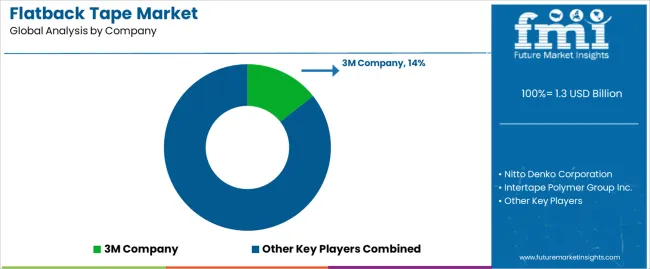
The flatback tape market is competitive, with established industry giants, new firms, and regional rivals battling for market share and positioning. Key international firms, such as 3M Company, Nitto Denko Corporation, and Tesa SE, lead the market due to their diverse product portfolios, global presence, and strategic partnerships.
These industrial behemoths use economies of scale and extensive distribution networks to retain a strong market position, continually investing in R&D to deliver novel solutions that meet changing client requirements.
Recent Developments
- In April 2025, 3M Company collaborated with Innovative Automation Inc. Customers can automate essential bonding tasks using the Robotic Tape System in VHB™ Tapes.
- In October 2024, Ahlstrom-Munksjö enhanced its sustainable tape backing solutions portfolio by introducing a full product line for pressure-sensitive packaging tape applications. MasterTape™ Pack is a sustainable, fiber-based alternative to plastic packaging tapes with high bio-based content.
Key Players in the Flatback Tape Market
- 3M Company
- Nitto Denko Corporation
- Intertape Polymer Group Inc.
- Tesa SE
- Scapa Group plc
- Shurtape Technologies, LLC
- Pro Tapes & Specialties, Inc.
- Adhesives Research, Inc.
- Berry Global Group, Inc.
- Advance Tapes International Ltd.
Key Coverage in the Flatback Tape Market Report
- Adjacent Study on Heat Temperature High Strength Kraft Flatback Tape Market, High Tensile Kraft Flatback Tape Market, and Flatback Paper Tapes Market
- Demand Analysis of Flatback Tape Category of Products
- Competition Analysis in the Flatback Tape Market with Focus on 3M’s, Intertape’s, and Nashua’s Strategies
- Consumption Analysis of Medium-Grade Flatback Tape
- Trends in the Printable Flatback Paper Tape Market
Flatback Tape Market Segmentation
By Product Type:
- Single Side
- Double Side
By Adhesive Type:
- Acrylic
- Silicon
- Rubber
- Others
By Application:
- Splicing
- Packaging
- Masking
- Tabbing
By Thickness:
- <5
- 5 to 10
- >10
By Region:
- North America
- Latin America
- Western Europe
- Eastern Europe
- Asia Pacific (APAC)
- Middle East & Africa (MEA)
- Japan
Frequently Asked Questions
How big is the flatback tape market in 2025?
The global flatback tape market is estimated to be valued at USD 1.3 billion in 2025.
What will be the size of flatback tape market in 2035?
The market size for the flatback tape market is projected to reach USD 2.2 billion by 2035.
How much will be the flatback tape market growth between 2025 and 2035?
The flatback tape market is expected to grow at a 5.5% CAGR between 2025 and 2035.
What are the key product types in the flatback tape market?
The key product types in flatback tape market are single side and double side.
Which adhesive type segment to contribute significant share in the flatback tape market in 2025?
In terms of adhesive type, rubber segment to command 68.8% share in the flatback tape market in 2025.
Preview the report firsthand - request a free sample
Get SampleGet the brochure for pricing and purchase details.
Get PDFTable of Content
- Executive Summary
- Global Market Outlook
- Demand-side Trends
- Supply-side Trends
- Technology Roadmap Analysis
- Analysis and Recommendations
- Market Overview
- Market Coverage / Taxonomy
- Market Definition / Scope / Limitations
- Market Background
- Market Dynamics
- Drivers
- Restraints
- Opportunity
- Trends
- Scenario Forecast
- Demand in Optimistic Scenario
- Demand in Likely Scenario
- Demand in Conservative Scenario
- Opportunity Map Analysis
- Product Life Cycle Analysis
- Supply Chain Analysis
- Investment Feasibility Matrix
- Value Chain Analysis
- PESTLE and Porter’s Analysis
- Regulatory Landscape
- Regional Parent Market Outlook
- Production and Consumption Statistics
- Import and Export Statistics
- Market Dynamics
- Global Market Analysis 2020 to 2024 and Forecast, 2025 to 2035
- Historical Market Size Value (USD Million) Analysis, 2020 to 2024
- Current and Future Market Size Value (USD Million) Projections, 2025 to 2035
- Y-o-Y Growth Trend Analysis
- Absolute $ Opportunity Analysis
- Global Market Pricing Analysis 2020 to 2024 and Forecast 2025 to 2035
- Global Market Analysis 2020 to 2024 and Forecast 2025 to 2035, By Type
- Introduction / Key Findings
- Historical Market Size Value (USD Million) Analysis By Type , 2020 to 2024
- Current and Future Market Size Value (USD Million) Analysis and Forecast By Type , 2025 to 2035
- Single Side
- Double Side
- Y-o-Y Growth Trend Analysis By Type , 2020 to 2024
- Absolute $ Opportunity Analysis By Type , 2025 to 2035
- Global Market Analysis 2020 to 2024 and Forecast 2025 to 2035, By Adhesive Type
- Introduction / Key Findings
- Historical Market Size Value (USD Million) Analysis By Adhesive Type, 2020 to 2024
- Current and Future Market Size Value (USD Million) Analysis and Forecast By Adhesive Type, 2025 to 2035
- Rubber
- Acrylic
- Silicon
- Others
- Y-o-Y Growth Trend Analysis By Adhesive Type, 2020 to 2024
- Absolute $ Opportunity Analysis By Adhesive Type, 2025 to 2035
- Global Market Analysis 2020 to 2024 and Forecast 2025 to 2035, By Application
- Introduction / Key Findings
- Historical Market Size Value (USD Million) Analysis By Application, 2020 to 2024
- Current and Future Market Size Value (USD Million) Analysis and Forecast By Application, 2025 to 2035
- Splicing
- Packaging
- Masking
- Tabbing
- Y-o-Y Growth Trend Analysis By Application, 2020 to 2024
- Absolute $ Opportunity Analysis By Application, 2025 to 2035
- Global Market Analysis 2020 to 2024 and Forecast 2025 to 2035, By Thickness
- Introduction / Key Findings
- Historical Market Size Value (USD Million) Analysis By Thickness, 2020 to 2024
- Current and Future Market Size Value (USD Million) Analysis and Forecast By Thickness, 2025 to 2035
- 5 To 10
- <5
- >10
- Y-o-Y Growth Trend Analysis By Thickness, 2020 to 2024
- Absolute $ Opportunity Analysis By Thickness, 2025 to 2035
- Global Market Analysis 2020 to 2024 and Forecast 2025 to 2035, By Region
- Introduction
- Historical Market Size Value (USD Million) Analysis By Region, 2020 to 2024
- Current Market Size Value (USD Million) Analysis and Forecast By Region, 2025 to 2035
- North America
- Latin America
- Western Europe
- Eastern Europe
- East Asia
- South Asia and Pacific
- Middle East & Africa
- Market Attractiveness Analysis By Region
- North America Market Analysis 2020 to 2024 and Forecast 2025 to 2035, By Country
- Historical Market Size Value (USD Million) Trend Analysis By Market Taxonomy, 2020 to 2024
- Market Size Value (USD Million) Forecast By Market Taxonomy, 2025 to 2035
- By Country
- USA
- Canada
- Mexico
- By Type
- By Adhesive Type
- By Application
- By Thickness
- By Country
- Market Attractiveness Analysis
- By Country
- By Type
- By Adhesive Type
- By Application
- By Thickness
- Key Takeaways
- Latin America Market Analysis 2020 to 2024 and Forecast 2025 to 2035, By Country
- Historical Market Size Value (USD Million) Trend Analysis By Market Taxonomy, 2020 to 2024
- Market Size Value (USD Million) Forecast By Market Taxonomy, 2025 to 2035
- By Country
- Brazil
- Chile
- Rest of Latin America
- By Type
- By Adhesive Type
- By Application
- By Thickness
- By Country
- Market Attractiveness Analysis
- By Country
- By Type
- By Adhesive Type
- By Application
- By Thickness
- Key Takeaways
- Western Europe Market Analysis 2020 to 2024 and Forecast 2025 to 2035, By Country
- Historical Market Size Value (USD Million) Trend Analysis By Market Taxonomy, 2020 to 2024
- Market Size Value (USD Million) Forecast By Market Taxonomy, 2025 to 2035
- By Country
- Germany
- UK
- Italy
- Spain
- France
- Nordic
- BENELUX
- Rest of Western Europe
- By Type
- By Adhesive Type
- By Application
- By Thickness
- By Country
- Market Attractiveness Analysis
- By Country
- By Type
- By Adhesive Type
- By Application
- By Thickness
- Key Takeaways
- Eastern Europe Market Analysis 2020 to 2024 and Forecast 2025 to 2035, By Country
- Historical Market Size Value (USD Million) Trend Analysis By Market Taxonomy, 2020 to 2024
- Market Size Value (USD Million) Forecast By Market Taxonomy, 2025 to 2035
- By Country
- Russia
- Poland
- Hungary
- Balkan & Baltic
- Rest of Eastern Europe
- By Type
- By Adhesive Type
- By Application
- By Thickness
- By Country
- Market Attractiveness Analysis
- By Country
- By Type
- By Adhesive Type
- By Application
- By Thickness
- Key Takeaways
- East Asia Market Analysis 2020 to 2024 and Forecast 2025 to 2035, By Country
- Historical Market Size Value (USD Million) Trend Analysis By Market Taxonomy, 2020 to 2024
- Market Size Value (USD Million) Forecast By Market Taxonomy, 2025 to 2035
- By Country
- China
- Japan
- South Korea
- By Type
- By Adhesive Type
- By Application
- By Thickness
- By Country
- Market Attractiveness Analysis
- By Country
- By Type
- By Adhesive Type
- By Application
- By Thickness
- Key Takeaways
- South Asia and Pacific Market Analysis 2020 to 2024 and Forecast 2025 to 2035, By Country
- Historical Market Size Value (USD Million) Trend Analysis By Market Taxonomy, 2020 to 2024
- Market Size Value (USD Million) Forecast By Market Taxonomy, 2025 to 2035
- By Country
- India
- ASEAN
- Australia & New Zealand
- Rest of South Asia and Pacific
- By Type
- By Adhesive Type
- By Application
- By Thickness
- By Country
- Market Attractiveness Analysis
- By Country
- By Type
- By Adhesive Type
- By Application
- By Thickness
- Key Takeaways
- Middle East & Africa Market Analysis 2020 to 2024 and Forecast 2025 to 2035, By Country
- Historical Market Size Value (USD Million) Trend Analysis By Market Taxonomy, 2020 to 2024
- Market Size Value (USD Million) Forecast By Market Taxonomy, 2025 to 2035
- By Country
- Kingdom of Saudi Arabia
- Other GCC Countries
- Turkiye
- South Africa
- Other African Union
- Rest of Middle East & Africa
- By Type
- By Adhesive Type
- By Application
- By Thickness
- By Country
- Market Attractiveness Analysis
- By Country
- By Type
- By Adhesive Type
- By Application
- By Thickness
- Key Takeaways
- Key Countries Market Analysis
- USA
- Pricing Analysis
- Market Share Analysis, 2024
- By Type
- By Adhesive Type
- By Application
- By Thickness
- Canada
- Pricing Analysis
- Market Share Analysis, 2024
- By Type
- By Adhesive Type
- By Application
- By Thickness
- Mexico
- Pricing Analysis
- Market Share Analysis, 2024
- By Type
- By Adhesive Type
- By Application
- By Thickness
- Brazil
- Pricing Analysis
- Market Share Analysis, 2024
- By Type
- By Adhesive Type
- By Application
- By Thickness
- Chile
- Pricing Analysis
- Market Share Analysis, 2024
- By Type
- By Adhesive Type
- By Application
- By Thickness
- Germany
- Pricing Analysis
- Market Share Analysis, 2024
- By Type
- By Adhesive Type
- By Application
- By Thickness
- UK
- Pricing Analysis
- Market Share Analysis, 2024
- By Type
- By Adhesive Type
- By Application
- By Thickness
- Italy
- Pricing Analysis
- Market Share Analysis, 2024
- By Type
- By Adhesive Type
- By Application
- By Thickness
- Spain
- Pricing Analysis
- Market Share Analysis, 2024
- By Type
- By Adhesive Type
- By Application
- By Thickness
- France
- Pricing Analysis
- Market Share Analysis, 2024
- By Type
- By Adhesive Type
- By Application
- By Thickness
- India
- Pricing Analysis
- Market Share Analysis, 2024
- By Type
- By Adhesive Type
- By Application
- By Thickness
- ASEAN
- Pricing Analysis
- Market Share Analysis, 2024
- By Type
- By Adhesive Type
- By Application
- By Thickness
- Australia & New Zealand
- Pricing Analysis
- Market Share Analysis, 2024
- By Type
- By Adhesive Type
- By Application
- By Thickness
- China
- Pricing Analysis
- Market Share Analysis, 2024
- By Type
- By Adhesive Type
- By Application
- By Thickness
- Japan
- Pricing Analysis
- Market Share Analysis, 2024
- By Type
- By Adhesive Type
- By Application
- By Thickness
- South Korea
- Pricing Analysis
- Market Share Analysis, 2024
- By Type
- By Adhesive Type
- By Application
- By Thickness
- Russia
- Pricing Analysis
- Market Share Analysis, 2024
- By Type
- By Adhesive Type
- By Application
- By Thickness
- Poland
- Pricing Analysis
- Market Share Analysis, 2024
- By Type
- By Adhesive Type
- By Application
- By Thickness
- Hungary
- Pricing Analysis
- Market Share Analysis, 2024
- By Type
- By Adhesive Type
- By Application
- By Thickness
- Kingdom of Saudi Arabia
- Pricing Analysis
- Market Share Analysis, 2024
- By Type
- By Adhesive Type
- By Application
- By Thickness
- Turkiye
- Pricing Analysis
- Market Share Analysis, 2024
- By Type
- By Adhesive Type
- By Application
- By Thickness
- South Africa
- Pricing Analysis
- Market Share Analysis, 2024
- By Type
- By Adhesive Type
- By Application
- By Thickness
- USA
- Market Structure Analysis
- Competition Dashboard
- Competition Benchmarking
- Market Share Analysis of Top Players
- By Regional
- By Type
- By Adhesive Type
- By Application
- By Thickness
- Competition Analysis
- Competition Deep Dive
- 3M Company
- Overview
- Product Portfolio
- Profitability by Market Segments (Product/Age /Sales Channel/Region)
- Sales Footprint
- Strategy Overview
- Marketing Strategy
- Product Strategy
- Channel Strategy
- Nitto Denko Corporation
- Intertape Polymer Group Inc.
- Tesa SE
- Scapa Group plc
- Shurtape Technologies, LLC
- Pro Tapes & Specialties, Inc.
- Adhesives Research, Inc.
- Berry Global Group, Inc.
- Advance Tapes International Ltd.
- 3M Company
- Competition Deep Dive
- Assumptions & Acronyms Used
- Research Methodology


