

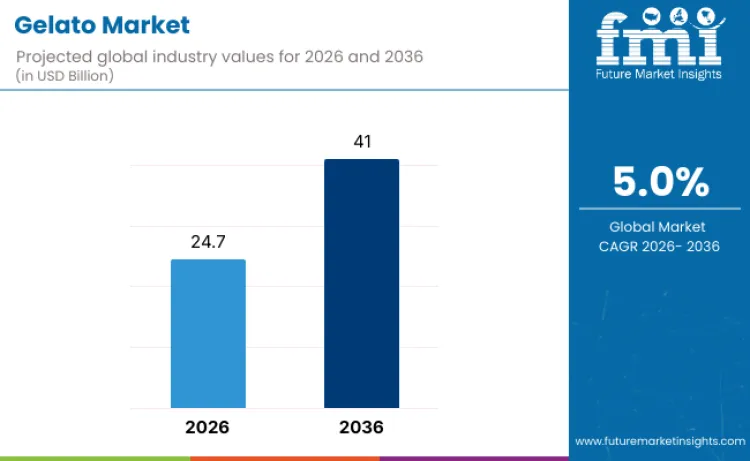
- Industry Size (2026)
- USD 24.7 Bn
- Forecast (2036)
- USD 41.0 Bn
- CAGR (2026 to 2036)
- 5.0%
Gelato Market Size, Market Forecast and Outlook By FMI
The gelato sector stands positioned for substantial expansion, with global revenues anticipated to climb from USD 24.7 billion in 2026 toward USD 41.0 billion by the decade's close. This progression reflects a measured 5.0% compound annual growth trajectory, supported by evolving consumer preferences for premium frozen dessert experiences and authentic European culinary traditions, as per FMI’s estimates.
Premium gelato consumption patterns reveal shifting demographics as younger consumers seek Instagram-worthy dessert experiences alongside authentic taste profiles. Urban gelato shops multiply across metropolitan areas, featuring transparent preparation areas where customers observe traditional churning methods and ingredient selection processes. Craft gelato producers emphasize small-batch production runs that enable rapid flavor innovation and limited-edition releases.
Gelato's lower air content compared to traditional ice cream creates opportunities for premium pricing justified by superior ingredient density and authentic preparation methods. Italian gelato masters train international franchisees in traditional techniques, ensuring global consistency while adapting recipes to local taste preferences and available ingredients. Export markets expand as frozen distribution technology advances enable authentic gelato to reach consumers previously limited to mass-produced ice cream alternatives.
Quick Stats for Gelato Market
- Gelato Industry Value (2026): USD 24.7 Billion
- Gelato Industry Forecast Value (2036): USD 41.0 Billion
- Gelato Industry Forecast CAGR: 5.0%
- Gelato Industry Leading Source: Dairy-based (73%)
- Gelato Industry Key Growth Regions: China, India, Germany
- Gelato Industry Top Players: Unilever PLC, Amorino, Gelatissimo, SAMMONTANA Italia S.p.A., Crosta Mollica
Temperature management throughout cold chain logistics ensures gelato maintains proper texture from production facilities to point of consumption. Specialized freezer equipment designed for gelato's specific storage requirements becomes standard in retail locations seeking to differentiate through premium frozen dessert offerings. Display case innovations showcase gelato's visual appeal while maintaining optimal serving temperatures.
Gelato Market Key Takeaways
| Metric | Value |
|---|---|
| Industry Size (2026) | USD 24.7 Billion |
| Industry Size (2036) | USD 41.0 Billion |
| CAGR (2026 to 2036) | 5.0% |
Source: FMI analysis based on primary research and proprietary forecasting model
What Drivers Are Accelerating Vanilla Flavor Dominance?
Traditional vanilla emerges as cornerstone flavor capturing 31% market share through versatility that complements diverse culinary applications and consumer familiarity across global markets. Madagascar vanilla bean sourcing creates premium positioning opportunities for gelato producers emphasizing authentic ingredient provenance and complex flavor development, and FMI is of the opinion that ingredient storytelling is becoming a decisive purchase factor. Vanilla's compatibility with mix-in ingredients enables endless customization possibilities that appeal to adventurous consumers seeking personalized dessert experiences.
Gelato shop operators leverage vanilla as foundation flavor for signature creations, incorporating local ingredients like regional honeys, artisanal cookies, or seasonal fruits that reflect neighborhood tastes. Premium vanilla extract sources command higher prices that gelato producers willingly pay to differentiate products from industrial ice cream manufacturers using synthetic vanilla flavoring.
Vanilla's universal appeal transcends cultural boundaries, making it safe choice for gelato shops entering new geographic markets where local flavor preferences remain unknown. Children gravitate toward vanilla's familiar taste, while adults appreciate subtle complexity that emerges through proper gelato preparation techniques and high-quality ingredient sourcing.
How Is the Gelato Market Segmented Across Key Categories?
Gelato categorization reflects production methodologies, ingredient sources, and consumption occasions that define purchasing decisions across diverse consumer segments. Industrial versus artisanal production methods create distinct market tiers serving different price points and distribution channels. Dairy-based formulations dominate traditional markets, while plant-based alternatives capture health-conscious and environmentally aware consumers.
Packaging distinctions between take-home containers and impulse single-serving formats address different consumption scenarios and shopping behaviors. Take-home packaging enables family sharing and repeat consumption, while impulse packaging targets immediate gratification and on-the-go consumption patterns.
Flavor segmentation reveals cultural preferences and seasonal consumption patterns that inform production planning and inventory management decisions. Nuts and fruits reflect premium positioning, while chocolate maintains universal appeal across age groups and geographic regions.
Why Does Dairy-Based Production Maintain Leadership?
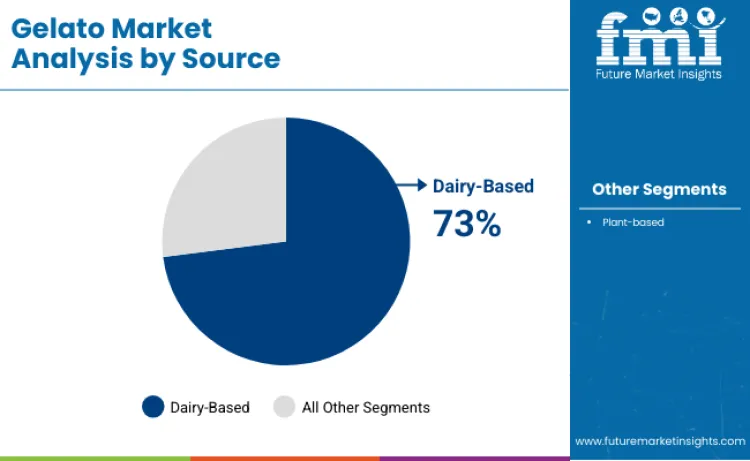
Dairy-based gelato commands 73% market dominance through superior texture development and authentic Italian preparation traditions that define genuine gelato experiences. Milk fat content creates smooth mouthfeel and flavor carrier properties that plant-based alternatives struggle to replicate without extensive processing and additive integration.
Traditional gelato preparation relies on dairy proteins for structure formation during churning processes that achieve characteristic dense texture distinguishing gelato from lighter ice cream products. Artisanal producers emphasize local dairy sourcing that supports regional farming communities while ensuring consistent quality and freshness standards.
Consumer perception associates authentic gelato with dairy ingredients, creating market resistance to plant-based alternatives positioned as gelato rather than distinct frozen dessert categories. Premium gelato experiences center on dairy richness that justifies higher price points compared to mass-market ice cream alternatives.
Why Do Retail Channels Lead Distribution?
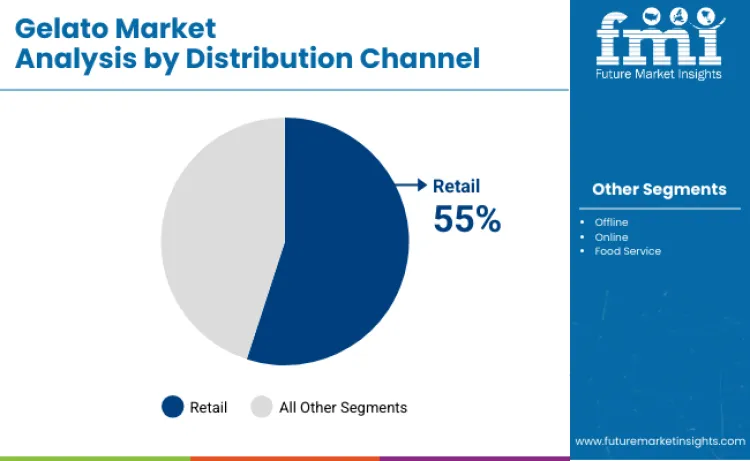
Retail channels capture 55% distribution share through convenient access points that enable impulse purchasing and take-home consumption occasions. Supermarket freezer sections expand gelato selections as consumer demand grows for premium frozen dessert options beyond traditional ice cream offerings.
Retail partnerships enable gelato brands to reach suburban consumers who lack access to specialized gelato shops concentrated in urban areas. Package sizing options cater to family consumption patterns while maintaining product quality through improved freezer technology and packaging innovations.
Retail distribution reduces per-unit costs through volume purchasing while enabling gelato producers to compete with established ice cream brands for freezer space allocation. Private label retail gelato development creates additional revenue streams for contract manufacturers while building retail partner loyalty.
Why Are Artisanal Production Methods Driving Premium Positioning?
Artisanal gelato preparation techniques create differentiation opportunities that justify premium pricing through authentic Italian culinary traditions and superior ingredient quality. Small-batch production enables flavor experimentation and seasonal menu rotations that maintain consumer interest and encourage repeat visits to specialized gelato establishments.
Transparent production areas in gelato shops create entertainment value and educational opportunities that enhance customer experience beyond simple dessert consumption. Traditional equipment usage and manual preparation steps demonstrate craftsmanship that mass production cannot replicate.
Master gelato makers trained in Italian techniques command premium wages and create competitive advantages for establishments emphasizing authenticity over cost efficiency. Artisanal focus attracts food enthusiasts willing to pay higher prices for genuine culinary experiences.
How Will Health-Conscious Consumption Impact Growth Prospects?
Natural ingredient emphasis aligns gelato positioning with clean eating trends that prioritize recognizable components over artificial additives and preservatives. Lower sugar formulations using natural sweeteners appeal to health-conscious consumers without sacrificing taste satisfaction.
Probiotic gelato innovations target gut health trends while maintaining indulgent dessert appeal that attracts wellness-focused consumers seeking functional food benefits. Protein-enriched gelato formulations appeal to fitness enthusiasts and aging populations concerned with nutritional density.
Portion control messaging emphasizes gelato's dense texture that provides satisfaction with smaller serving sizes compared to traditional ice cream consumption patterns. Premium positioning enables smaller portions while maintaining revenue per transaction.
What Role Does Seasonal Flavoring Play in Consumer Engagement?
Seasonal fruit incorporation creates anticipation cycles that drive repeat visits and social media engagement throughout agricultural harvest periods. Limited-time offerings generate urgency and exclusivity that premium consumers associate with authentic culinary experiences.
Local sourcing partnerships with farms create unique flavor profiles unavailable through mass distribution channels while supporting regional agricultural communities. Seasonal menus enable higher profit margins through premium pricing justified by ingredient scarcity and preparation complexity.
Weather-dependent consumption patterns influence production planning and inventory management as warm seasons drive peak sales volumes. Winter menu adaptations featuring comfort flavors and warming spices maintain revenue streams during traditionally slow periods.
How Will the Gelato Industry Evolve in Major Nations?
International gelato expansion reflects growing appreciation for authentic Italian culinary traditions combined with local adaptation strategies that respect regional taste preferences and dietary requirements. Asian markets demonstrate highest growth potential through urbanization trends and increasing disposable income levels that support premium dessert consumption, as per FMI’s estimates.
European markets emphasize authenticity and traditional preparation methods while North American consumers focus on health benefits and ingredient transparency. Emerging economies prioritize affordability and accessibility over premium positioning that characterizes mature market segments.
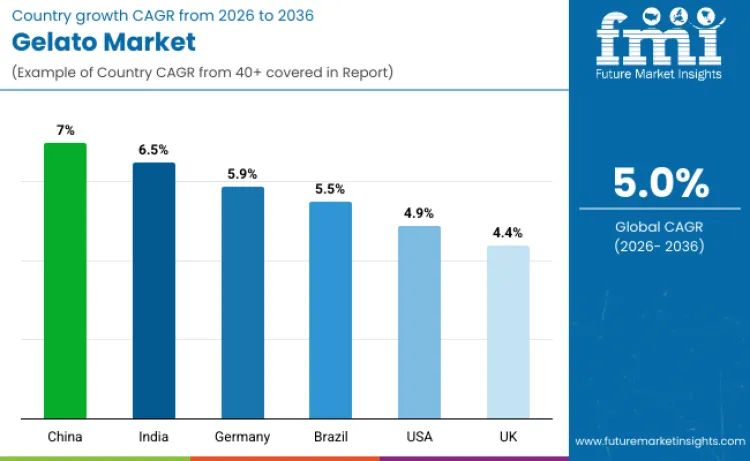
| Country | CAGR (2026 to 2036) |
|---|---|
| China | 7.0% |
| India | 6.5% |
| Germany | 5.9% |
| Brazil | 5.5% |
| USA | 4.9% |
| UK | 4.4% |
Source: Future Market Insights analysis, supported by a proprietary forecasting model and primary research
What Is Fueling the Rise of Gelato Consumption in China?
Sales of gelato in China are set to grow at 7.0% CAGR through rapid urbanization and growing middle-class appreciation for Western dessert culture combined with traditional Chinese flavors like red bean and green tea. International gelato chains establish flagship stores in major cities while domestic producers develop fusion flavors appealing to local palates.
Shopping mall integration creates high-traffic locations that introduce gelato to consumers previously unfamiliar with authentic Italian preparation methods. Social media influence drives younger demographics toward photogenic dessert experiences that generate viral marketing opportunities.
Premium positioning attracts affluent consumers seeking luxury food experiences that demonstrate sophistication and international awareness. Italian gelato master training programs develop local expertise while maintaining authentic preparation standards across franchise locations.
How Are Climate and Culinary Fusion Shaping India’s Gelato Growth?
Demand for gelato in India is projected to rise at 6.5% CAGR growth through tropical climate conditions that favor frozen dessert consumption year-round combined with growing exposure to international cuisine through travel and media influence. Traditional Indian sweets integration creates unique fusion flavors that appeal to local tastes while introducing gelato textures and preparation methods.
Urban heat islands in major cities create consistent demand for premium cooling refreshments that justify higher prices compared to traditional ice cream alternatives. Air conditioning expansion in retail locations enables proper gelato storage and presentation that maintains product quality.
Dairy abundance in India supports local gelato production while religious dietary requirements drive innovation in vegetarian and vegan formulations. Festival seasons create peak consumption periods that gelato shops leverage through special flavors and promotional activities.
Why Does Germany Offer a Stable Platform for Gelato Expansion?
Gelato industry in Germany is poised to expand at 5.9% CAGR through established appreciation for Italian culinary culture and quality food standards that align with authentic gelato preparation methods. Beer garden and cafe culture provides natural venues for gelato consumption that extends beyond traditional dessert occasions.
Tourism infrastructure supports gelato shop density in historic city centers where Italian authenticity appeals to both domestic consumers and international visitors seeking genuine European experiences. Seasonal outdoor dining expansion creates additional consumption opportunities during warm weather periods.
Organic ingredient sourcing aligns with German consumer preferences for natural and environmentally responsible food choices. Local dairy partnerships ensure fresh ingredient supply while supporting regional agricultural communities that value sustainable farming practices.
What Gives Brazil a Distinct Advantage in Gelato Innovation?
Sales of gelato in Brazil are set to grow at 5.5% CAGR annually through tropical fruit abundance that creates unique flavor opportunities unavailable in traditional Italian gelato markets combined with beach culture that normalizes frozen dessert consumption throughout the year. Carnival celebrations and festival culture provide seasonal peaks that gelato vendors maximize through themed flavors and special events.
Italian immigrant communities maintain authentic gelato traditions while incorporating Brazilian ingredients like acai, passion fruit, and coconut that appeal to local taste preferences. Beachfront gelato carts and boardwalk shops capture tourist traffic while serving local communities.
Coffee culture integration creates natural pairing opportunities for gelato consumption as afternoon treats and dessert course additions to traditional Brazilian dining experiences. Premium positioning targets growing middle class seeking indulgent experiences.
How Is the USA Expanding Gelato Beyond Traditional Ice Cream?
Demand for gelato in USA is projected to rise at 4.9% CAGR through artisanal food movement appreciation and Italian-American cultural influence that creates authentic gelato demand in metropolitan areas. Food truck popularity enables mobile gelato vendors to reach suburban markets and special events previously inaccessible to fixed-location shops.
Health-conscious consumer trends favor gelato's natural ingredients and dense texture over artificial additives common in mass-market ice cream products. Celebrity chef endorsements and food media coverage elevate gelato status from niche ethnic food to mainstream premium dessert category.
Franchise expansion enables rapid market penetration while maintaining quality standards through standardized training and supply chain management. Shopping center anchoring provides high-visibility locations that introduce gelato to consumers familiar only with traditional American ice cream.
Why Is Gelato Gaining Ground in the UK’s Dessert Landscape?
Revenue from gelato in UK is set to grow at 4.4% annually through Continental European food culture adoption and increasing tourism to Italy that creates consumer awareness and appreciation for authentic gelato experiences. Pub culture evolution toward food service creates new consumption venues for gelato as dessert options.
High street locations in historic town centers provide tourist traffic while serving local communities seeking premium dessert alternatives. British weather unpredictability creates year-round indoor consumption opportunities that traditional outdoor ice cream vendors cannot access.
Afternoon tea culture adaptation incorporates gelato as modern dessert option alongside traditional sweets while maintaining social dining customs. Premium ingredients sourcing from local farms creates British gelato variations that respect Italian techniques while celebrating regional ingredients.
What is the Competitive Outlook for the Gelato Market?
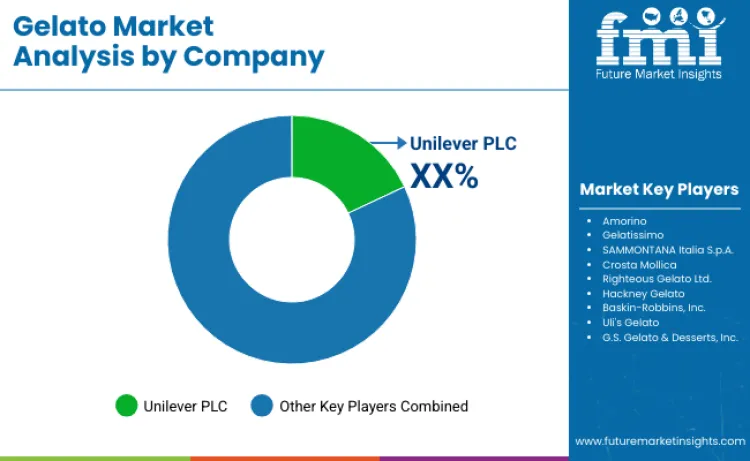
Gelato industry competition centers on authenticity demonstrations through Italian training certifications and traditional equipment usage that creates credibility with consumers seeking genuine culinary experiences. Artisanal producers emphasize handcraft techniques and local ingredient sourcing while larger manufacturers focus on distribution efficiency and consistent quality across multiple locations.
Franchise models enable rapid expansion while maintaining brand consistency through standardized training programs and supply chain management. Independent gelato shops differentiate through unique flavor development and local community engagement that larger chains struggle to replicate.
Technology integration improves temperature control and production efficiency while preserving traditional preparation methods that define authentic gelato characteristics. Point-of-sale systems track flavor preferences and consumption patterns that inform inventory management and new product development decisions.
Seasonal menu planning becomes competitive advantage as successful gelato operators anticipate consumer trends and source limited ingredients that create exclusivity and premium positioning opportunities.
Key Players in Gelato Market
- Unilever PLC
- Amorino
- Gelatissimo
- SAMMONTANA Italia S.p.A.
- Crosta Mollica
- Righteous Gelato Ltd.
- Hackney Gelato
- Baskin-Robbins, Inc.
- Uli's Gelato
- G.S. Gelato & Desserts, Inc.
Report Scope Table
| Items | Values |
|---|---|
| Quantitative Units | USD Billion |
| Source Segments | Dairy-based; Plant-based |
| Flavor Categories | Vanilla; Chocolate; Fruits & Berries; Nuts; Others |
| Production Method Segments | Industrial Gelato; Artisanal Gelato |
| Packaging Categories | Take-home packaging; Impulse packaging |
| Distribution Channel Categories | Retail; Offline; Online; Food Service |
| Regions Covered | North America, Europe, East Asia, South Asia, Latin America, Middle East & Africa |
| Key Countries | China, India, Germany, Brazil, USA, UK |
| Key Companies Profiled | Unilever PLC; Amorino; Gelatissimo; SAMMONTANA Italia S.p.A.; Crosta Mollica; Righteous Gelato Ltd.; Hackney Gelato; Baskin-Robbins, Inc.; Uli's Gelato; G.S. Gelato & Desserts, Inc. |
| Additional Attributes | Dollar sales measured for gelato products across premium frozen dessert applications, specified by production methodology (artisanal versus industrial), ingredient sourcing (dairy versus plant-based alternatives), flavor categorization (traditional versus seasonal specialties), packaging format (family-size versus single-serving), distribution strategy (specialty shops versus retail chains), temperature management requirements, Italian authenticity certification, and seasonal consumption pattern variations affecting production planning and inventory management. |
Gelato Market by Segments
Source:
- Dairy-based
- Plant-based
Flavor:
- Vanilla
- Chocolate
- Fruits & Berries
- Nuts
- Others
Production Method:
- Industrial Gelato
- Artisanal Gelato
Packaging:
- Take-home packaging
- Impulse packaging
Distribution Channel:
- Retail
- Offline
- Online
- Food Service
Bibliography
- International Dairy Foods Association. (2024). Standards and best practices in dairy-based frozen dessert manufacturing. International Dairy Foods Association.
- Associazione Italiana Gelatieri. (2024). Traditional gelato production methods and quality benchmarks. Associazione Italiana Gelatieri.
- European Dairy Association. (2024). Dairy ingredient utilization and innovation trends in frozen desserts. European Dairy Association.
- International Ice Cream Association. (2024). Frozen dessert category definitions, processing standards, and distribution practices. International Ice Cream Association.
Frequently Asked Questions
How large is the demand for Gelato in the global market in 2026?
Gelato industry is estimated to be valued at USD 24.7 billion in 2026.
What will be the market size of Gelato in the global market by 2036?
The market size for Gelato is projected to reach USD 41.0 billion by 2036.
What is the expected demand growth for Gelato between 2026 and 2036?
Demand for Gelato is expected to grow at a CAGR of 5.0% between 2026 and 2036.
Which Source segment is poised to lead global sales by 2026?
Dairy-based formulations are expected to be the dominant source segment, capturing approximately 73% of the global market share in 2026.
How significant is the role of Retail channels in driving Gelato adoption in 2026?
Retail channels represent a critical distribution segment, projected to hold a substantial 55% share of the total market in 2026.
Preview the report firsthand - request a free sample
Get SampleGet the brochure for pricing and purchase details.
Get PDFTable of Content
- Executive Summary
- Global Market Outlook
- Demand-side Trends
- Supply-side Trends
- Technology Roadmap Analysis
- Analysis and Recommendations
- Market Overview
- Market Coverage / Taxonomy
- Market Definition / Scope / Limitations
- Market Background
- Market Dynamics
- Drivers
- Restraints
- Opportunity
- Trends
- Scenario Forecast
- Demand in Optimistic Scenario
- Demand in Likely Scenario
- Demand in Conservative Scenario
- Opportunity Map Analysis
- Product Life Cycle Analysis
- Supply Chain Analysis
- Investment Feasibility Matrix
- Value Chain Analysis
- PESTLE and Porter’s Analysis
- Regulatory Landscape
- Regional Parent Market Outlook
- Production and Consumption Statistics
- Import and Export Statistics
- Market Dynamics
- Global Market Analysis 2020 to 2025 and Forecast, 2026 to 2036
- Historical Market Size Value (USD Million) Analysis, 2020 to 2025
- Current and Future Market Size Value (USD Million) Projections, 2026 to 2036
- Y-o-Y Growth Trend Analysis
- Absolute $ Opportunity Analysis
- Global Market Pricing Analysis 2020 to 2025 and Forecast 2026 to 2036
- Global Market Analysis 2020 to 2025 and Forecast 2026 to 2036, By Source
- Introduction / Key Findings
- Historical Market Size Value (USD Million) Analysis By Source, 2020 to 2025
- Current and Future Market Size Value (USD Million) Analysis and Forecast By Source, 2026 to 2036
- Dairy-based
- Plant-based
- Y-o-Y Growth Trend Analysis By Source, 2020 to 2025
- Absolute $ Opportunity Analysis By Source, 2026 to 2036
- Global Market Analysis 2020 to 2025 and Forecast 2026 to 2036, By Flavor
- Introduction / Key Findings
- Historical Market Size Value (USD Million) Analysis By Flavor, 2020 to 2025
- Current and Future Market Size Value (USD Million) Analysis and Forecast By Flavor, 2026 to 2036
- Vanilla
- Chocolate
- Fruits & Berries
- Nuts
- Others
- Y-o-Y Growth Trend Analysis By Flavor, 2020 to 2025
- Absolute $ Opportunity Analysis By Flavor, 2026 to 2036
- Global Market Analysis 2020 to 2025 and Forecast 2026 to 2036, By Production Method
- Introduction / Key Findings
- Historical Market Size Value (USD Million) Analysis By Production Method, 2020 to 2025
- Current and Future Market Size Value (USD Million) Analysis and Forecast By Production Method, 2026 to 2036
- Industrial Gelato
- Artisanal Gelato
- Y-o-Y Growth Trend Analysis By Production Method, 2020 to 2025
- Absolute $ Opportunity Analysis By Production Method, 2026 to 2036
- Global Market Analysis 2020 to 2025 and Forecast 2026 to 2036, By Packaging
- Introduction / Key Findings
- Historical Market Size Value (USD Million) Analysis By Packaging, 2020 to 2025
- Current and Future Market Size Value (USD Million) Analysis and Forecast By Packaging, 2026 to 2036
- Take-home packaging
- Impulse packaging
- Y-o-Y Growth Trend Analysis By Packaging, 2020 to 2025
- Absolute $ Opportunity Analysis By Packaging, 2026 to 2036
- Global Market Analysis 2020 to 2025 and Forecast 2026 to 2036, By Distribution Channel
- Introduction / Key Findings
- Historical Market Size Value (USD Million) Analysis By Distribution Channel, 2020 to 2025
- Current and Future Market Size Value (USD Million) Analysis and Forecast By Distribution Channel, 2026 to 2036
- Retail
- Offline
- Online
- Food Service
- Y-o-Y Growth Trend Analysis By Distribution Channel, 2020 to 2025
- Absolute $ Opportunity Analysis By Distribution Channel, 2026 to 2036
- Market Structure Analysis
- Competition Dashboard
- Competition Benchmarking
- Market Share Analysis of Top Players
- By Regional
- By Source
- By Flavor
- By Production Method
- By Packaging
- By Distribution Channel
- Competition Analysis
- Competition Deep Dive
- Unilever PLC
- Overview
- Product Portfolio
- Profitability by Market Segments (Product/Age /Sales Channel/Region)
- Sales Footprint
- Strategy Overview
- Marketing Strategy
- Product Strategy
- Channel Strategy
- Amorino
- Gelatissimo
- SAMMONTANA Italia S.p.A.
- Crosta Mollica
- Unilever PLC
- Competition Deep Dive
- Assumptions & Acronyms Used
- Research Methodology


