

- Industry Size (2025)
- USD 5.8 Bn
- Forecast (2035)
- USD 10.2 Bn
- CAGR (2025 to 2035)
- 5.8%
Glazed Bricks Market Size and Share Forecast Outlook 2025 to 2035
The Glazed Bricks Market is estimated to be valued at USD 5.8 billion in 2025 and is projected to reach USD 10.2 billion by 2035, registering a compound annual growth rate (CAGR) of 5.8% over the forecast period.
Quick Stats for Glazed Bricks Market
- Glazed Bricks Market Value (2025): USD 5.8 billion
- Glazed Bricks Market Forecast Value (2035): USD 10.2 billion
- Glazed Bricks Market Forecast CAGR: 5.8%
- Leading Segment in Glazed Bricks Market in 2025: Small (45.3%)
- Key Growth Regions in Glazed Bricks Market: North America, Asia-Pacific, Europe
- Top Key Players in Glazed Bricks Market: Wienerberger AG, Ibstock Brick Limited, Acme Brick Company, Glen-Gery Corporation, Boral Limited, CRH plc, General Shale Brick, Inc., Brickworks Limited, Michelmersh Brick Holdings PLC, Taylor Clay Products, Inc., Belden Brick Company, Carmeuse Group, Columbus Brick Company
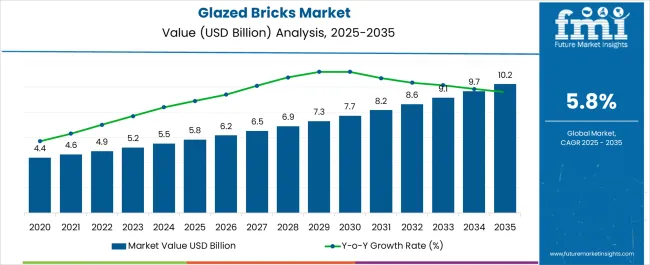
Glazed Bricks Market Key Takeaways
| Metric | Value |
|---|---|
| Glazed Bricks Market Estimated Value in (2025 E) | USD 5.8 billion |
| Glazed Bricks Market Forecast Value in (2035 F) | USD 10.2 billion |
| Forecast CAGR (2025 to 2035) | 5.8% |
Why is the Glazed Bricks Market Growing?
The Glazed Bricks market is experiencing significant growth, driven by increasing demand for aesthetically appealing and durable construction materials in residential, commercial, and infrastructure projects. Rising urbanization, coupled with government initiatives to promote sustainable and resilient building practices, has accelerated the adoption of glazed bricks in construction. These bricks provide enhanced weather resistance, improved durability, and low maintenance requirements, making them suitable for diverse applications.
Technological advancements in glazing processes and coating materials have further enhanced color consistency, surface finish, and long-term performance. Increasing awareness among architects, designers, and builders regarding the benefits of glazed bricks in terms of visual appeal and structural resilience is further supporting market expansion.
Additionally, the growing trend of integrating energy-efficient and environmentally friendly materials in building design is reinforcing demand As construction activities continue to rise across both emerging and developed markets, the Glazed Bricks market is expected to witness sustained growth, driven by continuous innovations in material quality, aesthetic versatility, and application flexibility.
Segmental Analysis
The glazed bricks market is segmented by size, type, class, end user, process of formation, and geographic regions. By size, glazed bricks market is divided into Small, Medium, and Large. In terms of type, glazed bricks market is classified into Type 1 (Single-Faced) and Type 2 (Two Faced). Based on class, glazed bricks market is segmented into Exterior and Interior. By end user, glazed bricks market is segmented into Commercial and Residential. By process of formation, glazed bricks market is segmented into Single Fired and Double Fired. Regionally, the glazed bricks industry is classified into North America, Latin America, Western Europe, Eastern Europe, Balkan & Baltic Countries, Russia & Belarus, Central Asia, East Asia, South Asia & Pacific, and the Middle East & Africa.
Insights into the Small Size Segment
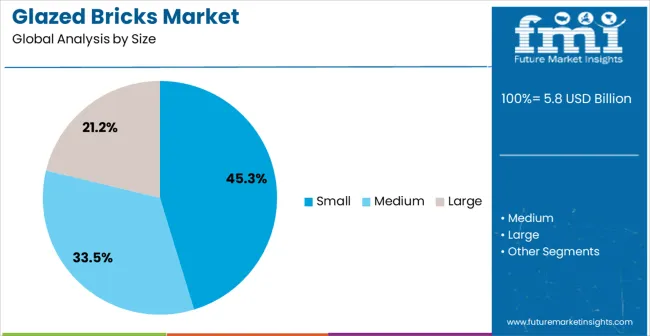
The small size segment is projected to hold 45.3% of the market revenue in 2025, establishing it as the leading size category. Growth in this segment is being driven by its versatility in construction and ability to support intricate architectural designs. Small-sized glazed bricks enable precision in layouts, ease of installation, and suitability for both decorative and structural applications.
Their manageable dimensions reduce labor requirements and allow for faster project completion, which is appealing to developers and contractors. In addition, small glazed bricks offer enhanced surface uniformity and are compatible with a wide range of bonding techniques and mortar types, improving structural stability.
The ability to combine aesthetic appeal with durability makes this size highly preferred in both residential and commercial projects As construction trends increasingly focus on design flexibility, modularity, and high-quality finishes, the small size segment is expected to maintain its leadership position, supported by consistent performance, adaptability, and growing adoption in modern architectural projects.
Insights into the Type 1 (Single-Faced) Segment
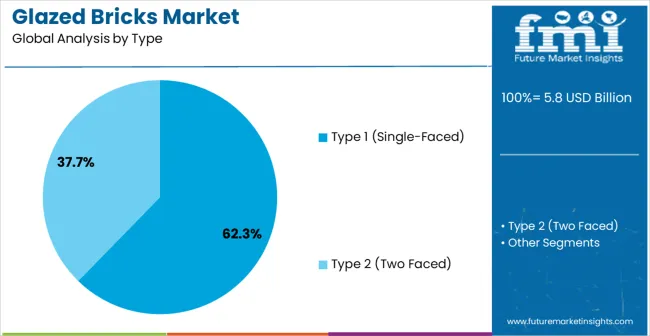
The Type 1 (Single-Faced) segment is anticipated to account for 62.3% of the market revenue in 2025, making it the leading type. Its growth is driven by the ability to provide a visually attractive finished surface while maintaining structural efficiency. Single-faced glazed bricks allow one surface to showcase aesthetic design features such as color uniformity, texture, and gloss, making them ideal for exterior facades, decorative walls, and accent features.
The manufacturing process ensures consistent quality and surface durability, which reduces maintenance costs and enhances building longevity. Designers and architects prefer this type for projects requiring focused visual impact without additional finishing work.
Additionally, single-faced bricks are compatible with modern construction practices and can be used alongside other masonry elements, supporting versatility in application With increasing emphasis on architectural aesthetics and energy-efficient building materials, the Type 1 (Single-Faced) segment is expected to retain market dominance, driven by its combination of functional performance and design flexibility.
Insights into the Exterior Class Segment
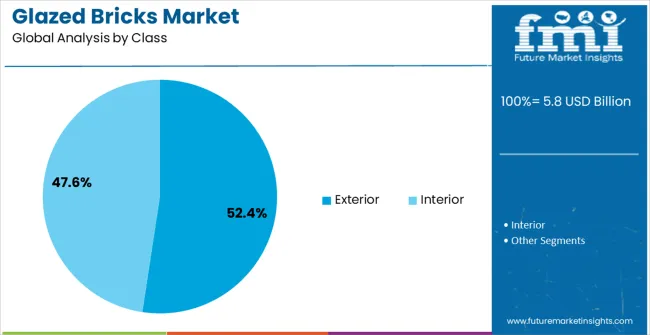
The exterior class segment is projected to hold 52.4% of the market revenue in 2025, establishing it as the leading class. Growth is being driven by the rising demand for durable and weather-resistant materials in building exteriors. Exterior glazed bricks provide enhanced protection against moisture, UV exposure, and temperature fluctuations, ensuring long-term structural integrity and appearance.
Their resistance to staining, fading, and erosion makes them suitable for facades, cladding, and boundary walls. Additionally, the use of exterior glazed bricks supports energy-efficient construction by contributing to thermal insulation and reducing maintenance requirements.
Architects and builders increasingly select exterior-class glazed bricks to meet modern building codes and aesthetic standards while delivering functional durability As urbanization and construction activities continue to rise, the exterior class segment is expected to maintain its leading market position, supported by growing awareness of its performance advantages, design appeal, and adaptability for both residential and commercial construction projects.
Market Overview
Glazed Bricks Market Overview
Glazed bricks have been widely used to enhance the interiors as well as the exteriors of houses. They come in a wide range of colours and provide an improved aesthetics to buildings, during new constructions as well as brickwork restoration. These bricks do not only give the constructed buildings an exquisite and polished look, but also provide durability and strength.
Glazed bricks have been extensively used in both historical as well as modern building projects. Glazed bricks make a durable, permanent and non-fading wall systemresistant to liquids and gases. They are easy to maintain and clean - especially with respect to dirt and graffiti removal. They have hightolerance against abrasion and impact. In addition to the above-stated benefits, glazed bricks also have an added advantage of being customizable for various designs and shapes.
Analysis of Glazed Bricks Market By Key Countries
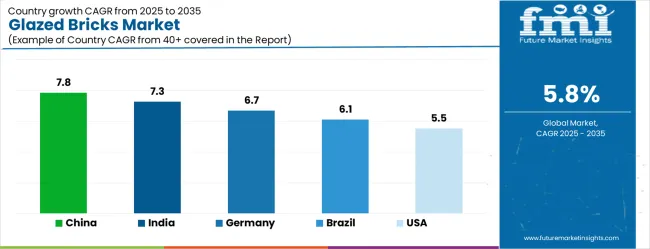
| Country | CAGR |
|---|---|
| China | 7.8% |
| India | 7.3% |
| Germany | 6.7% |
| Brazil | 6.1% |
| USA | 5.5% |
| UK | 4.9% |
| Japan | 4.4% |
Country-wise Analysis
The Glazed Bricks Market is expected to register a CAGR of 5.8% during the forecast period, exhibiting varied country level momentum. China leads with the highest CAGR of 7.8%, followed by India at 7.3%. Developed markets such as Germany, France, and the UK continue to expand steadily, while the USA is likely to grow at consistent rates. Japan posts the lowest CAGR at 4.4%, yet still underscores a broadly positive trajectory for the global Glazed Bricks Market. In 2024, Germany held a dominant revenue in the Western Europe market and is expected to grow with a CAGR of 6.7%. The USA Glazed Bricks Market is estimated to be valued at USD 2.1 billion in 2025 and is anticipated to reach a valuation of USD 2.1 billion by 2035. Sales are projected to rise at a CAGR of 0.0% over the forecast period between 2025 and 2035. While Japan and South Korea markets are estimated to be valued at USD 279.0 million and USD 181.0 million respectively in 2025.
Key Players in the Glazed Bricks Market
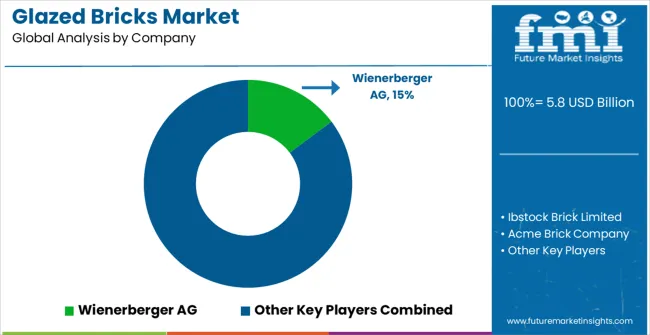
- Wienerberger AG
- Ibstock Brick Limited
- Acme Brick Company
- Glen-Gery Corporation
- Boral Limited
- CRH plc
- General Shale Brick, Inc.
- Brickworks Limited
- Michelmersh Brick Holdings PLC
- Taylor Clay Products, Inc.
- Belden Brick Company
- Carmeuse Group
- Columbus Brick Company
Scope of the Report
| Item | Value |
|---|---|
| Quantitative Units | USD 5.8 Billion |
| Size | Small, Medium, and Large |
| Type | Type 1 (Single-Faced) and Type 2 (Two Faced) |
| Class | Exterior and Interior |
| End User | Commercial and Residential |
| Process Of Formation | Single Fired and Double Fired |
| Regions Covered | North America, Europe, Asia-Pacific, Latin America, Middle East & Africa |
| Country Covered | United States, Canada, Germany, France, United Kingdom, China, Japan, India, Brazil, South Africa |
| Key Companies Profiled | Wienerberger AG, Ibstock Brick Limited, Acme Brick Company, Glen-Gery Corporation, Boral Limited, CRH plc, General Shale Brick, Inc., Brickworks Limited, Michelmersh Brick Holdings PLC, Taylor Clay Products, Inc., Belden Brick Company, Carmeuse Group, and Columbus Brick Company |
Glazed Bricks Market by Segments
Size:
- Small
- Medium
- Large
Type:
- Type 1 (Single-Faced)
- Type 2 (Two Faced)
Class:
- Exterior
- Interior
End User:
- Commercial
- Residential
Process Of Formation:
- Single Fired
- Double Fired
Region:
- North America
- USA
- Canada
- Mexico
- Latin America
- Brazil
- Chile
- Rest of Latin America
- Western Europe
- Germany
- UK
- Italy
- Spain
- France
- Nordic
- BENELUX
- Rest of Western Europe
- Eastern Europe
- Russia
- Poland
- Hungary
- Balkan & Baltic
- Rest of Eastern Europe
- East Asia
- China
- Japan
- South Korea
- South Asia and Pacific
- India
- ASEAN
- Australia & New Zealand
- Rest of South Asia and Pacific
- Middle East & Africa
- Kingdom of Saudi Arabia
- Other GCC Countries
- Turkiye
- South Africa
- Other African Union
- Rest of Middle East & Africa
Frequently Asked Questions
How big is the glazed bricks market in 2025?
The global glazed bricks market is estimated to be valued at USD 5.8 billion in 2025.
What will be the size of glazed bricks market in 2035?
The market size for the glazed bricks market is projected to reach USD 10.2 billion by 2035.
How much will be the glazed bricks market growth between 2025 and 2035?
The glazed bricks market is expected to grow at a 5.8% CAGR between 2025 and 2035.
What are the key product types in the glazed bricks market?
The key product types in glazed bricks market are small, medium and large.
Which type segment to contribute significant share in the glazed bricks market in 2025?
In terms of type, type 1 (single-faced) segment to command 62.3% share in the glazed bricks market in 2025.
Preview the report firsthand - request a free sample
Get SampleGet the brochure for pricing and purchase details.
Get PDFTable of Content
- Executive Summary
- Global Market Outlook
- Demand-side Trends
- Supply-side Trends
- Technology Roadmap Analysis
- Analysis and Recommendations
- Market Overview
- Market Coverage / Taxonomy
- Market Definition / Scope / Limitations
- Market Background
- Market Dynamics
- Drivers
- Restraints
- Opportunity
- Trends
- Scenario Forecast
- Demand in Optimistic Scenario
- Demand in Likely Scenario
- Demand in Conservative Scenario
- Opportunity Map Analysis
- Product Life Cycle Analysis
- Supply Chain Analysis
- Investment Feasibility Matrix
- Value Chain Analysis
- PESTLE and Porter’s Analysis
- Regulatory Landscape
- Regional Parent Market Outlook
- Production and Consumption Statistics
- Import and Export Statistics
- Market Dynamics
- Global Market Analysis 2020 to 2024 and Forecast, 2025 to 2035
- Historical Market Size Value (USD Million) Analysis, 2020 to 2024
- Current and Future Market Size Value (USD Million) Projections, 2025 to 2035
- Y-o-Y Growth Trend Analysis
- Absolute $ Opportunity Analysis
- Global Market Pricing Analysis 2020 to 2024 and Forecast 2025 to 2035
- Global Market Analysis 2020 to 2024 and Forecast 2025 to 2035, By Size
- Introduction / Key Findings
- Historical Market Size Value (USD Million) Analysis By Size , 2020 to 2024
- Current and Future Market Size Value (USD Million) Analysis and Forecast By Size , 2025 to 2035
- Small
- Medium
- Large
- Y-o-Y Growth Trend Analysis By Size , 2020 to 2024
- Absolute $ Opportunity Analysis By Size , 2025 to 2035
- Global Market Analysis 2020 to 2024 and Forecast 2025 to 2035, By Type
- Introduction / Key Findings
- Historical Market Size Value (USD Million) Analysis By Type, 2020 to 2024
- Current and Future Market Size Value (USD Million) Analysis and Forecast By Type, 2025 to 2035
- Type 1 (Single-Faced)
- Type 2 (Two Faced)
- Y-o-Y Growth Trend Analysis By Type, 2020 to 2024
- Absolute $ Opportunity Analysis By Type, 2025 to 2035
- Global Market Analysis 2020 to 2024 and Forecast 2025 to 2035, By Class
- Introduction / Key Findings
- Historical Market Size Value (USD Million) Analysis By Class, 2020 to 2024
- Current and Future Market Size Value (USD Million) Analysis and Forecast By Class, 2025 to 2035
- Exterior
- Interior
- Y-o-Y Growth Trend Analysis By Class, 2020 to 2024
- Absolute $ Opportunity Analysis By Class, 2025 to 2035
- Global Market Analysis 2020 to 2024 and Forecast 2025 to 2035, By End User
- Introduction / Key Findings
- Historical Market Size Value (USD Million) Analysis By End User, 2020 to 2024
- Current and Future Market Size Value (USD Million) Analysis and Forecast By End User, 2025 to 2035
- Commercial
- Residential
- Y-o-Y Growth Trend Analysis By End User, 2020 to 2024
- Absolute $ Opportunity Analysis By End User, 2025 to 2035
- Global Market Analysis 2020 to 2024 and Forecast 2025 to 2035, By Process Of Formation
- Introduction / Key Findings
- Historical Market Size Value (USD Million) Analysis By Process Of Formation, 2020 to 2024
- Current and Future Market Size Value (USD Million) Analysis and Forecast By Process Of Formation, 2025 to 2035
- Single Fired
- Double Fired
- Y-o-Y Growth Trend Analysis By Process Of Formation, 2020 to 2024
- Absolute $ Opportunity Analysis By Process Of Formation, 2025 to 2035
- Global Market Analysis 2020 to 2024 and Forecast 2025 to 2035, By Region
- Introduction
- Historical Market Size Value (USD Million) Analysis By Region, 2020 to 2024
- Current Market Size Value (USD Million) Analysis and Forecast By Region, 2025 to 2035
- North America
- Latin America
- Western Europe
- Eastern Europe
- East Asia
- South Asia and Pacific
- Middle East & Africa
- Market Attractiveness Analysis By Region
- North America Market Analysis 2020 to 2024 and Forecast 2025 to 2035, By Country
- Historical Market Size Value (USD Million) Trend Analysis By Market Taxonomy, 2020 to 2024
- Market Size Value (USD Million) Forecast By Market Taxonomy, 2025 to 2035
- By Country
- USA
- Canada
- Mexico
- By Size
- By Type
- By Class
- By End User
- By Process Of Formation
- By Country
- Market Attractiveness Analysis
- By Country
- By Size
- By Type
- By Class
- By End User
- By Process Of Formation
- Key Takeaways
- Latin America Market Analysis 2020 to 2024 and Forecast 2025 to 2035, By Country
- Historical Market Size Value (USD Million) Trend Analysis By Market Taxonomy, 2020 to 2024
- Market Size Value (USD Million) Forecast By Market Taxonomy, 2025 to 2035
- By Country
- Brazil
- Chile
- Rest of Latin America
- By Size
- By Type
- By Class
- By End User
- By Process Of Formation
- By Country
- Market Attractiveness Analysis
- By Country
- By Size
- By Type
- By Class
- By End User
- By Process Of Formation
- Key Takeaways
- Western Europe Market Analysis 2020 to 2024 and Forecast 2025 to 2035, By Country
- Historical Market Size Value (USD Million) Trend Analysis By Market Taxonomy, 2020 to 2024
- Market Size Value (USD Million) Forecast By Market Taxonomy, 2025 to 2035
- By Country
- Germany
- UK
- Italy
- Spain
- France
- Nordic
- BENELUX
- Rest of Western Europe
- By Size
- By Type
- By Class
- By End User
- By Process Of Formation
- By Country
- Market Attractiveness Analysis
- By Country
- By Size
- By Type
- By Class
- By End User
- By Process Of Formation
- Key Takeaways
- Eastern Europe Market Analysis 2020 to 2024 and Forecast 2025 to 2035, By Country
- Historical Market Size Value (USD Million) Trend Analysis By Market Taxonomy, 2020 to 2024
- Market Size Value (USD Million) Forecast By Market Taxonomy, 2025 to 2035
- By Country
- Russia
- Poland
- Hungary
- Balkan & Baltic
- Rest of Eastern Europe
- By Size
- By Type
- By Class
- By End User
- By Process Of Formation
- By Country
- Market Attractiveness Analysis
- By Country
- By Size
- By Type
- By Class
- By End User
- By Process Of Formation
- Key Takeaways
- East Asia Market Analysis 2020 to 2024 and Forecast 2025 to 2035, By Country
- Historical Market Size Value (USD Million) Trend Analysis By Market Taxonomy, 2020 to 2024
- Market Size Value (USD Million) Forecast By Market Taxonomy, 2025 to 2035
- By Country
- China
- Japan
- South Korea
- By Size
- By Type
- By Class
- By End User
- By Process Of Formation
- By Country
- Market Attractiveness Analysis
- By Country
- By Size
- By Type
- By Class
- By End User
- By Process Of Formation
- Key Takeaways
- South Asia and Pacific Market Analysis 2020 to 2024 and Forecast 2025 to 2035, By Country
- Historical Market Size Value (USD Million) Trend Analysis By Market Taxonomy, 2020 to 2024
- Market Size Value (USD Million) Forecast By Market Taxonomy, 2025 to 2035
- By Country
- India
- ASEAN
- Australia & New Zealand
- Rest of South Asia and Pacific
- By Size
- By Type
- By Class
- By End User
- By Process Of Formation
- By Country
- Market Attractiveness Analysis
- By Country
- By Size
- By Type
- By Class
- By End User
- By Process Of Formation
- Key Takeaways
- Middle East & Africa Market Analysis 2020 to 2024 and Forecast 2025 to 2035, By Country
- Historical Market Size Value (USD Million) Trend Analysis By Market Taxonomy, 2020 to 2024
- Market Size Value (USD Million) Forecast By Market Taxonomy, 2025 to 2035
- By Country
- Kingdom of Saudi Arabia
- Other GCC Countries
- Turkiye
- South Africa
- Other African Union
- Rest of Middle East & Africa
- By Size
- By Type
- By Class
- By End User
- By Process Of Formation
- By Country
- Market Attractiveness Analysis
- By Country
- By Size
- By Type
- By Class
- By End User
- By Process Of Formation
- Key Takeaways
- Key Countries Market Analysis
- USA
- Pricing Analysis
- Market Share Analysis, 2024
- By Size
- By Type
- By Class
- By End User
- By Process Of Formation
- Canada
- Pricing Analysis
- Market Share Analysis, 2024
- By Size
- By Type
- By Class
- By End User
- By Process Of Formation
- Mexico
- Pricing Analysis
- Market Share Analysis, 2024
- By Size
- By Type
- By Class
- By End User
- By Process Of Formation
- Brazil
- Pricing Analysis
- Market Share Analysis, 2024
- By Size
- By Type
- By Class
- By End User
- By Process Of Formation
- Chile
- Pricing Analysis
- Market Share Analysis, 2024
- By Size
- By Type
- By Class
- By End User
- By Process Of Formation
- Germany
- Pricing Analysis
- Market Share Analysis, 2024
- By Size
- By Type
- By Class
- By End User
- By Process Of Formation
- UK
- Pricing Analysis
- Market Share Analysis, 2024
- By Size
- By Type
- By Class
- By End User
- By Process Of Formation
- Italy
- Pricing Analysis
- Market Share Analysis, 2024
- By Size
- By Type
- By Class
- By End User
- By Process Of Formation
- Spain
- Pricing Analysis
- Market Share Analysis, 2024
- By Size
- By Type
- By Class
- By End User
- By Process Of Formation
- France
- Pricing Analysis
- Market Share Analysis, 2024
- By Size
- By Type
- By Class
- By End User
- By Process Of Formation
- India
- Pricing Analysis
- Market Share Analysis, 2024
- By Size
- By Type
- By Class
- By End User
- By Process Of Formation
- ASEAN
- Pricing Analysis
- Market Share Analysis, 2024
- By Size
- By Type
- By Class
- By End User
- By Process Of Formation
- Australia & New Zealand
- Pricing Analysis
- Market Share Analysis, 2024
- By Size
- By Type
- By Class
- By End User
- By Process Of Formation
- China
- Pricing Analysis
- Market Share Analysis, 2024
- By Size
- By Type
- By Class
- By End User
- By Process Of Formation
- Japan
- Pricing Analysis
- Market Share Analysis, 2024
- By Size
- By Type
- By Class
- By End User
- By Process Of Formation
- South Korea
- Pricing Analysis
- Market Share Analysis, 2024
- By Size
- By Type
- By Class
- By End User
- By Process Of Formation
- Russia
- Pricing Analysis
- Market Share Analysis, 2024
- By Size
- By Type
- By Class
- By End User
- By Process Of Formation
- Poland
- Pricing Analysis
- Market Share Analysis, 2024
- By Size
- By Type
- By Class
- By End User
- By Process Of Formation
- Hungary
- Pricing Analysis
- Market Share Analysis, 2024
- By Size
- By Type
- By Class
- By End User
- By Process Of Formation
- Kingdom of Saudi Arabia
- Pricing Analysis
- Market Share Analysis, 2024
- By Size
- By Type
- By Class
- By End User
- By Process Of Formation
- Turkiye
- Pricing Analysis
- Market Share Analysis, 2024
- By Size
- By Type
- By Class
- By End User
- By Process Of Formation
- South Africa
- Pricing Analysis
- Market Share Analysis, 2024
- By Size
- By Type
- By Class
- By End User
- By Process Of Formation
- USA
- Market Structure Analysis
- Competition Dashboard
- Competition Benchmarking
- Market Share Analysis of Top Players
- By Regional
- By Size
- By Type
- By Class
- By End User
- By Process Of Formation
- Competition Analysis
- Competition Deep Dive
- Wienerberger AG
- Overview
- Product Portfolio
- Profitability by Market Segments (Product/Age /Sales Channel/Region)
- Sales Footprint
- Strategy Overview
- Marketing Strategy
- Product Strategy
- Channel Strategy
- Ibstock Brick Limited
- Acme Brick Company
- Glen-Gery Corporation
- Boral Limited
- CRH plc
- General Shale Brick, Inc.
- Brickworks Limited
- Michelmersh Brick Holdings PLC
- Taylor Clay Products, Inc.
- Belden Brick Company
- Carmeuse Group
- Columbus Brick Company
- Wienerberger AG
- Competition Deep Dive
- Assumptions & Acronyms Used
- Research Methodology


