

- Industry Size (2026)
- USD 718.1 Mn
- Forecast (2036)
- USD 1238.3 Mn
- CAGR (2026 to 2036)
- 5.60%
Handheld Vibration Analyzer Market Forecast and Outlook 2026 to 2036
The handheld vibration analyzer market is valued at USD 718.1 million in 2026 and is projected to reach USD 1,238.3 million by 2036, growing at a CAGR of 5.60%. Procurement decisions are driven by the growing need for real-time diagnostic tools that enhance operational efficiency and minimize downtime. Companies prioritize vibration analyzers that offer portability, ease of use, and high accuracy for predictive maintenance and condition monitoring. As industries face increasing machinery complexity, buyers focus on tools that can identify potential mechanical issues early, thus avoiding costly breakdowns.
Quick Stats for Handheld Vibration Analyzer Market
- Handheld Vibration Analyzer Market Value (2026): USD 718.1 Million
- Handheld Vibration Analyzer Market Forecast Value (2036): USD 1,238.3 Million
- Handheld Vibration Analyzer Market Forecast CAGR (2026 to 2036): 5.60%
- Leading Frequency Range in Handheld Vibration Analyzer Market: Up to 10 kHz
- Key Growth Regions in Handheld Vibration Analyzer Market: Asia Pacific, North America
- Top Key Players in Handheld Vibration Analyzer Market: Fluke, SKF, Emerson, HBK, Parker Hannifin, Honeywell, Schaeffler, Acoem, Azima DLI, Pruftechnik
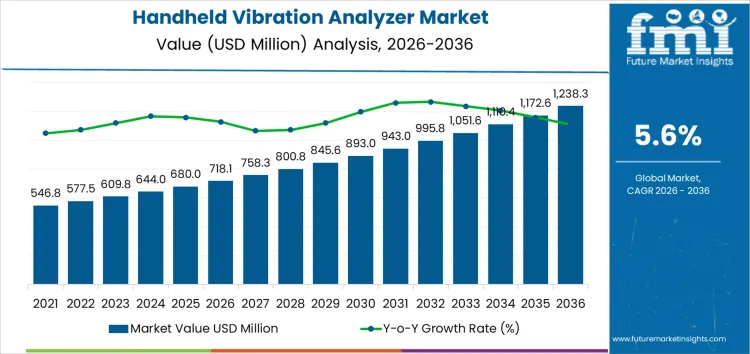
Buyer behavior is also heavily influenced by risk aversion and the desire for long-term reliability. Companies tend to favor established vendors offering comprehensive, proven solutions with strong after-sales support. Vendor lock-in is common in this market, especially when proprietary data analytics and integration capabilities are offered, making switching between vendors costly and complex. Switching costs are particularly high when extensive training, configuration, and system integration are involved, further solidifying relationships with trusted suppliers. Consequently, procurement strategies are more inclined toward long-term partnerships with recognized brands, valuing consistency and service quality over short-term savings.
Handheld Vibration Analyzer Market Key Takeaways
| Metric | Value |
|---|---|
| Industry Value (2026) | USD 718.1 Million |
| Forecast Value (2036) | USD 1238.3 Million |
| Forecast CAGR (2026 to 2036) | 5.60% |
How is the Global Handheld Vibration Analyzer Market Advancing?
The global handheld vibration analyzer market is steadily growing as industries increasingly focus on predictive maintenance and real-time monitoring to ensure the reliability of machinery and equipment. Handheld vibration analyzers are portable tools used to detect, measure, and analyze vibrations in mechanical systems. These analyzers play a crucial role in identifying potential mechanical faults, imbalance, misalignment, and other issues that may affect system performance and longevity.
The demand is driven by the growing adoption of condition-based monitoring across various industries, including manufacturing, automotive, aerospace, and energy. With the increasing complexity of machinery and the need for continuous operation, companies are prioritizing equipment maintenance strategies that can prevent costly breakdowns and reduce downtime. Handheld vibration analyzers allow maintenance personnel to perform on-site, real-time diagnostics without needing to bring equipment offline, leading to enhanced operational efficiency.
Advancements in sensor technology, wireless connectivity, and cloud-based data management are further improving the capabilities of handheld vibration analyzers. These innovations allow for better data accuracy, ease of use, and integration with existing maintenance systems. As the demand for predictive maintenance solutions grows, handheld vibration analyzers are becoming essential tools in ensuring the smooth operation of industrial processes. Despite challenges such as the initial cost of investment and the need for skilled operators, the growing emphasis on cost-effective, data-driven maintenance practices is expected to continue driving market growth.
What Is the Segment-Wise Analysis for the Handheld Vibration Analyzer Market?
The handheld vibration analyzer market is segmented by use case and frequency range. Route-Based Condition Monitoring leads the market with a 34% share, followed by Balance or Alignment Checks, Machine Health Screening, and Other use cases. These applications are essential for predictive maintenance and ensuring the reliability of machinery across industries. In terms of frequency range, Up to 10 kHz dominates with a 44% share, followed by 10–20 kHz, 20 kHz+, and Other ranges.
How Does Route-Based Condition Monitoring Lead the Handheld Vibration Analyzer Market?
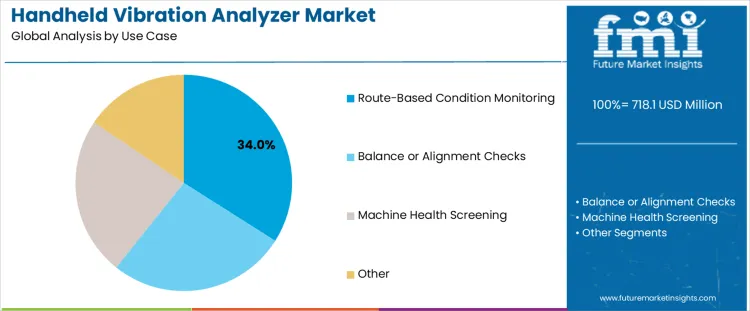
Route-Based Condition Monitoring holds a 34% share in the handheld vibration analyzer market, primarily due to its widespread use in industrial maintenance programs. This approach involves collecting vibration data at predetermined routes to monitor the condition of machinery over time. It is essential for predictive maintenance, helping prevent equipment failures before they occur. This method is particularly popular in industries such as manufacturing, energy, and oil and gas, where maintaining operational efficiency and reducing downtime are critical. As industries continue to focus on improving asset reliability and minimizing unplanned maintenance, route-based condition monitoring remains a key driver in the handheld vibration analyzer market.
How Does the Frequency Range "Up to 10 kHz" Contribute to the Handheld Vibration Analyzer Market?
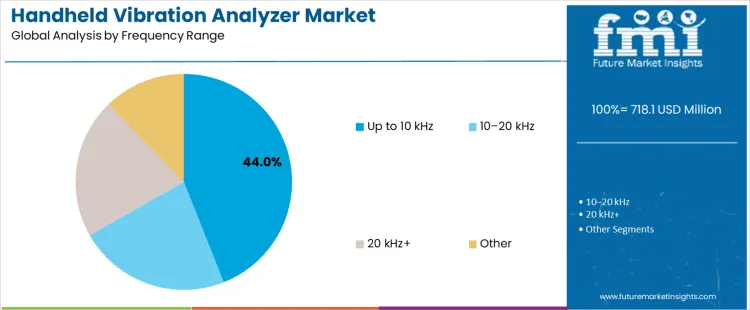
Up to 10 kHz accounts for 44% of the handheld vibration analyzer market share, reflecting its importance in measuring the vibrations of machinery that typically operate at lower frequencies. This frequency range is ideal for analyzing the vibration signals of most industrial equipment, such as motors, pumps, and compressors. Since many industrial machines produce vibrations within this range, handheld vibration analyzers that operate up to 10 kHz are widely used for predictive maintenance, condition monitoring, and fault detection. The demand for handheld analyzers capable of measuring vibrations in this range continues to grow, driven by the increasing need for efficient and cost-effective monitoring of machinery across various industries.
What Are the Key Dynamics for the Handheld Vibration Analyzer Market?
The handheld vibration analyzer market is driven by the growing need for quick, accurate vibration diagnostics across industries such as manufacturing, automotive, aerospace, energy, and industrial machinery. These portable devices enable maintenance teams to detect imbalance, misalignment, bearing faults, and other mechanical issues on the spot, supporting predictive and condition-based maintenance practices. As businesses aim to reduce unplanned downtime and optimize equipment performance, the demand for intuitive, easy-to-use handheld analyzers is rising.
How Are the Key Drivers Shaping the Handheld Vibration Analyzer Market?
The demand is primarily driven by the increasing adoption of predictive maintenance strategies, which prioritize early detection of faults to avoid costly equipment failures. Handheld vibration analyzers offer a practical, cost-effective way to capture vibration data directly from machines without interrupting operations, making them valuable tools for maintenance technicians. Growing emphasis on plant reliability and asset health is pushing companies to invest in portable diagnostic tools. Technological improvements such as wireless connectivity, enhanced software analytics, and built-in troubleshooting guidance are making handheld analyzers more efficient and user-friendly, expanding their adoption across industries.
What Are the Key Trends Shaping the Handheld Vibration Analyzer Market?
Key trends influencing this market include the integration of wireless connectivity and IoT, enabling real-time data transfer to centralized systems and remote diagnostics. There is also increased use of AI-driven analytics and software platforms that simplify complex vibration data interpretation and provide actionable insights. Another emerging trend is the development of compact, ruggedized devices designed for harsh industrial environments, expanding their usability across more applications. Manufacturers are focusing on modular and upgradeable analyzers that allow companies to expand functionality over time without replacing hardware, catering to evolving maintenance needs.
What is the Growth Outlook for the Handheld Vibration Analyzer Market by Country?
| Country | CAGR (%) |
|---|---|
| USA | 5.5% |
| South Korea | 5.3% |
| Germany | 5.2% |
| China | 6.6% |
| Brazil | 6.1% |
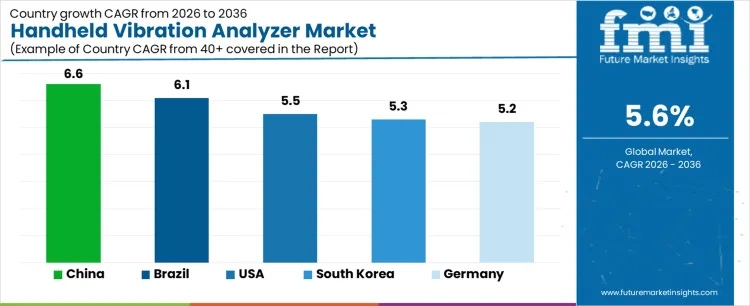
The handheld vibration analyzer market is experiencing steady growth, with China leading at a 6.6% CAGR, driven by the rapid expansion of its manufacturing and industrial sectors, and increasing demand for predictive maintenance solutions. Brazil follows with 6.1%, supported by industrial modernization, particularly in automotive, energy, and mining. The USA’s market grows at 5.5%, fueled by the rise of predictive maintenance across sectors like aerospace, automotive, and manufacturing. South Korea’s market grows at 5.3%, driven by its leadership in electronics, automotive, and semiconductor industries. Germany’s market grows at 5.2%, supported by its strong industrial base and focus on smart manufacturing and renewable energy sectors.
What is Driving the Growth of the Handheld Vibration Analyzer Market in China?
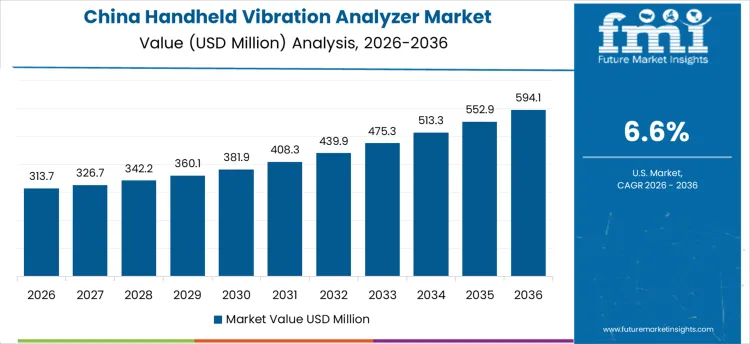
China’s handheld vibration analyzer market is growing at 6.6%, driven by the rapid growth of its manufacturing and industrial sectors. The increasing demand for predictive maintenance and condition monitoring in industries such as automotive, aerospace, and heavy machinery is contributing significantly to the market's expansion. As Chinese manufacturers adopt advanced technologies to improve operational efficiency and reduce downtime, the demand for portable vibration analysis tools is increasing. The country’s push towards smart manufacturing, Industry 4.0, and automation also drives the need for reliable, on-site vibration testing solutions. With China’s continued industrial growth and technological advancements, the handheld vibration analyzer market is expected to maintain strong growth.
What is Contributing to the Growth of the Handheld Vibration Analyzer Market in Brazil?
Brazil’s handheld vibration analyzer market is growing at 6.1%, supported by expanding industrial sectors, particularly in automotive, energy, and mining. As Brazil modernizes its industrial infrastructure and moves towards automation, there is an increasing need for reliable, portable vibration analysis tools to monitor the health of machinery and equipment. The automotive industry, where vibration testing is crucial for quality control, is a key driver for the market. Brazil's efforts to diversify its energy mix, including the expansion of renewable energy sources like wind and solar power, contribute to the demand for vibration analyzers for equipment monitoring. As Brazil continues to invest in industrial automation, the handheld vibration analyzer market is expected to grow steadily.
How is the Handheld Vibration Analyzer Market Expanding in the USA?
The USA’s handheld vibration analyzer market is growing at 5.5%, driven by the increasing adoption of predictive maintenance across various industries, including aerospace, automotive, and manufacturing. The demand for portable vibration analyzers is rising as companies seek to improve equipment reliability and reduce downtime through real-time condition monitoring. With the USA’s emphasis on advanced manufacturing and the integration of IoT technologies in industrial settings, handheld vibration analyzers have become essential tools for on-site testing. The increasing need for quality assurance in sectors like construction and power generation adds to the market’s growth. As industries in the USA continue to prioritize operational efficiency, the market for handheld vibration analyzers is expected to grow steadily.
Why is the Handheld Vibration Analyzer Market Growing in South Korea?
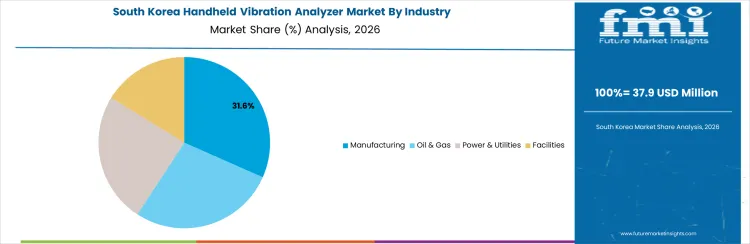
South Korea’s handheld vibration analyzer market is growing at 5.3%, supported by the country’s leadership in electronics, automotive, and semiconductor industries. As South Korea continues to advance in manufacturing automation, the need for portable vibration analysis tools to ensure the quality and reliability of machinery increases. The automotive and electronics sectors, in particular, rely on vibration analyzers to maintain production line efficiency and prevent costly equipment failures. South Korea’s strong focus on smart manufacturing and the integration of IoT technologies further contributes to the demand for handheld vibration analyzers. As the country continues to innovate and expand its industrial base, the market for vibration analyzers will continue to grow.
What is Driving the Growth of the Handheld Vibration Analyzer Market in Germany?
Germany’s handheld vibration analyzer market is growing at 5.2%, driven by the country’s strong industrial base, particularly in automotive, manufacturing, and energy. As Germany continues to lead in industrial automation and Industry 4.0 implementation, the demand for portable vibration analyzers for condition monitoring and predictive maintenance is increasing. The automotive and manufacturing industries rely heavily on these analyzers to monitor the performance of machinery and ensure operational efficiency. Germany’s growing renewable energy sector, including wind and solar power, contributes to the need for reliable vibration testing solutions for equipment monitoring. As industrial sectors continue to embrace smart technologies and automation, the market for handheld vibration analyzers is expected to expand.
How Do Key Players Compete in the Handheld Vibration Analyzer Market?
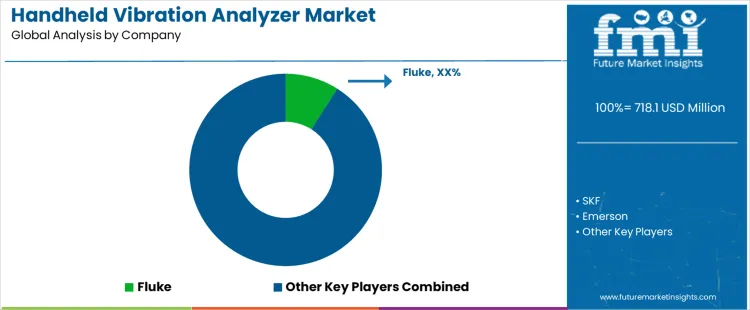
Competition in the handheld vibration analyzer market centers on portability, measurement accuracy, ease of use, and actionable diagnostics that help technicians identify machine faults quickly. Fluke is known for rugged, field-ready analyzers with intuitive interfaces and built-in diagnostic software that simplify vibration trend tracking and balance checks on the fly. SKF differentiates by combining vibration measurement with deep rotating machinery expertise, often embedding advanced fault detection algorithms in compact devices that appeal to maintenance teams across industries.
Emerson and HBK bring high-precision handheld tools that pair robust sensors with detailed analysis features, helping users capture reliable data in challenging environments. Their product materials focus on high signal fidelity and comprehensive frequency analysis. Parker Hannifin and Honeywell compete with devices that emphasize integration into larger condition monitoring programs, showcasing synoptic dashboards and connectivity features for cross-platform data sharing.
Schaeffler leverages its bearings and rotating equipment knowledge to offer analyzers tuned for common mechanical faults, with brochures highlighting bearing fault detection and imbalance analysis. Acoem and Azima DLI appeal to users seeking enterprise-class handhelds that balance portability with advanced diagnostic suites, their literature stressing rapid setup and clear reporting. Pruftechnik rounds out the field with vibration analyzers that integrate laser alignment and measurement features, marketed as multifunction tools that reduce inspection cycles. Across vendors, product collateral is tailored to emphasize speed of insight, rugged design, and actionable fault classification that empower technicians in maintenance and reliability roles.
Key Players in Handheld Vibration Analyzer Market
- Fluke
- SKF
- Emerson
- HBK
- Parker Hannifin
- Honeywell
- Schaeffler
- Acoem
- Azima DLI
- Pruftechnik
Scope of Report
| Items | Values |
|---|---|
| Quantitative Unit (2026) | USD million |
| Use Case | Route-Based Condition Monitoring, Balance or Alignment Checks, Machine Health Screening, Other |
| Industry | Manufacturing, Oil & Gas, Power & Utilities, Facilities |
| Frequency Range | Up to 10 kHz, 10–20 kHz, 20 kHz+, Other |
| Regions Covered | Asia Pacific, Europe, North America, Latin America, Middle East & Africa |
| Countries Covered | USA, China, Japan, South Korea, India, Australia & New Zealand, ASEAN, Germany, UK, France, Italy, Spain, Nordic, BENELUX, Brazil, Chile, Mexico, Saudi Arabia, Other GCC Countries, Turkey, South Africa, Other African Union |
| Key Companies Profiled | Fluke, SKF, Emerson, HBK, Parker Hannifin, Honeywell, Schaeffler, Acoem, Azima DLI, Pruftechnik |
| Additional Attributes | Dollar sales are segmented by use case, industry, frequency range, and region. Regional growth is measured by CAGR and outlook, providing a detailed forecast for each segment and region in the market, allowing for deeper insights into market dynamics and future trends. |
Handheld Vibration Analyzer Market by Segments
Use Case
- Route-Based Condition Monitoring
- Balance or Alignment Checks
- Machine Health Screening
- Other
Industry
- Manufacturing
- Oil & Gas
- Power & Utilities
- Facilities
Frequency Range
- Up to 10 kHz
- 10–20 kHz
- 20 kHz+
- Other
Region:
- Asia Pacific
- China
- Japan
- South Korea
- India
- Australia & New Zealand
- ASEAN
- Rest of Asia Pacific
- Europe
- Germany
- United Kingdom
- France
- Italy
- Spain
- Nordic
- BENELUX
- Rest of Europe
- North America
- United States
- Canada
- Mexico
- Latin America
- Brazil
- Chile
- Rest of Latin America
- Middle East & Africa
- Kingdom of Saudi Arabia
- Other GCC Countries
- Turkey
- South Africa
- Other African Union
- Rest of Middle East & Africa
Frequently Asked Questions
How big is the handheld vibration analyzer market in 2026?
The global handheld vibration analyzer market is estimated to be valued at USD 718.1 million in 2026.
What will be the size of handheld vibration analyzer market in 2036?
The market size for the handheld vibration analyzer market is projected to reach USD 1,238.3 million by 2036.
How much will be the handheld vibration analyzer market growth between 2026 and 2036?
The handheld vibration analyzer market is expected to grow at a 5.6% CAGR between 2026 and 2036.
What are the key product types in the handheld vibration analyzer market?
The key product types in handheld vibration analyzer market are route-based condition monitoring, balance or alignment checks, machine health screening and other.
Which industry segment to contribute significant share in the handheld vibration analyzer market in 2026?
In terms of industry, manufacturing segment to command 32.0% share in the handheld vibration analyzer market in 2026.
Preview the report firsthand - request a free sample
Get SampleGet the brochure for pricing and purchase details.
Get PDFTable of Content
- Executive Summary
- Global Market Outlook
- Demand-side Trends
- Supply-side Trends
- Technology Roadmap Analysis
- Analysis and Recommendations
- Market Overview
- Market Coverage / Taxonomy
- Market Definition / Scope / Limitations
- Market Background
- Market Dynamics
- Drivers
- Restraints
- Opportunity
- Trends
- Scenario Forecast
- Demand in Optimistic Scenario
- Demand in Likely Scenario
- Demand in Conservative Scenario
- Opportunity Map Analysis
- Product Life Cycle Analysis
- Supply Chain Analysis
- Investment Feasibility Matrix
- Value Chain Analysis
- PESTLE and Porter’s Analysis
- Regulatory Landscape
- Regional Parent Market Outlook
- Production and Consumption Statistics
- Import and Export Statistics
- Market Dynamics
- Global Market Analysis 2021 to 2025 and Forecast, 2026 to 2036
- Historical Market Size Value (USD Million) Analysis, 2021 to 2025
- Current and Future Market Size Value (USD Million) Projections, 2026 to 2036
- Y-o-Y Growth Trend Analysis
- Absolute $ Opportunity Analysis
- Global Market Pricing Analysis 2021 to 2025 and Forecast 2026 to 2036
- Global Market Analysis 2021 to 2025 and Forecast 2026 to 2036, By Use Case
- Introduction / Key Findings
- Historical Market Size Value (USD Million) Analysis By Use Case , 2021 to 2025
- Current and Future Market Size Value (USD Million) Analysis and Forecast By Use Case , 2026 to 2036
- Route-Based Condition Monitoring
- Balance or Alignment Checks
- Machine Health Screening
- Other
- Route-Based Condition Monitoring
- Y-o-Y Growth Trend Analysis By Use Case , 2021 to 2025
- Absolute $ Opportunity Analysis By Use Case , 2026 to 2036
- Global Market Analysis 2021 to 2025 and Forecast 2026 to 2036, By Industry
- Introduction / Key Findings
- Historical Market Size Value (USD Million) Analysis By Industry, 2021 to 2025
- Current and Future Market Size Value (USD Million) Analysis and Forecast By Industry, 2026 to 2036
- Manufacturing
- Oil & Gas
- Power & Utilities
- Facilities
- Manufacturing
- Y-o-Y Growth Trend Analysis By Industry, 2021 to 2025
- Absolute $ Opportunity Analysis By Industry, 2026 to 2036
- Global Market Analysis 2021 to 2025 and Forecast 2026 to 2036, By Frequency Range
- Introduction / Key Findings
- Historical Market Size Value (USD Million) Analysis By Frequency Range, 2021 to 2025
- Current and Future Market Size Value (USD Million) Analysis and Forecast By Frequency Range, 2026 to 2036
- Up to 10 kHz
- 10–20 kHz
- 20 kHz+
- Other
- Up to 10 kHz
- Y-o-Y Growth Trend Analysis By Frequency Range, 2021 to 2025
- Absolute $ Opportunity Analysis By Frequency Range, 2026 to 2036
- Global Market Analysis 2021 to 2025 and Forecast 2026 to 2036, By Region
- Introduction
- Historical Market Size Value (USD Million) Analysis By Region, 2021 to 2025
- Current Market Size Value (USD Million) Analysis and Forecast By Region, 2026 to 2036
- North America
- Latin America
- Western Europe
- Eastern Europe
- East Asia
- South Asia and Pacific
- Middle East & Africa
- Market Attractiveness Analysis By Region
- North America Market Analysis 2021 to 2025 and Forecast 2026 to 2036, By Country
- Historical Market Size Value (USD Million) Trend Analysis By Market Taxonomy, 2021 to 2025
- Market Size Value (USD Million) Forecast By Market Taxonomy, 2026 to 2036
- By Country
- USA
- Canada
- Mexico
- By Use Case
- By Industry
- By Frequency Range
- By Country
- Market Attractiveness Analysis
- By Country
- By Use Case
- By Industry
- By Frequency Range
- Key Takeaways
- Latin America Market Analysis 2021 to 2025 and Forecast 2026 to 2036, By Country
- Historical Market Size Value (USD Million) Trend Analysis By Market Taxonomy, 2021 to 2025
- Market Size Value (USD Million) Forecast By Market Taxonomy, 2026 to 2036
- By Country
- Brazil
- Chile
- Rest of Latin America
- By Use Case
- By Industry
- By Frequency Range
- By Country
- Market Attractiveness Analysis
- By Country
- By Use Case
- By Industry
- By Frequency Range
- Key Takeaways
- Western Europe Market Analysis 2021 to 2025 and Forecast 2026 to 2036, By Country
- Historical Market Size Value (USD Million) Trend Analysis By Market Taxonomy, 2021 to 2025
- Market Size Value (USD Million) Forecast By Market Taxonomy, 2026 to 2036
- By Country
- Germany
- UK
- Italy
- Spain
- France
- Nordic
- BENELUX
- Rest of Western Europe
- By Use Case
- By Industry
- By Frequency Range
- By Country
- Market Attractiveness Analysis
- By Country
- By Use Case
- By Industry
- By Frequency Range
- Key Takeaways
- Eastern Europe Market Analysis 2021 to 2025 and Forecast 2026 to 2036, By Country
- Historical Market Size Value (USD Million) Trend Analysis By Market Taxonomy, 2021 to 2025
- Market Size Value (USD Million) Forecast By Market Taxonomy, 2026 to 2036
- By Country
- Russia
- Poland
- Hungary
- Balkan & Baltic
- Rest of Eastern Europe
- By Use Case
- By Industry
- By Frequency Range
- By Country
- Market Attractiveness Analysis
- By Country
- By Use Case
- By Industry
- By Frequency Range
- Key Takeaways
- East Asia Market Analysis 2021 to 2025 and Forecast 2026 to 2036, By Country
- Historical Market Size Value (USD Million) Trend Analysis By Market Taxonomy, 2021 to 2025
- Market Size Value (USD Million) Forecast By Market Taxonomy, 2026 to 2036
- By Country
- China
- Japan
- South Korea
- By Use Case
- By Industry
- By Frequency Range
- By Country
- Market Attractiveness Analysis
- By Country
- By Use Case
- By Industry
- By Frequency Range
- Key Takeaways
- South Asia and Pacific Market Analysis 2021 to 2025 and Forecast 2026 to 2036, By Country
- Historical Market Size Value (USD Million) Trend Analysis By Market Taxonomy, 2021 to 2025
- Market Size Value (USD Million) Forecast By Market Taxonomy, 2026 to 2036
- By Country
- India
- ASEAN
- Australia & New Zealand
- Rest of South Asia and Pacific
- By Use Case
- By Industry
- By Frequency Range
- By Country
- Market Attractiveness Analysis
- By Country
- By Use Case
- By Industry
- By Frequency Range
- Key Takeaways
- Middle East & Africa Market Analysis 2021 to 2025 and Forecast 2026 to 2036, By Country
- Historical Market Size Value (USD Million) Trend Analysis By Market Taxonomy, 2021 to 2025
- Market Size Value (USD Million) Forecast By Market Taxonomy, 2026 to 2036
- By Country
- Kingdom of Saudi Arabia
- Other GCC Countries
- Turkiye
- South Africa
- Other African Union
- Rest of Middle East & Africa
- By Use Case
- By Industry
- By Frequency Range
- By Country
- Market Attractiveness Analysis
- By Country
- By Use Case
- By Industry
- By Frequency Range
- Key Takeaways
- Key Countries Market Analysis
- USA
- Pricing Analysis
- Market Share Analysis, 2025
- By Use Case
- By Industry
- By Frequency Range
- Canada
- Pricing Analysis
- Market Share Analysis, 2025
- By Use Case
- By Industry
- By Frequency Range
- Mexico
- Pricing Analysis
- Market Share Analysis, 2025
- By Use Case
- By Industry
- By Frequency Range
- Brazil
- Pricing Analysis
- Market Share Analysis, 2025
- By Use Case
- By Industry
- By Frequency Range
- Chile
- Pricing Analysis
- Market Share Analysis, 2025
- By Use Case
- By Industry
- By Frequency Range
- Germany
- Pricing Analysis
- Market Share Analysis, 2025
- By Use Case
- By Industry
- By Frequency Range
- UK
- Pricing Analysis
- Market Share Analysis, 2025
- By Use Case
- By Industry
- By Frequency Range
- Italy
- Pricing Analysis
- Market Share Analysis, 2025
- By Use Case
- By Industry
- By Frequency Range
- Spain
- Pricing Analysis
- Market Share Analysis, 2025
- By Use Case
- By Industry
- By Frequency Range
- France
- Pricing Analysis
- Market Share Analysis, 2025
- By Use Case
- By Industry
- By Frequency Range
- India
- Pricing Analysis
- Market Share Analysis, 2025
- By Use Case
- By Industry
- By Frequency Range
- ASEAN
- Pricing Analysis
- Market Share Analysis, 2025
- By Use Case
- By Industry
- By Frequency Range
- Australia & New Zealand
- Pricing Analysis
- Market Share Analysis, 2025
- By Use Case
- By Industry
- By Frequency Range
- China
- Pricing Analysis
- Market Share Analysis, 2025
- By Use Case
- By Industry
- By Frequency Range
- Japan
- Pricing Analysis
- Market Share Analysis, 2025
- By Use Case
- By Industry
- By Frequency Range
- South Korea
- Pricing Analysis
- Market Share Analysis, 2025
- By Use Case
- By Industry
- By Frequency Range
- Russia
- Pricing Analysis
- Market Share Analysis, 2025
- By Use Case
- By Industry
- By Frequency Range
- Poland
- Pricing Analysis
- Market Share Analysis, 2025
- By Use Case
- By Industry
- By Frequency Range
- Hungary
- Pricing Analysis
- Market Share Analysis, 2025
- By Use Case
- By Industry
- By Frequency Range
- Kingdom of Saudi Arabia
- Pricing Analysis
- Market Share Analysis, 2025
- By Use Case
- By Industry
- By Frequency Range
- Turkiye
- Pricing Analysis
- Market Share Analysis, 2025
- By Use Case
- By Industry
- By Frequency Range
- South Africa
- Pricing Analysis
- Market Share Analysis, 2025
- By Use Case
- By Industry
- By Frequency Range
- USA
- Market Structure Analysis
- Competition Dashboard
- Competition Benchmarking
- Market Share Analysis of Top Players
- By Regional
- By Use Case
- By Industry
- By Frequency Range
- Competition Analysis
- Competition Deep Dive
- Fluke
- Overview
- Product Portfolio
- Profitability by Market Segments (Product/Age /Sales Channel/Region)
- Sales Footprint
- Strategy Overview
- Marketing Strategy
- Product Strategy
- Channel Strategy
- SKF
- Emerson
- HBK
- Parker Hannifin
- Honeywell
- Schaeffler
- Acoem
- Azima DLI
- Pruftechnik
- Fluke
- Competition Deep Dive
- Assumptions & Acronyms Used
- Research Methodology


