

- Market Size (2026)
- USD 145.0 Mn
- Forecast (2036)
- USD 318.9 Mn
- CAGR (2026 to 2036)
- 8.2%
How big is the health economic MRI solutions market in 2026?
USD 145.0 million in 2026 and USD 318.9 million by 2036 at an 8.2% CAGR.
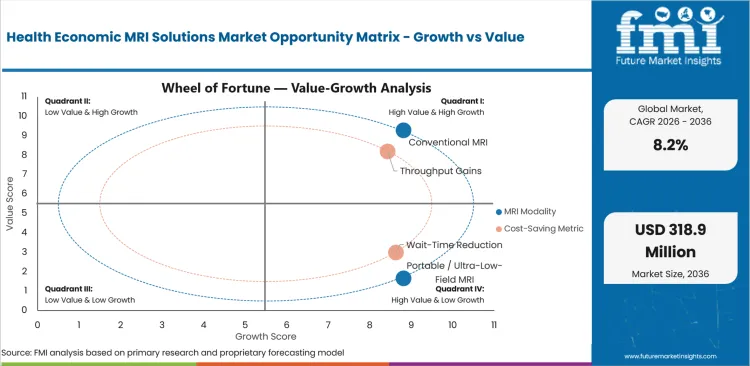
The health economic MRI solutions market is expected to grow from USD 134.0 million in 2025 to USD 318.9 million by 2036 at an 8.2% CAGR. Hospitals are measuring MRI spending against patient-flow impact and scanner availability. Conventional MRI is forecast to represent 68.0% share in 2026 with most tools attached to existing scanner fleets. Throughput gains are projected to secure 44.0% share in 2026 due to finance teams tracking completed scan slots and backlog relief.
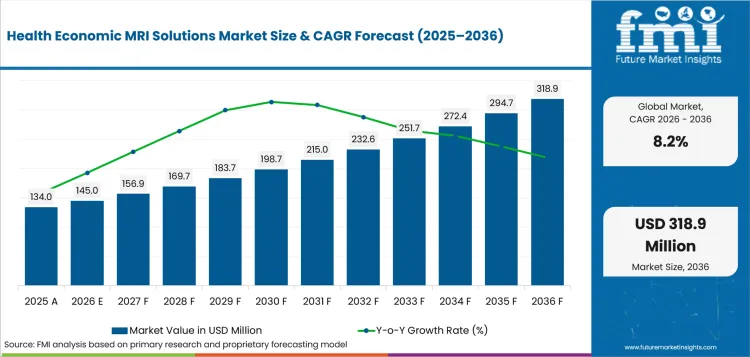
| Metric | Value |
|---|---|
| 2026 Market Size | USD 145.0 million |
| 2036 Market Size | USD 318.9 million |
| Forecast CAGR (2026-2036) | 8.2% |
| Leading MRI Modality | Conventional MRI |
| Conventional MRI Share (2026) | 68.0% |
| Leading Cost-Saving Metric | Throughput Gains |
| Throughput Gains Share (2026) | 44.0% |
| Fastest-growing Country | India |
| India CAGR by 2036 | 10.2% |
Summary of Health Economic MRI Solutions Market
| Market Signal | Commercial Impact |
|---|---|
| Demand and Growth Drivers | Demand for health economic MRI solutions is increasing as hospitals seek financial evidence that improves scanner utilization, reduces patient backlogs, and supports capital investment decisions.
|
| Product and Segment View | Conventional MRI, throughput gains, outpatient care, and hospitals lead their respective market segments.
|
| Geography and Growth Outlook | North America remains the leading regional market while Asia continues to expand through hospital modernization and diagnostic infrastructure investments.
|
| Competitive Landscape | Competition increasingly focuses on workflow optimization, portable imaging, and economic value demonstration.
|
| Analyst Perspective | Health economic MRI solutions are becoming a strategic investment as healthcare providers increasingly evaluate imaging technologies based on operational efficiency and financial outcomes.
- Anurag Sharma, Principal Consultant at Future Market Insights |
MRI departments are using magnetic resonance imaging systems more like capacity assets than stand-alone clinical rooms. MedlinePlus stated in June 2026 that MRI uses magnets and radio waves to create detailed pictures inside the body. That clinical role makes every delayed scan visible to clinicians and finance teams. Suppliers are expected to gain buyer trust as they prove shorter waits and fewer patient transfers without lowering diagnostic confidence.
Which factors support expansion in the health economic MRI solutions market?
Hospital cost control and imaging capacity planning support market value across MRI workflow and bedside imaging use cases.
- Market value is supported by software and portable MRI systems that measure wait time and patient-transfer cost.
- Supplier pricing reflects proof of slot recovery and clinical confidence before wider enterprise rollout.
- Revenue is expected to improve when hospitals convert MRI backlog data into finance-approved technology cases.
- Buyer trust rises when vendors show local cost savings and workflow evidence in the same review package.
Why is the health economic MRI solutions market growing?
Hospitals are using MRI economic tools to defend scanner investments with patient-flow evidence and cost proof.
Demand is becoming more structured due to scan-time and transport-cost pressure. Siemens Healthineers introduced Magnetom Flow in February 2024 and reported measurement-time reductions of up to 50% with AI-supported reconstruction. This gives hospitals a practical way to tie protocol speed to slot yield. The same buying reasoning supports adjacent spending on medical imaging software when it helps finance teams understand operational benefit.
Portable MRI creates a separate case inside acute care. Hyperfine reported in January 2026 that Swoop use reduced MRI wait time by 18 hours across ICU and ED patients. The release cited average MR-compatible equipment preparation cost avoidance of USD 590 per ICU patient. These figures help hospitals compare bedside MRI with transport-heavy workflows. Suppliers must prove the results inside each care setting before broad rollout.
How is the health economic MRI solutions market segmented?
The health economic MRI solutions industry is segmented by MRI modality, cost-saving metric, care setting, end user and region.
- Conventional MRI is projected to secure 68.0% share in 2026 with most buyers starting from existing scanner fleets.
- Throughput Gains are anticipated to hold 44.0% share in 2026 through direct financial value from recovered scan slots.
- Outpatient settings are expected to capture 42.0% share in 2026 with scheduling pressure shaping investment decisions.
- Hospitals are forecast to represent 58.0% share in 2026 through direct control of imaging budgets and operations.
- North America is projected to account for 41.0% share in 2026 with health systems applying stricter imaging governance.
Why does conventional MRI lead the health economic MRI solutions market?
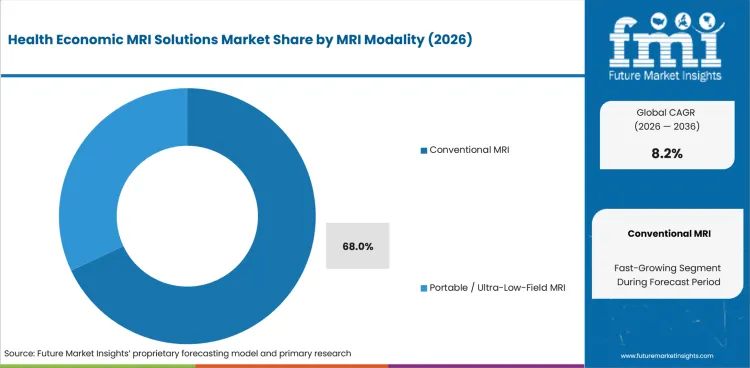
- Conventional MRI is projected to account for 68.0% share in 2026 through its large installed role in scheduled imaging.
- Portable MRI gains use in acute care when bedside access reduces patient movement and waiting time.
Which cost-saving metric leads the health economic MRI solutions market?
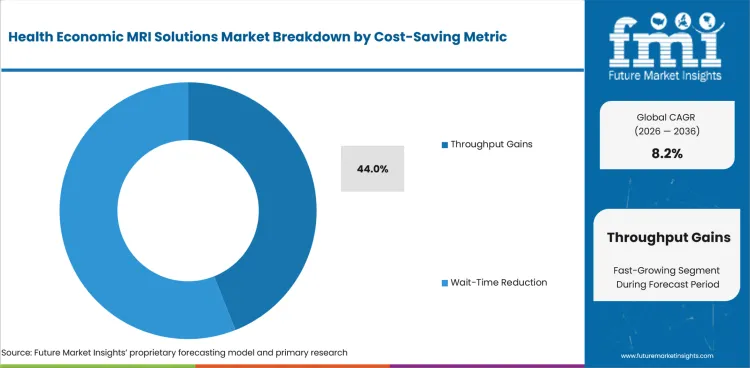
- Throughput Gains are expected to hold 44.0% share in 2026 through measurable value from completed scanner slots.
- Admission Avoidance gains buyer attention when bedside MRI helps clinicians make faster acute-care decisions.
Which care setting leads the health economic MRI solutions market?
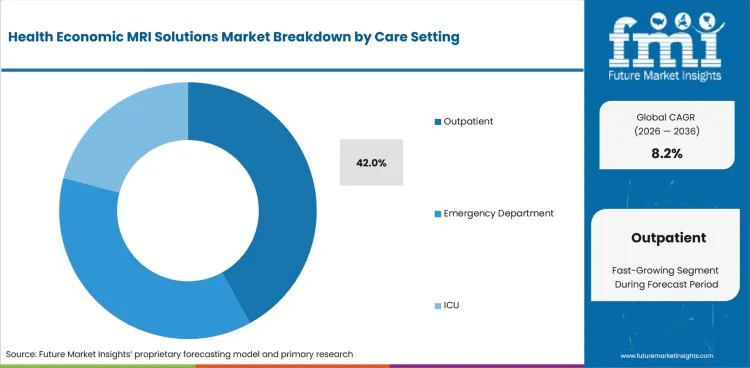
- Outpatient care is forecast to represent 42.0% share in 2026 with imaging centers managing backlog and payer pressure.
- ICU use grows from a smaller base when portable MRI reduces transfer effort for critically ill patients.
Which end user leads the health economic MRI solutions market?
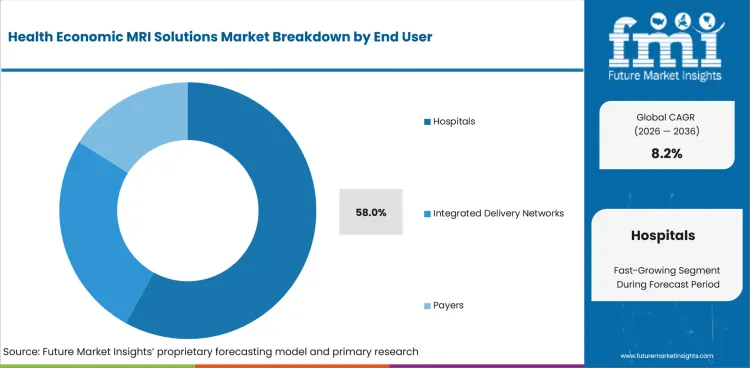
- Hospitals are projected to account for 58.0% share in 2026 with finance teams reviewing MRI capacity impact.
- Integrated delivery networks gain importance when economic proof must cover several imaging sites.
What are the drivers and restraints in the health economic MRI solutions market?
Scanner productivity and bedside imaging evidence support growth while validation and integration barriers slow conversion.
- Driver: Scanner-slot economics are expected to raise adoption when hospitals quantify lost capacity from delays and repeated protocols.
- Restraint: Uneven evidence can slow approval when ICU savings do not translate into outpatient MRI settings.
- Opportunity: Helium-light MRI platforms can support lower total-cost stories when buyers compare installation and operating costs.
How do accelerated MRI protocols support slot recovery?
MRI departments need economic tools when scanner time becomes the operating bottleneck. Philips received FDA 510(k) clearance for SmartSpeed Precise dual AI software in July 2025. Philips said the software supports up to three-times faster scanning and up to 80% sharper images. Buyers still need local evidence that faster protocols create completed studies and fewer delayed appointments.
How does bedside MRI change ICU cost review?
Bedside MRI changes the value case by reducing transfers from critical care units. Hyperfine announced first commercial sales of next-generation Swoop powered by Optive AI software in July 2025. That development supports portable brain MRI use in hospitals that need imaging closer to the patient. Vendors still need site-level proof before finance teams accept transfer savings.
How do accreditation rules shape imaging proof?
Utilization governance now depends on local evidence and supplier readiness. CMS updated advanced diagnostic imaging accreditation guidance in January 2025. CMS states that suppliers performing advanced diagnostic imaging must be accredited by a CMS-approved organization. This supports demand for MRI tools that document appropriate use and workflow value.
Which countries are growing fastest in the health economic MRI solutions market?
India leads at 10.2% CAGR by 2036. China follows at 9.6% CAGR. United States records 8.8% CAGR. South Korea records 8.7% CAGR. United Kingdom reaches 8.4% CAGR. France records 8.0% CAGR. Germany records 7.9% CAGR. Japan records 7.4% CAGR.
.webp "Top Country Growth Comparison Health Economic Mri Solutions Market Cagr (2026 2036)")
| Country | CAGR |
|---|---|
| India | 10.2% |
| China | 9.6% |
| United States | 8.8% |
| South Korea | 8.7% |
| United Kingdom | 8.4% |
| France | 8.0% |
| Germany | 7.9% |
| Japan | 7.4% |
Source: Future Market Insights, 2026.
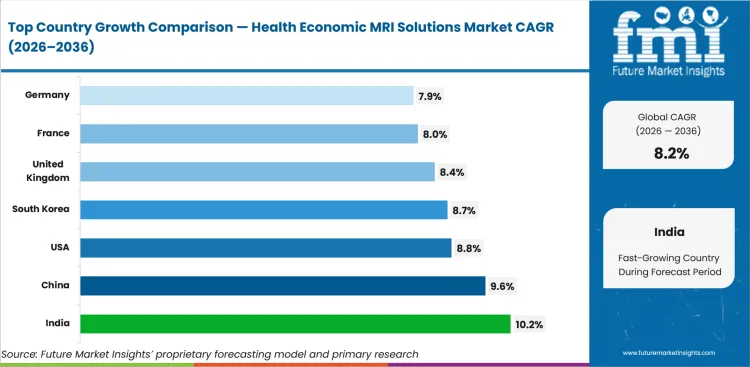
How do country-level CAGRs compare in the health economic MRI solutions market?
India leads country growth while Japan records cautious expansion outlook among profiled markets.
- India is forecast to record 10.2% CAGR by 2036 through hospital-chain expansion and cost-focused diagnostic access.
- China is expected to expand at 9.6% CAGR during the forecast period with public hospital scale guiding demand.
- The United States is projected to grow at 8.8% CAGR by 2036 with finance review shaping MRI workflow purchases.
- South Korea is estimated to rise at 8.7% CAGR over the assessment period through AI triage evidence.
- The United Kingdom is anticipated to expand at 8.4% CAGR by 2036 with NHS waiting-time pressure guiding investment.
- France is expected to grow at 8.0% CAGR across the forecast decade with MRI exam growth supporting access planning.
- Germany is forecast at 7.9% CAGR by 2036 with mature scanner use creating demand for productivity evidence.
- Japan is projected to advance at 7.4% CAGR through 2036 with productivity tools applied to a dense MRI fleet.
What is driving health economic MRI solutions growth in India?
A 10.2% CAGR by 2036 reflects hospital-chain expansion and cost-focused diagnostic access planning.
Country Market Snapshot Table
| Parameter | Value |
|---|---|
| Market Size in 2025 (Value) | USD 5.5 million |
| Market Size in 2026 (Value) | USD 6.1 million |
| Market Forecast in 2036 (Value) | USD 16.1 million |
| CAGR (2026 to 2036) | 10.2% |
| Years Considered | 2021 to 2036 |
| Base Year | 2025 |
| Forecast Period | 2026 to 2036 |
| Units Considered | Value (USD million) |
| Leading Sub-Region | Private hospital chains and PPP diagnostic corridors |
India Health Economic MRI Solutions Market Outlook
India demand is shaped by private hospital chains and public diagnostic expansion under cost pressure.
Economic MRI tools gain value when they reduce referral leakage and help scarce specialist capacity go further.
Key Growth Drivers
- Biopharma mission outcomes support local health technology confidence. PIB reported that the National Biopharma Mission supported 161 projects in December 2025.
- Diagnostic imaging procurement supports MRI economic review. CCI released a 2024 market study focused on two diagnostic imaging categories including MRI and CT.
- Private hospital chains are expected to use MRI economics to justify expansion beyond tier-one cities.
- PPP diagnostic procurement rewards turnaround proof and uptime performance across public access programs.
Key Restraints
- Out-of-pocket exposure can make smaller buyers cautious. National Health Accounts 2022-23 estimated OOPE at 43.4% of total health expenditure.
- Price sensitivity can limit premium analytics contracts in smaller hospitals and stand-alone diagnostic centers.
- Uneven radiologist availability can reduce the benefit of faster scanner throughput in under-served locations.
What makes India unique
India is distinct for cost-focused MRI access expansion across private hospitals and public programs.
Key Companies
- Siemens Healthineers India
- GE HealthCare India
- Philips India
- Hyperfine
- Canon Medical Systems India
Sales & Marketing Channels
- Private hospital chain procurement
- PPP diagnostic tenders
- OEM distributor channels
- Public medical college pilots
- Cloud software subscriptions
- Radiology service network partnerships
Country Segment Breakdown Table
| Segment | Sub-Segments |
|---|---|
| By MRI Modality | Conventional MRI · Portable MRI |
| By Cost-Saving Metric | Access Expansion · Turnaround Improvement |
| By Care Setting | Private Hospitals · PPP Centers · Public Medical Colleges |
| By End User | Hospitals · Diagnostic Chains · Public Buyers |
| Key Sub-Regions Covered | Delhi NCR · Mumbai · Bengaluru · Hyderabad · Gujarat |
Frequently Asked Questions
How fast is India health economic MRI solutions market growing?
India is forecast to grow at 10.2% CAGR through 2036 with diagnostic access expansion guiding demand.
Who leads India health economic MRI solutions market?
Siemens Healthineers India and GE HealthCare India compete with Philips and Canon Medical Systems through local channels.
What is driving adoption in India health economic MRI solutions market?
Hospital-chain expansion and digital health infrastructure are supporting demand for cost-measured MRI workflows.
What is the health economic MRI solutions market outlook in China?
A 9.6% CAGR by 2036 reflects public hospital scale and demand for utilization control in large imaging departments.
Country Market Snapshot Table
| Parameter | Value |
|---|---|
| Market Size in 2025 (Value) | USD 12.8 million |
| Market Size in 2026 (Value) | USD 14.0 million |
| Market Forecast in 2036 (Value) | USD 35.0 million |
| CAGR (2026 to 2036) | 9.6% |
| Years Considered | 2021 to 2036 |
| Base Year | 2025 |
| Forecast Period | 2026 to 2036 |
| Units Considered | Value (USD million) |
| Leading Sub-Region | Tier-one public hospital networks |
China Health Economic MRI Solutions Market Outlook
China demand is shaped by public hospital procurement and large-campus imaging capacity planning.
Economic MRI tools need tender fit and local service support before wider expansion becomes realistic.
Key Growth Drivers
- Industrial equipment depth supports localized imaging upgrades. NBS reported industrial enterprises above designated size increased value added by 5.9% in 2025.
- Public hospital scale supports multi-site analytics. The U.S. International Trade Administration reported China had over 40,000 hospitals in 2024.
- Domestic MRI suppliers are expected to strengthen price discipline and support localized workflow integration.
- High-end hospital upgrades are creating demand for scanner utilization proof during procurement reviews.
Key Restraints
- Aging can slow domestic volume conversion. UNDP China reported that people aged 65 and older reached 223 million by the end of 2025.
- Provincial tender variation can slow national expansion for specialized analytics tools.
- Data residency and local service requirements can raise entry work for foreign software suppliers.
What makes China unique
China is distinct for public hospital scale that puts tender fit and utilization proof at the center of adoption.
Key Companies
- United Imaging Healthcare
- Siemens Healthineers
- GE HealthCare
- Philips
- Canon Medical Systems
Sales & Marketing Channels
- Provincial hospital tenders
- Tertiary hospital pilots
- OEM service partnerships
- Local integrator sales
- Public procurement committees
- Academic hospital demonstrations
Country Segment Breakdown Table
| Segment | Sub-Segments |
|---|---|
| By MRI Modality | Conventional MRI · Portable MRI |
| By Cost-Saving Metric | Throughput Gains · Tender Cost Control |
| By Care Setting | Tertiary Hospitals · Emergency Departments · Outpatient |
| By End User | Public Hospitals · OEMs · Provincial Tender Buyers |
| Key Sub-Regions Covered | Beijing · Shanghai · Guangdong · Zhejiang · Jiangsu |
Frequently Asked Questions
How fast is China health economic MRI solutions market growing?
China is expected to expand at 9.6% CAGR through 2036 with public hospital scale guiding investment.
Who leads China health economic MRI solutions market?
United Imaging Healthcare leads local relevance with Siemens Healthineers and GE HealthCare competing in high-end hospitals.
What is driving adoption in China health economic MRI solutions market?
Public hospital scale and equipment upgrade programs are supporting demand for utilization analytics.
How fast is the health economic MRI solutions market growing in the United States?
An 8.8% CAGR by 2036 reflects scanner-density pressure and the need to show financial proof in hospital imaging reviews.
Country Market Snapshot Table
| Parameter | Value |
|---|---|
| Market Size in 2025 (Value) | USD 38.6 million |
| Market Size in 2026 (Value) | USD 42.0 million |
| Market Forecast in 2036 (Value) | USD 97.6 million |
| CAGR (2026 to 2036) | 8.8% |
| Years Considered | 2021 to 2036 |
| Base Year | 2025 |
| Forecast Period | 2026 to 2036 |
| Units Considered | Value (USD million) |
| Leading Sub-Region | Northeast academic centers and national IDN corridors |
United States Health Economic MRI Solutions Market Outlook
United States demand is shaped by large hospital networks that need to defend MRI access with finance-ready evidence.
Portable brain MRI and scanner workflow tools gain attention when they lower transfer effort or protect scheduled imaging slots.
Key Growth Drivers
- Scanner-density pressure supports MRI capacity analytics. OECD reported 86 CT scanners, MRI units and PET scanners per million people in the United States in 2025.
- Workforce planning supports software that protects scanner use. BLS projected radiologic and MRI technologist employment to grow 5% from 2024 to 2034.
- Bedside MRI evidence is expected to support ICU buying when transport delays affect neuroimaging decisions.
- Enterprise radiology groups are adopting economic dashboards to compare slot yield and cancellation effects across sites.
Key Restraints
- Policy uncertainty can slow order-entry software purchases. CMS stated that AUC consultation information should no longer be included on Medicare FFS claims from January 1, 2024.
- Hospital value committees may delay purchases when savings evidence is based on one site or one care pathway.
- Local IT integration can slow adoption when imaging data must feed scheduling and finance systems.
What makes United States unique
The United States is distinct for portable MRI evidence and hospital finance review converging in one buying process.
Key Companies
- Hyperfine
- GE HealthCare
- Siemens Healthineers
- Philips
- SyntheticMR
Sales & Marketing Channels
- Enterprise sales to IDNs
- Value analysis committee submissions
- Academic hospital pilots
- Radiology group partnerships
- Payer policy discussions
- Emergency department workflow studies
Country Segment Breakdown Table
| Segment | Sub-Segments |
|---|---|
| By MRI Modality | Conventional MRI · Portable MRI |
| By Cost-Saving Metric | Throughput Gains · Admission Avoidance |
| By Care Setting | ICU · Emergency Department · Outpatient |
| By End User | Hospitals · IDNs · Payers |
| Key Sub-Regions Covered | Northeast · Midwest · South Atlantic · California · Texas |
Frequently Asked Questions
How fast is United States health economic MRI solutions market growing?
The United States is projected to grow at 8.8% CAGR through 2036 with imaging economics guiding hospital approval.
Who leads United States health economic MRI solutions market?
Hyperfine and GE HealthCare lead local relevance with Siemens Healthineers and Philips competing through hospital channels.
What is driving adoption in United States health economic MRI solutions market?
Scanner-capacity pressure and bedside neuroimaging evidence are moving buyers toward cost-measured MRI workflows.
How is the health economic MRI solutions market performing in South Korea?
An 8.7% CAGR through 2036 reflects AI triage interest and high hospital readiness for neurology workflow studies.
Country Market Snapshot Table
| Parameter | Value |
|---|---|
| Market Size in 2025 (Value) | USD 4.4 million |
| Market Size in 2026 (Value) | USD 4.8 million |
| Market Forecast in 2036 (Value) | USD 11.1 million |
| CAGR (2026 to 2036) | 8.7% |
| Years Considered | 2021 to 2036 |
| Base Year | 2025 |
| Forecast Period | 2026 to 2036 |
| Units Considered | Value (USD million) |
| Leading Sub-Region | Seoul-Gyeonggi and university hospital clusters |
South Korea Health Economic MRI Solutions Market Outlook
South Korea demand is influenced by university hospitals and AI health technology evaluation.
Neurology pathways create the clearest cases when faster triage changes downstream testing cost.
Key Growth Drivers
- Equipment access supports AI workflow testing. OECD reported 87 CT scanners, MRI units and PET scanners per million people in Korea in 2025.
- Aging supports neurological imaging demand. Statistics Korea reported that people aged 65 and older represented 20.3% of the population in 2025.
- University hospitals are expected to support pilot evidence before wider health-system rollout.
- AI triage studies are improving the case for MRI economics in Parkinson’s disease and neurodegenerative care.
Key Restraints
- Administrative data demands can slow hospital review. HIRA reduced required review data items from 430 to 221 in 2025.
- Clinical departments may resist pathway changes without local validation and physician confidence.
- Smaller software vendors may face long procurement cycles when hospitals prefer OEM-integrated tools.
What makes South Korea unique
South Korea is distinct for AI triage evidence that can be tested inside technically capable university hospitals.
Key Companies
- Heuron
- Siemens Healthineers Korea
- GE HealthCare Korea
- Philips Korea
- Canon Medical Systems Korea
Sales & Marketing Channels
- University hospital pilots
- Private hospital group procurement
- AI software partnerships
- Neurology pathway evaluations
- OEM integration routes
- Reimbursement evidence submissions
Country Segment Breakdown Table
| Segment | Sub-Segments |
|---|---|
| By MRI Modality | Conventional MRI · Portable MRI |
| By Cost-Saving Metric | AI Triage Economics · Throughput Gains |
| By Care Setting | University Hospitals · Neurology Pathways · Outpatient |
| By End User | Hospitals · AI Software Buyers · OEM Channels |
| Key Sub-Regions Covered | Seoul · Gyeonggi · Busan · Daegu · Daejeon |
Frequently Asked Questions
How fast is South Korea health economic MRI solutions market growing?
South Korea is projected to grow at 8.7% CAGR through 2036 with AI triage evidence supporting demand.
Who leads South Korea health economic MRI solutions market?
Heuron leads local relevance with global MRI suppliers competing through hospital and distributor channels.
What is driving adoption in South Korea health economic MRI solutions market?
University hospital pilots and AI triage studies are supporting MRI economic evidence in neurology pathways.
What is the health economic MRI solutions market outlook in the United Kingdom?
An 8.4% CAGR through 2036 is supported by NHS waiting-time pressure and community diagnostic capacity planning.
Country Market Snapshot Table
| Parameter | Value |
|---|---|
| Market Size in 2025 (Value) | USD 9.4 million |
| Market Size in 2026 (Value) | USD 10.2 million |
| Market Forecast in 2036 (Value) | USD 22.9 million |
| CAGR (2026 to 2036) | 8.4% |
| Years Considered | 2021 to 2036 |
| Base Year | 2025 |
| Forecast Period | 2026 to 2036 |
| Units Considered | Value (USD million) |
| Leading Sub-Region | NHS trust networks and community diagnostic centers |
United Kingdom Health Economic MRI Solutions Market Outlook
United Kingdom demand is influenced by public diagnostic recovery programs and trust-level budget control.
Suppliers need to show how MRI workflow tools shorten waits while fitting NHS reporting and procurement routes.
Key Growth Drivers
- Community diagnostic centers support outpatient MRI scheduling. The UK government said England carried out 29 million diagnostic tests in 2025.
- Backlog pressure is expected to drive practical adoption. NHS England reported a 14,600 increase in patients waiting six weeks or more in January 2026.
- Community diagnostic centers are expected to lift demand for standardized scheduling dashboards across outpatient imaging.
- UK-based MRI magnet investment is attributable to the need for lower helium use and more stable scanner supply.
Key Restraints
- Radiologist shortages can limit scan-reporting gains. The Royal College of Radiologists reported a 29% UK consultant radiologist shortfall in 2025.
- Tender cycles can delay purchases when trusts need multi-year approval and framework access.
- Hospital IT variation can slow analytics projects across separate NHS trust systems.
What makes United Kingdom unique
The United Kingdom is distinct for MRI economics being judged against public waiting-time targets and trust procurement rules.
Key Companies
- Siemens Healthineers
- GE HealthCare
- Philips
- Hyperfine
- Canon Medical Systems
Sales & Marketing Channels
- NHS trust procurement
- Framework supplier routes
- Community diagnostic center pilots
- Academic hospital evaluations
- Managed equipment service contracts
- Radiology reporting partnerships
Country Segment Breakdown Table
| Segment | Sub-Segments |
|---|---|
| By MRI Modality | Conventional MRI · Portable MRI |
| By Cost-Saving Metric | Wait-Time Reduction · Throughput Gains |
| By Care Setting | Outpatient · Community Diagnostics · Hospital Imaging |
| By End User | NHS Trusts · Private Imaging Groups · Payers |
| Key Sub-Regions Covered | London · Manchester · Birmingham · Oxfordshire · Scotland |
Frequently Asked Questions
How fast is United Kingdom health economic MRI solutions market growing?
The United Kingdom is expected to grow at 8.4% CAGR through 2036 with NHS diagnostic recovery guiding demand.
Who leads United Kingdom health economic MRI solutions market?
Siemens Healthineers and GE HealthCare compete with Philips and Hyperfine through NHS and private imaging channels.
What is driving adoption in United Kingdom health economic MRI solutions market?
Diagnostic wait pressure and community imaging expansion are supporting MRI workflow tools with measurable capacity value.
What is the health economic MRI solutions market forecast for France?
An 8.0% CAGR through 2036 reflects MRI exam growth and hospital interest in access planning.
Country Market Snapshot Table
| Parameter | Value |
|---|---|
| Market Size in 2025 (Value) | USD 8.2 million |
| Market Size in 2026 (Value) | USD 8.9 million |
| Market Forecast in 2036 (Value) | USD 19.2 million |
| CAGR (2026 to 2036) | 8.0% |
| Years Considered | 2021 to 2036 |
| Base Year | 2025 |
| Forecast Period | 2026 to 2036 |
| Units Considered | Value (USD million) |
| Leading Sub-Region | Île-de-France and regional hospital groups |
France Health Economic MRI Solutions Market Outlook
France demand is shaped by public hospital evaluation and regional access planning.
Suppliers gain consideration when scan speed supports scheduling value and oncology pathway needs.
Key Growth Drivers
- MRI exam intensity supports scheduling tools. OECD reported MRI exams increased by around 70% in France between 2013 and 2023.
- Aging increases repeat imaging need. INSEE reported that 22% of France’s population was aged 65 or older in 2025.
- Cancer and neurological pathways are expected to support faster MRI scheduling in public hospitals.
- Regional hospital groups are adopting multi-site review processes that favor workflow proof over feature claims.
Key Restraints
- Public budget pressure can slow software-only adoption. DREES reported 367,300 full-hospitalization beds in France at the end of 2024.
- Hospital IT integration can delay rollout when scheduling and reporting data are stored in separate systems.
- Regional purchasing rules can slow rollout even when clinical teams support the workflow case.
What makes France unique
France is distinct for MRI economics shaped by public access planning and regional hospital evaluation.
Key Companies
- Philips
- GE HealthCare
- Siemens Healthineers
- Hyperfine
- Canon Medical Systems
Sales & Marketing Channels
- Public hospital procurement
- Regional imaging network tenders
- Private radiology group sales
- Oncology pathway pilots
- Scanner OEM upgrade routes
- Hospital IT partnerships
Country Segment Breakdown Table
| Segment | Sub-Segments |
|---|---|
| By MRI Modality | Conventional MRI · Portable MRI |
| By Cost-Saving Metric | Wait-Time Reduction · Throughput Gains |
| By Care Setting | Outpatient · Oncology Pathways · Public Hospitals |
| By End User | Hospitals · Regional Health Groups · Payers |
| Key Sub-Regions Covered | Île-de-France · Lyon · Marseille · Lille · Bordeaux |
Frequently Asked Questions
How fast is France health economic MRI solutions market growing?
France is expected to expand at 8.0% CAGR through 2036 with MRI exam growth supporting capacity tools.
Who leads France health economic MRI solutions market?
Philips and GE HealthCare compete with Siemens Healthineers and Canon Medical Systems through hospital channels.
What is driving adoption in France health economic MRI solutions market?
MRI exam growth and public access planning are supporting demand for scheduling and throughput evidence.
How is the health economic MRI solutions market performing in Germany?
A 7.9% CAGR by 2036 reflects mature scanner use and demand for productivity evidence in hospital imaging.
Country Market Snapshot Table
| Parameter | Value |
|---|---|
| Market Size in 2025 (Value) | USD 8.9 million |
| Market Size in 2026 (Value) | USD 9.6 million |
| Market Forecast in 2036 (Value) | USD 20.5 million |
| CAGR (2026 to 2036) | 7.9% |
| Years Considered | 2021 to 2036 |
| Base Year | 2025 |
| Forecast Period | 2026 to 2036 |
| Units Considered | Value (USD million) |
| Leading Sub-Region | Bavaria and North Rhine-Westphalia imaging clusters |
Germany Health Economic MRI Solutions Market Outlook
Germany demand is shaped by technically strict buyers that expect clinical confidence before economic claims are accepted.
Local MRI platform strength gives hospitals a direct route to workflow features that can be assessed during scanner upgrades.
Key Growth Drivers
- High scanner availability supports efficiency tools. OECD reported 74 CT scanners, MRI units and PET scanners per million people in Germany in 2025.
- Domestic platform evidence supports productivity claims. Siemens Healthineers reported up to 50% measurement-time reduction for Magnetom Flow in February 2024.
- Domestic supplier depth is expected to support buyer trust in scanner workflow and operating-cost claims.
- University hospitals are adopting evidence reviews that favor tools with measurable protocol and slot improvements.
Key Restraints
- Demographic pressure raises validation needs in hospital investment. Destatis projected one quarter of Germany’s population will be aged 67 or over by 2035.
- Regional procurement variation can delay multi-site rollouts across hospital groups.
- Software-only suppliers may struggle when buyers prefer scanner upgrades with bundled service support.
What makes Germany unique
Germany is distinct for domestic MRI platform strength and buyers that expect proof before scale buying.
Key Companies
- Siemens Healthineers
- Philips
- GE HealthCare
- Canon Medical Systems
- SyntheticMR
Sales & Marketing Channels
- University hospital reference sites
- Private hospital group tenders
- Radiology practice network sales
- Scanner upgrade bundles
- Technical service contracts
- Clinical training partnerships
Country Segment Breakdown Table
| Segment | Sub-Segments |
|---|---|
| By MRI Modality | Conventional MRI · Portable MRI |
| By Cost-Saving Metric | Throughput Gains · Energy Cost Tracking |
| By Care Setting | Outpatient · University Hospitals · Private Clinics |
| By End User | Hospitals · Imaging Networks · OEM Service Teams |
| Key Sub-Regions Covered | Bavaria · North Rhine-Westphalia · Baden-Württemberg · Berlin |
Frequently Asked Questions
How fast is Germany health economic MRI solutions market growing?
Germany is forecast to grow at 7.9% CAGR through 2036 with productivity evidence guiding purchases.
Who leads Germany health economic MRI solutions market?
Siemens Healthineers leads local relevance with Philips and GE HealthCare competing through hospital channels.
What is driving adoption in Germany health economic MRI solutions market?
Mature MRI use and domestic scanner expertise are supporting demand for workflow measurement tools.
How fast is the health economic MRI solutions market growing in Japan?
A 7.4% CAGR during the forecast period reflects high scanner density and demand for standardized workflow value.
Country Market Snapshot Table
| Parameter | Value |
|---|---|
| Market Size in 2025 (Value) | USD 9.8 million |
| Market Size in 2026 (Value) | USD 10.5 million |
| Market Forecast in 2036 (Value) | USD 21.4 million |
| CAGR (2026 to 2036) | 7.4% |
| Years Considered | 2021 to 2036 |
| Base Year | 2025 |
| Forecast Period | 2026 to 2036 |
| Units Considered | Value (USD million) |
| Leading Sub-Region | Kanto and Kansai hospital imaging corridors |
Japan Health Economic MRI Solutions Market Outlook
Japan is a productivity market where broad scanner access shifts buyer focus toward exam consistency.
Economic tools need to help facilities reduce repeat exams and improve daily schedule control.
Key Growth Drivers
- High equipment density supports productivity analytics. OECD reported 184 CT scanners, MRI units and PET scanners per million people in Japan in 2025.
- Aging supports repeat imaging need. The Statistics Bureau of Japan reported that the aged share reached 29.3% in 2024.
- Domestic MRI expertise is expected to improve buyer understanding of workflow and total-cost claims.
- Musculoskeletal and neurological imaging are creating demand for protocol consistency across routine MRI capacity.
Key Restraints
- Insurance review can slow new software value cases. MHLW’s 2025 guidebook states Japan revises its medical fee system every two years.
- Conservative validation can slow AI interpretation support when evidence is not local.
- Separate imaging-center buying can delay enterprise-scale analytics rollouts.
What makes Japan unique
Japan is distinct for productivity improvement in a high-access MRI environment.
Key Companies
- Canon Medical Systems
- GE HealthCare Japan
- Siemens Healthineers Japan
- Philips Japan
- Fujifilm Healthcare
Sales & Marketing Channels
- Hospital capital planning teams
- Imaging center network sales
- OEM service channels
- Clinical society education
- Elder care pathway pilots
- Distributor-supported upgrades
Country Segment Breakdown Table
| Segment | Sub-Segments |
|---|---|
| By MRI Modality | Conventional MRI · Portable MRI |
| By Cost-Saving Metric | Protocol Standardization · Throughput Gains |
| By Care Setting | Hospital Imaging · Imaging Centers · Elder Care Pathways |
| By End User | Hospitals · Imaging Centers · OEM Channels |
| Key Sub-Regions Covered | Tokyo · Osaka · Nagoya · Fukuoka · Sapporo |
Frequently Asked Questions
How fast is Japan health economic MRI solutions market growing?
Japan is projected to grow at 7.4% CAGR through 2036 with productivity improvement guiding demand.
Who leads Japan health economic MRI solutions market?
Canon Medical Systems leads local relevance with GE HealthCare and Siemens Healthineers competing through service channels.
What is driving adoption in Japan health economic MRI solutions market?
High MRI availability and aging-related imaging needs are supporting workflow standardization tools. MRI workflow economics can overlap with perfusion imaging when stroke and oncology pathways need faster evidence.
Who are the leading companies in the health economic MRI solutions market?
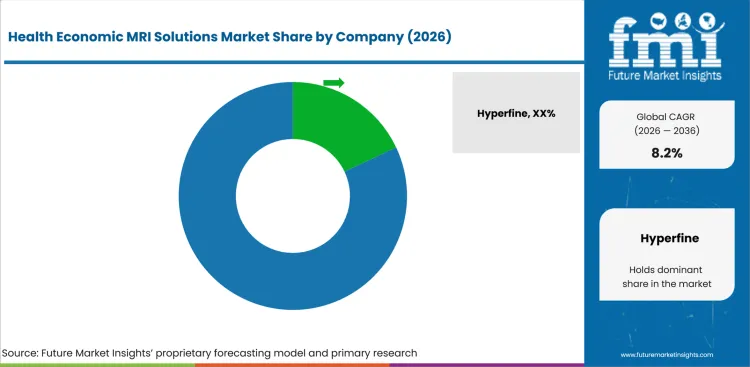
Hyperfine and Siemens Healthineers lead the evidence pool. GE HealthCare and Philips add scanner workflow reach. Canon Medical Systems adds regional scanner depth.
- Large MRI OEMs hold an advantage through service contracts and access to existing scanner fleets.
- Portable MRI specialists gain attention when bedside evidence lowers transfer burden in acute care.
- AI reconstruction vendors are expected to compete on scan-time reduction and diagnostic confidence.
- Quantitative MRI software firms stand out when neurology workflows need objective measurement support.
MRI OEMs compete by adding workflow and reconstruction features to scanners that hospitals already use. Siemens Healthineers introduced Magnetom Flow in February 2024 with AI-supported reconstruction. GE HealthCare expanded Sonic DL for 3D in December 2024 to support faster brain and body MRI scans. These claims matter only when hospitals can convert time savings into completed studies and better schedule control.
Portable MRI firms compete on acute-care access and proof of value. Hyperfine’s January 2026 publication announcement gave buyers a cost case for bedside brain imaging. ICU and emergency teams use that evidence to compare portable systems with patient transport. Wider adoption still depends on local proof and physician confidence.
Specialist software firms compete by narrowing the economic problem. Heuron is relevant when MRI triage affects neurology pathways. SyntheticMR supports quantitative imaging through OEM partnerships. These vendors are better placed when their tools fit scanner workflows and show downstream savings.
How do top health economic MRI solutions companies compare?
Hyperfine has the clearest bedside evidence. Large MRI OEMs lead workflow reach.
| Company | MRI Economic Evidence Depth | Workflow Integration Breadth | Acute Care Access Strength | Geographic Footprint |
|---|---|---|---|---|
| Hyperfine | High | Medium | High | United States and selected international markets |
| GE HealthCare | Medium | High | Medium | Global |
| Siemens Healthineers | Medium | High | Medium | Global |
| Philips | Medium | High | Medium | Global |
| Canon Medical Systems | Medium | Medium | Low | Japan and global channels |
| United Imaging Healthcare | Medium | Medium | Low | China and selected export markets |
| Heuron | High | Medium | Low | South Korea and export pathways |
| SyntheticMR | Medium | Medium | Low | Europe and OEM channels |
Source: Future Market Insights competitive analysis, 2026.
Which companies lead the health economic MRI solutions market?
Leading global companies in the health economic MRI solutions market include:
- Hyperfine
- GE HealthCare
- Siemens Healthineers
- Philips
- Canon Medical Systems
- United Imaging Healthcare
- Heuron
- SyntheticMR
Key Developments in Health Economic MRI Solutions Market
- In February 2024, Siemens Healthineers introduced Magnetom Flow with AI-supported reconstruction. The system supports shorter measurement times and lower helium dependence.
- In December 2024, GE HealthCare expanded its Effortless Recon DL portfolio with Sonic DL for 3D. The update supports shorter MRI scan times across brain and body imaging.
- In November 2025, Canon Medical highlighted its vertically integrated MRI portfolio for RSNA 2025. The update included AI workflow demonstrations and in-house component design.
- In May 2026, Philips announced Titanion MR at ISMRM 2026. The 3.0T system is designed for quantitative biomarker imaging and AI-enabled workflows.
- In June 2025, Siemens Healthineers received FDA clearance for Magnetom Flow.Ace. The scanner uses DryCool technology and AI-based image reconstruction.
Leading Companies in the Health Economic MRI Solutions Market
MRI Platform Leaders
- GE HealthCare
- Siemens Healthineers
- Philips
- Canon Medical Systems
- United Imaging Healthcare
Portable and Point-of-Care Specialists
- Hyperfine
Quantitative and AI Software Specialists
- Heuron
- SyntheticMR
Health Economic MRI Solutions Market - Report Scope
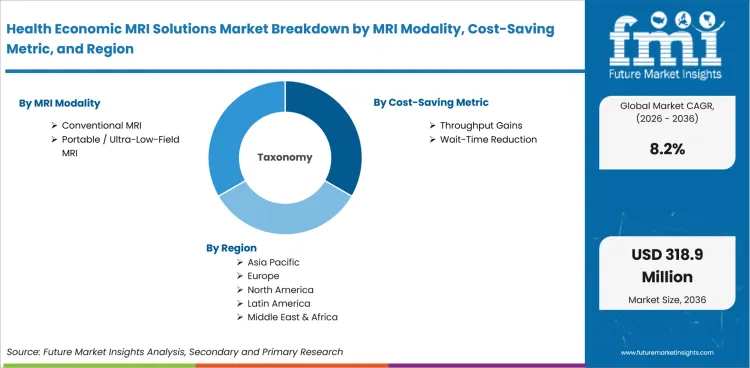
| Parameter | Details |
|---|---|
| Forecast period | 2026 to 2036 |
| Historical period | 2021 to 2025 |
| Quantitative unit | Revenue in USD million |
| By MRI modality | Conventional MRI, portable MRI |
| By cost-saving metric | Wait-time reduction · admission avoidance · throughput gains |
| By care setting | ICU · emergency department · outpatient |
| By end user | Hospitals · integrated delivery networks · payers |
| Regions covered | North America · Europe · East Asia · Middle East · Rest of World |
| Countries covered | United States · United Kingdom · Germany · France · Japan · China · South Korea · India |
| Key companies profiled | Hyperfine · GE HealthCare · Siemens Healthineers · Philips · Canon Medical Systems · United Imaging Healthcare · Heuron · SyntheticMR |
| Approach | Hybrid bottom-up and top-down method using product evidence, care-setting use rates and country demand patterns |
Source: Future Market Insights, 2026.
Health Economic MRI Solutions Market Definition and Scope
| Attribute | Detail |
|---|---|
| Market Definition | Software and workflow tools that quantify MRI cost and capacity outcomes. Portable MRI systems and decision tools are included. |
| Functions Covered | Wait-time tracking and scanner throughput measurement. Transfer reduction, admission avoidance and cost modeling are included. |
| Applications Covered | MRI ordering support and ICU imaging. Emergency neuroimaging, outpatient scheduling and enterprise imaging review are included. |
| End-Use Industries | Hospitals and imaging centers. Integrated delivery networks and payer-linked healthcare organizations are included. |
| Inclusions | Conventional MRI workflow tools and portable MRI economic platforms. Dashboards and care-setting analytics are included. |
| Exclusions | MRI scanners sold without economic measurement and general PACS archiving. Contrast agents, CT-only tools and X-ray detectors are excluded. |
Research Methodology
| Method | Description |
|---|---|
| Primary Research | FMI analyst interviews with radiology directors and hospital operations teams. Imaging service managers and payer policy teams were included. |
| Desk Research | Review of MedlinePlus and CMS. NHS England and OECD data were reviewed with official trade and company information. |
| Market Sizing & Forecasting | Hybrid approach using software pricing and portable MRI use cases. Country access gaps and end-user buying behavior were included. |
| Data Validation | Forecasts were checked against scanner capacity trends, hospital buying behavior and company portfolio evidence |
Health Economic MRI Solutions Market Breakdown by Segment and Region
Health Economic MRI Solutions Market Segmented by MRI Modality:
- Conventional MRI
- Portable / Ultra-Low-Field MRI
Health Economic MRI Solutions Market Segmented by Cost-Saving Metric:
- Wait-Time Reduction
- Admission Avoidance
- Throughput Gains
Health Economic MRI Solutions Market Segmented by Care Setting:
- ICU
- Emergency Department
- Outpatient
Health Economic MRI Solutions Market Segmented by End User:
- Hospitals
- Integrated Delivery Networks
- Payers
Health Economic MRI Solutions Market by Region:
- North America
- Europe
- East Asia
- Middle East
- Rest of World
Research Sources and Bibliography
- Bureau of Labor Statistics. (2025, August 28). Radiologic and MRI technologists. Occupational Outlook Handbook. U.S. Department of Labor.
- Centers for Medicare & Medicaid Services. (2026, March 10). Appropriate Use Criteria Program. Centers for Medicare & Medicaid Services.
- Competition Commission of India. (2024, August). Market study of diagnostic medical imaging equipment industry in India. Competition Commission of India.
- GE HealthCare. (2024, December 5). GE HealthCare expands its Effortless Recon DL portfolio. GE HealthCare.
- Hyperfine. (2025, July 17). Hyperfine announces the first commercial sales of the next-generation Swoop system powered by Optive AI software. Hyperfine.
- Hyperfine. (2026, January 6). Hyperfine announces first peer-reviewed publication demonstrating economic benefits of using the Swoop portable MRI system in acute hospital care. Hyperfine.
- MedlinePlus. (2026, June 1). MRI scans. U.S. National Library of Medicine.
- Royal College of Radiologists. (2025, June). Clinical Radiology Workforce Census 2024. Royal College of Radiologists.
- NHS England. (2025, November 27). Diagnostic Imaging Dataset annual statistical release 2024/25. NHS England.
- NHS England. (2026, January). Diagnostic Waiting Times and Activity Report. NHS England.
- NHS England. (2026). Monthly Diagnostic Waiting Times and Activity. NHS England.
- Organisation for Economic Co-operation and Development. (2025, November 13). Diagnostic technologies. Health at a Glance 2025. OECD.
- Organisation for Economic Co-operation and Development. (2025, November 13). Health at a Glance 2025: France. OECD.
- Organisation for Economic Co-operation and Development. (2025, November 13). Health at a Glance 2025: Germany. OECD.
- Organisation for Economic Co-operation and Development. (2025, November 13). Health at a Glance 2025: Japan. OECD.
- Organisation for Economic Co-operation and Development. (2025, November 13). Health at a Glance 2025: Korea. OECD.
- Organisation for Economic Co-operation and Development. (2025, November 13). Health at a Glance 2025: United States. OECD.
- Philips. (2025, July 2). Philips advances MRI speed and precision with FDA 510(k) clearance of SmartSpeed Precise dual AI software. Philips.
- Press Information Bureau. (2025, December 16). Achievements of Department of Biotechnology. Government of India.
- Press Information Bureau. (2026, March 1). India’s transformation into a global health powerhouse. Government of India.
- Siemens Healthineers. (2024, February 28). Siemens Healthineers introduces Magnetom Flow for greater efficiency in magnetic resonance imaging. Siemens Healthineers.
- Siemens Healthineers. (2025, June 26). Siemens Healthineers receives FDA clearance for Magnetom Flow.Ace. Siemens Healthineers.
- Statistics Bureau of Japan. (2025). Statistical handbook of Japan 2025. Government of Japan.
- Statistics Korea. (2025, September 29). Statistics on the aged. Statistics Korea.
- U.S. International Trade Administration. (2025, September 25). China - Healthcare. U.S. Department of Commerce.
- Federal Statistical Office. (2025, December 11). By 2035, one quarter of Germany’s population will be aged 67 or over. Destatis.
- Health Insurance Review and Assessment Service. (2025, March). HIRA realigns the review data list for providers. HIRA.
- Institut national de la statistique et des études économiques. (2026, January 13). Demographic report 2025. INSEE.
- National Bureau of Statistics of China. (2026, January 20). Industrial Production Operation in December 2025. National Bureau of Statistics of China.
- National Bureau of Statistics of China. (2026, February 28). Statistical communique of the People’s Republic of China on the 2025 national economic and social development. National Bureau of Statistics of China.
- United Nations Development Programme China. (2026, April). Measurement study on multidimensional vulnerabilities of the elderly population in China. UNDP China.
- Ministry of Health, Labour and Welfare. (2025). Guidebook on insurance coverage for medical devices and in vitro diagnostics. MHLW.
- Ministry of Health and Family Welfare. (2026, May 27). National Health Accounts Estimates for India 2022-23. Government of India.
- DREES. (2025, November 13). Dans les établissements de santé en 2024 la baisse du nombre de lits se poursuit. Direction de la recherche des études de l’évaluation et des statistiques.
- Department of Health and Social Care. (2026, April 13). NHS patients to get quicker tests and scans closer to home. GOV.UK.
- Philips. (2026, May 11). Philips Titanion MR expands ultra-high-gradient MRI beyond anatomical and functional imaging toward whole-body quantitative biomarkers. Philips.
- Centers for Medicare & Medicaid Services. (2025, January 17). Accrediting organizations: Advanced diagnostic imaging suppliers. Centers for Medicare & Medicaid Services.
- Canon Medical Systems USA. (2025, November 18). Canon Medical highlights vertical integration of MRI portfolio at RSNA 2025. Canon Medical Systems USA.
This Report Answers
- Delivery of market data and supporting analysis for strategic planning.
- Analysis of adoption barriers including IT integration and local proof needs.
- Review of post-2024 company developments that shape MRI workflow economics.
- Competitive analysis covering MRI OEMs and portable MRI specialists.
- Review of buyer behavior across hospitals and integrated delivery networks.
- Assessment of cost-saving metrics that reflect scanner productivity and bedside imaging workflows.
- Country-level growth analysis covering India and China with United States and Japan comparisons.
- Evaluation of wait-time reduction and throughput gains across hospitals and outpatient imaging settings.
- Analysis of MRI modality demand across conventional MRI and portable ultra-low-field MRI systems.
- Market size estimates for 2026 and forecasts through 2036 for the health economic MRI solutions market.
Frequently Asked Questions
What is the global market demand for Health Economic MRI Solutions Market in 2026?
In 2026, the global Health Economic MRI Solutions Market is expected to be worth USD 145.0 million with hospitals driving early buying.
What is the forecast value of the Health Economic MRI Solutions Market by 2036?
By 2036, the Health Economic MRI Solutions Market is forecast to reach USD 318.9 million with MRI economics central to capacity planning.
What CAGR is projected for the Health Economic MRI Solutions Market from 2026 to 2036?
The Health Economic MRI Solutions Market is projected to expand at an 8.2% CAGR from 2026 to 2036.
Which MRI modality segment is expected to lead in 2026?
Conventional MRI is projected to account for 68.0% share in 2026 with most tools attached to installed scanner fleets.
Which cost-saving metric segment is expected to lead in 2026?
Throughput Gains are expected to represent 44.0% share in 2026 with buyers measuring scanner slot recovery.
Which country is forecast to grow fastest in this market?
India is projected to record a 10.2% CAGR through 2036 with hospital chains seeking lower-cost MRI access expansion.
What does the Health Economic MRI Solutions Market include?
The market includes MRI workflow analytics, portable MRI economic platforms and decision support tools that quantify MRI cost outcomes.
How does FMI forecast this market?
FMI uses product evidence and care-setting adoption to forecast demand. Country access patterns and company portfolio checks validate the outlook.
What is a health economic MRI solution?
A health economic MRI solution shows how MRI use affects cost and waiting time. It measures patient transfer and scanner throughput.
Which MRI solution is best for ICU cost savings?
Portable ultra-low-field MRI can deliver ICU cost savings when it reduces patient transport and waiting time.
What are the main disadvantages of health economic MRI solutions?
The main disadvantages are uneven evidence across settings, hospital IT integration work and the need for local savings proof.
Preview the report firsthand - request a free sample
Get SampleGet the brochure for pricing and purchase details.
Get PDFTable of Content
- Key Takeaways
- Market Size and CAGR
- Top Growth Driver
- Fastest Growing Segment
- Leading Region
- Key Companies
- Emerging Opportunities
- Executive Summary
- Global Market Outlook
- Demand-side Trends
- Supply-side Trends
- Technology Roadmap Analysis
- Analysis and Recommendations
- Analyst Perspective (What is happening? Why now? What should investors know?)
- Key Questions Answered
- How large is the market?
- What is the CAGR?
- What are key trends?
- Which region dominates?
- Who are the leaders?
- Market Overview
- Market Coverage / Taxonomy
- Market Definition / Scope / Limitations
- Research Methodology
- Chapter Orientation
- Analytical Lens and Working Hypotheses
- Market Structure, Signals, and Trend Drivers
- Benchmarking and Cross-market Comparability
- Market Sizing, Forecasting, and Opportunity Mapping
- Admission Avoidance
- Research Design and Evidence Framework
- Desk Research Programme (Secondary Evidence)
- Expert Input and Fieldwork (Primary Evidence)
- Tooling, Models, and Reference Databases
- Admission Avoidance
- Data Engineering and Model Build
- Quality Assurance and Audit Trail
- Market Background
- Market Dynamics (Drivers, Restraints, Opportunity, Trends)
- Scenario Forecast (Optimistic, Likely, Conservative)
- Impact Analysis
- AI Impact
- Sustainability Impact
- Regulatory Impact
- Technology Impact
- Admission Avoidance
- Consumer / Buyer Analysis
- Purchase Drivers
- Adoption Barriers
- Buyer Journey
- Admission Avoidance
- Opportunity Map Analysis
- Product Life Cycle Analysis
- Supply Chain Analysis
- Investment Feasibility Matrix
- Value Chain Analysis
- PESTLE and Porter's Analysis
- Regulatory Landscape
- Regional Parent Market Outlook
- Production and Consumption Statistics
- Import and Export Statistics
- Global Market Analysis and Forecast, 2021 to 2036
- Historical Market Size Value (USD Million) Analysis, 2021 to 2025
- Current and Future Market Size Value (USD Million) Projections, 2026 to 2036
- Y-o-Y Growth Trend Analysis
- Absolute $ Opportunity Analysis
- Global Market Pricing Analysis, 2021 to 2036
- Global Market Analysis and Forecast, By MRI Modality, 2021 to 2036
- Introduction / Key Findings
- Historical Market Size Value (USD Million) Analysis By MRI Modality, 2021 to 2025
- Current and Future Market Size Value (USD Million) Analysis and Forecast By MRI Modality, 2026 to 2036
- Conventional MRI
- Portable / Ultra-Low-Field MRI
- Admission Avoidance
- Conventional MRI
- Y-o-Y Growth Trend Analysis By MRI Modality, 2021 to 2025
- Absolute $ Opportunity Analysis By MRI Modality, 2026 to 2036
- Global Market Analysis and Forecast, By Cost-Saving Metric, 2021 to 2036
- Introduction / Key Findings
- Historical Market Size Value (USD Million) Analysis By Cost-Saving Metric, 2021 to 2025
- Current and Future Market Size Value (USD Million) Analysis and Forecast By Cost-Saving Metric, 2026 to 2036
- Throughput Gains
- Wait-Time Reduction
- Admission Avoidance
- Throughput Gains
- Y-o-Y Growth Trend Analysis By Cost-Saving Metric, 2021 to 2025
- Absolute $ Opportunity Analysis By Cost-Saving Metric, 2026 to 2036
- Global Market Analysis and Forecast, By Care Setting, 2021 to 2036
- Introduction / Key Findings
- Historical Market Size Value (USD Million) Analysis By Care Setting, 2021 to 2025
- Current and Future Market Size Value (USD Million) Analysis and Forecast By Care Setting, 2026 to 2036
- Outpatient
- Emergency Department
- ICU
- Admission Avoidance
- Outpatient
- Y-o-Y Growth Trend Analysis By Care Setting, 2021 to 2025
- Absolute $ Opportunity Analysis By Care Setting, 2026 to 2036
- Global Market Analysis and Forecast, By End User, 2021 to 2036
- Introduction / Key Findings
- Historical Market Size Value (USD Million) Analysis By End User, 2021 to 2025
- Current and Future Market Size Value (USD Million) Analysis and Forecast By End User, 2026 to 2036
- Hospitals
- Integrated Delivery Networks
- Payers
- Admission Avoidance
- Hospitals
- Y-o-Y Growth Trend Analysis By End User, 2021 to 2025
- Absolute $ Opportunity Analysis By End User, 2026 to 2036
- Global Market Analysis and Forecast, By Region, 2021 to 2036
- Introduction
- Historical Market Size Value (USD Million) Analysis By Region, 2021 to 2025
- Current Market Size Value (USD Million) Analysis and Forecast By Region, 2026 to 2036
- North America
- Latin America
- Western Europe
- Eastern Europe
- East Asia
- South Asia and Pacific
- Middle East & Africa
- Admission Avoidance
- Market Attractiveness Analysis By Region
- North America Market Analysis and Forecast, By Country, 2021 to 2036
- Historical Market Size Value (USD Million) Trend Analysis By Market Taxonomy, 2021 to 2025
- Market Size Value (USD Million) Forecast By Market Taxonomy, 2026 to 2036
- By Country
- USA
- Canada
- Mexico
- By MRI Modality
- By Cost-Saving Metric
- By Care Setting
- By End User
- Admission Avoidance
- By Country
- Market Attractiveness Analysis
- By Country
- By MRI Modality
- By Cost-Saving Metric
- By Care Setting
- By End User
- Admission Avoidance
- Key Takeaways
- Latin America Market Analysis and Forecast, By Country
- Historical Market Size Value (USD Million) Trend Analysis By Market Taxonomy, 2021 to 2025
- Market Size Value (USD Million) Forecast By Market Taxonomy, 2026 to 2036
- By Country
- Brazil
- Chile
- Rest of Latin America
- By MRI Modality
- By Cost-Saving Metric
- By Care Setting
- By End User
- Admission Avoidance
- By Country
- Market Attractiveness Analysis
- By Country
- By MRI Modality
- By Cost-Saving Metric
- By Care Setting
- By End User
- Admission Avoidance
- Key Takeaways
- Western Europe Market Analysis and Forecast, By Country
- Historical Market Size Value (USD Million) Trend Analysis By Market Taxonomy, 2021 to 2025
- Market Size Value (USD Million) Forecast By Market Taxonomy, 2026 to 2036
- By Country
- Germany
- UK
- Italy
- Spain
- France
- Nordic
- BENELUX
- Rest of Western Europe
- By MRI Modality
- By Cost-Saving Metric
- By Care Setting
- By End User
- Admission Avoidance
- By Country
- Market Attractiveness Analysis
- By Country
- By MRI Modality
- By Cost-Saving Metric
- By Care Setting
- By End User
- Admission Avoidance
- Key Takeaways
- Eastern Europe Market Analysis and Forecast, By Country
- Historical Market Size Value (USD Million) Trend Analysis By Market Taxonomy, 2021 to 2025
- Market Size Value (USD Million) Forecast By Market Taxonomy, 2026 to 2036
- By Country
- Russia
- Poland
- Hungary
- Balkan & Baltic
- Rest of Eastern Europe
- By MRI Modality
- By Cost-Saving Metric
- By Care Setting
- By End User
- Admission Avoidance
- By Country
- Market Attractiveness Analysis
- By Country
- By MRI Modality
- By Cost-Saving Metric
- By Care Setting
- By End User
- Admission Avoidance
- Key Takeaways
- East Asia Market Analysis and Forecast, By Country
- Historical Market Size Value (USD Million) Trend Analysis By Market Taxonomy, 2021 to 2025
- Market Size Value (USD Million) Forecast By Market Taxonomy, 2026 to 2036
- By Country
- China
- Japan
- South Korea
- By MRI Modality
- By Cost-Saving Metric
- By Care Setting
- By End User
- Admission Avoidance
- By Country
- Market Attractiveness Analysis
- By Country
- By MRI Modality
- By Cost-Saving Metric
- By Care Setting
- By End User
- Admission Avoidance
- Key Takeaways
- South Asia and Pacific Market Analysis and Forecast, By Country
- Historical Market Size Value (USD Million) Trend Analysis By Market Taxonomy, 2021 to 2025
- Market Size Value (USD Million) Forecast By Market Taxonomy, 2026 to 2036
- By Country
- India
- ASEAN
- Australia & New Zealand
- Rest of South Asia and Pacific
- By MRI Modality
- By Cost-Saving Metric
- By Care Setting
- By End User
- Admission Avoidance
- By Country
- Market Attractiveness Analysis
- By Country
- By MRI Modality
- By Cost-Saving Metric
- By Care Setting
- By End User
- Admission Avoidance
- Key Takeaways
- Middle East & Africa Market Analysis and Forecast, By Country
- Historical Market Size Value (USD Million) Trend Analysis By Market Taxonomy, 2021 to 2025
- Market Size Value (USD Million) Forecast By Market Taxonomy, 2026 to 2036
- By Country
- Kingdom of Saudi Arabia
- Other GCC Countries
- Türkiye
- South Africa
- Other African Union
- Rest of Middle East & Africa
- By MRI Modality
- By Cost-Saving Metric
- By Care Setting
- By End User
- Admission Avoidance
- By Country
- Market Attractiveness Analysis
- By Country
- By MRI Modality
- By Cost-Saving Metric
- By Care Setting
- By End User
- Admission Avoidance
- Key Takeaways
- Key Countries Market Analysis
- USA
- Pricing Analysis
- Market Share Analysis, 2025
- By MRI Modality
- By Cost-Saving Metric
- By Care Setting
- By End User
- Admission Avoidance
- Canada
- Pricing Analysis
- Market Share Analysis, 2025
- By MRI Modality
- By Cost-Saving Metric
- By Care Setting
- By End User
- Admission Avoidance
- Mexico
- Pricing Analysis
- Market Share Analysis, 2025
- By MRI Modality
- By Cost-Saving Metric
- By Care Setting
- By End User
- Admission Avoidance
- Brazil
- Pricing Analysis
- Market Share Analysis, 2025
- By MRI Modality
- By Cost-Saving Metric
- By Care Setting
- By End User
- Admission Avoidance
- Chile
- Pricing Analysis
- Market Share Analysis, 2025
- By MRI Modality
- By Cost-Saving Metric
- By Care Setting
- By End User
- Admission Avoidance
- Germany
- Pricing Analysis
- Market Share Analysis, 2025
- By MRI Modality
- By Cost-Saving Metric
- By Care Setting
- By End User
- Admission Avoidance
- UK
- Pricing Analysis
- Market Share Analysis, 2025
- By MRI Modality
- By Cost-Saving Metric
- By Care Setting
- By End User
- Admission Avoidance
- Italy
- Pricing Analysis
- Market Share Analysis, 2025
- By MRI Modality
- By Cost-Saving Metric
- By Care Setting
- By End User
- Admission Avoidance
- Spain
- Pricing Analysis
- Market Share Analysis, 2025
- By MRI Modality
- By Cost-Saving Metric
- By Care Setting
- By End User
- Admission Avoidance
- France
- Pricing Analysis
- Market Share Analysis, 2025
- By MRI Modality
- By Cost-Saving Metric
- By Care Setting
- By End User
- Admission Avoidance
- India
- Pricing Analysis
- Market Share Analysis, 2025
- By MRI Modality
- By Cost-Saving Metric
- By Care Setting
- By End User
- Admission Avoidance
- ASEAN
- Pricing Analysis
- Market Share Analysis, 2025
- By MRI Modality
- By Cost-Saving Metric
- By Care Setting
- By End User
- Admission Avoidance
- Australia & New Zealand
- Pricing Analysis
- Market Share Analysis, 2025
- By MRI Modality
- By Cost-Saving Metric
- By Care Setting
- By End User
- Admission Avoidance
- China
- Pricing Analysis
- Market Share Analysis, 2025
- By MRI Modality
- By Cost-Saving Metric
- By Care Setting
- By End User
- Admission Avoidance
- Japan
- Pricing Analysis
- Market Share Analysis, 2025
- By MRI Modality
- By Cost-Saving Metric
- By Care Setting
- By End User
- Admission Avoidance
- South Korea
- Pricing Analysis
- Market Share Analysis, 2025
- By MRI Modality
- By Cost-Saving Metric
- By Care Setting
- By End User
- Admission Avoidance
- Russia
- Pricing Analysis
- Market Share Analysis, 2025
- By MRI Modality
- By Cost-Saving Metric
- By Care Setting
- By End User
- Admission Avoidance
- Poland
- Pricing Analysis
- Market Share Analysis, 2025
- By MRI Modality
- By Cost-Saving Metric
- By Care Setting
- By End User
- Admission Avoidance
- Hungary
- Pricing Analysis
- Market Share Analysis, 2025
- By MRI Modality
- By Cost-Saving Metric
- By Care Setting
- By End User
- Admission Avoidance
- Kingdom of Saudi Arabia
- Pricing Analysis
- Market Share Analysis, 2025
- By MRI Modality
- By Cost-Saving Metric
- By Care Setting
- By End User
- Admission Avoidance
- Türkiye
- Pricing Analysis
- Market Share Analysis, 2025
- By MRI Modality
- By Cost-Saving Metric
- By Care Setting
- By End User
- Admission Avoidance
- South Africa
- Pricing Analysis
- Market Share Analysis, 2025
- By MRI Modality
- By Cost-Saving Metric
- By Care Setting
- By End User
- USA
- Market Structure Analysis
- Competition Dashboard
- Competition Benchmarking
- Market Share Analysis of Top Players
- By Regional
- By MRI Modality
- By Cost-Saving Metric
- By Care Setting
- By End User
- Emerging Startups
- Innovation Benchmarking
- Admission Avoidance
- Competition Analysis
- Competition Deep Dive
- Hyperfine
- Overview
- Product Portfolio
- Profitability by Market Segments (Product/Region/Sales Channel)
- Sales Footprint
- Strategy Overview
- Marketing Strategy
- Product Strategy
- Channel Strategy
- GE HealthCare
- Siemens Healthineers
- Philips
- Canon Medical Systems
- Value (USD Million)ed Imaging Healthcare
- Hyperfine
- Case Studies
- Success Stories
- Recent Developments
- Competition Deep Dive
- Assumptions & Acronyms Used


