

- Industry Size (2025)
- USD 180.0 Mn
- Forecast (2035)
- USD 234.9 Mn
- CAGR (2025 to 2035)
- 2.7%
Demand for Antimicrobial Susceptibility Testing in Japan Forecast and Outlook 2025 to 2035
Demand for antimicrobial susceptibility testing in Japan is expected to grow steadily from USD 180.0 million in 2025 to USD 234.9 million in 2035, reflecting a CAGR of 2.7%. In the first few years of the forecast period (2025–2030), growth remains consistent but gradual. Starting at USD 180.0 million in 2025, the demand increases slightly to USD 184.8 million in 2026, a growth rate of 2.7%.
In the following years, demand continues to rise modestly, reaching USD 189.8 million in 2027 and USD 194.9 million in 2028, reflecting growth rates of 2.8% and 2.7%, respectively. As the need for effective antimicrobial resistance (AMR) monitoring and diagnostics grows, the industry continues to see gradual but steady expansion in these early years.
Quick Stats of the Demand for Antimicrobial Susceptibility Testing in Japan
- Demand for Antimicrobial Susceptibility Testing in Japan Value (2025): USD 180.0 million
- Demand for Antimicrobial Susceptibility Testing in Japan Forecast Value (2035): USD 234.9 million
- Demand for Antimicrobial Susceptibility Testing in Japan Forecast CAGR (2025 to 2035): 2.7%
- Demand for Antimicrobial Susceptibility Testing in Japan Leading Product Type: Instruments
- Demand for Antimicrobial Susceptibility Testing in Japan Key Growth Regions: Kyushu & Okinawa, Kanto, Kansai, Chubu, Tohoku, Rest of Japan
- Demand for Antimicrobial Susceptibility Testing in Japan Top Players: BD, Danaher, Thermo Fisher Scientific, Bio-Rad, Creative Diagnostics
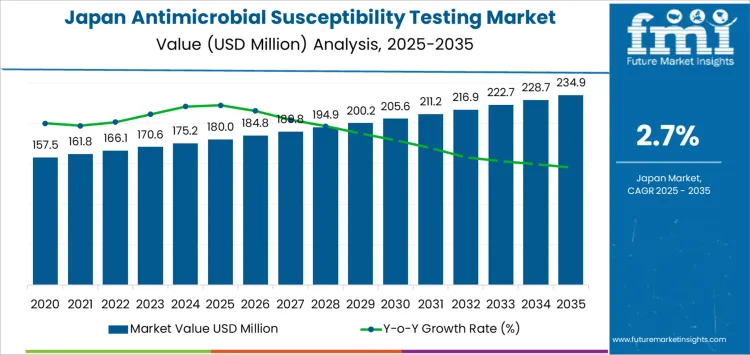
By 2030, demand reaches USD 200.2 million, followed by USD 205.6 million in 2031, with a growth rate of 2.7%. Over the next four years, the demand increases further, reaching USD 211.2 million in 2033 and USD 216.9 million in 2034, reflecting a sustained demand driven by increased awareness and regulatory emphasis on AMR. By 2035, the demand for antimicrobial susceptibility testing is projected to hit USD 234.9 million, supported by Japan’s increasing efforts to combat antimicrobial resistance and improving healthcare infrastructure. The growth is driven by rising healthcare demands, the adoption of new diagnostic technologies, and continuous efforts to improve public health surveillance and infection control.
Demand for Antimicrobial Susceptibility Testing in Japan Key Takeaways
| Metric | Value |
|---|---|
| Industry Value (2025) | USD 180.0 million |
| Industry Forecast Value (2035) | USD 234.9 million |
| Forecast CAGR (2025 to 2035) | 2.7% |
Why is the Demand for Antimicrobial Susceptibility Testing in Japan Growing?
The demand for antimicrobial susceptibility testing (AST) in Japan is growing due to the increasing prevalence of antibiotic-resistant infections and the need for precise treatment strategies. AST is essential in identifying the most effective antibiotics for treating infections, ensuring that patients receive the appropriate medication. With the rise in multidrug-resistant pathogens, particularly in hospital settings, there is a heightened focus on accurate and rapid susceptibility testing to guide treatment decisions and reduce the spread of resistant bacteria.
The Japanese healthcare system is investing in advanced diagnostic technologies to improve infection control and management. As a result, the adoption of antimicrobial susceptibility testing has increased in clinical laboratories, particularly in response to government initiatives aimed at addressing antimicrobial resistance (AMR). The growing awareness of AMR among healthcare professionals and the public, coupled with the need for more targeted therapies, is further driving the demand for AST.
Despite the growth in demand, challenges such as the high cost of advanced testing systems and the need for specialized expertise in interpreting test results may slow the adoption of AST in certain settings. However, as the focus on controlling AMR intensifies and technological advancements make AST more accessible, the demand for antimicrobial susceptibility testing in Japan is expected to continue growing.
What is the Segment-Wise Analysis of Demand for Antimicrobial Susceptibility Testing in Japan?
Demand for antimicrobial susceptibility testing in Japan is segmented by product, end-user, application, and region. By product, instruments lead at 40%, followed by software & services, and kits & reagents. In terms of end-users, diagnostic laboratories account for 40% of the demand, with hospitals and research laboratories also contributing to the industry. The key applications for antimicrobial susceptibility testing include sepsis, respiratory infections, gastrointestinal infections, meningitis & encephalitis, endocarditis, and other infections. Regionally, demand spans across Kyushu & Okinawa, Kanto, Kansai, Chubu, Tohoku, and the rest of Japan, with variations in demand based on local infection rates and healthcare infrastructure.
How Do Instruments Lead the Demand for Antimicrobial Susceptibility Testing in Japan?
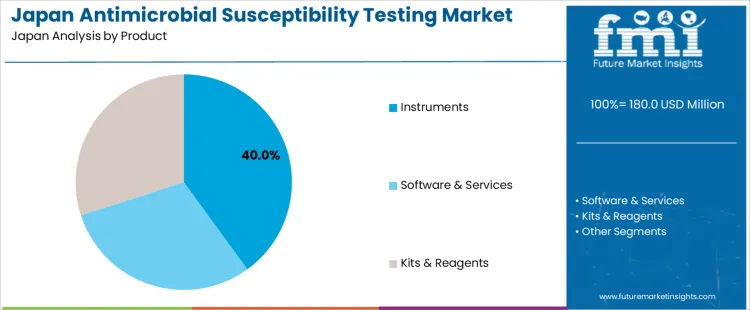
Instruments account for 40% of the demand for antimicrobial susceptibility testing in Japan, driven by their critical role in accurately diagnosing infections and determining the most effective antimicrobial treatment. These instruments, including automated systems and microbiological analyzers, are essential for quickly and efficiently identifying microbial resistance to various antibiotics. The demand for instruments is particularly strong in diagnostic laboratories and hospitals, where fast and precise testing is crucial for effective patient treatment. As antimicrobial resistance continues to rise, the need for reliable, automated testing systems in clinical settings is growing, especially in regions like Kanto and Kansai. Instruments are preferred for their ability to handle high volumes of samples, provide quick results, and reduce the chances of human error, ensuring better treatment outcomes and patient safety. Their advanced technology and efficiency continue to drive their dominant position in the antimicrobial susceptibility testing industry in Japan.
Why Do Diagnostic Laboratories Lead the Demand for Antimicrobial Susceptibility Testing in Japan?
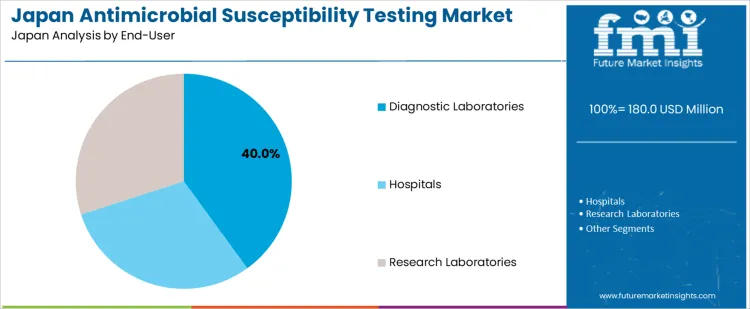
Diagnostic laboratories account for 40% of the demand for antimicrobial susceptibility testing in Japan, reflecting their central role in conducting accurate testing to guide treatment decisions. These laboratories are essential in identifying infections and determining the antimicrobial susceptibility of pathogens, which is crucial for effective disease management. With the rise in antibiotic-resistant infections, diagnostic laboratories play an increasingly important role in providing reliable results to healthcare providers. The growing adoption of automated instruments and systems in these labs has increased testing efficiency, enabling faster diagnosis and treatment. The demand is particularly strong in urban regions like Kanto and Kansai, where healthcare infrastructure supports advanced diagnostic capabilities. As Japan continues to address the challenges of antimicrobial resistance, diagnostic laboratories remain the primary end-users of antimicrobial susceptibility testing, ensuring their continued dominance in the industry.
What are the Key Trends, Drivers, and Restraints in Demand for Antimicrobial Susceptibility Testing in Japan?
Demand for antimicrobial susceptibility testing (AST) in Japan is increasing due to rising concerns about antimicrobial resistance (AMR) and the growing prevalence of drug-resistant infections. AST plays a crucial role in ensuring that healthcare providers prescribe the most effective antibiotics, which helps reduce the misuse of broad-spectrum drugs and limits resistance. As AMR becomes a greater threat, particularly in hospital settings, the need for accurate, timely diagnostics is more important than ever. However, there are barriers to broader adoption. The costs of AST, including the necessary infrastructure and skilled personnel, can be prohibitive for smaller clinics. In some settings, delays in testing or a lack of resources may limit the routine use of AST, especially in outpatient care, where quick treatment decisions are needed.
Why is Demand for Antimicrobial Susceptibility Testing Growing in Japan?
Demand for AST in Japan is growing due to the increasing rates of antibiotic-resistant infections and their associated medical costs. Resistant infections are linked to longer hospital stays, higher mortality rates, and greater overall healthcare costs. This drives the need for accurate and timely diagnostics to guide effective treatment. The Japanese government and healthcare organizations have been focusing on AMR surveillance and stewardship programs, where AST plays a vital role in controlling the spread of resistance. As healthcare professionals become more aware of the importance of AST, its adoption across hospitals and diagnostic laboratories continues to rise. AST helps ensure that patients receive targeted therapies, reducing the risk of treatment failure and promoting responsible antibiotic use, further contributing to its growing demand.
How are Technological & Industry Innovations Driving AST Demand in Japan?
Technological advancements are enhancing the efficiency and accessibility of antimicrobial susceptibility testing (AST) in Japan. Innovations in lab automation and rapid susceptibility testing have streamlined workflows and reduced result turnaround times, making AST more practical for high‑volume clinical settings. New molecular diagnostic techniques and advanced culture media provide faster and more accurate results, particularly for critical or bloodstream infections. The integration of automated systems in laboratories allows for consistent, reproducible testing, further improving the quality of results. These innovations make AST more viable for a broader range of healthcare facilities, from large hospitals to smaller clinics, driving increased demand. As technology continues to evolve, AST is becoming a vital part of infection control and antimicrobial stewardship programs.
What are the Key Challenges and Risks That Could Limit AST Demand in Japan?
Despite the growing demand for antimicrobial susceptibility testing (AST) in Japan, several challenges remain. One major issue is the high cost of advanced diagnostic systems, which can be a barrier for smaller healthcare facilities or rural clinics. The complexity of setting up and maintaining automated systems, as well as ongoing costs for consumables, may limit the widespread adoption of AST. Conventional AST methods may still take time to yield results, especially for severe infections, which may lead some healthcare providers to rely on empirical treatment rather than waiting for test results. There is also variability in how AST results are interpreted across different laboratories, which can hinder consistency in clinical decision-making. Furthermore, some physicians may continue to prioritize empirical prescribing, reducing the perceived value of AST.
What is the Regional Demand Outlook for Antimicrobial Susceptibility Testing in Japan?
Demand for antimicrobial susceptibility testing (AST) is steadily increasing across Japan, with Kyushu & Okinawa leading at a 3.4% CAGR. This growth is driven by the region's growing healthcare infrastructure and increasing focus on combating antimicrobial resistance (AMR). Kanto follows closely with a 3.1% CAGR, supported by its large urban population and healthcare facilities. Kansai shows a 2.7% CAGR, reflecting the region’s established healthcare system and growing adoption of advanced diagnostics. Chubu experiences a 2.4% CAGR as regional hospitals and clinics modernize, while Tohoku and the Rest of Japan see more moderate growth at 2.1% and 2.0%, respectively, as smaller regions gradually adopt AST solutions.
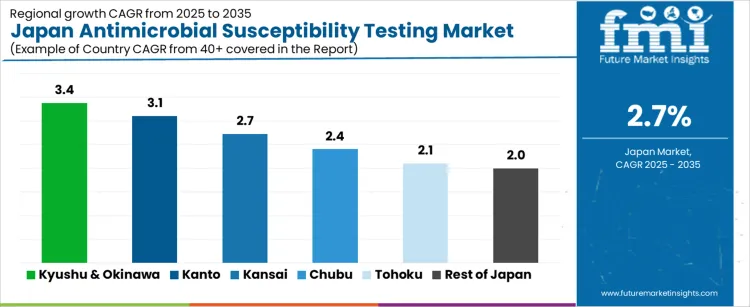
| Region | CAGR (%) |
|---|---|
| Kyushu & Okinawa | 3.4% |
| Kanto | 3.1% |
| Kansai | 2.7% |
| Chubu | 2.4% |
| Tohoku | 2.1% |
| Rest of Japan | 2.0% |
How is Demand for Antimicrobial Susceptibility Testing Growing in Kyushu & Okinawa?
Kyushu & Okinawa leads the demand for antimicrobial susceptibility testing (AST), growing at a 3.4% CAGR. The region’s strong focus on healthcare, particularly in Okinawa, has driven the adoption of advanced diagnostic methods such as AST. With an aging population and rising incidence of infectious diseases, hospitals and clinics are relying more on AST for effective treatment. Modernization of healthcare facilities and increasing public awareness of antimicrobial resistance (AMR) are accelerating AST use. The tourism sector in Okinawa also plays a role in boosting demand, as health services for both locals and visitors require quick and accurate diagnostics. As the region prioritizes healthcare innovation, AST demand is expected to remain strong, supporting continued growth as part of the region’s efforts to improve patient care and address AMR.
Why is Demand for Antimicrobial Susceptibility Testing Rising in Kanto?
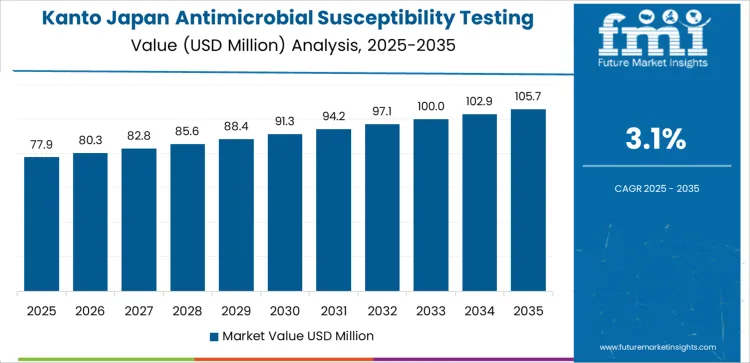
In Kanto, demand for antimicrobial susceptibility testing (AST) is rising at a 3.1% CAGR. Kanto’s large urban population and advanced healthcare infrastructure, particularly in Tokyo, contribute to the high demand for AST. Hospitals and diagnostic labs in the region are adopting AST technologies to better manage infections and treat patients effectively. With antimicrobial resistance (AMR) becoming a growing concern, Kanto’s healthcare providers seek reliable testing solutions to guide antibiotic use. The region’s robust medical research community is also driving innovation in AST technologies. As Kanto works to enhance healthcare delivery and fight AMR, the demand for AST is expected to grow, driven by an increasing focus on precision diagnostics and effective treatment strategies in the region’s expansive healthcare system.
How is Demand for Antimicrobial Susceptibility Testing Expanding in Kansai?
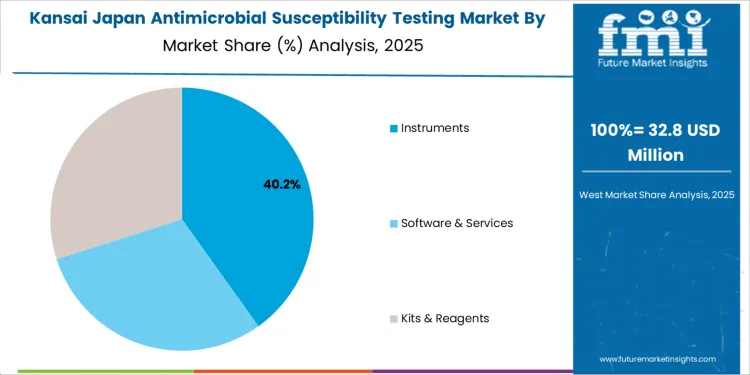
Kansai shows steady demand for antimicrobial susceptibility testing (AST), growing at a 2.7% CAGR. The region’s well-established healthcare system, especially in cities like Osaka and Kyoto, has contributed to the widespread adoption of AST in hospitals and diagnostic centers. Kansai’s aging population and growing health awareness are driving the demand for effective antimicrobial resistance (AMR) management. As more healthcare providers integrate advanced diagnostic tools into their practices, the use of AST continues to rise. The region’s commitment to providing high-quality healthcare ensures that AST will remain an essential part of managing infections. With an increasing focus on improving treatment outcomes and combating AMR, the demand for AST technologies in Kansai is expected to continue expanding steadily, making it a key area for future growth in Japan’s healthcare landscape.
Why is Demand for Antimicrobial Susceptibility Testing Growing in Chubu?
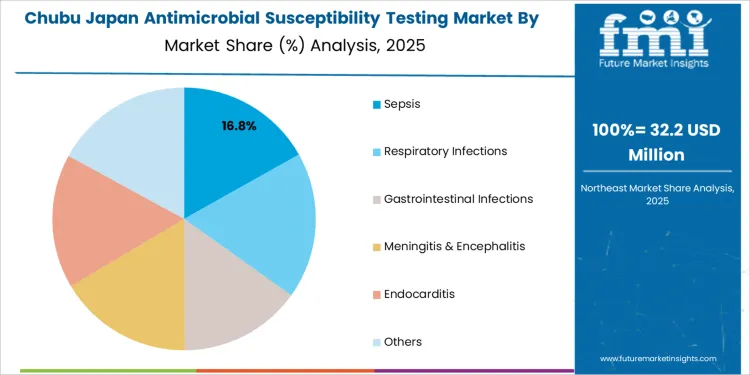
Chubu is experiencing steady demand for antimicrobial susceptibility testing (AST), growing at a 2.4% CAGR. The region’s expanding healthcare infrastructure, especially in Nagoya, is contributing to the adoption of AST solutions in hospitals and clinics. As the prevalence of infectious diseases rises, Chubu’s healthcare providers are increasingly using AST to combat antimicrobial resistance (AMR) and ensure effective treatment. The region’s focus on modernizing healthcare delivery, along with growing investments in diagnostic technologies, is further driving the demand for AST. Chubu’s pharmaceutical and medical sectors are also integrating AST into their practices to improve diagnostic accuracy and patient care. As the region continues to embrace innovation in healthcare, the demand for AST is expected to rise steadily, supporting improvements in both treatment outcomes and healthcare efficiency.
How is Demand for Antimicrobial Susceptibility Testing Expanding in Tohoku?
Tohoku is seeing moderate growth in antimicrobial susceptibility testing (AST) demand, with a 2.1% CAGR. Although the region’s adoption rate is slower compared to major urban areas, there is growing interest in AST technologies to improve the accuracy and efficiency of infectious disease management. Tohoku’s aging population and increasing health awareness are driving the demand for effective antimicrobial resistance (AMR) management. As local healthcare facilities modernize their infrastructure, the adoption of AST is gradually increasing. With the growing need for improved disease management and better healthcare access in the region, AST is becoming an essential tool in Tohoku’s healthcare systems. While growth in the region may be slower, the continued focus on modernizing healthcare and addressing AMR will ensure steady demand for AST technologies in the coming years.
Why is Demand for Antimicrobial Susceptibility Testing Steady in the Rest of Japan?
The Rest of Japan is experiencing steady demand for antimicrobial susceptibility testing (AST), with a 2.0% CAGR. Although adoption is slower compared to larger urban regions, there is increasing awareness of antimicrobial resistance (AMR) and the need for effective diagnostics. As healthcare providers in rural and semi-urban areas modernize their diagnostic capabilities, AST adoption is growing. The national emphasis on improving healthcare access, combined with the need to manage AMR, ensures continued demand for AST. Public health initiatives aimed at improving awareness of AMR and expanding healthcare infrastructure are also supporting this growth. While the pace of adoption is slower compared to urban areas, AST demand in the Rest of Japan is expected to grow steadily as healthcare providers in these regions integrate more advanced diagnostic solutions to improve patient care.
What is Driving the Demand for Antimicrobial Susceptibility Testing in Japan and Who Are the Key Providers?
The demand for antimicrobial susceptibility testing (AST) in Japan is rising, largely in response to increasing concerns around antimicrobial resistance (AMR). As pathogens become more resistant to standard treatments, the need to quickly and accurately determine which antibiotics remain effective has grown. Hospitals and clinics are relying more on AST to guide treatment decisions and avoid prescribing ineffective drugs. The trend toward antimicrobial stewardship optimizing the use of antibiotics to limit resistance also boosts demand for robust testing.
Leading providers of diagnostic equipment and supplies for AST in Japan include BD (Becton, Dickinson and Company), Danaher, Thermo Fisher Scientific, Bio-Rad Laboratories, and Creative Diagnostics. BD holds approximately 25.0% of the supply base, indicating a strong presence in Japan’s clinical diagnostics ecosystem. These companies supply instruments, culture media, reagents, and automated testing platforms that laboratories use to perform both traditional phenotypic AST and more advanced methods.
Adoption of AST in Japan is being supported by technological improvements that make tests faster, more accurate, and more scalable - including automated systems that reduce manual labor and error, and high‑throughput platforms useful for busy diagnostic labs. At the same time, growing awareness among healthcare providers and regulators about the dangers of resistant bacteria has reinforced the role of AST as essential for effective treatment, infection control, and public health. With rising infection rates, more resistant bacterial strains, and increasing pressure to use antibiotics responsibly, AST is becoming a cornerstone of clinical diagnostics and antimicrobial strategy in Japan.
Key Players in Japan Antimicrobial Susceptibility Testing Demand
- BD
- Danaher
- Thermo Fisher Scientific
- Bio-Rad
- Creative Diagnostics
Scope of Report
| Items | Values |
|---|---|
| Quantitative Units (2025) | USD million |
| Product | Instruments, Software & Services, Kits & Reagents |
| Application | Sepsis, Respiratory Infections, Gastrointestinal Infections, Meningitis & Encephalitis, Endocarditis, Others |
| End-User | Diagnostic Laboratories, Hospitals, Research Laboratories |
| Region | Kyushu & Okinawa, Kanto, Kansai, Chubu, Tohoku, Rest of Japan |
| Countries Covered | Japan |
| Key Companies Profiled | BD, Danaher, Thermo Fisher Scientific, Bio-Rad, Creative Diagnostics |
| Additional Attributes | Dollar sales by product type and application; regional CAGR and growth trends; technological advancements in antimicrobial testing; increasing focus on sepsis and respiratory infections |
Japan Antimicrobial Susceptibility Testing Demand by Key Segments
Product:
- Instruments
- Software & Services
- Kits & Reagents
Application:
- Sepsis
- Respiratory Infections
- Gastrointestinal Infections
- Meningitis & Encephalitis
- Endocarditis
- Others
End-User:
- Diagnostic Laboratories
- Hospitals
- Research Laboratories
Region:
- Kyushu & Okinawa
- Kanto
- Kansai
- Chubu
- Tohoku
- Rest of Japan
Frequently Asked Questions
How big is the demand for antimicrobial susceptibility testing in Japan in 2025?
The demand for antimicrobial susceptibility testing in Japan is estimated to be valued at USD 180.0 million in 2025.
What will be the size of antimicrobial susceptibility testing in Japan in 2035?
The market size for the antimicrobial susceptibility testing in Japan is projected to reach USD 234.9 million by 2035.
How much will be the demand for antimicrobial susceptibility testing in Japan growth between 2025 and 2035?
The demand for antimicrobial susceptibility testing in Japan is expected to grow at a 2.7% CAGR between 2025 and 2035.
What are the key product types in the antimicrobial susceptibility testing in Japan?
The key product types in antimicrobial susceptibility testing in Japan are instruments, software & services and kits & reagents.
Which application segment is expected to contribute significant share in the antimicrobial susceptibility testing in Japan in 2025?
In terms of application, sepsis segment is expected to command 17.0% share in the antimicrobial susceptibility testing in Japan in 2025.
Preview the report firsthand - request a free sample
Get SampleGet the brochure for pricing and purchase details.
Get PDFTable of Content
- Executive Summary
- Japan Market Outlook
- Demand-side Trends
- Supply-side Trends
- Technology Roadmap Analysis
- Analysis and Recommendations
- Market Overview
- Market Coverage / Taxonomy
- Market Definition / Scope / Limitations
- Market Background
- Market Dynamics
- Drivers
- Restraints
- Opportunity
- Trends
- Scenario Forecast
- Demand in Optimistic Scenario
- Demand in Likely Scenario
- Demand in Conservative Scenario
- Opportunity Map Analysis
- Product Life Cycle Analysis
- Supply Chain Analysis
- Investment Feasibility Matrix
- Value Chain Analysis
- PESTLE and Porter’s Analysis
- Regulatory Landscape
- Regional Parent Market Outlook
- Production and Consumption Statistics
- Import and Export Statistics
- Market Dynamics
- Japan Market Analysis 2020 to 2024 and Forecast, 2025 to 2035
- Historical Market Size Value (USD Million) Analysis, 2020 to 2024
- Current and Future Market Size Value (USD Million) Projections, 2025 to 2035
- Y-o-Y Growth Trend Analysis
- Absolute $ Opportunity Analysis
- Japan Market Pricing Analysis 2020 to 2024 and Forecast 2025 to 2035
- Japan Market Analysis 2020 to 2024 and Forecast 2025 to 2035, By Product
- Introduction / Key Findings
- Historical Market Size Value (USD Million) Analysis By Product , 2020 to 2024
- Current and Future Market Size Value (USD Million) Analysis and Forecast By Product , 2025 to 2035
- Instruments
- Software & Services
- Kits & Reagents
- Y-o-Y Growth Trend Analysis By Product , 2020 to 2024
- Absolute $ Opportunity Analysis By Product , 2025 to 2035
- Japan Market Analysis 2020 to 2024 and Forecast 2025 to 2035, By Application
- Introduction / Key Findings
- Historical Market Size Value (USD Million) Analysis By Application, 2020 to 2024
- Current and Future Market Size Value (USD Million) Analysis and Forecast By Application, 2025 to 2035
- Sepsis
- Respiratory Infections
- Gastrointestinal Infections
- Meningitis & Encephalitis
- Endocarditis
- Others
- Y-o-Y Growth Trend Analysis By Application, 2020 to 2024
- Absolute $ Opportunity Analysis By Application, 2025 to 2035
- Japan Market Analysis 2020 to 2024 and Forecast 2025 to 2035, By End-User
- Introduction / Key Findings
- Historical Market Size Value (USD Million) Analysis By End-User, 2020 to 2024
- Current and Future Market Size Value (USD Million) Analysis and Forecast By End-User, 2025 to 2035
- Diagnostic Laboratories
- Hospitals
- Research Laboratories
- Y-o-Y Growth Trend Analysis By End-User, 2020 to 2024
- Absolute $ Opportunity Analysis By End-User, 2025 to 2035
- Market Structure Analysis
- Competition Dashboard
- Competition Benchmarking
- Market Share Analysis of Top Players
- By Regional
- By Product
- By Application
- By End-User
- Competition Analysis
- Competition Deep Dive
- Danaher
- Overview
- Product Portfolio
- Profitability by Market Segments (Product/Age /Sales Channel/Region)
- Sales Footprint
- Strategy Overview
- Marketing Strategy
- Product Strategy
- Channel Strategy
- Thermo Fisher Scientific
- Bio-Rad
- Creative Diagnostics
- Danaher
- Competition Deep Dive
- Assumptions & Acronyms Used
- Research Methodology


