

- Industry Size (2025)
- USD 393.5 Mn
- Forecast (2035)
- USD 560.5 Mn
- CAGR (2025 to 2035)
- 3.6%
Demand for At-Home Testing in Japan Forecast and Outlook 2025 to 2035
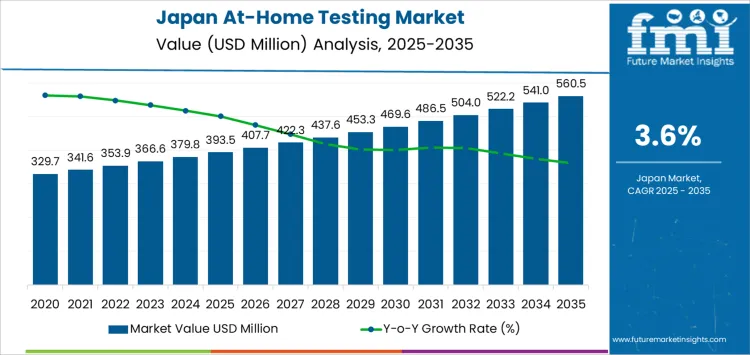
Demand for at-home testing in Japan is valued at USD 393.5 million in 2025 and is projected to reach USD 560.5 million by 2035 at a CAGR of 3.6%. Digital monitoring instruments form the largest product segment, supported by sample collection kits, cassettes, strips, and cups. Blood glucose testing represents the core application, followed by HIV, chlamydia and gonorrhoea, pregnancy and fertility, and cancer screening.
Urine remains the dominant sample type, with saliva and blood showing steady expansion. Drug stores lead distribution, supported by hospital pharmacies and online channels. Demand is concentrated across Kanto, Kansai, and Chubu, driven by dense urban populations and aging demographics.
Quick Stats of the At Home Testing in Japan
- At Home Testing in Japan Value (2025): USD 393.5 million
- At Home Testing in Japan Forecast Value (2035): USD 560.5 million
- At Home Testing in Japan Forecast CAGR (2025 to 2035): 3.6%
- At Home Testing in Japan Leading Product: Digital Monitoring Instruments (48%)
- At Home Testing in Japan Key Growth Regions: Kyushu & Okinawa, Kanto, Kinki, Chubu
- At Home Testing in Japan Top Players: Abbott Laboratories, OraSure Technologies, Everlywell, LetsGetChecked, iHealth Labs
What is the Demand Forecast for At-Home Testing in Japan through 2035?
From 2030 onward, volume growth reflects wider acceptance of home-based disease screening and routine metabolic monitoring among older adults. Online channels expand steadily as subscription testing models gain trust in urban households. Sexual health and hormone testing contribute higher value growth despite smaller base volumes. Distribution remains anchored in national retail pharmacy chains supported by e-commerce platforms. Key companies shaping the competitive structure include Abbott Laboratories, OraSure Technologies, Everlywell, LetsGetChecked, and iHealth Labs. Competitive positioning is defined by regulatory approvals under Japanese in-vitro diagnostics rules, accuracy validation, and data integration with digital health portals used by hospitals and primary care providers.
The demand for at-home testing in Japan is reflecting an absolute expansion of USD 59.8 million in the first half of the forecast period. The increase from USD 329.7 million in 2020 reflects the steady transition of routine health monitoring from clinics to households, particularly for glucose, pregnancy, fertility, infectious disease screening, and cardiovascular risk markers. The at-home testing industry in Japan is shaped by an aging population, dense urban living patterns, and strong pharmacy distribution networks that support OTC diagnostics. Early growth is driven by physician-backed self-testing protocols, rising outpatient load in public hospitals, and growing consumer comfort with digital result tracking platforms.
From 2030 to 2035, demand advances from USD 453.3 million to USD 560.5 million, adding a larger USD 107.2 million in incremental value during the second half of the outlook. Annual value additions strengthen as spending rises from roughly USD 16.3 million per year to nearly USD 19.5 million toward the end of the period. This phase reflects expanded adoption of multi-parameter test kits, higher test frequency among older households managing chronic conditions, and integration with remote consultation workflows. Demand is also reinforced by municipal health screening programs promoting early detection through self-testing. By 2035, at-home testing demand in Japan is structurally embedded in routine preventive healthcare behavior rather than being driven by episodic public health events.
At Home Testing Industry in Japan Key Takeaways
| Metric | Value |
|---|---|
| Industry Value (2025) | USD 393.5 million |
| Forecast Value (2035) | USD 560.5 million |
| Forecast CAGR (2025 to 2035) | 3.6% |
What Is Driving the Demand for At Home Testing in Japan?
The demand for at home testing in Japan is shaped by the structure of primary care access, an aging population, and strong public discipline around early health detection. Historically, routine diagnostics were tightly centered on clinics and hospitals, supported by high outpatient visitation rates and dense urban medical networks. Over time, household testing gained relevance as families sought faster screening for infections, metabolic conditions, and allergy triggers without repeated clinic visits. Elderly households, caregivers, and dual income families increasingly adopted home based testing to reduce travel burden and waiting times. Corporate health programs and pharmacies also supported uptake by integrating self-testing into routine wellness checks, especially for respiratory infections, glucose monitoring, and digestive health.
Future demand for at home testing in Japan will be shaped by continued population aging, home based care expansion, and pressure to ease outpatient congestion. Telemedicine integration will further normalize self-testing as a first step before in person consultation. Growth will continue in infectious disease screening, hormone monitoring, nutritional deficiency checks, and chronic condition management where frequent testing is required. Barriers include conservative consumer attitudes toward test accuracy compared with clinic diagnostics, regulatory approval timelines, and limited digital health data integration in some regions. Long term demand will depend on how effectively at home testing earns clinical trust, integrates with pharmacy and telehealth workflows, and supports Japans broader shift toward home centered healthcare delivery.
What Is the Demand for At Home Testing in Japan by Product and Application?
The demand for at home testing in Japan is shaped by population aging, chronic disease prevalence, and strong consumer acceptance of self-managed health monitoring. Digital monitoring instruments lead by product due to widespread adoption of connected glucose meters and home diagnostics integrated with mobile health platforms. Blood glucose testing dominates by application because diabetes management requires frequent daily measurement.
Procurement is driven by retail pharmacies, online medical platforms, and hospital affiliated home care programs. Import reliance remains present for sensors and electronic components. Substitution pressure exists between traditional strips and connected devices. Demand stability is supported by rising outpatient care, telemedicine adoption, and preference for privacy centered diagnostics.
Why do digital monitoring instruments dominate the demand for at home testing in Japan by product?
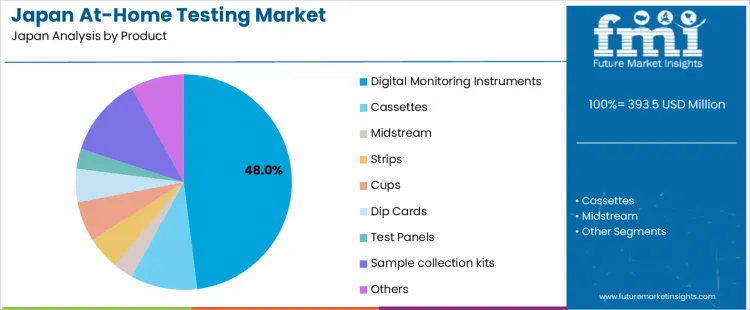
Digital monitoring instruments account for 48% of the demand for at home testing in Japan by product, reflecting strong consumer trust in connected health devices. Consumption intensity is driven by daily glucose monitoring, blood pressure tracking, and multi parameter wellness screening among elderly and chronic care patients. Usage remains stable because these devices integrate with smartphones and hospital oversight systems. Procurement is led by retail pharmacy chains, electronics retailers, and online healthcare platforms. Price sensitivity remains moderate because health insurance reimbursement reduces out of pocket burden for key diagnostic devices. Specification control emphasizes sensor precision, wireless stability, and battery performance for continuous home use.
Digital monitoring instruments also generate strong repeat demand through sensor replacement cycles, device upgrades, and system recalibration needs. Repeat purchasing remains predictable because many platforms require monthly or quarterly consumable replacement. Buyers favor devices that integrate with hospital databases and physician monitoring dashboards. Margin structure remains controlled under competition between domestic electronics manufacturers and imported brands. Regulatory exposure remains high due to medical device accuracy standards and cybersecurity compliance. Import reliance persists for biosensors and microchips. Substitution pressure from manual strip based testing continues but remains limited among elderly patients needing automated data capture.
What drives blood glucose testing to lead the demand for at home testing in Japan by application?
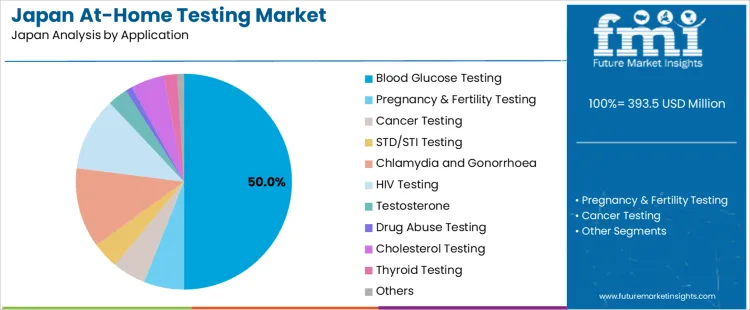
Blood glucose testing represents 50.0% of the demand for at home testing in Japan by application, reflecting the high burden of diabetes across aging population groups. Consumption intensity is driven by routine daily monitoring required for insulin dosing, dietary control, and complication prevention. Usage remains stable because testing frequency is guided by physician defined schedules for both Type 1 and Type 2 patients. Procurement is dominated by hospital linked pharmacies, retail drug stores, and insurance supported mail delivery programs. Price sensitivity remains moderate due to partial reimbursement coverage. Specification control emphasizes strip sensitivity, meter calibration stability, and fast result confirmation to support self-management.
Blood glucose testing also generates the most consistent recurring volume through continuous strip and lancet consumption. Repeat ordering remains predictable because patient testing routines rarely change once established. Buyers favor platforms with simplified user interfaces and minimal error risk to support elderly users. Margin structure remains tight due to competition among diagnostic brands and payer pricing controls. Regulatory exposure remains elevated under medical device surveillance requirements. Import reliance persists for enzyme chemistry and sensor substrates. Substitution pressure from continuous glucose monitoring continues to rise but remains complementary rather than fully replacing conventional testing across the broader patient population.
What Is Driving the Demand for At-Home Testing in Japan Preventive Care and Aging Population Management?
Demand for at-home testing in Japan is driven by the rapid expansion of the elderly population, pressure on outpatient capacity, and strong public awareness of early disease detection. Households increasingly rely on self-tests for glucose, blood pressure, infectious diseases, fertility, and urinary health. Pharmacies, mail-order healthcare platforms, and employer wellness programs support wide distribution. Rural access gaps and caregiver-managed home health further strengthen utilization. Demand is therefore anchored in demographic aging, access decentralization, and preventive health behavior rather than acute care substitution alone.
How Is Population Aging and Home Care Infrastructure Strengthening Repeat Use?
Japan aging structure creates sustained need for regular at-home monitoring of diabetes, hypertension, kidney function, and cardiovascular risk. Elderly patients and caregivers favor simple testing formats that reduce travel to clinics. Home-visit nursing services and municipal elder care programs increasingly integrate self-testing into routine care plans. This embeds at-home testing into long-term disease monitoring rather than one-time screening. Repeat demand is therefore structurally tied to chronic disease prevalence and supervised home-care expansion.
Why Are Pharmacies and Mail-Order Health Platforms Expanding Consumer Access?
National pharmacy chains and digital health retailers in Japan play a central role in distributing at-home test kits. Consumers frequently purchase tests for metabolic health, COVID-type infections, pregnancy, and allergy monitoring without hospital involvement. Employer health checks and municipal screening programs also distribute kits by mail to reduce facility congestion. This retail-led access model positions at-home testing as a normalized consumer health behavior rather than a specialist diagnostic service.
How Do Interpretation Concerns, Regulatory Review, and Reimbursement Limits Restrain Growth?
Demand for at-home testing in Japan is restrained by consumer uncertainty over result interpretation without physician guidance. Regulatory review processes delay introduction of new test formats. Public insurance reimbursement remains limited for non-prescribed self-tests, restricting access for lower-income users. Improper sample collection also affects clinical confidence. These behavioral, regulatory, and financial limits moderate unchecked expansion despite strong demographic and access-driven demand.
What is the Demand for At-Home Testing in Japan by Region?
| Region | CAGR (%) |
|---|---|
| Kyushu & Okinawa | 4.5% |
| Kanto | 4.1% |
| Kinki | 3.6% |
| Chubu | 3.2% |
| Tohoku | 2.8% |
| Rest of Japan | 2.7% |
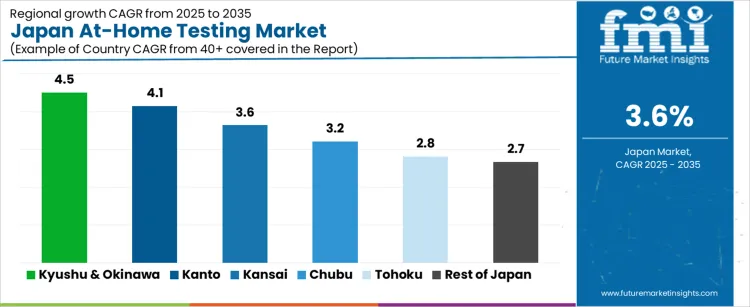
The demand for at-home testing in Japan is increasing steadily across all regions, with Kyushu and Okinawa leading at a 4.5% CAGR. Growth in this region is supported by improving access to self-diagnostic kits, rising awareness of preventive health screening, and wider retail pharmacy distribution. Kanto follows at 4.1%, driven by dense urban populations, strong e-commerce penetration, and higher adoption of digital health solutions.
Kinki records 3.6% growth, reflecting stable use among working age consumers and routine monitoring for chronic conditions. Chubu at 3.2% shows moderate uptake linked to regional healthcare outreach and pharmacy based testing programs. Tohoku and the Rest of Japan, at 2.8% and 2.7%, reflect slower but steady growth shaped by aging populations, lower online purchasing intensity, and gradual acceptance of home-based diagnostics.
How Is Aging Population Health Monitoring Driving At Home Testing Demand in Kyushu and Okinawa?
Demand for at home testing in Kyushu and Okinawa is advancing at a CAGR of 4.5% through 2035, supported by high aging population density, growing chronic disease screening needs, and expanding access to pharmacy based diagnostics. This region shows strong uptake of glucose, blood pressure, and infection screening kits across community households. Kyushu and Okinawa contrast with Kanto through stronger reliance on pharmacy guided self testing rather than digital app linked diagnostics. Demand growth is reinforced by rural healthcare access gaps and steady government backed preventive health outreach.
- Aging population sustains consistent self testing volumes
- Pharmacies anchor primary distribution channels
- Chronic disease monitoring drives repeat usage
- Rural healthcare gaps encourage home diagnostics
Why Is Urban Digital Healthcare Adoption Strengthening At Home Testing Growth in Kanto?
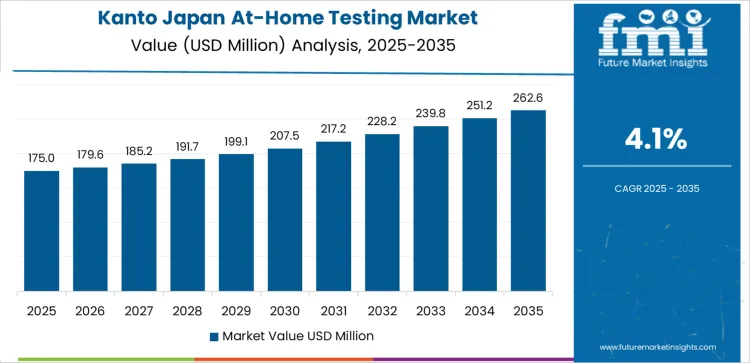
Demand for at home testing in Kanto is advancing at a CAGR of 4.1% through 2035, supported by high digital health adoption, strong telemedicine integration, and dense hospital linked home care networks. Tokyo remains the central hub for app connected testing kits, rapid infectious disease screening, and preventive wellness monitoring. Kanto contrasts with Kyushu and Okinawa through stronger use of smartphone enabled interpretation and data sharing with physicians. Demand reflects frequent testing among working age populations and corporate wellness program participation.
- Telemedicine platforms integrate home diagnostics
- App linked reporting supports physician follow up
- Corporate health programs expand preventive usage
- Rapid infectious disease tests dominate demand mix
What Is Supporting Balanced At Home Testing Uptake Across Kinki Healthcare Systems?
Demand for at home testing in Kinki is advancing at a CAGR of 3.6% through 2035, supported by stable hospital outreach programs, growing chronic patient self-management, and strong regional pharmacy networks. Osaka and Kyoto anchor demand for cardiovascular, metabolic, and infectious disease home test kits. Kinki contrasts with Kanto through lower dependence on fully digital reporting and stronger integration with traditional outpatient care. Demand shows steady growth from structured hospital discharge programs that include home monitoring tools.
- Hospital outreach programs support home testing continuity
- Pharmacy networks anchor product availability
- Chronic disease self-management drives repeat testing
- Discharge based monitoring supports sustained usage
How Is Preventive Healthcare Awareness Driving At Home Testing Demand in Chubu?
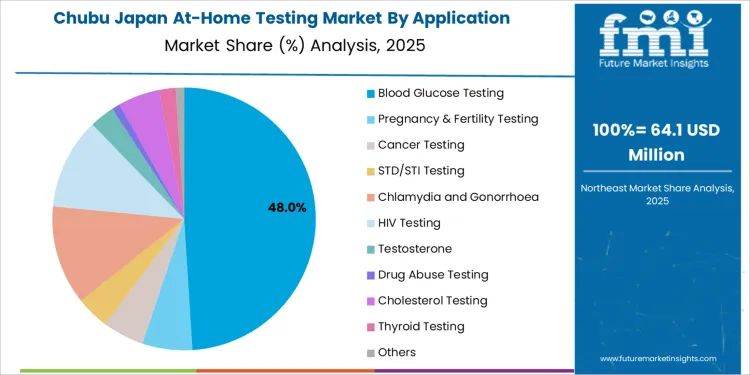
Demand for at home testing in Chubu is advancing at a CAGR of 3.2% through 2035, supported by rising preventive health awareness, steady employer health screening participation, and expanding access to basic diagnostics through regional retailers. Aichi anchors the highest uptake across glucose, cholesterol, and respiratory testing. Chubu contrasts with Kanto through slower adoption of connected devices and stronger use of standalone test kits. Growth remains moderate and driven by employer supported checkups and household wellness monitoring habits.
- Preventive health awareness strengthens testing frequency
- Employer screening programs support household adoption
- Standalone test kits dominate product preference
- Retail availability anchors steady distribution
Why Is Episodic Testing Shaping At Home Testing Demand in Tohoku?
Demand for at home testing in Tohoku is advancing at a CAGR of 2.8% through 2035, supported by low population density, stable elderly care needs, and modest retail diagnostics expansion. Miyagi leads demand through pharmacy based infection and glucose testing. Tohoku contrasts with Kanto through episodic rather than routine testing behavior. Utilization remains centered on seasonal respiratory screening, home based fever monitoring, and basic metabolic testing in households with limited hospital access.
- Seasonal respiratory screening drives episodic demand
- Elderly households support chronic care monitoring
- Pharmacies remain the primary sales channel
- Lower population density limits rapid volume growth
How Is Limited Retail Penetration Moderating At Home Testing Growth in Rest of Japan?
Demand for at home testing in Rest of Japan is advancing at a CAGR of 2.7% through 2035, supported by uneven retail penetration, smaller urban centers, and steady but slow expansion of self-care diagnostics. This group of regions contrasts with Kanto through lower digital health penetration and limited telehealth integration. Demand remains focused on basic glucose, pregnancy, and fever testing rather than multi parameter wellness monitoring. Growth is stable but gradual, shaped by local healthcare access and regional pharmacy expansion pace.
- Basic glucose and fever kits dominate sales mix
- Smaller urban centers limit rapid retail scaling
- Limited telehealth integration restrains digital testing
- Regional pharmacy expansion drives gradual growth
What Is Driving the Demand for At Home Testing in Japan and Which Companies Shape Consumer Access
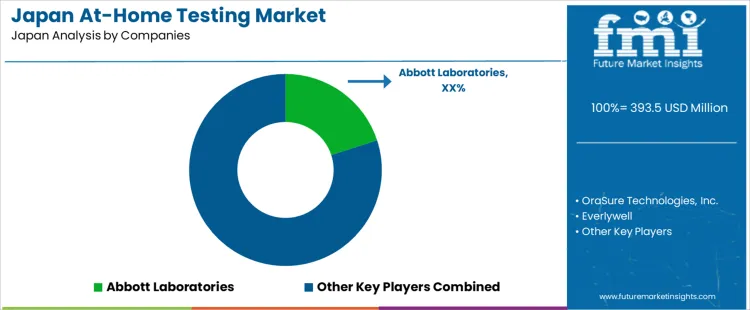
The demand for at home testing in Japan is shaped by an aging population, high health screening participation, and steady normalization of self-testing following pandemic era respiratory diagnostics. Abbott Laboratories holds a central role through glucose monitoring systems and infectious disease rapid tests distributed through pharmacies and hospital affiliated retail outlets. iHealth Labs participates through connected thermometers and rapid antigen tests supplied through electronics retailers and online marketplaces serving urban households.
Sysmex supports domestic access through diagnostic technology partnerships and reagent systems that extend into approved self-testing formats. Fujirebio contributes through immunodiagnostic platforms that guide downstream home testing adoption under physician supervised care. These suppliers shape demand through regulatory alignment with PMDA requirements and integration with pharmacy based counseling.
OraSure Technologies and LetsGetChecked participate through limited distributor led access tied to travel testing, occupational screening, and imported specialty kits used by clinics serving international patients. Everlywell remains largely confined to direct to consumer cross border purchasing rather than structured domestic distribution. Adoption in Japan is governed by approval under the Pharmaceuticals and Medical Devices Act, labeling in Japanese language, and strict sensitivity and specificity thresholds for consumer diagnostics.
Buyer preference favors tests with simple sample collection, short result time, and compatibility with smartphone based reporting. Demand visibility tracks seasonal influenza and respiratory infection waves, employer health screening programs, and continued expansion of home monitoring for glucose, lipids, and infectious disease markers among older adults.
Key Players in the At Home Testing Industry in Japan
- Abbott Laboratories
- OraSure Technologies, Inc.
- Everlywell
- LetsGetChecked
- iHealth Labs Inc.
Scope of the Report
| Items | Values |
|---|---|
| Quantitative Units (2025) | USD million |
| Product | Digital Monitoring Instruments, Cassettes, Midstream, Strips, Cups, Dip Cards, Test Panels, Sample Collection Kits, Others |
| Application | Blood Glucose Testing, Pregnancy & Fertility Testing, Cancer Testing, STD/STI Testing, Chlamydia and Gonorrhoea, HIV Testing, Testosterone, Drug Abuse Testing, Cholesterol Testing, Thyroid Testing, Others |
| Sample | Urine, Blood, Saliva, Stool, Vaginal Swab, Semen |
| Distribution Channel | Drug Stores, Hospital Pharmacies, Online Channels |
| Region | Kyushu & Okinawa, Kanto, Kansai, Chubu, Tohoku, Rest of Japan |
| Countries Covered | Japan |
| Key Companies Profiled | Abbott Laboratories, OraSure Technologies, Everlywell, LetsGetChecked, iHealth Labs |
| Additional Attributes | Dollar by sales by product and application; Regional CAGR and growth drivers; Device accuracy, sensitivity, and specificity metrics; Integration with digital health and telemedicine platforms; Repeat purchase cycles for consumables and test kits; Regulatory alignment with Pharmaceuticals and Medical Devices Act; Age demographic penetration for elderly households; Distribution mix between pharmacy, hospital, and online channels; Import reliance for sensors and microelectronics; Multi-parameter test adoption trends |
At Home Testing Industry in Japan Segmentation
Product:
- Digital Monitoring Instruments
- Cassettes
- Midstream
- Strips
- Cups
- Dip Cards
- Test Panels
- Sample Collection Kits
- Others
Application:
- Blood Glucose Testing
- Pregnancy & Fertility Testing
- Cancer Testing
- STD/STI Testing
- Chlamydia and Gonorrhoea
- HIV Testing
- Testosterone
- Drug Abuse Testing
- Cholesterol Testing
- Thyroid Testing
- Others
Sample:
- Urine
- Blood
- Saliva
- Stool
- Vaginal Swab
- Semen
Distribution Channel:
- Drug Stores
- Hospital Pharmacies
- Online Channels
Region
- Kyushu & Okinawa
- Kanto
- Kansai
- Chubu
- Tohoku
- Rest of Japan
Frequently Asked Questions
How big is the demand for at-home testing in Japan in 2025?
The demand for at-home testing in Japan is estimated to be valued at USD 393.5 million in 2025.
What will be the size of at-home testing in Japan in 2035?
The market size for the at-home testing in Japan is projected to reach USD 560.5 million by 2035.
How much will be the demand for at-home testing in Japan growth between 2025 and 2035?
The demand for at-home testing in Japan is expected to grow at a 3.6% CAGR between 2025 and 2035.
What are the key product types in the at-home testing in Japan?
The key product types in at-home testing in Japan are digital monitoring instruments, cassettes, midstream, strips, cups, dip cards, test panels, sample collection kits and others.
Which application segment is expected to contribute significant share in the at-home testing in Japan in 2025?
In terms of application, blood glucose testing segment is expected to command 50.0% share in the at-home testing in Japan in 2025.
Preview the report firsthand - request a free sample
Get SampleGet the brochure for pricing and purchase details.
Get PDFTable of Content
- Executive Summary
- Japan Market Outlook
- Demand-side Trends
- Supply-side Trends
- Technology Roadmap Analysis
- Analysis and Recommendations
- Market Overview
- Market Coverage / Taxonomy
- Market Definition / Scope / Limitations
- Market Background
- Market Dynamics
- Drivers
- Restraints
- Opportunity
- Trends
- Scenario Forecast
- Demand in Optimistic Scenario
- Demand in Likely Scenario
- Demand in Conservative Scenario
- Opportunity Map Analysis
- Product Life Cycle Analysis
- Supply Chain Analysis
- Investment Feasibility Matrix
- Value Chain Analysis
- PESTLE and Porter’s Analysis
- Regulatory Landscape
- Regional Parent Market Outlook
- Production and Consumption Statistics
- Import and Export Statistics
- Market Dynamics
- Japan Market Analysis 2020 to 2024 and Forecast, 2025 to 2035
- Historical Market Size Value (USD Million) Analysis, 2020 to 2024
- Current and Future Market Size Value (USD Million) Projections, 2025 to 2035
- Y-o-Y Growth Trend Analysis
- Absolute $ Opportunity Analysis
- Japan Market Pricing Analysis 2020 to 2024 and Forecast 2025 to 2035
- Japan Market Analysis 2020 to 2024 and Forecast 2025 to 2035, By Product
- Introduction / Key Findings
- Historical Market Size Value (USD Million) Analysis By Product , 2020 to 2024
- Current and Future Market Size Value (USD Million) Analysis and Forecast By Product , 2025 to 2035
- Digital Monitoring Instruments
- Cassettes
- Midstream
- Strips
- Cups
- Dip Cards
- Test Panels
- Sample collection kits
- Others
- Y-o-Y Growth Trend Analysis By Product , 2020 to 2024
- Absolute $ Opportunity Analysis By Product , 2025 to 2035
- Japan Market Analysis 2020 to 2024 and Forecast 2025 to 2035, By Application
- Introduction / Key Findings
- Historical Market Size Value (USD Million) Analysis By Application, 2020 to 2024
- Current and Future Market Size Value (USD Million) Analysis and Forecast By Application, 2025 to 2035
- Blood Glucose Testing
- Pregnancy & Fertility Testing
- Cancer Testing
- STD/STI Testing
- Chlamydia and Gonorrhoea
- HIV Testing
- Testosterone
- Drug Abuse Testing
- Cholesterol Testing
- Thyroid Testing
- Others
- Y-o-Y Growth Trend Analysis By Application, 2020 to 2024
- Absolute $ Opportunity Analysis By Application, 2025 to 2035
- Japan Market Analysis 2020 to 2024 and Forecast 2025 to 2035, By Sample
- Introduction / Key Findings
- Historical Market Size Value (USD Million) Analysis By Sample, 2020 to 2024
- Current and Future Market Size Value (USD Million) Analysis and Forecast By Sample, 2025 to 2035
- Urine
- Blood
- Saliva
- Stool
- Vaginal Swab
- Semen
- Y-o-Y Growth Trend Analysis By Sample, 2020 to 2024
- Absolute $ Opportunity Analysis By Sample, 2025 to 2035
- Japan Market Analysis 2020 to 2024 and Forecast 2025 to 2035, By Distribution Channel
- Introduction / Key Findings
- Historical Market Size Value (USD Million) Analysis By Distribution Channel, 2020 to 2024
- Current and Future Market Size Value (USD Million) Analysis and Forecast By Distribution Channel, 2025 to 2035
- Drug Stores
- Hospital Pharmacies
- Online Channels
- Y-o-Y Growth Trend Analysis By Distribution Channel, 2020 to 2024
- Absolute $ Opportunity Analysis By Distribution Channel, 2025 to 2035
- Market Structure Analysis
- Competition Dashboard
- Competition Benchmarking
- Market Share Analysis of Top Players
- By Regional
- By Product
- By Application
- By Sample
- By Distribution Channel
- Competition Analysis
- Competition Deep Dive
- Abbott Laboratories
- Overview
- Product Portfolio
- Profitability by Market Segments (Product/Age /Sales Channel/Region)
- Sales Footprint
- Strategy Overview
- Marketing Strategy
- Product Strategy
- Channel Strategy
- OraSure Technologies, Inc.
- Everlywell
- LetsGetChecked
- iHealth Labs Inc.
- Abbott Laboratories
- Competition Deep Dive
- Assumptions & Acronyms Used
- Research Methodology


