

- Industry Size (2025)
- USD 245.8 Mn
- Forecast (2035)
- USD 479 Mn
- CAGR (2025 to 2035)
- 6.9%
Demand for Organic Seed in Japan Forecast and Outlook 2025 to 2035
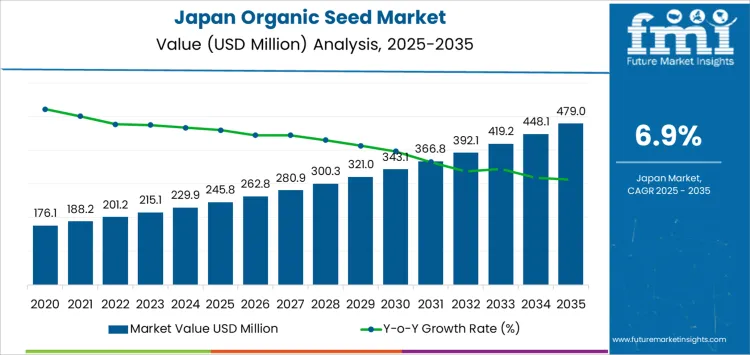
Demand for organic seed in Japan is expected to grow from USD 245.8 million in 2025 to USD 479 million by 2035, reflecting a CAGR of 6.9%. Demand is primarily driven by growing awareness of health and environmental sustainability, and rising demand for organic food. As more consumers shift toward organic food products, the need for organic seeds, the foundation of organic farming, is expected to grow.
Japan’s focus on environmental preservation and the adoption of eco-friendly farming practices will also contribute to the expanding demand for organic seeds. Government incentives and subsidies for organic farming and the rising popularity of organic agriculture will support the sector’s growth.
Quick Stats of the Demand for Organic Seed in Japan
- Demand for Organic Seed in Japan Value (2025): USD 245.8 million
- Demand for Organic Seed in Japan Forecast Value (2035): USD 479 million
- Demand for Organic Seed in Japan Forecast CAGR (2025-2035): 6.9%
- Demand for Organic Seed in Japan Leading Product Type: Fruits & Nuts Seeds
- Demand for Organic Seed in Japan Key Growth Regions: Kyushu & Okinawa, Kanto, Kansai, Chubu, Tohoku, Rest of Japan
- Demand for Organic Seed in Japan Top Players: Johnny’s Selected Seeds, Seed Savers Exchange, Southern Exposure Seed Exchange, Fedco Seeds, Rijk Zwaan
What is the Growth Forecast for the Demand for Organic Seed in Japan through 2035?
The organic seed industry will benefit from innovations in seed varieties and farming technologies. As agricultural technologies advance, there will be greater access to improved organic seed varieties that offer better yield, resistance to pests and diseases, and adaptability to different environmental conditions. This will make organic farming more efficient, encouraging more farmers to adopt organic practices. Furthermore, the increasing number of consumers adopting healthier lifestyles and demanding more organic food products will continue to drive the industry. The shift towards locally grown organic produce, driven by consumer demand for freshness and sustainability, will also increase demand for organic seeds.
From 2025 to 2030, the organic seed industry will grow steadily. In 2025, the industry size is USD 245.8 million, and it is expected to reach USD 262.8 million in 2026, reflecting a YoY growth of 6.9%. This initial phase of growth is driven by increased consumer demand for organic food products and a continued shift towards organic farming practices. The industry will see a steady rise as more farmers transition to organic agriculture, encouraged by both consumer preferences and favorable government policies.
In the following years, the YoY growth will continue to be strong, with the industry expected to grow to USD 280.9 million in 2027, reflecting a YoY growth rate of 6.9%. By 2028, the industry will reach USD 300.3 million, continuing to grow at a similar rate. From 2028 to 2030, the industry will see continued growth, reaching USD 321 million by 2030. The YoY growth in this period will remain consistent, supported by the increasing adoption of organic farming techniques and rising consumer preference for organic food products.
From 2030 to 2035, the YoY growth rate will moderate slightly as the industry matures. By 2035, the industry is expected to reach USD 479 million. While growth continues, the rate of increase will gradually slow as the industry reaches a higher level of maturity, with organic farming becoming more widespread and the industry starting to saturate. Nevertheless, the demand for organic seed will remain strong, driven by sustained consumer interest in organic food and continued innovations in seed technology.
Demand for Organic Seed in Japan Key Takeaways
| Metric | Value |
|---|---|
| Demand for Organic Seed in Japan Value (2025) | USD 245.8 million |
| Demand for Organic Seed in Japan Forecast Value (2035) | USD 479 million |
| Demand for Organic Seed in Japan Forecast CAGR (2025-2035) | 6.9% |
Why is the Demand for Organic Seed in Japan Growing?
The demand for organic seeds in Japan is growing as consumer interest in organic farming and food continues to rise. Organic seeds are essential for cultivating crops without synthetic pesticides, fertilizers, or genetically modified organisms (GMOs), making them crucial for the production of organic food. As more consumers seek healthy, environmentally friendly, and sustainably produced food, the demand for organic seeds is increasing. This trend is driven by both farmers transitioning to organic practices and the expanding popularity of organic food in Japan’s retail and foodservice sectors.
A major driver behind this growth is the rising awareness of the benefits of organic farming, which positively impacts both health and the environment. Japan’s agricultural sector is increasingly focusing on sustainable farming practices, with more farmers adopting organic methods. As consumers become more health-conscious and prefer foods free from chemicals and pesticides, the demand for organic produce and, by extension, organic seeds are expected to continue to rise.
Government support for organic farming, through incentives, subsidies, and policies that promote sustainable agricultural methods, is further contributing to the growth of the organic seed industry. These efforts help farmers transition to organic practices and ensure a steady supply of organic seeds for cultivation. As Japan's organic food industry continues to expand and more farmers embrace organic agriculture, the demand for organic seeds is expected to grow steadily through 2035.
What is the Segment-Wise Analysis of Demand for Organic Seeds in Japan?
Demand for organic seeds in Japan is segmented by product type, distribution channel, and region. By product type, demand is divided into fruits & nuts seeds, vegetable seeds, and crop and oil seeds, with fruits & nuts seeds leading at 40%. The demand is also segmented by distribution channel, including cooperatives, retailers, and wholesalers, with cooperatives being a significant channel. Regionally, demand is spread across Kyushu & Okinawa, Kanto, Kansai, Chubu, Tohoku, and the rest of Japan.
Why Do Fruits & Nuts Seeds Lead the Demand for Organic Seeds in Japan?
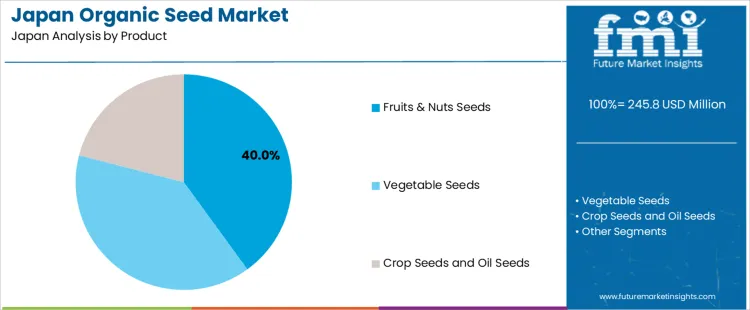
Fruits & nuts seeds account for 40% of the demand for organic seeds in Japan, driven by their popularity among both home gardeners and commercial growers. The growing demand for organic fruits and nuts is part of the broader trend toward healthier, locally-sourced food in Japan. Organic fruits and nuts are prized for their high nutritional value and taste, making the seeds for these products highly sought after.
As consumers continue to prioritize organic and natural food sources, particularly those free from synthetic pesticides and fertilizers, the demand for organic fruits & nuts seeds remains strong. The increasing awareness of sustainable agriculture practices and the benefits of growing organic crops at home fuels the popularity of these seeds.
Why Do Cooperatives Lead the Distribution of Organic Seeds in Japan?
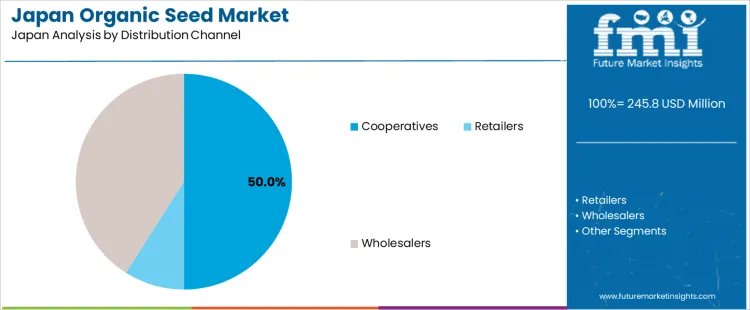
Cooperatives account for a significant portion of the demand for organic seeds in Japan, driven by their role in supporting small-scale farmers and local communities. These organizations often provide a reliable source of high-quality organic seeds to their members, who are primarily involved in sustainable farming practices. Cooperatives allow farmers to access organic seeds at more affordable prices, which is especially important in the organic farming sector where costs can be higher compared to conventional methods.
Cooperatives foster a sense of community and collaboration among local farmers, helping them share knowledge, resources, and expertise. As the demand for organic farming continues to grow in Japan, cooperatives will remain a key distribution channel, helping to meet the needs of organic growers and promoting sustainable agriculture.
What are the Key Trends, Drivers, and Restraints in Demand for Organic Seed in Japan?
Demand for organic seed in Japan is growing as more farmers and home gardeners shift toward organic farming and self-sufficiency. Organic seeds, which are used for various crops like vegetables, fruits, and grains, are becoming more popular due to their avoidance of synthetic pesticides and fertilizers. This trend is driven by increasing consumer and producer interest in health, soil quality, and natural farming.
Government policies encouraging organic farming further support this demand. However, the demand for organic seeds is still constrained by factors such as higher costs compared to conventional seeds and a relatively limited range of certified organic varieties. Stricter quality and certification requirements can also make it challenging for some producers to transition fully to organic farming, limiting rapid expansion in the sector.
Why is Demand for Organic Seed Growing in Japan?
The demand for organic seed in Japan is rising as consumers become more health-conscious and prioritize food safety and environmental sustainability. With the growing interest in organic produce, farmers are adopting organic cultivation methods, which increases the need for certified organic seeds. Government incentives, including subsidies for farmers transitioning from conventional to organic methods, help lower the barriers for adoption.
The desire for pesticide-free, naturally grown food and the rising interest in home gardening and small-scale farming further fuel the demand for organic seeds. As awareness of the benefits of organic products grows, both commercial growers and households are increasingly seeking certified organic seeds to meet consumer demand for healthier and more sustainable food options.
How are Technological & Industry Innovations Driving Organic Seed Demand in Japan?
Technological advancements in seed development and organic farming practices are making organic seeds more practical and appealing to Japanese farmers. Breeders are focusing on creating varieties that are better suited to local climates and soil conditions, improving yields even under organic farming practices. Innovations in natural pest control methods, seed treatment, and composting techniques help farmers overcome the challenges of organic farming, improving crop productivity.
Government support programs that reduce costs for farmers transitioning to organic farming help drive the adoption of organic seeds. As organic farming methods become more efficient and accessible, there is growing encouragement for both commercial farmers and hobbyists to embrace organic seed use, boosting demand in Japan’s agricultural sector.
What are the Key Challenges and Risks That Could Limit Organic Seed Demand in Japan?
Despite the increasing interest in organic farming, several challenges could limit the demand for organic seeds in Japan. One key issue is the higher cost of organic seeds compared to conventional seeds, which can deter small farmers or home gardeners with limited budgets. The variety of certified organic seeds available remains relatively narrow, limiting options for growers and reducing the diversity of crops that can be cultivated organically.
Transitioning to organic farming also requires significant upfront investment in soil management, pest control, and composting, which can lead to lower yields and higher labor costs initially. The relatively low consumer demand for organic produce in Japan compared to other countries limits the incentives for farmers to adopt organic farming practices on a larger scale.
What is the Regional Demand Outlook for Organic Seed in Japan?
| Region | CAGR (%) |
|---|---|
| Kyushu & Okinawa | 8.6% |
| Kanto | 7.9% |
| Kansai | 7.0% |
| Chubu | 6.1% |
| Tohoku | 5.4% |
| Rest of Japan | 5.1% |
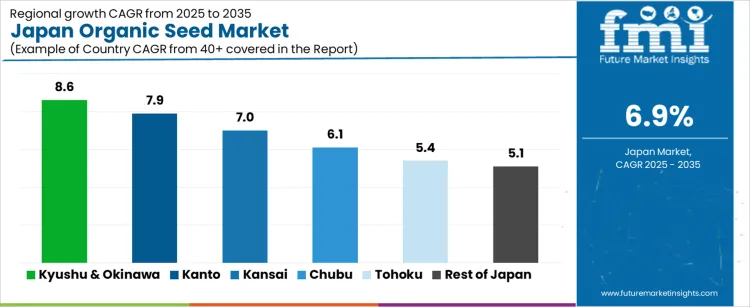
Demand for organic seed in Japan is increasing across all regions, with Kyushu & Okinawa leading at an 8.6% CAGR, reflecting strong adoption of organic farming and growing consumer interest in organic produce. Kanto follows with a 7.9% CAGR, driven by its large population, urban agriculture interest, and rising demand for clean‑label food. Kansai shows 7.0% CAGR, supported by its robust food and beverage industry and growing interest in locally grown organic vegetables and fruits. Chubu has a 6.1% CAGR, reflecting steady growth among its farming and horticultural communities shifting toward organic cultivation. Tohoku and the Rest of Japan see more moderate growth at 5.4% and 5.1% CAGR respectively, indicating increasing but slower adoption of organic seeds in rural and less urbanized areas.
How is Demand for Organic Seed Growing in Kyushu & Okinawa?
Kyushu & Okinawa leads the demand for organic seed, growing at an 8.6% CAGR. The region’s shift toward sustainable farming practices is being driven by both local consumers and an increasing number of farmers adopting organic cultivation methods. The demand is particularly high in Okinawa, where there is a strong focus on health-conscious living, with many residents preferring organic produce. Tourism in Okinawa contributes to the demand for organic food products, as visitors seek healthier, locally grown options.
Farmers in both Kyushu and Okinawa are recognizing the long-term benefits of organic farming, supported by regional agricultural policies. The increase in organic farming certifications, along with growing consumer awareness of the environmental and health benefits of organic produce, ensures that demand for organic seeds will remain strong in the region, further boosting the local agricultural industry.
Why is Demand for Organic Seed Rising in Kanto?
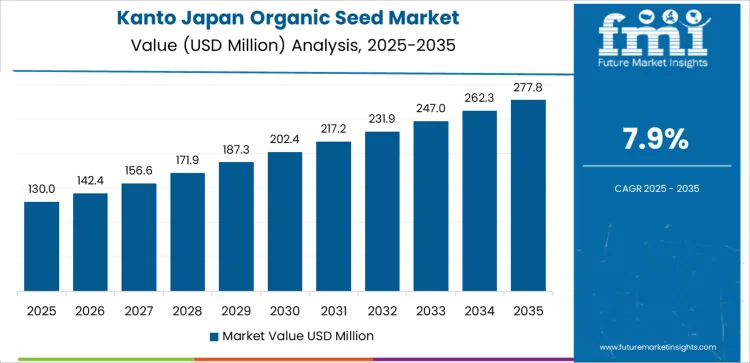
Kanto is experiencing a 7.9% CAGR in demand for organic seed. As Japan’s largest urban population, Kanto has a high demand for clean-label and chemical-free products, particularly in cities like Tokyo. Consumers are increasingly seeking organic produce due to growing concerns about health and sustainability. This shift in consumer preferences is prompting food producers, urban farms, and home gardeners to adopt organic farming methods.
The growing popularity of organic produce in restaurants, and local industries is encouraging the use of organic seeds. Urban agriculture initiatives, including community gardens and rooftop farms, are fueling this demand. As Kanto continues to be a hub for innovation and health-conscious consumers, demand for organic seed is expected to grow steadily, as people seek out fresh, local, and organically grown food.
How is Demand for Organic Seed Expanding in Kinki?
Kinki shows steady demand for organic seed, with a 7.0% CAGR. Known for its rich culinary culture, particularly in Osaka, the region’s strong food industry drives the increasing demand for organic produce. Consumers in Kinki are becoming more aware of the health benefits of organic food, with many opting for organic products in both restaurants and grocery stores. As the demand for clean-label and locally sourced food continues to rise, farmers and food producers in the region are increasingly turning to organic seeds.
The adoption of organic farming practices is also being supported by local policies and government incentives, which encourage environmentally sustainable agriculture. The foodservice industry in Kinki, which is highly focused on quality and fresh ingredients, is driving this demand. As consumer preferences evolve, Kinki is expected to continue seeing steady growth in the adoption of organic farming and seeds.
Why is Demand for Organic Seed Growing in Chubu?
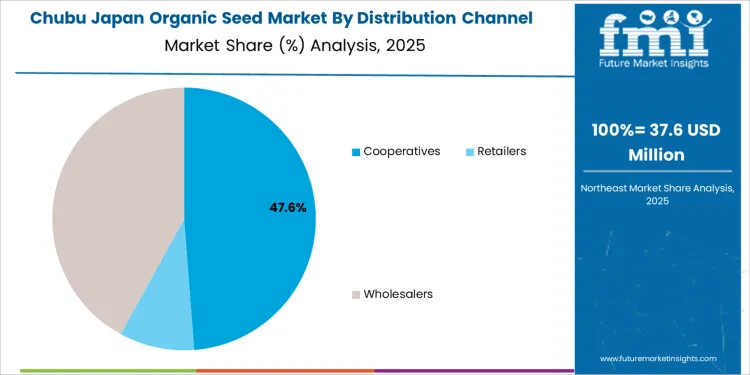
Chubu is experiencing steady demand for organic seed, growing at a 6.1% CAGR. The region’s agricultural and food industries are gradually adopting organic farming practices to meet the growing consumer demand for healthy, organic food. Consumers in Chubu are increasingly choosing organic produce for its health benefits and lower environmental impact. The region’s agricultural policies and local initiatives support the conversion of farmland to organic farming, which is fueling demand for organic seeds.
As the region's foodservice sector and retail outlets stock more organic products, there is a noticeable rise in the need for organic seed for vegetable and fruit cultivation. Chubu’s focus on sustainable agriculture and healthier eating habits is driving the region’s transition toward organic farming, contributing to steady growth in organic seed adoption. As more producers enter the organic farming sector, demand for organic seed in Chubu is expected to increase.
How is Demand for Organic Seed Expanding in Tohoku?
Tohoku is seeing moderate demand for organic seed, with a 5.4% CAGR. The region’s agricultural sector, although smaller compared to urban areas, is beginning to adopt organic farming practices, driven by increasing consumer demand for healthy, organic products. Farmers in Tohoku are increasingly adopting organic cultivation methods to meet the rising interest in local, sustainable produce. There is growing awareness of the benefits of organic farming in rural communities, where farming traditions are strong, and consumers are seeking alternatives to conventionally grown food.
The region’s focus on producing high-quality, nutritious food supports the gradual adoption of organic farming methods. As Tohoku modernizes its agricultural practices and consumer interest in organic produce rises, the demand for organic seed is expected to continue growing, albeit at a more moderate pace compared to urban regions.
Why is Demand for Organic Seed Steady in the Rest of Japan?
The Rest of Japan is experiencing steady demand for organic seed, with a 5.1% CAGR. Although smaller than demand in urban areas, the region is gradually adopting organic farming practices as more farmers recognize the benefits of organic produce for both health and environmental reasons. Local consumers in rural areas are becoming increasingly health-conscious, seeking out organic options in both local industries and retail stores.
The trend toward organic farming is supported by government incentives and local farming cooperatives encouraging organic certifications. As the demand for organic food grows in rural communities and smaller cities, the adoption of organic farming, and consequently the need for organic seeds, is expected to rise. As awareness of organic food’s benefits continues to spread across Japan, the Rest of Japan will see continued steady growth in the demand for organic seed, driven by both consumer and agricultural sector shifts.
What is Driving the Demand for Organic Seeds in Japan and Who Are the Key Players Shaping the Industry?
The demand for organic seeds in Japan is growing as the country experiences a rising interest in organic farming and sustainable agriculture practices. Japanese consumers are becoming more health-conscious and environmentally aware, favoring products grown without synthetic pesticides or fertilizers. This shift towards organic products is driving the demand for organic seeds, as more farmers and gardeners are adopting organic farming methods to meet the needs of eco-conscious consumers. Japan’s strong emphasis on food safety and quality, combined with the government's support for sustainable agricultural practices, is fueling the growth of organic seed adoption in both commercial and home gardening sectors.
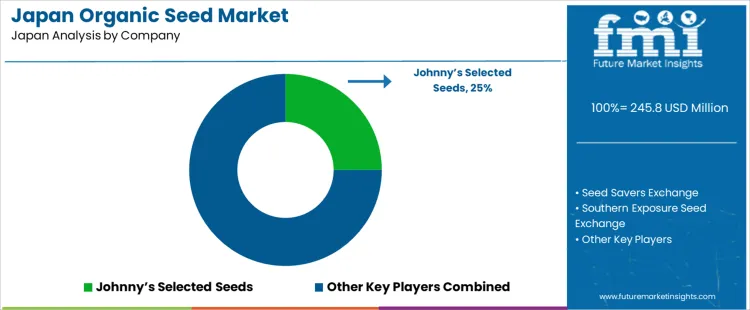
Key players shaping the organic seed industry in Japan include Johnny’s Selected Seeds, Seed Savers Exchange, Southern Exposure Seed Exchange, Fedco Seeds, and Rijk Zwaan. Johnny’s Selected Seeds leads the industry with a significant share of 25%, offering a wide range of high-quality organic seeds for various crops. These companies provide organic seed varieties that meet Japan’s high standards for agricultural quality, catering to both professional farmers and home gardeners. Their focus on sustainability, seed preservation, and crop diversification contributes to the expansion of the organic seed industry in Japan.
The growth of the organic seed industry in Japan is supported by increasing awareness of the environmental and health benefits of organic farming. As demand for organic food products continues to rise, organic seeds are becoming a vital component of Japan's agricultural system. With growing interest in eco-friendly, sustainable agricultural practices, the industry for organic seeds is expected to continue expanding, with more innovative solutions emerging to meet the needs of both commercial and home growers in Japan.
Key Players in Japan Organic Seed Demand
- Johnny’s Selected Seeds
- Seed Savers Exchange
- Southern Exposure Seed Exchange
- Fedco Seeds
- Rijk Zwaan
Scope of Report
| Items | Values |
|---|---|
| Quantitative Units (2025) | USD million |
| Product | Fruits & Nuts Seeds, Vegetable Seeds, Crop Seeds and Oil Seeds |
| Distribution Channel | Cooperatives, Retailers, Wholesalers |
| Regions Covered | Kyushu & Okinawa, Kanto, Kansai, Chubu, Tohoku, Rest of Japan |
| Countries Covered | Japan |
| Key Companies Profiled | Johnny’s Selected Seeds, Seed Savers Exchange, Southern Exposure Seed Exchange, Fedco Seeds, Rijk Zwaan |
| Additional Attributes | Dollar sales by product type; regional CAGR and growth trends; increasing adoption of organic farming; rise in demand for organic vegetable and fruit seeds; product availability in multiple distribution channels. |
Japan Organic Seed Demand by Key Segments
Product
- Fruits & Nuts Seeds
- Vegetable Seeds
- Crop Seeds and Oil Seeds
Distribution Channel
- Cooperatives
- Retailers
- Wholesalers
Region
- Kyushu & Okinawa
- Kanto
- Kansai
- Chubu
- Tohoku
- Rest of Japan
Frequently Asked Questions
How big is the demand for organic seed in Japan in 2025?
The demand for organic seed in Japan is estimated to be valued at USD 245.8 million in 2025.
What will be the size of organic seed in Japan in 2035?
The market size for the organic seed in Japan is projected to reach USD 479.0 million by 2035.
How much will be the demand for organic seed in Japan growth between 2025 and 2035?
The demand for organic seed in Japan is expected to grow at a 6.9% CAGR between 2025 and 2035.
What are the key product types in the organic seed in Japan?
The key product types in organic seed in Japan are fruits & nuts seeds, vegetable seeds and crop seeds and oil seeds.
Which distribution channel segment is expected to contribute significant share in the organic seed in Japan in 2025?
In terms of distribution channel, cooperatives segment is expected to command 50.0% share in the organic seed in Japan in 2025.
Preview the report firsthand - request a free sample
Get SampleGet the brochure for pricing and purchase details.
Get PDFTable of Content
- Executive Summary
- Japan Market Outlook
- Demand-side Trends
- Supply-side Trends
- Technology Roadmap Analysis
- Analysis and Recommendations
- Market Overview
- Market Coverage / Taxonomy
- Market Definition / Scope / Limitations
- Market Background
- Market Dynamics
- Drivers
- Restraints
- Opportunity
- Trends
- Scenario Forecast
- Demand in Optimistic Scenario
- Demand in Likely Scenario
- Demand in Conservative Scenario
- Opportunity Map Analysis
- Product Life Cycle Analysis
- Supply Chain Analysis
- Investment Feasibility Matrix
- Value Chain Analysis
- PESTLE and Porter’s Analysis
- Regulatory Landscape
- Regional Parent Market Outlook
- Production and Consumption Statistics
- Import and Export Statistics
- Market Dynamics
- Japan Market Analysis 2020 to 2024 and Forecast, 2025 to 2035
- Historical Market Size Value (USD Million) Analysis, 2020 to 2024
- Current and Future Market Size Value (USD Million) Projections, 2025 to 2035
- Y-o-Y Growth Trend Analysis
- Absolute $ Opportunity Analysis
- Japan Market Pricing Analysis 2020 to 2024 and Forecast 2025 to 2035
- Japan Market Analysis 2020 to 2024 and Forecast 2025 to 2035, By Product
- Introduction / Key Findings
- Historical Market Size Value (USD Million) Analysis By Product , 2020 to 2024
- Current and Future Market Size Value (USD Million) Analysis and Forecast By Product , 2025 to 2035
- Fruits & Nuts Seeds
- Vegetable Seeds
- Crop Seeds and Oil Seeds
- Y-o-Y Growth Trend Analysis By Product , 2020 to 2024
- Absolute $ Opportunity Analysis By Product , 2025 to 2035
- Japan Market Analysis 2020 to 2024 and Forecast 2025 to 2035, By Distribution Channel
- Introduction / Key Findings
- Historical Market Size Value (USD Million) Analysis By Distribution Channel, 2020 to 2024
- Current and Future Market Size Value (USD Million) Analysis and Forecast By Distribution Channel, 2025 to 2035
- Cooperatives
- Retailers
- Wholesalers
- Y-o-Y Growth Trend Analysis By Distribution Channel, 2020 to 2024
- Absolute $ Opportunity Analysis By Distribution Channel, 2025 to 2035
- Market Structure Analysis
- Competition Dashboard
- Competition Benchmarking
- Market Share Analysis of Top Players
- By Regional
- By Product
- By Distribution Channel
- Competition Analysis
- Competition Deep Dive
- Johnny’s Selected Seeds
- Overview
- Product Portfolio
- Profitability by Market Segments (Product/Age /Sales Channel/Region)
- Sales Footprint
- Strategy Overview
- Marketing Strategy
- Product Strategy
- Channel Strategy
- Seed Savers Exchange
- Southern Exposure Seed Exchange
- Fedco Seeds
- Rijk Zwaan
- Johnny’s Selected Seeds
- Competition Deep Dive
- Assumptions & Acronyms Used
- Research Methodology


