

- Industry Size (2026):
- USD 1.2 Bn
- Forecast (2036):
- USD 2.7 Bn
- CAGR (2026 to 2036)
- 8.5%
Low-Carbon PVC Flooring and Wall Covering Materials Market Forecast and Outlook 2026 to 2036
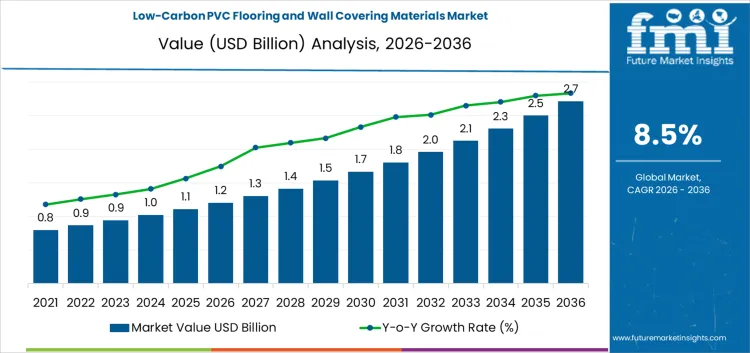
The low-carbon PVC flooring and wall covering materials market is projected to grow from USD 1.2 billion in 2026 to USD 2.7 billion by 2036, reflecting a compound annual growth rate (CAGR) of 8.5%. These figures signal an increasing shift in purchasing behavior toward sustainable, eco-friendly solutions, driven by both regulatory pressures and growing consumer demand for low-carbon alternatives. As buyers increasingly prioritize environmental impact, suppliers with proven, cost-effective solutions will gain traction. This shift indicates greater long-term commitment from industries such as construction and interior design, where sustainability has become a key factor in decision-making. Supplier confidence is on the rise, but success will hinge on the ability to maintain competitive pricing while scaling production of compliant products. The market’s expansion highlights the growing alignment between sustainability goals and market demand, suggesting a shift toward more strategic, long-term investments in low-carbon technologies. Companies that can adapt to this demand will be well-positioned for sustained growth in the coming years.
Quick Stats of the Low-Carbon PVC Flooring and Wall Covering Materials Market
- Low-Carbon PVC Flooring and Wall Covering Materials Market Value (2026): USD 1.2 billion
- Low-Carbon PVC Flooring and Wall Covering Materials Market Forecast Value (2036): USD 2.7 billion
- Low-Carbon PVC Flooring and Wall Covering Materials Market Global Forecast CAGR (2026-2036): 8.5%
- Low-Carbon PVC Flooring and Wall Covering Materials Market Leading Segment: Application (Flooring Materials) 55%
- Key Growth Regions in Low-Carbon PVC Flooring and Wall Covering Materials Market: USA
- Top Players in Low-Carbon PVC Flooring and Wall Covering Materials Market: Tarkett, Shaw Industries, Mohawk Industries, Armstrong Flooring, Gerflor, Forbo Flooring, LG Hausys, Polyflor, Beaulieu International Group, Mannington Mills
What is the Growth Forecast for the Low-Carbon PVC Flooring and Wall Covering Materials Market through 2036?
The growth contribution index for the low-carbon PVC flooring and wall covering materials market highlights the key drivers of expansion and the relative contributions of various factors to overall market growth. From 2026 to 2031, the market will grow from USD 1.2 billion to USD 1.9 billion, reflecting an increase of USD 0.7 billion. This early-stage growth will be primarily driven by regulatory pressures and sustainability goals in the construction industry, where the shift towards eco-friendlier materials is accelerating. Government policies promoting green building certifications, along with growing consumer demand for environmentally conscious products, will contribute significantly to market growth during this phase. The introduction of new low-carbon PVC products with improved performance will also contribute to the early adoption and increase in market share for these materials.
From 2031 to 2036, the market will continue its growth, reaching USD 2.7 billion by 2036. This period will see steady, sustained growth, with the focus shifting from early adoption to more widespread integration of low-carbon PVC in flooring and wall coverings. The ongoing optimization of production technologies, resulting in cost reduction and better material performance, will be a key driver during this phase. Additionally, as the market matures, the demand for low-carbon PVC will be driven by broad industry acceptance and the continued expansion of green building initiatives. The growth contribution index suggests that, as the technology becomes more mainstream, market growth will be increasingly driven by incremental improvements and the growing incorporation of sustainable materials in construction and interior design.
Low-Carbon PVC Flooring and Wall Covering Materials Market Key Takeaways
| Metric | Value |
|---|---|
| Industry Sales Value (2026) | USD 1.2 billion |
| Industry Forecast Value (2036) | USD 2.7 billion |
| Industry Forecast CAGR (2026-2036) | 8.5% |
What Is Driving the Demand for Low Carbon PVC Flooring and Wall Covering Materials Market?
Historical demand for PVC based flooring and wall covering materials was shaped by broad adoption of polyvinyl chloride as a construction material owing to durability, ease of maintenance, water resistance, and cost efficiency in flooring, walls, and interior finishes. PVC has been widely used in sheet flooring, vinyl tiles, and decorative wall products because it is resilient and versatile, helping meet diverse design and performance needs across residential and commercial sectors. Over decades, manufacturers have improved PVC products to offer a range of aesthetic options and practical benefits, contributing to sustained use in interior applications where moisture resistance and long service life are priorities. Construction growth and interior fit out activity supported demand for PVC flooring and wall coverings as part of broader materials markets that included wood, linoleum, and composite substrates. Consumer preference for material performance and cost effective interior surfaces underpinned baseline market expansion for PVC products.
Future demand for low carbon PVC flooring and wall covering materials is expected to grow as sustainability, environmental regulation, and building performance criteria increasingly influence material selection in construction and renovation. The global low carbon flooring segment alone was valued at approximately USD 70 billion in 2024 and is forecast to reach about USD 119 billion by 2033 at a roughly 5.6 % CAGR, driven by environmental awareness and demand for sustainable building materials that lower life cycle emissions in built environments. This trend reflects rising consumer and developer focus on products that reduce carbon impact and support healthier indoor environments. Regulatory and green building standards that emphasise low embodied carbon and eco friendly materials drive interest in PVC products manufactured with reduced emissions and improved eco profiles, including use of renewable power in production and incorporation of recycled content to lower carbon intensity. Technical innovation in material design that demonstrates lower fossil carbon footprint and certified environmental declarations is likely to support broader adoption of low carbon variants in flooring and wall covering applications, aligning with construction industry targets for reduced embodied carbon.
What are the Leading Segments in the Global Low-Carbon PVC Flooring and Wall Covering Materials Market?
The global low-carbon PVC flooring and wall covering materials market is segmented by application and end-use sector. Among applications, flooring materials lead the market, capturing 55% of the share, followed by wall covering materials, baseboards & trim, and specialty architectural elements. Flooring materials are favored for their widespread use in residential and commercial properties due to their durability, aesthetic appeal, and low-maintenance characteristics. On the end-use sector side, residential construction dominates the market, holding 46% of the share, followed by commercial buildings, hospitality & retail, and renovation & retrofits. Residential construction leads due to the high demand for sustainable and cost-effective materials in new home construction and remodeling projects.
What Drives the Growth of Flooring Materials in the Low-Carbon PVC Flooring and Wall Covering Materials Market?
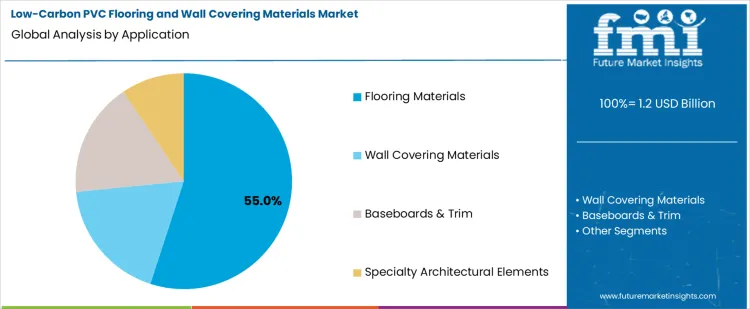
Flooring materials are the leading application in the low-carbon PVC flooring and wall covering materials market, holding 55% of the share. This growth is driven by the increasing preference for durable, sustainable, and cost-efficient flooring options in both residential and commercial construction. Low-carbon PVC flooring provides excellent wear resistance, ease of maintenance, and superior performance in high-traffic areas, making it a popular choice for a wide range of applications. Additionally, low-carbon PVC flooring materials are becoming increasingly popular due to their environmental benefits, as they contribute to reducing carbon footprints without compromising on quality. The ability of these flooring materials to mimic the appearance of natural materials such as wood or stone further drives their adoption, especially in residential construction where aesthetics and sustainability are key factors. As the demand for eco-friendly building materials continues to rise, low-carbon PVC flooring will remain a dominant segment in the market.
What is Driving the Demand for Residential Construction in the Low-Carbon PVC Flooring and Wall Covering Materials Market?
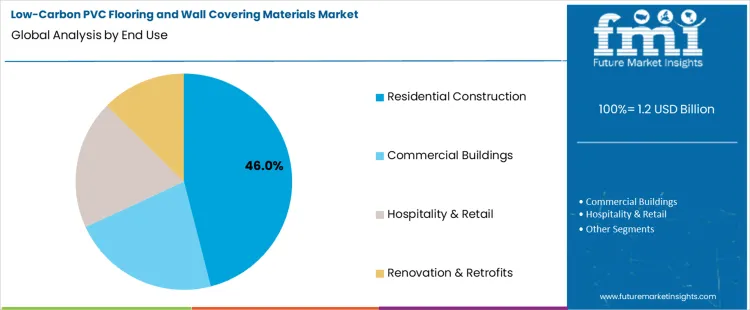
Residential construction is the leading end-use sector in the low-carbon PVC flooring and wall covering materials market, capturing 46% of the share. This demand is primarily driven by the increasing focus on building energy-efficient and sustainable homes. Homeowners and builders are increasingly opting for eco-friendly materials like low-carbon PVC to reduce energy consumption and lower their carbon footprint. Low-carbon PVC flooring and wall coverings are particularly appealing due to their durability, low-maintenance qualities, and environmental benefits. With the rise of green building certifications and regulations aimed at reducing environmental impact, the demand for sustainable materials in residential construction continues to grow. The ability to offer affordable, long-lasting, and environmentally friendly alternatives to traditional building materials further boosts the adoption of low-carbon PVC in residential projects. As sustainability becomes a central concern in homebuilding, the demand for low-carbon PVC in residential construction will continue to drive the market.
What are the Key Dynamics in the Low Carbon PVC Flooring and Wall Covering Materials Market?
The low carbon PVC flooring and wall covering materials market is shaped by increasing demand for sustainable building materials with reduced carbon footprints. PVC is widely used in flooring and wall coverings due to its durability, ease of maintenance, and moisture resistance. However, growing environmental concerns have pushed manufacturers to reduce PVC's environmental impact by incorporating renewable energy in production processes, using alternative feedstocks, and improving manufacturing efficiencies to lower emissions. Regulatory standards and consumer preference for low carbon products are driving this shift. End users assess products based on their carbon intensity, performance, and ability to meet green building certification standards.
What are the Main Drivers Supporting Growth in This Market?
Regulatory pressure to reduce carbon emissions in the construction industry is a significant driver for the growth of low carbon PVC flooring and wall covering materials. Green building standards, which increasingly emphasize the use of low carbon and renewable materials, are also pushing manufacturers to innovate. Additionally, growing consumer and business awareness of sustainability is prompting demand for environmentally friendly materials in construction projects. Technological advances in PVC manufacturing processes, including energy-efficient production and the use of sustainable feedstocks, are helping to make low carbon PVC more competitive. The expansion of the global construction and renovation market further fuels the demand for resilient, eco-friendly building materials.
What Restraints Are Limiting Market Expansion?
High production costs remain a significant barrier for the low carbon PVC flooring and wall covering materials market. The transition to sustainable manufacturing processes can be capital intensive, especially when incorporating renewable energy and alternative feedstocks. Variability in the supply of bio based feedstocks and the challenge of reducing PVC’s environmental impact while maintaining product performance can also complicate production. Some consumers and manufacturers may prefer non PVC alternatives, such as bio-based or natural fiber-based products, in an effort to further reduce environmental impact. Additionally, inconsistent global regulatory frameworks for carbon emissions and sustainable certifications can limit adoption in certain regions.
What Emerging Trends Are Shaping the Future of This Market?
Emerging trends include increased use of renewable energy in PVC production to lower carbon intensity, as well as the development of advanced PVC formulations with improved functionality, such as antimicrobial properties and better indoor air quality features. The growing adoption of environmental product declarations (EPDs) and lifecycle assessments (LCAs) in the construction sector is driving the need for greater transparency in the sustainability credentials of flooring and wall materials. There is also a rising interest in integrating low carbon PVC with other sustainable building materials to create high-performance, eco-friendly solutions. Collaboration between material suppliers, construction firms, and regulatory bodies is fostering the creation of standardized frameworks to support the broader adoption of low carbon materials in the built environment.
What is the Country-Wise Analysis of the Low-Carbon PVC Flooring and Wall Covering Materials Market?
The low-carbon PVC flooring and wall covering materials market is growing due to the increasing demand for eco-friendly building materials that help reduce the environmental impact of construction projects. Low-carbon PVC is produced with a reduced carbon footprint compared to traditional PVC, making it an attractive option for flooring and wall coverings. Developed markets such as the USA, Germany, and Japan are leading the adoption of low-carbon PVC in construction and renovation projects due to strong regulatory pressures, government incentives, and growing consumer demand for sustainable products. Emerging markets like China and South Korea are also seeing strong growth, driven by rapid urbanization, increased government support for green building initiatives, and a growing focus on sustainability in the construction industry. As the global push for sustainable building practices intensifies, the market for low-carbon PVC flooring and wall covering materials is expected to expand steadily.
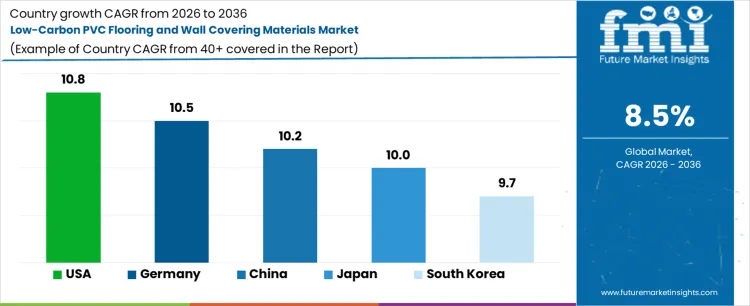
| Country | CAGR (2026-2036) |
|---|---|
| USA | 10.8% |
| Germany | 10.5% |
| China | 10.2% |
| Japan | 10% |
| South Korea | 9.7% |
What is the Growth Outlook for the Low-Carbon PVC Flooring and Wall Covering Materials Market in the USA?
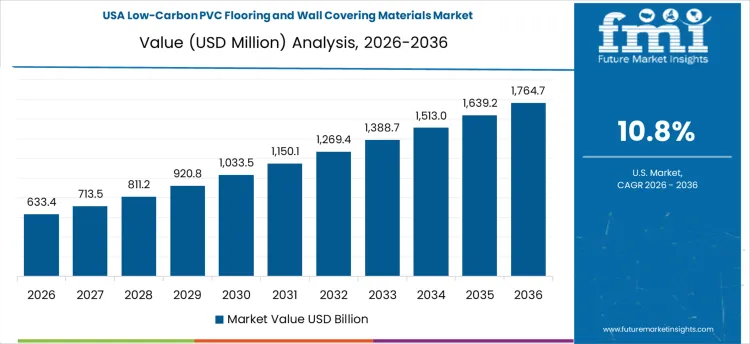
The low-carbon PVC flooring and wall covering materials market in the USA is projected to grow steadily, with a projected CAGR of 10.8% from 2026 to 2036. The USA has been at the forefront of sustainability, with an increasing focus on reducing the environmental impact of building materials. Low-carbon PVC is gaining popularity in the flooring and wall covering sectors due to its environmental benefits, such as reduced carbon emissions during production. Government regulations promoting sustainability in construction and consumer demand for green materials are driving the adoption of low-carbon PVC. As the USA construction industry continues to embrace sustainable building practices and materials, the market for low-carbon PVC flooring and wall coverings is expected to continue its steady growth.
What is the Market Outlook for the Low-Carbon PVC Flooring and Wall Covering Materials Market in Germany?
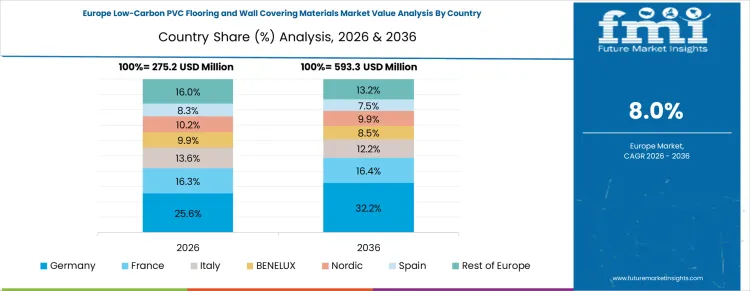
Germany is expected to see steady growth in the low-carbon PVC flooring and wall covering materials market, with a projected CAGR of 10.5% from 2026 to 2036. As a global leader in sustainability, Germany has long been at the forefront of adopting green building materials. The demand for low-carbon PVC is rising as the country works to meet its ambitious climate goals. With increasing regulatory pressure to reduce carbon emissions and promote sustainable construction, the German market is seeing a rise in the use of low-carbon PVC for flooring and wall coverings. Germany’s commitment to a circular economy and eco-friendly materials is expected to drive continued growth in the market for low-carbon PVC in the coming years.
What is the Growth Forecast for the Low-Carbon PVC Flooring and Wall Covering Materials Market in China?
China is projected to experience steady growth in the low-carbon PVC flooring and wall covering materials market, with a projected CAGR of 10.2% from 2026 to 2036. China, as the largest producer and consumer of plastics, is increasingly focusing on reducing the environmental impact of its manufacturing sector. The demand for low-carbon PVC in flooring and wall coverings is growing as China seeks to address plastic pollution and improve sustainability in the construction industry. Government policies promoting green development and sustainability in building materials are driving the adoption of low-carbon PVC. As China continues to prioritize sustainable construction practices, the market for low-carbon PVC in flooring and wall covering materials is expected to expand steadily.
What is the Market Outlook for the Low-Carbon PVC Flooring and Wall Covering Materials Market in Japan?
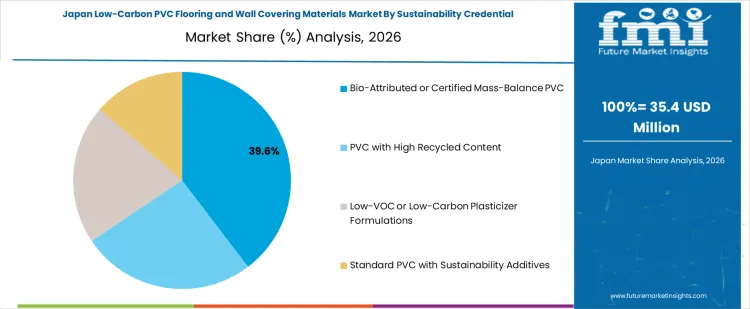
Japan is expected to see steady growth in the low-carbon PVC flooring and wall covering materials market, with a projected CAGR of 10% from 2026 to 2036. Japan has a strong focus on sustainability and environmental innovation, and the demand for low-carbon PVC is increasing across various industries, including construction. As the country works to reduce its environmental impact, there is a growing need for eco-friendly building materials like low-carbon PVC. Government regulations supporting sustainable construction, combined with increasing consumer demand for green materials, are driving the adoption of low-carbon PVC for flooring and wall coverings. The market in Japan is expected to continue to grow as the construction industry embraces more sustainable and energy-efficient practices.
What is the Growth Forecast for the Low-Carbon PVC Flooring and Wall Covering Materials Market in South Korea?
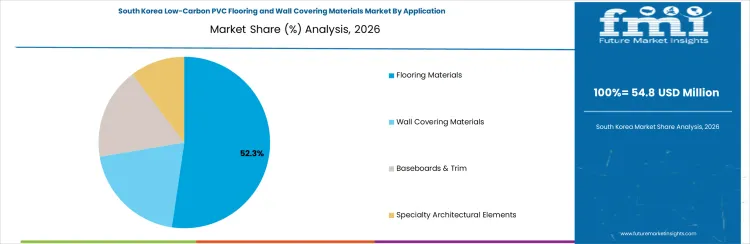
South Korea is projected to experience steady growth in the low-carbon PVC flooring and wall covering materials market, with a projected CAGR of 9.7% from 2026 to 2036. South Korea is increasingly focusing on sustainability and green technologies, and the demand for low-carbon materials in the construction industry is rising. Government policies promoting sustainable construction and environmental responsibility are driving the adoption of low-carbon PVC in flooring and wall coverings. South Korean industries are increasingly turning to sustainable alternatives to traditional building materials, and as consumer awareness of environmental issues grows, the market for low-carbon PVC in South Korea is expected to continue its steady growth.
What is the Competitive Landscape for the Low-Carbon PVC Flooring and Wall Covering Materials Market?
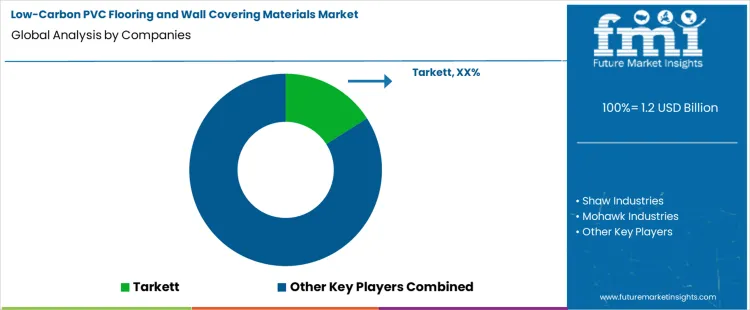
The low-carbon PVC flooring and wall covering materials market is growing as sustainability becomes a key focus in the construction and interior design industries. Tarkett leads the market with its innovative low-carbon PVC flooring and wall covering solutions, offering durable, high-performance products that meet sustainability standards and contribute to reducing the carbon footprint in building materials. Their strong commitment to environmental stewardship, product innovation, and circular economy principles has positioned them as a dominant player. Shaw Industries, Mohawk Industries, and Armstrong Flooring are significant competitors, each providing low-carbon PVC solutions that offer long-lasting performance and sustainability in residential and commercial applications. Shaw Industries emphasizes environmentally responsible flooring materials, while Mohawk Industries and Armstrong Flooring focus on reducing their carbon footprints through sustainable manufacturing processes.
Gerflor, Forbo Flooring, and LG Hausys further strengthen the competitive landscape by offering their own low-carbon PVC flooring and wall covering materials. Gerflor specializes in eco-friendly and innovative flooring solutions, while Forbo Flooring delivers sustainable, high-quality vinyl materials for both commercial and residential uses. LG Hausys offers low-carbon PVC solutions with advanced performance features, including durability and aesthetic appeal. Polyflor, Beaulieu International Group, and Mannington Mills also contribute to the market by offering their own low-carbon flooring and wall coverings, focusing on eco-friendly and energy-efficient products. These companies compete by focusing on product innovation, environmental sustainability, and the growing demand for sustainable building materials. As the drive for green building and eco-conscious materials intensifies, the market for low-carbon PVC flooring and wall covering materials is expected to grow, promoting further innovation and competition.
Key Players of the Low-Carbon PVC Flooring and Wall Covering Materials Market
- Tarkett
- Shaw Industries
- Mohawk Industries
- Armstrong Flooring
- Gerflor
- Forbo Flooring
- LG Hausys
- Polyflor
- Beaulieu International Group
- Mannington Mills
Scope of the Report
| Items | Values |
|---|---|
| Quantitative Units (2026) | USD Billion |
| Sustainability Credential | Bio Attributed or Certified Mass Balance PVC, PVC with High Recycled Content, Low VOC or Low Carbon Plasticizer Formulations, Standard PVC with Sustainability Additives |
| Application | Flooring Materials, Wall Covering Materials, Baseboards & Trim, Specialty Architectural Elements |
| End Use | Residential Construction, Commercial Buildings, Hospitality & Retail, Renovation & Retrofits |
| Companies | Tarkett, Shaw Industries, Mohawk Industries, Armstrong Flooring, Gerflor, Forbo Flooring, LG Hausys, Polyflor, Beaulieu International Group, Mannington Mills |
| Regions Covered | North America, Latin America, Western Europe, Eastern Europe, South Asia & Pacific, East Asia, Middle East & Africa |
| Countries Covered | United States, Canada, Mexico, Brazil, Argentina, Germany, France, United Kingdom, Italy, Spain, Netherlands, China, India, Japan, South Korea, ANZ, GCC Countries, South Africa |
| Additional Attributes | Dollar sales by sustainability credential, application, end use, and region. Includes analysis of market trends in low carbon PVC flooring and wall covering materials, performance in flooring and wall systems across residential and commercial segments, formulation cost and sustainability drivers, regulatory and environmental considerations influencing adoption of low carbon and recycled PVC materials, circular economy impacts, competitive positioning and market share of key companies, innovations in sustainable PVC materials and plasticizer technologies, and evaluation of impact on product durability, indoor air quality, aesthetics, and building performance. |
Low-Carbon PVC Flooring and Wall Covering Materials Market Segmentation
Sustainability Credential:
- Bio-Attributed or Certified Mass-Balance PVC
- PVC with High Recycled Content
- Low-VOC or Low-Carbon Plasticizer Formulations
- Standard PVC with Sustainability Additives
Application:
- Flooring Materials
- Wall Covering Materials
- Baseboards & Trim
- Specialty Architectural Elements
End Use:
- Residential Construction
- Commercial Buildings
- Hospitality & Retail
- Renovation & Retrofits
Region:
- Asia Pacific
- China
- Japan
- South Korea
- India
- Australia & New Zealand
- ASEAN
- Rest of Asia Pacific
- Europe
- Germany
- United Kingdom
- France
- Italy
- Spain
- Nordic
- BENELUX
- Rest of Europe
- North America
- United States
- Canada
- Mexico
- Latin America
- Brazil
- Chile
- Rest of Latin America
- Middle East & Africa
- Kingdom of Saudi Arabia
- Other GCC Countries
- Turkey
- South Africa
- Other African Union
- Rest of Middle East & Africa
Frequently Asked Questions
How big is the low-carbon pvc flooring and wall covering materials market in 2026?
The global low-carbon pvc flooring and wall covering materials market is estimated to be valued at USD 1.2 billion in 2026.
What will be the size of low-carbon pvc flooring and wall covering materials market in 2036?
The market size for the low-carbon pvc flooring and wall covering materials market is projected to reach USD 2.7 billion by 2036.
How much will be the low-carbon pvc flooring and wall covering materials market growth between 2026 and 2036?
The low-carbon pvc flooring and wall covering materials market is expected to grow at a 8.5% CAGR between 2026 and 2036.
What are the key product types in the low-carbon pvc flooring and wall covering materials market?
The key product types in low-carbon pvc flooring and wall covering materials market are bio‑attributed or certified mass‑balance pvc, pvc with high recycled content, low‑voc or low‑carbon plasticizer formulations and standard pvc with sustainability additives.
Which application segment to contribute significant share in the low-carbon pvc flooring and wall covering materials market in 2026?
In terms of application, flooring materials segment to command 55.0% share in the low-carbon pvc flooring and wall covering materials market in 2026.
Preview the report firsthand - request a free sample
Get SampleGet the brochure for pricing and purchase details.
Get PDFTable of Content
- Executive Summary
- Global Market Outlook
- Demand-side Trends
- Supply-side Trends
- Technology Roadmap Analysis
- Analysis and Recommendations
- Market Overview
- Market Coverage / Taxonomy
- Market Definition / Scope / Limitations
- Market Background
- Market Dynamics
- Drivers
- Restraints
- Opportunity
- Trends
- Scenario Forecast
- Demand in Optimistic Scenario
- Demand in Likely Scenario
- Demand in Conservative Scenario
- Opportunity Map Analysis
- Product Life Cycle Analysis
- Supply Chain Analysis
- Investment Feasibility Matrix
- Value Chain Analysis
- PESTLE and Porter’s Analysis
- Regulatory Landscape
- Regional Parent Market Outlook
- Production and Consumption Statistics
- Import and Export Statistics
- Market Dynamics
- Global Market Analysis 2021 to 2025 and Forecast, 2026 to 2036
- Historical Market Size Value (USD Million) Analysis, 2021 to 2025
- Current and Future Market Size Value (USD Million) Projections, 2026 to 2036
- Y-o-Y Growth Trend Analysis
- Absolute $ Opportunity Analysis
- Global Market Pricing Analysis 2021 to 2025 and Forecast 2026 to 2036
- Global Market Analysis 2021 to 2025 and Forecast 2026 to 2036, By Sustainability Credential
- Introduction / Key Findings
- Historical Market Size Value (USD Million) Analysis By Sustainability Credential , 2021 to 2025
- Current and Future Market Size Value (USD Million) Analysis and Forecast By Sustainability Credential , 2026 to 2036
- Bio‑Attributed or Certified Mass‑Balance PVC
- PVC with High Recycled Content
- Low‑VOC or Low‑Carbon Plasticizer Formulations
- Standard PVC with Sustainability Additives
- Bio‑Attributed or Certified Mass‑Balance PVC
- Y-o-Y Growth Trend Analysis By Sustainability Credential , 2021 to 2025
- Absolute $ Opportunity Analysis By Sustainability Credential , 2026 to 2036
- Global Market Analysis 2021 to 2025 and Forecast 2026 to 2036, By Application
- Introduction / Key Findings
- Historical Market Size Value (USD Million) Analysis By Application, 2021 to 2025
- Current and Future Market Size Value (USD Million) Analysis and Forecast By Application, 2026 to 2036
- Flooring Materials
- Wall Covering Materials
- Baseboards & Trim
- Specialty Architectural Elements
- Flooring Materials
- Y-o-Y Growth Trend Analysis By Application, 2021 to 2025
- Absolute $ Opportunity Analysis By Application, 2026 to 2036
- Global Market Analysis 2021 to 2025 and Forecast 2026 to 2036, By End Use
- Introduction / Key Findings
- Historical Market Size Value (USD Million) Analysis By End Use, 2021 to 2025
- Current and Future Market Size Value (USD Million) Analysis and Forecast By End Use, 2026 to 2036
- Residential Construction
- Commercial Buildings
- Hospitality & Retail
- Renovation & Retrofits
- Residential Construction
- Y-o-Y Growth Trend Analysis By End Use, 2021 to 2025
- Absolute $ Opportunity Analysis By End Use, 2026 to 2036
- Global Market Analysis 2021 to 2025 and Forecast 2026 to 2036, By Region
- Introduction
- Historical Market Size Value (USD Million) Analysis By Region, 2021 to 2025
- Current Market Size Value (USD Million) Analysis and Forecast By Region, 2026 to 2036
- North America
- Latin America
- Western Europe
- Eastern Europe
- East Asia
- South Asia and Pacific
- Middle East & Africa
- Market Attractiveness Analysis By Region
- North America Market Analysis 2021 to 2025 and Forecast 2026 to 2036, By Country
- Historical Market Size Value (USD Million) Trend Analysis By Market Taxonomy, 2021 to 2025
- Market Size Value (USD Million) Forecast By Market Taxonomy, 2026 to 2036
- By Country
- USA
- Canada
- Mexico
- By Sustainability Credential
- By Application
- By End Use
- By Country
- Market Attractiveness Analysis
- By Country
- By Sustainability Credential
- By Application
- By End Use
- Key Takeaways
- Latin America Market Analysis 2021 to 2025 and Forecast 2026 to 2036, By Country
- Historical Market Size Value (USD Million) Trend Analysis By Market Taxonomy, 2021 to 2025
- Market Size Value (USD Million) Forecast By Market Taxonomy, 2026 to 2036
- By Country
- Brazil
- Chile
- Rest of Latin America
- By Sustainability Credential
- By Application
- By End Use
- By Country
- Market Attractiveness Analysis
- By Country
- By Sustainability Credential
- By Application
- By End Use
- Key Takeaways
- Western Europe Market Analysis 2021 to 2025 and Forecast 2026 to 2036, By Country
- Historical Market Size Value (USD Million) Trend Analysis By Market Taxonomy, 2021 to 2025
- Market Size Value (USD Million) Forecast By Market Taxonomy, 2026 to 2036
- By Country
- Germany
- UK
- Italy
- Spain
- France
- Nordic
- BENELUX
- Rest of Western Europe
- By Sustainability Credential
- By Application
- By End Use
- By Country
- Market Attractiveness Analysis
- By Country
- By Sustainability Credential
- By Application
- By End Use
- Key Takeaways
- Eastern Europe Market Analysis 2021 to 2025 and Forecast 2026 to 2036, By Country
- Historical Market Size Value (USD Million) Trend Analysis By Market Taxonomy, 2021 to 2025
- Market Size Value (USD Million) Forecast By Market Taxonomy, 2026 to 2036
- By Country
- Russia
- Poland
- Hungary
- Balkan & Baltic
- Rest of Eastern Europe
- By Sustainability Credential
- By Application
- By End Use
- By Country
- Market Attractiveness Analysis
- By Country
- By Sustainability Credential
- By Application
- By End Use
- Key Takeaways
- East Asia Market Analysis 2021 to 2025 and Forecast 2026 to 2036, By Country
- Historical Market Size Value (USD Million) Trend Analysis By Market Taxonomy, 2021 to 2025
- Market Size Value (USD Million) Forecast By Market Taxonomy, 2026 to 2036
- By Country
- China
- Japan
- South Korea
- By Sustainability Credential
- By Application
- By End Use
- By Country
- Market Attractiveness Analysis
- By Country
- By Sustainability Credential
- By Application
- By End Use
- Key Takeaways
- South Asia and Pacific Market Analysis 2021 to 2025 and Forecast 2026 to 2036, By Country
- Historical Market Size Value (USD Million) Trend Analysis By Market Taxonomy, 2021 to 2025
- Market Size Value (USD Million) Forecast By Market Taxonomy, 2026 to 2036
- By Country
- India
- ASEAN
- Australia & New Zealand
- Rest of South Asia and Pacific
- By Sustainability Credential
- By Application
- By End Use
- By Country
- Market Attractiveness Analysis
- By Country
- By Sustainability Credential
- By Application
- By End Use
- Key Takeaways
- Middle East & Africa Market Analysis 2021 to 2025 and Forecast 2026 to 2036, By Country
- Historical Market Size Value (USD Million) Trend Analysis By Market Taxonomy, 2021 to 2025
- Market Size Value (USD Million) Forecast By Market Taxonomy, 2026 to 2036
- By Country
- Kingdom of Saudi Arabia
- Other GCC Countries
- Turkiye
- South Africa
- Other African Union
- Rest of Middle East & Africa
- By Sustainability Credential
- By Application
- By End Use
- By Country
- Market Attractiveness Analysis
- By Country
- By Sustainability Credential
- By Application
- By End Use
- Key Takeaways
- Key Countries Market Analysis
- USA
- Pricing Analysis
- Market Share Analysis, 2025
- By Sustainability Credential
- By Application
- By End Use
- Canada
- Pricing Analysis
- Market Share Analysis, 2025
- By Sustainability Credential
- By Application
- By End Use
- Mexico
- Pricing Analysis
- Market Share Analysis, 2025
- By Sustainability Credential
- By Application
- By End Use
- Brazil
- Pricing Analysis
- Market Share Analysis, 2025
- By Sustainability Credential
- By Application
- By End Use
- Chile
- Pricing Analysis
- Market Share Analysis, 2025
- By Sustainability Credential
- By Application
- By End Use
- Germany
- Pricing Analysis
- Market Share Analysis, 2025
- By Sustainability Credential
- By Application
- By End Use
- UK
- Pricing Analysis
- Market Share Analysis, 2025
- By Sustainability Credential
- By Application
- By End Use
- Italy
- Pricing Analysis
- Market Share Analysis, 2025
- By Sustainability Credential
- By Application
- By End Use
- Spain
- Pricing Analysis
- Market Share Analysis, 2025
- By Sustainability Credential
- By Application
- By End Use
- France
- Pricing Analysis
- Market Share Analysis, 2025
- By Sustainability Credential
- By Application
- By End Use
- India
- Pricing Analysis
- Market Share Analysis, 2025
- By Sustainability Credential
- By Application
- By End Use
- ASEAN
- Pricing Analysis
- Market Share Analysis, 2025
- By Sustainability Credential
- By Application
- By End Use
- Australia & New Zealand
- Pricing Analysis
- Market Share Analysis, 2025
- By Sustainability Credential
- By Application
- By End Use
- China
- Pricing Analysis
- Market Share Analysis, 2025
- By Sustainability Credential
- By Application
- By End Use
- Japan
- Pricing Analysis
- Market Share Analysis, 2025
- By Sustainability Credential
- By Application
- By End Use
- South Korea
- Pricing Analysis
- Market Share Analysis, 2025
- By Sustainability Credential
- By Application
- By End Use
- Russia
- Pricing Analysis
- Market Share Analysis, 2025
- By Sustainability Credential
- By Application
- By End Use
- Poland
- Pricing Analysis
- Market Share Analysis, 2025
- By Sustainability Credential
- By Application
- By End Use
- Hungary
- Pricing Analysis
- Market Share Analysis, 2025
- By Sustainability Credential
- By Application
- By End Use
- Kingdom of Saudi Arabia
- Pricing Analysis
- Market Share Analysis, 2025
- By Sustainability Credential
- By Application
- By End Use
- Turkiye
- Pricing Analysis
- Market Share Analysis, 2025
- By Sustainability Credential
- By Application
- By End Use
- South Africa
- Pricing Analysis
- Market Share Analysis, 2025
- By Sustainability Credential
- By Application
- By End Use
- USA
- Market Structure Analysis
- Competition Dashboard
- Competition Benchmarking
- Market Share Analysis of Top Players
- By Regional
- By Sustainability Credential
- By Application
- By End Use
- Competition Analysis
- Competition Deep Dive
- Tarkett
- Overview
- Product Portfolio
- Profitability by Market Segments (Product/Age /Sales Channel/Region)
- Sales Footprint
- Strategy Overview
- Marketing Strategy
- Product Strategy
- Channel Strategy
- Shaw Industries
- Mohawk Industries
- Armstrong Flooring
- Gerflor
- Forbo Flooring
- LG Hausys
- Polyflor
- Beaulieu International Group
- Mannington Mills
- Tarkett
- Competition Deep Dive
- Assumptions & Acronyms Used
- Research Methodology


