

- Industry Size (2026)
- USD 6.2 Bn
- Forecast (2036)
- USD 14.7 Bn
- CAGR (2026 to 2036)
- 9%
OEM-Approved Low-Emission TPE for Vehicle Cabin Surfaces Market Forecast and Outlook 2026 to 2036
The OEM-approved low-emission TPE for vehicle cabin surfaces market is projected to grow from USD 6.2 billion in 2026 to USD 14.7 billion by 2036, at a CAGR of 9%. This growth is largely driven by heightened regulatory pressures and consumer demand for eco-friendly automotive materials, especially in regions like China, the USA, and Europe. Regional demand concentration varies, with China leading the charge due to its dominance in electric vehicle (EV) production and aggressive green manufacturing initiatives.
The USA follows closely, where environmental regulations and consumer preferences for sustainable vehicles are accelerating the adoption of low-emission materials. European markets, particularly Germany, emphasize stringent regulatory compliance, further propelling demand for low-emission TPEs. However, uneven adoption patterns exist, with some regions facing higher costs for material sourcing and production, while others benefit from local manufacturing hubs and cost advantages. These disparities in adoption rates and regional production costs influence the market dynamics and shape competitive strategies across global markets.
Quick Stats for OEM-Approved Low-Emission TPE for Vehicle Cabin Surfaces Market
- OEM-Approved Low-Emission TPE for Vehicle Cabin Surfaces Market Value (2026): USD 6.2 Billion
- OEM-Approved Low-Emission TPE for Vehicle Cabin Surfaces Market Forecast Value (2036): USD 14.7 Billion
- OEM-Approved Low-Emission TPE for Vehicle Cabin Surfaces Market Forecast CAGR (2026 to 2036): 9%
- Leading Polymer Type in OEM-Approved Low-Emission TPE for Vehicle Cabin Surfaces Market: Thermoplastic Olefins (TPO or TPE-O)
- Key Growth Regions in OEM-Approved Low-Emission TPE for Vehicle Cabin Surfaces Market: Asia Pacific, North America
- Top Key Players in OEM-Approved Low-Emission TPE for Vehicle Cabin Surfaces Market: Kraton Corporation, Teknor Apex Company, Avient Corporation, Kuraray Co., Ltd.
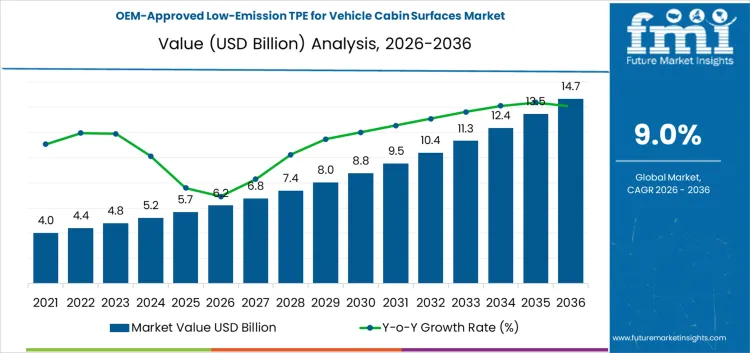
OEM-Approved Low-Emission TPE for Vehicle Cabin Surfaces Market Key Takeaways
| Metric | Value |
|---|---|
| Industry Value (2026) | USD 6.2 Billion |
| Forecast Value (2036) | USD 14.7 Billion |
| Forecast CAGR (2026 to 2036) | 9% |
How is the Global OEM-Approved Low-Emission TPE for Vehicle Cabin Surfaces Market Advancing?
The global OEM-approved low-emission TPE (thermoplastic elastomer) for vehicle cabin surfaces market is growing rapidly, driven by the automotive industry's increasing focus on environmental sustainability, safety, and interior air quality. These low-emission TPE compounds are designed to reduce harmful VOC (volatile organic compound) emissions, making them ideal for use in vehicle interiors where air quality is a key consideration. As regulatory standards for interior air quality become stricter, automakers are increasingly turning to low-emission TPE solutions for cabin components such as dashboards, door panels, and center consoles.
The growth of this market is also fueled by consumer demand for eco-friendlier vehicles. As more consumers prioritize health-conscious and environmentally responsible choices, the automotive sector is adapting by using sustainable materials in vehicle construction. Low-emission TPEs offer a balance of durability, flexibility, and high-performance properties that make them suitable for demanding automotive applications, ensuring long-lasting interior components while complying with emerging regulations.
Technological innovations in TPE formulations, such as enhanced processing capabilities, improved emissions control, and the development of more sustainable, cost-effective options, are further contributing to market growth. As the automotive industry continues to evolve with a focus on sustainability and improving occupant health, the OEM-approved low-emission TPE for vehicle cabin surfaces market is poised for substantial growth in the coming years.
What Is the Segment-Wise Analysis for the OEM-Approved Low-Emission TPE for Vehicle Cabin Surfaces Market?
The OEM-approved low-emission TPE for vehicle cabin surfaces market is segmented by polymer type and application. Thermoplastic Olefins (TPO/TPE-O) lead the market with a 38% share, followed by styrenic block copolymers (SBC), thermoplastic vulcanizates (TPV), and thermoplastic polyurethane (TPU). These TPE types are chosen for their low-emission properties, which are crucial for meeting air quality standards inside vehicle cabins. In terms of application, instrument panels account for the largest share at 65%, followed by door panels, center consoles, soft-touch interior surfaces, and seals or weatherstrips.
Why Do Thermoplastic Olefins (TPO/TPE-O) Lead the Market?
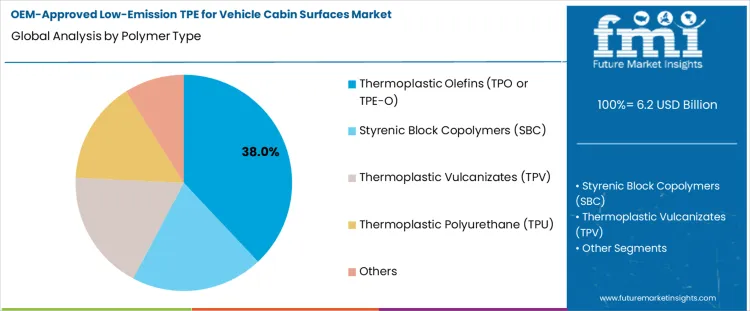
Thermoplastic Olefins (TPO/TPE-O) account for 38% of the OEM-approved low-emission TPE for vehicle cabin surfaces market due to their excellent balance of cost-effectiveness, performance, and low-emission properties. These polymers are widely used in automotive interiors, particularly for components such as instrument panels, where low-VOC emissions are critical to maintaining interior air quality. TPO/TPE-O polymers offer excellent durability, resistance to wear, and easy processability, making them ideal for mass production. As the automotive industry increasingly focuses on both environmental sustainability and passenger comfort, the demand for TPO/TPE-O in interior applications continues to grow, reinforcing its leadership in the market.
How Do Instrument Panels Contribute to the Low-Emission TPE Market?
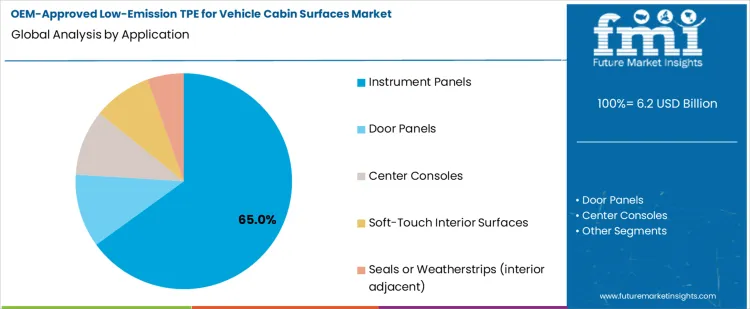
Instrument panels represent 65% of the application segment in the OEM-approved low-emission TPE for vehicle cabin surfaces market. These components are integral to vehicle interiors, providing both functional and aesthetic value. With growing emphasis on improving air quality inside vehicles and complying with stringent emission standards, automakers are turning to low-emission TPEs for instrument panels. Materials like thermoplastic olefins (TPO/TPE-O) and styrenic block copolymers (SBC) are preferred for their low-VOC emissions, durability, and versatility. As the demand for sustainable automotive interiors rises, instrument panels continue to be a key driver of growth for the low-emission TPE market in vehicle cabin applications.
What Are the Key Dynamics for the OEM-Approved Low-Emission TPE for Vehicle Cabin Surfaces Market?
Low-emission thermoplastic elastomers (TPEs) help reduce volatile organic compound (VOC) emissions from dashboards, consoles, door trims, and soft-touch surfaces, contributing to improved interior air quality. Automotive OEMs increasingly specify low-emission materials as part of quality assurance and brand differentiation strategies. Growth in global vehicle production especially in regions enforcing stringent air quality standards fuels demand for TPE compounds that meet performance criteria while achieving low emissions over vehicle lifetime.
How Are the Key Drivers Shaping the OEM-Approved Low-Emission TPE for Vehicle Cabin Surfaces Market?
Growth in the OEM-approved low-emission TPE for vehicle cabin surfaces market is shaped by stricter indoor air quality regulations and consumer preference for low-odor, low-emission interiors. Regulatory frameworks in major automotive markets set limits on VOC emissions from interior materials to protect occupant health, prompting OEMs to adopt engineered TPEs that consistently meet these standards. Advances in polymer chemistry and compounding techniques enable manufacturers to tailor low-emission TPE grades that maintain required mechanical and aesthetic properties. Collaboration between tier suppliers and automakers accelerates material qualification, ensuring that low-emission TPEs are integrated early in the design and production process.
Why Are There Restraints Impacting the OEM-Approved Low-Emission TPE for Vehicle Cabin Surfaces Market?
The OEM-approved low-emission TPE for vehicle cabin surfaces market faces restraints due to higher material development and processing costs associated with low-emission TPE compounds. Formulating elastomers that achieve strict emission thresholds while delivering required elasticity, durability, and surface feel often involves specialized raw materials and complex compounding, increasing production expenses. Price-sensitive vehicle segments may delay adoption due to cost considerations. Regional differences in emission testing protocols and certification requirements can complicate global material standardization. Rigorous qualification timelines for new low-emission TPE grades may delay integration into mass production, especially for model cycles with tight launch schedules.
What is the Growth Outlook for the OEM-Approved Low-Emission TPE for Vehicle Cabin Surfaces Market by Country?
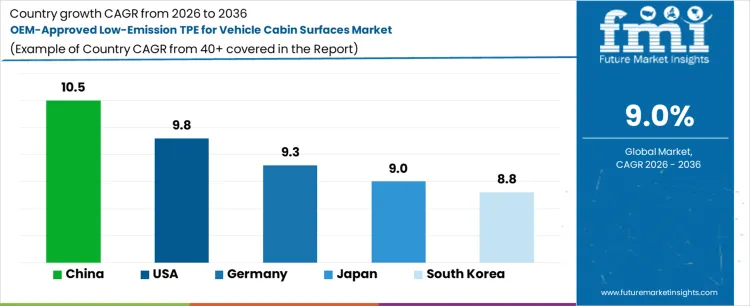
| Country | CAGR (%) |
|---|---|
| China | 10.5% |
| USA | 9.8% |
| South Korea | 8.8% |
| Japan | 9.0% |
| Germany | 9.3% |
The OEM-approved low-emission TPE for vehicle cabin surfaces market is growing steadily across key regions, with China leading at 10.5%, driven by the country’s strong presence in electric vehicle (EV) production and its commitment to sustainable automotive manufacturing. The USA follows at 9.8%, supported by increasing demand for eco-friendly vehicle interiors, especially in the rapidly growing EV sector. South Korea’s market grows at 8.8%, fueled by its focus on green technologies and healthy air quality in automotive cabins. Japan’s market grows at 9%, supported by its leadership in automotive innovation and the increasing adoption of sustainable materials. Germany’s market grows at 9.3%, driven by its push for low-emission technologies in the automotive industry and growing consumer demand for environmentally friendly vehicles.
What is Driving the Growth of the OEM-Approved Low-Emission TPE for Vehicle Cabin Surfaces Market in China?
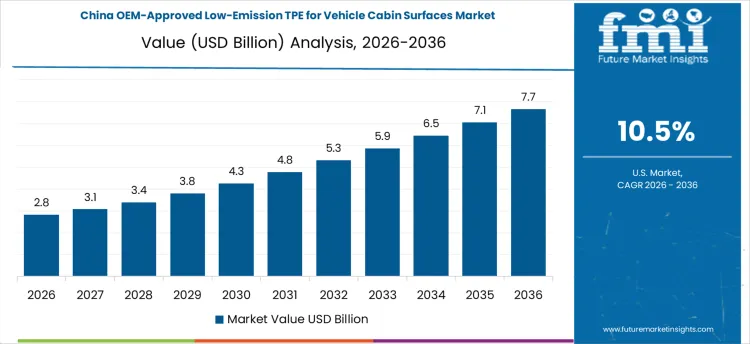
China’s OEM-approved low-emission TPE for vehicle cabin surfaces market is growing at 10.5%, driven by the country’s expanding electric vehicle (EV) market and strong push for environmentally friendly manufacturing. As China leads global EV production, there is an increasing need for low-emission materials that improve vehicle interior air quality and meet sustainability regulations. The growing awareness of health concerns related to vehicle cabin air quality, combined with government incentives for green technologies, has accelerated the demand for low-emission TPE materials. China’s automotive industry, which is rapidly adopting green manufacturing practices, is shifting towards sustainable, low-VOC (volatile organic compound) TPE materials for interior components. As the EV sector continues to grow, China’s market for low-emission TPE for vehicle cabins is expected to continue its strong growth.
What is Contributing to the Growth of the OEM-Approved Low-Emission TPE for Vehicle Cabin Surfaces Market in the USA?
The OEM-approved low-emission TPE for vehicle cabin surfaces market in the USA is growing at 9.8%, supported by the increasing demand for electric vehicles (EVs) and the push for improved vehicle interior air quality. As the USA continues to adopt more sustainable automotive solutions, there is a growing demand for low-emission, eco-friendly materials in vehicle cabins. The shift towards electric mobility and stricter environmental regulations has led automotive manufacturers to use low-VOC TPE materials that contribute to healthier cabin air. The rise in consumer demand for eco-friendly vehicles and green technologies further fuels the market. The USA’s focus on sustainability and improving vehicle safety and air quality, combined with advancements in TPE material formulations, positions the market for continued growth in the coming years.
How is the OEM-Approved Low-Emission TPE for Vehicle Cabin Surfaces Market Expanding in Germany?
Germany’s OEM-approved low-emission TPE for vehicle cabin surfaces market is growing at 9.3%, driven by the country’s leadership in the electric vehicle (EV) market and emphasis on sustainability. As Germany continues to push for eco-friendly transportation solutions, particularly through EV adoption, the demand for low-emission TPE materials in vehicle cabins is rising. These materials play a critical role in meeting environmental and health standards by reducing volatile organic compounds (VOCs) and enhancing interior air quality. With stringent regulations regarding automotive emissions and a strong focus on renewable energy, Germany’s automotive manufacturers are increasingly turning to sustainable materials for vehicle interiors. As the demand for green and sustainable vehicles increases, the market for low-emission TPE in Germany is expected to continue growing, particularly in the electric vehicle sector.
What is Driving the Growth of the OEM-Approved Low-Emission TPE for Vehicle Cabin Surfaces Market in Japan?
Japan’s OEM-approved low-emission TPE for vehicle cabin surfaces market is growing at 9%, supported by the country’s commitment to environmental sustainability and leadership in the automotive sector. Japan’s focus on electric vehicle (EV) development and the integration of green technologies is contributing to the demand for low-emission materials in vehicle cabins. With growing consumer awareness of air quality and health concerns related to VOCs in vehicle interiors, Japan’s automotive manufacturers are increasingly using low-emission TPE for interior parts. The country’s strong regulatory environment, which promotes green manufacturing and eco-friendly solutions, further drives the adoption of these materials. Japan’s focus on creating sustainable, high-performance vehicles positions its automotive sector for continued growth in the low-emission TPE market.
What is Contributing to the Growth of the OEM-Approved Low-Emission TPE for Vehicle Cabin Surfaces Market in South Korea?
South Korea’s OEM-approved low-emission TPE for vehicle cabin surfaces market is growing at 8.8%, driven by the country’s strong automotive industry and focus on environmentally friendly solutions. As South Korea transitions towards electric vehicles (EVs) and sustainable mobility, there is an increasing demand for low-emission materials that enhance vehicle interior air quality. The rising awareness of the impact of VOCs on health, combined with government incentives for green technologies, is fueling market growth. South Korean automakers, including Hyundai and Kia, are increasingly adopting low-emission TPE materials for vehicle cabin components to comply with environmental standards and meet consumer demand for eco-friendly products. With a continued focus on sustainability and innovation, South Korea’s market for low-emission TPE in automotive interiors is expected to expand steadily.
How Are Companies Competing in the OEM‑Approved Low‑Emission TPE for Vehicle Cabin Surfaces Market?
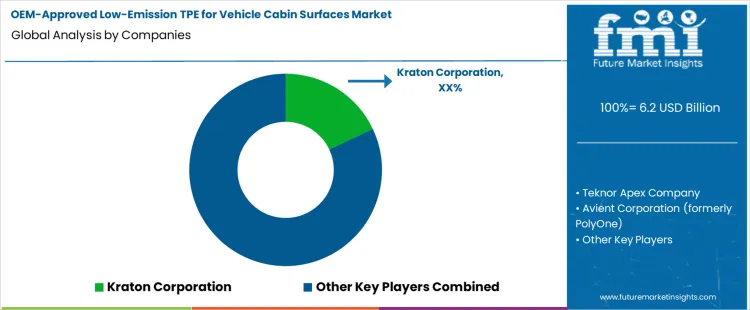
Competition in the OEM‑approved low‑emission thermoplastic elastomer (TPE) for vehicle cabin surfaces market is shaped by VOC performance, tactile quality, processability, and compliance with stringent automotive air quality standards. Kraton Corporation is positioned with block copolymer‑based TPEs that are engineered for low odor and minimal emissions, and its product materials emphasize soft touch and long‑term dimensional stability for dashboards, door trims, and armrests. Teknor Apex Company competes by offering tailored low‑emission TPE compounds that meet specific OEM interior surface specifications, with documentation highlighting predictable VOC profiles and molding ease across production environments.
Avient Corporation (formerly PolyOne) brings a broad portfolio of customizable TPE solutions that balance performance and cabin air quality compliance, and its product literature stresses color and texture versatility alongside emission data. Kuraray Co., Ltd. differentiates through advanced elastomer chemistries that combine soft feel and low chemical off‑gassing, often showcased for premium interior fit and finish. Mitsui Chemicals, Inc. focuses on engineered TPE platforms designed to support both aesthetic and functional demands, with materials marketed for consistent low‑VOC performance under dynamic cabin conditions.
Covestro AG and The Lubrizol Corporation add value by developing high‑performance, low‑emission TPE compounds that are compatible with automated assembly processes, and their brochures highlight regulatory compliance and long‑term stability. Across all players, product materials are crafted to underscore VOC compliance data, tactile quality, processing efficiency, and alignment with evolving automotive standards, helping OEMs meet both comfort and cabin air quality goals.
Key Players in OEM-Approved Low-Emission TPE for Vehicle Cabin Surfaces Market
- Kraton Corporation
- Teknor Apex Company
- Avient Corporation (formerly PolyOne)
- Kuraray Co., Ltd.
- Mitsui Chemicals, Inc.
- Covestro AG
- The Lubrizol Corporation
Scope of Report
| Items | Values |
|---|---|
| Quantitative Unit (2026) | USD Billion |
| Polymer Type | Thermoplastic Olefins (TPO/TPE-O), Styrenic Block Copolymers (SBC), Thermoplastic Vulcanizates (TPV), Thermoplastic Polyurethane (TPU), Others |
| Application | Instrument Panels, Door Panels, Center Consoles, Soft-Touch Interior Surfaces, Seals or Weatherstrips (interior adjacent) |
| Regions Covered | Asia Pacific, Europe, North America, Latin America, Middle East & Africa |
| Countries Covered | USA, China, Japan, South Korea, India, Australia & New Zealand, ASEAN, Germany, UK, France, Italy, Spain, Nordic, BENELUX, Brazil, Chile, Mexico, Saudi Arabia, Other GCC Countries, Turkey, South Africa, Other African Union |
| Key Companies Profiled | Kraton Corporation, Teknor Apex Company, Avient Corporation (formerly PolyOne), Kuraray Co., Ltd., Mitsui Chemicals, Inc., Covestro AG, The Lubrizol Corporation |
| Additional Attributes | Dollar sales segmented by polymer type, application, and region. Regional CAGR and growth outlook for OEM-approved low-emission TPE in vehicle cabin surfaces, with a focus on regulatory compliance and automotive industry needs for sustainable materials. |
OEM-Approved Low-Emission TPE for Vehicle Cabin Surfaces Market by Key Segments
By Polymer Type:
- Thermoplastic Olefins (TPO/TPE‑O)
- Styrenic Block Copolymers (SBC)
- Thermoplastic Vulcanizates (TPV)
- Thermoplastic Polyurethane (TPU)
- Others
By Application:
- Instrument Panels
- Door Panels
- Center Consoles
- Soft‑Touch Interior Surfaces
- Seals or Weatherstrips (interior adjacent)
By Region:
- Asia Pacific
- China
- Japan
- South Korea
- India
- Australia & New Zealand
- ASEAN
- Rest of Asia Pacific
- Europe
- Germany
- United Kingdom
- France
- Italy
- Spain
- Nordic
- BENELUX
- Rest of Europe
- North America
- United States
- Canada
- Mexico
- Latin America
- Brazil
- Chile
- Rest of Latin America
- Middle East & Africa
- Kingdom of Saudi Arabia
- Other GCC Countries
- Turkey
- South Africa
- Other African Union
- Rest of Middle East & Africa
Frequently Asked Questions
How big is the OEM-approved low-emission TPE for vehicle cabin surfaces market in 2026?
The global OEM-approved low-emission TPE for vehicle cabin surfaces market is estimated to be valued at USD 6.2 billion in 2026.
What will be the size of OEM-approved low-emission TPE for vehicle cabin surfaces market in 2036?
The market size for the OEM-approved low-emission TPE for vehicle cabin surfaces market is projected to reach USD 14.7 billion by 2036.
How much will be the OEM-approved low-emission TPE for vehicle cabin surfaces market growth between 2026 and 2036?
The OEM-approved low-emission TPE for vehicle cabin surfaces market is expected to grow at a 9.0% CAGR between 2026 and 2036.
What are the key polymer types in the OEM-approved low-emission TPE for vehicle cabin surfaces market?
The key polymer types in the OEM-approved low-emission TPE for vehicle cabin surfaces market are thermoplastic olefins (TPO or TPE‑O), styrenic block copolymers (SBC), thermoplastic vulcanizates (TPV), thermoplastic polyurethane (TPU), and others.
Which application segment to contribute significant share in the OEM-approved low-emission TPE for vehicle cabin surfaces market in 2026?
In terms of application, instrument panels segment to command 65.0% share in the OEM-approved low-emission TPE for vehicle cabin surfaces market in 2026.
Preview the report firsthand - request a free sample
Get SampleGet the brochure for pricing and purchase details.
Get PDFTable of Content
- Executive Summary
- Global Market Outlook
- Demand-side Trends
- Supply-side Trends
- Technology Roadmap Analysis
- Analysis and Recommendations
- Market Overview
- Market Coverage / Taxonomy
- Market Definition / Scope / Limitations
- Market Background
- Market Dynamics
- Drivers
- Restraints
- Opportunity
- Trends
- Scenario Forecast
- Demand in Optimistic Scenario
- Demand in Likely Scenario
- Demand in Conservative Scenario
- Opportunity Map Analysis
- Product Life Cycle Analysis
- Supply Chain Analysis
- Investment Feasibility Matrix
- Value Chain Analysis
- PESTLE and Porter’s Analysis
- Regulatory Landscape
- Regional Parent Market Outlook
- Production and Consumption Statistics
- Import and Export Statistics
- Market Dynamics
- Global Market Analysis 2021 to 2025 and Forecast, 2026 to 2036
- Historical Market Size Value (USD Million) Analysis, 2021 to 2025
- Current and Future Market Size Value (USD Million) Projections, 2026 to 2036
- Y-o-Y Growth Trend Analysis
- Absolute $ Opportunity Analysis
- Global Market Pricing Analysis 2021 to 2025 and Forecast 2026 to 2036
- Global Market Analysis 2021 to 2025 and Forecast 2026 to 2036, By Polymer Type
- Introduction / Key Findings
- Historical Market Size Value (USD Million) Analysis By Polymer Type , 2021 to 2025
- Current and Future Market Size Value (USD Million) Analysis and Forecast By Polymer Type , 2026 to 2036
- Thermoplastic Olefins (TPO or TPE‑O)
- Styrenic Block Copolymers (SBC)
- Thermoplastic Vulcanizates (TPV)
- Thermoplastic Polyurethane (TPU)
- Others
- Thermoplastic Olefins (TPO or TPE‑O)
- Y-o-Y Growth Trend Analysis By Polymer Type , 2021 to 2025
- Absolute $ Opportunity Analysis By Polymer Type , 2026 to 2036
- Global Market Analysis 2021 to 2025 and Forecast 2026 to 2036, By Application
- Introduction / Key Findings
- Historical Market Size Value (USD Million) Analysis By Application, 2021 to 2025
- Current and Future Market Size Value (USD Million) Analysis and Forecast By Application, 2026 to 2036
- Instrument Panels
- Door Panels
- Center Consoles
- Soft‑Touch Interior Surfaces
- Seals or Weatherstrips (interior adjacent)
- Instrument Panels
- Y-o-Y Growth Trend Analysis By Application, 2021 to 2025
- Absolute $ Opportunity Analysis By Application, 2026 to 2036
- Global Market Analysis 2021 to 2025 and Forecast 2026 to 2036, By Region
- Introduction
- Historical Market Size Value (USD Million) Analysis By Region, 2021 to 2025
- Current Market Size Value (USD Million) Analysis and Forecast By Region, 2026 to 2036
- North America
- Latin America
- Western Europe
- Eastern Europe
- East Asia
- South Asia and Pacific
- Middle East & Africa
- Market Attractiveness Analysis By Region
- North America Market Analysis 2021 to 2025 and Forecast 2026 to 2036, By Country
- Historical Market Size Value (USD Million) Trend Analysis By Market Taxonomy, 2021 to 2025
- Market Size Value (USD Million) Forecast By Market Taxonomy, 2026 to 2036
- By Country
- USA
- Canada
- Mexico
- By Polymer Type
- By Application
- By Country
- Market Attractiveness Analysis
- By Country
- By Polymer Type
- By Application
- Key Takeaways
- Latin America Market Analysis 2021 to 2025 and Forecast 2026 to 2036, By Country
- Historical Market Size Value (USD Million) Trend Analysis By Market Taxonomy, 2021 to 2025
- Market Size Value (USD Million) Forecast By Market Taxonomy, 2026 to 2036
- By Country
- Brazil
- Chile
- Rest of Latin America
- By Polymer Type
- By Application
- By Country
- Market Attractiveness Analysis
- By Country
- By Polymer Type
- By Application
- Key Takeaways
- Western Europe Market Analysis 2021 to 2025 and Forecast 2026 to 2036, By Country
- Historical Market Size Value (USD Million) Trend Analysis By Market Taxonomy, 2021 to 2025
- Market Size Value (USD Million) Forecast By Market Taxonomy, 2026 to 2036
- By Country
- Germany
- UK
- Italy
- Spain
- France
- Nordic
- BENELUX
- Rest of Western Europe
- By Polymer Type
- By Application
- By Country
- Market Attractiveness Analysis
- By Country
- By Polymer Type
- By Application
- Key Takeaways
- Eastern Europe Market Analysis 2021 to 2025 and Forecast 2026 to 2036, By Country
- Historical Market Size Value (USD Million) Trend Analysis By Market Taxonomy, 2021 to 2025
- Market Size Value (USD Million) Forecast By Market Taxonomy, 2026 to 2036
- By Country
- Russia
- Poland
- Hungary
- Balkan & Baltic
- Rest of Eastern Europe
- By Polymer Type
- By Application
- By Country
- Market Attractiveness Analysis
- By Country
- By Polymer Type
- By Application
- Key Takeaways
- East Asia Market Analysis 2021 to 2025 and Forecast 2026 to 2036, By Country
- Historical Market Size Value (USD Million) Trend Analysis By Market Taxonomy, 2021 to 2025
- Market Size Value (USD Million) Forecast By Market Taxonomy, 2026 to 2036
- By Country
- China
- Japan
- South Korea
- By Polymer Type
- By Application
- By Country
- Market Attractiveness Analysis
- By Country
- By Polymer Type
- By Application
- Key Takeaways
- South Asia and Pacific Market Analysis 2021 to 2025 and Forecast 2026 to 2036, By Country
- Historical Market Size Value (USD Million) Trend Analysis By Market Taxonomy, 2021 to 2025
- Market Size Value (USD Million) Forecast By Market Taxonomy, 2026 to 2036
- By Country
- India
- ASEAN
- Australia & New Zealand
- Rest of South Asia and Pacific
- By Polymer Type
- By Application
- By Country
- Market Attractiveness Analysis
- By Country
- By Polymer Type
- By Application
- Key Takeaways
- Middle East & Africa Market Analysis 2021 to 2025 and Forecast 2026 to 2036, By Country
- Historical Market Size Value (USD Million) Trend Analysis By Market Taxonomy, 2021 to 2025
- Market Size Value (USD Million) Forecast By Market Taxonomy, 2026 to 2036
- By Country
- Kingdom of Saudi Arabia
- Other GCC Countries
- Turkiye
- South Africa
- Other African Union
- Rest of Middle East & Africa
- By Polymer Type
- By Application
- By Country
- Market Attractiveness Analysis
- By Country
- By Polymer Type
- By Application
- Key Takeaways
- Key Countries Market Analysis
- USA
- Pricing Analysis
- Market Share Analysis, 2025
- By Polymer Type
- By Application
- Canada
- Pricing Analysis
- Market Share Analysis, 2025
- By Polymer Type
- By Application
- Mexico
- Pricing Analysis
- Market Share Analysis, 2025
- By Polymer Type
- By Application
- Brazil
- Pricing Analysis
- Market Share Analysis, 2025
- By Polymer Type
- By Application
- Chile
- Pricing Analysis
- Market Share Analysis, 2025
- By Polymer Type
- By Application
- Germany
- Pricing Analysis
- Market Share Analysis, 2025
- By Polymer Type
- By Application
- UK
- Pricing Analysis
- Market Share Analysis, 2025
- By Polymer Type
- By Application
- Italy
- Pricing Analysis
- Market Share Analysis, 2025
- By Polymer Type
- By Application
- Spain
- Pricing Analysis
- Market Share Analysis, 2025
- By Polymer Type
- By Application
- France
- Pricing Analysis
- Market Share Analysis, 2025
- By Polymer Type
- By Application
- India
- Pricing Analysis
- Market Share Analysis, 2025
- By Polymer Type
- By Application
- ASEAN
- Pricing Analysis
- Market Share Analysis, 2025
- By Polymer Type
- By Application
- Australia & New Zealand
- Pricing Analysis
- Market Share Analysis, 2025
- By Polymer Type
- By Application
- China
- Pricing Analysis
- Market Share Analysis, 2025
- By Polymer Type
- By Application
- Japan
- Pricing Analysis
- Market Share Analysis, 2025
- By Polymer Type
- By Application
- South Korea
- Pricing Analysis
- Market Share Analysis, 2025
- By Polymer Type
- By Application
- Russia
- Pricing Analysis
- Market Share Analysis, 2025
- By Polymer Type
- By Application
- Poland
- Pricing Analysis
- Market Share Analysis, 2025
- By Polymer Type
- By Application
- Hungary
- Pricing Analysis
- Market Share Analysis, 2025
- By Polymer Type
- By Application
- Kingdom of Saudi Arabia
- Pricing Analysis
- Market Share Analysis, 2025
- By Polymer Type
- By Application
- Turkiye
- Pricing Analysis
- Market Share Analysis, 2025
- By Polymer Type
- By Application
- South Africa
- Pricing Analysis
- Market Share Analysis, 2025
- By Polymer Type
- By Application
- USA
- Market Structure Analysis
- Competition Dashboard
- Competition Benchmarking
- Market Share Analysis of Top Players
- By Regional
- By Polymer Type
- By Application
- Competition Analysis
- Competition Deep Dive
- Kraton Corporation
- Overview
- Product Portfolio
- Profitability by Market Segments (Product/Age /Sales Channel/Region)
- Sales Footprint
- Strategy Overview
- Marketing Strategy
- Product Strategy
- Channel Strategy
- Teknor Apex Company
- Avient Corporation (formerly PolyOne)
- Kuraray Co., Ltd.
- Mitsui Chemicals, Inc.
- Covestro AG
- The Lubrizol Corporation
- Kraton Corporation
- Competition Deep Dive
- Assumptions & Acronyms Used
- Research Methodology


