

- Industry Size (2026)
- USD 2.8 Bn
- Forecast (2036)
- USD 7.0 Bn
- CAGR (2026 to 2036)
- 9.6%
Low‑VOC TPE Compounds for Automotive Interior Air Quality Compliance Market Forecast and Outlook 2026 to 2036
The global low-VOC TPE compounds for automotive interior air quality compliance market is expected to grow from USD 2.8 billion in 2026 to USD 7.0 billion by 2036, at a CAGR of 9.6%. This growth is being driven by increasingly stringent regulatory requirements for air quality in automotive interiors, particularly in response to growing concerns over health and environmental impact. Regulatory oversight is a key factor influencing the market, as manufacturers must adhere to strict emissions standards such as REACH and other global directives aimed at minimizing VOC emissions.
Compliance with these standards often entails significant investment in testing, certification, and material innovation, which can increase costs for suppliers. The complexity of certification processes can also slow down the time to market for new materials, further impacting adoption. Vendors that can offer low-VOC TPE solutions that meet these regulatory demands and deliver consistent, high-quality performance are poised to lead the market by ensuring regulatory compliance and product safety.
Quick Stats for Low-VOC TPE Compounds for Automotive Interior Air Quality Compliance Market
- Low-VOC TPE Compounds for Automotive Interior Air Quality Compliance Market Value (2026): USD 2.8 Billion
- Low-VOC TPE Compounds for Automotive Interior Air Quality Compliance Market Forecast Value (2036): USD 7.0 Billion
- Low-VOC TPE Compounds for Automotive Interior Air Quality Compliance Market Forecast CAGR (2026 to 2036): 9.6%
- Leading TPE Type in Low-VOC TPE Compounds for Automotive Interior Air Quality Compliance Market: Styrenic Block Copolymers (SBC)
- Key Growth Regions in Low-VOC TPE Compounds for Automotive Interior Air Quality Compliance Market: Asia Pacific, North America
- Top Key Players in Low-VOC TPE Compounds for Automotive Interior Air Quality Compliance Market: Kuraray Co., Ltd., Arlanxeo, Kraton Corporation, Teknor Apex Company
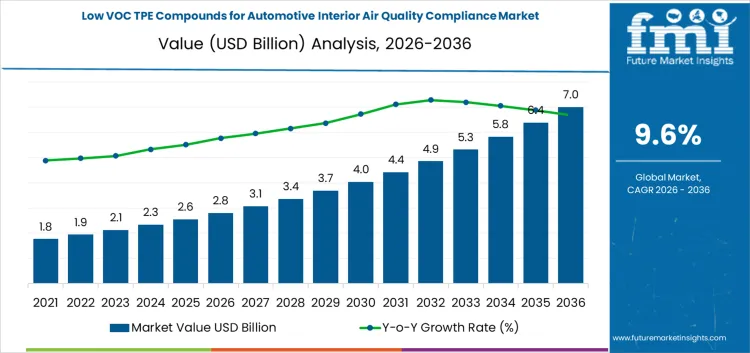
Low-VOC TPE Compounds for Automotive Interior Air Quality Compliance Market Key Takeaways
| Metric | Value |
|---|---|
| Industry Value (2026) | USD 2.8 Billion |
| Forecast Value (2036) | USD 7.0 Billion |
| Forecast CAGR (2026 to 2036) | 9.6% |
How is the Global Low-VOC TPE Compounds for Automotive Interior Air Quality Compliance Market Advancing?
The global low-VOC (volatile organic compound) TPE (thermoplastic elastomer) compounds for automotive interior air quality compliance market is growing rapidly, driven by the increasing demand for healthier, safer, and more environmentally friendly materials in automotive interiors. As consumers and regulatory bodies place greater emphasis on air quality, particularly in the cabin of vehicles, automakers are focusing on developing materials that help meet stringent air quality standards. Low-VOC TPE compounds are an essential solution, offering enhanced durability, flexibility, and performance, while minimizing harmful emissions that can affect cabin air quality.
The market growth is being fueled by the rising awareness of the impact of interior air quality on the health and well-being of vehicle occupants. In particular, the automotive industry is under pressure to meet regulatory requirements related to air quality, such as the European Union’s REACH regulations and other global standards aimed at reducing VOC emissions. As automakers increasingly adopt eco-friendly materials for dashboard trims, seat coverings, door panels, and other interior components, low-VOC TPE compounds are becoming a popular choice for manufacturers seeking compliance with air quality standards while maintaining the functional and aesthetic qualities of automotive interiors.
Advancements in TPE compound technology, including improved performance, processing ease, and sustainability, are contributing to the market's growth. The demand for low-VOC materials is expected to rise as more automakers focus on sustainable vehicle design and meet the evolving consumer preference for green, low-emission vehicles. As air quality regulations become stricter and consumers prioritize health-conscious options, the market for low-VOC TPE compounds for automotive interior air quality compliance is set for continued growth in the coming years.
What Is the Segment-Wise Analysis for the Low-VOC TPE Compounds for Automotive Interior Air Quality Compliance Market?
The low-VOC TPE compounds for automotive interior air quality compliance market is segmented by TPE type and end-use application. Styrenic Block Copolymers (SBC) lead the market with a 35% share, followed by thermoplastic polyolefins (TPO), thermoplastic vulcanizates (TPV), and others (such as TPU, TPE-E). These TPE types are chosen for their low VOC emissions, essential for maintaining air quality inside automotive interiors. In terms of end-use application, instrument panels & dashboards account for 50% of the market share, followed by door panels & trims, floor & console components, sealing & weatherstrips, and other interior components.
Why Do Styrenic Block Copolymers (SBC) Lead the Market?
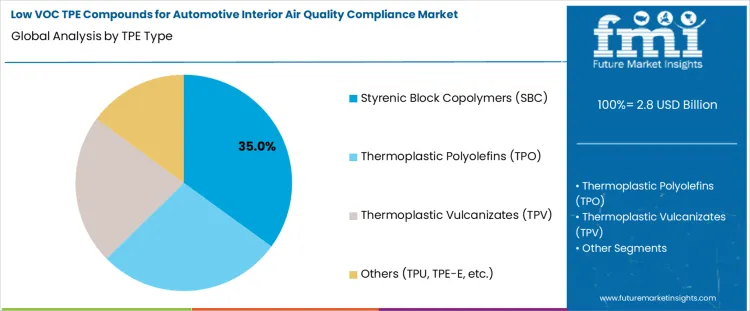
Styrenic Block Copolymers (SBC) account for 35% of the low-VOC TPE compounds market share due to their optimal balance of flexibility, strength, and low VOC emissions. These properties make them ideal for use in automotive interior applications, such as instrument panels & dashboards, where both aesthetics and air quality are essential. SBCs offer superior processing capabilities, excellent surface appearance, and compliance with air quality regulations. As automotive manufacturers face growing pressure to meet stringent air quality standards, the demand for SBC-based compounds continues to rise, ensuring their continued leadership in the market for low-VOC materials in automotive interiors.
How Do Instrument Panels & Dashboards Contribute to the Low-VOC TPE Compounds Market?
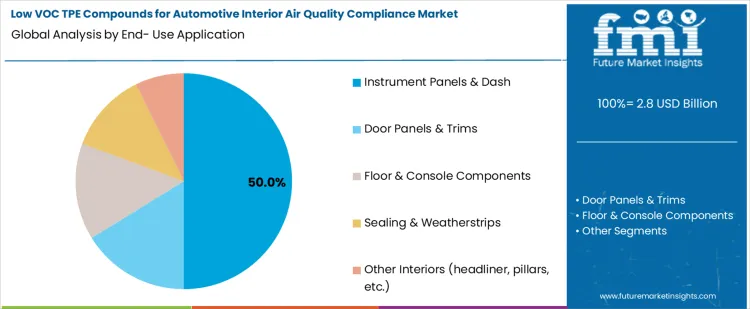
Instrument panels & dashboards represent 50% of the end-use application segment in the low-VOC TPE compounds market. These components are vital for both the safety and aesthetic appeal of vehicle interiors. With increasing regulatory pressure to reduce VOC emissions, automotive manufacturers are adopting low-VOC TPE compounds, such as styrenic block copolymers (SBC), to meet air quality standards. These compounds offer durability, flexibility, and enhanced safety for components like dashboards and panels. As the automotive industry focuses on improving interior air quality, the use of low-VOC materials in instrument panels continues to grow, driving the overall demand for TPE compounds in the market.
What Are the Key Dynamics for the low‑VOC TPE Compounds for Automotive Interior Air Quality Compliance Market?
The low‑VOC tpe compounds for automotive interior air quality compliance market is shaped by increasing regulatory requirements and consumer expectations for healthier in‑vehicle environments. Thermoplastic elastomer (TPE) compounds with low volatile organic compound (VOC) emissions help automakers meet stringent interior air quality standards and reduce odor, irritation, and long‑term health concerns. As electric vehicles (EVs) and premium vehicles emphasize cabin comfort and health, material selections increasingly prioritize VOC performance. Growth in automotive production globally, coupled with heightened attention to sustainability metrics (excluding the use of that word), also drives adoption of engineered TPEs for low emissions without compromising performance or durability in trims, seals, and soft‑touch components.
How Are the Key Drivers Shaping the low‑VOC TPE Compounds for Automotive Interior Air Quality Compliance Market?
Growth in the low‑VOC tpe compounds for automotive interior air quality compliance market is driven by stronger enforcement of interior air quality regulations such as those from automotive safety and standards bodies, which limit VOC emissions from materials. Rising urban populations and increased vehicle usage heighten consumer sensitivity to cabin air quality, especially in climates with extended idling. Automakers are responding by integrating engineered TPEs that balance low VOC emissions with required mechanical and thermal properties. Improvements in polymer formulations, processing technologies, and testing methods help manufacturers fine‑tune TPE compounds that meet air quality compliance while maintaining tactile feel, aging resistance, and fit‑for‑purpose performance.
What Are the Key Trends Shaping the Low‑VOC TPE Compounds for Automotive Interior Air Quality Compliance Market?
Key trends in the low‑VOC tpe compounds for automotive interior air quality compliance market include increasing development of customized polymer blends that achieve ultra‑low VOC emission profiles while delivering targeted mechanical properties for specific interior parts. There is growing use of advanced analytics and cabin air quality modeling to predict VOC behavior and optimize material selections. Collaborative efforts between TPE suppliers and OEMs are accelerating co‑development of tailored solutions. Another trend is integration with advanced interior systems, where low‑VOC TPEs are used in air ducts, tactile interfaces, and seating components. In addition, enhanced testing standards and digital monitoring of VOC emissions during production help ensure compliance and performance consistency.
How is the Low-VOC TPE Compounds for Automotive Interior Air Quality Compliance Market Growing by Country?
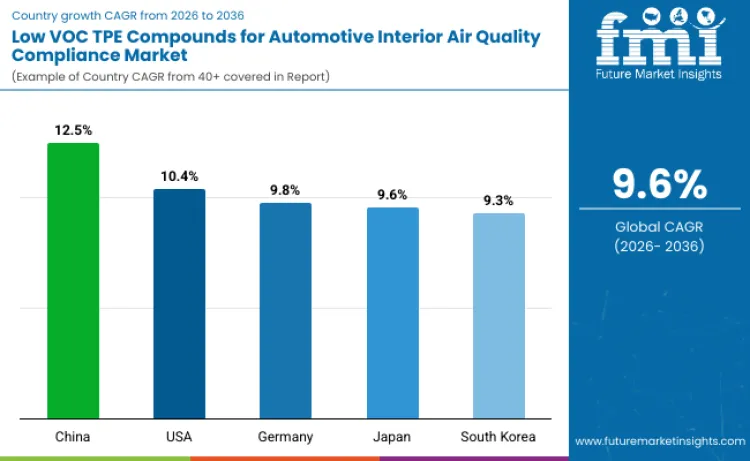
| Country | CAGR (%) |
|---|---|
| China | 12.5% |
| USA | 10.4% |
| South Korea | 9.3% |
| Japan | 9.6% |
| Germany | 9.8% |
The Low-VOC TPE compounds for automotive interior air quality compliance market is experiencing significant growth globally, with China leading at 12.5%, driven by its strong position in the electric vehicle (EV) market and manufacturing. The demand for healthier and safer in-car air quality solutions is pushing automakers to adopt low-VOC materials in vehicle interiors. The USA follows at 10.4%, supported by increased adoption of electric vehicles and stricter environmental regulations. South Korea’s market is growing at 9.3%, driven by its commitment to sustainable and eco-friendly automotive solutions. Japan, growing at 9.6%, is driven by innovations in EVs and renewable energy. Germany’s market grows at 9.8%, supported by the push for green technologies and cleaner vehicles.
Why is the Low-VOC TPE Compounds for Automotive Interior Air Quality Compliance Market Growing in China?
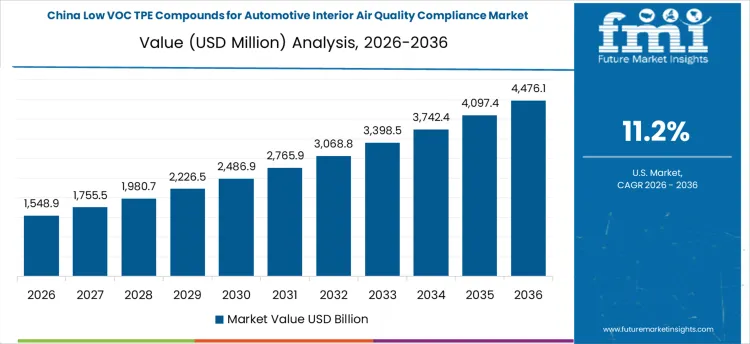
China’s low-VOC TPE compounds for automotive interior air quality compliance market is growing at 12.5%, driven by the country's leadership in EV production and battery manufacturing. The growing adoption of electric vehicles and energy storage solutions has led to increased demand for high-performance battery materials and healthier automotive interiors. The Chinese government’s emphasis on green energy and reducing carbon emissions further contributes to the demand for low-VOC materials in vehicles. As more consumers prioritize air quality in their vehicles, especially with the rise of EVs, automakers are turning to low-VOC TPE compounds for enhanced air quality and safety. China’s strong focus on innovation and sustainable automotive manufacturing supports the continued growth of the market.
What is Contributing to the Growth of the Low-VOC TPE Compounds for Automotive Interior Air Quality Compliance Market in the USA?
The low-VOC TPE compounds for automotive interior air quality compliance market in the USA is growing at 10.4%, supported by rising consumer demand for healthier, environmentally friendly vehicle interiors. As consumers become more conscious of air quality, especially in electric vehicles (EVs), automakers are increasingly adopting low-VOC materials for seats, dashboards, and other interior components. The USA’s growing EV market and government policies supporting clean energy solutions are driving the adoption of these materials. The demand for low-VOC compounds is rising due to increased focus on health and sustainability in the automotive industry. With a robust regulatory framework and increasing consumer interest in eco-friendly solutions, the market for low-VOC TPE compounds in the USA is expected to grow steadily.
How is the Low-VOC TPE Compounds for Automotive Interior Air Quality Compliance Market Expanding in South Korea?
South Korea’s low-VOC TPE compounds for automotive interior air quality compliance market is growing at 9.3%, driven by the country’s leadership in automotive manufacturing and commitment to sustainable solutions. South Korea is investing heavily in the electric vehicle (EV) industry and has made significant strides in improving automotive air quality. As the demand for EVs rises, particularly for vehicles with low environmental impact, the need for high-performance materials that meet air quality standards is increasing. The growing consumer preference for eco-friendly solutions and healthier interiors, coupled with government incentives for green automotive technologies, further boosts market growth. With the increasing focus on sustainability and innovation in automotive materials, South Korea’s market for low-VOC TPE compounds is expected to expand steadily.
Why is the Low-VOC TPE Compounds for Automotive Interior Air Quality Compliance Market Growing in Japan?
Japan’s low-VOC TPE compounds for automotive interior air quality compliance market is growing at 9.6%, driven by the country’s strong focus on sustainability and green technologies. Japan is one of the leaders in the adoption of electric vehicles (EVs) and continues to innovate in automotive manufacturing. The country’s automotive sector is increasingly adopting low-VOC TPE compounds to meet air quality and environmental regulations. As Japanese consumers become more aware of the health impacts of vehicle interior air quality, automakers are turning to safer, low-VOC materials. The Japanese government’s policies supporting the adoption of electric vehicles and the reduction of carbon emissions are further contributing to market growth. As Japan leads in EV development and eco-friendly automotive solutions, the demand for low-VOC TPE compounds will continue to rise.
What is Contributing to the Growth of the Low-VOC TPE Compounds for Automotive Interior Air Quality Compliance Market in Germany?
Germany’s low-VOC TPE compounds for automotive interior air quality compliance market is growing at 9.8%, supported by the country’s strong automotive industry and focus on clean energy solutions. As Germany leads the European Union in electric vehicle (EV) adoption, the demand for materials that support sustainable vehicle manufacturing is rising. Low-VOC TPE compounds are critical for enhancing the air quality inside vehicles, particularly as Germany pushes for cleaner, greener automotive solutions. The automotive industry’s shift towards electric mobility, coupled with strict environmental regulations, is driving the need for high-performance separator materials. Germany’s emphasis on sustainability and technological innovation in the automotive sector will continue to support the expansion of the market for low-VOC TPE compounds.
What Are the Competitive Strategies in the Low-VOC TPE Compounds for Automotive Interior Air Quality Compliance Market?
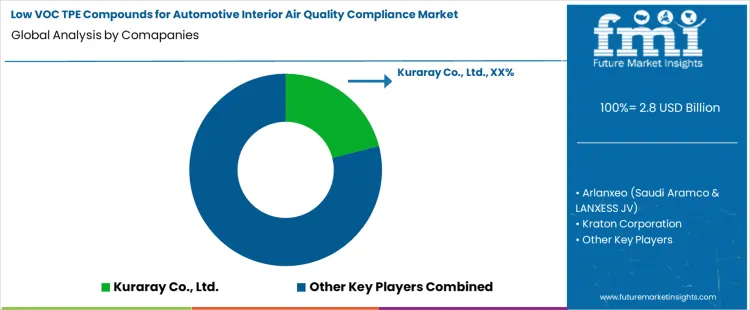
Competition in the low-VOC TPE (thermoplastic elastomer) compounds for automotive interior air quality compliance market is shaped by formulation performance, regulatory adherence, processability, and fit with automotive interior requirements. Kuraray Co., Ltd. positions its TPE solutions with excellent low-emission profiles and strong tactile properties, and its product materials emphasize balance between softness and durability for trim, seals, and gasketing. Arlanxeo (Saudi Aramco & LANXESS JV) competes with advanced elastomer systems formulated to meet stringent interior air quality standards while retaining thermal and mechanical resilience, with collateral that highlights consistency in VOC performance across production runs.
Kraton Corporation differentiates through block copolymer-based TPEs that deliver enhanced flexibility and low odor, marketed for interior components where comfort and compliance intersect. Its product literature underscores process versatility and broad application support. Teknor Apex Company focuses on tailored compound solutions that meet specific OEM specifications, with brochures stressing predictable low-VOC emissions and ease of molding.
Mitsui Chemicals, Inc. and Celanese Corporation bring engineered TPE platforms designed to optimize mechanical strength and low emission profiles, with documentation that emphasizes fit with automated assembly processes and longevity under cabin conditions. PolyOne Corporation (now part of Avient) competes with value-driven, customizable TPEs that help interior parts achieve both performance and air quality targets. Across vendors, product materials underscore VOC performance data, compliance with automotive standards, processing ease, and functional fit as key differentiators for automakers seeking healthier cabin environments.
Key Players in Low‑VOC TPE Compounds for Automotive Interior Air Quality Compliance Market
- Kuraray Co., Ltd.
- Arlanxeo (Saudi Aramco & LANXESS JV)
- Kraton Corporation
- Teknor Apex Company
- Mitsui Chemicals, Inc.
- Celanese Corporation
- PolyOne Corporation
Scope of Report
| Items | Values |
|---|---|
| Quantitative Unit (2026) | USD Billion |
| TPE Type | Styrenic Block Copolymers (SBC), Thermoplastic Polyolefins (TPO), Thermoplastic Vulcanizates (TPV), Others (TPU, TPE-E, etc.) |
| End-Use Application | Instrument Panels & Dash, Door Panels & Trims, Floor & Console Components, Sealing & Weatherstrips, Other Interiors (headliner, pillars, etc.) |
| Regions Covered | Asia Pacific, Europe, North America, Latin America, Middle East & Africa |
| Countries Covered | USA, China, Japan, South Korea, India, Australia & New Zealand, ASEAN, Germany, UK, France, Italy, Spain, Nordic, BENELUX, Brazil, Chile, Mexico, Saudi Arabia, Other GCC Countries, Turkey, South Africa, Other African Union |
| Key Companies Profiled | Kuraray Co., Ltd., Arlanxeo (Saudi Aramco & LANXESS JV), Kraton Corporation, Teknor Apex Company, Mitsui Chemicals, Inc., Celanese Corporation, PolyOne Corporation |
| Additional Attributes | Dollar sales segmented by TPE type, end-use application, and region. Regional CAGR and growth outlook for compliance with automotive air quality standards, particularly focusing on Low-VOC compounds for enhanced interior air quality. |
Low‑VOC TPE Compounds for Automotive Interior Air Quality Compliance Market by Key Segments
By TPE Type
- Styrenic Block Copolymers (SBC)
- Thermoplastic Polyolefins (TPO)
- Thermoplastic Vulcanizates (TPV)
- Others (TPU, TPE‑E, etc.)
By End- Use Application
- Instrument Panels & Dash
- Door Panels & Trims
- Floor & Console Components
- Sealing & Weatherstrips
- Other Interiors (headliner, pillars, etc.)
By Region:
- Asia Pacific
- China
- Japan
- South Korea
- India
- Australia & New Zealand
- ASEAN
- Rest of Asia Pacific
- Europe
- Germany
- United Kingdom
- France
- Italy
- Spain
- Nordic
- BENELUX
- Rest of Europe
- North America
- United States
- Canada
- Mexico
- Latin America
- Brazil
- Chile
- Rest of Latin America
- Middle East & Africa
- Kingdom of Saudi Arabia
- Other GCC Countries
- Turkey
- South Africa
- Other African Union
- Rest of Middle East & Africa
Frequently Asked Questions
How big is the Low‑VOC TPE compounds for automotive interior air quality compliance market in 2026?
The global Low‑VOC TPE compounds for automotive interior air quality compliance market is estimated to be valued at USD 2.8 billion in 2026.
What will be the size of Low‑VOC TPE compounds for automotive interior air quality compliance market in 2036?
The market size for the Low‑VOC TPE compounds for automotive interior air quality compliance market is projected to reach USD 7.0 billion by 2036.
How much will be the Low‑VOC TPE compounds for automotive interior air quality compliance market growth between 2026 and 2036?
The Low‑VOC TPE compounds for automotive interior air quality compliance market is expected to grow at a 9.6% CAGR between 2026 and 2036.
What are the key TPE types in the Low‑VOC TPE compounds for automotive interior air quality compliance market?
The key TPE types in Low‑VOC TPE compounds for automotive interior air quality compliance market are styrenic block copolymers (SBC), thermoplastic polyolefins (TPO), thermoplastic vulcanizates (TPV), and others (TPU, TPE‑E, etc.).
Which end-use application segment to contribute significant share in the Low‑VOC TPE compounds for automotive interior air quality compliance market in 2026?
In terms of end-use application, instrument panels & dash segment to command 50.0% share in the Low‑VOC TPE compounds for automotive interior air quality compliance market in 2026.
Preview the report firsthand - request a free sample
Get SampleGet the brochure for pricing and purchase details.
Get PDFTable of Content
- Executive Summary
- Global Market Outlook
- Demand-side Trends
- Supply-side Trends
- Technology Roadmap Analysis
- Analysis and Recommendations
- Market Overview
- Market Coverage / Taxonomy
- Market Definition / Scope / Limitations
- Market Background
- Market Dynamics
- Drivers
- Restraints
- Opportunity
- Trends
- Scenario Forecast
- Demand in Optimistic Scenario
- Demand in Likely Scenario
- Demand in Conservative Scenario
- Opportunity Map Analysis
- Product Life Cycle Analysis
- Supply Chain Analysis
- Investment Feasibility Matrix
- Value Chain Analysis
- PESTLE and Porter’s Analysis
- Regulatory Landscape
- Regional Parent Market Outlook
- Production and Consumption Statistics
- Import and Export Statistics
- Market Dynamics
- Global Market Analysis 2021 to 2025 and Forecast, 2026 to 2036
- Historical Market Size Value (USD Million) Analysis, 2021 to 2025
- Current and Future Market Size Value (USD Million) Projections, 2026 to 2036
- Y-o-Y Growth Trend Analysis
- Absolute $ Opportunity Analysis
- Global Market Pricing Analysis 2021 to 2025 and Forecast 2026 to 2036
- Global Market Analysis 2021 to 2025 and Forecast 2026 to 2036, By TPE Type
- Introduction / Key Findings
- Historical Market Size Value (USD Million) Analysis By TPE Type , 2021 to 2025
- Current and Future Market Size Value (USD Million) Analysis and Forecast By TPE Type , 2026 to 2036
- Styrenic Block Copolymers (SBC)
- Thermoplastic Polyolefins (TPO)
- Thermoplastic Vulcanizates (TPV)
- Others (TPU, TPE‑E, etc.)
- Styrenic Block Copolymers (SBC)
- Y-o-Y Growth Trend Analysis By TPE Type , 2021 to 2025
- Absolute $ Opportunity Analysis By TPE Type , 2026 to 2036
- Global Market Analysis 2021 to 2025 and Forecast 2026 to 2036, By End- Use Application
- Introduction / Key Findings
- Historical Market Size Value (USD Million) Analysis By End- Use Application, 2021 to 2025
- Current and Future Market Size Value (USD Million) Analysis and Forecast By End- Use Application, 2026 to 2036
- Instrument Panels & Dash
- Door Panels & Trims
- Floor & Console Components
- Sealing & Weatherstrips
- Other Interiors (headliner, pillars, etc.)
- Instrument Panels & Dash
- Y-o-Y Growth Trend Analysis By End- Use Application, 2021 to 2025
- Absolute $ Opportunity Analysis By End- Use Application, 2026 to 2036
- Global Market Analysis 2021 to 2025 and Forecast 2026 to 2036, By Region
- Introduction
- Historical Market Size Value (USD Million) Analysis By Region, 2021 to 2025
- Current Market Size Value (USD Million) Analysis and Forecast By Region, 2026 to 2036
- North America
- Latin America
- Western Europe
- Eastern Europe
- East Asia
- South Asia and Pacific
- Middle East & Africa
- Market Attractiveness Analysis By Region
- North America Market Analysis 2021 to 2025 and Forecast 2026 to 2036, By Country
- Historical Market Size Value (USD Million) Trend Analysis By Market Taxonomy, 2021 to 2025
- Market Size Value (USD Million) Forecast By Market Taxonomy, 2026 to 2036
- By Country
- USA
- Canada
- Mexico
- By TPE Type
- By End- Use Application
- By Country
- Market Attractiveness Analysis
- By Country
- By TPE Type
- By End- Use Application
- Key Takeaways
- Latin America Market Analysis 2021 to 2025 and Forecast 2026 to 2036, By Country
- Historical Market Size Value (USD Million) Trend Analysis By Market Taxonomy, 2021 to 2025
- Market Size Value (USD Million) Forecast By Market Taxonomy, 2026 to 2036
- By Country
- Brazil
- Chile
- Rest of Latin America
- By TPE Type
- By End- Use Application
- By Country
- Market Attractiveness Analysis
- By Country
- By TPE Type
- By End- Use Application
- Key Takeaways
- Western Europe Market Analysis 2021 to 2025 and Forecast 2026 to 2036, By Country
- Historical Market Size Value (USD Million) Trend Analysis By Market Taxonomy, 2021 to 2025
- Market Size Value (USD Million) Forecast By Market Taxonomy, 2026 to 2036
- By Country
- Germany
- UK
- Italy
- Spain
- France
- Nordic
- BENELUX
- Rest of Western Europe
- By TPE Type
- By End- Use Application
- By Country
- Market Attractiveness Analysis
- By Country
- By TPE Type
- By End- Use Application
- Key Takeaways
- Eastern Europe Market Analysis 2021 to 2025 and Forecast 2026 to 2036, By Country
- Historical Market Size Value (USD Million) Trend Analysis By Market Taxonomy, 2021 to 2025
- Market Size Value (USD Million) Forecast By Market Taxonomy, 2026 to 2036
- By Country
- Russia
- Poland
- Hungary
- Balkan & Baltic
- Rest of Eastern Europe
- By TPE Type
- By End- Use Application
- By Country
- Market Attractiveness Analysis
- By Country
- By TPE Type
- By End- Use Application
- Key Takeaways
- East Asia Market Analysis 2021 to 2025 and Forecast 2026 to 2036, By Country
- Historical Market Size Value (USD Million) Trend Analysis By Market Taxonomy, 2021 to 2025
- Market Size Value (USD Million) Forecast By Market Taxonomy, 2026 to 2036
- By Country
- China
- Japan
- South Korea
- By TPE Type
- By End- Use Application
- By Country
- Market Attractiveness Analysis
- By Country
- By TPE Type
- By End- Use Application
- Key Takeaways
- South Asia and Pacific Market Analysis 2021 to 2025 and Forecast 2026 to 2036, By Country
- Historical Market Size Value (USD Million) Trend Analysis By Market Taxonomy, 2021 to 2025
- Market Size Value (USD Million) Forecast By Market Taxonomy, 2026 to 2036
- By Country
- India
- ASEAN
- Australia & New Zealand
- Rest of South Asia and Pacific
- By TPE Type
- By End- Use Application
- By Country
- Market Attractiveness Analysis
- By Country
- By TPE Type
- By End- Use Application
- Key Takeaways
- Middle East & Africa Market Analysis 2021 to 2025 and Forecast 2026 to 2036, By Country
- Historical Market Size Value (USD Million) Trend Analysis By Market Taxonomy, 2021 to 2025
- Market Size Value (USD Million) Forecast By Market Taxonomy, 2026 to 2036
- By Country
- Kingdom of Saudi Arabia
- Other GCC Countries
- Turkiye
- South Africa
- Other African Union
- Rest of Middle East & Africa
- By TPE Type
- By End- Use Application
- By Country
- Market Attractiveness Analysis
- By Country
- By TPE Type
- By End- Use Application
- Key Takeaways
- Key Countries Market Analysis
- USA
- Pricing Analysis
- Market Share Analysis, 2025
- By TPE Type
- By End- Use Application
- Canada
- Pricing Analysis
- Market Share Analysis, 2025
- By TPE Type
- By End- Use Application
- Mexico
- Pricing Analysis
- Market Share Analysis, 2025
- By TPE Type
- By End- Use Application
- Brazil
- Pricing Analysis
- Market Share Analysis, 2025
- By TPE Type
- By End- Use Application
- Chile
- Pricing Analysis
- Market Share Analysis, 2025
- By TPE Type
- By End- Use Application
- Germany
- Pricing Analysis
- Market Share Analysis, 2025
- By TPE Type
- By End- Use Application
- UK
- Pricing Analysis
- Market Share Analysis, 2025
- By TPE Type
- By End- Use Application
- Italy
- Pricing Analysis
- Market Share Analysis, 2025
- By TPE Type
- By End- Use Application
- Spain
- Pricing Analysis
- Market Share Analysis, 2025
- By TPE Type
- By End- Use Application
- France
- Pricing Analysis
- Market Share Analysis, 2025
- By TPE Type
- By End- Use Application
- India
- Pricing Analysis
- Market Share Analysis, 2025
- By TPE Type
- By End- Use Application
- ASEAN
- Pricing Analysis
- Market Share Analysis, 2025
- By TPE Type
- By End- Use Application
- Australia & New Zealand
- Pricing Analysis
- Market Share Analysis, 2025
- By TPE Type
- By End- Use Application
- China
- Pricing Analysis
- Market Share Analysis, 2025
- By TPE Type
- By End- Use Application
- Japan
- Pricing Analysis
- Market Share Analysis, 2025
- By TPE Type
- By End- Use Application
- South Korea
- Pricing Analysis
- Market Share Analysis, 2025
- By TPE Type
- By End- Use Application
- Russia
- Pricing Analysis
- Market Share Analysis, 2025
- By TPE Type
- By End- Use Application
- Poland
- Pricing Analysis
- Market Share Analysis, 2025
- By TPE Type
- By End- Use Application
- Hungary
- Pricing Analysis
- Market Share Analysis, 2025
- By TPE Type
- By End- Use Application
- Kingdom of Saudi Arabia
- Pricing Analysis
- Market Share Analysis, 2025
- By TPE Type
- By End- Use Application
- Turkiye
- Pricing Analysis
- Market Share Analysis, 2025
- By TPE Type
- By End- Use Application
- South Africa
- Pricing Analysis
- Market Share Analysis, 2025
- By TPE Type
- By End- Use Application
- USA
- Market Structure Analysis
- Competition Dashboard
- Competition Benchmarking
- Market Share Analysis of Top Players
- By Regional
- By TPE Type
- By End- Use Application
- Competition Analysis
- Competition Deep Dive
- Kuraray Co., Ltd.
- Overview
- Product Portfolio
- Profitability by Market Segments (Product/Age /Sales Channel/Region)
- Sales Footprint
- Strategy Overview
- Marketing Strategy
- Product Strategy
- Channel Strategy
- Arlanxeo (Saudi Aramco & LANXESS JV)
- Kraton Corporation
- Teknor Apex Company
- Mitsui Chemicals, Inc.
- Celanese Corporation
- PolyOne Corporation
- Kuraray Co., Ltd.
- Competition Deep Dive
- Assumptions & Acronyms Used
- Research Methodology


