

- Industry Size (2026)
- USD 1.4 Bn
- Forecast (2036)
- USD 3.8 Bn
- CAGR (2026 to 2036)
- 10.5%
Environmental-Product-Declaration-Ready Low-Carbon PVC Compounds Market Forecast and Outlook 2026 to 2036
The environmental-product-declaration-ready low-carbon PVC compounds market is projected to grow from USD 1.4 billion in 2026 to USD 3.8 billion by 2036, reflecting a compound annual growth rate (CAGR) of 10.5%. Cost structures in this market will be shaped by the higher production costs associated with low-carbon compounds and the need to invest in sustainable practices. While these costs may initially burden suppliers, pricing control will become a key differentiator as demand for certified, environmentally-friendly products increases.
Larger players with economies of scale will be able to maintain pricing power, but smaller suppliers with innovative solutions may still capture value by catering to niche markets or offering differentiated products. Margin concentration will likely shift towards suppliers who can streamline production processes while meeting certification requirements for environmental-product-declarations (EPD). Companies that can efficiently balance sustainability with cost control will be well-positioned to capture long-term value, while those focused purely on volume may face profit margin pressures
Quick Stats of the Environmental-Product-Declaration-Ready Low-Carbon PVC Compounds Market
- Environmental-Product-Declaration-Ready Low-Carbon PVC Compounds Market Value (2026): USD 1.4 billion
- Environmental-Product-Declaration-Ready Low-Carbon PVC Compounds Market Forecast Value (2036): USD 3.8 billion
- Environmental-Product-Declaration-Ready Low-Carbon PVC Compounds Market Global Forecast CAGR (2026-2036): 10.5%
- Environmental-Product-Declaration-Ready Low-Carbon PVC Compounds Market Leading Segment: End Use (Green Building Projects) 50%
- Key Growth Regions in Environmental-Product-Declaration-Ready Low-Carbon PVC Compounds Market: USA
- Top Players in Environmental-Product-Declaration-Ready Low-Carbon PVC Compounds Market: Covestro AG, INEOS Group Ltd., Solvay S.A., BASF SE, Dow Chemical Company, Formosa Plastics Corporation, Shin-Etsu Chemical Co., Ltd., LG Chem Ltd., Arkema S.A., Wacker Chemie AG

What is the Growth Forecast for the Environmental-Product-Declaration-Ready Low-Carbon PVC Compounds Market through 2036?
The contribution of volume vs price growth analysis for the environmental-product-declaration-ready low-carbon PVC compounds market reveals that both factors will play important roles in the market’s expansion, but with differing influences over time. From 2026 to 2031, the primary driver of growth will be volume growth, as the market experiences a surge in the adoption of low-carbon PVC compounds across various sectors. Volume growth is expected to account for the majority of the market’s increase during this period as manufacturers shift toward more sustainable materials to meet environmental standards. The early phase of adoption will be driven by demand from industries aiming to comply with sustainability goals and reduce their carbon footprints, particularly in sectors like construction and automotive.
From 2031 to 2036, price growth will start to contribute more significantly to the overall market expansion. As the technology and production processes for low-carbon PVC compounds become more refined, economies of scale will help drive cost reductions, making these compounds more price-competitive with traditional PVC. While volume growth will continue, the adoption of EPD-ready low-carbon PVC compounds will become more widespread and standardized, leading to price stabilization and gradual increases due to continued demand for sustainable products. The combination of volume and price growth during the forecast period will drive the market toward maturity, with price growth becoming an increasingly important factor as the material becomes more integrated into mainstream manufacturing.
Environmental-Product-Declaration-Ready Low-Carbon PVC Compounds Market Key Takeaways
| Metric | Value |
|---|---|
| Industry Sales Value (2026) | USD 1.4 billion |
| Industry Forecast Value (2036) | USD 3.8 billion |
| Industry Forecast CAGR (2026-2036) | 10.5% |
What Is Driving the Demand for Environmental Product Declaration Ready Low Carbon PVC Compounds Market?
Historical demand for PVC compounds in construction, infrastructure, automotive, healthcare, and consumer applications was driven by PVC’s performance properties, including chemical resistance, durability, and cost effectiveness, as well as its extensive use in rigid and flexible products worldwide. PVC is among the most widely produced polymers, with around 40 million tonnes output annually and diverse applications such as pipes, profiles, flooring, and cladding. PVC compounds include resin mixed with additives to tailor properties for specific end uses. Advances in environmental transparency frameworks began to shape industry behaviour as stakeholders sought reliable life cycle data on environmental impacts across materials such as PVC, and Environmental Product Declarations (EPDs) emerged to provide independently verified life cycle impact information in accordance with international standards (ISO 14025). EPDs have been published for PVC products such as pressure pipe systems, allowing builders, designers, and specifiers to include quantified environmental data in project assessments and sustainability reporting. EPDs do not in themselves certify that a product is eco friendly, but they are essential tools for transparent environmental communication linking products with life cycle impacts.
Future demand for EPD ready low carbon PVC compounds is expected to grow as regulatory frameworks, green building standards, and corporate sustainability commitments increasingly require documented environmental performance for materials used in major projects. Construction and industrial procurement commonly reference EPDs to support life cycle assessments that satisfy green rating systems and embodied carbon targets, creating a need for PVC compounds whose environmental profiles are pre verified and aligned with low carbon strategies. Growth factors include stronger market and regulatory pressure to disclose material environmental impacts, widespread use of EPDs under schemes such as the International EPD System, expansion of low carbon construction procurement criteria that reward materials with demonstrable life cycle benefits, and rising corporate targets addressing upstream emissions in supply chains. EPD ready low carbon PVC compounds facilitate use by OEMs and specifiers who require transparent environmental data without incurring the cost and time of commissioning proprietary EPDs. Technical and commercial challenges include producing compounds that balance low carbon intensity with performance requirements for construction and industrial applications, and navigating differing regional life cycle assessment protocols, but broader adoption is likely to continue as life cycle transparency becomes embedded in material sourcing and sustainability reporting.
What are the Leading Segments in the Global Environmental-Product-Declaration-Ready Low-Carbon PVC Compounds Market?
The global environmental-product-declaration-ready low-carbon PVC compounds market is segmented by application segment and end-use sector. Among application segments, construction materials lead the market, capturing 46% of the share, followed by automotive & transportation components, industrial & OEM components, consumer & specialty products, healthcare & cleanroom systems. Construction materials are preferred for their significant role in green building projects where low-carbon solutions are required. On the end-use side, green building projects dominate the market, holding 50% of the share, followed by infrastructure & public works, industrial OEM programs, commercial product manufacturing, and residential sustainably certified homes. Green building projects represent the largest end-use sector due to the rising demand for sustainable construction materials in line with environmental certifications and building regulations.
What Drives the Growth of Construction Materials in the Environmental-Product-Declaration-Ready Low-Carbon PVC Compounds Market?

Construction materials are the leading application segment in the environmental-product-declaration-ready low-carbon PVC compounds market, holding 46% of the share. This growth is primarily driven by the increased demand for eco-friendly, low-carbon materials in the construction sector, particularly in green building projects. Low-carbon PVC compounds are used extensively in construction materials such as windows, pipes, roofing, and flooring, offering excellent durability, ease of maintenance, and superior performance while meeting sustainability goals.
The push for more energy-efficient and sustainable buildings, coupled with stringent environmental regulations and green building standards, has significantly contributed to the adoption of these low-carbon solutions. Environmental Product Declarations (EPDs) are increasingly required by architects, builders, and developers to verify the sustainability of materials used in construction. As more construction projects strive to meet sustainability certifications, such as LEED and BREEAM, the demand for environmental-product-declaration-ready low-carbon PVC compounds in construction materials will continue to grow, ensuring its dominance in the market.
What is Driving the Demand for Green Building Projects in the Environmental-Product-Declaration-Ready Low-Carbon PVC Compounds Market?

Green building projects are the leading end-use sector in the environmental-product-declaration-ready low-carbon PVC compounds market, capturing 50% of the share. This demand is driven by the increasing focus on sustainability in the construction industry, as well as the growing consumer and regulatory pressure for energy-efficient, environmentally responsible buildings. Green building projects require materials that contribute to reducing the carbon footprint of the structure, and low-carbon PVC compounds are highly valued for their recyclability, performance, and lower environmental impact.
These projects often require products with environmental-product-declaration certifications, ensuring that all materials used meet specific sustainability criteria. With the rise of government incentives, certifications, and regulations promoting sustainable construction practices, the adoption of low-carbon PVC compounds in green building projects is expected to continue increasing. As sustainability becomes a central focus in both residential and commercial construction, green building projects will remain the dominant application segment for low-carbon PVC compounds, further driving the market.
What are the Key Dynamics in the Environmental Product Declaration Ready Low Carbon PVC Compounds Market?
The environmental‑product‑declaration‑ready low‑carbon PVC compounds market involves supply of polyvinyl chloride formulations with quantified lifecycle emissions that support environmental product declaration (EPD) reporting. These compounds are designed for use in construction, automotive, flooring, and other durable applications where buyers increasingly require verified data on embodied carbon. Demand reflects interaction between material performance criteria, regulatory reporting requirements, and procurement policies that include carbon metrics. Producers focus on traceability of feedstocks, energy efficiency in production, and integration of renewable energy to reduce the carbon intensity of PVC compounds. Adoption is influenced by construction standards, sustainability scoring systems, and corporate commitments to lower scope 3 emissions.
What are the Main Drivers Supporting Growth in This Market?
Growth in this market is supported by regulatory frameworks and voluntary reporting systems that emphasise transparency in material lifecycle impacts. Buyers in building and industrial sectors are seeking EPD ready materials to meet criteria in green building certification programmes and public procurement guidelines. Manufacturers of PVC compounds are responding by documenting raw material sources, production energy mix, and emissions data to enable issuance of environmental product declarations. Corporate environmental, social, and governance reporting requirements further encourage use of materials with verified carbon performance. Advances in process optimisation, energy management, and renewable integration help compounders achieve lower carbon footprints that can be reflected in EPD data.
What Restraints Are Limiting Market Expansion?
Constraints in the environmental product declaration ready low carbon PVC compounds market include cost and complexity of compiling verified lifecycle assessment data. Producing EPD ready compounds requires rigorous measurement of emissions across feedstock acquisition, manufacturing, and transport, which can be resource intensive. Higher costs associated with renewable energy use or alternative feedstocks can make low carbon compounds less competitive in price sensitive projects. Variations in regional standards for EPD content and carbon accounting add complexity for suppliers operating across multiple markets. Some specifiers remain focused on traditional performance metrics and cost, which can slow integration of EPD ready PVC compounds into existing supply chains.
What Emerging Trends Are Shaping the Future of This Market?
Emerging trends include greater standardisation of EPD formats and harmonisation of carbon measurement methods, which improve comparability of low carbon PVC compounds. Integration of digital tools for lifecycle assessment is enabling real time tracking of emissions data and more frequent updates to environmental product declarations. Collaboration among compound producers, certification bodies, and end users is increasing to align material specifications with sustainability reporting frameworks. There is growing interest in combining low carbon PVC with recycled content and renewable inputs to further lower embodied emissions. Buyer demand for transparent supply chain data and traceability continues to shape how PVC compounding businesses document and communicate environmental performance.
What is the Country-Wise Analysis of the Environmental-Product-Declaration-Ready Low-Carbon PVC Compounds Market?
The environmental-product-declaration-ready low-carbon PVC compounds market is growing as industries increasingly focus on sustainability and transparency in their environmental impact. Environmental product declarations (EPDs) are becoming a standard for showcasing the environmental performance of products, and low-carbon PVC compounds, which have a reduced environmental impact compared to traditional PVC, are gaining traction.
Developed markets like the USA, Germany, and Japan are leading the adoption of EPD-ready low-carbon PVC compounds, driven by regulatory pressures, consumer demand for sustainable products, and a focus on reducing carbon footprints. Emerging markets like China and South Korea are also experiencing growth, supported by government initiatives to encourage greener manufacturing practices and a rising consumer demand for eco-friendly products. As the push for sustainability intensifies globally, the market for EPD-ready low-carbon PVC compounds is expected to grow significantly.

| Country | CAGR (2026-2036) |
|---|---|
| USA | 11.8% |
| Germany | 11.5% |
| China | 11.2% |
| Japan | 10.9% |
| South Korea | 10.7% |
What is the Growth Outlook for the Environmental-Product-Declaration-Ready Low-Carbon PVC Compounds Market in the USA?

The environmental-product-declaration-ready low-carbon PVC compounds market in the USA is projected to grow steadily, with a projected CAGR of 11.8% from 2026 to 2036. The USA is a leader in promoting sustainability, and there is a growing demand for transparent, eco-friendly materials in construction, automotive, and consumer goods industries. As companies and manufacturers increasingly focus on reducing their carbon footprints and adopting more sustainable production practices, the demand for low-carbon PVC compounds with environmental product declarations is expected to rise. The U.S. government’s focus on reducing plastic waste and promoting green technologies, along with consumer demand for sustainable products, will continue to drive the growth of this market.
What is the Market Outlook for the Environmental-Product-Declaration-Ready Low-Carbon PVC Compounds Market in Germany?
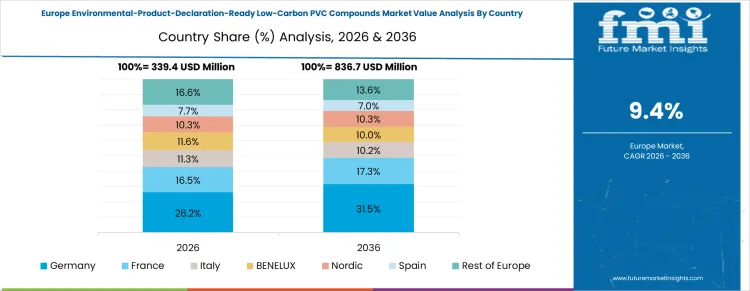
Germany is expected to see steady growth in the environmental-product-declaration-ready low-carbon PVC compounds market, with a projected CAGR of 11.5% from 2026 to 2036. As a global leader in sustainability and green technologies, Germany is at the forefront of adopting eco-friendly materials in construction and manufacturing. The demand for low-carbon PVC compounds that are EPD-ready is increasing as companies and industries seek to comply with stringent environmental regulations and meet sustainability goals. The German government’s strong support for sustainable production practices and the growing consumer preference for products with lower environmental impacts are key factors driving the adoption of EPD-ready low-carbon PVC compounds. As Germany continues to prioritize green technologies, the market is set to grow steadily.
What is the Growth Forecast for the Environmental-Product-Declaration-Ready Low-Carbon PVC Compounds Market in China?
China is projected to experience steady growth in the environmental-product-declaration-ready low-carbon PVC compounds market, with a projected CAGR of 11.2% from 2026 to 2036. As one of the largest manufacturing countries in the world, China is increasingly focused on reducing its environmental impact and adopting more sustainable production methods. The government is promoting green technologies and sustainable manufacturing processes, which is driving the adoption of low-carbon PVC compounds in various industries. As China works to meet its sustainability goals, the demand for EPD-ready low-carbon PVC compounds in construction, automotive, and packaging applications is expected to rise. The Chinese market for low-carbon PVC compounds is expected to grow steadily as the country continues to prioritize sustainability in manufacturing and consumer products.
What is the Market Outlook for the Environmental-Product-Declaration-Ready Low-Carbon PVC Compounds Market in Japan?
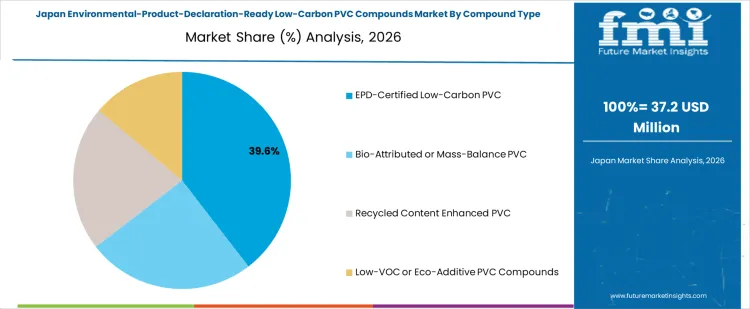
Japan is expected to see steady growth in the environmental-product-declaration-ready low-carbon PVC compounds market, with a projected CAGR of 10.9% from 2026 to 2036. Japan has a strong commitment to environmental sustainability and innovation, and the demand for low-carbon PVC compounds in construction and manufacturing is increasing. As part of its sustainability goals, Japan is promoting the adoption of green technologies and environmentally friendly materials in various sectors. The demand for EPD-ready low-carbon PVC compounds is driven by stricter environmental regulations and the growing awareness among consumers and businesses of the importance of sustainable production practices. As Japan continues to focus on reducing carbon emissions and adopting greener manufacturing processes, the market for low-carbon PVC compounds is expected to grow steadily.
What is the Growth Forecast for the Environmental-Product-Declaration-Ready Low-Carbon PVC Compounds Market in South Korea?
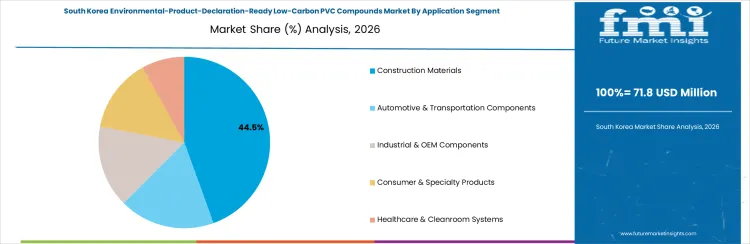
South Korea is projected to experience steady growth in the environmental-product-declaration-ready low-carbon PVC compounds market, with a projected CAGR of 10.7% from 2026 to 2036. South Korea is actively working to reduce its environmental impact, and the demand for low-carbon materials in construction, automotive, and other sectors is growing. The South Korean government’s support for sustainable manufacturing practices and green technologies is driving the adoption of EPD-ready low-carbon PVC compounds. With increasing consumer demand for eco-friendly products and the need for industries to comply with environmental regulations, the market for low-carbon PVC compounds in South Korea is expected to continue growing steadily. The country’s commitment to achieving its sustainability goals will contribute to the continued expansion of this market.
What is the Competitive Landscape for the Environmental-Product-Declaration-Ready Low-Carbon PVC Compounds Market?
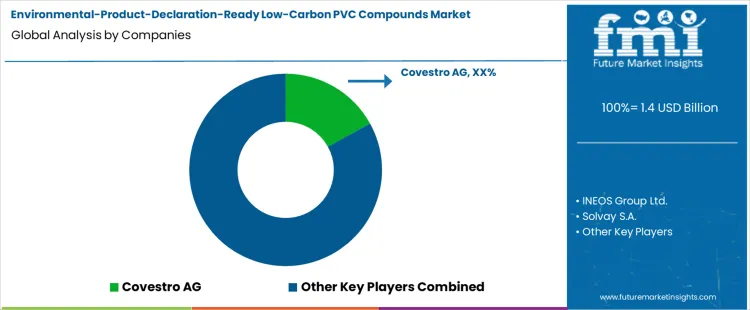
The environmental-product-declaration-ready low-carbon PVC compounds market is rapidly expanding as industries focus on sustainability and transparency in their product offerings. Covestro AG leads the market with its innovative low-carbon PVC compounds that are ready for environmental product declarations (EPDs), allowing manufacturers to demonstrate their commitment to sustainability and reduce the environmental impact of their products. Their focus on sustainability, high-performance materials, and providing solutions that meet stringent environmental regulations has positioned them as a dominant player. INEOS Group Ltd., Solvay S.A., and BASF SE are significant competitors, each offering specialized low-carbon PVC compounds that support the growing demand for sustainable products with transparent environmental impact data. INEOS Group Ltd. emphasizes the development of sustainable PVC materials, while Solvay S.A. and BASF SE offer eco-friendly compounds with low carbon footprints, making them suitable for use in various applications requiring environmental certifications.
Dow Chemical Company, Formosa Plastics Corporation, and Shin Etsu Chemical Co., Ltd. further contribute to the competitive landscape by offering their own low-carbon PVC compounds designed to meet EPD requirements. Dow Chemical Company focuses on developing advanced materials with reduced environmental impact, while Formosa Plastics Corporation provides high-quality low-carbon compounds for a range of applications. Shin Etsu Chemical Co., Ltd. delivers sustainable PVC solutions with an emphasis on reducing carbon emissions. LG Chem Ltd., Arkema S.A., and Wacker Chemie AG also play key roles in the market by offering their own low-carbon, EPD-ready PVC compounds. LG Chem Ltd. provides eco-friendly materials that comply with environmental standards, while Arkema S.A. and Wacker Chemie AG focus on producing innovative compounds that support sustainable manufacturing. These companies compete by focusing on product innovation, sustainability, and the ability to meet the growing demand for environmentally responsible materials. As sustainability and environmental transparency become increasingly important, the market for environmental-product-declaration-ready low-carbon PVC compounds is expected to grow, driving further innovation and competition in the sector.
Key Players of the Environmental-Product-Declaration-Ready Low-Carbon PVC Compounds Market
- Covestro AG
- INEOS Group Ltd.
- Solvay S.A.
- BASF SE
- Dow Chemical Company
- Formosa Plastics Corporation
- Shin‑Etsu Chemical Co., Ltd.
- LG Chem Ltd.
- Arkema S.A.
- Wacker Chemie AG
Scope of the Report
| Items | Values |
|---|---|
| Quantitative Units (2026) | USD Billion |
| Compound Type | EPD-certified low-carbon PVC, bio-attributed or mass-balance PVC, Recycled Content Enhanced PVC, low-VOC or eco-additive PVC Compounds |
| Application Segment | Construction Materials, Automotive & Transportation Components, Industrial & OEM Components, Consumer & Specialty Products, Healthcare & Cleanroom Systems |
| End Use | Green Building Projects, Infrastructure & Public Works, Industrial OEM Programs, Commercial Product Manufacturing, Residential Sustainably Certified Homes |
| Companies | Covestro AG, INEOS Group Ltd., Solvay S.A., BASF SE, Dow Chemical Company, Formosa Plastics Corporation, Shin-Etsu Chemical Co., Ltd., LG Chem Ltd., Arkema S.A., Wacker Chemie AG |
| Regions Covered | North America, Latin America, Western Europe, Eastern Europe, South Asia & Pacific, East Asia, Middle East & Africa |
| Countries Covered | United States, Canada, Mexico, Brazil, Argentina, Germany, France, United Kingdom, Italy, Spain, Netherlands, China, India, Japan, South Korea, ANZ, GCC Countries, South Africa |
| Additional Attributes | Dollar sales by compound type, application segment, end use, and region. Includes analysis of market trends in environmental product declaration-ready low-carbon PVC compounds, performance in construction, automotive, industrial, consumer, and healthcare applications, cost and formulation dynamics, regulatory and sustainability drivers for EPD certification and eco-additive materials, competitive positioning and market share of key companies, innovations in low-carbon PVC compound technologies, and evaluation of influence on product durability, lifecycle environmental performance, emissions reporting, and adoption in green building, sustainable manufacturing, and certified residential projects. |
Environmental-Product-Declaration-Ready Low-Carbon PVC Compounds Market Segmentation
Compound Type:
- EPD-Certified Low-Carbon PVC
- Bio-Attributed or Mass-Balance PVC
- Recycled Content Enhanced PVC
- Low-VOC or Eco-Additive PVC Compounds
Application Segment:
- Construction Materials
- Automotive & Transportation Components
- Industrial & OEM Components
- Consumer & Specialty Products
- Healthcare & Cleanroom Systems
End Use
- Green Building Projects
- Infrastructure & Public Works
- Industrial OEM Programs
- Commercial Product Manufacturing
- Residential Sustainably Certified Homes
Region
- Asia Pacific
- China
- Japan
- South Korea
- India
- Australia & New Zealand
- ASEAN
- Rest of Asia Pacific
- Europe
- Germany
- United Kingdom
- France
- Italy
- Spain
- Nordic
- BENELUX
- Rest of Europe
- North America
- United States
- Canada
- Mexico
- Latin America
- Brazil
- Chile
- Rest of Latin America
- Middle East & Africa
- Kingdom of Saudi Arabia
- Other GCC Countries
- Turkey
- South Africa
- Other African Union
- Rest of Middle East & Africa
Frequently Asked Questions
How big is the environmental-product-declaration-ready low-carbon PVC compounds market in 2026?
The global environmental-product-declaration-ready low-carbon PVC compounds market is estimated to be valued at USD 1.4 billion in 2026.
What will be the size of environmental-product-declaration-ready low-carbon PVC compounds market in 2036?
The market size for the environmental-product-declaration-ready low-carbon PVC compounds market is projected to reach USD 3.8 billion by 2036.
How much will be the environmental-product-declaration-ready low-carbon pvc compounds market growth between 2026 and 2036?
The environmental-product-declaration-ready low-carbon pvc compounds market is expected to grow at a 10.5% CAGR between 2026 and 2036.
What are the key compound types in the environmental-product-declaration-ready low-carbon PVC compounds market?
The key compound types in environmental-product-declaration-ready low-carbon PVC compounds market are epd‑certified low‑carbon pvc, bio‑attributed or mass‑balance pvc, recycled content enhanced pvc and low‑voc or eco‑additive pvc compounds.
Which application segment to contribute significant share in the environmental-product-declaration-ready low-carbon PVC compounds market in 2026?
In terms of application segment, construction materials segment to command 46.0% share in the environmental-product-declaration-ready low-carbon PVC compounds market in 2026.
Preview the report firsthand - request a free sample
Get SampleGet the brochure for pricing and purchase details.
Get PDFTable of Content
- Executive Summary
- Global Market Outlook
- Demand-side Trends
- Supply-side Trends
- Technology Roadmap Analysis
- Analysis and Recommendations
- Market Overview
- Market Coverage / Taxonomy
- Market Definition / Scope / Limitations
- Market Background
- Market Dynamics
- Drivers
- Restraints
- Opportunity
- Trends
- Scenario Forecast
- Demand in Optimistic Scenario
- Demand in Likely Scenario
- Demand in Conservative Scenario
- Opportunity Map Analysis
- Product Life Cycle Analysis
- Supply Chain Analysis
- Investment Feasibility Matrix
- Value Chain Analysis
- PESTLE and Porter’s Analysis
- Regulatory Landscape
- Regional Parent Market Outlook
- Production and Consumption Statistics
- Import and Export Statistics
- Market Dynamics
- Global Market Analysis 2021 to 2025 and Forecast, 2026 to 2036
- Historical Market Size Value (USD Million) Analysis, 2021 to 2025
- Current and Future Market Size Value (USD Million) Projections, 2026 to 2036
- Y-o-Y Growth Trend Analysis
- Absolute $ Opportunity Analysis
- Global Market Pricing Analysis 2021 to 2025 and Forecast 2026 to 2036
- Global Market Analysis 2021 to 2025 and Forecast 2026 to 2036, By Compound Type
- Introduction / Key Findings
- Historical Market Size Value (USD Million) Analysis By Compound Type , 2021 to 2025
- Current and Future Market Size Value (USD Million) Analysis and Forecast By Compound Type , 2026 to 2036
- EPD‑Certified Low‑Carbon PVC
- Bio‑Attributed or Mass‑Balance PVC
- Recycled Content Enhanced PVC
- Low‑VOC or Eco‑Additive PVC Compounds
- EPD‑Certified Low‑Carbon PVC
- Y-o-Y Growth Trend Analysis By Compound Type , 2021 to 2025
- Absolute $ Opportunity Analysis By Compound Type , 2026 to 2036
- Global Market Analysis 2021 to 2025 and Forecast 2026 to 2036, By Application Segment
- Introduction / Key Findings
- Historical Market Size Value (USD Million) Analysis By Application Segment, 2021 to 2025
- Current and Future Market Size Value (USD Million) Analysis and Forecast By Application Segment, 2026 to 2036
- Construction Materials
- Automotive & Transportation Components
- Industrial & OEM Components
- Consumer & Specialty Products
- Healthcare & Cleanroom Systems
- Construction Materials
- Y-o-Y Growth Trend Analysis By Application Segment, 2021 to 2025
- Absolute $ Opportunity Analysis By Application Segment, 2026 to 2036
- Global Market Analysis 2021 to 2025 and Forecast 2026 to 2036, By End Use
- Introduction / Key Findings
- Historical Market Size Value (USD Million) Analysis By End Use, 2021 to 2025
- Current and Future Market Size Value (USD Million) Analysis and Forecast By End Use, 2026 to 2036
- Green Building Projects
- Infrastructure & Public Works
- Industrial OEM Programs
- Commercial Product Manufacturing
- Residential Sustainably Certified Homes
- Green Building Projects
- Y-o-Y Growth Trend Analysis By End Use, 2021 to 2025
- Absolute $ Opportunity Analysis By End Use, 2026 to 2036
- Global Market Analysis 2021 to 2025 and Forecast 2026 to 2036, By Region
- Introduction
- Historical Market Size Value (USD Million) Analysis By Region, 2021 to 2025
- Current Market Size Value (USD Million) Analysis and Forecast By Region, 2026 to 2036
- North America
- Latin America
- Western Europe
- Eastern Europe
- East Asia
- South Asia and Pacific
- Middle East & Africa
- Market Attractiveness Analysis By Region
- North America Market Analysis 2021 to 2025 and Forecast 2026 to 2036, By Country
- Historical Market Size Value (USD Million) Trend Analysis By Market Taxonomy, 2021 to 2025
- Market Size Value (USD Million) Forecast By Market Taxonomy, 2026 to 2036
- By Country
- USA
- Canada
- Mexico
- By Compound Type
- By Application Segment
- By End Use
- By Country
- Market Attractiveness Analysis
- By Country
- By Compound Type
- By Application Segment
- By End Use
- Key Takeaways
- Latin America Market Analysis 2021 to 2025 and Forecast 2026 to 2036, By Country
- Historical Market Size Value (USD Million) Trend Analysis By Market Taxonomy, 2021 to 2025
- Market Size Value (USD Million) Forecast By Market Taxonomy, 2026 to 2036
- By Country
- Brazil
- Chile
- Rest of Latin America
- By Compound Type
- By Application Segment
- By End Use
- By Country
- Market Attractiveness Analysis
- By Country
- By Compound Type
- By Application Segment
- By End Use
- Key Takeaways
- Western Europe Market Analysis 2021 to 2025 and Forecast 2026 to 2036, By Country
- Historical Market Size Value (USD Million) Trend Analysis By Market Taxonomy, 2021 to 2025
- Market Size Value (USD Million) Forecast By Market Taxonomy, 2026 to 2036
- By Country
- Germany
- UK
- Italy
- Spain
- France
- Nordic
- BENELUX
- Rest of Western Europe
- By Compound Type
- By Application Segment
- By End Use
- By Country
- Market Attractiveness Analysis
- By Country
- By Compound Type
- By Application Segment
- By End Use
- Key Takeaways
- Eastern Europe Market Analysis 2021 to 2025 and Forecast 2026 to 2036, By Country
- Historical Market Size Value (USD Million) Trend Analysis By Market Taxonomy, 2021 to 2025
- Market Size Value (USD Million) Forecast By Market Taxonomy, 2026 to 2036
- By Country
- Russia
- Poland
- Hungary
- Balkan & Baltic
- Rest of Eastern Europe
- By Compound Type
- By Application Segment
- By End Use
- By Country
- Market Attractiveness Analysis
- By Country
- By Compound Type
- By Application Segment
- By End Use
- Key Takeaways
- East Asia Market Analysis 2021 to 2025 and Forecast 2026 to 2036, By Country
- Historical Market Size Value (USD Million) Trend Analysis By Market Taxonomy, 2021 to 2025
- Market Size Value (USD Million) Forecast By Market Taxonomy, 2026 to 2036
- By Country
- China
- Japan
- South Korea
- By Compound Type
- By Application Segment
- By End Use
- By Country
- Market Attractiveness Analysis
- By Country
- By Compound Type
- By Application Segment
- By End Use
- Key Takeaways
- South Asia and Pacific Market Analysis 2021 to 2025 and Forecast 2026 to 2036, By Country
- Historical Market Size Value (USD Million) Trend Analysis By Market Taxonomy, 2021 to 2025
- Market Size Value (USD Million) Forecast By Market Taxonomy, 2026 to 2036
- By Country
- India
- ASEAN
- Australia & New Zealand
- Rest of South Asia and Pacific
- By Compound Type
- By Application Segment
- By End Use
- By Country
- Market Attractiveness Analysis
- By Country
- By Compound Type
- By Application Segment
- By End Use
- Key Takeaways
- Middle East & Africa Market Analysis 2021 to 2025 and Forecast 2026 to 2036, By Country
- Historical Market Size Value (USD Million) Trend Analysis By Market Taxonomy, 2021 to 2025
- Market Size Value (USD Million) Forecast By Market Taxonomy, 2026 to 2036
- By Country
- Kingdom of Saudi Arabia
- Other GCC Countries
- Turkiye
- South Africa
- Other African Union
- Rest of Middle East & Africa
- By Compound Type
- By Application Segment
- By End Use
- By Country
- Market Attractiveness Analysis
- By Country
- By Compound Type
- By Application Segment
- By End Use
- Key Takeaways
- Key Countries Market Analysis
- USA
- Pricing Analysis
- Market Share Analysis, 2025
- By Compound Type
- By Application Segment
- By End Use
- Canada
- Pricing Analysis
- Market Share Analysis, 2025
- By Compound Type
- By Application Segment
- By End Use
- Mexico
- Pricing Analysis
- Market Share Analysis, 2025
- By Compound Type
- By Application Segment
- By End Use
- Brazil
- Pricing Analysis
- Market Share Analysis, 2025
- By Compound Type
- By Application Segment
- By End Use
- Chile
- Pricing Analysis
- Market Share Analysis, 2025
- By Compound Type
- By Application Segment
- By End Use
- Germany
- Pricing Analysis
- Market Share Analysis, 2025
- By Compound Type
- By Application Segment
- By End Use
- UK
- Pricing Analysis
- Market Share Analysis, 2025
- By Compound Type
- By Application Segment
- By End Use
- Italy
- Pricing Analysis
- Market Share Analysis, 2025
- By Compound Type
- By Application Segment
- By End Use
- Spain
- Pricing Analysis
- Market Share Analysis, 2025
- By Compound Type
- By Application Segment
- By End Use
- France
- Pricing Analysis
- Market Share Analysis, 2025
- By Compound Type
- By Application Segment
- By End Use
- India
- Pricing Analysis
- Market Share Analysis, 2025
- By Compound Type
- By Application Segment
- By End Use
- ASEAN
- Pricing Analysis
- Market Share Analysis, 2025
- By Compound Type
- By Application Segment
- By End Use
- Australia & New Zealand
- Pricing Analysis
- Market Share Analysis, 2025
- By Compound Type
- By Application Segment
- By End Use
- China
- Pricing Analysis
- Market Share Analysis, 2025
- By Compound Type
- By Application Segment
- By End Use
- Japan
- Pricing Analysis
- Market Share Analysis, 2025
- By Compound Type
- By Application Segment
- By End Use
- South Korea
- Pricing Analysis
- Market Share Analysis, 2025
- By Compound Type
- By Application Segment
- By End Use
- Russia
- Pricing Analysis
- Market Share Analysis, 2025
- By Compound Type
- By Application Segment
- By End Use
- Poland
- Pricing Analysis
- Market Share Analysis, 2025
- By Compound Type
- By Application Segment
- By End Use
- Hungary
- Pricing Analysis
- Market Share Analysis, 2025
- By Compound Type
- By Application Segment
- By End Use
- Kingdom of Saudi Arabia
- Pricing Analysis
- Market Share Analysis, 2025
- By Compound Type
- By Application Segment
- By End Use
- Turkiye
- Pricing Analysis
- Market Share Analysis, 2025
- By Compound Type
- By Application Segment
- By End Use
- South Africa
- Pricing Analysis
- Market Share Analysis, 2025
- By Compound Type
- By Application Segment
- By End Use
- USA
- Market Structure Analysis
- Competition Dashboard
- Competition Benchmarking
- Market Share Analysis of Top Players
- By Regional
- By Compound Type
- By Application Segment
- By End Use
- Competition Analysis
- Competition Deep Dive
- Covestro AG
- Overview
- Product Portfolio
- Profitability by Market Segments (Product/Age /Sales Channel/Region)
- Sales Footprint
- Strategy Overview
- Marketing Strategy
- Product Strategy
- Channel Strategy
- INEOS Group Ltd.
- Solvay S.A.
- BASF SE
- Dow Chemical Company
- Formosa Plastics Corporation
- Shin‑Etsu Chemical Co., Ltd.
- LG Chem Ltd.
- Arkema S.A.
- Wacker Chemie AG
- Covestro AG
- Competition Deep Dive
- Assumptions & Acronyms Used
- Research Methodology


