

- Industry Size (2026)
- USD 240.5 Mn
- Forecast (2036)
- USD 931.5 Mn
- CAGR (2026 to 2036)
- 14.50%
Photo-Activated Debondable Structural Adhesives Market Forecast and Outlook 2026 to 2036
The global photo-activated debondable structural adhesives market is projected to grow from USD 240.5 million in 2026 to USD 931.5 million by 2036, reflecting a robust CAGR of 14.50%. This growth is driven by the increasing demand for reversible bonding solutions across industries such as automotive, aerospace, electronics, and packaging. Photo-activated adhesives provide strong, durable bonds during manufacturing and assembly but can be easily debonded through exposure to specific light wavelengths, facilitating disassembly for repairs, upgrades, or recycling. The ability to bond strongly and release cleanly makes them a valuable option for industries focused on durability, repairability, and efficient manufacturing processes.
Quick Stats for Photo-Activated Debondable Structural Adhesives Market
- Photo-Activated Debondable Structural Adhesives Market Value (2026): USD 240.5 Million
- Photo-Activated Debondable Structural Adhesives Market Forecast Value (2036): USD 931.5 million
- Photo-Activated Debondable Structural Adhesives Market Forecast CAGR (2026 to 2036): 14.50%
- Leading Form Factor in Photo-Activated Debondable Structural Adhesives Market: Liquid or Paste Adhesives
- Key Growth Regions in Photo-Activated Debondable Structural Adhesives Market: Asia Pacific
- Top Key Players in Photo-Activated Debondable Structural Adhesives Market: Henkel AG & Co. KGaA, 3M Company, H.B. Fuller Company, Sika AG, Dymax Corporation
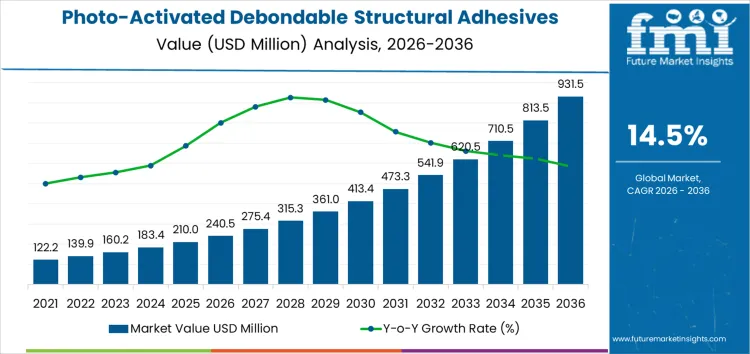
Key drivers include the rising emphasis on eco-friendly solutions to support recycling and repair, particularly in consumer electronics, automotive, and industrial sectors. As product complexity increases, the need for adhesives that allow easy disassembly without damaging sensitive components grows. Innovations in adhesive formulations have further enhanced the performance of these materials, making them even more appealing for applications requiring high precision. The market is expected to continue expanding as industries increasingly prioritize recyclability, repairability, and eco-friendly manufacturing, with significant adoption in regions like China, the USA, and Germany.
Photo-Activated Debondable Structural Adhesives Market Key Takeaways
| Metric | Value |
|---|---|
| Industry Value (2026) | USD 240.5 Million |
| Forecast Value (2036) | USD 930.4 Million |
| Forecast CAGR (2026 to 2036) | 14.50% |
How Is the Global Photo-Activated Debondable Structural Adhesives Market Advancing?
The global photo-activated debondable structural adhesives market is growing at a robust pace, driven by increasing demand for reversible bonding solutions in a variety of industries such as automotive, aerospace, electronics, and packaging. These adhesives provide strong, durable bonds during manufacturing and assembly, and can be easily debonded through exposure to specific light wavelengths, enabling efficient disassembly for repairs, upgrades, or recycling. This combination of strength and reversibility makes photo-activated adhesives an attractive option for industries looking to improve product durability, reduce waste, and streamline manufacturing processes.
Demand is primarily driven by the need for eco-friendly solutions that support the growing emphasis on recycling and repairability in various sectors. In automotive and electronics, for instance, photo-activated adhesives are being used to allow for easy disassembly of components for recycling or repairs without causing damage to sensitive materials. This growing preference for eco-friendly and cost-effective bonding solutions is pushing the adoption of photo-activated debondable structural adhesives. Additionally, advances in adhesive technology have improved the performance of these materials, increasing their applications and driving further growth.
As industries continue to prioritize durability and innovation, the market for photo-activated debondable structural adhesives is expected to expand significantly. The adoption of these adhesives will likely continue to rise, particularly in industries seeking improved recyclability and greater flexibility in assembly and disassembly processes.
What is the Segment-Wise Analysis for the Photo-Activated Debondable Structural Adhesives Market?
The photo-activated debondable structural adhesives market is segmented by form factor and application industry. Liquid or paste adhesives lead the market with a 42% share, followed by film or tape or preformed adhesives and other forms (such as powder and hybrid adhesives). These adhesives are key to ensuring strong bonding while allowing easy disassembly when exposed to light. In terms of application industry, consumer electronics & devices lead with a 38% share, followed by automotive & EV components, industrial, and other industries like aerospace and medical.
Why Do Liquid or Paste Adhesives Lead the Photo-Activated Debondable Structural Adhesives Market?
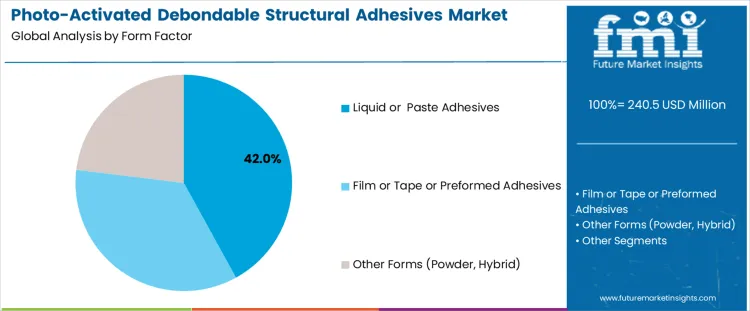
Liquid or paste adhesives account for 42% of the market share due to their versatility and ease of application across a wide range of surfaces and substrates. These adhesives provide strong, durable bonds and are particularly useful for applications requiring precise control over adhesive placement. They are ideal for consumer electronics, automotive components, and industrial applications, offering the added benefit of being debondable when exposed to light, making them perfect for repair or recycling purposes. As industries continue to prioritize durability and ease of disassembly, liquid or paste photo-activated adhesives are increasingly in demand, solidifying their leading position in the market.
How Do Consumer Electronics & Devices Contribute to the Photo-Activated Debondable Structural Adhesives Market?
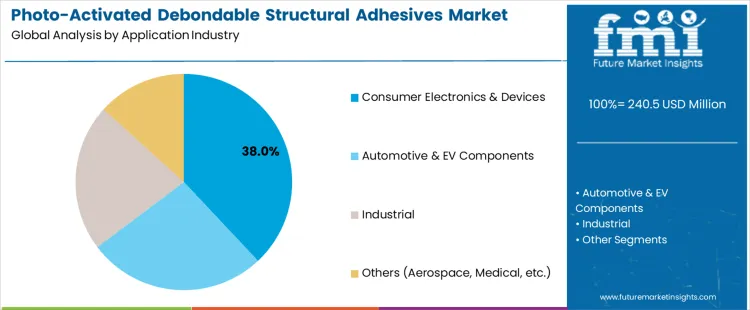
Consumer electronics & devices account for 38% of the application industry segment in the photo-activated debondable structural adhesives market. These devices, including smartphones, laptops, and wearables, require adhesives that provide strong bonding for components while enabling easy disassembly for repairs or recycling. Photo-activated debondable adhesives offer a solution for this need, allowing manufacturers to create durable and eco-friendly devices that can be repaired or refurbished without damaging internal components. As the demand for repairable, recyclable electronics grows, the need for photo-activated debondable adhesives in consumer electronics continues to drive market growth.
What Are the Key Dynamics for the Photo-Activated Debondable Structural Adhesives Market?
The photo activated debondable structural adhesives market is shaped by demand for advanced bonding solutions that provide strong performance during use and controlled separation when stimulated by specific light wavelengths. These adhesives are increasingly used in electronics, automotive, aerospace, and medical devices where selective disassembly, repair, and recycling are critical. The growing emphasis on product serviceability, eco-friendly end of life processes, and lightweight structural design supports adoption. Manufacturers seek reliable bonding with minimal damage during debonding, making photo activated systems a strategic solution.
How Are the Key Drivers Shaping the Photo-Activated Debondable Structural Adhesives Market?
Growth is driven by the need for efficient assembly and disassembly in high-value manufacturing sectors. Automotive and aerospace industries adopt these adhesives to simplify repairs, upgrades, and component recycling. Photo activated adhesives offer precise control over bond release, reducing mechanical stress during separation. Durability initiatives and regulations promoting repairability and recyclability further push adoption. Technological advancements in adhesive chemistries that balance bond strength with predictable debonding under specific light conditions are enhancing performance and expanding application opportunities.
What Are the Key Trends Shaping the Photo-Activated Debondable Structural Adhesives Market?
Emerging trends include multi functional adhesive systems that integrate debondability with conductivity, sealing, or thermal management. There’s rising interest in eco friendly formulations that reduce volatile organic compounds and support durability goals. Photo activated adhesives capable of precise, localized debonding are increasingly paired with automated manufacturing systems and robotics. Collaboration between adhesive developers and OEMs is driving tailored solutions for specific applications. Additionally, expanding standards and guidelines around product repairability and recycling continue to create opportunities for these advanced adhesive technologies.
What is the Growth Outlook for the Photo-Activated Debondable Structural Adhesives Market by Country?
| Country | CAGR (%) |
|---|---|
| China | 16% |
| USA | 14% |
| Germany | 13.5% |
| South Korea | 13% |
| Japan | 12.5% |
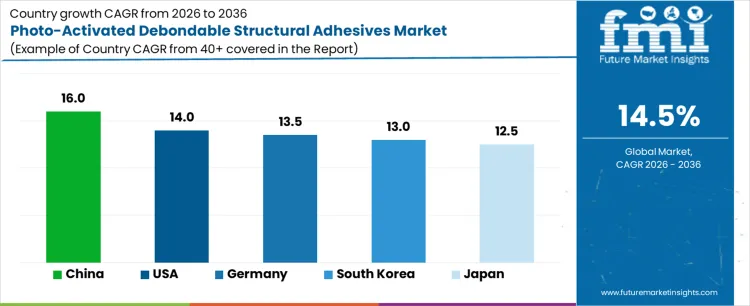
The photo-activated debondable structural adhesives market is growing rapidly, with China leading at 16%, driven by its dominance in automotive, aerospace, and electronics manufacturing. The USA follows at 14%, supported by advancements in electric vehicle production and the need for efficient, recyclable bonding solutions. Germany’s market grows at 13.5%, driven by its automotive sector’s focus on high-performance, eco-friendly solutions. South Korea grows at 13%, fueled by its leadership in advanced manufacturing and eco-friendly technologies. Japan’s market grows at 12.5%, driven by its automotive and electronics industries, which prioritize high-tech manufacturing and environmental durability.
What is Driving the Growth of the Photo-Activated Debondable Structural Adhesives Market in China?
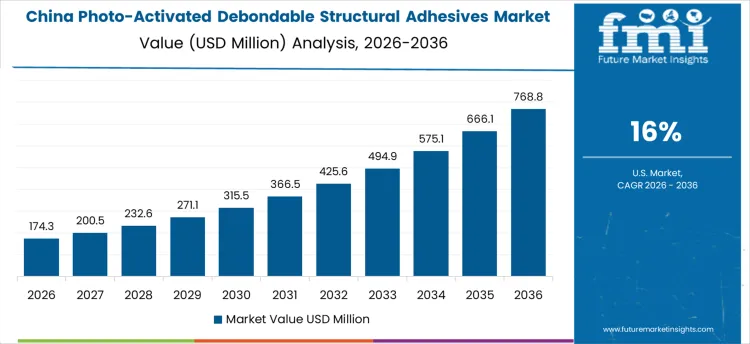
China’s photo-activated debondable structural adhesives market is growing at 16%, driven by its leading position in the manufacturing of automotive, aerospace, and electronics industries, all of which increasingly use these adhesives for their ability to provide strong bonds with the flexibility to be debonded using light activation. As China advances in electric vehicle production and high-tech manufacturing, the demand for innovative bonding solutions that offer easy disassembly without damaging components is growing. The country’s focus on eco-friendly manufacturing and its push for environmentally-friendly production methods further contribute to the market’s growth, making China a dominant player in this sector.
What is Contributing to the Growth of the Photo-Activated Debondable Structural Adhesives Market in the USA?
The photo-activated debondable structural adhesives market in the USA is growing at 14%, supported by the country’s technological advancements in industries like aerospace, automotive, and electronics. As the USA continues to focus on innovation, the demand for efficient, high-performance adhesives that can provide structural bonding while offering the ability to debond with light activation grows. These adhesives play a critical role in the production of electric vehicles, where easy disassembly of components is required for maintenance and recycling. The USA’s focus on durability, green technologies, and reducing waste in manufacturing further drives the demand for these advanced adhesive solutions.
How is the Photo-Activated Debondable Structural Adhesives Market Expanding in Germany?
Germany’s photo-activated debondable structural adhesives market is growing at 13.5%, driven by the country’s automotive and industrial manufacturing sectors. As Germany continues to lead in high-performance vehicle production, particularly electric vehicles (EVs), the need for advanced adhesive solutions that enable easy disassembly and recyclability increases. The automotive and aerospace industries are key drivers, where these adhesives ensure strong, reliable bonds while offering the benefit of light-based debonding for maintenance and recycling purposes. With Germany’s commitment to durability and eco-friendly manufacturing processes, the demand for photo-activated debondable structural adhesives is expected to remain strong.
Why is the Photo-Activated Debondable Structural Adhesives Market Growing in South Korea?
South Korea’s photo-activated debondable structural adhesives market is growing at 13%, supported by its strong automotive, electronics, and semiconductor industries. South Korea’s focus on advanced manufacturing, particularly in EV production and electronics, increases the need for adhesives that provide high bonding strength while enabling easy disassembly for maintenance, repairs, and recycling. With increasing demands for durability and reduced environmental impact, South Korean manufacturers are turning to photo-activated debondable adhesives as part of their green technology initiatives. As the country continues to innovate and prioritize efficient manufacturing, the demand for these adhesives will continue to rise.
What is Driving the Growth of the Photo-Activated Debondable Structural Adhesives Market in Japan?
Japan’s photo-activated debondable structural adhesives market is growing at 12.5%, driven by the country’s leadership in automotive manufacturing, particularly in electric vehicles (EVs), and in advanced electronics and aerospace sectors. These industries increasingly require adhesives that can provide strong bonds yet be easily debonded using light activation for maintenance, repairs, or recycling. Japan’s strong focus on innovation and durability in manufacturing, coupled with its commitment to green technologies, further accelerates the adoption of these advanced adhesives. As Japanese companies continue to lead in high-tech manufacturing and eco-friendly solutions, the market for photo-activated debondable structural adhesives will continue to expand.
How Are Companies Competing in the Photo‑Activated Debondable Structural Adhesives Market?
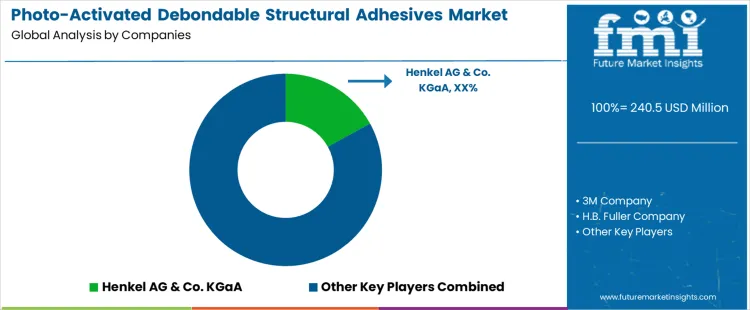
Competition in the photo‑activated debondable structural adhesives market centers on controlled activation precision, bond strength versus debondability balance, process compatibility, and long‑term durability. Henkel AG & Co. KGaA positions its solutions with advanced formulations that cure to form strong structural bonds yet release cleanly under specific wavelengths of light. Its product materials highlight predictable debonding thresholds and robust performance under thermal and mechanical stresses, appealing to high‑value assembly sectors. 3M Company competes with a broad portfolio of photo‑responsive adhesives tailored for diverse substrates, emphasizing consistent activation response, substrate versatility, and integration with automated cure systems in manufacturing workflows.
H.B. Fuller Company differentiates through tunable photo‑activated adhesives that offer a well‑controlled switch from permanent bond to debonded state, reducing post‑assembly rework and facilitating repair or recycling. Its brochures underscore clean release performance and compatibility with specialty light sources used in high‑speed production environments. Sika AG brings solutions engineered for demanding structural applications, with materials that balance environmental resistance and reliable debonding under light exposure, making them suitable for automotive and industrial assemblies where serviceability and durability are priorities.
Dymax Corporation rounds out the market with rapid‑cure, photo‑debondable adhesives that support fast processing and minimal heat input, reducing cycle times and thermal impact on sensitive components. Its collateral stresses high throughput capability and precise energy delivery for consistent activation. Across vendors, documentation is crafted to showcase activation control, adhesion performance, and alignment with evolving manufacturing and durability goals.
Key Players in Photo-Activated Debondable Structural Adhesives Market
- Henkel AG & Co. KGaA
- 3M Company
- H.B. Fuller Company
- Sika AG
- Dymax Corporation
Scope of Report
| Items | Values |
|---|---|
| Quantitative Unit (2026) | USD million |
| Form Factor | Liquid or Paste Adhesives, Film or Tape or Preformed Adhesives, Other Forms (Powder, Hybrid) |
| Application Industry | Consumer Electronics & Devices, Automotive & EV Components, Industrial, Others (Aerospace, Medical, etc.) |
| Regions Covered | Asia Pacific, Europe, North America, Latin America, Middle East & Africa |
| Countries Covered | USA, China, Japan, South Korea, India, Australia & New Zealand, ASEAN, Germany, UK, France, Italy, Spain, Nordic, BENELUX, Brazil, Chile, Mexico, Saudi Arabia, Other GCC Countries, Turkey, South Africa, Other African Union |
| Key Companies Profiled | Henkel AG & Co. KGaA, 3M Company, H.B. Fuller Company, Sika AG, Dymax Corporation |
| Additional Attributes | Dollar sales segmented by form factor, application industry, and region. Regional CAGR and growth outlook are provided, offering detailed insights into the expected market trends, growth dynamics, and forecasts for each segment and region. |
Photo-Activated Debondable Structural Adhesives Market by Key Segments
By Form Factor:
- Liquid or Paste Adhesives
- Film or Tape or Preformed Adhesives
- Other Forms (Powder, Hybrid)
By Application Industry:
- Consumer Electronics & Devices
- Automotive & EV Components
- Industrial
- Others (Aerospace, Medical, etc.)
By Region:
- Asia Pacific
- China
- Japan
- South Korea
- India
- Australia & New Zealand
- ASEAN
- Rest of Asia Pacific
- Europe
- Germany
- United Kingdom
- France
- Italy
- Spain
- Nordic
- BENELUX
- Rest of Europe
- North America
- United States
- Canada
- Mexico
- Latin America
- Brazil
- Chile
- Rest of Latin America
- Middle East & Africa
- Kingdom of Saudi Arabia
- Other GCC Countries
- Turkey
- South Africa
- Other African Union
- Rest of Middle East & Africa
Frequently Asked Questions
How big is the photo-activated debondable structural adhesives market in 2026?
The global photo-activated debondable structural adhesives market is estimated to be valued at USD 240.5 million in 2026.
What will be the size of photo-activated debondable structural adhesives market in 2036?
The market size for the photo-activated debondable structural adhesives market is projected to reach USD 931.5 million by 2036.
How much will be the photo-activated debondable structural adhesives market growth between 2026 and 2036?
The photo-activated debondable structural adhesives market is expected to grow at a 14.5% CAGR between 2026 and 2036.
What are the key product types in the photo-activated debondable structural adhesives market?
The key product types in photo-activated debondable structural adhesives market are liquid or paste adhesives, film or tape or preformed adhesives and other forms (powder, hybrid).
Which application industry segment to contribute significant share in the photo-activated debondable structural adhesives market in 2026?
In terms of application industry, consumer electronics & dEVices segment to command 38.0% share in the photo-activated debondable structural adhesives market in 2026.
Preview the report firsthand - request a free sample
Get SampleGet the brochure for pricing and purchase details.
Get PDFTable of Content
- Executive Summary
- Global Market Outlook
- Demand-side Trends
- Supply-side Trends
- Technology Roadmap Analysis
- Analysis and Recommendations
- Market Overview
- Market Coverage / Taxonomy
- Market Definition / Scope / Limitations
- Market Background
- Market Dynamics
- Drivers
- Restraints
- Opportunity
- Trends
- Scenario Forecast
- Demand in Optimistic Scenario
- Demand in Likely Scenario
- Demand in Conservative Scenario
- Opportunity Map Analysis
- Product Life Cycle Analysis
- Supply Chain Analysis
- Investment Feasibility Matrix
- Value Chain Analysis
- PESTLE and Porter’s Analysis
- Regulatory Landscape
- Regional Parent Market Outlook
- Production and Consumption Statistics
- Import and Export Statistics
- Market Dynamics
- Global Market Analysis 2021 to 2025 and Forecast, 2026 to 2036
- Historical Market Size Value (USD Million) Analysis, 2021 to 2025
- Current and Future Market Size Value (USD Million) Projections, 2026 to 2036
- Y-o-Y Growth Trend Analysis
- Absolute $ Opportunity Analysis
- Global Market Pricing Analysis 2021 to 2025 and Forecast 2026 to 2036
- Global Market Analysis 2021 to 2025 and Forecast 2026 to 2036, By Form Factor
- Introduction / Key Findings
- Historical Market Size Value (USD Million) Analysis By Form Factor , 2021 to 2025
- Current and Future Market Size Value (USD Million) Analysis and Forecast By Form Factor , 2026 to 2036
- Liquid or Paste Adhesives
- Film or Tape or Preformed Adhesives
- Other Forms (Powder, Hybrid)
- Liquid or Paste Adhesives
- Y-o-Y Growth Trend Analysis By Form Factor , 2021 to 2025
- Absolute $ Opportunity Analysis By Form Factor , 2026 to 2036
- Global Market Analysis 2021 to 2025 and Forecast 2026 to 2036, By Application Industry
- Introduction / Key Findings
- Historical Market Size Value (USD Million) Analysis By Application Industry, 2021 to 2025
- Current and Future Market Size Value (USD Million) Analysis and Forecast By Application Industry, 2026 to 2036
- Consumer Electronics & Devices
- Automotive & EV Components
- Industrial
- Others (Aerospace, Medical, etc.)
- Consumer Electronics & Devices
- Y-o-Y Growth Trend Analysis By Application Industry, 2021 to 2025
- Absolute $ Opportunity Analysis By Application Industry, 2026 to 2036
- Global Market Analysis 2021 to 2025 and Forecast 2026 to 2036, By Region
- Introduction
- Historical Market Size Value (USD Million) Analysis By Region, 2021 to 2025
- Current Market Size Value (USD Million) Analysis and Forecast By Region, 2026 to 2036
- North America
- Latin America
- Western Europe
- Eastern Europe
- East Asia
- South Asia and Pacific
- Middle East & Africa
- Market Attractiveness Analysis By Region
- North America Market Analysis 2021 to 2025 and Forecast 2026 to 2036, By Country
- Historical Market Size Value (USD Million) Trend Analysis By Market Taxonomy, 2021 to 2025
- Market Size Value (USD Million) Forecast By Market Taxonomy, 2026 to 2036
- By Country
- USA
- Canada
- Mexico
- By Form Factor
- By Application Industry
- By Country
- Market Attractiveness Analysis
- By Country
- By Form Factor
- By Application Industry
- Key Takeaways
- Latin America Market Analysis 2021 to 2025 and Forecast 2026 to 2036, By Country
- Historical Market Size Value (USD Million) Trend Analysis By Market Taxonomy, 2021 to 2025
- Market Size Value (USD Million) Forecast By Market Taxonomy, 2026 to 2036
- By Country
- Brazil
- Chile
- Rest of Latin America
- By Form Factor
- By Application Industry
- By Country
- Market Attractiveness Analysis
- By Country
- By Form Factor
- By Application Industry
- Key Takeaways
- Western Europe Market Analysis 2021 to 2025 and Forecast 2026 to 2036, By Country
- Historical Market Size Value (USD Million) Trend Analysis By Market Taxonomy, 2021 to 2025
- Market Size Value (USD Million) Forecast By Market Taxonomy, 2026 to 2036
- By Country
- Germany
- UK
- Italy
- Spain
- France
- Nordic
- BENELUX
- Rest of Western Europe
- By Form Factor
- By Application Industry
- By Country
- Market Attractiveness Analysis
- By Country
- By Form Factor
- By Application Industry
- Key Takeaways
- Eastern Europe Market Analysis 2021 to 2025 and Forecast 2026 to 2036, By Country
- Historical Market Size Value (USD Million) Trend Analysis By Market Taxonomy, 2021 to 2025
- Market Size Value (USD Million) Forecast By Market Taxonomy, 2026 to 2036
- By Country
- Russia
- Poland
- Hungary
- Balkan & Baltic
- Rest of Eastern Europe
- By Form Factor
- By Application Industry
- By Country
- Market Attractiveness Analysis
- By Country
- By Form Factor
- By Application Industry
- Key Takeaways
- East Asia Market Analysis 2021 to 2025 and Forecast 2026 to 2036, By Country
- Historical Market Size Value (USD Million) Trend Analysis By Market Taxonomy, 2021 to 2025
- Market Size Value (USD Million) Forecast By Market Taxonomy, 2026 to 2036
- By Country
- China
- Japan
- South Korea
- By Form Factor
- By Application Industry
- By Country
- Market Attractiveness Analysis
- By Country
- By Form Factor
- By Application Industry
- Key Takeaways
- South Asia and Pacific Market Analysis 2021 to 2025 and Forecast 2026 to 2036, By Country
- Historical Market Size Value (USD Million) Trend Analysis By Market Taxonomy, 2021 to 2025
- Market Size Value (USD Million) Forecast By Market Taxonomy, 2026 to 2036
- By Country
- India
- ASEAN
- Australia & New Zealand
- Rest of South Asia and Pacific
- By Form Factor
- By Application Industry
- By Country
- Market Attractiveness Analysis
- By Country
- By Form Factor
- By Application Industry
- Key Takeaways
- Middle East & Africa Market Analysis 2021 to 2025 and Forecast 2026 to 2036, By Country
- Historical Market Size Value (USD Million) Trend Analysis By Market Taxonomy, 2021 to 2025
- Market Size Value (USD Million) Forecast By Market Taxonomy, 2026 to 2036
- By Country
- Kingdom of Saudi Arabia
- Other GCC Countries
- Turkiye
- South Africa
- Other African Union
- Rest of Middle East & Africa
- By Form Factor
- By Application Industry
- By Country
- Market Attractiveness Analysis
- By Country
- By Form Factor
- By Application Industry
- Key Takeaways
- Key Countries Market Analysis
- USA
- Pricing Analysis
- Market Share Analysis, 2025
- By Form Factor
- By Application Industry
- Canada
- Pricing Analysis
- Market Share Analysis, 2025
- By Form Factor
- By Application Industry
- Mexico
- Pricing Analysis
- Market Share Analysis, 2025
- By Form Factor
- By Application Industry
- Brazil
- Pricing Analysis
- Market Share Analysis, 2025
- By Form Factor
- By Application Industry
- Chile
- Pricing Analysis
- Market Share Analysis, 2025
- By Form Factor
- By Application Industry
- Germany
- Pricing Analysis
- Market Share Analysis, 2025
- By Form Factor
- By Application Industry
- UK
- Pricing Analysis
- Market Share Analysis, 2025
- By Form Factor
- By Application Industry
- Italy
- Pricing Analysis
- Market Share Analysis, 2025
- By Form Factor
- By Application Industry
- Spain
- Pricing Analysis
- Market Share Analysis, 2025
- By Form Factor
- By Application Industry
- France
- Pricing Analysis
- Market Share Analysis, 2025
- By Form Factor
- By Application Industry
- India
- Pricing Analysis
- Market Share Analysis, 2025
- By Form Factor
- By Application Industry
- ASEAN
- Pricing Analysis
- Market Share Analysis, 2025
- By Form Factor
- By Application Industry
- Australia & New Zealand
- Pricing Analysis
- Market Share Analysis, 2025
- By Form Factor
- By Application Industry
- China
- Pricing Analysis
- Market Share Analysis, 2025
- By Form Factor
- By Application Industry
- Japan
- Pricing Analysis
- Market Share Analysis, 2025
- By Form Factor
- By Application Industry
- South Korea
- Pricing Analysis
- Market Share Analysis, 2025
- By Form Factor
- By Application Industry
- Russia
- Pricing Analysis
- Market Share Analysis, 2025
- By Form Factor
- By Application Industry
- Poland
- Pricing Analysis
- Market Share Analysis, 2025
- By Form Factor
- By Application Industry
- Hungary
- Pricing Analysis
- Market Share Analysis, 2025
- By Form Factor
- By Application Industry
- Kingdom of Saudi Arabia
- Pricing Analysis
- Market Share Analysis, 2025
- By Form Factor
- By Application Industry
- Turkiye
- Pricing Analysis
- Market Share Analysis, 2025
- By Form Factor
- By Application Industry
- South Africa
- Pricing Analysis
- Market Share Analysis, 2025
- By Form Factor
- By Application Industry
- USA
- Market Structure Analysis
- Competition Dashboard
- Competition Benchmarking
- Market Share Analysis of Top Players
- By Regional
- By Form Factor
- By Application Industry
- Competition Analysis
- Competition Deep Dive
- Henkel AG & Co. KGaA
- Overview
- Product Portfolio
- Profitability by Market Segments (Product/Age /Sales Channel/Region)
- Sales Footprint
- Strategy Overview
- Marketing Strategy
- Product Strategy
- Channel Strategy
- 3M Company
- H.B. Fuller Company
- Sika AG
- Dymax Corporation
- Henkel AG & Co. KGaA
- Competition Deep Dive
- Assumptions & Acronyms Used
- Research Methodology


