

- Industry Size (2026)
- USD 153.9 Mn
- Forecast (2036)
- USD 395.6 Mn
- CAGR (2026 to 2036)
- 9.9%
Plant-Based Shrink Wrap Market Forecast and Outlook 2026 to 2036
In 2026, the plant-based shrink wrap market is valued at USD 153.9 million and is projected to reach USD 395.6 million by 2036, expanding at a CAGR of 9.9%. Growth momentum in the initial phase from 2026 to 2031 strengthens progressively as annual value additions rise from roughly USD 15.2 million to about USD 22.2 million. This momentum is driven by phased replacement of conventional shrink films in food packaging, consumer goods bundling, and secondary packaging. Early acceleration reflects structured adoption by packaging converters rather than sporadic demand spikes.
From 2031 onward, growth momentum becomes more pronounced as yearly absolute gains widen consistently, moving the market from approximately USD 246.6 million to USD 395.6 million by 2036. This period shows sustained acceleration supported by broader application coverage and increased production throughput. Momentum is reinforced by repeat procurement and standardized film specifications, indicating embedded demand rather than transitional uptake. The growth curve reflects durable expansion, with momentum anchored in volume scaling and predictable replacement cycles across established packaging uses.
Quick Stats of the Plant-Based Shrink Wrap Market:
- Plant-Based Shrink Wrap Market Value (2026): USD 153.9 million
- Plant-Based Shrink Wrap Market Forecast Value (2036): USD 395.6 million
- Plant-Based Shrink Wrap Market Forecast CAGR (2026 to 2036): 9.9%
- Plant-Based Shrink Wrap Market Leading End Use: Foodservice & Retail (40%)
- Plant-Based Shrink Wrap Market Key Growth Regions: India, China, USA, Brazil, Germany, Japan
- Plant-Based Shrink Wrap Market Top Players: Sealed Air (bio), Mondi, YUTO Packaging, UFlex, Klabin, Toppan

What is the Growth Forecast for the Plant-Based Shrink Wrap Market through 2036?
From 2026 to 2031, the plant-based shrink wrap market grows from USD 153.9 million to about USD 224.4 million, reflecting a transition from pilot adoption to early commercial scaling. Growth in this phase is driven by packaging trials in food, beverage multipacks, and consumer goods where shrink performance, seal clarity, and machinability are closely evaluated. Uptake remains selective, with converters and brand owners prioritizing compatibility with existing shrink tunnels and line speeds. YeAR-on-year gains widen gradually as material consistency improves and qualification barriers ease across regional packaging operations.
Between 2031 and 2036, the market expands from approximately USD 224.4 million to USD 395.6 million, indicating a stronger acceleration in value creation. This phase reflects broader rollout across high-volume packaging lines, increased adoption in private-label and export packaging, and rising confidence in supply reliability. Growth is reinforced by higher film usage per unit, expansion into secondary and tertiary packaging formats, and repeat procurement as plant-based shrink wrap becomes embedded in standardized packaging specifications. Earlier growth reflected cautious conversion, while later expansion signals scaled deployment and deeper integration across global packaging programs.
Plant Based Shrink Wrap Market Key Takeaways
| Metric | Value |
|---|---|
| Market Value (2026) | USD 153.9 million |
| Forecast Value (2036) | USD 395.6 million |
| Forecast CAGR (2026–2036) | 9.9% |
How Are Packaging Line Compatibility and Material Sourcing Shaping the Plant-Based Shrink Wrap Market from 2026 to 2036?
Plant-based shrink wrap entered use as packaging operators tested bio-derived films within established shrink packaging workflows. Manufacturers of consumer goods, printed materials, and bundled products explored these wraps to maintain load stability while adjusting material inputs. Historical demand reflected pilot adoption in secondary packaging where film thickness, shrink tension, and seal reliability could be closely controlled. Packaging teams focused on machinability, consistent shrink response, and resistance to tearing during high-speed application. Early uptake depended on availability of plant-based resins that behaved predictably under standard heat tunnel conditions.
From 2026 to 2036 demand is expected to grow as material formulations mature and sourcing of bio-based feedstocks stabilizes. Broader use emerges in retail multipacks, logistics bundling, and protective overwraps. Film suppliers refine blends to improve uniform shrink force and dimensional recovery. Buyers assess line efficiency impact, film yield per roll, and storage stability. Demand reflects packaging standardization efforts, long-term material contracts, and gradual replacement of conventional shrink films where performance consistency meets operational requirements.
What Is the Demand for the Plant-Based Shrink Wrap Market by End Use and Packaging Format from 2026 to 2036?
From 2026 to 2036, the plant-based shrink wrap market expands as packaging users replace conventional polyolefin films with bio-derived alternatives across secondary and tertiary packaging. Foodservice and retail account for 40% of end-use demand as fresh, bundled, and ready-to-sell products rely on shrink wrapping for protection and presentation. Shrink film rolls represent 55% of packaging format share because they offer flexibility across varied pack sizes and compatibility with existing shrink tunnels. Demand reflects gradual substitution driven by brand commitments, regulatory pressure, and operational feasibility rather than abrupt material shifts.
Why do foodservice and retail account for 40% of demand in the plant-based shrink wrap market by end use from 2026 to 2036?
Foodservice and retail account for 40% of demand because shrink wrapping remains essential for unitizing trays, fresh items, and multipacks at the point of distribution. Consumption intensity stays high in fresh produce, takeaway packaging, and in-store prepared foods where product visibility and containment are required. Usage remains steady as plant-based films are introduced first in lower-stress applications such as tray overwraps and short shelf-life items. Procurement decisions emphasize film clarity, shrink force control, and seal reliability.
Buyers favor solutions that run on existing equipment without speed loss. Price sensitivity remains moderate since shrink wrap costs form a small share of packaged product value. Specification control focuses on tear resistance, puncture tolerance, and shrink consistency. Demand remains stable through 2036 as retailers expand bio-based packaging adoption across private-label and branded foodservice formats.Foodservice operators continue using shrink wrap for portion control and hygiene during transport. Retailers adopt plant-based films where customer-facing sustainability claims influence purchasing behavior. Usage patterns align with daily replenishment cycles, supporting predictable volume demand.
Why do shrink film rolls represent 55% of demand in the plant-based shrink wrap market by packaging format from 2026 to 2036?
Shrink film rolls represent 55% of demand because they offer the highest versatility across food, beverage, and industrial packaging lines. Consumption is strong where converters and packers require adjustable film width and gauge flexibility. Usage remains steady as rolls integrate seamlessly with automated shrink wrapping equipment. Procurement favors roll formats that minimize downtime and inventory complexity. Buyers prioritize films with consistent thickness and uniform shrink response. Price sensitivity stays moderate since roll formats reduce waste and improve line efficiency. Specification control emphasizes roll stability, winding quality, and compatibility with heat tunnels. Demand persists through 2036 as roll-fed shrink wrapping remains the dominant operational standard. Roll formats support pallet wrapping, multipack bundling, and secondary packaging across sectors. Their adaptability reinforces continued preference as plant-based materials gain broader qualification and acceptance.
How Is Plant Based Shrink Wrap Being Applied Across Packaging and Distribution Operations?
Use appears in packaging lines that require tight unitization while reducing reliance on petroleum based films. Beverage distributors apply plant based shrink wrap for multipack bundling where load stability matters during pallet movement. Personal care brands use it to secure cartons for retail display without altering pack dimensions. Electronics accessory suppliers apply wraps to protect boxes from scuffing during transit. Agricultural exporters use it to consolidate produce trays for short haul shipping. These applications reflect functional packaging needs centered on containment, visibility, and handling compatibility rather than decorative presentation.
What Packaging and Process Conditions Support Selection of Plant Based Shrink Wrap? Adoption aligns with operations seeking film performance that matches existing shrink tunnels and sealing equipment. Packaging teams value wraps that deliver predictable shrink force and clarity during heat application. Brands standardize plant based films where packaging specifications require consistent gauge and tensile behavior. Contract packers favor materials that run at similar speeds to conventional films to avoid line adjustments. Warehouses handling mixed loads prefer wraps that maintain integrity under compression. These conditions support use where operational continuity and process reliability guide material choice.
Which Practical Considerations Shape Limits on Broader Use of Plant Based Shrink Wrap? Performance varies by resin composition and heat tolerance. Some films require narrower temperature control during shrinking. Cost differences influence decisions in high volume, low margin packaging. Tear resistance may differ under rough handling conditions. Shelf life of rolls can be affected by storage temperature and humidity. Availability remains uneven across gauges and widths. These considerations lead to selective adoption where equipment capability, cost planning, and distribution stress levels align with film properties.
What is the Demand for Plant Based Shrink Wrap by Country?
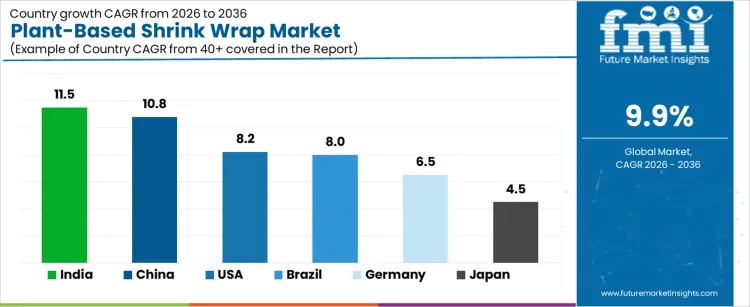
| Country | CAGR (%) |
|---|---|
| USA | 8.2% |
| Germany | 6.5% |
| China | 10.8% |
| India | 11.5% |
| Brazil | 8.0% |
| Japan | 4.5% |
The demand for plant based shrink wrap shows uneven growth across major economies, influenced by packaging substitution trends and end use industry adoption. India leads with an 11.5% CAGR, supported by expanding packaged food production and increased use of bio derived packaging materials. China follows at 10.8%, driven by large scale manufacturing and growing use of alternative shrink films in logistics and retail packaging. The USA records 8.2%, reflecting steady adoption across food, beverage, and consumer goods packaging. Brazil grows at 8.0%, supported by agricultural exports and flexible packaging demand. Germany posts 6.5%, shaped by established packaging standards, while Japan grows at 4.5%, reflecting mature demand patterns and limited format transitions.
How Is Alternative Packaging Adoption Supporting Growth in the United States?
In the United States, revenue from the Plant-Based Shrink Wrap Market is expanding at a CAGR of 8.2% through 2035, driven by replacement of conventional plastic wraps in food, beverage, and consumer goods packaging. Manufacturers are adopting plant-based shrink films to meet retailer material requirements and internal packaging targets. Demand is concentrated in multipack beverages, fresh produce, and bundled consumer products requiring transparency and load stability. Domestic film producers are supplying plant-derived formulations compatible with existing shrink equipment. Stable shipment volumes, established retail distribution, and recurring packaging replenishment cycles are sustaining consistent procurement across packaging users nationwide.
- Food and beverage manufacturers are replacing traditional shrink films with plant-based alternatives for bundled and multipack formats
- Compatibility with existing shrink tunnels is enabling adoption without major capital investment
- Domestic producers are scaling output to meet steady demand from large packaging customers
- Recurring retail replenishment cycles are supporting predictable procurement volumes
How Do Packaging Compliance Practices Shape Demand in Germany?
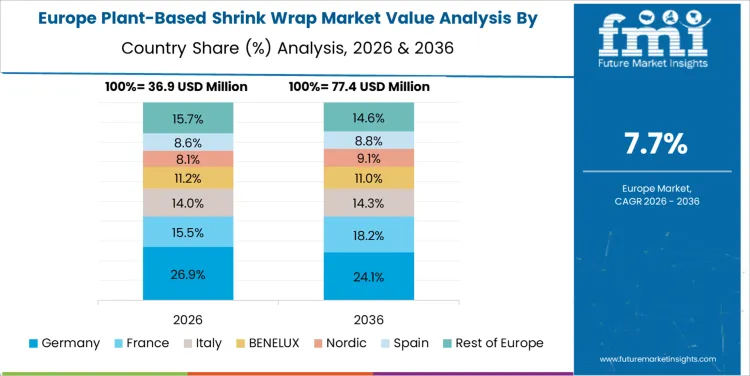
Germany continues to record steady expansion in the Plant-Based Shrink Wrap Market at a CAGR of 6.5% through 2035, supported by packaging compliance requirements and structured material selection practices. Producers are integrating plant-based shrink films to align with regulated packaging standards across food and industrial goods. Demand remains focused on export packaging, bundled consumer products, and pallet stabilization applications. Technical expertise in film processing supports consistent shrink performance and material uniformity. Stable industrial output and long-term supplier relationships are sustaining measured procurement across domestic packaging operations nationwide.
- Compliance-driven material selection is encouraging adoption of plant-based shrink films
- Export-oriented packaging applications require consistent shrink performance and handling durability
- Film processing expertise supports reliable integration into automated packing lines
- Long-term supplier agreements are sustaining stable purchasing behavior
How Is E-Commerce Fulfillment Accelerating Adoption in China?
In China, revenue from the Plant-Based Shrink Wrap Market is growing at a CAGR of 10.8% through 2035, driven by rapid expansion of e-commerce fulfillment and high-volume consumer goods distribution. Packaging operators are adopting plant-based shrink wraps to manage bundling efficiency while adjusting material inputs. Demand is strong across electronics accessories, household goods, and retail multipacks. Domestic manufacturers are expanding film production capacity using plant-derived polymers. High-throughput logistics operations and structured procurement systems are sustaining rapid adoption across major distribution hubs nationwide.
- Rising parcel shipment volumes are increasing demand for efficient shrink bundling solutions
- Plant-based films are being adopted to support ongoing material substitution efforts
- Domestic production expansion is improving availability at competitive cost levels
- Large-scale logistics networks are sustaining consistent volume consumption
How Is Organized Manufacturing Supporting Growth in India?
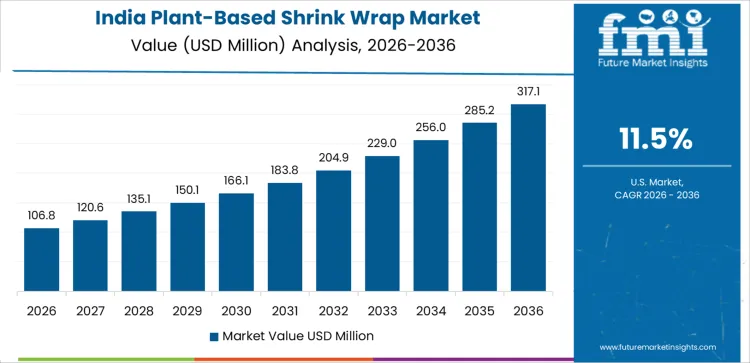
India is witnessing strong expansion in the Plant-Based Shrink Wrap Market at a CAGR of 11.5% through 2035, supported by growth in organized manufacturing and packaged goods distribution. Producers are adopting plant-based shrink wraps for bundled food, beverages, and consumer products moving through modern trade channels. Demand is rising across bottled goods, packaged foods, and household items. Domestic film converters are supplying cost-aligned shrink solutions suited to variable packaging needs. Expanding warehouse infrastructure and retail penetration are sustaining robust procurement across manufacturing and distribution centers nationwide.
- Organized manufacturing growth is increasing use of bundled packaging formats
- Modern retail distribution requires consistent load stability during transportation
- Domestic converters are providing cost-aligned plant-based film solutions
- Warehouse and logistics expansion is sustaining steady demand growth
How Are Consumer Goods Shipments Supporting Adoption in Brazil?
Brazil is seeing steady growth in the Plant-Based Shrink Wrap Market at a CAGR of 8% through 2035, supported by rising shipment of consumer goods and packaged food products. Manufacturers are using plant-based shrink films to bundle products while managing packaging costs. Demand is concentrated in beverages, food multipacks, and household goods. Imports supply some specialized film grades, while local converters expand basic production capacity. Growth in organized retail and regional distribution networks is sustaining recurring procurement across packaging users nationwide.
- Consumer goods distribution is increasing demand for multipack shrink solutions
- Cost management considerations are supporting gradual material substitution
- Imports are complementing local supply for specialized film specifications
- Retail expansion is sustaining recurring packaging consumption
How Does Mature Packaging Demand Influence Stability in Japan?
Japan is maintaining measured growth in the Plant-Based Shrink Wrap Market at a CAGR of 4.5% through 2035, supported by mature packaging demand and preference for consistent material performance. Packaging users apply plant-based shrink films selectively for bundled food and consumer goods. Demand remains focused on reliability, clarity, and controlled shrink behavior. Domestic suppliers emphasize film uniformity and compatibility with precision packaging systems. Stable shipment volumes and replacement-driven purchasing are sustaining predictable procurement across established packaging operations nationwide.
- Mature packaging markets favor selective adoption based on performance reliability
- Precision packaging systems require consistent shrink behavior and clarity
- Domestic suppliers ensure tight material specifications and process control
- Replacement-driven purchasing sustains procurement continuity
What Is Driving the Demand for Plant Based Shrink Wrap and Which Packaging Companies Shape Adoption?
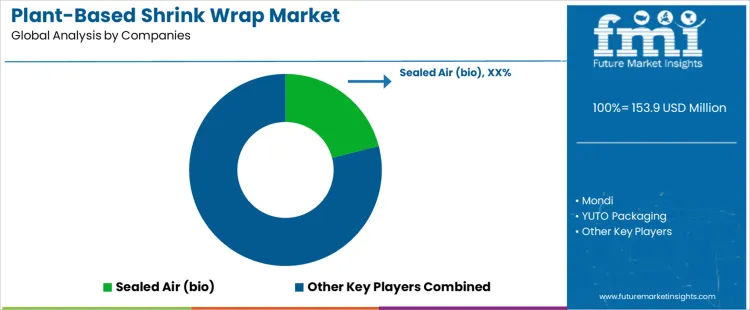
Plant based shrink wrap is drawing interest as brand owners and logistics operators search for renewable alternatives to conventional polyolefin films. Food multipacks, beverage bundles, cosmetics, and e commerce shipments drive early use where shrink performance and clarity remain essential. Sealed Air supports this transition through bio attributed shrink solutions designed to run on existing wrapping equipment. Mondi contributes paper hybrid and bio based film developments aimed at reducing fossil content in shrink applications. YUTO Packaging supports custom shrink formats for retail ready packaging and promotional packs. Klabin supplies fiber based components used in hybrid shrink systems that combine paper strength with thin bio films.
Material selection is governed by shrink force, seal reliability, optical clarity, and performance under heat tunnels. UFlex supports volume adoption through bio based and partially renewable shrink films suited to mass market packaging. Toppan contributes through printed shrink solutions that maintain branding and traceability on renewable substrates. Packagers emphasize compatibility with current machinery to avoid capital changes. Usage spans tray overwraps, multipack bundling, and protective wraps for transit. Demand visibility tracks retailer packaging targets, growth in bio polymer sourcing, and continued pressure to lower fossil content while preserving functional shrink characteristics.
Key Players in the Plant Based Shrink Wrap Market
- Sealed Air (bio)
- Mondi
- YUTO Packaging
- UFlex
- Klabin
- Toppan
Scope of the Report
| Items | Values |
|---|---|
| Quantitative Units (2026) | USD million |
| End Use Application | Foodservice and Retail; Fresh Produce; Industrial Packaging; E-commerce; Beverage and Can Bundles; Other Applications |
| Packaging Format Type | Shrink Film Rolls; Sleeve Wraps; Pallet Wraps; Pre-cut Shrink Bags; Shrink Sleeves |
| Material | PLA-based Films; Starch-blend Films; Bio-PE Alternatives; Bagasse-coated Films; Sugarcane-based Polymer; Other Materials |
| Technology | Heat-shrink Processing; Heat Tunnel Systems; Layered Casting; Film Extrusion; Blown Film |
| Regions Covered | Asia Pacific; Europe; North America; Latin America; Middle East & Africa |
| Countries Covered | China; Japan; South Korea; India; Australia & New Zealand; ASEAN; Germany; United Kingdom; France; Italy; Spain; Nordic; BENELUX; United States; Canada; Mexico; Brazil; Chile; Kingdom of Saudi Arabia; Turkey; South Africa; plus additional countries across Asia Pacific, Europe, Latin America, and Middle East & Africa |
| Key Companies Profiled | Sealed Air (bio); Mondi; YUTO Packaging; UFlex; Klabin; Toppan |
| Additional Attributes | Dollar by sales across end use applications and packaging formats; adoption of plant-based shrink films as substitutes for conventional polyolefin wraps; importance of shrink force consistency, optical clarity, and seal reliability in high speed packaging lines; compatibility of plant-based films with existing heat tunnels and sealing equipment; role of film roll formats in multipack bundling and secondary packaging; influence of resin formulation and gauge control on shrink performance; use of plant-based shrink wrap in food, beverage, consumer goods, and logistics packaging; considerations around storage stability, tear resistance, and handling performance during distribution |
Plant Based Shrink Wrap Market Segmentation
End-use / Application
- Foodservice & Retail
- Fresh Produce
- Industrial Packaging
- E-commerce
- Beverage/Can Bundles
- Others
Packaging Format / Type
- Shrink Film Rolls
- Sleeve Wraps
- Pallet Wraps
- Pre-cut Shrink Bags
- Shrink Sleeves
Material
- PLA-based Films
- Starch-blend Films
- Bio-PE Alternatives
- Bagasse-coated Films
- Sugarcane-based Polymer
- Others
Technology
- Heat-shrink Processing
- Heat Tunnel Systems
- Layered Casting
- Film Extrusion
- Blown Film
Region
- Asia Pacific
- China
- Japan
- South Korea
- India
- Australia & New Zealand
- ASEAN
- Rest of Asia Pacific
- Europe
- Germany
- United Kingdom
- France
- Italy
- Spain
- Nordic
- BENELUX
- Rest of Europe
- North America
- United States
- Canada
- Mexico
- Latin America
- Brazil
- Chile
- Rest of Latin America
- Middle East & Africa
- Kingdom of Saudi Arabia
- Other GCC Countries
- Turkey
- South Africa
- Other African Union
- Rest of Middle East & Africa
Bibliography
- International Organization for Standardization. (2023). Shrink film performance, testing, and material characterisation standards. ISO Standards Publications.
- European Bioplastics Association. (2023). Plant based polymer films and packaging applications. European Bioplastics Technical Reports.
- Plastics Industry Association. (2023). Flexible film processing and shrink wrap performance considerations. PLASTICS Industry Technical Publications.
- United States Food and Drug Administration. (2023). Food contact compliance guidance for polymer based packaging films. FDA Regulatory Publications.
Frequently Asked Questions
How big is the plant-based shrink wrap market in 2026?
The global plant-based shrink wrap market is estimated to be valued at USD 153.9 million in 2026.
What will be the size of plant-based shrink wrap market in 2036?
The market size for the plant-based shrink wrap market is projected to reach USD 395.6 million by 2036.
How much will be the plant-based shrink wrap market growth between 2026 and 2036?
The plant-based shrink wrap market is expected to grow at a 9.9% CAGR between 2026 and 2036.
What are the key product types in the plant-based shrink wrap market?
The key product types in plant-based shrink wrap market are foodservice & retail, fresh produce, industrial packaging, e-commerce, beverage/can bundles and others.
Which packaging format / type segment to contribute significant share in the plant-based shrink wrap market in 2026?
In terms of packaging format / type, shrink film rolls segment to command 55.0% share in the plant-based shrink wrap market in 2026.
Preview the report firsthand - request a free sample
Get SampleGet the brochure for pricing and purchase details.
Get PDFTable of Content
- Executive Summary
- Global Market Outlook
- Demand-side Trends
- Supply-side Trends
- Technology Roadmap Analysis
- Analysis and Recommendations
- Market Overview
- Market Coverage / Taxonomy
- Market Definition / Scope / Limitations
- Market Background
- Market Dynamics
- Drivers
- Restraints
- Opportunity
- Trends
- Scenario Forecast
- Demand in Optimistic Scenario
- Demand in Likely Scenario
- Demand in Conservative Scenario
- Opportunity Map Analysis
- Product Life Cycle Analysis
- Supply Chain Analysis
- Investment Feasibility Matrix
- Value Chain Analysis
- PESTLE and Porter’s Analysis
- Regulatory Landscape
- Regional Parent Market Outlook
- Production and Consumption Statistics
- Import and Export Statistics
- Market Dynamics
- Global Market Analysis 2021 to 2025 and Forecast, 2026 to 2036
- Historical Market Size Value (USD Million) Analysis, 2021 to 2025
- Current and Future Market Size Value (USD Million) Projections, 2026 to 2036
- Y-o-Y Growth Trend Analysis
- Absolute $ Opportunity Analysis
- Global Market Pricing Analysis 2021 to 2025 and Forecast 2026 to 2036
- Global Market Analysis 2021 to 2025 and Forecast 2026 to 2036, By End-use / Application
- Introduction / Key Findings
- Historical Market Size Value (USD Million) Analysis By End-use / Application , 2021 to 2025
- Current and Future Market Size Value (USD Million) Analysis and Forecast By End-use / Application , 2026 to 2036
- Foodservice & Retail
- Fresh Produce
- Industrial Packaging
- E-commerce
- Beverage/Can Bundles
- Others
- Y-o-Y Growth Trend Analysis By End-use / Application , 2021 to 2025
- Absolute $ Opportunity Analysis By End-use / Application , 2026 to 2036
- Global Market Analysis 2021 to 2025 and Forecast 2026 to 2036, By Packaging Format / Type
- Introduction / Key Findings
- Historical Market Size Value (USD Million) Analysis By Packaging Format / Type, 2021 to 2025
- Current and Future Market Size Value (USD Million) Analysis and Forecast By Packaging Format / Type, 2026 to 2036
- Shrink Film Rolls
- Sleeve Wraps
- Pallet Wraps
- Pre-cut Shrink Bags
- Shrink Sleeves
- Y-o-Y Growth Trend Analysis By Packaging Format / Type, 2021 to 2025
- Absolute $ Opportunity Analysis By Packaging Format / Type, 2026 to 2036
- Global Market Analysis 2021 to 2025 and Forecast 2026 to 2036, By Material
- Introduction / Key Findings
- Historical Market Size Value (USD Million) Analysis By Material, 2021 to 2025
- Current and Future Market Size Value (USD Million) Analysis and Forecast By Material, 2026 to 2036
- PLA-based Films
- Starch-blend Films
- Bio-PE Alternatives
- Bagasse-coated Films
- Sugarcane-based Polymer
- Others
- Y-o-Y Growth Trend Analysis By Material, 2021 to 2025
- Absolute $ Opportunity Analysis By Material, 2026 to 2036
- Global Market Analysis 2021 to 2025 and Forecast 2026 to 2036, By Technology
- Introduction / Key Findings
- Historical Market Size Value (USD Million) Analysis By Technology, 2021 to 2025
- Current and Future Market Size Value (USD Million) Analysis and Forecast By Technology, 2026 to 2036
- Heat-shrink Processing
- Heat Tunnel Systems
- Layered Casting
- Film Extrusion
- Blown Film
- Y-o-Y Growth Trend Analysis By Technology, 2021 to 2025
- Absolute $ Opportunity Analysis By Technology, 2026 to 2036
- Global Market Analysis 2021 to 2025 and Forecast 2026 to 2036, By Region
- Introduction
- Historical Market Size Value (USD Million) Analysis By Region, 2021 to 2025
- Current Market Size Value (USD Million) Analysis and Forecast By Region, 2026 to 2036
- North America
- Latin America
- Western Europe
- Eastern Europe
- East Asia
- South Asia and Pacific
- Middle East & Africa
- Market Attractiveness Analysis By Region
- North America Market Analysis 2021 to 2025 and Forecast 2026 to 2036, By Country
- Historical Market Size Value (USD Million) Trend Analysis By Market Taxonomy, 2021 to 2025
- Market Size Value (USD Million) Forecast By Market Taxonomy, 2026 to 2036
- By Country
- USA
- Canada
- Mexico
- By End-use / Application
- By Packaging Format / Type
- By Material
- By Technology
- By Country
- Market Attractiveness Analysis
- By Country
- By End-use / Application
- By Packaging Format / Type
- By Material
- By Technology
- Key Takeaways
- Latin America Market Analysis 2021 to 2025 and Forecast 2026 to 2036, By Country
- Historical Market Size Value (USD Million) Trend Analysis By Market Taxonomy, 2021 to 2025
- Market Size Value (USD Million) Forecast By Market Taxonomy, 2026 to 2036
- By Country
- Brazil
- Chile
- Rest of Latin America
- By End-use / Application
- By Packaging Format / Type
- By Material
- By Technology
- By Country
- Market Attractiveness Analysis
- By Country
- By End-use / Application
- By Packaging Format / Type
- By Material
- By Technology
- Key Takeaways
- Western Europe Market Analysis 2021 to 2025 and Forecast 2026 to 2036, By Country
- Historical Market Size Value (USD Million) Trend Analysis By Market Taxonomy, 2021 to 2025
- Market Size Value (USD Million) Forecast By Market Taxonomy, 2026 to 2036
- By Country
- Germany
- UK
- Italy
- Spain
- France
- Nordic
- BENELUX
- Rest of Western Europe
- By End-use / Application
- By Packaging Format / Type
- By Material
- By Technology
- By Country
- Market Attractiveness Analysis
- By Country
- By End-use / Application
- By Packaging Format / Type
- By Material
- By Technology
- Key Takeaways
- Eastern Europe Market Analysis 2021 to 2025 and Forecast 2026 to 2036, By Country
- Historical Market Size Value (USD Million) Trend Analysis By Market Taxonomy, 2021 to 2025
- Market Size Value (USD Million) Forecast By Market Taxonomy, 2026 to 2036
- By Country
- Russia
- Poland
- Hungary
- Balkan & Baltic
- Rest of Eastern Europe
- By End-use / Application
- By Packaging Format / Type
- By Material
- By Technology
- By Country
- Market Attractiveness Analysis
- By Country
- By End-use / Application
- By Packaging Format / Type
- By Material
- By Technology
- Key Takeaways
- East Asia Market Analysis 2021 to 2025 and Forecast 2026 to 2036, By Country
- Historical Market Size Value (USD Million) Trend Analysis By Market Taxonomy, 2021 to 2025
- Market Size Value (USD Million) Forecast By Market Taxonomy, 2026 to 2036
- By Country
- China
- Japan
- South Korea
- By End-use / Application
- By Packaging Format / Type
- By Material
- By Technology
- By Country
- Market Attractiveness Analysis
- By Country
- By End-use / Application
- By Packaging Format / Type
- By Material
- By Technology
- Key Takeaways
- South Asia and Pacific Market Analysis 2021 to 2025 and Forecast 2026 to 2036, By Country
- Historical Market Size Value (USD Million) Trend Analysis By Market Taxonomy, 2021 to 2025
- Market Size Value (USD Million) Forecast By Market Taxonomy, 2026 to 2036
- By Country
- India
- ASEAN
- Australia & New Zealand
- Rest of South Asia and Pacific
- By End-use / Application
- By Packaging Format / Type
- By Material
- By Technology
- By Country
- Market Attractiveness Analysis
- By Country
- By End-use / Application
- By Packaging Format / Type
- By Material
- By Technology
- Key Takeaways
- Middle East & Africa Market Analysis 2021 to 2025 and Forecast 2026 to 2036, By Country
- Historical Market Size Value (USD Million) Trend Analysis By Market Taxonomy, 2021 to 2025
- Market Size Value (USD Million) Forecast By Market Taxonomy, 2026 to 2036
- By Country
- Kingdom of Saudi Arabia
- Other GCC Countries
- Turkiye
- South Africa
- Other African Union
- Rest of Middle East & Africa
- By End-use / Application
- By Packaging Format / Type
- By Material
- By Technology
- By Country
- Market Attractiveness Analysis
- By Country
- By End-use / Application
- By Packaging Format / Type
- By Material
- By Technology
- Key Takeaways
- Key Countries Market Analysis
- USA
- Pricing Analysis
- Market Share Analysis, 2025
- By End-use / Application
- By Packaging Format / Type
- By Material
- By Technology
- Canada
- Pricing Analysis
- Market Share Analysis, 2025
- By End-use / Application
- By Packaging Format / Type
- By Material
- By Technology
- Mexico
- Pricing Analysis
- Market Share Analysis, 2025
- By End-use / Application
- By Packaging Format / Type
- By Material
- By Technology
- Brazil
- Pricing Analysis
- Market Share Analysis, 2025
- By End-use / Application
- By Packaging Format / Type
- By Material
- By Technology
- Chile
- Pricing Analysis
- Market Share Analysis, 2025
- By End-use / Application
- By Packaging Format / Type
- By Material
- By Technology
- Germany
- Pricing Analysis
- Market Share Analysis, 2025
- By End-use / Application
- By Packaging Format / Type
- By Material
- By Technology
- UK
- Pricing Analysis
- Market Share Analysis, 2025
- By End-use / Application
- By Packaging Format / Type
- By Material
- By Technology
- Italy
- Pricing Analysis
- Market Share Analysis, 2025
- By End-use / Application
- By Packaging Format / Type
- By Material
- By Technology
- Spain
- Pricing Analysis
- Market Share Analysis, 2025
- By End-use / Application
- By Packaging Format / Type
- By Material
- By Technology
- France
- Pricing Analysis
- Market Share Analysis, 2025
- By End-use / Application
- By Packaging Format / Type
- By Material
- By Technology
- India
- Pricing Analysis
- Market Share Analysis, 2025
- By End-use / Application
- By Packaging Format / Type
- By Material
- By Technology
- ASEAN
- Pricing Analysis
- Market Share Analysis, 2025
- By End-use / Application
- By Packaging Format / Type
- By Material
- By Technology
- Australia & New Zealand
- Pricing Analysis
- Market Share Analysis, 2025
- By End-use / Application
- By Packaging Format / Type
- By Material
- By Technology
- China
- Pricing Analysis
- Market Share Analysis, 2025
- By End-use / Application
- By Packaging Format / Type
- By Material
- By Technology
- Japan
- Pricing Analysis
- Market Share Analysis, 2025
- By End-use / Application
- By Packaging Format / Type
- By Material
- By Technology
- South Korea
- Pricing Analysis
- Market Share Analysis, 2025
- By End-use / Application
- By Packaging Format / Type
- By Material
- By Technology
- Russia
- Pricing Analysis
- Market Share Analysis, 2025
- By End-use / Application
- By Packaging Format / Type
- By Material
- By Technology
- Poland
- Pricing Analysis
- Market Share Analysis, 2025
- By End-use / Application
- By Packaging Format / Type
- By Material
- By Technology
- Hungary
- Pricing Analysis
- Market Share Analysis, 2025
- By End-use / Application
- By Packaging Format / Type
- By Material
- By Technology
- Kingdom of Saudi Arabia
- Pricing Analysis
- Market Share Analysis, 2025
- By End-use / Application
- By Packaging Format / Type
- By Material
- By Technology
- Turkiye
- Pricing Analysis
- Market Share Analysis, 2025
- By End-use / Application
- By Packaging Format / Type
- By Material
- By Technology
- South Africa
- Pricing Analysis
- Market Share Analysis, 2025
- By End-use / Application
- By Packaging Format / Type
- By Material
- By Technology
- USA
- Market Structure Analysis
- Competition Dashboard
- Competition Benchmarking
- Market Share Analysis of Top Players
- By Regional
- By End-use / Application
- By Packaging Format / Type
- By Material
- By Technology
- Competition Analysis
- Competition Deep Dive
- Sealed Air (bio)
- Overview
- Product Portfolio
- Profitability by Market Segments (Product/Age /Sales Channel/Region)
- Sales Footprint
- Strategy Overview
- Marketing Strategy
- Product Strategy
- Channel Strategy
- Mondi
- YUTO Packaging
- UFlex
- Klabin
- Toppan
- Sealed Air (bio)
- Competition Deep Dive
- Assumptions & Acronyms Used
- Research Methodology


