

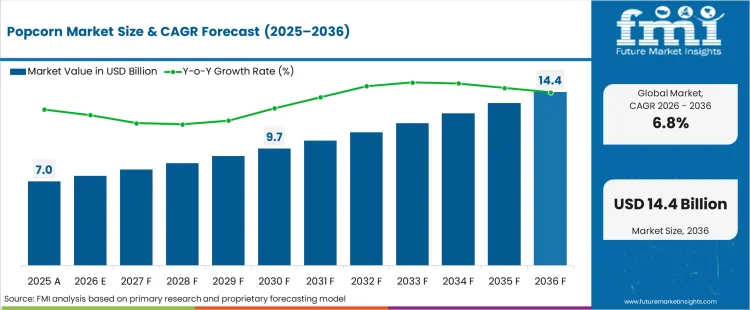
- Industry Size (2026)
- USD Bn 7.48
- Forecast (2036)
- USD Bn 14.43
- CAGR (2026 to 2036)
- 6.8%
Popcorn Market Size, Market Forecast and Outlook By FMI
The popcorn market was valued at USD 7.00 billion in 2025, projected to reach USD 7.48 billion in 2026, and is forecast to expand to USD 14.43 billion by 2036 at a 6.8% CAGR. The repositioning of popcorn from a cinema-occasion snack to a daily health-conscious snacking alternative is driving retail volume growth across mainstream grocery, convenience, and online channels. Popcorn's whole-grain classification, high fibre content, and low calorie density per volume position it as a permissible snack within wellness-oriented eating patterns that reject traditional fried snack categories.
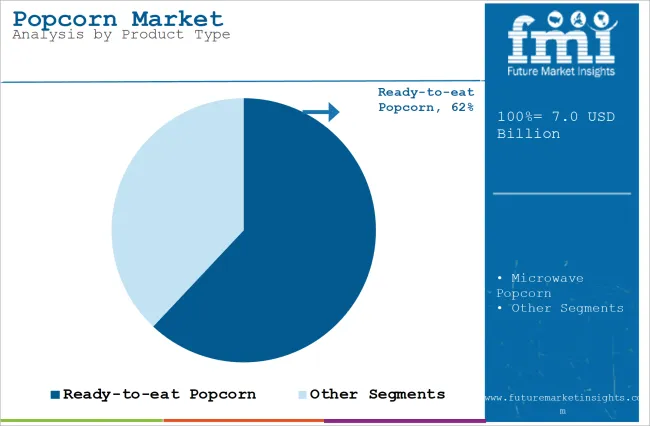
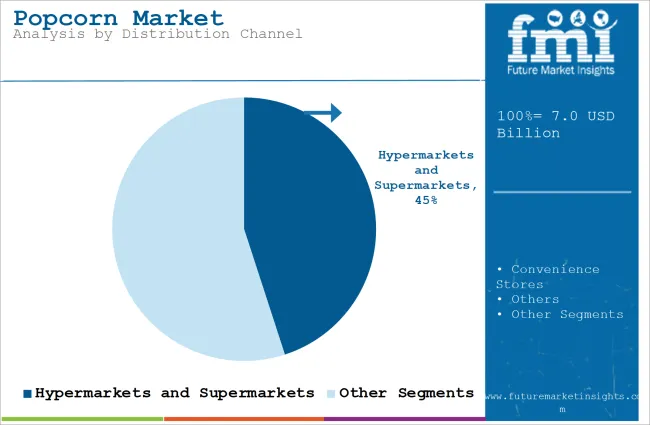
As per FMI, ready-to-eat popcorn holds 62.0% share because pre-popped, packaged popcorn delivers immediate snacking convenience without microwave preparation, fitting the on-the-go consumption occasions that drive modern snack food growth. Hypermarkets and supermarkets command 45.0% of distribution as popcorn achieves permanent shelf placement within the salty snacks aisle alongside potato chips and pretzels. Product innovation in flavour profiles ranging from sea salt and olive oil to truffle and sriracha is expanding popcorn's appeal beyond traditional butter-flavoured formats.
Summary of Popcorn Market
- Popcorn Market Definition
- Popcorn is a whole-grain snack food produced by heating dried corn kernels until the internal moisture creates sufficient steam pressure to expand the starch endosperm. The market covers both ready-to-eat pre-popped popcorn sold in retail packaging and microwave popcorn products sold as unpopped kernels in microwave-compatible bags for home preparation.
- Demand Drivers in the Market
- Whole-grain health snack repositioning: Popcorn's classification as a whole-grain food with 3.5 grams of fibre per serving positions it as a permissible snack within health-conscious eating patterns. FMI analysts note that nutritional labelling reforms that highlight whole-grain content and fibre per serving create a visible health comparison advantage for popcorn against fried potato and corn chip competitors.
- Ready-to-eat format convenience: Based on FMI's report, pre-popped RTE popcorn in portion-controlled packaging fits the on-the-go snacking occasions that dominate modern consumption patterns. Single-serve and multi-pack RTE popcorn formats enable office, commute, and school snacking without requiring preparation equipment or cleanup.
- Premium flavour innovation: As per FMI, artisan and gourmet flavour profiles including truffle, aged cheddar, sriracha, and dark chocolate position popcorn as a premium snacking experience rather than a commodity movie-theatre product. These premium flavoured popcorn products command 2x to 3x pricing over plain salted popcorn, driving margin growth for both branded and private-label producers.
- Key Segments Analyzed in the FMI Report
- Ready-to-eat convenience dominance: Ready-to-Eat Popcorn holds 62.0% share in 2026. Pre-popped popcorn in shelf-stable packaging delivers immediate snacking convenience that aligns with the portability and portion-control expectations of modern snack food consumers.
- Supermarket distribution breadth: Hypermarkets/Supermarkets commands 45.0% share in 2026. Grocery channel placement within the salty snacks aisle positions popcorn as a direct shopping alternative to potato chips and pretzels, capturing cross-category browsing traffic from health-conscious snack shoppers.
- Microwave format home occasion: Microwave Popcorn retains a stable share serving the home entertainment occasion where warm, freshly popped popcorn provides the sensory experience that RTE products cannot fully replicate.
- Analyst Opinion at FMI
- FMI analysts observe that the popcorn market is transitioning from a mature, cinema-associated commodity into a premium, health-positioned snack category where flavour innovation and nutritional positioning drive growth. The winners in this market are brands that capture both health-motivated daily snacking occasions with clean-label, lightly seasoned products and indulgence occasions with premium gourmet flavour profiles. Production cost advantages accrue to manufacturers with vertically integrated corn sourcing and popping operations.
- Strategic Implications / Executive Takeaways
- Snack food companies should develop dual popcorn product lines: a clean-label, health-positioned range for daily snacking and a premium gourmet-flavoured range for indulgence occasions.
- Retail buyers should expand popcorn shelf space allocation within the salty snacks fixture to accommodate the growing variety of RTE popcorn brands and flavour profiles competing for health-conscious snack shoppers.
- Corn suppliers should develop popcorn-specific hybrid varieties with improved expansion volume and kernel uniformity to support premium RTE popcorn manufacturers seeking consistent product quality.
- Methodology
- Primary Research: FMI conducted technical interviews with procurement specialists and operations directors across 40 countries to validate adoption timelines.
- Desk Research: Analysts aggregated public regulatory documentation, industry standards, and corporate disclosure filings.
- Market-Sizing and Forecasting: Forecasting models apply hybrid methodology starting with global production metrics and projecting adoption conversion rates.
- Data Validation and Update Cycle: Segment forecasts undergo cross-validation against quarterly and annual industry production volumes.
India leads with a 9.1% CAGR, driven by the rapidly expanding organized snack food market and growing consumer preference for healthier alternatives to traditional fried snacks. China follows at 8.4% as Western snacking formats gain traction in urban retail and cinema channels. UK registers a 6.2% pace anchored by the established RTE popcorn market led by premium brands positioned as healthy snacking alternatives. USA tracks at 5.8% driven by the mature popcorn market where premium and organic sub-segments drive incremental growth. Germany registers a 5.5% pace reflecting the European healthy snacks trend and supermarket private-label popcorn development.
Popcorn Market Key Takeaways
| Metric | Details |
|---|---|
| Industry Size (2026) | USD Billion 7.48 |
| Industry Value (2036) | USD Billion 14.43 |
| CAGR (2026-2036) | 6.8% |
Popcorn Market Definition
Popcorn is a whole-grain snack food produced by heating dried corn kernels until the internal moisture creates sufficient steam pressure to expand the starch endosperm. The market covers both ready-to-eat pre-popped popcorn sold in retail packaging and microwave popcorn products sold as unpopped kernels in microwave-compatible bags for home preparation.
Popcorn Market Inclusions
Market scope includes ready-to-eat popcorn and microwave popcorn in all flavour variants distributed through retail, convenience, and online channels. The report covers global and regional market sizes from 2026 to 2036, segmented by product type, distribution channel, and geography.
Popcorn Market Exclusions
Raw popcorn kernels sold in bulk for commercial popping operations (cinema, stadium) are excluded. Caramel corn and candy-coated popcorn products classified as confectionery rather than snack food fall outside scope. Corn-based extruded snack products that are not popped popcorn are excluded from the valuation.
Popcorn Market Research Methodology
- Primary Research: Analysts engaged with procurement specialists, production managers, and supply chain directors to map purchasing cycles and supplier qualification requirements.
- Desk Research: Data collection aggregated regulatory filings, industry standards, trade association publications, and public company disclosures.
- Market-Sizing and Forecasting: Baseline values derive from hybrid top-down and bottom-up methodology, applying region-specific adoption curves through 2036.
- Data Validation and Update Cycle: Projections tested against publicly reported production volumes, trade data, and industry benchmarks with annual recalibration.
Factors Restraining Growth of Popcorn Market
Supply Chain and Raw Material Issues
- Fluctuating Corn Prices: Popcorn is primarily made from corn, and any fluctuations in the price of corn can impact production costs. Adverse weather conditions (like droughts) can also affect corn yields, causing supply chain disruptions and price volatility in the popcorn market.
- Packaging Challenges: Effective and eco-friendly packaging solutions are another concern, as packaging waste and environmental impact are increasingly important to consumers. However, the transition to sustainable packaging can be costly for manufacturers, especially in regions with high cost of packaging materials.
- Intense Competition from Other Snacks: As the demand for healthy snacking options rises, popcorn faces growing competition from other alternatives like fruit snacks, protein bars, and vegetable-based chips, which may be perceived as healthier and more aligned with modern snacking preferences.
- Innovative Alternatives: The proliferation of plant-based snacks, nuts, seeds, and other snacks that offer unique nutritional benefits (like higher protein content) may reduce the appeal of traditional popcorn, especially among younger, health-conscious consumers.
Consumer Behavior Analysis in Popcorn Market
Health-Consciousness and Nutritional Awareness
- Demand for Healthier Snacks: Consumers are increasingly seeking snacks that align with healthier lifestyles, prioritizing options that are low in calories, high in fibre, and free from artificial additives. Popcorn, especially air-popped or lightly seasoned varieties, fits this trend, making it a preferred choice over other snack foods like chips and cookies.
- Clean Label Preferences: Consumers gravitate towards products with clean labels - organic, non-GMO, and free from preservatives or artificial colours. This reflects a broader trend toward transparency in food ingredients, with many consumers opting for popcorn brands focusing on natural, simple ingredients.
- Focus on Functional Benefits: Popcorn’s perceived health benefits, such as fibre and antioxidants, appeal to health-conscious consumers. Many turn to popcorn as a guilt-free snack, especially as an alternative to higher-calorie and processed snack foods.
Flavor Preferences and Product Innovation
- Taste and Flavor Variety: Flavor innovation is a significant driver of consumer behavior in the popcorn market. Traditional buttered popcorn remains popular, but consumers are increasingly drawn to new flavors. Savory options like cheese, sour cream, and spicy varieties are gaining popularity, as well as sweet options like caramel, chocolate, and kettle corn.
- Premium and Gourmet Offerings: The rise of gourmet popcorn with premium ingredients and flavors (such as truffle, sea salt, and exotic spices) appeals to consumers seeking indulgent or unique snacking experiences. There is a growing market for artisanal and small-batch popcorn products, often linked to niche, higher-income demographics.
- Health-Conscious Flavors: As more consumers adopt healthy eating habits, flavored popcorn lower in sodium, sugar, or fat is gaining traction. Flavored options using natural seasonings (e.g., herbs, spices, and nutritional yeast) cater to those who want healthier alternatives to traditional flavored snacks.
Sustainability Concerns
- Eco-Friendly Packaging: Increasing environmental awareness is leading consumers to seek out brands that offer sustainable packaging, such as recyclable, biodegradable, or compostable materials. Many consumers are shifting towards brands that are committed to reducing environmental impact.
- Sustainable Sourcing: Ethical sourcing of ingredients is another consideration for conscious consumers. Brands that source non-GMO corn or use organic farming practices appeal to those concerned about sustainability, ethics, and the environment.
Pricing Analysis of Popcorn Market
The pricing dynamics of the popcorn market are influenced by various factors, including raw material costs, packaging, distribution channels, and product segmentation. With a wide range of offerings from budget-friendly to premium, pricing plays a critical role in determining consumer choice and market competitiveness.
From 2021 to 2025, the rising prices of corn significantly affected popcorn prices. In 2021, corn was priced at USD 3.60 per bushel. By 2025, it peaked at USD 6.75 before settling at USD 6.10 in 2025. This increase in corn prices led to higher popcorn prices, which rose from USD 2.50 per unit in 2021 to USD 3.50 in 2024, reflecting a 25% increase due to the cost of raw materials.
Although corn prices dropped slightly in 2025, popcorn prices remained high at USD 3.30 per unit, showing that fluctuations in input costs have a lasting impact on consumer prices.
Understanding these pricing dynamics is essential for businesses to optimize their market positioning and identify potential growth opportunities across diverse markets.
Top Segments Studied in the Popcorn Market Report
By Product Type
| Attributes | Details |
|---|---|
| By Product Type | Ready-to-eat Popcorn |
| Market Share in 2026 | 62% |
By product type, the popcorn market is segmented into ready-to-eat popcorn, and microwave popcorn. Ready-to-eat popcorn segment is expected to attain a market share of 62% in 2026. Ready-to-eat popcorn offers significant convenience as it requires no preparation, unlike microwaveable or stovetop popcorn.
The snack is lightweight and easy to carry, making it a popular choice for people who need a quick, portable snack during travel, at work, or while engaging in recreational activities. Ready-to-eat popcorn leads the market due to its unmatched convenience, health benefits, product variety, and alignment with modern snacking trends.
As consumers continue to seek healthier, portable, and easy-to-consume snacks, ready-to-eat popcorn remains the dominant segment in the forecast period.
By Distribution Channel
| Attributes | Details |
|---|---|
| By Distribution Channel | Hypermarkets and Supermarkets |
| Market Share in 2026 | 45% |
By distribution channel, the popcorn market is segmented into hypermarkets/ supermarkets, convenience stores, and others.
Hypermarkets and supermarkets are expected to account for 45% market share in 2026. offer a wide range of popcorn products, including various flavors, brands, and sizes, which attracts many customers. Consumers prefer hypermarkets and supermarkets because they can purchase a wide variety of products, including popcorn, in one convenient location. This drives impulse buying, particularly for snacks like popcorn.
The combination of high foot traffic, convenient shopping experiences, and regular promotions positions these retail channels as the dominant sales venues for popcorn, meets the growing demand for both traditional and innovative snack options.
Regional Market Trends and Adoption Outlook for Popcorn
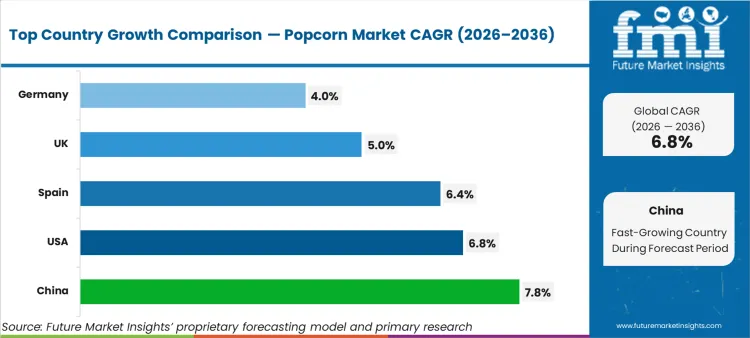
.webp "Top Country Growth Comparison Popcorn Market Cagr (2026 2036)")
| Country | CAGR(%) |
|---|---|
| USA | 6.8% |
| Spain | 6.4% |
| China | 7.8% |
| UK | 5.0% |
| Germany | 4.0% |
North America Popcorn Market Analysis
In North America, the USA leads in popcorn production, and is estimated to grow with a CAGR of 6.8% during the forecast period. With increasing health consciousness, popcorn is being viewed as a healthier snack due to its low-calorie, high-fiber, and gluten-free properties. The demand for air-popped, organic, and non-GMO popcorn is rising as consumers opt for snacks with cleaner ingredients and lower fat content.
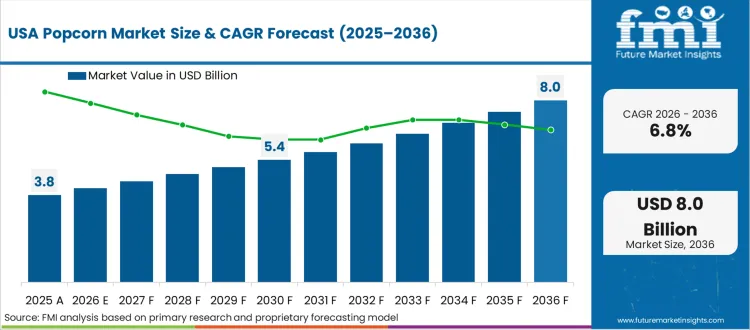
Snacking has become a common habit in North America, with consumers looking for quick, easy, and nutritious options. Popcorn, being portable and versatile, fits well into the growing trend of on-the-go snacking, contributing to its widespread consumption. The market is also likely to witness a continued demand for on-the-go, ready-to-eat, and microwaveable popcorn products, supported by the rise of e-commerce and changing consumer lifestyles.
Europe Popcorn Market Analysis
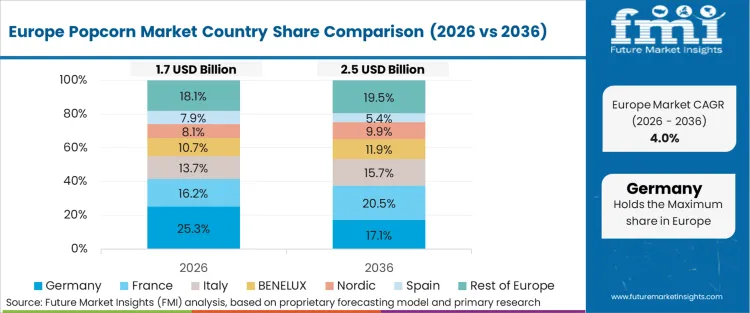
In Europe, Spain will lead the popcorn production during the forecast period with an anticipated CAGR of 6.4% during the forecast period. The popcorn industry is likely to grow due to changing consumer habits. As Spanish consumers become more health-conscious, demand for popcorn as a low-calorie, gluten-free, and high-fiber snack is rising. This is particularly true for air-popped and organic popcorn varieties.
Popcorn is increasingly replacing traditional snack foods due to its perceived health benefits and convenience. Manufacturers are focusing on innovation with new flavors, healthier ingredients (like reduced salt and sugar), and specialized varieties such as vegan, organic, and non-GMO popcorn. Gourmet and premium popcorn varieties are also gaining traction in Spain.
Asia Pacific Popcorn Market Analysis
China is a leading country with an anticipated CAGR of 7.8% by 2035. Snack culture is growing in China, and this is making popcorn a popular choice among consumers who enjoy convenient and tasty snacks.
Increased availability of popcorn through modern retail channels, including supermarkets, convenience stores, and e-commerce platforms, is making the snack more accessible to a larger consumer base.
The busy lifestyles of urban consumers are driving demand for ready-to-eat and microwaveable popcorn. Popcorn fits well into the growing trend of on-the-go snacking, especially in densely populated markets in China.
Competitive Landscape of Popcorn Market
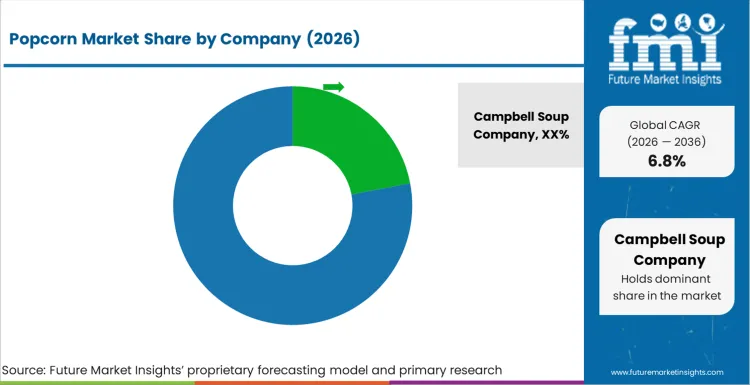
The popcorn market is dominated by established brands like Orville Redenbacher’s, Pop Secret, and BoomChickaPop, which have a strong global presence. Local brands also play a role, catering to specific tastes in different regions.
For example, in India, masala-flavored popcorn is trending, while major German consumer prefer sweeter varieties. The market is divided into segments like microwave popcorn, ready-to-eat (RTE), and gourmet options, each targeting different groups of consumers.
Established players focus on product innovation, introducing new flavors and healthier options to attract more customers.
Large brands benefit from strong distribution networks, making their products widely available in stores and online platforms. However, new entrants struggle to gain market share due to strong brand loyalty and the entry costs involved. This makes it challenging for newcomers to compete effectively.
| Company | Area of Focus |
|---|---|
| Campbell Soup Company | Campbell Soup Company owns several popular snack brands, including those that produce popcorn, allowing them to reach a wide audience. They focus on innovation, often introducing new flavors and healthier options to meet changing consumer preferences. |
| PepsiCo Inc. | PepsiCo is known for its strong marketing strategies, promoting its popcorn products alongside its other snack foods and beverages. The company invests in sustainability, aiming to use environmentally friendly practices in its popcorn production and packaging. |
| Conagra Brands, Inc | Conagra offers a variety of popcorn products, including microwave and ready-to-eat options, catering to different consumer needs. They focus on quality ingredients and often highlight their commitment to health by providing lower-calorie and whole-grain popcorn choices. |
| Weaver Popcorn, Inc. | Weaver Popcorn is one of the largest popcorn manufacturers in the world, known for its expertise in growing and processing high-quality popcorn. The company produces a wide range of popcorn products, including private label options for retailers, allowing them to serve various market segments. |
| Quinn Foods LLC | Quinn Foods specializes in making popcorn with clean ingredients, emphasizing organic and non-GMO options to attract health-conscious consumers. They focus on unique flavors and innovative packaging, often using compostable materials to appeal to environmentally aware shoppers. |
Emerging Startups in Popcorn Market
Startups in the snack industry often focus on making health-conscious products, such as organic and non-GMO snacks, or unique gourmet flavors. Companies such as Pipsnacks and LesserEvil creates premium and sustainable snacks.
They stand out by using eco-friendly packaging, innovative flavors, and sourcing ingredients locally. To attract young consumers, these startups connect with them through such social media campaigns and influencer partnerships. Some of the notable startups in the popcorn industry analysis include;
- Popcornopolis
- Overview: Popcornopolis is a premium popcorn brand that focuses on gourmet popcorn with a wide variety of innovative flavors, including cheddar cheese, caramel, and unique options like zebra and spicy jalapeño.
- Innovation: The brand stands out for its distinctive packaging, which features a signature cone-shaped bag, and its emphasis on high-quality, all-natural ingredients.
- Target Audience: Health-conscious consumers and those looking for a gourmet snack experience.
- Jolly Time
- Overview: Though established for several decades, Jolly Time has recently emerged as a key player in the innovative popcorn space, introducing new product lines such as "Simply Popped" which focuses on healthier, air-popped options.
- Innovation: Known for its microwaveable popcorn options and new natural flavors, Jolly Time targets health-conscious consumers seeking a quick yet wholesome snack.
- The Popcorn Factory
- Overview: The Popcorn Factory is a small startup that focuses on artisanal popcorn with high-quality ingredients. The company emphasizes customization and offers gift packages, making it popular for corporate gifting and special events.
- Innovation: Known for its creative flavor profiles and limited-edition flavors, such as gourmet caramel, chocolate drizzle, and savory truffle.
- Crispy Green
- Overview: This brand specializes in healthy snacks, including fruit and veggie crisps, and has expanded into the popcorn market with a focus on natural and low-calorie popcorn options.
- Innovation: They offer a healthy, preservative-free popcorn snack line designed for the health-conscious consumer, incorporating real ingredients and avoiding artificial additives.
- Poppy’s Popcorn
- Overview: Poppy’s Popcorn is a direct-to-consumer brand that sells a wide variety of flavored gourmet popcorn, including sweet, savory, and spicy options. They prioritize sustainable sourcing and ethical practices in their business model.
- Innovation: Their unique selling point is creating custom flavor combinations and offering eco-friendly, biodegradable packaging to appeal to environmentally-conscious consumers.
Leading Popcorn Producers by Market Share
- Campbell Soup Company
- PepsiCo Inc.
- Conagra Brands, Inc.
- Weaver Popcorn, Inc.
- Quinn Foods LLC
- The Hershey Company
- Eagle Family Foods Group LLC
- PROPER Snacks
- JOLLY TIME
- Intersnack Group GmbH & Co. KG.
Scope of the Report
| Metric | Value |
|---|---|
| Quantitative Units | USD Billion 7.48 to USD Billion 14.43, at a CAGR of 6.8% |
| Market Definition | Popcorn is a whole-grain snack food produced by heating dried corn kernels until the internal moisture creates sufficient steam pressure to expand the starch endosperm. The market covers both ready-to-eat pre-popped popcorn sold in retail packaging and microwave popcorn products sold as unpopped kernels in microwave-compatible bags for home preparation. |
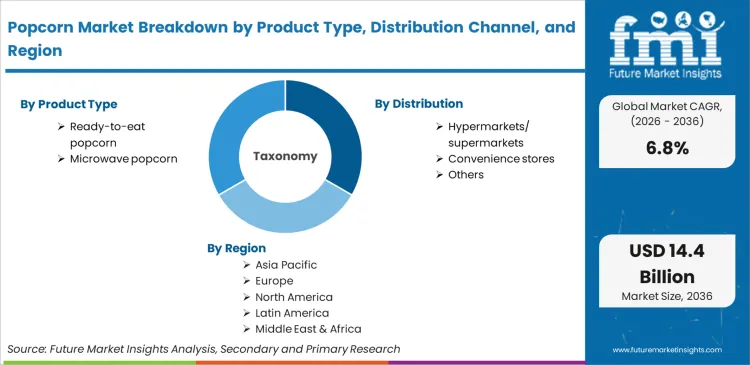
| Product Type Segmentation | Ready-to-Eat Popcorn, Microwave Popcorn |
| Distribution Channel Segmentation | Hypermarkets/Supermarkets, Convenience Stores, Others |
| Regions Covered | North America, Latin America, Europe, East Asia, South Asia, Oceania, Middle East & Africa |
| Countries Covered | USA, UK, Germany, China, India, and 40 plus countries |
| Key Companies Profiled | Campbell Soup Company, PepsiCo Inc., Conagra Brands Inc., Weaver Popcorn Inc., Quinn Foods LLC, The Hershey Company, Eagle Family Foods Group LLC, PROPER Snacks, JOLLY TIME, Intersnack Group GmbH & Co. KG |
| Forecast Period | 2026 to 2036 |
| Approach | Hybrid top-down and bottom-up modelling anchored by primary interviews and public data benchmarking |
Popcorn Industry Analysis by Top Investment Segments
By Product Type:
By product type, the popcorn market is segmented into ready-to-eat popcorn, and microwave popcorn.
By Distribution Channel:
By distribution channel, the popcorn market is segmented into hypermarkets/ supermarkets, convenience stores, and others.
By Region:
By Region, the market is segmented as North America, Europe, Middle-East, and Asia-Pacific
Bibliography
- United States Department of Agriculture. (2024). FoodData Central: Popcorn Nutritional Composition. USDA Agricultural Research Service.
- Whole Grains Council. (2024). Whole Grain Statistics and Consumer Trends Report. WGC.
- European Commission. (2024). Regulation (EU) No 1169/2011 on food information to consumers: Whole grain labelling. EUR-Lex.
- Snack Food Association. (2024). State of the Snack Industry Report. SFA.
- Food and Agriculture Organization of the United Nations. (2024). FAOSTAT: Maize Production Statistics. FAO.
This bibliography is provided for reader reference. The full FMI report contains the complete reference list with primary research documentation.
Frequently Asked Questions
How large is the demand for Popcorn in the global market in 2026?
Demand for Popcorn in the global market is estimated to be valued at USD Billion 7.48 in 2026.
What will be the market size of Popcorn in the global market by 2036?
Market size for Popcorn is projected to reach USD Billion 14.43 by 2036.
What is the expected demand growth for Popcorn in the global market between 2026 and 2036?
Demand for Popcorn is expected to grow at a CAGR of 6.8% between 2026 and 2036.
Which Product Type is poised to lead global sales by 2026?
Ready-to-Eat Popcorn accounts for 62.0% share in 2026.
How significant is the role of Hypermarkets/Supermarkets in Distribution Channel?
Hypermarkets/Supermarkets commands 45.0% of the distribution channel segment in 2026.
What is the growth outlook for USA?
USA is projected to grow at a CAGR of 5.8% during 2026 to 2036.
What is the growth rate for UK in this market?
UK is projected to expand at a CAGR of 6.2% during 2026 to 2036.
What is Popcorn and what is it mainly used for?
Popcorn is a whole-grain snack food produced by heating dried corn kernels until the internal moisture creates sufficient steam pressure to expand the starch endosperm. The market covers both ready-to-eat pre-popped popcorn sold in retail packaging and microwave popcorn products sold as unpopped kernels in microwave-compatible bags for home preparation.
What is included in the scope of this Popcorn report?
Market scope includes ready-to-eat popcorn and microwave popcorn in all flavour variants distributed through retail, convenience, and online channels. The report covers global and regional market sizes from 2026 to 2036, segmented by product type, distribution channel, and geography.
What is excluded from the scope of this report?
Raw popcorn kernels sold in bulk for commercial popping operations (cinema, stadium) are excluded. Caramel corn and candy-coated popcorn products classified as confectionery rather than snack food fall outside scope.
What does market forecast mean on this page?
The market forecast represents a model-based projection built on defined industry and supply chain assumptions for strategic planning purposes.
How does FMI build and validate the Popcorn forecast?
Forecasting models apply a hybrid top-down and bottom-up methodology and cross-validate projections against publicly available industry data and primary research inputs.
What does zero reliance on speculative third-party market research mean here?
Primary interviews, verified public regulatory documentation, and official industry standards registries are used instead of unverified syndicated estimates.
Preview the report firsthand - request a free sample
Get SampleGet the brochure for pricing and purchase details.
Get PDFTable of Content
- Executive Summary
- Global Market Outlook
- Demand-side Trends
- Supply-side Trends
- Technology Roadmap Analysis
- Analysis and Recommendations
- Market Overview
- Market Coverage / Taxonomy
- Market Definition / Scope / Limitations
- Research Methodology
- Chapter Orientation
- Analytical Lens and Working Hypotheses
- Market Structure, Signals, and Trend Drivers
- Benchmarking and Cross-market Comparability
- Market Sizing, Forecasting, and Opportunity Mapping
- Research Design and Evidence Framework
- Desk Research Programme (Secondary Evidence)
- Company Annual and Sustainability Reports
- Peer-reviewed Journals and Academic Literature
- Corporate Websites, Product Literature, and Technical Notes
- Earnings Decks and Investor Briefings
- Statutory Filings and Regulatory Disclosures
- Technical White Papers and Standards Notes
- Trade Journals, Industry Magazines, and Analyst Briefs
- Conference Proceedings, Webinars, and Seminar Materials
- Government Statistics Portals and Public Data Releases
- Press Releases and Reputable Media Coverage
- Specialist Newsletters and Curated Briefings
- Sector Databases and Reference Repositories
- FMI Internal Proprietary Databases and Historical Market Datasets
- Subscription Datasets and Paid Sources
- Social Channels, Communities, and Digital Listening Inputs
- Additional Desk Sources
- Expert Input and Fieldwork (Primary Evidence)
- Primary Modes
- Qualitative Interviews and Expert Elicitation
- Quantitative Surveys and Structured Data Capture
- Blended Approach
- Why Primary Evidence is Used
- Field Techniques
- Interviews
- Surveys
- Focus Groups
- Observational and In-context Research
- Social and Community Interactions
- Stakeholder Universe Engaged
- C-suite Leaders
- Board Members
- Presidents and Vice Presidents
- R&D and Innovation Heads
- Technical Specialists
- Domain Subject-matter Experts
- Scientists
- Physicians and Other Healthcare Professionals
- Governance, Ethics, and Data Stewardship
- Research Ethics
- Data Integrity and Handling
- Primary Modes
- Tooling, Models, and Reference Databases
- Desk Research Programme (Secondary Evidence)
- Data Engineering and Model Build
- Data Acquisition and Ingestion
- Cleaning, Normalisation, and Verification
- Synthesis, Triangulation, and Analysis
- Quality Assurance and Audit Trail
- Market Background
- Market Dynamics
- Drivers
- Restraints
- Opportunity
- Trends
- Scenario Forecast
- Demand in Optimistic Scenario
- Demand in Likely Scenario
- Demand in Conservative Scenario
- Opportunity Map Analysis
- Product Life Cycle Analysis
- Supply Chain Analysis
- Investment Feasibility Matrix
- Value Chain Analysis
- PESTLE and Porter’s Analysis
- Regulatory Landscape
- Regional Parent Market Outlook
- Production and Consumption Statistics
- Import and Export Statistics
- Market Dynamics
- Global Market Analysis 2021 to 2025 and Forecast, 2026 to 2036
- Historical Market Size Value (USD Million) Analysis, 2021 to 2025
- Current and Future Market Size Value (USD Million) Projections, 2026 to 2036
- Y-o-Y Growth Trend Analysis
- Absolute $ Opportunity Analysis
- Global Market Pricing Analysis 2021 to 2025 and Forecast 2026 to 2036
- Global Market Analysis 2021 to 2025 and Forecast 2026 to 2036, By Product Type
- Introduction / Key Findings
- Historical Market Size Value (USD Million) Analysis By Product Type , 2021 to 2025
- Current and Future Market Size Value (USD Million) Analysis and Forecast By Product Type , 2026 to 2036
- Ready-to-eat popcorn
- Microwave popcorn
- Ready-to-eat popcorn
- Y-o-Y Growth Trend Analysis By Product Type , 2021 to 2025
- Absolute $ Opportunity Analysis By Product Type , 2026 to 2036
- Global Market Analysis 2021 to 2025 and Forecast 2026 to 2036, By Distribution Channel
- Introduction / Key Findings
- Historical Market Size Value (USD Million) Analysis By Distribution Channel, 2021 to 2025
- Current and Future Market Size Value (USD Million) Analysis and Forecast By Distribution Channel, 2026 to 2036
- Hypermarkets/ supermarkets
- Convenience stores
- Others
- Hypermarkets/ supermarkets
- Y-o-Y Growth Trend Analysis By Distribution Channel, 2021 to 2025
- Absolute $ Opportunity Analysis By Distribution Channel, 2026 to 2036
- Global Market Analysis 2021 to 2025 and Forecast 2026 to 2036, By Region
- Introduction
- Historical Market Size Value (USD Million) Analysis By Region, 2021 to 2025
- Current Market Size Value (USD Million) Analysis and Forecast By Region, 2026 to 2036
- North America
- Latin America
- Western Europe
- Eastern Europe
- East Asia
- South Asia and Pacific
- Middle East & Africa
- Market Attractiveness Analysis By Region
- North America Market Analysis 2021 to 2025 and Forecast 2026 to 2036, By Country
- Historical Market Size Value (USD Million) Trend Analysis By Market Taxonomy, 2021 to 2025
- Market Size Value (USD Million) Forecast By Market Taxonomy, 2026 to 2036
- By Country
- USA
- Canada
- Mexico
- By Product Type
- By Distribution Channel
- By Country
- Market Attractiveness Analysis
- By Country
- By Product Type
- By Distribution Channel
- Key Takeaways
- Latin America Market Analysis 2021 to 2025 and Forecast 2026 to 2036, By Country
- Historical Market Size Value (USD Million) Trend Analysis By Market Taxonomy, 2021 to 2025
- Market Size Value (USD Million) Forecast By Market Taxonomy, 2026 to 2036
- By Country
- Brazil
- Chile
- Rest of Latin America
- By Product Type
- By Distribution Channel
- By Country
- Market Attractiveness Analysis
- By Country
- By Product Type
- By Distribution Channel
- Key Takeaways
- Western Europe Market Analysis 2021 to 2025 and Forecast 2026 to 2036, By Country
- Historical Market Size Value (USD Million) Trend Analysis By Market Taxonomy, 2021 to 2025
- Market Size Value (USD Million) Forecast By Market Taxonomy, 2026 to 2036
- By Country
- Germany
- UK
- Italy
- Spain
- France
- Nordic
- BENELUX
- Rest of Western Europe
- By Product Type
- By Distribution Channel
- By Country
- Market Attractiveness Analysis
- By Country
- By Product Type
- By Distribution Channel
- Key Takeaways
- Eastern Europe Market Analysis 2021 to 2025 and Forecast 2026 to 2036, By Country
- Historical Market Size Value (USD Million) Trend Analysis By Market Taxonomy, 2021 to 2025
- Market Size Value (USD Million) Forecast By Market Taxonomy, 2026 to 2036
- By Country
- Russia
- Poland
- Hungary
- Balkan & Baltic
- Rest of Eastern Europe
- By Product Type
- By Distribution Channel
- By Country
- Market Attractiveness Analysis
- By Country
- By Product Type
- By Distribution Channel
- Key Takeaways
- East Asia Market Analysis 2021 to 2025 and Forecast 2026 to 2036, By Country
- Historical Market Size Value (USD Million) Trend Analysis By Market Taxonomy, 2021 to 2025
- Market Size Value (USD Million) Forecast By Market Taxonomy, 2026 to 2036
- By Country
- China
- Japan
- South Korea
- By Product Type
- By Distribution Channel
- By Country
- Market Attractiveness Analysis
- By Country
- By Product Type
- By Distribution Channel
- Key Takeaways
- South Asia and Pacific Market Analysis 2021 to 2025 and Forecast 2026 to 2036, By Country
- Historical Market Size Value (USD Million) Trend Analysis By Market Taxonomy, 2021 to 2025
- Market Size Value (USD Million) Forecast By Market Taxonomy, 2026 to 2036
- By Country
- India
- ASEAN
- Australia & New Zealand
- Rest of South Asia and Pacific
- By Product Type
- By Distribution Channel
- By Country
- Market Attractiveness Analysis
- By Country
- By Product Type
- By Distribution Channel
- Key Takeaways
- Middle East & Africa Market Analysis 2021 to 2025 and Forecast 2026 to 2036, By Country
- Historical Market Size Value (USD Million) Trend Analysis By Market Taxonomy, 2021 to 2025
- Market Size Value (USD Million) Forecast By Market Taxonomy, 2026 to 2036
- By Country
- Kingdom of Saudi Arabia
- Other GCC Countries
- Turkiye
- South Africa
- Other African Union
- Rest of Middle East & Africa
- By Product Type
- By Distribution Channel
- By Country
- Market Attractiveness Analysis
- By Country
- By Product Type
- By Distribution Channel
- Key Takeaways
- Key Countries Market Analysis
- USA
- Pricing Analysis
- Market Share Analysis, 2025
- By Product Type
- By Distribution Channel
- Canada
- Pricing Analysis
- Market Share Analysis, 2025
- By Product Type
- By Distribution Channel
- Mexico
- Pricing Analysis
- Market Share Analysis, 2025
- By Product Type
- By Distribution Channel
- Brazil
- Pricing Analysis
- Market Share Analysis, 2025
- By Product Type
- By Distribution Channel
- Chile
- Pricing Analysis
- Market Share Analysis, 2025
- By Product Type
- By Distribution Channel
- Germany
- Pricing Analysis
- Market Share Analysis, 2025
- By Product Type
- By Distribution Channel
- UK
- Pricing Analysis
- Market Share Analysis, 2025
- By Product Type
- By Distribution Channel
- Italy
- Pricing Analysis
- Market Share Analysis, 2025
- By Product Type
- By Distribution Channel
- Spain
- Pricing Analysis
- Market Share Analysis, 2025
- By Product Type
- By Distribution Channel
- France
- Pricing Analysis
- Market Share Analysis, 2025
- By Product Type
- By Distribution Channel
- India
- Pricing Analysis
- Market Share Analysis, 2025
- By Product Type
- By Distribution Channel
- ASEAN
- Pricing Analysis
- Market Share Analysis, 2025
- By Product Type
- By Distribution Channel
- Australia & New Zealand
- Pricing Analysis
- Market Share Analysis, 2025
- By Product Type
- By Distribution Channel
- China
- Pricing Analysis
- Market Share Analysis, 2025
- By Product Type
- By Distribution Channel
- Japan
- Pricing Analysis
- Market Share Analysis, 2025
- By Product Type
- By Distribution Channel
- South Korea
- Pricing Analysis
- Market Share Analysis, 2025
- By Product Type
- By Distribution Channel
- Russia
- Pricing Analysis
- Market Share Analysis, 2025
- By Product Type
- By Distribution Channel
- Poland
- Pricing Analysis
- Market Share Analysis, 2025
- By Product Type
- By Distribution Channel
- Hungary
- Pricing Analysis
- Market Share Analysis, 2025
- By Product Type
- By Distribution Channel
- Kingdom of Saudi Arabia
- Pricing Analysis
- Market Share Analysis, 2025
- By Product Type
- By Distribution Channel
- Turkiye
- Pricing Analysis
- Market Share Analysis, 2025
- By Product Type
- By Distribution Channel
- South Africa
- Pricing Analysis
- Market Share Analysis, 2025
- By Product Type
- By Distribution Channel
- USA
- Market Structure Analysis
- Competition Dashboard
- Competition Benchmarking
- Market Share Analysis of Top Players
- By Regional
- By Product Type
- By Distribution Channel
- Competition Analysis
- Competition Deep Dive
- Campbell Soup Company
- Overview
- Product Portfolio
- Profitability by Market Segments (Product/Age /Sales Channel/Region)
- Sales Footprint
- Strategy Overview
- Marketing Strategy
- Product Strategy
- Channel Strategy
- PepsiCo Inc.
- Conagra Brands, Inc.
- Weaver Popcorn, Inc.
- Quinn Foods LLC
- The Hershey Company
- Eagle Family Foods Group LLC
- PROPER Snacks
- JOLLY TIME
- Intersnack Group GmbH & Co. KG.
- Campbell Soup Company
- Competition Deep Dive
- Assumptions & Acronyms Used


