

- Industry Size (2026):
- USD 1540.0 Mn
- Forecast (2036)
- USD 5620.0 Mn
- CAGR (2026 to 2036)
- 13.8%
Procurement & Supply Assurance Models for PCR Material Market Forecast and Outlook 2026 to 2036
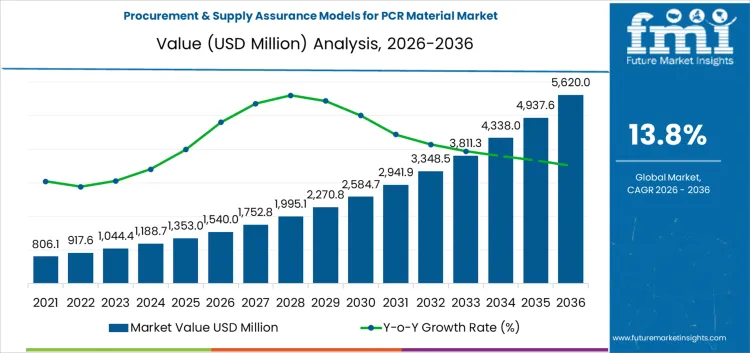
The procurement & supply assurance models for PCR material market is likely to be valued at USD 1,540.0 million in 2026 and is set to reach USD 5,620.0 million by 2036, and is projected to expand at a 13.8% CAGR. Between 2026 and 2036, performance in this market is being shaped by how procurement risk is priced and absorbed rather than by headline sourcing volumes. Priority is being given to continuity of supply, verification strength, and resilience against feedstock disruption, leading buyers to favor structured frameworks over opportunistic purchasing. Cost structures are increasingly weighted toward supplier qualification, audit readiness, digital traceability integration, and internal coordination across procurement, compliance, and operations. Pricing control is being retained by platforms and intermediaries that aggregate supplier data, standardize assurance logic, and embed PCR sourcing into enterprise procurement workflows. Switching costs are elevated once approved supplier panels, data integrations, and reporting routines are established, concentrating value with solution providers that sit closest to decision-making systems.
Quick Stats for Procurement & Supply Assurance Models for PCR Material Market
- Procurement & Supply Assurance Models for PCR Material Market Value (2026): USD 1,540.0 Million
- Procurement & Supply Assurance Models for PCR Material Market Forecast Value (2036): USD 5,620.0 Million
- Procurement & Supply Assurance Models for PCR Material Market Forecast CAGR 2026 to 2036: 13.8%
- Leading End Use in Procurement & Supply Assurance Models for PCR Material Market: Brand & OEM Sourcing
- Leading Procurement Model in Procurement & Supply Assurance Models for PCR Material Market: Multi-Supplier Frameworks
- Key Growth Regions in Procurement & Supply Assurance Models for PCR Material Market: Asia Pacific, Europe, North America
- Top Key Players in Procurement & Supply Assurance Models for PCR Material Market: SAP SE (SAP Ariba), Coupa Software Incorporated, IntegrityNext GmbH, Alibaba Group Holding Limited (Alibaba Supply Chain), JD.com, Inc. (JD Industrial), Panasonic Holdings Corporation, NEC Corporation
Procurement & Supply Assurance Models for PCR Material Market Key Takeaways
| Metric | Value |
|---|---|
| Industry Value (2026) | USD 1,540.0 Million |
| Forecast Value (2036) | USD 5,620.0 Million |
| Forecast CAGR 2026 to 2036 | 13.8% |
How is the Global Procurement & Supply Assurance Models for PCR Material Market Advancing?
The global procurement and supply assurance models for PCR material market is advancing rapidly, driven by increasing complexity and risk in recycled material sourcing. As brand owners and manufacturers raise PCR usage commitments, procurement strategies are shifting from spot purchasing toward structured supply assurance models designed to secure consistent volumes, verified quality, and delivery reliability.
A key driver supporting market growth is the growing volatility in PCR availability and pricing. Inconsistent collection rates, quality variability, and regional supply imbalances are pushing buyers to adopt multi-layered procurement models that combine long-term contracts, diversified supplier portfolios, and contingency sourcing arrangements. These models reduce exposure to supply disruptions while improving forecast accuracy and material planning.
Expansion of cross-functional procurement practices is further contributing to market adoption. Procurement and supply assurance models increasingly integrate sourcing, logistics, quality control, and compliance functions into unified frameworks. This approach improves coordination between recyclers, compounders, converters, and brand owners, enabling faster response to supply shocks and demand fluctuations.
Advancements in digital procurement platforms and data-driven planning tools are strengthening market implementation. Supplier performance dashboards, material traceability integration, and predictive demand analytics are enhancing visibility and decision-making across PCR supply chains. As PCR sourcing becomes a strategic priority rather than a transactional activity, procurement and supply assurance models are expected to play a critical role in stabilizing recycled material supply over the forecast period.
What Is the Segment-Wise Overview of the Procurement & Supply Assurance Models for PCR Material Market?
The procurement & supply assurance models for PCR material market is shaped by risk mitigation priorities and structured sourcing strategies aimed at securing reliable recycled material supply. Brand and OEM sourcing leads the end-use segment with a 45% share, as manufacturers increasingly take direct control over PCR procurement to meet regulatory, quality, and volume requirements. These players prioritize supply continuity and traceability across packaging and component value chains. By procurement model, multi-supplier frameworks dominate with a 50% share, reflecting a shift away from single-source dependency toward diversified supplier portfolios.
Why Does Brand & OEM Sourcing Lead the Procurement & Supply Assurance Models for PCR Material Market?
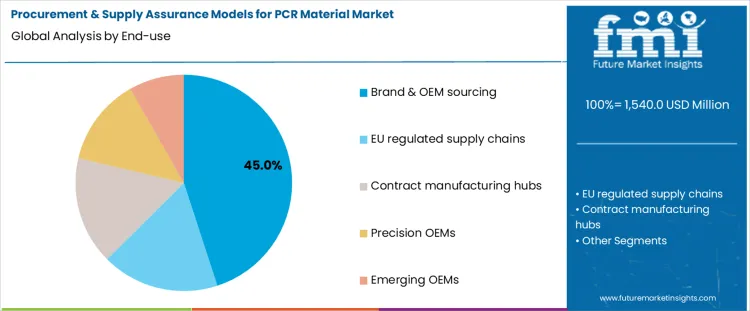
Brand and OEM sourcing accounts for 45% of market demand because large manufacturers face direct accountability for PCR usage targets, compliance reporting, and material quality outcomes. Relying on intermediaries or spot markets exposes brands to supply volatility, inconsistent specifications, and certification gaps. Direct sourcing models allow brands and OEMs to define material grades, audit suppliers, and align procurement with production planning. These approaches also improve visibility across upstream recycling operations, supporting traceability and verification. As PCR becomes a core input rather than a secondary material, brands increasingly embed sourcing within procurement strategy. This shift positions brand and OEM-led sourcing as the dominant end-use model in PCR supply assurance.
How Do Multi-Supplier Frameworks Drive the PCR Procurement & Supply Assurance Market?
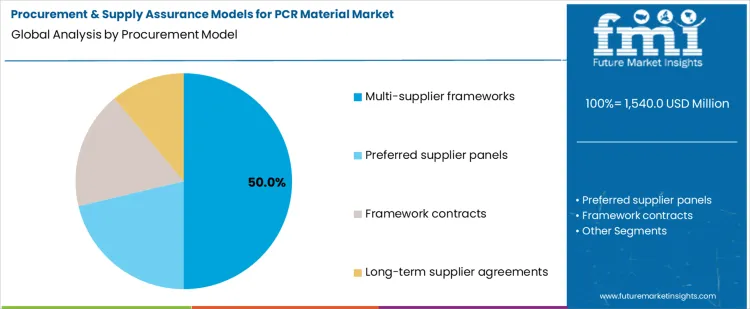
Multi-supplier frameworks represent 50% of procurement model demand, making them the leading approach for managing PCR supply risk. These frameworks involve contracting multiple approved recyclers or compounders under standardized commercial and quality terms. By spreading volume commitments across suppliers, buyers reduce exposure to operational disruptions, regional shortages, and feedstock variability. Multi-supplier models also enable flexible allocation based on price, availability, and performance, improving procurement agility. For PCR materials, where supply consistency remains uneven, diversification is critical. As competition for high-quality PCR intensifies, multi-supplier frameworks continue to gain preference over single-vendor or ad-hoc sourcing models.
What Are the Key Dynamics for the Procurement & Supply Assurance Models for PCR Material Market?
Procurement and supply assurance models include multi-supplier sourcing, long-term contracts, strategic partnerships, preferred supplier frameworks, and vertical integration approaches designed to reduce supply risk. Key market dynamics include increasing regulatory recycled-content requirements, heightened competition for high-quality PCR feedstock, and rising exposure to spot-market volatility. Brands and manufacturers are moving away from transactional purchasing toward structured procurement models that ensure volume reliability, quality consistency, and traceability. As PCR sourcing becomes a strategic priority rather than a tactical purchase, formalized procurement and assurance frameworks are becoming essential components of recycled materials supply chains.
Why Is the Procurement & Supply Assurance Models for PCR Material Market Growing?
The procurement & supply assurance models for PCR material market is growing as demand for PCR materials continues to outpace available supply across multiple polymer types. Manufacturers face risks related to inconsistent material availability, quality variation, and price instability, prompting adoption of structured procurement strategies. Expansion of extended producer responsibility regulations and recycled-content mandates is increasing long-term PCR demand visibility, encouraging proactive sourcing models. Recycling infrastructure development remains uneven geographically, further amplifying the need for supply assurance mechanisms. Brands with public PCR commitments are prioritizing procurement models that minimize disruption and reputational risk.
How Are the Key Drivers Shaping the Procurement & Supply Assurance Models for PCR Material Market?
Key drivers shaping the procurement & supply assurance models for PCR material market include regulatory enforcement of recycled-content targets, investor scrutiny of supply-chain resilience, and growing cost exposure to PCR price fluctuations. Procurement teams are adopting diversified sourcing strategies to reduce dependence on single suppliers and mitigate operational risk. Strategic partnerships with recyclers, aggregators, and material processors are enabling better visibility into feedstock availability and processing capacity. Integration of digital traceability and verification tools into procurement workflows enhances confidence in PCR claims and supplier performance. Internal alignment between procurement, and operations functions is also influencing model design.
What is the Growth Outlook for the Procurement & Supply Assurance Models for PCR Material Market by Country?
| Country | CAGR (%) |
|---|---|
| India | 15.2% |
| China | 14.6% |
| Germany | 12.2% |
| Brazil | 11.8% |
| Japan | 10.4% |
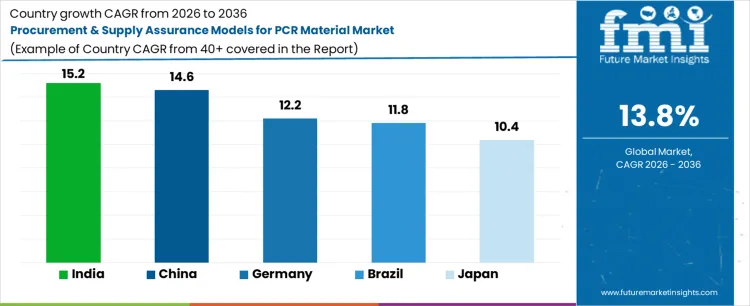
The procurement & supply assurance models for PCR material market is expanding as buyers seek reliability, compliance, and risk control in PCR sourcing. India leads with a 15.2% CAGR, driven by regulatory enforcement and organized procurement adoption. China follows at 14.6%, supported by large-scale manufacturing and centralized recycling. Germany grows at 12.2%, reflecting strong compliance and documentation needs. Brazil records 11.8% growth, supported by gradual supply-chain formalization. Japan expands at 10.4%, driven by quality-focused sourcing practices. As PCR demand increases globally, structured procurement and supply assurance models are becoming a core element of PCR supply strategies.
Why Is the Procurement & Supply Assurance Models for PCR Material Market Expanding Rapidly in India?
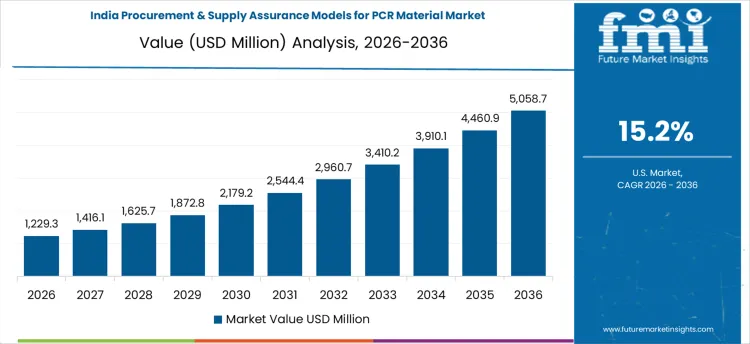
Demand for procurement & supply assurance models for PCR material in India is expanding at a CAGR of 15.2%. Packaging producers, FMCG brands, and converters are prioritizing structured sourcing models to manage PCR availability and quality risk. EPR enforcement and time-bound recycled-content targets are pushing companies to move beyond spot buying toward assured procurement frameworks. Buyers are adopting multi-supplier strategies, long-term sourcing commitments, and verification-linked procurement to reduce supply disruptions. Recyclers benefit from predictable demand signals that support capacity planning and investment decisions. Growth of organized recycling parks and digital compliance platforms is improving visibility across supply chains. Procurement teams are aligning assurance models with audit readiness and internal reporting needs. As PCR demand scales faster than collection growth, structured procurement and supply assurance models are becoming essential in India.
What Is Driving Growth of the Procurement & Supply Assurance Models for PCR Material Market in China?
Demand for procurement & supply assurance models for PCR material in China is expanding at a CAGR of 14.6%. Large-scale packaging and consumer goods manufacturers require consistent PCR volumes across multiple production sites. Structured procurement models help manage variability in feedstock quality and logistics across regions. Buyers are integrating supplier qualification, batch traceability, and performance monitoring into procurement workflows. Centralized recycling hubs support contract-backed sourcing and predictable delivery schedules. Export-oriented manufacturers rely on assurance models to meet international recycled-content verification requirements. Procurement teams value models that link sourcing decisions with compliance documentation. As China continues to formalize PCR supply chains and scale recycled-content usage, adoption of advanced procurement and supply assurance models is expected to grow steadily.
Why Is the Procurement & Supply Assurance Models for PCR Material Market Gaining Traction in Germany?
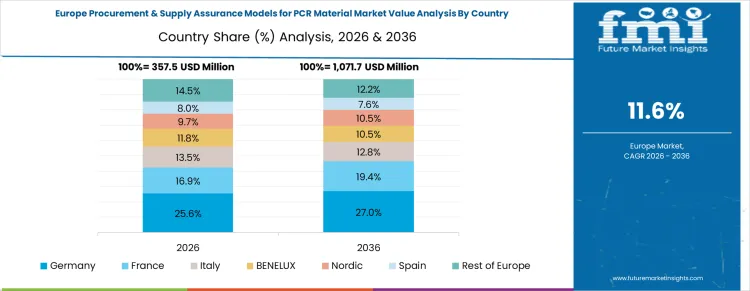
Sales for procurement & supply assurance models for PCR material in Germany are growing at a CAGR of 12.2%. Strong regulatory oversight and documentation requirements encourage structured sourcing approaches. Packaging producers and industrial users prefer assurance-led procurement to secure certified PCR with consistent specifications. German companies emphasize supplier audits, long-term sourcing frameworks, and digital traceability integration within procurement systems. These models support compliance reporting and risk management across complex supply networks. Recyclers benefit from clearer demand commitments that justify process upgrades and capacity optimization. Integration with enterprise systems improves transparency and procurement governance. As regulatory scrutiny remains high, procurement and supply assurance models continue to gain importance across German PCR supply chains.
What Is Supporting Procurement & Supply Assurance Models for PCR Material Market Growth in Brazil?
Demand for procurement & supply assurance models for PCR material in Brazil is expanding at a CAGR of 11.8%. Growing PCR adoption in packaging and consumer goods is increasing focus on supply reliability. Buyers are moving toward structured procurement models to manage variability in collection volumes and feedstock quality. Assurance frameworks help stabilize pricing and reduce exposure to spot-market volatility. Recyclers benefit from clearer demand signals that improve operational planning. Multinational brands operating in Brazil are transferring global procurement practices into local supply chains. Digital supplier management and verification tools are supporting wider adoption. As Brazil’s PCR ecosystem matures, procurement and supply assurance models are becoming increasingly relevant.
Why Is the Procurement & Supply Assurance Models for PCR Material Market Developing at a Measured Pace in Japan?
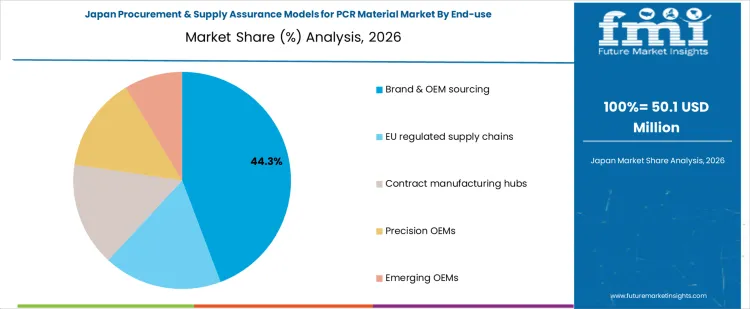
Demand for procurement & supply assurance models for PCR material in Japan is expanding at a CAGR of 10.4%. Japanese manufacturers emphasize quality consistency, supplier reliability, and documentation accuracy. Procurement teams are adopting assurance-based sourcing to integrate PCR into high-standard packaging and consumer products. Structured models reduce manual verification effort and improve coordination with recyclers. Companies value long-term supplier relationships supported by performance tracking and compliance alignment. Integration with quality management and production planning systems strengthens procurement efficiency. Growth remains measured due to gradual PCR adoption rates, yet assurance requirements continue to increase. As recycled material usage expands cautiously, demand for procurement and supply assurance models in Japan is expected to remain steady.
How Are Companies Competing in the Procurement & Supply Assurance Models for PCR Material Market?
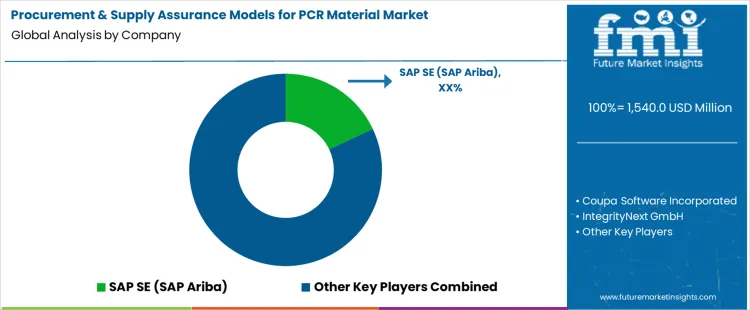
Competition in the procurement and supply assurance models for PCR material market is driven by visibility into recycled material flows, supplier reliability, compliance assurance, and the ability to manage risk across fragmented recycling ecosystems. As PCR demand rises faster than certified supply, brands and converters require procurement systems that go beyond transactional purchasing to ensure continuity, traceability, and verification of recycled content. Companies compete on digital procurement platforms, supplier qualification frameworks, real-time monitoring, and integration of compliance, ESG, and quality data into sourcing decisions. Differentiation increasingly centers on predictive risk management, multi-supplier orchestration, and assurance mechanisms that reduce supply disruption.
SAP SE (SAP Ariba), Coupa Software, IntegrityNext, Alibaba Group (Alibaba Supply Chain), and JD.com (JD Industrial) lead competition through platform scale, supplier network reach, and embedded analytics. SAP Ariba and Coupa differentiate by integrating PCR sourcing into broader procurement and spend management workflows, enabling buyers to assess supplier risk, contract compliance, and volume commitments within enterprise systems. IntegrityNext focuses on supplier due diligence, compliance validation, and data-driven risk scoring tailored to recycled material sourcing. Alibaba and JD.com leverage extensive supplier ecosystems and logistics intelligence to improve supply assurance and responsiveness in PCR procurement.
Panasonic Holdings and NEC Corporation compete through enterprise-grade procurement governance, digital traceability integration, and industrial supply chain expertise. These companies emphasize system reliability, data security, and integration with manufacturing operations, supporting long-term PCR sourcing strategies for complex product portfolios. Across the market, competitive advantage is defined by supplier visibility, compliance assurance, platform interoperability, and the ability to convert PCR procurement from reactive sourcing into structured, resilient supply assurance models.
Key Players in Procurement & Supply Assurance Models for PCR Material Market
- SAP SE (SAP Ariba)
- Coupa Software Incorporated
- IntegrityNext GmbH
- Alibaba Group Holding Limited (Alibaba Supply Chain)
- JD.com, Inc. (JD Industrial)
- Panasonic Holdings Corporation
- NEC Corporation
Scope of Report
| Attributes | Description |
|---|---|
| Quantitative Unit (2026) | USD Million |
| End-use | Brand & OEM Sourcing, EU Regulated Supply Chains, Contract Manufacturing Hubs, Precision OEMs, Emerging OEMs |
| Procurement Model | Multi-Supplier Frameworks, Preferred Supplier Panels, Framework Contracts, Long-Term Supplier Agreements |
| Regions Covered | Asia Pacific, Europe, North America, Latin America, Middle East & Africa |
| Countries Covered | China, Japan, South Korea, India, Australia & New Zealand, ASEAN, Rest of Asia Pacific, Germany, United Kingdom, France, Italy, Spain, Nordic, BENELUX, Rest of Europe, United States, Canada, Mexico, Brazil, Chile, Rest of Latin America, Kingdom of Saudi Arabia, Other GCC Countries, Turkey, South Africa, Other African Union, Rest of Middle East & Africa |
| Key Companies Profiled | SAP SE (SAP Ariba), Coupa Software Incorporated, IntegrityNext GmbH, Alibaba Group Holding Limited (Alibaba Supply Chain), JD.com, Inc. (JD Industrial), Panasonic Holdings Corporation, NEC Corporation |
| Additional Attributes | Dollar sales by end-use and procurement model; regional market size and forecast analysis; growth outlook across major regions; adoption trends for PCR procurement and supply assurance frameworks; assessment of supplier qualification rigor, contract duration structures, risk mitigation mechanisms, and demand patterns across regulated, export-oriented, and high-volume PCR sourcing ecosystems. |
Procurement & Supply Assurance Models for PCR Material Market by Key Segments
End-use:
- Brand & OEM sourcing
- EU regulated supply chains
- Contract manufacturing hubs
- Precision OEMs
- Emerging OEMs
Procurement Model:
- Multi-supplier frameworks
- Preferred supplier panels
- Framework contracts
- Long-term supplier agreements
Region:
- Asia Pacific
- China
- Japan
- South Korea
- India
- Australia & New Zealand
- ASEAN
- Rest of Asia Pacific
- Europe
- Germany
- United Kingdom
- France
- Italy
- Spain
- Nordic
- BENELUX
- Rest of Europe
- North America
- United States
- Canada
- Mexico
- Latin America
- Brazil
- Chile
- Rest of Latin America
- Middle East & Africa
- Kingdom of Saudi Arabia
- Other GCC Countries
- Turkey
- South Africa
- Other African Union
- Rest of Middle East & Africa
Bibliography
- European Commission. (2024). Proposal for a regulation on substantiating environmental claims (Green Claims Directive) and related due-diligence requirements. Publications Office of the European Union.
- Organisation for Economic Co-operation and Development. (2024). Responsible business conduct and supply-chain due diligence in environmental product value chains. OECD Publishing.
- United Nations Environment Programme. (2024). Sustainable procurement and circular supply chains for plastics and packaging: Global guidance 2024. United Nations Environment Programme.
Frequently Asked Questions
How big is the procurement & supply assurance models for PCR material market in 2026?
The global procurement & supply assurance models for PCR material market is estimated to be valued at USD 1,540.0 million in 2026.
What will be the size of procurement & supply assurance models for PCR material market in 2036?
The market size for the procurement & supply assurance models for PCR material market is projected to reach USD 5,620.0 million by 2036.
How much will be the procurement & supply assurance models for PCR material market growth between 2026 and 2036?
The procurement & supply assurance models for PCR material market is expected to grow at a 13.8% CAGR between 2026 and 2036.
What are the key end-use segments in the procurement & supply assurance models for PCR material market?
The key end-use segments in procurement & supply assurance models for the PCR material market are brand & OEM sourcing, EU-regulated supply chains, contract manufacturing hubs, precision OEMs, and emerging OEMs.
Which procurement model segment to contribute significant share in the procurement & supply assurance models for PCR material market in 2026?
In terms of procurement model, multi-supplier frameworks segment to command 50.0% share in the procurement & supply assurance models for PCR material market in 2026.
Preview the report firsthand - request a free sample
Get SampleGet the brochure for pricing and purchase details.
Get PDFTable of Content
- Executive Summary
- Global Market Outlook
- Demand-side Trends
- Supply-side Trends
- Technology Roadmap Analysis
- Analysis and Recommendations
- Market Overview
- Market Coverage / Taxonomy
- Market Definition / Scope / Limitations
- Market Background
- Market Dynamics
- Drivers
- Restraints
- Opportunity
- Trends
- Scenario Forecast
- Demand in Optimistic Scenario
- Demand in Likely Scenario
- Demand in Conservative Scenario
- Opportunity Map Analysis
- Product Life Cycle Analysis
- Supply Chain Analysis
- Investment Feasibility Matrix
- Value Chain Analysis
- PESTLE and Porter’s Analysis
- Regulatory Landscape
- Regional Parent Market Outlook
- Production and Consumption Statistics
- Import and Export Statistics
- Market Dynamics
- Global Market Analysis 2021 to 2025 and Forecast, 2026 to 2036
- Historical Market Size Value (USD Million) Analysis, 2021 to 2025
- Current and Future Market Size Value (USD Million) Projections, 2026 to 2036
- Y-o-Y Growth Trend Analysis
- Absolute $ Opportunity Analysis
- Global Market Pricing Analysis 2021 to 2025 and Forecast 2026 to 2036
- Global Market Analysis 2021 to 2025 and Forecast 2026 to 2036, By End-use
- Introduction / Key Findings
- Historical Market Size Value (USD Million) Analysis By End-use, 2021 to 2025
- Current and Future Market Size Value (USD Million) Analysis and Forecast By End-use, 2026 to 2036
- Brand & OEM sourcing
- EU regulated supply chains
- Contract manufacturing hubs
- Precision OEMs
- Emerging OEMs
- Brand & OEM sourcing
- Y-o-Y Growth Trend Analysis By End-use, 2021 to 2025
- Absolute $ Opportunity Analysis By End-use, 2026 to 2036
- Global Market Analysis 2021 to 2025 and Forecast 2026 to 2036, By Procurement Model
- Introduction / Key Findings
- Historical Market Size Value (USD Million) Analysis By Procurement Model, 2021 to 2025
- Current and Future Market Size Value (USD Million) Analysis and Forecast By Procurement Model, 2026 to 2036
- Multi-supplier frameworks
- Preferred supplier panels
- Framework contracts
- Long-term supplier agreements
- Multi-supplier frameworks
- Y-o-Y Growth Trend Analysis By Procurement Model, 2021 to 2025
- Absolute $ Opportunity Analysis By Procurement Model, 2026 to 2036
- Global Market Analysis 2021 to 2025 and Forecast 2026 to 2036, By Region
- Introduction
- Historical Market Size Value (USD Million) Analysis By Region, 2021 to 2025
- Current Market Size Value (USD Million) Analysis and Forecast By Region, 2026 to 2036
- North America
- Latin America
- Western Europe
- Eastern Europe
- East Asia
- South Asia and Pacific
- Middle East & Africa
- Market Attractiveness Analysis By Region
- North America Market Analysis 2021 to 2025 and Forecast 2026 to 2036, By Country
- Historical Market Size Value (USD Million) Trend Analysis By Market Taxonomy, 2021 to 2025
- Market Size Value (USD Million) Forecast By Market Taxonomy, 2026 to 2036
- By Country
- USA
- Canada
- Mexico
- By End-use
- By Procurement Model
- By Country
- Market Attractiveness Analysis
- By Country
- By End-use
- By Procurement Model
- Key Takeaways
- Latin America Market Analysis 2021 to 2025 and Forecast 2026 to 2036, By Country
- Historical Market Size Value (USD Million) Trend Analysis By Market Taxonomy, 2021 to 2025
- Market Size Value (USD Million) Forecast By Market Taxonomy, 2026 to 2036
- By Country
- Brazil
- Chile
- Rest of Latin America
- By End-use
- By Procurement Model
- By Country
- Market Attractiveness Analysis
- By Country
- By End-use
- By Procurement Model
- Key Takeaways
- Western Europe Market Analysis 2021 to 2025 and Forecast 2026 to 2036, By Country
- Historical Market Size Value (USD Million) Trend Analysis By Market Taxonomy, 2021 to 2025
- Market Size Value (USD Million) Forecast By Market Taxonomy, 2026 to 2036
- By Country
- Germany
- UK
- Italy
- Spain
- France
- Nordic
- BENELUX
- Rest of Western Europe
- By End-use
- By Procurement Model
- By Country
- Market Attractiveness Analysis
- By Country
- By End-use
- By Procurement Model
- Key Takeaways
- Eastern Europe Market Analysis 2021 to 2025 and Forecast 2026 to 2036, By Country
- Historical Market Size Value (USD Million) Trend Analysis By Market Taxonomy, 2021 to 2025
- Market Size Value (USD Million) Forecast By Market Taxonomy, 2026 to 2036
- By Country
- Russia
- Poland
- Hungary
- Balkan & Baltic
- Rest of Eastern Europe
- By End-use
- By Procurement Model
- By Country
- Market Attractiveness Analysis
- By Country
- By End-use
- By Procurement Model
- Key Takeaways
- East Asia Market Analysis 2021 to 2025 and Forecast 2026 to 2036, By Country
- Historical Market Size Value (USD Million) Trend Analysis By Market Taxonomy, 2021 to 2025
- Market Size Value (USD Million) Forecast By Market Taxonomy, 2026 to 2036
- By Country
- China
- Japan
- South Korea
- By End-use
- By Procurement Model
- By Country
- Market Attractiveness Analysis
- By Country
- By End-use
- By Procurement Model
- Key Takeaways
- South Asia and Pacific Market Analysis 2021 to 2025 and Forecast 2026 to 2036, By Country
- Historical Market Size Value (USD Million) Trend Analysis By Market Taxonomy, 2021 to 2025
- Market Size Value (USD Million) Forecast By Market Taxonomy, 2026 to 2036
- By Country
- India
- ASEAN
- Australia & New Zealand
- Rest of South Asia and Pacific
- By End-use
- By Procurement Model
- By Country
- Market Attractiveness Analysis
- By Country
- By End-use
- By Procurement Model
- Key Takeaways
- Middle East & Africa Market Analysis 2021 to 2025 and Forecast 2026 to 2036, By Country
- Historical Market Size Value (USD Million) Trend Analysis By Market Taxonomy, 2021 to 2025
- Market Size Value (USD Million) Forecast By Market Taxonomy, 2026 to 2036
- By Country
- Kingdom of Saudi Arabia
- Other GCC Countries
- Turkiye
- South Africa
- Other African Union
- Rest of Middle East & Africa
- By End-use
- By Procurement Model
- By Country
- Market Attractiveness Analysis
- By Country
- By End-use
- By Procurement Model
- Key Takeaways
- Key Countries Market Analysis
- USA
- Pricing Analysis
- Market Share Analysis, 2025
- By End-use
- By Procurement Model
- Canada
- Pricing Analysis
- Market Share Analysis, 2025
- By End-use
- By Procurement Model
- Mexico
- Pricing Analysis
- Market Share Analysis, 2025
- By End-use
- By Procurement Model
- Brazil
- Pricing Analysis
- Market Share Analysis, 2025
- By End-use
- By Procurement Model
- Chile
- Pricing Analysis
- Market Share Analysis, 2025
- By End-use
- By Procurement Model
- Germany
- Pricing Analysis
- Market Share Analysis, 2025
- By End-use
- By Procurement Model
- UK
- Pricing Analysis
- Market Share Analysis, 2025
- By End-use
- By Procurement Model
- Italy
- Pricing Analysis
- Market Share Analysis, 2025
- By End-use
- By Procurement Model
- Spain
- Pricing Analysis
- Market Share Analysis, 2025
- By End-use
- By Procurement Model
- France
- Pricing Analysis
- Market Share Analysis, 2025
- By End-use
- By Procurement Model
- India
- Pricing Analysis
- Market Share Analysis, 2025
- By End-use
- By Procurement Model
- ASEAN
- Pricing Analysis
- Market Share Analysis, 2025
- By End-use
- By Procurement Model
- Australia & New Zealand
- Pricing Analysis
- Market Share Analysis, 2025
- By End-use
- By Procurement Model
- China
- Pricing Analysis
- Market Share Analysis, 2025
- By End-use
- By Procurement Model
- Japan
- Pricing Analysis
- Market Share Analysis, 2025
- By End-use
- By Procurement Model
- South Korea
- Pricing Analysis
- Market Share Analysis, 2025
- By End-use
- By Procurement Model
- Russia
- Pricing Analysis
- Market Share Analysis, 2025
- By End-use
- By Procurement Model
- Poland
- Pricing Analysis
- Market Share Analysis, 2025
- By End-use
- By Procurement Model
- Hungary
- Pricing Analysis
- Market Share Analysis, 2025
- By End-use
- By Procurement Model
- Kingdom of Saudi Arabia
- Pricing Analysis
- Market Share Analysis, 2025
- By End-use
- By Procurement Model
- Turkiye
- Pricing Analysis
- Market Share Analysis, 2025
- By End-use
- By Procurement Model
- South Africa
- Pricing Analysis
- Market Share Analysis, 2025
- By End-use
- By Procurement Model
- USA
- Market Structure Analysis
- Competition Dashboard
- Competition Benchmarking
- Market Share Analysis of Top Players
- By Regional
- By End-use
- By Procurement Model
- Competition Analysis
- Competition Deep Dive
- SAP SE (SAP Ariba)
- Overview
- Product Portfolio
- Profitability by Market Segments (Product/Age /Sales Channel/Region)
- Sales Footprint
- Strategy Overview
- Marketing Strategy
- Product Strategy
- Channel Strategy
- Coupa Software Incorporated
- IntegrityNext GmbH
- Alibaba Group Holding Limited (Alibaba Supply Chain)
- JD.com, Inc. (JD Industrial)
- Panasonic Holdings Corporation
- NEC Corporation
- SAP SE (SAP Ariba)
- Competition Deep Dive
- Assumptions & Acronyms Used
- Research Methodology


