

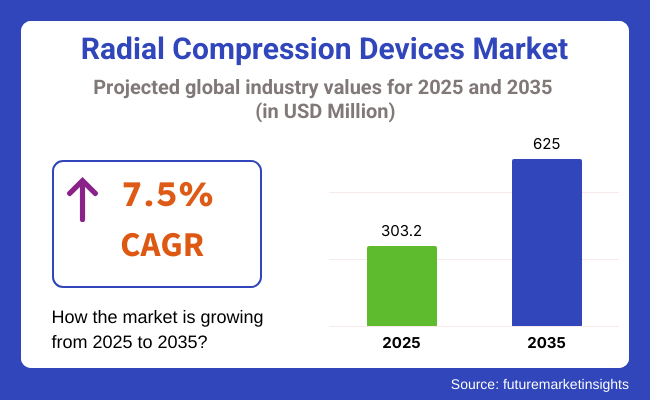
- Industry Size (2025)
- USD 303.2 Mn
- Forecast (2035)
- USD 625.0 Mn
- CAGR (2025 to 2035)
- 7.5%
Radial Compression Devices Market Size and Share Forecast Outlook 2025 to 2035
The global Radial Compression Devices Market was valued at USD 198.6 million in 2020 and is projected to reach USD 303.2 million by 2025. From 2025 to 2035, the market is forecast to expand at a robust CAGR of 7.5%, ultimately surpassing USD 625.0 million by 2035. This upward trajectory is primarily fueled by the growing clinical preference for radial artery access over femoral access in interventional cardiovascular procedures, including coronary angiography and percutaneous coronary interventions (PCI).
The transition to radial access is underpinned by lower complication rates, shorter recovery times, and cost-effective care delivery, making it a favorable approach for both patients and providers. As global procedural volumes rise, particularly among aging populations with cardiovascular comorbidities, the need for efficient hemostasis solutions has grown significantly.
The market is further supported by continuous innovations in device design, including adjustable pressure controls, transparent visualization bands, and antimicrobial-coated materials. Additionally, physician training initiatives and catheter lab partnerships by leading manufacturers are contributing to increased clinical adoption and sustained product utilization across key markets.
Major manufacturers operating in the radial compression devices space include Terumo Corporation, Merit Medical Systems, Abbott Laboratories, and Teleflex Incorporated. These companies continue to strengthen their market position through targeted product innovation, clinician education programs, and streamlined distribution models.
In 2024, DIZGENGENS Medical Science Co., Ltd. secured FDA 510(k) clearance, marking a significant step in expanding access to next-generation hemostasis technologies. New product introductions featuring antimicrobial coatings, dual-port mechanisms, and transparent pads are enhancing procedural safety, visualization, and clinician confidence. These advancements, combined with a growing emphasis on post-procedural outcomes and infection control, are expected to propel market competitiveness over the next decade.
North America is projected to maintain a leading position in the radial compression devices market in 2025, supported by high procedural volumes and favorable reimbursement structures that encourage the use of minimally invasive techniques. The USA healthcare system continues to witness a shift toward outpatient cardiovascular procedures, with CMS promoting ambulatory PCI protocols that rely heavily on radial access and associated hemostatic technologies.
Independent catheterization centers are also adopting radial-first strategies to enhance procedural safety and efficiency. In Europe, market growth is driven by the adoption of radial access guidelines issued by the European Society of Cardiology (ESC) and national initiatives to reduce vascular complications.
Countries such as Germany, France, and the Netherlands are investing in compact, disposable solutions tailored to public procurement strategies. Furthermore, EU-wide research collaborations aimed at minimizing radial artery occlusion are fostering innovation in compression system design and pressure regulation features
Analyzing Radial Compression Devices Market by Top Investment Segments
Band/Strap-Based Radial Compression Devices Lead the Market with Precise Pressure Application and Enhanced Patient Comfort
In 2025, the band/strap-based radial compression devices segment is expected to lead the global market, accounting for 80.0% of total revenue. This dominance is attributed to their superior ability to provide consistent, adjustable pressure over the radial artery following catheterization. The ergonomic design and transparent materials of these devices allow clinicians to monitor the access site without disrupting the compression, while the integration of antimicrobial elements reduces infection risks.
These devices also offer improved patient comfort, reduced incidence of occlusion, and are available in pre-sterilized kits for rapid deployment in high-throughput cardiovascular units. Hospitals and ambulatory centers have increasingly adopted strap-based solutions as the standard due to their simplicity, clinical reliability, and integration with cost-conscious purchasing frameworks across developed economies.
Disposable Radial Compression Devices Dominate the Market with Emphasis on Infection Control and Cost Efficiency
Disposable radial compression devices are projected to dominate the usage landscape in 2025, capturing 86.1% of global market revenue. This preference stems from heightened infection control measures and the demand for standardized, single-use solutions in high-volume procedural settings. Disposable devices mitigate the risk of cross-contamination and eliminate the need for reprocessing, aligning with hospital hygiene protocols and reducing turnaround times between procedures.
Regulatory authorities such as the FDA and EMA have endorsed disposable technologies in high-risk environments, driving their adoption across global healthcare systems. Manufacturers have responded with user-friendly innovations, such as built-in pressure valves, transparent interfaces, and simplified application mechanisms. The operational advantages of disposables-such as logistical ease, cost-effectiveness, and consistent performance-have positioned them as the gold standard for post-procedural radial artery management in both developed and emerging regions.
Challenges, Opportunities, and Trends
Challenges
Comprehensive Analysis of Challenges Impacting the Radial Compression Devices Market
The radial compression devices market faces challenges such as high costs of advanced compression systems, regulatory hurdles in obtaining approvals for innovative hemostasis technologies, and resistance to transitioning from femoral to radial access in some healthcare settings.
The need for improved compression device design to balance hemostasis and patient comfort, challenges in standardizing radial artery compression techniques, and disparities in reimbursement policies for radial procedures create barriers to market expansion.
Additionally, challenges in integrating AI-driven pressure monitoring into routine radial hemostasis, high costs associated with developing ultra-thin and lightweight compression devices, and concerns over long-term efficacy of bioresorbable radial bands impact market growth.
Opportunities
Emerging Opportunities and Innovations Driving Growth in the Radial Compression Devices Market
The increasing adoption of advanced hemostasis monitoring techniques, the expansion of transradial access in complex medical procedures, and rising investments in biodegradable radial closure devices are driving significant growth opportunities in the market. Innovations such as ultra-soft, adjustable radial bands and the integration of vascular closure methods with digital health solutions are further supporting market expansion.
Additionally, the rising use of hybrid radial and ulnar compression devices, alongside expanding research on non-invasive hemostasis tracking, is contributing to industry growth. Strengthening collaborations between pharmaceutical companies and medical technology firms to improve vascular access care is also expected to open new avenues for market development. Moreover, the growing demand for patient-focused radial compression solutions and user-friendly hemostasis devices is enhancing accessibility and boosting long-term market potential.
Emerging Trends
The rising adoption of eco-friendly, patient-friendly hemostasis solutions is expanding market opportunities in transradial access management and outpatient cardiac care. Moreover, governments and healthcare agencies are expanding support for radial access innovation, streamlining approval pathways for next-generation hemostasis solutions, and implementing policies to improve accessibility of advanced compression devices.
The rising demand for compression devices with dynamic pressure control and enhanced comfort features is driving innovation in adjustable, lightweight, and bioresorbable hemostasis devices, improving safety and treatment outcomes.
Brief Market Overview
From 2020 through 2024, the market for radial compression devices experienced a great boost in growth, primarily driven by increased utilization of transradial access procedures in interventional cardiology. The trend was boosted by the benefits of transradial access, which include minimal risks of bleeding and enhanced patient comfort compared to traditional femoral access procedures.
While these advantages existed, market growth was hindered by factors such as the expense of devices and the need for specialized education, which restrained broader utilization at that time.
Looking forward to 2025 to 2035, the radial compression devices market will witness steady growth, fueled by continued technological advancements, the increasing incidence of cardiovascular diseases, and increased emphasis on minimally invasive treatments.
Improved device functionality is expected to advance treatment outcomes, enhancing patient care overall. Additionally, the creation of cost-effective and easy-to-use devices is expected to enhance accessibility, particularly in developing markets, leading to wider market growth.
Country Wise Analysis
United States
Market Outlook
The United States is a major market for radial compression devices, with the rising volume of transradial catheterization procedures, growing incidence of cardiovascular diseases, and high adoption of minimally invasive procedures. Adoption of radial artery access over femoral artery access in interventional cardiology is driving market growth at a rapid pace. Also, improvements in radial compression technology and availability of major medical device companies are driving market growth.
Market Growth Factors
- Rising Prevalence of Cardiovascular Diseases: Increasing cases of coronary artery disease (CAD) and acute coronary syndrome (ACS) are driving demand for radial access procedures.
- Growing Adoption of Transradial Access in Angioplasty: Radial artery catheterization is preferred due to reduced complications and faster recovery times.
- Advancements in Compression Device Technology: Innovations in adjustable, pneumatic, and hemostatic radial compression bands are improving patient comfort and efficacy.
- Favorable Reimbursement Policies: Medicare and private insurers cover transradial catheterization, increasing accessibility.
- Strong Presence of Leading Medical Device Companies: USA-based firms are at the forefront of radial compression device manufacturing and distribution.
Market Forecast
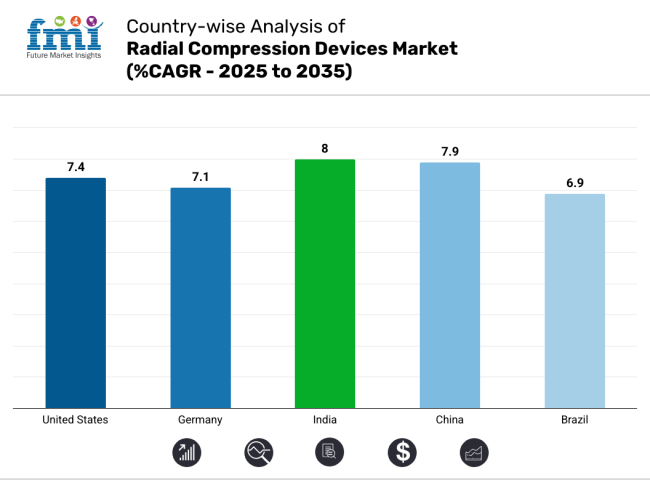
| Country | CAGR (2025 to 2035) |
|---|---|
| United States | 7.4% |
Germany
Market Outlook
Germany is an important market for radial compression devices, enjoying its highly developed healthcare system, high rate of adoption of transradial catheterization, and high concentration of medical technology companies. The patient safety and efficiency in interventional procedures focus in the country is propelling demand for advanced radial hemostasis devices.
Market Growth Factors
- High Adoption of Transradial Angioplasty: German hospitals are at the forefront of minimally invasive cardiovascular procedures.
- Strong R&D in Hemostasis Devices: German medtech firms are innovating next-generation radial compression technologies.
- Emphasis on Patient Safety & Shorter Hospital Stays: Radial access reduces bleeding complications and hospital readmissions.
- Government Support for Advanced Cardiovascular Care: National healthcare policies ensure widespread access to cutting-edge interventions.
- Increasing Use of Biodegradable & Eco-Friendly Compression Devices: Germany is pioneering sustainable medical device solutions.
Market Forecast
| Country | CAGR (2025 to 2035) |
|---|---|
| Germany | 7.1% |
India
Market Outlook
India's radial compression devices market is experiencing consistent growth due to the increasing incidence of cardiovascular diseases, the growing use of transradial catheterization procedures, and the burgeoning healthcare infrastructure. Although affordability is a major issue, the presence of affordable radial compression bands from local manufacturers is making it more accessible.
Market Growth Factors
- High Incidence of Heart Disease & Stroke: The growing prevalence of hypertension and diabetes is increasing demand for interventional procedures.
- Government Initiatives for Affordable Cardiac Care: Programs like Ayushman Bharat are improving access to catheterization procedures.
- Rise in Cath Labs & Interventional Cardiology Centers: The rapid establishment of cardiac care facilities is expanding the market.
- Availability of Cost-Effective Domestic Devices: Indian manufacturers are producing affordable radial compression bands.
- Growing Medical Tourism for Cardiac Interventions: International patients seeking low-cost angioplasty are contributing to market growth.
Market Forecast
| Country | CAGR (2025 to 2035) |
|---|---|
| India | 8.0% |
China
Market Outlook
China's market for radial compression devices is expanding with increasing prevalence of cardiac disease, government spending on healthcare infrastructure, and the growing use of interventional cardiology procedures. The nation is also witnessing the growth of local manufacturing of affordable vascular closure devices, making transradial procedures more accessible.
Market Growth Drivers
- Large Patient Population with Cardiovascular Diseases: A high burden of CAD and stroke is driving demand for radial catheterization.
- Government Investment in Interventional Cardiology: Public health initiatives are modernizing cardiovascular care.
- Rise of Local Medical Device Manufacturers: Domestic firms are producing affordable and high-quality radial compression devices.
- Increasing Adoption of Minimally Invasive Procedures: More hospitals are shifting to transradial interventions for better patient outcomes.
- Expansion of Private Healthcare & Digital Health Integration: Smart monitoring solutions for vascular procedures are gaining traction.
Market Forecast
| Country | CAGR (2025 to 2035) |
|---|---|
| China | 7.9% |
UK
Market Outlook
The United Kingdom’s radial compression devices market is expanding due to increasing awareness of radial artery catheterization benefits, NHS investments in interventional cardiology, and advancements in vascular closure devices. The shift towards outpatient procedures and same-day discharge after angioplasty is further driving demand for radial compression devices.
Market Growth Drivers
- Expansion of NHS-Funded Cardiovascular Care: Public healthcare support for transradial procedures is increasing device adoption.
- Growing Preference for Radial Over Femoral Access: Studies highlighting better patient outcomes with radial access are influencing clinical practices.
- Increasing Demand for Disposable & Single-Use Devices: The UK’s emphasis on infection control is boosting the use of sterile radial compression bands.
- Integration of AI & Remote Monitoring in Vascular Care: AI-driven hemostasis monitoring solutions are emerging in interventional cardiology.
- Growing Aging Population & CVD Burden: The rise in elderly patients with heart conditions is increasing demand for catheterization procedures.
Market Forecast
| Country | CAGR (2025 to 2035) |
|---|---|
| Brazil | 6.9% |
Competitive Outlook
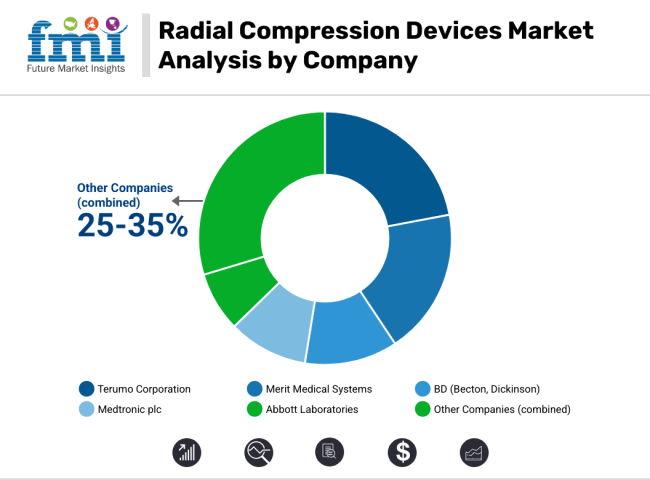
The radial compression devices market is highly competitive, driven by the increasing adoption of transradial access procedures, advancements in hemostasis technology, and the growing preference for minimally invasive cardiovascular interventions. Companies are investing in ergonomic designs, adjustable compression mechanisms, and patient-friendly hemostasis solutions to maintain a competitive edge.
The market is shaped by well-established medical device manufacturers, vascular access solution providers, and emerging hemostasis technology firms, each contributing to the evolving landscape of radial compression devices.
Key Company Insights
Terumo Corporation (22-26%)
A dominant player in the radial compression devices market, Terumo leads with high-performance hemostasis solutions for transradial interventions.
Merit Medical Systems (18-22%)
A leader in vascular access management, Merit Medical offers ergonomic radial compression bands that enhance patient comfort and procedural outcomes.
BD (Becton, Dickinson) (10-14%)
A key innovator in hemostasis technology, BD specializes in radial closure devices designed to reduce complications and improve workflow efficiency.
Medtronic plc (8-12%)
A strong competitor in cardiovascular devices, Medtronic provides user-friendly radial compression systems that ensure reliable and consistent hemostasis.
Abbott Laboratories (5-9%)
A major provider of vascular closure solutions, Abbott integrates advanced pressure-regulating features into its radial compression devices.
Other Key Players (25-35% Combined)
Beyond the leading companies, several other manufacturers contribute significantly to the market, enhancing product diversity and technological advancements. These include:
- Vascular Solutions (Teleflex)
- Cordis (Cardinal Health)
- Terason Corporation
- Tricol Biomedical
- Hemostasis LLC
These companies focus on expanding the reach of radial compression solutions, offering competitive pricing and cutting-edge innovations to meet diverse interventional cardiology and vascular access needs.
Key Segments
By Product Type:
Band/Strap Based, Knob Based and Plate Based
By Usage:
Disposable Device and Reusable Device
By Application:
Surgical Intervention and Diagnostics
By End User:
Hospitals, Independent Catheterization Lab, Ambulatory Surgical Centers and Specialized Clinics
By Region:
North America, Latin America, Western Europe, Eastern Europe, East Asia, South Asia & Pacific, Middle East & Africa
Frequently Asked Questions
What was the overall size of the Radial Compression Devices Market in 2025?
The overall market size for Radial Compression Devices Market was USD 303.2 million in 2025.
How big is the Radial Compression Devices Market expected in 2035?
The Radial Compression Devices Market is expected to reach USD 625.0 million in 2035.
What will drive the demand for Radial Compression Devices Market during the forecast period?
Radial access in a PCI process provides greater patient satisfaction, higher benefits and savings due to shorter hospital stay and lower post-procedural complication are some factors that is likely to drive the growth of this market.
List the top 5 Key players of the Radial Compression Devices Market?
The top key players that drives the development of Radial Compression Devices Market are, Terumo Corporation, Merit Medical Systems, BD (Becton, Dickinson), Medtronic plc, and Abbott Laboratories
Which segment in product is expected to lead in Radial Compression Devices Market?
Band-based in product type of Radial Compression Devices market is expected to command significant share over the assessment period.
Preview the report firsthand - request a free sample
Get SampleGet the brochure for pricing and purchase details.
Get PDFTable of Content
- Executive Summary
- Industry Introduction, including Taxonomy and Market Definition
- Market Trends and Success Factors, including Macro-Economic Factors, Market Dynamics, and Recent Industry Developments
- Global Market Demand (Value in USD) and Volume (Units) Analysis 2020 to 2024 and Forecast 2025 to 2035, including Historical Analysis and Future Projections
- Global Market Analysis 2020 to 2024 and Forecast 2025 to 2035
- By Product
- By Usage
- By Application
- By End User
- By Region
- Global Market Analysis 2020 to 2024 and Forecast 2025 to 2035, By Product
- Band/Strap Based
- Knob Based
- Plate Based
- Global Market Analysis 2020 to 2024 and Forecast 2025 to 2035, By Usage
- Disposable Device
- Reusable Device
- Global Market Analysis 2020 to 2024 and Forecast 2025 to 2035, By Application
- Surgical Intervention
- Diagnostics
- Global Market Analysis 2020 to 2024 and Forecast 2025 to 2035, By End User
- Hospital & Independent Catheterization Centers
- Ambulatory Surgical Centers
- Specialized Clinics
- Global Market Analysis 2020 to 2024 and Forecast 2025 to 2035, By Region
- North America
- Latin America
- Western Europe
- Eastern Europe
- South Asia & Pacific
- East Asia
- Middle East & Africa
- North America Sales Analysis 2020 to 2024 and Forecast 2025 to 2035, by Key Segments and Countries
- Latin America Sales Analysis 2020 to 2024 and Forecast 2025 to 2035, by Key Segments and Countries
- East Asia Sales Analysis 2020 to 2024 and Forecast 2025 to 2035, by Key Segments and Countries
- South Asia & Pacific Sales Analysis 2020 to 2024 and Forecast 2025 to 2035, by Key Segments and Countries
- Western Europe Sales Analysis 2020 to 2024 and Forecast 2025 to 2035, by Key Segments and Countries
- Eastern Europe Sales Analysis 2020 to 2024 and Forecast 2025 to 2035, by Key Segments and Countries
- Middle East and Africa Sales Analysis 2020 to 2024 and Forecast 2025 to 2035, by Key Segments and Countries
- Sales Forecast 2025 to 2035 by Product, by Usage, by Application, and by End User for 30 Countries
- Competition Outlook, including Market Structure Analysis, Company Share Analysis by Key Players, and Competition Dashboard
- Company Profile
- Terumo Corporation
- Merit Medical Inc.
- Abbott Laboratories
- ConMed B.V.
- Cardinal Health
- Beijing Demax Medical Technology
- Teleflex Incorporated
- Forge Medical Inc.
- TZ Medical Inc.
- Semler Technologies Inc.
- Advanced Vascular Dynamics
- MedPlus, Inc.
- Lepu Medical
- Others


