

- Industry Size (2026)
- USD 62.2 Bn
- Forecast (2036)
- USD 119 Bn
- CAGR (2026 to 2036)
- 6.7%
Spare Parts Logistics Market Forecast and Outlook 2026 to 2036
The spare parts logistics market is projected to reach USD 119 billion by 2036, growing at a CAGR of 6.7% from its 2026 valuation of USD 62.2 billion. Demand quality in this market is driven by the need for high reliability, timely deliveries, and consistent service levels in critical industries like automotive, aerospace, and industrial machinery. Stability in demand will be underpinned by the essential, ongoing need for spare parts in maintenance and repair operations. Repeat usage is common, as businesses rely on dependable logistics providers for timely replenishment of parts.
Buyer commitment levels remain strong due to the long-term nature of these relationships, where quality and service reliability are prioritized over price alone. As companies focus on minimizing downtime and optimizing supply chains, vendors must demonstrate both efficiency and flexibility, ensuring that customers continue to rely on their services for urgent and ongoing parts requirements across various sectors.
Quick Stats for the Spare Parts Logistics Market
- Spare Parts Logistics Market Value (2026): USD 62.2 billion
- Spare Parts Logistics Market Forecast Value (2036): USD 119 billion
- Spare Parts Logistics Market Global Forecast CAGR 2026 to 2036: 6.7%
- Spare Parts Logistics Market Leading Segment: Road Freight (51%)
- Key Growth Regions in Spare Parts Logistics Market: India
- Top Players in Spare Parts Logistics Market: DHL Supply Chain, Kuehne + Nagel International AG, DB Schenker Logistics, C.H. Robinson Worldwide, XPO Logistics, FedEx Supply Chain, UPS Supply Chain Solutions, Ryder System Inc., Ceva Logistics, Geodis SA
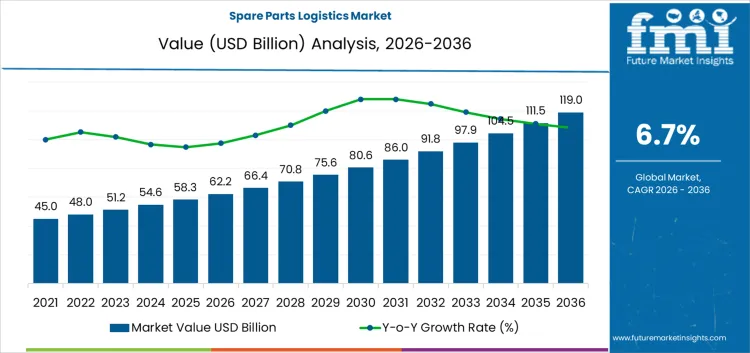
What is the Early vs Late Growth Curve Comparison for the Spare Parts Logistics Market through 2036?
The early growth phase of the spare parts logistics market (2026-2028) will be marked by gradual but steady increases in market value. From USD 62.2 billion in 2026 to USD 70.1 billion in 2028, growth will be driven by incremental improvements in logistics systems and the expansion of industries requiring spare parts management. This phase reflects growing recognition of the need for efficient spare parts logistics in global supply chains, as industries aim to improve downtime management and reduce operational disruptions.
In the late growth phase (2029-2036), the market will experience accelerated growth, with the value increasing from USD 74.5 billion in 2029 to USD 119 billion by 2036. This acceleration will be driven by the increasing adoption of advanced technologies like artificial intelligence (AI), automation, and machine learning in logistics, which enhance inventory management, predictive maintenance, and faster delivery times. Additionally, the continued rise of e-commerce and globalization will significantly increase demand for efficient spare parts logistics services. The late phase will see stronger demand as industries across the globe increasingly rely on fast and reliable spare parts logistics solutions to maintain high levels of operational efficiency.
Spare Parts Logistics Market Key Takeaways
| Metric | Value |
|---|---|
| Industry Sales Value (2026) | USD 62.2 billion |
| Industry Forecast Value (2036) | USD 119 billion |
| Industry Forecast CAGR 2026 to 2036 | 6.7% |
What Is Driving the Spare Parts Logistics Market?
Historically, the spare parts logistics market developed as manufacturers, distributors, and service providers sought reliable methods to supply replacement components for products after sale. Early spare parts distribution relied on manual inventory, local warehouses, and reactive replenishment when failures occurred. These methods often led to long lead times, stockouts, and elevated unplanned downtime for industrial equipment, vehicles, and consumer goods. As global supply chains expanded in the late 20th century, businesses began establishing centralized distribution centers, formal reorder points, and forecast driven stocking to balance availability and inventory cost. The automotive sector was an early adopter of systematic spare parts logistics because vehicle uptime and service center efficiency directly affected customer satisfaction. Industrial OEMs followed with planned parts provisioning linked to preventive maintenance programs. During this period, logistics practices matured around kanban replenishment, basic demand sensing, and safety stock profiling. This early phase established expectations for responsiveness, accuracy, and traceability in spare parts movements but remained limited by fragmented data and siloed operations.
Future demand for the spare parts logistics market is expected to be shaped by digital transformation, growth in aftermarket services, and rising expectations for fast, reliable delivery across industries. Growth drivers include adoption of advanced forecasting powered by artificial intelligence, real time inventory visibility across multi tier networks, and integrated platforms that connect OEMs, distributors, and service centers. The rise of e-commerce logistrics and same day delivery models will extend into aftermarket parts, pressuring logistics providers to shorten lead times and improve last mile performance. Expansion of complex equipment fleets in manufacturing, energy, aerospace, and healthcare will increase the volume and variety of parts that must be tracked, stored, and shipped with high accuracy to minimize operational downtime. Predictive parts replenishment based on usage data, sensor feeds from connected assets, and digital twins will reduce excess inventory while ensuring critical spares are available when needed. Barriers include variability in demand for slow moving items, high carrying costs for large inventories, and the need to balance service levels with warehousing expenses. Long term market expansion will depend on how effectively logistics players deploy automation, data analytics, and collaborative planning to meet global parts flow requirements with precision and agility.
What are the Key Segments in the Spare Parts Logistics Market?
The Spare Parts Logistics market is segmented by mode of transport and service type. Mode of transport includes road freight, air freight, sea freight, and rail freight, with road freight leading the market at 51%. Service types include transportation & freight, warehousing & inventory management, reverse logistics & returns, and value-added services (kitting, packaging), with transportation & freight representing the largest share at 40%. The market is driven by the growing demand for efficient, reliable, and timely delivery of spare parts across industries such as automotive, manufacturing, and electronics. The increasing complexity of supply chains and the need for quick turnaround times for spare parts are further fueling the demand for specialized logistics services.
What is Driving Growth in the Road Freight Mode of Transport Segment?
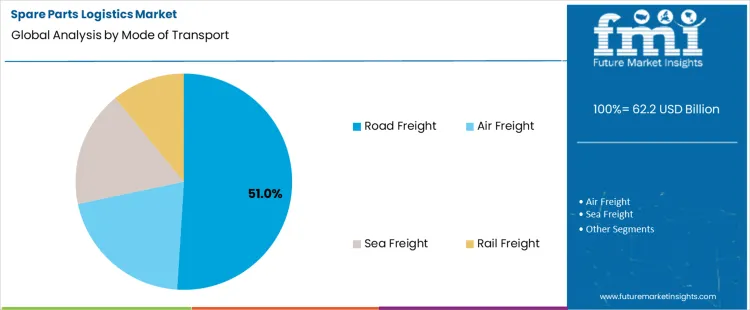
Road freight is the dominant mode of transport in the Spare Parts Logistics market, accounting for 51% of the market share. This growth is driven by the flexibility, cost-effectiveness, and speed that road freight offers for transporting spare parts, especially within regions with well-developed road infrastructure. Road freight allows for door-to-door delivery, making it highly suitable for time-sensitive shipments of spare parts, particularly in the automotive and manufacturing sectors. Additionally, road freight offers the ability to transport goods over short to medium distances with greater ease compared to other modes of transport, such as air or sea freight, which can be more costly and time-consuming. The increasing demand for just-in-time inventory systems and the need for quick repairs in industries like automotive and machinery are pushing the reliance on road freight. As urbanization and industrial activity expand, especially in emerging markets, the demand for road freight services in spare parts logistics is expected to continue growing.
What is Driving the Demand for Transportation & Freight Services in the Spare Parts Logistics Market?
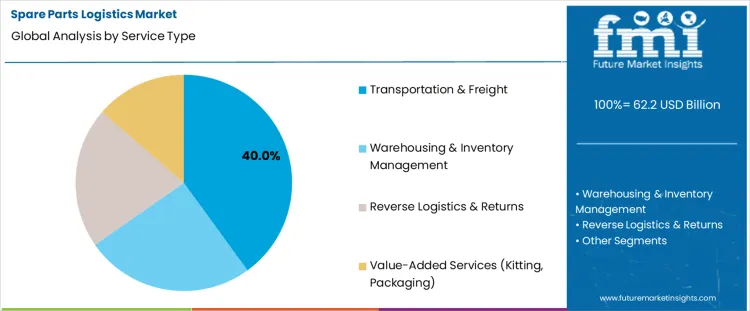
Transportation & freight services represent the largest service type segment in the Spare Parts Logistics market, holding 40% of the market share. This growth is driven by the critical need for fast, reliable, and efficient transportation of spare parts to various industries. Spare parts logistics requires a seamless and well-coordinated transportation system to ensure that essential components reach repair and manufacturing facilities on time, reducing downtime and improving operational efficiency. With industries such as automotive, aerospace, and electronics relying heavily on the availability of spare parts to maintain machinery, vehicles, and equipment, the demand for transportation & freight services is increasing.
The rapid growth of e-commerce and online marketplaces, where spare parts need to be delivered quickly to consumers and businesses, is further driving the demand for these services. Additionally, as supply chains become more complex and global, the need for optimized transportation services that can handle varying volumes, delivery speeds, and regulatory requirements is fueling growth in the transportation & freight services segment. The continued expansion of industrial and manufacturing sectors, particularly in regions like North America, Europe, and Asia Pacific, is expected to maintain the strength of this segment in the coming years.
What are the Key Dynamics in the Spare Parts Logistics Market?
The spare parts logistics market is growing due to the increasing demand for fast, efficient, and reliable delivery of spare parts across industries such as automotive, aerospace, industrial machinery, and electronics. Spare parts logistics involves the management, storage, and distribution of spare parts to ensure the timely availability of essential components required for maintenance, repairs, and production. The market is driven by the rising need for aftersales services, the growth of e-commerce, and the demand for reduced downtime in production and machinery. Additionally, the growing complexity of supply chains, the rise of digitalization in logistics management, and the push for more sustainable practices are further shaping the market dynamics.
What are the Key Drivers of Growth in the Spare Parts Logistics Market?
The primary drivers of growth in the spare parts logistics market include the increasing demand for spare parts across various industries, particularly in sectors such as automotive, aerospace, and machinery, where downtime costs can be significant. The need for timely and efficient delivery of spare parts to prevent production delays or equipment failures is driving the demand for improved logistics solutions. The rise of e-commerce and online platforms has created new opportunities for spare parts distribution, enabling faster and more direct access to customers. Furthermore, advancements in digital technologies such as IoT, AI, and big data are transforming logistics operations, making inventory management, tracking, and delivery more efficient. The adoption of automated systems, such as robotics in warehouses and drones for delivery, is also contributing to the growth of the market by reducing human error and operational costs. Additionally, the trend toward more sustainable and green logistics solutions, such as optimized transportation routes and eco-friendly packaging, is shaping the direction of the market.
What are the Key Restraints in the Spare Parts Logistics Market?
Despite its growth potential, the spare parts logistics market faces several challenges. One of the key restraints is the complexity of managing inventory across multiple locations and ensuring the availability of parts without overstocking, which can lead to higher costs. This is particularly challenging in industries with highly specialized or infrequently required spare parts. Another challenge is the high cost of maintaining efficient logistics infrastructure, including warehouses, transportation fleets, and technology systems. For companies with large or global operations, managing these logistics processes can be resource-intensive. Additionally, the increasing demand for faster delivery times, especially in the context of e-commerce, places pressure on logistics providers to maintain high levels of service while managing cost efficiency. Delays in spare parts delivery due to customs regulations, supply chain disruptions, or transport bottlenecks can further hinder the smooth functioning of spare parts logistics. Finally, the reliance on third-party logistics providers may create risks related to service reliability, compliance with standards, and control over the logistics process.
What are the Key Trends in the Spare Parts Logistics Market?
Several key trends are shaping the spare parts logistics market. One of the most notable trends is the increasing integration of advanced technologies to improve efficiency and transparency in the logistics process. The use of IoT for real-time tracking and monitoring of spare parts, coupled with AI-powered systems that predict demand and optimize inventory management, is transforming logistics operations. Another trend is the growing adoption of warehouse automation systems and fulfillment centers, where robotics and automated guided vehicles (AGVs) are used to enhance order picking and packaging processes, reducing human error and improving throughput. The rise of same-day or next-day delivery services, driven by e-commerce platforms, is also influencing the market, as customers expect fast, reliable, and cost-effective delivery options. Furthermore, there is a growing focus on sustainability, with logistics providers and manufacturers seeking to reduce carbon footprints by optimizing transportation routes, using electric vehicles, and adopting sustainable packaging solutions. Additionally, the expansion of global supply chains and the increasing complexity of international logistics are pushing companies to improve their logistics network to handle the global distribution of spare parts efficiently. These trends are expected to continue driving innovation and competition in the spare parts logistics market.
What is the Country-Wise Analysis of the Spare Parts Logistics Market?
The spare parts logistics market is growing as industries such as automotive, electronics, and machinery require efficient and reliable logistics solutions for spare parts management and distribution. Spare parts logistics involves the transportation, storage, and delivery of spare parts to ensure timely repairs and maintenance, which is critical for minimizing downtime and maximizing operational efficiency. The market is driven by factors such as the increasing need for after-sales services, growth in e-commerce, and advancements in supply chain technologies. Countries like the USA, China, Germany, India, and Japan are witnessing growth in this market, fueled by the expansion of manufacturing industries, increasing demand for quick and reliable spare parts supply, and technological advancements in logistics management.
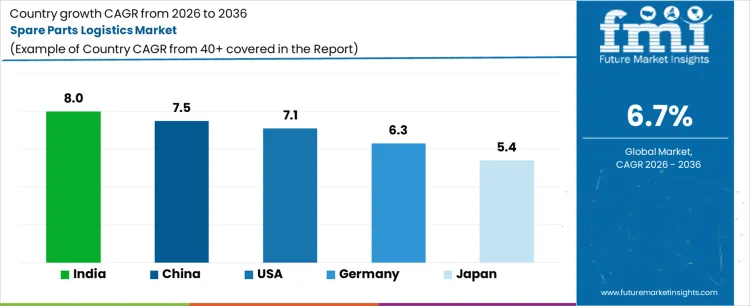
| Country | CAGR (%) |
|---|---|
| USA | 7.1 |
| China | 7.5 |
| Germany | 6.3 |
| India | 8 |
| Japan | 5.4 |
What is Driving the Growth of the Spare Parts Logistics Market in India?
India’s spare parts logistics market is growing at a CAGR of 8%, the highest among the countries analyzed. The growth is driven by India’s expanding manufacturing sector, which relies heavily on spare parts for maintenance and repairs, particularly in industries such as automotive, machinery, and electronics. The increasing demand for fast and efficient delivery of spare parts, along with the rise of e-commerce and digital platforms for spare parts sales, is contributing to market growth. India’s focus on improving logistics infrastructure, reducing supply chain inefficiencies, and supporting industrial growth is expected to continue driving the demand for spare parts logistics solutions in the country.
How is the Spare Parts Logistics Market Performing in the USA?
The spare parts logistics market in the USA is growing at a CAGR of 7.1%. The USA’s strong manufacturing and automotive sectors are driving the demand for spare parts logistics solutions to ensure timely and efficient delivery of components. The increasing reliance on e-commerce platforms and online services for spare parts procurement is also contributing to the market’s growth. Furthermore, the USA’s focus on improving supply chain efficiency and adopting new technologies like automation and artificial intelligence in logistics management is expected to continue supporting the growth of the spare parts logistics market. As the demand for fast and reliable spare parts delivery rises, the market in the USA is expected to expand steadily.
What Factors are Shaping the Spare Parts Logistics Market in China?
China’s spare parts logistics market is growing at a CAGR of 7.5%. The market is driven by China’s large manufacturing base, particularly in industries such as automotive, electronics, and machinery, which require efficient spare parts management and logistics. The country’s growing e-commerce sector and the increasing need for fast delivery of spare parts are contributing to market growth. China’s investments in logistics infrastructure, including transportation networks and warehouse management technologies, are enhancing the efficiency of spare parts distribution. As China’s manufacturing and industrial sectors continue to grow, the demand for spare parts logistics solutions is expected to increase.
How is the Spare Parts Logistics Market Evolving in Germany?
Germany’s spare parts logistics market is growing at a CAGR of 6.3%. The growth is driven by Germany’s strong industrial and automotive sectors, which require reliable and efficient spare parts management and logistics solutions. Germany’s emphasis on high-quality manufacturing and after-sales services is contributing to the demand for efficient spare parts logistics. Additionally, Germany’s focus on digitalization and automation in logistics, as well as its investments in infrastructure, is supporting the growth of the market. As Germany continues to innovate in manufacturing and logistics technologies, the demand for spare parts logistics solutions is expected to grow steadily.
What is Contributing to the Growth of the Spare Parts Logistics Market in Japan?
Japan’s spare parts logistics market is growing at a CAGR of 5.4%. The country’s strong automotive and electronics industries are key drivers of the demand for spare parts logistics solutions, which are essential for ensuring timely repairs and maintenance. Japan’s focus on improving supply chain efficiency, adopting new logistics technologies, and optimizing inventory management is contributing to the growth of the market. Additionally, the rise in e-commerce and the increasing need for quick and reliable spare parts delivery are fueling market growth. As Japan continues to focus on technological innovation in its manufacturing and logistics sectors, the demand for spare parts logistics solutions is expected to remain steady.
What is the Competitive Landscape for the Spare Parts Logistics Market?
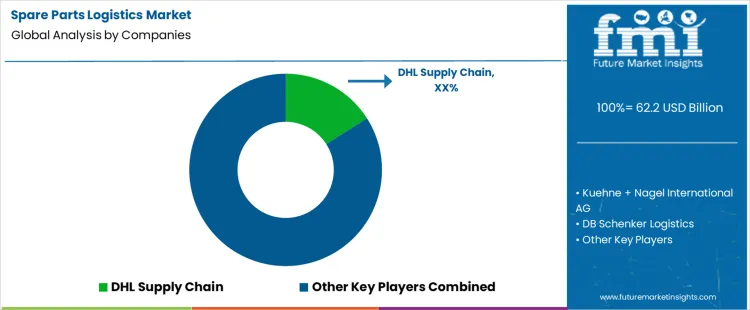
The spare parts logistics market is expanding due to the growing need for efficient, timely delivery of spare parts in industries such as automotive, aerospace, and manufacturing. DHL Supply Chain leads the market, offering advanced logistics solutions that ensure fast, reliable, and cost-effective delivery of spare parts to customers worldwide. DHL’s expertise in supply chain management, along with its global reach, positions it as the dominant player in this space. Kuehne + Nagel International AG is another key competitor, providing integrated logistics services that include spare parts management, emphasizing efficiency, real-time tracking, and customer satisfaction.
DB Schenker Logistics also competes by offering comprehensive supply chain solutions, focusing on optimizing the delivery of spare parts with a strong focus on sustainability and digitalization. C.H. Robinson Worldwide provides reliable spare parts logistics solutions that leverage technology to improve visibility, reduce lead times, and enhance supply chain efficiency. XPO Logistics offers end-to-end supply chain services, including spare parts logistics, with a focus on automation and real-time tracking to ensure timely delivery and improve operational efficiency. FedEx Supply Chain is a significant player, providing fast, flexible logistics solutions for spare parts distribution, with a strong emphasis on customer-centric services and speed.
UPS Supply Chain Solutions leverages its global network to provide tailored spare parts logistics solutions that ensure reliability and flexibility in distribution. Ryder System Inc. focuses on offering customized logistics solutions, ensuring efficient and cost-effective spare parts management for its clients. Ceva Logistics offers integrated supply chain solutions for spare parts, focusing on speed and cost efficiency while ensuring optimal service levels. Geodis SA competes by offering advanced logistics services for spare parts, focusing on supply chain visibility, speed, and end-to-end solutions.
To remain competitive in the spare parts logistics market, companies focus on technological innovation, efficiency, and customer satisfaction. DHL Supply Chain continues to lead by enhancing its logistics services with advanced digital tools, real-time tracking, and predictive analytics to improve supply chain performance. Kuehne + Nagel International AG is investing in automation and digitization to streamline its spare parts logistics services, ensuring faster deliveries and reduced costs. DB Schenker Logistics is expanding its digital platforms and focusing on sustainable logistics practices to meet the growing demand for efficient and eco-friendly solutions. C.H. Robinson Worldwide focuses on offering data-driven logistics solutions, improving visibility and control over spare parts shipments to optimize operational performance.
XPO Logistics enhances its service offerings by leveraging AI and automation to improve speed and reduce lead times in spare parts delivery. FedEx Supply Chain is expanding its flexible logistics solutions, integrating smart technology to improve delivery speed and operational efficiency. UPS Supply Chain Solutions continues to invest in expanding its global network and leveraging technology to provide more efficient and flexible spare parts logistics. Ryder System Inc. focuses on offering scalable and customizable spare parts logistics solutions that meet the diverse needs of industries. Ceva Logistics and Geodis SA continue to innovate by improving service delivery times, increasing visibility across supply chains, and providing seamless integration of logistics solutions. These strategies position these companies as leaders in the growing spare parts logistics market, ensuring that they remain at the forefront of the industry as demand for efficient logistics services increases across sectors.
Key Players of the Spare Parts Logistics Market
- DHL Supply Chain
- Kuehne + Nagel International AG
- DB Schenker Logistics
- C.H. Robinson Worldwide
- XPO Logistics
- FedEx Supply Chain
- UPS Supply Chain Solutions
- Ryder System Inc.
- Ceva Logistics
- Geodis SA
Scope of the Report
| Items | Values |
|---|---|
| Quantitative Units (2026) | USD Billion |
| Service Type | Transportation & Freight, Warehousing & Inventory Management, Reverse Logistics & Returns, Value-Added Services (Kitting, Packaging) |
| End-Use Industry | Automotive Aftermarket, Industrial Machinery & Equipment, Aerospace & Defense, Electronics & Electrical Equipment, Healthcare & Medical Devices |
| Mode of Transport | Road Freight, Air Freight, Sea Freight, Rail Freight |
| Companies | DHL Supply Chain, Kuehne + Nagel International AG, DB Schenker Logistics, C.H. Robinson Worldwide, XPO Logistics, FedEx Supply Chain, UPS Supply Chain Solutions, Ryder System Inc., Ceva Logistics, Geodis SA |
| Regions Covered | North America, Latin America, Western Europe, Eastern Europe, South Asia and Pacific, East Asia, Middle East & Africa |
| Countries Covered | United States, Canada, Mexico, Brazil, Argentina, Germany, France, United Kingdom, Italy, Spain, Netherlands, China, India, Japan, South Korea, ANZ, GCC Countries, South Africa |
| Additional Attributes | Dollar by sales by service type, end-use industry, mode of transport, and region. Includes market trends towards supply chain optimization, cost-effectiveness, regulatory compliance, and the role of spare parts logistics in improving delivery efficiency across industries. |
Spare Parts Logistics Market Segmentation
Service Type
- Transportation & Freight
- Warehousing & Inventory Management
- Reverse Logistics & Returns
- Value-Added Services (Kitting, Packaging)
End-Use Industry
- Automotive Aftermarket
- Industrial Machinery & Equipment
- Aerospace & Defense
- Electronics & Electrical Equipment
- Healthcare & Medical Devices
- Other
Mode of Transport
- Road Freight
- Air Freight
- Sea Freight
- Rail Freight
- Other
Region:
- Asia Pacific
- China
- Japan
- India
- Australia & New Zealand
- ASEAN
- Rest of Asia Pacific
- Europe
- Germany
- United Kingdom
- France
- Italy
- Spain
- Nordic
- BENELUX
- Rest of Europe
- North America
- United States
- Canada
- Mexico
- Latin America
- Brazil
- Argentina
- Rest of Latin America
- Middle East & Africa
- Kingdom of Saudi Arabia
- Other GCC Countries
- South Africa
- Rest of Middle East & Africa
Bibliography
- International Transport Forum. (2023). Transport outlook 2023: Sustainable transitions in global transport systems. OECD Publishing.
- World Economic Forum. (2023). The future of logistics: Delivering resilient and sustainable supply chains. World Economic Forum.
- United Nations Economic Commission for Europe. (2022). Supply chain resilience and trade facilitation in times of crisis. United Nations.
Frequently Asked Questions
How big is the spare parts logistics market in 2026?
The global spare parts logistics market is estimated to be valued at USD 62.2 billion in 2026.
What will be the size of spare parts logistics market in 2036?
The market size for the spare parts logistics market is projected to reach USD 119.0 billion by 2036.
How much will be the spare parts logistics market growth between 2026 and 2036?
The spare parts logistics market is expected to grow at a 6.7% CAGR between 2026 and 2036.
What are the key product types in the spare parts logistics market?
The key product types in spare parts logistics market are transportation & freight, warehousing & inventory management, reverse logistics & returns and value-added services (kitting, packaging).
Which end-use industry segment to contribute significant share in the spare parts logistics market in 2026?
In terms of end-use industry, automotive aftermarket segment to command 38.0% share in the spare parts logistics market in 2026.
Preview the report firsthand - request a free sample
Get SampleGet the brochure for pricing and purchase details.
Get PDFTable of Content
- Executive Summary
- Global Market Outlook
- Demand-side Trends
- Supply-side Trends
- Technology Roadmap Analysis
- Analysis and Recommendations
- Market Overview
- Market Coverage / Taxonomy
- Market Definition / Scope / Limitations
- Market Background
- Market Dynamics
- Drivers
- Restraints
- Opportunity
- Trends
- Scenario Forecast
- Demand in Optimistic Scenario
- Demand in Likely Scenario
- Demand in Conservative Scenario
- Opportunity Map Analysis
- Product Life Cycle Analysis
- Supply Chain Analysis
- Investment Feasibility Matrix
- Value Chain Analysis
- PESTLE and Porter’s Analysis
- Regulatory Landscape
- Regional Parent Market Outlook
- Production and Consumption Statistics
- Import and Export Statistics
- Market Dynamics
- Global Market Analysis 2021 to 2025 and Forecast, 2026 to 2036
- Historical Market Size Value (USD Million) Analysis, 2021 to 2025
- Current and Future Market Size Value (USD Million) Projections, 2026 to 2036
- Y-o-Y Growth Trend Analysis
- Absolute $ Opportunity Analysis
- Global Market Pricing Analysis 2021 to 2025 and Forecast 2026 to 2036
- Global Market Analysis 2021 to 2025 and Forecast 2026 to 2036, By Service Type
- Introduction / Key Findings
- Historical Market Size Value (USD Million) Analysis By Service Type, 2021 to 2025
- Current and Future Market Size Value (USD Million) Analysis and Forecast By Service Type, 2026 to 2036
- Transportation & Freight
- Warehousing & Inventory Management
- Reverse Logistics & Returns
- Value-Added Services (Kitting, Packaging)
- Transportation & Freight
- Y-o-Y Growth Trend Analysis By Service Type, 2021 to 2025
- Absolute $ Opportunity Analysis By Service Type, 2026 to 2036
- Global Market Analysis 2021 to 2025 and Forecast 2026 to 2036, By End-Use Industry
- Introduction / Key Findings
- Historical Market Size Value (USD Million) Analysis By End-Use Industry, 2021 to 2025
- Current and Future Market Size Value (USD Million) Analysis and Forecast By End-Use Industry, 2026 to 2036
- Automotive Aftermarket
- Industrial Machinery & Equipment
- Aerospace & Defense
- Electronics & Electrical Equipment
- Healthcare & Medical Devices
- Automotive Aftermarket
- Y-o-Y Growth Trend Analysis By End-Use Industry, 2021 to 2025
- Absolute $ Opportunity Analysis By End-Use Industry, 2026 to 2036
- Global Market Analysis 2021 to 2025 and Forecast 2026 to 2036, By Mode of Transport
- Introduction / Key Findings
- Historical Market Size Value (USD Million) Analysis By Mode of Transport, 2021 to 2025
- Current and Future Market Size Value (USD Million) Analysis and Forecast By Mode of Transport, 2026 to 2036
- Road Freight
- Air Freight
- Sea Freight
- Rail Freight
- Road Freight
- Y-o-Y Growth Trend Analysis By Mode of Transport, 2021 to 2025
- Absolute $ Opportunity Analysis By Mode of Transport, 2026 to 2036
- Global Market Analysis 2021 to 2025 and Forecast 2026 to 2036, By Region
- Introduction
- Historical Market Size Value (USD Million) Analysis By Region, 2021 to 2025
- Current Market Size Value (USD Million) Analysis and Forecast By Region, 2026 to 2036
- North America
- Latin America
- Western Europe
- Eastern Europe
- East Asia
- South Asia and Pacific
- Middle East & Africa
- Market Attractiveness Analysis By Region
- North America Market Analysis 2021 to 2025 and Forecast 2026 to 2036, By Country
- Historical Market Size Value (USD Million) Trend Analysis By Market Taxonomy, 2021 to 2025
- Market Size Value (USD Million) Forecast By Market Taxonomy, 2026 to 2036
- By Country
- USA
- Canada
- Mexico
- By Service Type
- By End-Use Industry
- By Mode of Transport
- By Country
- Market Attractiveness Analysis
- By Country
- By Service Type
- By End-Use Industry
- By Mode of Transport
- Key Takeaways
- Latin America Market Analysis 2021 to 2025 and Forecast 2026 to 2036, By Country
- Historical Market Size Value (USD Million) Trend Analysis By Market Taxonomy, 2021 to 2025
- Market Size Value (USD Million) Forecast By Market Taxonomy, 2026 to 2036
- By Country
- Brazil
- Chile
- Rest of Latin America
- By Service Type
- By End-Use Industry
- By Mode of Transport
- By Country
- Market Attractiveness Analysis
- By Country
- By Service Type
- By End-Use Industry
- By Mode of Transport
- Key Takeaways
- Western Europe Market Analysis 2021 to 2025 and Forecast 2026 to 2036, By Country
- Historical Market Size Value (USD Million) Trend Analysis By Market Taxonomy, 2021 to 2025
- Market Size Value (USD Million) Forecast By Market Taxonomy, 2026 to 2036
- By Country
- Germany
- UK
- Italy
- Spain
- France
- Nordic
- BENELUX
- Rest of Western Europe
- By Service Type
- By End-Use Industry
- By Mode of Transport
- By Country
- Market Attractiveness Analysis
- By Country
- By Service Type
- By End-Use Industry
- By Mode of Transport
- Key Takeaways
- Eastern Europe Market Analysis 2021 to 2025 and Forecast 2026 to 2036, By Country
- Historical Market Size Value (USD Million) Trend Analysis By Market Taxonomy, 2021 to 2025
- Market Size Value (USD Million) Forecast By Market Taxonomy, 2026 to 2036
- By Country
- Russia
- Poland
- Hungary
- Balkan & Baltic
- Rest of Eastern Europe
- By Service Type
- By End-Use Industry
- By Mode of Transport
- By Country
- Market Attractiveness Analysis
- By Country
- By Service Type
- By End-Use Industry
- By Mode of Transport
- Key Takeaways
- East Asia Market Analysis 2021 to 2025 and Forecast 2026 to 2036, By Country
- Historical Market Size Value (USD Million) Trend Analysis By Market Taxonomy, 2021 to 2025
- Market Size Value (USD Million) Forecast By Market Taxonomy, 2026 to 2036
- By Country
- China
- Japan
- South Korea
- By Service Type
- By End-Use Industry
- By Mode of Transport
- By Country
- Market Attractiveness Analysis
- By Country
- By Service Type
- By End-Use Industry
- By Mode of Transport
- Key Takeaways
- South Asia and Pacific Market Analysis 2021 to 2025 and Forecast 2026 to 2036, By Country
- Historical Market Size Value (USD Million) Trend Analysis By Market Taxonomy, 2021 to 2025
- Market Size Value (USD Million) Forecast By Market Taxonomy, 2026 to 2036
- By Country
- India
- ASEAN
- Australia & New Zealand
- Rest of South Asia and Pacific
- By Service Type
- By End-Use Industry
- By Mode of Transport
- By Country
- Market Attractiveness Analysis
- By Country
- By Service Type
- By End-Use Industry
- By Mode of Transport
- Key Takeaways
- Middle East & Africa Market Analysis 2021 to 2025 and Forecast 2026 to 2036, By Country
- Historical Market Size Value (USD Million) Trend Analysis By Market Taxonomy, 2021 to 2025
- Market Size Value (USD Million) Forecast By Market Taxonomy, 2026 to 2036
- By Country
- Kingdom of Saudi Arabia
- Other GCC Countries
- Turkiye
- South Africa
- Other African Union
- Rest of Middle East & Africa
- By Service Type
- By End-Use Industry
- By Mode of Transport
- By Country
- Market Attractiveness Analysis
- By Country
- By Service Type
- By End-Use Industry
- By Mode of Transport
- Key Takeaways
- Key Countries Market Analysis
- USA
- Pricing Analysis
- Market Share Analysis, 2025
- By Service Type
- By End-Use Industry
- By Mode of Transport
- Canada
- Pricing Analysis
- Market Share Analysis, 2025
- By Service Type
- By End-Use Industry
- By Mode of Transport
- Mexico
- Pricing Analysis
- Market Share Analysis, 2025
- By Service Type
- By End-Use Industry
- By Mode of Transport
- Brazil
- Pricing Analysis
- Market Share Analysis, 2025
- By Service Type
- By End-Use Industry
- By Mode of Transport
- Chile
- Pricing Analysis
- Market Share Analysis, 2025
- By Service Type
- By End-Use Industry
- By Mode of Transport
- Germany
- Pricing Analysis
- Market Share Analysis, 2025
- By Service Type
- By End-Use Industry
- By Mode of Transport
- UK
- Pricing Analysis
- Market Share Analysis, 2025
- By Service Type
- By End-Use Industry
- By Mode of Transport
- Italy
- Pricing Analysis
- Market Share Analysis, 2025
- By Service Type
- By End-Use Industry
- By Mode of Transport
- Spain
- Pricing Analysis
- Market Share Analysis, 2025
- By Service Type
- By End-Use Industry
- By Mode of Transport
- France
- Pricing Analysis
- Market Share Analysis, 2025
- By Service Type
- By End-Use Industry
- By Mode of Transport
- India
- Pricing Analysis
- Market Share Analysis, 2025
- By Service Type
- By End-Use Industry
- By Mode of Transport
- ASEAN
- Pricing Analysis
- Market Share Analysis, 2025
- By Service Type
- By End-Use Industry
- By Mode of Transport
- Australia & New Zealand
- Pricing Analysis
- Market Share Analysis, 2025
- By Service Type
- By End-Use Industry
- By Mode of Transport
- China
- Pricing Analysis
- Market Share Analysis, 2025
- By Service Type
- By End-Use Industry
- By Mode of Transport
- Japan
- Pricing Analysis
- Market Share Analysis, 2025
- By Service Type
- By End-Use Industry
- By Mode of Transport
- South Korea
- Pricing Analysis
- Market Share Analysis, 2025
- By Service Type
- By End-Use Industry
- By Mode of Transport
- Russia
- Pricing Analysis
- Market Share Analysis, 2025
- By Service Type
- By End-Use Industry
- By Mode of Transport
- Poland
- Pricing Analysis
- Market Share Analysis, 2025
- By Service Type
- By End-Use Industry
- By Mode of Transport
- Hungary
- Pricing Analysis
- Market Share Analysis, 2025
- By Service Type
- By End-Use Industry
- By Mode of Transport
- Kingdom of Saudi Arabia
- Pricing Analysis
- Market Share Analysis, 2025
- By Service Type
- By End-Use Industry
- By Mode of Transport
- Turkiye
- Pricing Analysis
- Market Share Analysis, 2025
- By Service Type
- By End-Use Industry
- By Mode of Transport
- South Africa
- Pricing Analysis
- Market Share Analysis, 2025
- By Service Type
- By End-Use Industry
- By Mode of Transport
- USA
- Market Structure Analysis
- Competition Dashboard
- Competition Benchmarking
- Market Share Analysis of Top Players
- By Regional
- By Service Type
- By End-Use Industry
- By Mode of Transport
- Competition Analysis
- Competition Deep Dive
- DHL Supply Chain
- Overview
- Product Portfolio
- Profitability by Market Segments (Product/Age /Sales Channel/Region)
- Sales Footprint
- Strategy Overview
- Marketing Strategy
- Product Strategy
- Channel Strategy
- Kuehne + Nagel International AG
- DB Schenker Logistics
- C.H. Robinson Worldwide
- XPO Logistics
- FedEx Supply Chain
- UPS Supply Chain Solutions
- Ryder System Inc.
- Ceva Logistics
- Geodis SA
- DHL Supply Chain
- Competition Deep Dive
- Assumptions & Acronyms Used
- Research Methodology


