

Tamper Evident Label Market Size and Share Outlook (2025 to 2035)
The tamper evident label industry is increasing rapidly as businesses prioritize security, authenticity, and product integrity on packaging. With the increasing fear of counterfeiting, supply chain transparency, and regulatory compliance, businesses are developing advanced label solutions with void patterns, destructible elements, and digital traceability. Businesses are implementing smart labeling technology, RFID-tagged authentication, and holographic security features to enhance traceability and brand protection.
Manufacturers are adopting high-resolution printing, solvent-free adhesives, and anti-tamper coatings to improve durability and utilization. The industry is shifting towards sustainable, customizable labels with improved security that enables sustainability efforts.
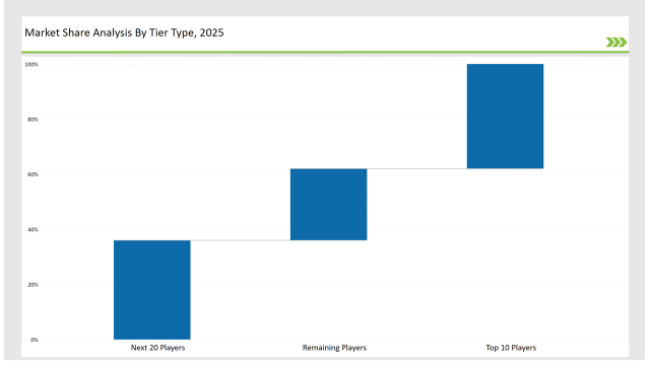
Tier 1 players like 3M, Avery Dennison, and CCL Industries hold 38% market share due to their leadership in high-performance security labels, heavy R&D investments, and robust distribution networks.
Tier 2 players such as UPM Raflatac, Tesa SE, and Lintec Corporation occupy 36% of the market with cost-effective, customized, and specialty tamper evident labels for industries such as pharmaceuticals, food packaging, and consumer electronics.
Tier 3 is regional and niche players with expertise in biodegradable, digital authentication, and forensic security labels and 26% of the market. Tier 3 companies emphasize local production, high-precision printing, and anti-counterfeiting.
Vendor Performance in Specialty Security, Void-Release, and Frangible Label Formats
Global Market Share by Key Players (2025)
| Category | Market Share (%) |
|---|---|
| Top 3 (3M, Avery Dennison, CCL Industries) | 19% |
| Rest of Top 5 (UPM Raflatac, Tesa SE) | 12% |
| Next 5 of Top 10 (Lintec Corporation, Schreiner Group, Honeywell, Seiko, Brady Corporation) | 7% |
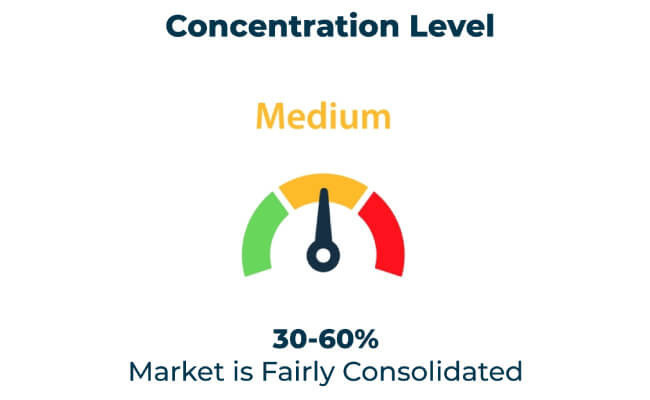
Market Concentration (2025E)
Segment Analysis
Powering Success in Leading Industries
The tamper evident label industry serves multiple sectors where security, authenticity, and traceability are essential. Companies are developing advanced labeling technologies to support regulatory compliance and consumer confidence. They are integrating AI-powered verification systems to enhance label authentication and tracking. Additionally, manufacturers are focusing on multi-layer security features that combine tamper-evident materials with real-time monitoring solutions.
- Pharmaceuticals & Healthcare: Ensuring authenticity with destructible and tamper-proof labels.
- Food & Beverage: Strengthening food safety with void-patterned security seals.
- Electronics & Automotive: Preventing warranty fraud with high-resistance security labels.
- Retail & E-Commerce: Enhancing brand protection with smart, trackable labels.
Vendor-Driven Product Categories
Manufacturers are optimizing tamper evident labels with smart tracking features, anti-counterfeiting solutions, and sustainable materials. They are integrating temperature-sensitive inks to detect tampering through environmental changes. Additionally, companies are developing holographic security seals that offer multi-layer authentication. Businesses are also using AI-driven verification systems to enhance real-time tracking and authentication processes.
- Void & Destructible Labels: Indicating tampering by leaving residue or breaking upon removal.
- RFID-Enabled & Smart Labels: Enhancing traceability and real-time authentication.
- Holographic & UV-Sensitive Labels: Providing visual authentication against counterfeiting.
- Eco-Friendly & Biodegradable Labels: Supporting sustainability without compromising security.
Who Shaped the Year
Security and innovation are redefining the tamper evident label industry. Companies are integrating blockchain authentication, forensic-level security printing, and cloud-based tracking solutions to improve anti-counterfeiting efforts. Businesses are developing temperature-sensitive labels to detect improper storage conditions. Manufacturers are expanding multi-layer security features, combining RFID, QR codes, and chemical markers for enhanced traceability. Additionally, firms are implementing AI-driven quality inspection to reduce errors and improve production efficiency. They are also adopting laser-etched security markings to create tamper-proof authentication elements. Furthermore, companies are integrating invisible ink printing that becomes visible under specific lighting conditions to enhance security.
Year-on-Year Leaders
- 3M: Launched high-security tamper evident labels with blockchain authentication.
- Avery Dennison: Developed eco-friendly, RFID-enabled security labels.
- CCL Industries: Expanded forensic-level printing for pharmaceutical labels.
- UPM Raflatac: Innovated temperature-sensitive tamper labels for food and medicine.
- Tesa SE: Strengthened holographic and destructible label portfolio.
- Lintec Corporation: Introduced UV-sensitive security labels for premium products.
- Schreiner Group: Pioneered smart labels with digital tracking for logistics.
Recommendations for Technology Suppliers
Technology suppliers should focus on automation, digital authentication, and eco-friendly labeling innovations to support the evolving tamper evident label market. Partnering with pharmaceutical, e-commerce, and logistics companies will accelerate adoption and market expansion.
- Sustainability Trends: Develop biodegradable and solvent-free security labels.
- Automation & Efficiency: Improve production with AI-driven defect detection and high-speed printing.
- Customization & Scalability: Offer smart and holographic label solutions for brand protection.
- Regional Growth Dynamics: North America and Europe lead in authentication technology, while Asia-Pacific drives cost-effective manufacturing.
Tier-Wise Vendor Classification (2025)
| Tier Type | Example of Key Players |
|---|---|
| Tier 1 | 3M, Avery Dennison, CCL Industries |
| Tier 2 | UPM Raflatac, Tesa SE, Lintec Corporation |
| Tier 3 | Schreiner Group, Honeywell, Seiko, Brady Corporation |
Key Company Initiatives
The top brands are leveraging artificial intelligence and implementing quality control with evidence of tamper-proof labels using eco-friendly materials and high-performance authentication solutions. They are incorporating high-definition security printing to prevent counterfeiting and for traceability purposes. Further, companies are now researching to develop adhesives that are tamper resistant and which bond strongly but give visible evidence of tampering.
| Manufacturer | Latest Developments |
|---|---|
| 3M | Launched blockchain-based tamper evident labels in March 2024. |
| Avery Dennison | Developed eco-friendly RFID security labels in April 2024. |
| CCL Industries | Expanded forensic printing for pharmaceutical security in May 2024. |
| UPM Raflatac | Released temperature-sensitive food packaging labels in June 2024. |
| Tesa SE | Strengthened holographic and destructible label portfolio in July 2024. |
| Lintec Corporation | Introduced UV-sensitive authentication labels in August 2024. |
| Schreiner Group | Pioneered smart tracking labels for logistics in September 2024. |
Vendor Insights
The tamper evident label market is evolving as companies invest in digital authentication, high-security printing, and AI-driven production. They are integrating advanced encryption technologies to improve label security and prevent unauthorized duplication. Additionally, manufacturers are developing color-changing inks that react to temperature fluctuations to indicate potential tampering. Businesses are also incorporating machine-readable security elements to streamline verification and enhance anti-counterfeiting measures.
- 3M:Leads in blockchain-based security labels.
- Avery Dennison:Pioneers eco-friendly RFID authentication.
- CCL Industries:Specializes in forensic printing for pharmaceuticals.
- UPM Raflatac:Innovates temperature-sensitive security labels.
- Tesa SE:Enhances holographic and destructible labels.
- Lintec Corporation:Develops UV-sensitive authentication labels.
- Schreiner Group:Advances digital tracking solutions.
Future Roadmap
Manufacturers will integrate AI-driven quality control, blockchain authentication, and RFID tracking to enhance security. Companies will refine forensic printing techniques to prevent counterfeiting. Businesses will expand sustainability initiatives with biodegradable security labels. Digital printing advancements will improve high-resolution, tamper-proof designs. Smart packaging applications will drive innovation in real-time tracking. Additionally, AI-powered predictive analytics will streamline production and ensure consistent quality. Companies will also explore NFC-enabled security labels to improve consumer engagement and authentication. Furthermore, manufacturers will invest in high-strength adhesives to ensure labels remain intact under extreme conditions.
Frequently Asked Questions
Who are the key manufacturers in the tamper evident label market?
Leading players include 3M, Avery Dennison, CCL Industries, UPM Raflatac, Tesa SE, Lintec Corporation, and Schreiner Group.
What is the market share of the top 3 players?
The top 3 players collectively control 19% of the global market.
How is market concentration assessed for 2025?
The market shows medium concentration, with top players holding 38%.
What factors drive innovation in this market?
Key drivers include security, digital tracking, sustainability, and automation.
Preview the report firsthand - request a free sample
Get SampleGet the brochure for pricing and purchase details.
Get PDFTable of Content
- Executive Summary
- Market Overview
- Key Growth Drivers
- Company Performance
- Market Concentration
- Segment Analysis
- Key Highlights from the Forecast
- Tier-Wise Company Classification
- Key Company Initiatives
- Recommendations for Technology Suppliers
- Future Roadmap
- FAQs


