

- CAGR (2025 to 2035)
- 4.9%
Labels Market Size and Share Analysis Forecast Outlook 2035
The labels market is growing rapidly as industries demand innovative, durable, and sustainable solutions for branding, product identification, and compliance. Manufacturers are advancing technologies to deliver high-performance, customizable, and eco-friendly labels to meet diverse industry needs. By 2035, this market is projected to exceed USD 149.5 billion, growing at a compound annual growth rate (CAGR) of 4.9%.
The focus on sustainability, product traceability, and consumer engagement drives market growth. Companies are developing label solutions that ensure durability, enhance branding, and support regulatory compliance.
| Attribute | Details |
|---|---|
| Projected Value by 2035 | USD 149.5 billion |
| CAGR (2025 to 2035) | 4.9% |
Market Overview of the Labels Market
Factors Driving Market Growth
- E-commerce Boom: Increasing online retail drives demand for product labeling and tracking.
- Sustainability: Manufacturers adopt recyclable and biodegradable materials to meet environmental goals.
- Customization: Businesses require tailored labels for branding and improved customer engagement.
- Regulatory Compliance: Industries prioritize labels that meet international standards for traceability and information.
- Technological Advancements: Innovations in smart labels and digital printing enhance label functionality.
Market Share & Industry Share
| Category | Market Share (%) |
|---|---|
| Top 3 Players (Avery Dennison, UPM Raflatac, CCL Industries) | 16% |
| Rest of Top 5 Players (3M, LINTEC) | 06% |
| Next 5 of Top 10 Players | 07% |
Type of Player & Industry Share
| Type of Player | Market Share (%) |
|---|---|
| Top 10 Players | 29% |
| Next 20 Players | 45% |
| Remaining Players | 26% |
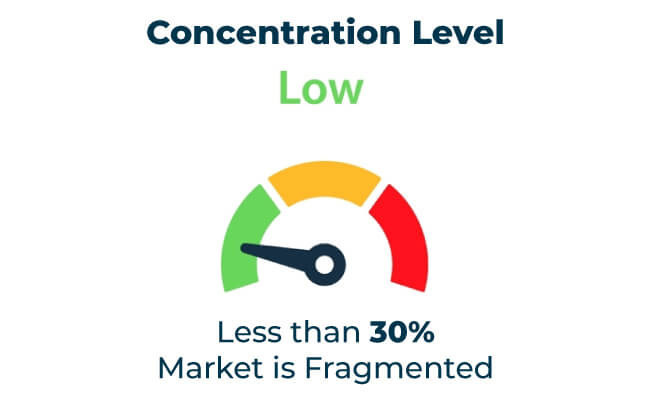
Market Concentration
Year-on-Year Leaders
- Avery Dennison: Innovates with sustainable and smart label solutions.
- UPM Raflatac: Focuses on recyclable materials and eco-friendly practices.
- CCL Industries: Leads with durable and customizable labeling options.
Emerging Technologies
- Smart Labels: Incorporate RFID, NFC, and QR codes for tracking and consumer engagement.
- Biodegradable Materials: Provide eco-friendly options without compromising quality.
- Digital Printing: Enables cost-effective, high-quality label customization.
- Temperature-Sensitive Labels: Monitor product conditions during storage and transit.
Sustainability Trends
- Recyclable Labels: Companies develop solutions compatible with recycling processes.
- Energy-Efficient Production: Manufacturers reduce emissions with advanced technologies.
- Waste Reduction: Lightweight designs minimize material usage and environmental impact.
Consumer Trends
- Eco-Conscious Choices: Buyers prefer labels made from sustainable materials.
- Enhanced Engagement: Consumers value labels with interactive elements like QR codes.
- Product Transparency: Detailed labels providing origin and ingredient information build trust.
Regulatory Insights
- North America: Enforces strict labeling regulations for safety and compliance.
- Europe: Promotes sustainability through rigorous packaging and labeling policies.
- Asia-Pacific: Experiences growing demand for affordable and compliant labeling solutions.
Export Opportunities
Emerging markets in Asia-Pacific, Africa, and Latin America offer significant growth potential. Expanding industrial sectors and increasing demand for branded and traceable products drive opportunities for label manufacturers. Exporters aligning with local regulations and consumer preferences can capitalize on these growing markets.
Obstacles and Opportunities
Obstacles
- High Material Costs: Advanced sustainable materials increase production expenses.
- Regulatory Complexity: Diverse global standards challenge compliance efforts.
- Recycling Infrastructure Gaps: Limited facilities hinder adoption of recyclable labels in some regions.
Opportunities
- Sustainability Initiatives: Eco-friendly labels attract environmentally conscious businesses.
- E-commerce Growth: Rising online retail boosts demand for functional and customizable labels.
- Technological Advancements: Smart and digital printing technologies open new possibilities.
Market Context
In-House vs. Contract Manufacturing
- In-House Manufacturing: Offers control over quality and branding, ideal for high-volume production.
- Contract Manufacturing: Provides flexibility and advanced technologies, benefiting smaller businesses or those with variable demand.
Regional Analysis
| Region | North America |
|---|---|
| Market Share (%) | 35% |
| Key Drivers | Focuses on compliance, traceability, and sustainability. |
| Region | Europe |
|---|---|
| Market Share (%) | 30% |
| Key Drivers | Leads in eco-friendly practices and advanced label designs |
| Region | Asia-Pacific |
|---|---|
| Market Share (%) | 25% |
| Key Drivers | Industrial growth and e-commerce drive demand. |
| Region | Other Regions |
|---|---|
| Market Share (%) | 10% |
| Key Drivers | Affordable, durable labels gain traction in emerging markets. |
End-User Segment Analysis
- Food and Beverage: Requires labels for branding, compliance, and traceability.
- Pharmaceuticals: Relies on secure, informative labels to meet stringent regulations.
- Logistics: Uses durable labels for tracking and inventory management.
- Retail: Enhances product visibility and branding with high-quality labels.
Future Roadmap
The labels market will grow through advancements in sustainable materials, smart technologies, and automation. Companies focusing on eco-friendly practices and global market expansion will strengthen their competitive positions. Collaboration with regulatory bodies and e-commerce platforms will drive innovation and adoption.
Market KPI
- Regional Revenue Growth: Tracks performance in North America and Asia-Pacific.
- Sustainability Metrics: Measures adoption of recyclable and biodegradable labels.
- End-User Demand: Monitors demand across food, pharma, logistics, and retail sectors.
Who Shaped the Year
- Avery Dennison: Pioneers in sustainable and interactive label technologies.
- UPM Raflatac: Develops eco-friendly and recyclable label solutions.
- CCL Industries: Innovates with durable and customizable options for various industries.
Tier-Wise Company Analysis
| Tier | Key Companies |
|---|---|
| Tier 1 | Avery Dennison, UPM Raflatac, CCL Industries |
| Tier 2 | 3M, LINTEC |
| Tier 3 | Inland, Multi-Color Corporation |
Key Vendor Initiatives
- Avery Dennison: Expands its portfolio with recyclable and smart labels.
- UPM Raflatac: Invests in sustainable materials and energy-efficient production.
- CCL Industries: Focuses on advanced digital printing and customization.
Conclusion
The labels market is set for significant growth as sustainability, e-commerce expansion, and innovation shape industry trends. Companies prioritizing eco-friendly practices, advanced materials, and global market expansion will lead the competitive landscape. Collaboration with regulatory bodies and industry stakeholders will enhance growth opportunities.
Appendix
Key Definitions
- Labels: Printed or adhesive materials used for product identification, branding, and traceability.
- Biodegradable Materials: Substances that decompose naturally, reducing environmental impact.
- Smart Labels: Include RFID, NFC, and QR codes for interactive and functional purposes.
Abbreviations
- CAGR: Compound Annual Growth Rate
- RFID: Radio-Frequency Identification
Methodology
This report integrates primary research, secondary data, and expert insights. Findings are validated through interviews with industry professionals and end-users to ensure accuracy and reliability.
Market Definition
The labels market includes the production and application of adhesive, printed, and smart labels for industries like food and beverage, pharmaceuticals, logistics, and retail. These solutions prioritize durability, compliance, and sustainability.
Top Segments Studied in the Labels Market Outlook
By End-User:
- Food and Beverage
- Pharmaceuticals
- Logistics
- Retail
By Region:
- North America
- Europe
- Asia-Pacific
- Other Regions
Frequently Asked Questions
What industries rely heavily on labels?
Industries like food and beverage, pharmaceuticals, logistics, and retail use labels for branding, compliance, and traceability.
How are labels becoming more sustainable?
Manufacturers use recyclable and biodegradable materials, reduce waste with lightweight designs, and adopt energy-efficient production processes.
Which regions dominate the labels market?
North America and Europe lead due to strong e-commerce growth and stringent environmental regulations, while Asia-Pacific shows rapid growth driven by industrial expansion.
What are the main challenges in the labels market?
Challenges include high material costs, recycling infrastructure gaps, and navigating diverse global regulatory standards.
What advancements are shaping the future of labels?
Smart labels with interactive features, digital printing technologies, and temperature-sensitive designs are driving innovation in the market.
Preview the report firsthand - request a free sample
Get SampleGet the brochure for pricing and purchase details.
Get PDFTable of Content
- Executive Summary
- Market Overview
- Market Growth Drivers
- Market Size and Forecast
- Vendor Performance
- Global Market Share & Industry Share
- Type of Player & Industry Share
- Market Concentration
- Year-on-Year Leaders
- Technology Trends
- Sustainability Trends
- Consumer Trends
- Regulatory Insights
- Export Opportunities
- Challenges and Opportunities
- Market Context
- Regional Analysis
- End-User Industry Segments
- Future Roadmap
- Market KPI
- Who Shaped the Year
- Tier-Wise Company Analysis
- Key Vendor Initiatives
- Conclusion
- Appendix
- Methodology
- Market Definition
- FAQs


