

Repositionable Labels Market Size and Share Forecast Outlook (2025 to 2035)
The repositionable labels market is continuously rising because of growing demand across retail, logistics, pharmaceuticals, and consumer goods. Key participants are focusing on innovation within adhesive technologies, sustainability and printing technologies. Improvement in the cost-efficiency and quality through automation in the production process also further drives market expansion.
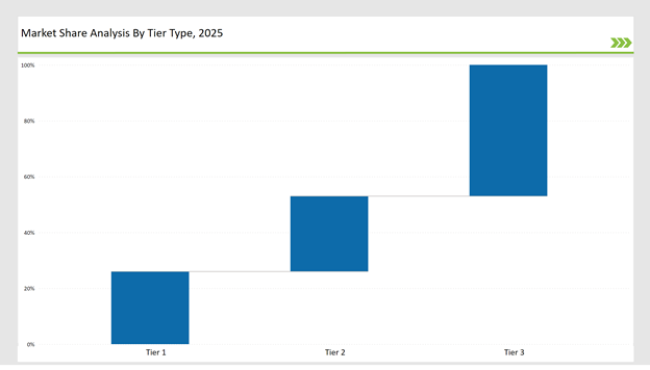
Tier 1: Leading companies such as Avery Dennison, CCL Industries, and UPM Raflatac dominate 26% of the market, leveraging advanced adhesive formulations, extensive distribution networks, and continuous innovation in eco-friendly labels.
Tier 2: Companies like 3M, Multi-Color Corporation, and LINTEC control 27% of the market. These firms cater to mid-sized consumers by offering high-performance labeling solutions, benefiting from cost-effective production and strong regulatory compliance.
Tier 3: Regional and niche manufacturers specializing in customized, specialty, and removable labels account for the remaining 47% of the market. These players focus on tailored solutions with localized distribution strategies.
Vendor Performance in Removable, Restickable, and Low-Tack Label Products
Global Market Share by Key Players (2025)
| Category | Market Share (%) |
|---|---|
| Top 3 (Avery Dennison, CCL Industries, UPM Raflatac) | 12% |
| Rest of Top 5 (3M, Multi-Color Corporation) | 9% |
| Next 5 of Top 10 (LINTEC, Fuji Seal, MCC Verstraete, SATO Holdings, Inland Label) | 5% |
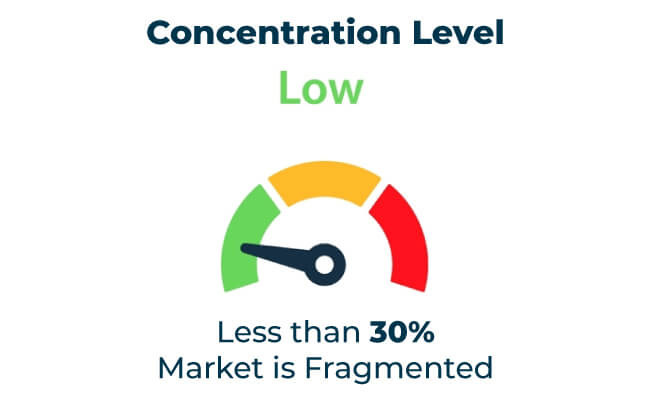
Market Concentration (2025E) Among Pressure-Sensitive Labeling Providers
Segment Analysis by Adhesive Type, Label Format, and End Use
Powering Success in Leading Industries
The repositionable labels market serves multiple industries, driven by the need for product identification, regulatory compliance, and sustainability.
- Retail & E-commerce: Growth in online shopping boosts demand for flexible and removable labeling solutions.
- Logistics & Warehousing: Increased use of repositionable barcodes and inventory tracking labels.
- Pharmaceuticals: Labels with temporary adhesion properties for medical packaging and compliance.
- Consumer Goods & Food Packaging: Customizable solutions for branding and reusability.
Vendor-Driven Product Categories
To satisfy industry expectations, businesses are concentrating on eco-friendly materials, high-performance printing processes, and adhesive durability.
- Removable Paper Labels: Used in retail and logistics for temporary applications.
- Repositionable Film Labels: Durable and moisture-resistant solutions for high-demand environments.
- Eco-Friendly Adhesive Labels: Biodegradable and recyclable options for sustainability.
- Smart Labels: NFC and RFID-enabled solutions for track-and-trace functionality.
Who Shaped the Year – Developments in Clean Removal and High Opacity Label Films
The utilization of sustainability-focused materials, automated label application, and AI-driven quality monitoring has raised competition. In order to improve utilization and reduce their environmental impact, manufacturers are investing in research and development to create intelligent and compostable labels.
Year-on-Year Leaders
- Avery Dennison: Expanded its sustainable labeling portfolio with fully recyclable materials.
- CCL Industries: Developed repositionable labels with improved adhesion control for logistics.
- UPM Raflatac: Focused on biodegradable label solutions to meet regulatory requirements.
- 3M: Strengthened its presence with smart label innovations for inventory tracking.
- Multi-Color Corporation: Introduced water-resistant repositionable labels for food packaging.
Recommendations for Technology Suppliers in Print Compatibility and Shelf Life
Technology suppliers should focus on integrating smart labeling solutions, sustainability, and advanced printing technologies. Collaborations with raw material providers will further enhance innovation.
- Sustainability Trends: Develop compostable and biodegradable adhesive technologies.
- Automation & Efficiency: Invest in AI-powered label printing and application systems.
- Customization & Scalability: Offer industry-specific and customizable label solutions.
- Regional Growth Dynamics: Asia-Pacific is expected to drive demand, while North America and Europe focus on regulatory compliance and sustainable solutions.
Tier-Wise Vendor Classification (2025) by Market Channel and Labeling Application
| Tier Type | Example of Key Players |
|---|---|
| Tier 1 | Avery Dennison, CCL Industries, UPM Raflatac |
| Tier 2 | 3M, Multi-Color Corporation, LINTEC |
| Tier 3 | Fuji Seal, MCC Verstraete, SATO Holdings, Inland Label |
Key Company Initiatives in Sustainable Liners, Reposition-Ready Coatings, and E-Commerce Labels
Leading manufacturers are extending their production capabilities, integrating sustainable materials, and developing printing technology in order to meet shifting industry demands.
| Manufacturer | Latest Developments |
|---|---|
| Avery Dennison | Launched a new line of 100% recyclable repositionable labels (March 2024) |
| CCL Industries | Developed advanced adhesive technology for repositionable logistics labels (August 2023) |
| UPM Raflatac | Introduced biodegradable labeling materials (May 2024) |
| 3M | Expanded its smart label solutions for inventory tracking (November 2023) |
| Multi-Color Corporation | Launched water-resistant repositionable labels for food and beverage packaging (February 2024) |
Vendor Insights on Adhesion Strength, Peelability, and Reusability Across Cycles
In order to preserve a solid market position, major players in the repositionable labels industry are concentrating on innovation, sustainability, and automation as the competitive landscape changes quickly.
- Avery Dennison leads in sustainable and fully recyclable label solutions.
- CCL Industries pioneers repositionable adhesive technology for logistics and retail applications.
- UPM Raflatac specializes in biodegradable labels aligning with regulatory trends.
- 3M strengthens its innovation in smart labels with enhanced tracking functionality.
- Multi-Color Corporation focuses on water-resistant and high-performance printing solutions.
Future Roadmap for Smart Labels, Biodegradable Adhesives, and Recyclable Backings
Automation, eco-friendly materials, and intelligent labeling technologies will propel the market for repositionable labels. To satisfy industry demands, businesses will create ultra-thin, high-performance label films, invest in biodegradable adhesives, and incorporate RFID and NFC capabilities. The future of the sector will continue to be shaped by the growing regulatory demand on sustainability.
Segmentation of the Repositionable Labels Market by Adhesive Type, Application, and Substrate
By Targeted End-User Industries:
- Retail & E-commerce
- Logistics & Warehousing
- Pharmaceuticals
- Consumer Goods & Food Packaging
By Product Categories:
- Removable Paper Labels
- Repositionable Film Labels
- Eco-Friendly Adhesive Labels
- Smart Labels
Frequently Asked Questions
Who are the key manufacturers in the repositionable labels market?
Leading players include Avery Dennison, CCL Industries, UPM Raflatac, 3M, and Multi-Color Corporation.
What is the market share of the top 3 players?
The top 3 players collectively control 12% of the global market.
How is market concentration assessed for 2025?
The market exhibits medium concentration, with top players holding 26%.
What factors drive innovation in this market?
Key drivers include sustainability, automation, material innovation, and regulatory compliance.
Preview the report firsthand - request a free sample
Get SampleGet the brochure for pricing and purchase details.
Get PDFTable of Content
- Executive Summary
- Market Overview
- Key Growth Drivers
- Company Performance
- Market Concentration
- Segment Analysis
- Key Highlights from the Forecast
- Tier-Wise Company Classification
- Key Company Initiatives
- Recommendations for Technology Suppliers
- Future Roadmap
- FAQs


