

Braille Labels Market Size and Share Forecast Outlook for 2025 to 2035
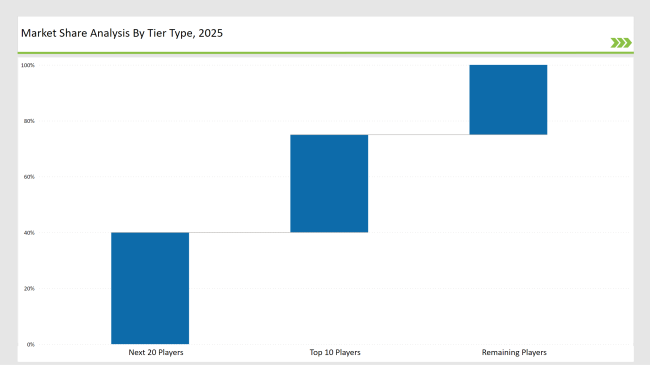
The global braille labels market is highly competitive, with companies categorized into Tier 1, Tier 2, and Tier 3 based on market presence and strategic positioning. Tier 1 players, including Avery Dennison, 3M, and CCL Industries, collectively hold 35% of the market. These companies dominate by leveraging advanced printing technology, compliance with accessibility regulations, and strong distribution networks to meet the increasing demand for braille labeling solutions.
Tier 2 players, such as UPM Raflatac, Schreiner Group, and Multi-Color Corporation, account for approximately 40% of the market. They focus on cost-effective, customizable braille label solutions for pharmaceutical, food, and consumer goods packaging. These players strengthen their market presence by expanding production capacities and enhancing smart labeling technologies.
Tier 3 players, including regional manufacturers and niche startups, hold 25% of the market. They specialize in unique braille printing techniques, lightweight label materials, and compliance-driven labeling solutions. Their agility enables them to quickly adapt to changing accessibility regulations and market needs.
Vendor Performance in Braille Embossing, Adhesive Labeling, and Custom Roll Formats
Global Market Share by Key Players (2025)
| Category | Market Share (%) |
|---|---|
| Top 3 (Avery Dennison, 3M, CCL Industries) | 18% |
| Rest of Top 5 (UPM Raflatac, Schreiner Group) | 10% |
| Next 5 of Top 10 (Multi-Color Corporation, Denny Bros, Tactile Labels, MCC Label, Rotomail) | 7% |
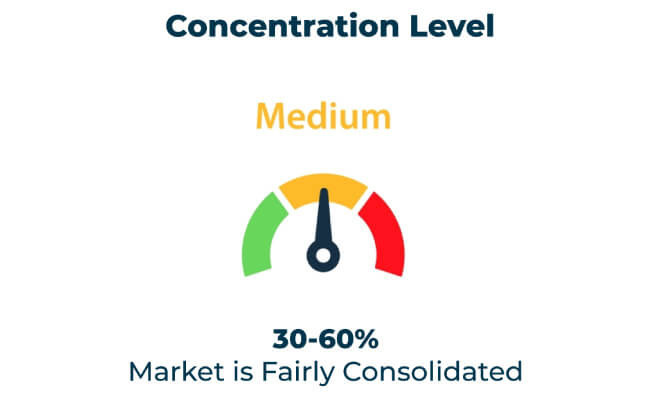
Market Concentration, 2025E Among Assistive Packaging and Labeling Providers
Segment Analysis by Material Type, Printing Method, and End Use Industry
Targeted End-user Key Industries
The braille labels market serves industries such as
- Pharmaceuticals & Healthcare: Labels ensure accessibility and regulatory compliance for medication packaging.
- Food & Beverage: Braille-embossed labels enhance inclusivity and consumer trust in packaged products.
- Consumer Goods: Tactile labels improve product differentiation and accessibility for visually impaired individuals.
Vendor-Focused Product Categories
Vendors offer specialized products to meet evolving industry needs
- Self-Adhesive Braille Labels: Designed for pharmaceutical and food packaging applications.
- Heat-Embossed Tactile Labels: Developed for durable and high-precision braille printing.
- Smart Braille Labels with QR Codes: Enhances accessibility through digital interaction and product information retrieval.
Manufacturers integrate automation, AI-driven printing quality control, and compliance-driven innovations to enhance efficiency while accessibility regulations remain a key driver for market growth.
Who Shaped the Year – Innovators in Tactile Labeling and Accessibility Compliance
This section highlights the key players that led innovation and growth in the braille labels market in 2025. Companies introduced high-performance, durable braille labels to improve accessibility. Manufacturers invested in AI-driven quality control to enhance efficiency. Firms expanded production capacity to meet the increasing demand for regulatory-compliant braille labeling. Businesses developed smart labeling technologies to improve consumer engagement and traceability.
Year on Year Leaders
- Avery Dennison : Expanded sustainable braille label production with high-durability materials.
- 3M : Launched ultra-lightweight and high-precision braille labels.
- CCL Industries : Invested in AI-driven defect detection for improved quality control.
- UPM Raflatac : Enhanced customization capabilities with advanced embossing techniques.
- Schreiner Group : Developed smart braille labels integrating NFC and QR code technology.
- Multi-Color Corporation : Focused on durable, high-performance braille labels for pharmaceutical packaging.
- Denny Bros : Strengthened production capacity in Europe to meet increasing accessibility requirements.
Recommendations for Technology Suppliers in Precision Embossing and Tamper-Resistant Materials
- Sustainability Trends: Fully recyclable and biodegradable braille labels are in high demand.
- Customization and Niche Offerings: Unique tactile designs and regulatory compliance enhance market positioning.
- Technological Advancements: AI-based defect detection and smart labeling solutions improve production efficiency.
- Regional Growth Dynamics: Europe and North America lead in regulatory compliance adoption, while Asia-Pacific sees growing demand for accessibility solutions.
Tier-Wise Vendor Classification, 2025 Based on Market Reach and Printing Capabilities
| Tier Type | Example of Key Players |
|---|---|
| Tier 1 | Avery Dennison, 3M, CCL Industries |
| Tier 2 | UPM Raflatac, Schreiner Group, Multi-Color Corporation |
| Tier 3 | Denny Bros, Tactile Labels, niche startups |
Key Company Initiatives in Multi-Language Labeling, Sustainability, and Product Traceability
| Manufacturer | Latest Developments |
|---|---|
| Avery Dennison | In January 2024, launched high-durability and eco-friendly braille labels. |
| 3M | In March 2024, introduced AI-powered quality control for braille embossing. |
| CCL Industries | In June 2024, expanded production capacity for smart braille labeling solutions. |
| UPM Raflatac | In February 2024, developed high-precision tactile labels with smart tracking. |
| Schreiner Group | In July 2024, launched braille labels with integrated NFC and digital accessibility. |
| Multi-Color Corporation | In April 2024, focused on compliant and durable braille labeling solutions. |
| Denny Bros | In August 2024, expanded European production to support regulatory compliance demands. |
Vendor Insights on Regulatory Standards, Ink Compatibility, and Cost Optimization
- Avery Dennison: A leader in sustainable and AI-driven braille label manufacturing.
- 3M: Innovates in lightweight and high-precision tactile labels.
- CCL Industries: Invests in AI-driven defect detection and compliance-driven labeling.
- UPM Raflatac: Specializes in advanced embossing and smart labeling innovations.
- Schreiner Group: Develops interactive NFC-enabled braille labeling solutions.
- Multi-Color Corporation: Leads in durable and regulatory-compliant pharmaceutical braille labels.
- Denny Bros: Expands production to meet accessibility standards in global markets.
Future Roadmap for Smart Braille Labels, Digital Integration, and Expanded Product Lines
The industry is evolving with AI-driven production monitoring, sustainable materials, and customized tactile solutions. Manufacturers optimize energy-efficient processes to reduce environmental impact. Companies invest in regulatory-compliant embossing techniques and mono-material braille labels for recyclability.
Engineers develop tamper-proof and highly durable braille labels for improved consumer usability. Firms enhance digital branding capabilities for interactive and accessible packaging. Emerging innovations will drive further investments in next-generation braille label technologies.
Segmentation of the Braille Labels Market by Material, Application, and End Use
By Product Type:
- Self-Adhesive Braille Labels
- Heat-Embossed Tactile Labels
- Smart Braille Labels with QR Codes
By End-user:
- Pharmaceuticals & Healthcare
- Food & Beverage
- Consumer Goods
Frequently Asked Questions
Who are the key manufacturers in the Braille Labels Market?
Avery Dennison, 3M, CCL Industries, UPM Raflatac, and Schreiner Group lead the market.
What is the share of the tier -1 players in the braille labels market?
Tier-1 players collectively hold about 35% of the global market.
What drives innovation in the braille labels industry?
AI-based quality control, sustainable materials, and regulatory compliance drive innovation.
How do braille labels impact accessibility in packaging?
They enhance inclusivity, improve product differentiation, and comply with global accessibility regulations.
What role does smart packaging play in braille labels?
Smart packaging integrates NFC, QR codes, and digital accessibility for enhanced consumer engagement.
Preview the report firsthand - request a free sample
Get SampleGet the brochure for pricing and purchase details.
Get PDFTable of Content
- Executive Summary
- Market Overview
- Key Growth Drivers
- Company Performance
- Market Concentration
- Segmented Analysis
- Key Highlights from the Forecast
- Tier-Wise Company Classification
- Key Company Initiatives
- Recommendations for Brands
- Future Roadmap
- FAQs


