

- Industry Size (2025)
- USD 964.4 Mn
- Forecast (2035)
- USD 7102.6 Mn
- CAGR (2025 to 2035)
- 22.1%
Therapeutic Robots Market Size and Share Forecast Outlook 2025 to 2035
The therapeutic robots market is valued at USD 964.4 million in 2025 and is expected to reach USD 7,102.6 million by 2035, with a CAGR of 22.1%. The market’s rapid growth is driven by increasing adoption of robotics in healthcare settings, particularly for emotional and rehabilitation therapy, with humanoid robots leading the way with 57.8% share in 2025. As therapeutic robots become more sophisticated and cost-effective, their integration in treating patients with various physical and mental health conditions accelerates. Autism leads the disorder type segment with 38.6% market share in 2025, reflecting the growing demand for robotic support in autism therapy, where robots play a vital role in behavioral interaction and therapy delivery.
Growth is further fueled by the aging global population, increasing stroke incidents, and the rising incidence of neurodevelopmental disorders like autism. North America, Asia-Pacific, and Europe will drive market expansion due to robust healthcare infrastructure and high disposable income, supporting the adoption of therapeutic robots for conditions like dementia, anxiety, and post-traumatic stress. Technological advances in robotics, such as enhanced emotional interaction capabilities, will continue to drive market demand. However, challenges such as high initial costs, regulatory hurdles, and limited reimbursement models in certain regions may hinder widespread adoption.
Quick Stats for Therapeutic Robots Market
- Therapeutic Robots Market Industry Value (2025): USD 964.4 million
- Therapeutic Robots Market Forecast Value (2035): USD 7102.6 million
- Therapeutic Robots Market Forecast CAGR: 22.1%
- Leading Segment in Therapeutic Robots Market in 2025: Humanoid (57.8%)
- Key Growth Region in Therapeutic Robots Market: North America, Asia-Pacific, Europe
- Top Key Players in Therapeutic Robots Market: PARO Robots, SoftBank Robotics, AnthroTronix, Inc., BeatBots LLC, Omron Corporation, Sony Corporation, Bionik Laboratories Corp., Instead Technologies Ltd., Ekso Bionics Holdings Inc., AlterG, Inc.
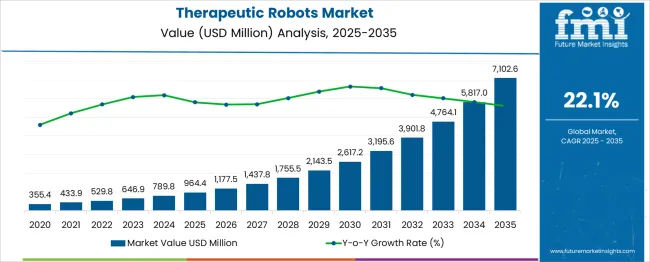
| Metric | Value |
|---|---|
| Therapeutic Robots Market Estimated Value in (2025 E) | USD 964.4 million |
| Therapeutic Robots Market Forecast Value in (2035 F) | USD 7102.6 million |
| Forecast CAGR (2025 to 2035) | 22.1% |
Rationale for Segmental Growth in the Therapeutic Robots Market
Insights into the Humanoid Robot Segment
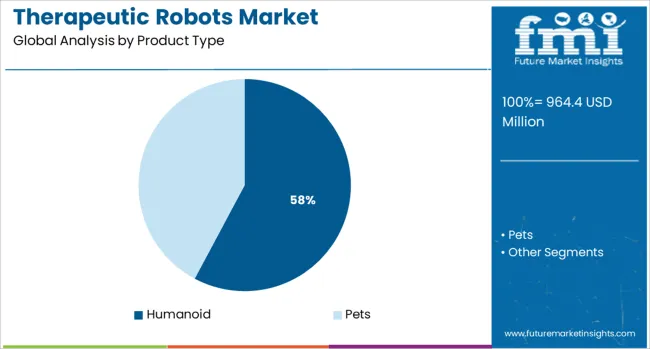
The humanoid robot segment is poised to capture 57.8% of the market share in 2025. Humanoid robots are designed to interact with patients through human-like movements, making them ideal for therapeutic applications such as autism treatment, dementia care, and rehabilitation following stroke. Their ability to simulate human emotions and behavior enables deeper connections with patients, fostering more effective therapy outcomes. Increased interest in human-like robots that provide emotional support and interact in natural ways strengthens the demand for humanoid robots. Additionally, humanoid robots in therapeutic applications are supported by advancements in artificial intelligence (AI) and robotics, further enhancing their capabilities and performance in healthcare settings.
Insights into the Autism Disorder Segment
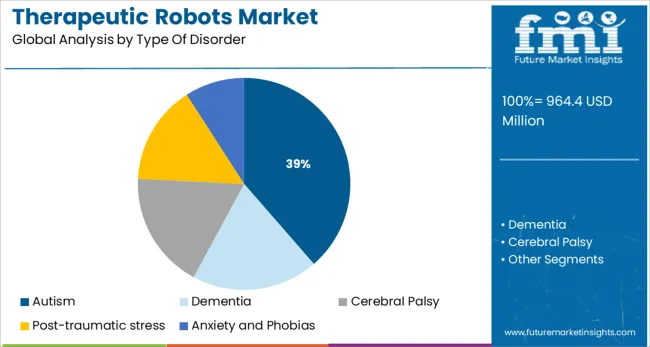
The autism disorder segment will dominate the market, holding 38.6% of the share in 2025. The use of therapeutic robots in autism treatment has gained significant traction due to the increasing need for alternative interventions that support behavioral therapy and cognitive development. Robots designed for autism therapy can provide consistent, personalized interaction that enhances communication and social skills in children with autism. Given the rising incidence of autism and the shortage of skilled therapists, therapeutic robots are seen as a promising tool to augment existing therapeutic practices. These robots are particularly effective in structured environments, providing patients with a safe and predictable interaction model, thus boosting their adoption in the treatment of autism globally.
Insights into the Rehabilitation Centers Segment
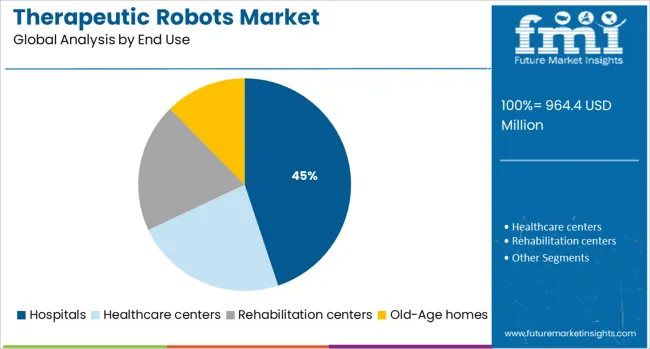
The rehabilitation centers segment is expected to see substantial growth, driven by the increasing use of robotic systems in post-stroke recovery and physical rehabilitation. These robots assist in enhancing motor skills, reducing recovery time, and promoting independence in patients. The segment benefits from technological advancements, with robots offering precise, repetitive motions that humans may find difficult to perform consistently. Rehabilitation centers are increasingly adopting robotic technology to support physical therapists and improve patient outcomes, contributing to the rise in demand for therapeutic robots in clinical and home settings. As the cost of these technologies continues to decrease, more rehabilitation centers will integrate these systems into their therapy offerings.
What are the Key Drivers to the Therapeutic Robots Market Share?
With the growing aging population across the globe especially in countries including Japan, Italy, Germany, Singapore, the UK, the USA, and Canada, the demand for therapeutic robots is expected to subsequently increase in the coming years for emotional support.
The rise in instances of cerebral vascular accidents (stroke) in the aged population, increases the demand for the deployment of rehabilitation technologies such as therapeutic robotics to assist in the recovery process as well as to provide mental & physical support.
Moreover, the robust increase in the number of rehabilitation centers coupled with the continuous evolution of robotic technology is likely to boost the growth of the therapeutic robots market over the forecast period.
Additionally, the developed regions that have a high disposable income of individuals and the growing awareness about the utilization of robots for stress-related issues is one of the key factors that will increase the adoption of therapeutic robots.
Furthermore, not only do therapeutic robots simplify the work of a human therapist, but it also helps to reduce the cost of treatment while helping patients to deal with the social environment.
As therapeutic robots become more versatile, affordable, and sophisticated with time, they are more likely to be seen in treatment settings. These factors are projected to create significant demand for therapeutic robots in the worldwide market.
Which Region holds the Highest Growth Potential in the Therapeutic Robots Market?

The upsurge in the adoption of innovative automated technologies in the healthcare sector, satisfactory reimbursement policies, and relatively higher per capita expenditure on healthcare, is expected to create lucrative growth opportunities, especially in developed regions such as North America and Europe. In the USA, manufacturers of therapeutic robots are increasingly focusing on developing advanced emotional therapy robots to cure neurological disorders such as autism and dementia.
For instance, recently, in 2020, Bionik Laboratories Corp. launched the InMotion arm/hand robotic system for the treatment of mobility impairments due to neurological conditions and clinical rehabilitation of stroke survivors. Similarly, PARO, a companion robot, developed by Japan’s National Institute of Advanced Industrial Science and Technology, has been designed for the recovery of patients suffering from Alzheimer’s, dementia, and other cognitive disorders.
Additionally, regions such as East Asia and South Asia are also expected to experience significant growth owing to increasing awareness about conditions such as Dementia, Alzheimer's, and Cerebral Palsy that are actively driving demand for therapeutic robots in these regions.
How is the Competitive Landscape in the Therapeutic Robots Market?

Therapeutic robots are a type of rehabilitation robot used as a recovery therapy for individuals suffering from various mental and physical health disorders. These robots usually replace human-applied therapies with robotics-based therapies.
Recent studies have shown that therapeutic robots, also known as emotional robots and robotic pets, are becoming popular companions for people with cognitive impairment or/and physical disabilities. The use of therapeutic robots in autism, mood disorders, and Alzheimer's care has shown considerable promise.
In the coming years, the market for therapeutic robots is projected to grow due to a change from conventional therapies for people with disabilities to robotic therapy, which helps optimize their recovery.
The global therapeutic robots market has numerous small-scale and international manufacturers at the regional level. Few industry players are identified across the value chain of the global therapeutic robots market which are PARO Robots, SoftBank Robotics, AnthroTronix, Inc., BeatBots LLC, Omron Corporation, Sony Corporation, Bionik Laboratories Corp., Instead Technologies Ltd., Ekso Bionics Holdings Inc., AlterG, Inc.
Report Scope
| Report Attribute | Details |
|---|---|
| Growth rate | CAGR of 22.1% from 2025 to 2035 |
| Base year for estimation | 2024 |
| Historical data | 2020 to 2024 |
| Forecast period | 2025 to 2035 |
| Quantitative units | Revenue in USD Million/ Billion and CAGR from 2025 to 2035 |
| Report coverage | Revenue forecast, volume forecast, company ranking, competitive landscape, growth factors, and trends, Pricing Analysis |
| Segments covered | Product Type, Type of Disorder, End Use & Region |
| Regional scope | North America (USA, Canada); Latin America (Mexico, Brazil); Latin America (Mexico, Brazil); Western Europe (Germany, Italy, France, UK, Spain); Eastern Europe (Poland, Russia); Asia Pacific (China, India, ASEAN, Australia & New Zealand); Japan; Middle East and Africa (GCC Countries, S. Africa, Northern Africa) |
| Country scope | USA, Canada, Mexico, Brazil, US, Canada, Mexico, Brazil, Germany, Italy, France, U.K, Spain, Poland, Russia, China, India, ASEAN, Australia & New Zealand, Japan, GCC Countries, S. Africa, Northern Africa |
| Key companies profiled | PARO Robots; SoftBank Robotics; AnthroTronix; Inc.; BeatBots LLC; Omron Corporation; Sony Corporation; Bionik Laboratories Corp.; Instead Technologies Ltd.; Ekso Bionics Holdings Inc.; AlterG; Inc. |
| Customization scope | Free report customization (equivalent to up to 8 analysts working days) with purchase. Addition or alteration to country, regional & segment scope. |
| Pricing and purchase options | Avail customized purchase options to meet your exact research needs. |
Key Segments Profiled in Therapeutic Robots Market
By Product Type:
- Humanoid
- Pets
By Type of Disorder:
- Autism
- Dementia
- Cerebral Palsy
- Post-traumatic stress
- Anxiety and Phobias
By End Use:
- Hospitals
- Healthcare centers
- Rehabilitation centers
- Old-Age homes
By Region:
- North America
- Latin America
- Western Europe
- Eastern Europe
- Asia Pacific
- Japan
- Middle East & Africa
Frequently Asked Questions
How big is the therapeutic robots market in 2025?
The global therapeutic robots market is estimated to be valued at USD 964.4 million in 2025.
What will be the size of therapeutic robots market in 2035?
The market size for the therapeutic robots market is projected to reach USD 7,102.6 million by 2035.
How much will be the therapeutic robots market growth between 2025 and 2035?
The therapeutic robots market is expected to grow at a 22.1% CAGR between 2025 and 2035.
What are the key product types in the therapeutic robots market?
The key product types in therapeutic robots market are humanoid and pets.
Which type of disorder segment to contribute significant share in the therapeutic robots market in 2025?
In terms of type of disorder, autism segment to command 38.6% share in the therapeutic robots market in 2025.
Preview the report firsthand - request a free sample
Get SampleGet the brochure for pricing and purchase details.
Get PDFTable of Content
- Executive Summary
- Global Market Outlook
- Demand-side Trends
- Supply-side Trends
- Technology Roadmap Analysis
- Analysis and Recommendations
- Market Overview
- Market Coverage / Taxonomy
- Market Definition / Scope / Limitations
- Market Background
- Market Dynamics
- Drivers
- Restraints
- Opportunity
- Trends
- Scenario Forecast
- Demand in Optimistic Scenario
- Demand in Likely Scenario
- Demand in Conservative Scenario
- Opportunity Map Analysis
- Product Life Cycle Analysis
- Supply Chain Analysis
- Investment Feasibility Matrix
- Value Chain Analysis
- PESTLE and Porter’s Analysis
- Regulatory Landscape
- Regional Parent Market Outlook
- Production and Consumption Statistics
- Import and Export Statistics
- Market Dynamics
- Global Market Analysis 2020 to 2024 and Forecast, 2025 to 2035
- Historical Market Size Value (USD Million) Analysis, 2020 to 2024
- Current and Future Market Size Value (USD Million) Projections, 2025 to 2035
- Y-o-Y Growth Trend Analysis
- Absolute $ Opportunity Analysis
- Global Market Pricing Analysis 2020 to 2024 and Forecast 2025 to 2035
- Global Market Analysis 2020 to 2024 and Forecast 2025 to 2035, By Product Type
- Introduction / Key Findings
- Historical Market Size Value (USD Million) Analysis By Product Type , 2020 to 2024
- Current and Future Market Size Value (USD Million) Analysis and Forecast By Product Type , 2025 to 2035
- Humanoid
- Pets
- Y-o-Y Growth Trend Analysis By Product Type , 2020 to 2024
- Absolute $ Opportunity Analysis By Product Type , 2025 to 2035
- Global Market Analysis 2020 to 2024 and Forecast 2025 to 2035, By Type Of Disorder
- Introduction / Key Findings
- Historical Market Size Value (USD Million) Analysis By Type Of Disorder, 2020 to 2024
- Current and Future Market Size Value (USD Million) Analysis and Forecast By Type Of Disorder, 2025 to 2035
- Autism
- Dementia
- Cerebral Palsy
- Post-traumatic stress
- Anxiety and Phobias
- Y-o-Y Growth Trend Analysis By Type Of Disorder, 2020 to 2024
- Absolute $ Opportunity Analysis By Type Of Disorder, 2025 to 2035
- Global Market Analysis 2020 to 2024 and Forecast 2025 to 2035, By End Use
- Introduction / Key Findings
- Historical Market Size Value (USD Million) Analysis By End Use, 2020 to 2024
- Current and Future Market Size Value (USD Million) Analysis and Forecast By End Use, 2025 to 2035
- Hospitals
- Healthcare centers
- Rehabilitation centers
- Old-Age homes
- Y-o-Y Growth Trend Analysis By End Use, 2020 to 2024
- Absolute $ Opportunity Analysis By End Use, 2025 to 2035
- Global Market Analysis 2020 to 2024 and Forecast 2025 to 2035, By Region
- Introduction
- Historical Market Size Value (USD Million) Analysis By Region, 2020 to 2024
- Current Market Size Value (USD Million) Analysis and Forecast By Region, 2025 to 2035
- North America
- Latin America
- Western Europe
- Eastern Europe
- East Asia
- South Asia and Pacific
- Middle East & Africa
- Market Attractiveness Analysis By Region
- North America Market Analysis 2020 to 2024 and Forecast 2025 to 2035, By Country
- Historical Market Size Value (USD Million) Trend Analysis By Market Taxonomy, 2020 to 2024
- Market Size Value (USD Million) Forecast By Market Taxonomy, 2025 to 2035
- By Country
- USA
- Canada
- Mexico
- By Product Type
- By Type Of Disorder
- By End Use
- By Country
- Market Attractiveness Analysis
- By Country
- By Product Type
- By Type Of Disorder
- By End Use
- Key Takeaways
- Latin America Market Analysis 2020 to 2024 and Forecast 2025 to 2035, By Country
- Historical Market Size Value (USD Million) Trend Analysis By Market Taxonomy, 2020 to 2024
- Market Size Value (USD Million) Forecast By Market Taxonomy, 2025 to 2035
- By Country
- Brazil
- Chile
- Rest of Latin America
- By Product Type
- By Type Of Disorder
- By End Use
- By Country
- Market Attractiveness Analysis
- By Country
- By Product Type
- By Type Of Disorder
- By End Use
- Key Takeaways
- Western Europe Market Analysis 2020 to 2024 and Forecast 2025 to 2035, By Country
- Historical Market Size Value (USD Million) Trend Analysis By Market Taxonomy, 2020 to 2024
- Market Size Value (USD Million) Forecast By Market Taxonomy, 2025 to 2035
- By Country
- Germany
- UK
- Italy
- Spain
- France
- Nordic
- BENELUX
- Rest of Western Europe
- By Product Type
- By Type Of Disorder
- By End Use
- By Country
- Market Attractiveness Analysis
- By Country
- By Product Type
- By Type Of Disorder
- By End Use
- Key Takeaways
- Eastern Europe Market Analysis 2020 to 2024 and Forecast 2025 to 2035, By Country
- Historical Market Size Value (USD Million) Trend Analysis By Market Taxonomy, 2020 to 2024
- Market Size Value (USD Million) Forecast By Market Taxonomy, 2025 to 2035
- By Country
- Russia
- Poland
- Hungary
- Balkan & Baltic
- Rest of Eastern Europe
- By Product Type
- By Type Of Disorder
- By End Use
- By Country
- Market Attractiveness Analysis
- By Country
- By Product Type
- By Type Of Disorder
- By End Use
- Key Takeaways
- East Asia Market Analysis 2020 to 2024 and Forecast 2025 to 2035, By Country
- Historical Market Size Value (USD Million) Trend Analysis By Market Taxonomy, 2020 to 2024
- Market Size Value (USD Million) Forecast By Market Taxonomy, 2025 to 2035
- By Country
- China
- Japan
- South Korea
- By Product Type
- By Type Of Disorder
- By End Use
- By Country
- Market Attractiveness Analysis
- By Country
- By Product Type
- By Type Of Disorder
- By End Use
- Key Takeaways
- South Asia and Pacific Market Analysis 2020 to 2024 and Forecast 2025 to 2035, By Country
- Historical Market Size Value (USD Million) Trend Analysis By Market Taxonomy, 2020 to 2024
- Market Size Value (USD Million) Forecast By Market Taxonomy, 2025 to 2035
- By Country
- India
- ASEAN
- Australia & New Zealand
- Rest of South Asia and Pacific
- By Product Type
- By Type Of Disorder
- By End Use
- By Country
- Market Attractiveness Analysis
- By Country
- By Product Type
- By Type Of Disorder
- By End Use
- Key Takeaways
- Middle East & Africa Market Analysis 2020 to 2024 and Forecast 2025 to 2035, By Country
- Historical Market Size Value (USD Million) Trend Analysis By Market Taxonomy, 2020 to 2024
- Market Size Value (USD Million) Forecast By Market Taxonomy, 2025 to 2035
- By Country
- Kingdom of Saudi Arabia
- Other GCC Countries
- Turkiye
- South Africa
- Other African Union
- Rest of Middle East & Africa
- By Product Type
- By Type Of Disorder
- By End Use
- By Country
- Market Attractiveness Analysis
- By Country
- By Product Type
- By Type Of Disorder
- By End Use
- Key Takeaways
- Key Countries Market Analysis
- USA
- Pricing Analysis
- Market Share Analysis, 2024
- By Product Type
- By Type Of Disorder
- By End Use
- Canada
- Pricing Analysis
- Market Share Analysis, 2024
- By Product Type
- By Type Of Disorder
- By End Use
- Mexico
- Pricing Analysis
- Market Share Analysis, 2024
- By Product Type
- By Type Of Disorder
- By End Use
- Brazil
- Pricing Analysis
- Market Share Analysis, 2024
- By Product Type
- By Type Of Disorder
- By End Use
- Chile
- Pricing Analysis
- Market Share Analysis, 2024
- By Product Type
- By Type Of Disorder
- By End Use
- Germany
- Pricing Analysis
- Market Share Analysis, 2024
- By Product Type
- By Type Of Disorder
- By End Use
- UK
- Pricing Analysis
- Market Share Analysis, 2024
- By Product Type
- By Type Of Disorder
- By End Use
- Italy
- Pricing Analysis
- Market Share Analysis, 2024
- By Product Type
- By Type Of Disorder
- By End Use
- Spain
- Pricing Analysis
- Market Share Analysis, 2024
- By Product Type
- By Type Of Disorder
- By End Use
- France
- Pricing Analysis
- Market Share Analysis, 2024
- By Product Type
- By Type Of Disorder
- By End Use
- India
- Pricing Analysis
- Market Share Analysis, 2024
- By Product Type
- By Type Of Disorder
- By End Use
- ASEAN
- Pricing Analysis
- Market Share Analysis, 2024
- By Product Type
- By Type Of Disorder
- By End Use
- Australia & New Zealand
- Pricing Analysis
- Market Share Analysis, 2024
- By Product Type
- By Type Of Disorder
- By End Use
- China
- Pricing Analysis
- Market Share Analysis, 2024
- By Product Type
- By Type Of Disorder
- By End Use
- Japan
- Pricing Analysis
- Market Share Analysis, 2024
- By Product Type
- By Type Of Disorder
- By End Use
- South Korea
- Pricing Analysis
- Market Share Analysis, 2024
- By Product Type
- By Type Of Disorder
- By End Use
- Russia
- Pricing Analysis
- Market Share Analysis, 2024
- By Product Type
- By Type Of Disorder
- By End Use
- Poland
- Pricing Analysis
- Market Share Analysis, 2024
- By Product Type
- By Type Of Disorder
- By End Use
- Hungary
- Pricing Analysis
- Market Share Analysis, 2024
- By Product Type
- By Type Of Disorder
- By End Use
- Kingdom of Saudi Arabia
- Pricing Analysis
- Market Share Analysis, 2024
- By Product Type
- By Type Of Disorder
- By End Use
- Turkiye
- Pricing Analysis
- Market Share Analysis, 2024
- By Product Type
- By Type Of Disorder
- By End Use
- South Africa
- Pricing Analysis
- Market Share Analysis, 2024
- By Product Type
- By Type Of Disorder
- By End Use
- USA
- Market Structure Analysis
- Competition Dashboard
- Competition Benchmarking
- Market Share Analysis of Top Players
- By Regional
- By Product Type
- By Type Of Disorder
- By End Use
- Competition Analysis
- Competition Deep Dive
- PARO Robots
- Overview
- Product Portfolio
- Profitability by Market Segments (Product/Age /Sales Channel/Region)
- Sales Footprint
- Strategy Overview
- Marketing Strategy
- Product Strategy
- Channel Strategy
- SoftBank Robotics
- AnthroTronix, Inc.
- BeatBots LLC
- Omron Corporation
- Sony Corporation
- Bionik Laboratories Corp.
- Instead Technologies Ltd.
- Ekso Bionics Holdings Inc.
- AlterG, Inc.
- PARO Robots
- Competition Deep Dive
- Assumptions & Acronyms Used
- Research Methodology


