

- Industry Size (2026)
- USD 3.7 Bn
- Forecast (2036)
- USD 6.1 Bn
- CAGR (2026 to 2036)
- 5.1%
Trolley Bus Market Size, Market Forecast and Outlook By FMI
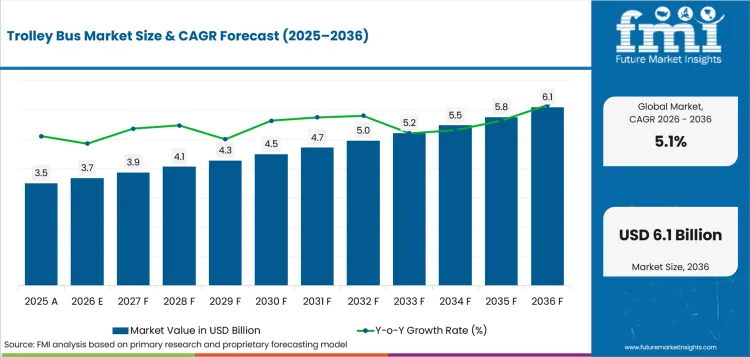
The trolley bus market is projected to expand from USD 3.5 billion in 2025 to USD 6.1 billion by 2036 at 5.1% CAGR. Municipal operators are forecast to hold 58.6% share in 2026 and local commute is projected at 51.7% share as cities renew wire-fed electric service for dense corridors.
Key Takeaways, Market Size, and Forecast
| Metric | Value |
|---|---|
| Market Size (2026) | USD 3.7 Billion |
| Market Size (2036) | USD 6.1 Billion |
| Forecast CAGR | 5.1% from 2026 to 2036 |
| Leading End Buyer | Municipal Operators |
| Municipal Operators Share In 2026 | 58.6% |
| Leading Application | Local Commute |
| Local Commute Share In 2026 | 51.7% |
| Fastest-Growing Country | China |
| China CAGR | 6.2% by 2036 |
Summary of Trolley Bus Market
- Demand and Growth Drivers
- City agencies are using overhead wires as charging assets for electric buses serving dense urban routes.
- Battery assisted trolley buses are extending route flexibility by adding short off-wire operation.
- Existing catenary networks lower charging setup pressure for agencies replacing diesel buses.
- Product and Segment View
- Municipal operators are projected to hold 58.6% share in 2026, influenced by city transport agencies controlling most fleet orders.
- Local commute is expected to represent 51.7% share in 2026, driven by trolley buses serving high-frequency urban routes.
- 12 M buses are forecast to secure 47.8% share in 2026 due to standard depots and stops absorbing them with limited layout change.
- Geography and Competitive Outlook
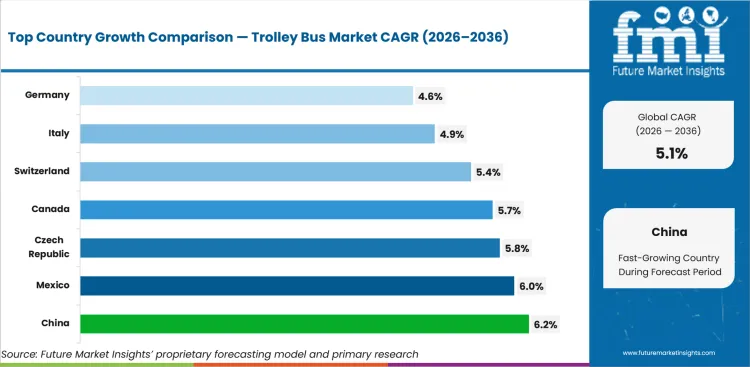
- China is projected to record 6.2% CAGR by 2036, reflected by large city networks keeping wire-fed electric transit active.
- Mexico is expected to expand at 6.0% CAGR by 2036 through elevated trolley bus corridors increase service reach.
- Solaris Bus & Coach and Škoda Group compete depending on trolley bus orders tied to European fleet renewal.
- Yutong and Carrosserie HESS AG compete based on electric bus platforms and high-capacity dynamic charging experience.
- Analyst Opinion
- Nikhil Kaitwade, Principal Consultant for Industrial Automation at FMI, observes, “Trolley bus buying has moved beyond a wired vehicle alone. Agencies now compare battery range and route charging before funding fleet renewal. Suppliers with proven catenary operation and service training should gain repeat orders from cities extending electric service beyond fixed wire corridors.”
- Trolley Bus Market Value Analysis
- Market value is tied to vehicle orders and catenary equipment before software and service contracts affect delivered project price.
- Supplier pricing reflects bus length and battery capacity before local power installation affects corridor cost.
- Revenue improves as agencies renew old fleets and add battery assisted trolley buses for partial off-wire service.
- Fleet trust rises as operators reduce depot charging pressure and keep regular service on dense urban routes.
Vehicle cost and wire asset use now shape trolley bus buying for city fleets. International Association of Public Transport stated in May 2025, trolley bus systems operated across about 260 cities with a fleet of 22,137 vehicles as of December 2024. In motion charging has changed route planning by allowing battery trolley buses to leave wires for parts of a corridor. Solaris signed a March 2025 Vancouver contract for 107 trolley buses with options for 405 further vehicles. Supplier advantage is expected to come from complete vehicles and verified catenary operation. Transit agencies will favor systems reducing depot charging pressure and keep high-frequency routes electric.
Trolley Bus Market Definition
Trolley bus market covers rubber-tire urban buses powered through overhead catenary wires with electric traction motors. Scope includes conventional wired trolley buses and battery assisted vehicles able to operate short off-wire sections. Revenue includes complete buses and traction equipment sold for public transport use. Poles and onboard battery systems are counted inside complete trolley bus packages.
Trolley Bus Market Inclusions
Market scope covers commercially traded trolley buses by bus length such as 12 M and 18 M, charging system such as conventional wired and battery assisted, component such as traction motors and battery packs, application such as local commute and bus rapid transit, and end buyer such as municipal operators and transport authorities. Revenue scope covers market activity from 2026 to 2036 across complete trolley buses and related electric traction packages. Key participants include bus manufacturers, traction equipment makers, catenary specialists, municipal transport operators, service depots and fleet planning agencies.
Trolley Bus Market Exclusions
Scope excludes battery electric buses using only depot charging or pantograph charging without trolley poles. Electric coaches, trams and rail transit vehicles are outside scope. General bus parts are counted only if sold as part of trolley bus vehicle systems or catenary-fed traction packages.
Trolley Bus Market Research Methodology
- Primary Research: Future Market Insights analysts reviewed transit fleet planner interviews and supplier checks across trolley bus operating regions.
- Desk Research: Official transit data, public transport association releases and company contract notes supported scope mapping and demand checks.
- Market Sizing and Forecasting: Forecast values used bus order volume, average trolley bus pricing and corridor renewal assumptions.
- Data Validation: Checks compared 2026 value with 2036 value and tested CAGR consistency across seven country rates.
Why is the Trolley Bus Market Growing?
- City transport agencies are extending wire-fed service on dense corridors to lower depot charging pressure.
- Battery assisted trolley buses are improving route planning by covering short off-wire sections during diversions.
- Zero-emission bus funding is bringing trolley buses back into fleet renewal decisions for catenary cities.
Forward outlook is improving as operators treat overhead catenary as charging infrastructure instead of a fixed route limit. International Association of Public Transport reported in September 2024, automatic reconnection to overhead wires during passenger boarding takes 3 to 15 seconds in in motion charging trolley buses. Quick reconnection makes short off-wire sections practical for diversions and sensitive street areas. Operators can compare route-charged trolley buses with electric low entry buses for city service and electric commercial vehicle traction motor systems for drivetrain planning.
Market Segmentation Analysis
- 12 M buses are expected to represent 47.8% share in 2026 as standard city routes need vehicles compatible with older depots and stop layouts.
- Battery assisted systems are projected to account for 46.1% share in 2026 as off-wire operation lowers route rigidity during detours and repair periods.
- Traction motors are forecast to capture 34.9% share in 2026 as electric drive hardware defines stop-start performance and hill reliability.
- Local commute is anticipated to hold 51.7% share in 2026 as daily urban service uses regular headways and dense passenger movement.
- Municipal operators are expected to represent 58.6% share in 2026 as city agencies own most route assets and funding programs.
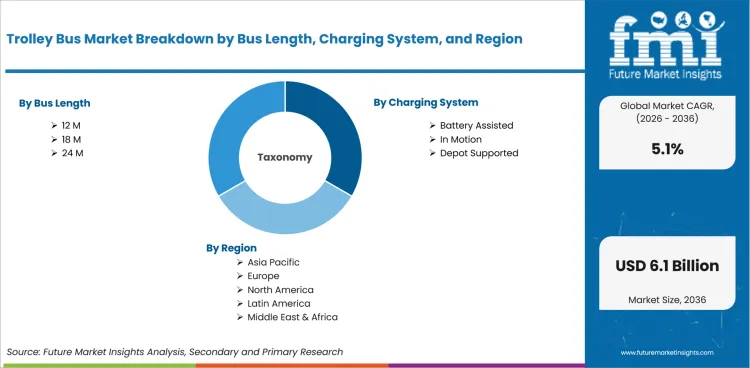
Trolley bus demand is divided into groups based on bus length, charging system, component, application, end buyer and region. Bus length includes 12 M, 18 M, 24 M and other lengths. Charging system coverage includes conventional wired, battery assisted, in motion and depot supported formats. Component demand connects with traction motors and overhead poles used in catenary-fed service. Application analysis covers local commute, bus rapid transit, airport access and feeder routes. End buyer analysis includes municipal operators, transport authorities, private contractors and airport authorities.
Insights into Trolley Bus Market by Bus Length
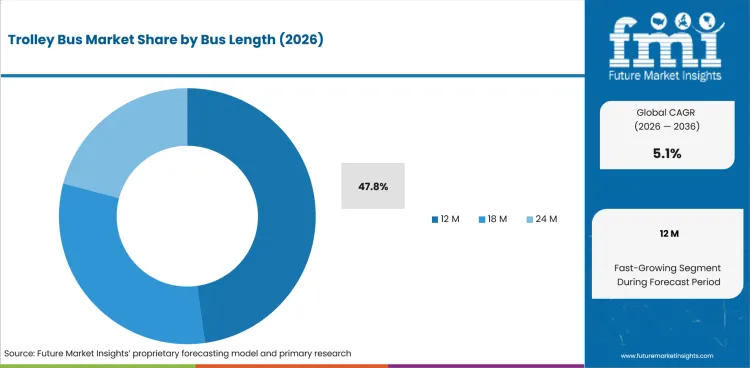
- 12 M buses are projected to account for 47.8% share in 2026, led by standard city routes needing vehicles compatible with older depots and stop layouts.
- 18 M buses gain use on high-ridership corridors as articulated bodies raise passenger capacity without full rail investment.
Insights into Trolley Bus Market by Charging System
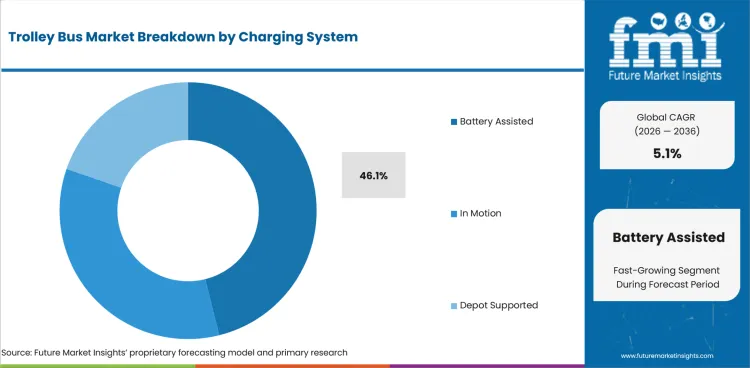
- Battery assisted systems are forecast to hold 46.1% share in 2026 due to detour flexibility keeping public service active during street works.
- Conventional wired systems retain a service role on older networks as constant power supply reduces large onboard battery needs.
Insights into Trolley Bus Market by Component
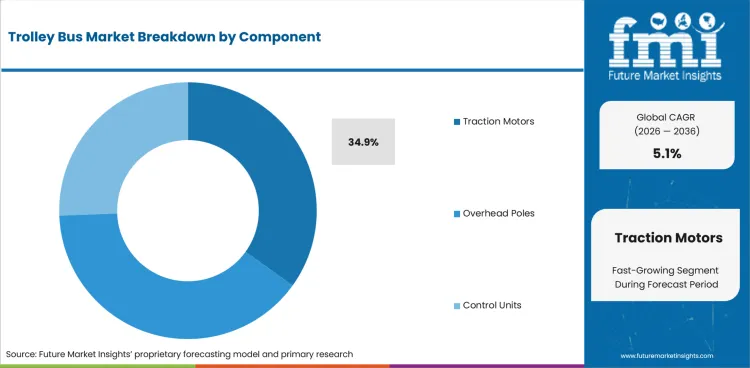
- Traction motors are expected to account for 34.9% share in 2026 as hill reliability and stop-start duty cycles shape core vehicle value.
- Overhead poles gain value as battery assisted vehicles continue to need stable wire contact for in-service charging.
Insights into Trolley Bus Market by Application
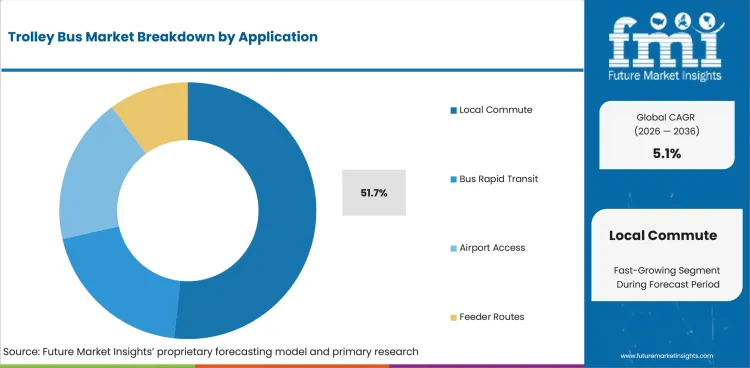
- Local commute is anticipated to hold 51.7% share in 2026, driven by frequent urban routes providing steady daily service volume.
- Bus rapid transit gains order attention as dedicated corridors can combine electric traction with priority movement.
Insights into Trolley Bus Market by End Buyer
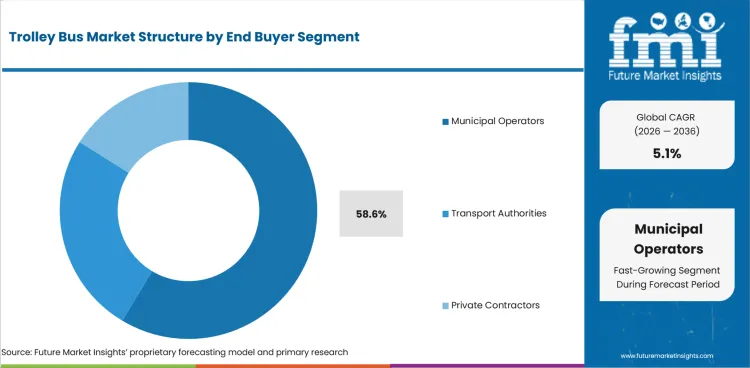
- Municipal operators are projected to represent 58.6% share in 2026 since city agencies control routes and catenary assets.
- Transport authorities create higher value tenders as route planning and fleet funding are handled through multi-year programs.
Trolley Bus Market Drivers, Restraints and Opportunities
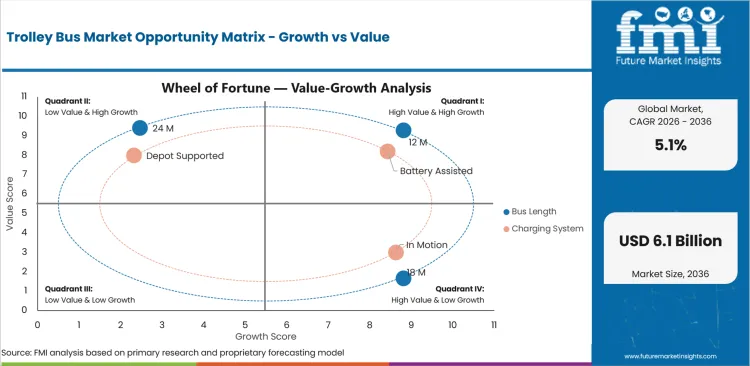
- Driver: Existing overhead wire assets are giving cities a lower-risk path for zero-emission bus renewal.
- Restraint: Route expansion can slow as catenary work needs road access and power coordination.
- Opportunity: In motion charging creates new project value by combining wired supply with battery assisted operation.
Forward demand is strongest in cities already owning catenary and trained maintenance staff. European Commission rules adopted in 2024 require 90% of new city buses to be zero-emission by 2030 and 100% by 2035. United States Federal Transit Administration guidance posted in May 2025 lists rubber tire trolley buses powered by overhead catenaries as eligible zero-emission bus assets. Policy coverage keeps trolley bus systems inside formal fleet renewal plans and supports nearby electric vehicle charging stations activity.
Import Dependence and Trade Flow Analysis
Cross-border supply is expected to stay important as trolley bus projects combine vehicle bodies, drive hardware and overhead contact systems. Canada shows such reliance after Solaris signed a March 2025 contract for 107 Vancouver trolley buses with options for 405 more vehicles. Similar order flows create demand for commercial vehicle traction motors from specialized European and Asian suppliers.
Technology Adoption and Automation Penetration Analysis
Technology use is moving from simple wire-fed buses toward battery assisted fleets with dynamic charging. International Association of Public Transport states in motion charging can let trolley buses operate off-wire for selected line sections while using smaller batteries than depot-only electric buses. Vehicle makers are aligning electric traction motors with battery packs and commercial vehicle traction battery systems for such service models.
Competitive Landscape and Strategic Positioning
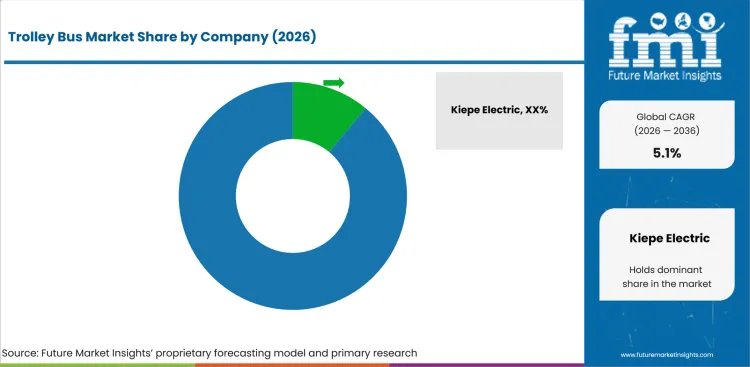
- Complete vehicle suppliers hold an advantage led by battery assisted platforms and proven catenary service experience.
- Traction specialists gain orders by serving control systems and overhead contact equipment for route upgrades.
- Service networks strengthen repeat orders as transit agencies need spare parts during fleet renewal.
- Installer and depot support reduces adoption risk by checking wire contact and battery operation before public service.
Competitive structure is led by bus manufacturers and electric traction specialists. Solaris Bus & Coach and Škoda Group hold positions in European trolley bus orders tied to fleet renewal. Yutong and CRRC Electric compete through domestic electric bus scale in China. HESS serves dynamic charging projects across Europe. Kiepe Electric strengthens the power equipment layer through traction packages and overhead contact expertise.
Channel strength is becoming as important as vehicle range. Direct manufacturer bids support route-specific product paths and warranty control. Transit agencies need stock that covers 12 M buses and articulated vehicles. Adjacent spending across bus bellows and electric drive hardware can create bundled orders for operators upgrading high-capacity electric routes.
Key Companies in the Trolley Bus Market
Competitive structure is differentiated by complete vehicle makers, traction specialists and dynamic charging system suppliers.
- Vehicle Manufacturers: Solaris Bus & Coach, Škoda Group and Zhengzhou Yutong Bus Co., Ltd. compete through trolley bus platforms and zero-emission fleet references.
- Traction Specialists: CRRC Electric Vehicle Co., Ltd. and Medcom Sp. z o.o. compete through power electronics and wire-fed drive system support.
- Dynamic Charging Suppliers: Carrosserie HESS AG and Bozankaya A.Ş. compete through high-capacity vehicle formats and corridor-specific service packages.
Competitive Benchmarking: Trolley Bus Market
| Company | Battery Assisted Range | Catenary System Depth | Traction Hardware Focus | Channel Reach | Geographic Footprint |
|---|---|---|---|---|---|
| Solaris Bus & Coach | Very Strong | Strong | Strong | Very Strong | Global |
| Škoda Group | Very Strong | Very Strong | Very Strong | Strong | Europe |
| Zhengzhou Yutong Bus Co., Ltd. | Strong | Moderate | Strong | Very Strong | Global |
| CRRC Electric Vehicle Co., Ltd. | Strong | Strong | Very Strong | Strong | Asia Pacific |
| Carrosserie HESS AG | Very Strong | Very Strong | Strong | Moderate | Europe |
| Medcom Sp. z o.o. | Moderate | Strong | Very Strong | Moderate | Europe |
| Bozankaya A.Ş. | Strong | Moderate | Strong | Moderate | Europe |
Source: Future Market Insights competitive analysis, 2026.
Key Developments in Trolley Bus Market
- In October 2025, Škoda Group signed a framework agreement to supply up to 30 Škoda 33Tr battery-powered trolley buses to Ústí nad Labem, with six charging stations and a contract value of CZK 650 million.
- In December 2025, Solaris Bus & Coach signed a contract to supply 20 Trollino 12 trolley buses to MPK Lublin, with deliveries scheduled for early 2027.
- In January 2026, Kiepe Electric GmbH carved out its trolleybus electrical systems business and transferred the activities to Carrosserie HESS AG.
Key Players in the Trolley Bus Market
- Solaris Bus & Coach
- Škoda Group
- Zhengzhou Yutong Bus Co., Ltd.
- CRRC Electric Vehicle Co., Ltd.
- Carrosserie HESS AG
- Medcom Sp. z o.o.
- Bozankaya A.Ş.
Analysis of Trolley Bus Market by Key Countries
.webp "Top Country Growth Comparison Trolley Bus Market Cagr (2026 2036)")
| Country | CAGR |
|---|---|
| China | 6.2% |
| Mexico | 6.0% |
| Czech Republic | 5.8% |
| Canada | 5.7% |
| Switzerland | 5.4% |
| Italy | 4.9% |
| Germany | 4.6% |
Source: Future Market Insights, 2026.
Sales Outlook for Trolley Bus Market in China
Large urban trolley bus renewal center · 2026 to 2036
Country Market Snapshot Table
| Parameter | Value |
|---|---|
| Market Size in 2025 (Value) | USD 884.9 million |
| Market Size in 2026 (Value) | USD 940.0 million |
| Market Forecast in 2036 (Value) | USD 1,713.8 million |
| CAGR (2026-2036) | 6.2% |
| Years Considered | 2021-2036 |
| Base Year | 2025 |
| Forecast Period | 2026-2036 |
| Units Considered | Value (USD million) |
| Leading Sub-Region | Beijing and coastal city networks |
China Trolley Bus Market Outlook
China trolley bus demand is shaped by large city networks and domestic electric bus manufacturing. Operators compare battery assisted range and service reliability before approving wire-fed fleet renewal.
Guangzhou and Shanghai show why local service density matters for trolley bus orders. Supplier value improves as fleet scale supports traction motor stocking and trained maintenance crews.
Key Growth Drivers
- Beijing gives suppliers a large fleet reference, due to the International Association of Public Transport reporting 1,044 trolley buses across 31 routes and 465 km in May 2025. Vehicle makers can plan high-volume replacement programs around large urban networks.
- Guangzhou service keeps parts movement active, since the International Association of Public Transport reported 102 trolley buses and 130 km of bidirectional wire infrastructure in May 2025. Pole and traction suppliers can serve recurring service needs across dense corridors.
- Shanghai supports battery assisted planning, influenced by the International Association of Public Transport recording 126 trolley buses and 332 km of bidirectional infrastructure in May 2025. Longer wire reach allows operators to test partial off-wire service without full depot charging reliance.
- Asia Pacific scale favors Chinese suppliers, as the International Association of Public Transport counted 27 trolley bus cities and 3,086 vehicles in the region in May 2025. Domestic bus makers can use regional depth to defend local tenders.
Key Restraints
- Guangzhou power equipment planning can slow upgrades, led by the International Association of Public Transport having recorded 8 rectifier stations in the city network. New route additions may need substation checks before new buses enter service.
- Shanghai operations raise maintenance load, reflecting annual trolley bus distance reaching 5,263,900 km in the International Association of Public Transport survey. Operators need stronger inspection cycles for poles and drive hardware.
- Guangzhou service speed can limit fleet productivity, since average commercial speed reached 11.4 km per hour and 11.7 km per hour in peak hours. Slow corridors may require extra vehicles before line length expands.
What makes China unique
China is unique due to large operating networks and domestic electric bus production strength.
Key Companies
- Yutong
- CRRC Electric
- Zhongtong Bus
- Solaris Bus & Coach
- Škoda Group
- Kiepe Electric
- HESS
Sales & Marketing Channels
- Municipal tenders
- Transit agency frameworks
- Direct manufacturer bids
- Local service partners
- Aftermarket service contracts
- Public fleet grants
Country Segment Breakdown Table
| Segment | Sub-Segments |
|---|---|
| By Bus Length | 12 M · 18 M · 24 M · Other Lengths |
| By Charging System | Conventional Wired · Battery Assisted · In Motion · Depot Supported |
| By Component | Traction Motors · Overhead Poles · Control Units · Battery Packs · Power Converters |
| By Application | Local Commute · Bus Rapid Transit · Airport Access · Feeder Routes |
| By End Buyer | Municipal Operators · Transport Authorities · Private Contractors · Airport Authorities |
| Key Sub-Regions Covered, City Networks | Beijing · Shanghai · Guangzhou · Wuhan · Qingdao · Jinan |
Frequently Asked Questions
How fast is China trolley bus market growing?
Demand in China is forecast at 6.2% CAGR from 2026 to 2036 as large city networks refresh wire-fed fleets.
Who leads China trolley bus market?
Yutong, CRRC Electric and Zhongtong Bus compete through domestic vehicle supply and electric bus production depth.
What is driving adoption in China trolley bus market?
Large urban wire networks and domestic manufacturing are moving agencies toward battery assisted trolley bus upgrades.
Demand Outlook for Trolley Bus Market in Mexico
Elevated electric corridor center · 2026 to 2036
Country Market Snapshot Table
| Parameter | Value |
|---|---|
| Market Size in 2025 (Value) | USD 386.8 million |
| Market Size in 2026 (Value) | USD 410.0 million |
| Market Forecast in 2036 (Value) | USD 734.0 million |
| CAGR (2026-2036) | 6.0% |
| Years Considered | 2021-2036 |
| Base Year | 2025 |
| Forecast Period | 2026-2036 |
| Units Considered | Value (USD million) |
| Leading Sub-Region | Mexico City metropolitan corridor |
Mexico Trolley Bus Market Outlook
Mexico trolley bus demand is led by Mexico City corridor expansion and fleet renewal. Agencies are using trolley bus service for dense urban movement that needs fixed electric supply.
Elevated trolley bus lines create a different fleet case than ordinary street routes. Vehicle orders need capacity and dependable wire contact across high-use corridors.
Key Growth Drivers
- Mexico City renewal is active, reflected by the International Association of Public Transport reporting 442 trolley buses having operated on 261.6 km in May 2025. Fleet scale creates steady vehicle and component demand for corridor service.
- Elevated corridor growth supports articulated orders, as the International Association of Public Transport noted an 18 km Line 11 electric bus rapid transit trolley bus system planned for 2025. Dedicated guideways can raise delivered vehicle value.
- Latin American scale gives Mexico a regional role, led by the International Association of Public Transport counting 13 cities and 1,029 trolley buses across the region. Suppliers can use Mexico City as a reference point for nearby projects.
- Mexico City fleet intensity supports service parts as overhead line renewal and high-frequency corridor use favor traction motors and overhead poles with dependable replacement supply.
Key Restraints
- Capital works can slow expansion, since Line 11 covers 18 km and needs corridor construction before vehicle orders convert into service. Agencies may stage spending across civil works and fleet purchase cycles.
- Regional supplier scale is limited, due to Latin America having 13 trolley bus cities compared with Europe at 85 systems. Smaller network density can restrict local component inventory.
- Mexico City fleet concentration raises service risk, impacted by 442 trolley buses accounting for a large share of Latin America’s 1,029 vehicles. Any funding delay in one network can affect supplier order timing.
What makes Mexico unique
Mexico is unique due to elevated trolley bus corridors and a large metropolitan electric transit network.
Key Companies
- Yutong
- CRRC Electric
- Solaris Bus & Coach
- HESS
- Škoda Group
- Kiepe Electric
- Bozankaya
Sales & Marketing Channels
- Municipal tenders
- Transit agency frameworks
- Direct manufacturer bids
- Local service partners
- Aftermarket service contracts
- Public fleet grants
Country Segment Breakdown Table
| Segment | Sub-Segments |
|---|---|
| By Bus Length | 12 M · 18 M · 24 M · Other Lengths |
| By Charging System | Conventional Wired · Battery Assisted · In Motion · Depot Supported |
| By Component | Traction Motors · Overhead Poles · Control Units · Battery Packs · Power Converters |
| By Application | Local Commute · Bus Rapid Transit · Airport Access · Feeder Routes |
| By End Buyer | Municipal Operators · Transport Authorities · Private Contractors · Airport Authorities |
| Key Sub-Regions Covered, Metropolitan Areas | Mexico City · State of Mexico · Guadalajara · Monterrey · Puebla · León |
Frequently Asked Questions
How fast is Mexico trolley bus market growing?
Sector in Mexico is projected to grow at 6.0% CAGR from 2026 to 2036 as elevated electric corridors expand.
Who leads Mexico trolley bus market?
Yutong, CRRC Electric and Solaris Bus & Coach compete through vehicle supply and electric fleet experience.
What is driving adoption in Mexico trolley bus market?
Mexico City corridor renewal is moving agencies toward articulated trolley buses and reliable power equipment.
Demand Outlook for Trolley Bus Market in Czech Republic
In motion charging renewal center · 2026 to 2036
Country Market Snapshot Table
| Parameter | Value |
|---|---|
| Market Size in 2025 (Value) | USD 198.5 million |
| Market Size in 2026 (Value) | USD 210.0 million |
| Market Forecast in 2036 (Value) | USD 369.0 million |
| CAGR (2026-2036) | 5.8% |
| Years Considered | 2021-2036 |
| Base Year | 2025 |
| Forecast Period | 2026-2036 |
| Units Considered | Value (USD million) |
| Leading Sub-Region | Prague airport corridor |
Czech Republic Trolley Bus Market Outlook
Czech Republic trolley bus demand is shaped by Prague renewal and local system capability. Agencies are using in motion charging for airport access and dense city links.
Prague’s battery trolley bus service connects vehicle procurement with corridor design. Suppliers need proof on range, wire contact and high-capacity operations.
Key Growth Drivers
- Prague airport service shows high-capacity need, since the International Association of Public Transport reported 25 metre double articulated trolley buses on the new Line 59. Vehicle length increases delivered system value for airport corridors.
- Capacity gains support further funding, supported by the International Association of Public Transport stated Prague service raising capacity by about 30% and saves about 1,300 tonnes of carbon dioxide per year. Measurable operating gains strengthen corridor renewal cases.
- Future orders can deepen local supply, backed by Prague’s published tender report in February 2025 stating for up to 180 additional low-floor battery trolley buses. Such scale supports traction equipment and service training demand.
- Project value supports supplier interest, as the same Prague tender carried an estimated value of CZK 3.465 billion. Large public awards can keep vehicle makers active in Czech trolley bus bids.
Key Restraints
- Tender size can extend award timing, reflecting Prague’s planned framework covering 90 articulated buses and 90 standard buses. Large mixed fleets need detailed technical checks before purchase approval.
- Route specialization can limit reuse, since Line 59 covers 18 km with 9 km in each direction. Suppliers must match charging and vehicle length to a tightly defined corridor.
- High-capacity vehicles raise operating checks, as Line 59 uses 20 double articulated vehicles with 23 metre to 25 metre bodies. Depot layouts and driver training may need updates before fleet scaling.
What makes Czech Republic unique
Czech Republic is unique due to Prague’s revived trolley bus program and domestic Škoda system capability.
Key Companies
- Škoda Group
- Solaris Bus & Coach
- Kiepe Electric
- HESS
- Bozankaya
- Yutong
- CRRC Electric
Sales & Marketing Channels
- Municipal tenders
- Transit agency frameworks
- Direct manufacturer bids
- Local service partners
- Aftermarket service contracts
- Public fleet grants
Country Segment Breakdown Table
| Segment | Sub-Segments |
|---|---|
| By Bus Length | 12 M · 18 M · 24 M · Other Lengths |
| By Charging System | Conventional Wired · Battery Assisted · In Motion · Depot Supported |
| By Component | Traction Motors · Overhead Poles · Control Units · Battery Packs · Power Converters |
| By Application | Local Commute · Bus Rapid Transit · Airport Access · Feeder Routes |
| By End Buyer | Municipal Operators · Transport Authorities · Private Contractors · Airport Authorities |
| Key Sub-Regions Covered, City Networks | Prague · Brno · Ostrava · Plzeň · Ústí nad Labem · Pardubice |
Frequently Asked Questions
How fast is Czech Republic trolley bus market growing?
Industry in Czech Republic is expected to rise at 5.8% CAGR from 2026 to 2036 as Prague expands electric corridors.
Who leads Czech Republic trolley bus market?
Škoda Group, Solaris Bus & Coach and Kiepe Electric compete through vehicles and power system capability.
What is driving adoption in Czech Republic trolley bus market?
Prague’s airport corridor is moving agencies toward double articulated trolley buses and in motion charging.
Growth Outlook for Trolley Bus Market in Canada
Vancouver fleet renewal center · 2026 to 2036
Country Market Snapshot Table
| Parameter | Value |
|---|---|
| Market Size in 2025 (Value) | USD 312.2 million |
| Market Size in 2026 (Value) | USD 330.0 million |
| Market Forecast in 2036 (Value) | USD 575.1 million |
| CAGR (2026-2036) | 5.7% |
| Years Considered | 2021-2036 |
| Base Year | 2025 |
| Forecast Period | 2026-2036 |
| Units Considered | Value (USD million) |
| Leading Sub-Region | Metro Vancouver network |
Canada Trolley Bus Market Outlook
Canada trolley bus demand is centered on Vancouver fleet renewal and North American service planning. Operators evaluate vehicle reliability and parts support before changing legacy fleets.
Vancouver gives suppliers a direct replacement case for wire-fed electric buses. Contract scale makes service training and spares planning as important as vehicle delivery.
Key Growth Drivers
- Vancouver keeps North American trolley bus demand active, led by the International Association of Public Transport recording 261 trolley buses and 320 km of infrastructure. Network size supports renewal activity and component replacement.
- Solaris confirmed direct fleet renewal, explained by its March 2025 contract covering 107 twelve metre trolley buses for Vancouver. Base volume gives suppliers a clear production and service planning cycle.
- Optional volume extends the order path, reflected by the Solaris agreement including 201 more standard units and 204 articulated units. Such options support long-term parts stocking and depot training.
- North America has a focused network base, driven by the International Association of Public Transport counting 5 cities and 797 trolley buses in May 2025. Vancouver can act as the key reference for modern replacements.
Key Restraints
- Fleet renewal relies on imported vehicles, a the Vancouver contract was awarded to Solaris for 107 base units. Currency shifts and delivery logistics can affect agency budgets.
- Service staffing needs can slow rollout, due to the International Association of Public Transport recorded 662 employees involved in Vancouver trolley bus operations. Training and labor coverage need planning alongside vehicle delivery.
- Peak service creates spare-part pressure, since Vancouver operates 124 standard buses and 39 articulated buses during peak periods. Agencies need reliable poles and traction parts before peak fleet replacement.
What makes Canada unique
Canada is unique due to Vancouver’s large trolley bus network and a confirmed renewal contract.
Key Companies
- Solaris Bus & Coach
- Kiepe Electric
- HESS
- Škoda Group
- Yutong
- CRRC Electric
- Bozankaya
Sales & Marketing Channels
- Municipal tenders
- Transit agency frameworks
- Direct manufacturer bids
- Local service partners
- Aftermarket service contracts
- Public fleet grants
Country Segment Breakdown Table
| Segment | Sub-Segments |
|---|---|
| By Bus Length | 12 M · 18 M · 24 M · Other Lengths |
| By Charging System | Conventional Wired · Battery Assisted · In Motion · Depot Supported |
| By Component | Traction Motors · Overhead Poles · Control Units · Battery Packs · Power Converters |
| By Application | Local Commute · Bus Rapid Transit · Airport Access · Feeder Routes |
| By End Buyer | Municipal Operators · Transport Authorities · Private Contractors · Airport Authorities |
| Key Sub-Regions Covered, Service Areas | Vancouver · Burnaby · New Westminster · Richmond · Surrey · North Shore |
Frequently Asked Questions
How fast is Canada trolley bus market growing?
Demand in Canada is anticipated to rise at 5.7% CAGR from 2026 to 2036 as Vancouver renews its fleet.
Who leads Canada trolley bus market?
Solaris Bus & Coach, Kiepe Electric and HESS compete through vehicle supply and system support.
What is driving adoption in Canada trolley bus market?
Vancouver fleet replacement is moving operators toward modern trolley buses with battery assisted service capability.
Sales Analysis for Trolley Bus Market in Switzerland
Dynamic charging supplier and network center · 2026 to 2036
Country Market Snapshot Table
| Parameter | Value |
|---|---|
| Market Size in 2025 (Value) | USD 275.1 million |
| Market Size in 2026 (Value) | USD 290.0 million |
| Market Forecast in 2036 (Value) | USD 490.8 million |
| CAGR (2026-2036) | 5.4% |
| Years Considered | 2021-2036 |
| Base Year | 2025 |
| Forecast Period | 2026-2036 |
| Units Considered | Value (USD million) |
| Leading Sub-Region | Zurich and French-speaking city networks |
Switzerland Trolley Bus Market Outlook
Switzerland trolley bus demand is guided by dense city networks and domestic vehicle expertise. Buyers value dynamic charging and long vehicle life in high-service urban corridors.
Swiss projects carry strong supplier signaling because HESS links vehicles with dynamic charging know-how. Order decisions place weight on route proof and aftersales support.
Key Growth Drivers
- Swiss-built dynamic charging gains export proof, backed by HESS reporting 15 lighTram 25 DC trolley buses entering Nancy service in April 2025. Export service experience can support bids in dense European cities.
- Winterthur keeps domestic renewal active, supported by HESS reporting 10 lighTram 19 DC trolley buses for Line 5 in April 2024. Local orders retain vehicle know-how inside Swiss networks.
- Emission savings support funding, led by HESS stating Winterthur could save up to 900 tonnes of carbon dioxide per year after replacing seven diesel buses. Public agencies can link trolley bus renewal with climate targets.
- European fleet planning supports Swiss demand, through the International Association of Public Transport survey showing 10 European operators expected a 120% trolley bus fleet increase by 2030 versus 2022. Swiss cities are included in that operator set.
Key Restraints
- High-service vehicles increase project cost, since HESS Nancy vehicles operate on a 9.78 km line with about 62% overhead contact coverage. Dynamic charging needs precise route engineering and battery control.
- Winterthur renewal is small in unit count, as the HESS order covers ten trolley buses. Limited batch sizes can restrict supplier price leverage against larger city tenders.
- Battery operation adds thermal load, reflected by the International Association of Public Transport stating heating and cooling can add up to 50% of total vehicle energy consumption. Alpine climate planning may raise range testing needs.
What makes Switzerland unique
Switzerland is unique due to strong dynamic charging expertise and dense urban trolley bus systems.
Key Companies
- HESS
- Kiepe Electric
- Solaris Bus & Coach
- Škoda Group
- Yutong
- CRRC Electric
- Bozankaya
Sales & Marketing Channels
- Municipal tenders
- Transit agency frameworks
- Direct manufacturer bids
- Local service partners
- Aftermarket service contracts
- Public fleet grants
Country Segment Breakdown Table
| Segment | Sub-Segments |
|---|---|
| By Bus Length | 12 M · 18 M · 24 M · Other Lengths |
| By Charging System | Conventional Wired · Battery Assisted · In Motion · Depot Supported |
| By Component | Traction Motors · Overhead Poles · Control Units · Battery Packs · Power Converters |
| By Application | Local Commute · Bus Rapid Transit · Airport Access · Feeder Routes |
| By End Buyer | Municipal Operators · Transport Authorities · Private Contractors · Airport Authorities |
| Key Sub-Regions Covered, City Networks | Zurich · Geneva · Lausanne · Winterthur · Lucerne · Bern |
Frequently Asked Questions
How fast is Switzerland trolley bus market growing?
The sector in Switzerland is projected at 5.4% CAGR from 2026 to 2036 as city systems keep fleet renewal active.
Who leads Switzerland trolley bus market?
HESS, Kiepe Electric and Solaris Bus & Coach compete through dynamic charging and vehicle support.
What is driving adoption in Switzerland trolley bus market?
Domestic vehicle expertise and dense wire networks are moving operators toward upgraded battery trolley buses.
Demand Outlook for Trolley Bus Market in Italy
Historic wire network renewal center · 2026 to 2036
Country Market Snapshot Table
| Parameter | Value |
|---|---|
| Market Size in 2025 (Value) | USD 228.8 million |
| Market Size in 2026 (Value) | USD 240.0 million |
| Market Forecast in 2036 (Value) | USD 387.1 million |
| CAGR (2026-2036) | 4.9% |
| Years Considered | 2021-2036 |
| Base Year | 2025 |
| Forecast Period | 2026-2036 |
| Units Considered | Value (USD million) |
| Leading Sub-Region | Milan and Cagliari service corridor |
Italy Trolley Bus Market Outlook
Italy trolley bus demand is shaped by older wire networks and urban decarbonization targets. Operators seek battery assisted vehicles for city sections with sensitive streets.
Cagliari and Milan keep trolley bus planning tied to dense transit corridors. Suppliers need compact components and dependable overhead contact systems for road layouts with limited space.
Key Growth Drivers
- Milan gives suppliers a dense service case, as the International Association of Public Transport reported 130 trolley buses and 77.6 km of bidirectional infrastructure. Legacy wire assets support battery assisted renewal.
- Cagliari keeps in motion charging active, led by the International Association of Public Transport recording 30 trolley buses and 45.9 km of infrastructure. Smaller networks can adopt upgrades without full city-scale rewiring.
- Genoa strengthens component demand, influenced by Škoda Group stating in January 2024 that 112 Solaris articulated trolley buses would receive Škoda traction equipment. Traction battery packages can support off-wire urban sections.
- Milan service volume supports parts demand, due to annual trolley bus operation reaching 5 million km in the International Association of Public Transport survey. High route use favors reliable traction motors and overhead poles.
Key Restraints
- Cagliari fleet scale limits bulk buying, since the International Association of Public Transport recorded 30 trolley buses and 25 in peak operation. Smaller orders can raise unit-level sourcing pressure.
- Milan maintenance needs are complex, due to its network using 26 substations with 13 used for trolley buses. Shared power assets can lengthen coordination during upgrades.
- Driver preparation adds operating cost, reflected by Milan basic driver training lasting 2.5 months in the International Association of Public Transport survey. Agencies need staffing plans before fleet expansion.
What makes Italy unique
Italy is unique due to legacy urban wire systems and strong policy pressure for zero-emission city buses.
Key Companies
- Solaris Bus & Coach
- HESS
- Škoda Group
- Kiepe Electric
- Yutong
- CRRC Electric
- Bozankaya
Sales & Marketing Channels
- Municipal tenders
- Transit agency frameworks
- Direct manufacturer bids
- Local service partners
- Aftermarket service contracts
- Public fleet grants
Country Segment Breakdown Table
| Segment | Sub-Segments |
|---|---|
| By Bus Length | 12 M · 18 M · 24 M · Other Lengths |
| By Charging System | Conventional Wired · Battery Assisted · In Motion · Depot Supported |
| By Component | Traction Motors · Overhead Poles · Control Units · Battery Packs · Power Converters |
| By Application | Local Commute · Bus Rapid Transit · Airport Access · Feeder Routes |
| By End Buyer | Municipal Operators · Transport Authorities · Private Contractors · Airport Authorities |
| Key Sub-Regions Covered, City Networks | Milan · Cagliari · Rimini · Bologna · Genoa · Naples |
Frequently Asked Questions
How fast is Italy trolley bus market growing?
Demand in Italy is set to increase at 4.9% CAGR from 2026 to 2036 as older wire systems receive updates.
Who leads Italy trolley bus market?
Solaris Bus & Coach, HESS and Škoda Group compete through trolley bus vehicles and European service support.
What is driving adoption in Italy trolley bus market?
Urban emission rules and legacy catenary are moving agencies toward battery assisted trolley bus renewal.
Demand Analysis for Trolley Bus Market in Germany
Solingen and supplier service center · 2026 to 2036
Country Market Snapshot Table
| Parameter | Value |
|---|---|
| Market Size in 2025 (Value) | USD 191.2 million |
| Market Size in 2026 (Value) | USD 200.0 million |
| Market Forecast in 2036 (Value) | USD 313.6 million |
| CAGR (2026-2036) | 4.6% |
| Years Considered | 2021-2036 |
| Base Year | 2025 |
| Forecast Period | 2026-2036 |
| Units Considered | Value (USD million) |
| Leading Sub-Region | Solingen and North Rhine-Westphalia service corridor |
Germany Trolley Bus Market Outlook
Germany trolley bus demand is smaller than China or Mexico but carries strong technical discipline. Operators focus on approval proof and stable service support before choosing new vehicles.
Solingen and other networks create a specialized order pool for trolley buses. Suppliers must meet route reliability needs and documentation standards for public fleet decisions.
Key Growth Drivers
- Solingen provides a focused national reference, as the International Association of Public Transport counted 64 trolley buses in May 2025. Specialized fleets can support targeted vehicle and traction equipment replacement.
- In motion charging has operating proof, due to the International Association of Public Transport reporting Solingen Line 695 achieved nearly 80% wireless operation. Such performance supports battery assisted corridor planning.
- European policy keeps German cities within a compliance timetable, led by the Council of European Union approving 90% zero-emission new urban buses by 2030 and 100% by 2035. Catenary cities can use trolley buses as a compliant route option.
- Regional scale supports supplier depth, since the International Association of Public Transport counted 85 systems and 5,390 trolley buses in Europe. German traction specialists can serve nearby network upgrades.
Key Restraints
- National fleet scale is modest, as Solingen has 64 trolley buses compared with Milan at 130 units. Lower order volume can limit immediate local stocking.
- Route design needs power overlap, as in motion charging can operate off-wire for up to 80% of a line only with planned charging sections. Poor overlap can raise infrastructure cost.
- Energy demand can rise in severe weather, as the International Association of Public Transport states heating and cooling can add up to 50% of total vehicle energy consumption. Operators need range margins for winter service.
What makes Germany unique
Germany is unique due to strict technical approval culture and supplier skill in electric traction systems.
Key Companies
- Kiepe Electric
- Solaris Bus & Coach
- HESS
- Škoda Group
- Yutong
- CRRC Electric
- Bozankaya
Sales & Marketing Channels
- Municipal tenders
- Transit agency frameworks
- Direct manufacturer bids
- Local service partners
- Aftermarket service contracts
- Public fleet grants
Country Segment Breakdown Table
| Segment | Sub-Segments |
|---|---|
| By Bus Length | 12 M · 18 M · 24 M · Other Lengths |
| By Charging System | Conventional Wired · Battery Assisted · In Motion · Depot Supported |
| By Component | Traction Motors · Overhead Poles · Control Units · Battery Packs · Power Converters |
| By Application | Local Commute · Bus Rapid Transit · Airport Access · Feeder Routes |
| By End Buyer | Municipal Operators · Transport Authorities · Private Contractors · Airport Authorities |
| Key Sub-Regions Covered, Service Areas | Solingen · Eberswalde · Esslingen · Berlin · Hamburg · Munich |
Frequently Asked Questions
How fast is Germany trolley bus market growing?
Sales in Germany are expected to rise at 4.6% CAGR from 2026 to 2036 as catenary cities renew fleets.
Who leads Germany trolley bus market?
Kiepe Electric, Solaris Bus & Coach and HESS compete through traction systems and service support.
What is driving adoption in Germany trolley bus market?
Technical approval needs and electric traction know-how are moving operators toward documented trolley bus systems.
Market Report Scope
| Item | Value |
|---|---|
| Market size by 2036 | USD 6.1 billion |
| Growth rate | 5.1% CAGR (2026-2036) |
| Forecast period | 2026 to 2036 |
| Base year value (2026) | USD 3.7 billion |
| By bus length | 12 M, 18 M, 24 M, other lengths |
| By charging system | conventional wired, battery assisted, in motion, depot supported |
| By component | traction motors, overhead poles, control units, battery packs, power converters |
| By application | local commute, bus rapid transit, airport access, feeder routes |
| By end buyer | municipal operators, transport authorities, private contractors, airport authorities |
| Regions covered | North America, Latin America, Europe, Asia Pacific, Middle East and Africa |
| Countries covered | China, Mexico, Czech Republic, Canada, Switzerland, Italy, Germany |
| Key companies profiled | Solaris Bus & Coach, Škoda Group, Yutong, CRRC Electric, HESS, Kiepe Electric, Bozankaya |
| Approach | Bottom-up vehicle order checks with corridor density, public transit sources and supplier contract validation |
Source: Future Market Insights competitive analysis, 2026.
Trolley Bus Market Breakdown by Bus Length, Charging System, Component, Application, End Buyer, and Region
By Bus Length:
- 12 M
- 18 M
- 24 M
- Other Lengths
By Charging System:
- Conventional Wired
- Battery Assisted
- In Motion
- Depot Supported
By Component:
- Traction Motors
- Overhead Poles
- Control Units
- Battery Packs
- Power Converters
By Application:
- Local Commute
- Bus Rapid Transit
- Airport Access
- Feeder Routes
By End Buyer:
- Municipal Operators
- Transport Authorities
- Private Contractors
- Airport Authorities
By Region:
- North America
- Latin America
- Europe
- Asia Pacific
- Middle East and Africa
Research Sources and Bibliography
- International Association of Public Transport. (2025, May 23). Global trolleybus figures 2025.
- International Association of Public Transport. (2024, August 28). In-motion charging trolleybus systems.
- Council of the European Union. (2024, May 13). Heavy-duty vehicles: Council signs off on stricter CO2 emission standards.
- European Commission. (2024, May). Lorries, buses and coaches.
- United States Federal Transit Administration. (2025, May 14). FY 2025 notice of funding opportunity: Low or No Emission Grant Program and Grants for Buses and Bus Facilities Program.
- Solaris Bus & Coach. (2025, March 7). Solaris signs its first Canadian contract for trolleybus deliveries.
- Carrosserie HESS AG. (2025, April 11). Successful commissioning in Nancy.
- Carrosserie HESS AG. (2024, April 4). Expansion of the trolleybus network in Winterthur.
- Solaris Bus & Coach. (2025, December 17). MPK Lublin places an order for 20 Solaris trolleybuses.
- Škoda Group. (2024, January 18). Škoda Group powers one of the largest trolleybus projects in history, providing 112 trolleybuses for Genoa with traction equipment.
- Škoda Group. (2024, May 29). First trolleybuses for Vilnius are ready for delivery.
- Škoda Group. (2024, December 19). Škoda trolleybus equipment returns to the Polish market.
- Škoda Group. (2025, October 31). Up to 30 new Škoda 33Tr battery-powered trolleybuses head to Ústí nad Labem.
- Škoda Group. (2026, April 17). Škoda Group presents next-generation trolleybuses in Tallinn, advancing flexible and sustainable urban transport.
- Kiepe Electric GmbH. (2026, January 28). KIEPE completes carve-out of its trolleybus business.
- Carrosserie HESS AG. (2026, January 30). HESS integrates Kiepe trolleybus expertise.
- Medcom Sp. z o.o. (2026). Trolleybuses and electric buses.
- Bozankaya A.Ş. (2025). Trolleybus.
- International Association of Public Transport. (2024, September). In motion charging trolleybus systems [Policy brief].
Bibliography uses English-language official public body, industry association and company sources dated 2024 onward.
This Report Answers
- What is the 2026 value and 2036 forecast for trolley bus market?
- What bus length is projected to hold the leading share during the forecast period?
- What end buyer group is expected to account for the leading 2026 share?
- How do battery assisted systems affect route planning and project pricing?
- What companies compete in modern trolley bus systems?
Frequently Asked Questions
What is the trolley bus market size in 2026?
The trolley bus market is expected to cross USD 3.7 billion in 2026 as wire-fed electric fleet renewal expands.
What is the forecast value of trolley bus market by 2036?
Trolley bus market is predicted to scale USD 6.1 billion by 2036 as battery assisted corridors increase.
What is the forecast CAGR for trolley bus market?
Trolley bus market is projected to expand at 5.1% CAGR from 2026 to 2036.
What application leads trolley bus market?
Local commute is expected to garner 51.7% share in 2026 due to high-frequency urban route use.
What end buyer leads trolley bus market?
Municipal operators are forecast to account for 58.6% share in 2026 as city agencies renew wired electric fleets.
Preview the report firsthand - request a free sample
Get SampleGet the brochure for pricing and purchase details.
Get PDFTable of Content
- Executive Summary
- Global Market Outlook
- Demand to side Trends
- Supply to side Trends
- Technology Roadmap Analysis
- Analysis and Recommendations
- Market Overview
- Market Coverage / Taxonomy
- Market Definition / Scope / Limitations
- Research Methodology
- Chapter Orientation
- Analytical Lens and Working Hypotheses
- Market Structure, Signals, and Trend Drivers
- Benchmarking and Cross-market Comparability
- Market Sizing, Forecasting, and Opportunity Mapping
- Research Design and Evidence Framework
- Desk Research Programme (Secondary Evidence)
- Company Annual and Sustainability Reports
- Peer-reviewed Journals and Academic Literature
- Corporate Websites, Product Literature, and Technical Notes
- Earnings Decks and Investor Briefings
- Statutory Filings and Regulatory Disclosures
- Technical White Papers and Standards Notes
- Trade Journals, Industry Magazines, and Analyst Briefs
- Conference Proceedings, Webinars, and Seminar Materials
- Government Statistics Portals and Public Data Releases
- Press Releases and Reputable Media Coverage
- Specialist Newsletters and Curated Briefings
- Sector Databases and Reference Repositories
- FMI Internal Proprietary Databases and Historical Market Datasets
- Subscription Datasets and Paid Sources
- Social Channels, Communities, and Digital Listening Inputs
- Additional Desk Sources
- Expert Input and Fieldwork (Primary Evidence)
- Primary Modes
- Qualitative Interviews and Expert Elicitation
- Quantitative Surveys and Structured Data Capture
- Blended Approach
- Why Primary Evidence is Used
- Field Techniques
- Interviews
- Surveys
- Focus Groups
- Observational and In-context Research
- Social and Community Interactions
- Stakeholder Universe Engaged
- C-suite Leaders
- Board Members
- Presidents and Vice Presidents
- R&D and Innovation Heads
- Technical Specialists
- Domain Subject-matter Experts
- Scientists
- Physicians and Other Healthcare Professionals
- Governance, Ethics, and Data Stewardship
- Research Ethics
- Data Integrity and Handling
- Primary Modes
- Tooling, Models, and Reference Databases
- Desk Research Programme (Secondary Evidence)
- Data Engineering and Model Build
- Data Acquisition and Ingestion
- Cleaning, Normalisation, and Verification
- Synthesis, Triangulation, and Analysis
- Quality Assurance and Audit Trail
- Market Background
- Market Dynamics
- Drivers
- Restraints
- Opportunity
- Trends
- Scenario Forecast
- Demand in Optimistic Scenario
- Demand in Likely Scenario
- Demand in Conservative Scenario
- Opportunity Map Analysis
- Product Life Cycle Analysis
- Supply Chain Analysis
- Investment Feasibility Matrix
- Value Chain Analysis
- PESTLE and Porter’s Analysis
- Regulatory Landscape
- Regional Parent Market Outlook
- Production and Consumption Statistics
- Import and Export Statistics
- Market Dynamics
- Global Market Analysis 2021 to 2025 and Forecast, 2026 to 2036
- Historical Market Size Value (USD Million) Analysis, 2021 to 2025
- Current and Future Market Size Value (USD Million) Projections, 2026 to 2036
- Y to o to Y Growth Trend Analysis
- Absolute $ Opportunity Analysis
- Global Market Pricing Analysis 2021 to 2025 and Forecast 2026 to 2036
- Global Market Analysis 2021 to 2025 and Forecast 2026 to 2036, By Bus Length
- Introduction / Key Findings
- Historical Market Size Value (USD Million) Analysis By Bus Length , 2021 to 2025
- Current and Future Market Size Value (USD Million) Analysis and Forecast By Bus Length , 2026 to 2036
- 12 M
- 18 M
- 24 M
- 12 M
- Y to o to Y Growth Trend Analysis By Bus Length , 2021 to 2025
- Absolute $ Opportunity Analysis By Bus Length , 2026 to 2036
- Global Market Analysis 2021 to 2025 and Forecast 2026 to 2036, By Charging System
- Introduction / Key Findings
- Historical Market Size Value (USD Million) Analysis By Charging System, 2021 to 2025
- Current and Future Market Size Value (USD Million) Analysis and Forecast By Charging System, 2026 to 2036
- Battery Assisted
- In Motion
- Depot Supported
- Battery Assisted
- Y to o to Y Growth Trend Analysis By Charging System, 2021 to 2025
- Absolute $ Opportunity Analysis By Charging System, 2026 to 2036
- Global Market Analysis 2021 to 2025 and Forecast 2026 to 2036, By Component
- Introduction / Key Findings
- Historical Market Size Value (USD Million) Analysis By Component, 2021 to 2025
- Current and Future Market Size Value (USD Million) Analysis and Forecast By Component, 2026 to 2036
- Traction Motors
- Overhead Poles
- Control Value (USD Million)s
- Traction Motors
- Y to o to Y Growth Trend Analysis By Component, 2021 to 2025
- Absolute $ Opportunity Analysis By Component, 2026 to 2036
- Global Market Analysis 2021 to 2025 and Forecast 2026 to 2036, By Application
- Introduction / Key Findings
- Historical Market Size Value (USD Million) Analysis By Application, 2021 to 2025
- Current and Future Market Size Value (USD Million) Analysis and Forecast By Application, 2026 to 2036
- Local Commute
- Bus Rapid Transit
- Airport Access
- Feeder Routes
- Local Commute
- Y to o to Y Growth Trend Analysis By Application, 2021 to 2025
- Absolute $ Opportunity Analysis By Application, 2026 to 2036
- Global Market Analysis 2021 to 2025 and Forecast 2026 to 2036, By End Buyer
- Introduction / Key Findings
- Historical Market Size Value (USD Million) Analysis By End Buyer, 2021 to 2025
- Current and Future Market Size Value (USD Million) Analysis and Forecast By End Buyer, 2026 to 2036
- Municipal Operators
- Transport Authorities
- Private Contractors
- Municipal Operators
- Y to o to Y Growth Trend Analysis By End Buyer, 2021 to 2025
- Absolute $ Opportunity Analysis By End Buyer, 2026 to 2036
- Global Market Analysis 2021 to 2025 and Forecast 2026 to 2036, By Region
- Introduction
- Historical Market Size Value (USD Million) Analysis By Region, 2021 to 2025
- Current Market Size Value (USD Million) Analysis and Forecast By Region, 2026 to 2036
- North America
- Latin America
- Western Europe
- Eastern Europe
- East Asia
- South Asia and Pacific
- Middle East & Africa
- Market Attractiveness Analysis By Region
- North America Market Analysis 2021 to 2025 and Forecast 2026 to 2036, By Country
- Historical Market Size Value (USD Million) Trend Analysis By Market Taxonomy, 2021 to 2025
- Market Size Value (USD Million) Forecast By Market Taxonomy, 2026 to 2036
- By Country
- USA
- Canada
- Mexico
- By Bus Length
- By Charging System
- By Component
- By Application
- By End Buyer
- By Country
- Market Attractiveness Analysis
- By Country
- By Bus Length
- By Charging System
- By Component
- By Application
- By End Buyer
- Key Takeaways
- Latin America Market Analysis 2021 to 2025 and Forecast 2026 to 2036, By Country
- Historical Market Size Value (USD Million) Trend Analysis By Market Taxonomy, 2021 to 2025
- Market Size Value (USD Million) Forecast By Market Taxonomy, 2026 to 2036
- By Country
- Brazil
- Chile
- Rest of Latin America
- By Bus Length
- By Charging System
- By Component
- By Application
- By End Buyer
- By Country
- Market Attractiveness Analysis
- By Country
- By Bus Length
- By Charging System
- By Component
- By Application
- By End Buyer
- Key Takeaways
- Western Europe Market Analysis 2021 to 2025 and Forecast 2026 to 2036, By Country
- Historical Market Size Value (USD Million) Trend Analysis By Market Taxonomy, 2021 to 2025
- Market Size Value (USD Million) Forecast By Market Taxonomy, 2026 to 2036
- By Country
- Germany
- UK
- Italy
- Spain
- France
- Nordic
- BENELUX
- Rest of Western Europe
- By Bus Length
- By Charging System
- By Component
- By Application
- By End Buyer
- By Country
- Market Attractiveness Analysis
- By Country
- By Bus Length
- By Charging System
- By Component
- By Application
- By End Buyer
- Key Takeaways
- Eastern Europe Market Analysis 2021 to 2025 and Forecast 2026 to 2036, By Country
- Historical Market Size Value (USD Million) Trend Analysis By Market Taxonomy, 2021 to 2025
- Market Size Value (USD Million) Forecast By Market Taxonomy, 2026 to 2036
- By Country
- Russia
- Poland
- Hungary
- Balkan & Baltic
- Rest of Eastern Europe
- By Bus Length
- By Charging System
- By Component
- By Application
- By End Buyer
- By Country
- Market Attractiveness Analysis
- By Country
- By Bus Length
- By Charging System
- By Component
- By Application
- By End Buyer
- Key Takeaways
- East Asia Market Analysis 2021 to 2025 and Forecast 2026 to 2036, By Country
- Historical Market Size Value (USD Million) Trend Analysis By Market Taxonomy, 2021 to 2025
- Market Size Value (USD Million) Forecast By Market Taxonomy, 2026 to 2036
- By Country
- China
- Japan
- South Korea
- By Bus Length
- By Charging System
- By Component
- By Application
- By End Buyer
- By Country
- Market Attractiveness Analysis
- By Country
- By Bus Length
- By Charging System
- By Component
- By Application
- By End Buyer
- Key Takeaways
- South Asia and Pacific Market Analysis 2021 to 2025 and Forecast 2026 to 2036, By Country
- Historical Market Size Value (USD Million) Trend Analysis By Market Taxonomy, 2021 to 2025
- Market Size Value (USD Million) Forecast By Market Taxonomy, 2026 to 2036
- By Country
- India
- ASEAN
- Australia & New Zealand
- Rest of South Asia and Pacific
- By Bus Length
- By Charging System
- By Component
- By Application
- By End Buyer
- By Country
- Market Attractiveness Analysis
- By Country
- By Bus Length
- By Charging System
- By Component
- By Application
- By End Buyer
- Key Takeaways
- Middle East & Africa Market Analysis 2021 to 2025 and Forecast 2026 to 2036, By Country
- Historical Market Size Value (USD Million) Trend Analysis By Market Taxonomy, 2021 to 2025
- Market Size Value (USD Million) Forecast By Market Taxonomy, 2026 to 2036
- By Country
- Kingdom of Saudi Arabia
- Other GCC Countries
- Turkiye
- South Africa
- Other African Union
- Rest of Middle East & Africa
- By Bus Length
- By Charging System
- By Component
- By Application
- By End Buyer
- By Country
- Market Attractiveness Analysis
- By Country
- By Bus Length
- By Charging System
- By Component
- By Application
- By End Buyer
- Key Takeaways
- Key Countries Market Analysis
- USA
- Pricing Analysis
- Market Share Analysis, 2025
- By Bus Length
- By Charging System
- By Component
- By Application
- By End Buyer
- Canada
- Pricing Analysis
- Market Share Analysis, 2025
- By Bus Length
- By Charging System
- By Component
- By Application
- By End Buyer
- Mexico
- Pricing Analysis
- Market Share Analysis, 2025
- By Bus Length
- By Charging System
- By Component
- By Application
- By End Buyer
- Brazil
- Pricing Analysis
- Market Share Analysis, 2025
- By Bus Length
- By Charging System
- By Component
- By Application
- By End Buyer
- Chile
- Pricing Analysis
- Market Share Analysis, 2025
- By Bus Length
- By Charging System
- By Component
- By Application
- By End Buyer
- Germany
- Pricing Analysis
- Market Share Analysis, 2025
- By Bus Length
- By Charging System
- By Component
- By Application
- By End Buyer
- UK
- Pricing Analysis
- Market Share Analysis, 2025
- By Bus Length
- By Charging System
- By Component
- By Application
- By End Buyer
- Italy
- Pricing Analysis
- Market Share Analysis, 2025
- By Bus Length
- By Charging System
- By Component
- By Application
- By End Buyer
- Spain
- Pricing Analysis
- Market Share Analysis, 2025
- By Bus Length
- By Charging System
- By Component
- By Application
- By End Buyer
- France
- Pricing Analysis
- Market Share Analysis, 2025
- By Bus Length
- By Charging System
- By Component
- By Application
- By End Buyer
- India
- Pricing Analysis
- Market Share Analysis, 2025
- By Bus Length
- By Charging System
- By Component
- By Application
- By End Buyer
- ASEAN
- Pricing Analysis
- Market Share Analysis, 2025
- By Bus Length
- By Charging System
- By Component
- By Application
- By End Buyer
- Australia & New Zealand
- Pricing Analysis
- Market Share Analysis, 2025
- By Bus Length
- By Charging System
- By Component
- By Application
- By End Buyer
- China
- Pricing Analysis
- Market Share Analysis, 2025
- By Bus Length
- By Charging System
- By Component
- By Application
- By End Buyer
- Japan
- Pricing Analysis
- Market Share Analysis, 2025
- By Bus Length
- By Charging System
- By Component
- By Application
- By End Buyer
- South Korea
- Pricing Analysis
- Market Share Analysis, 2025
- By Bus Length
- By Charging System
- By Component
- By Application
- By End Buyer
- Russia
- Pricing Analysis
- Market Share Analysis, 2025
- By Bus Length
- By Charging System
- By Component
- By Application
- By End Buyer
- Poland
- Pricing Analysis
- Market Share Analysis, 2025
- By Bus Length
- By Charging System
- By Component
- By Application
- By End Buyer
- Hungary
- Pricing Analysis
- Market Share Analysis, 2025
- By Bus Length
- By Charging System
- By Component
- By Application
- By End Buyer
- Kingdom of Saudi Arabia
- Pricing Analysis
- Market Share Analysis, 2025
- By Bus Length
- By Charging System
- By Component
- By Application
- By End Buyer
- Turkiye
- Pricing Analysis
- Market Share Analysis, 2025
- By Bus Length
- By Charging System
- By Component
- By Application
- By End Buyer
- South Africa
- Pricing Analysis
- Market Share Analysis, 2025
- By Bus Length
- By Charging System
- By Component
- By Application
- By End Buyer
- USA
- Market Structure Analysis
- Competition Dashboard
- Competition Benchmarking
- Market Share Analysis of Top Players
- By Regional
- By Bus Length
- By Charging System
- By Component
- By Application
- By End Buyer
- Competition Analysis
- Competition Deep Dive
- Kiepe Electric
- Overview
- Product Portfolio
- Profitability by Market Segments (Product/Age /Sales Channel/Region)
- Sales Footprint
- Strategy Overview
- Marketing Strategy
- Product Strategy
- Channel Strategy
- Solaris Bus & Coach
- HESS
- Skoda Group
- Yutong
- CRRC Electric
- Bozankaya
- Kiepe Electric
- Competition Deep Dive
- Assumptions & Acronyms Used


