

- Industry Size (2026)
- USD 467.7 Mn
- Forecast (2036)
- USD 1101.9 Mn
- CAGR (2026 to 2036)
- 8.9%
Demand for Adaptive Shapewear in United Kingdom Forecast and Outlook 2026 to 2036
The adaptive shapewear market in the United Kingdom is forecast to grow from USD 467.7 million in 2026 to USD 1,101.9 million by 2036, at a CAGR of 8.9%. Regional demand concentration plays a critical role in shaping market dynamics, as certain areas may see faster adoption due to higher disposable income, greater awareness, and a focus on body-positive fashion. Uneven adoption patterns across regions will influence growth, as urban centers with more diverse consumer bases typically show quicker uptake of new products.
On the other hand, regions with more conservative trends or lower purchasing power may experience slower growth, delaying overall market expansion. Geographic cost advantages also come into play, as manufacturing costs can vary significantly based on location, influencing pricing strategies and supply chain efficiency. As the industry matures, these regional variations will shape competitive positioning, with companies focusing on high-demand areas to maximize their share while balancing cost efficiencies.
Quick Stats for the Demand for Adaptive Shapewear in United Kingdom
- Adaptive Shapewear in United Kingdom Value (2026): USD 467.7 million
- Adaptive Shapewear in United Kingdom Forecast Value (2036): USD 1,101.9 million
- Adaptive Shapewear in United Kingdom Forecast CAGR (2026 to 2036): 8.9%
- Adaptive Shapewear in United Kingdom Leading Segment: Women (55% share)
- Key Growth Regions of Adaptive Shapewear in United Kingdom: England
- Top Players of Adaptive Shapewear in United Kingdom: Adaptivewear Co., ComfortFit Innovations, FlexShaper Apparel, EmbraceWear, BodyEase Solutions
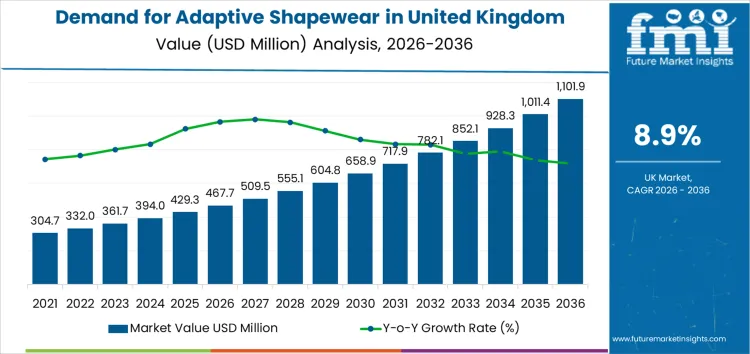
What is the Growth Forecast for Adaptive Shapewear in United Kingdom through 2036?
Demand for adaptive shapewear in the United Kingdom is expected to grow strongly through the forecast period, supported by rising consumer preference for comfortable, functional, and body-inclusive apparel. Adoption is increasing as shapewear evolves beyond appearance-focused use and becomes more centered on everyday support, improved mobility, and better fit for different body types and lifestyle needs. Growth is also supported by wider product availability through online retail, stronger brand visibility, and increasing acceptance of adaptive and inclusive clothing among mainstream consumers.
Saturation point analysis suggests that growth will be faster in the early years as awareness and adoption accelerate across key consumer groups. Over time, as adaptive shapewear becomes more widely adopted and established within regular wardrobe purchases, the pace of growth is likely to moderate. In the later stage, demand will be supported mainly by repeat purchases, incremental adoption among remaining consumers, continuous product innovation in fabrics and design, and expansion into new regional and demographic segments. Overall, sustained interest in inclusive and comfort-led apparel will continue to support long-term growth in the UK.
Key Takeaways for Demand for Adaptive Shapewear in United Kingdom
| Metric | Value |
|---|---|
| Industry Sales Value (2026) | USD 467.7 million |
| Industry Forecast Value (2036) | USD 1,101.9 million |
| Industry Forecast CAGR (2026 to 2036) | 8.9% |
Why is Demand for Adaptive Shapewear in United Kingdom Growing?
Demand for adaptive shapewear in the United Kingdom has increased as apparel brands and retailers respond to evolving consumer expectations for comfort, inclusivity, and functional design. Historically, shapewear products focused on standard silhouettes and were marketed primarily for body contouring in formal wear. UK consumers began prioritising all day comfort, breathable fabrics, and garments that adapt to varied body types. Apparel developers recognised that adaptive shapewear, engineered with flexible support zones and moisture management textiles, meets requirements in both everyday wear and specialised use cases such as maternity and post surgical garments.
Retail buyers observed heightened interest from fitness and athleisure segments where compression and support features enhance performance and recovery. Manufacturers integrating adaptive shapewear into larger product lines valued the predictable performance of engineered knits that align with automated cutting and stitching processes common in high volume production. Product planners also noted that consistent fit and size range adjustability reduced return rates, a key metric for omnichannel sales operations.
Looking ahead, demand for adaptive shapewear in the United Kingdom is expected to continue expanding as brands refine assortment strategies and deepen consumer engagement. Growth in direct to consumer channels will support tailored offerings that highlight fabric technology and fit accuracy. Merchandising teams will evaluate adaptive shapewear based on material durability, range of motion properties, and ease of care, which are critical in repeat purchase categories.
Suppliers that provide reliable technical support in fabric selection and pattern engineering will be preferred partners for UK apparel firms seeking to differentiate through functionality. Health related use cases, including garments for rehabilitation and mobility support, may broaden the addressable market beyond traditional fashion segments. Competitive pricing, clear specification sheets, and scalable supply assurances will be important for companies integrating adaptive shapewear into their portfolios.
What Are the Key Segments in the Demand for Adaptive Shapewear in the United Kingdom?
Demand for adaptive shapewear in the United Kingdom is primarily driven by end user and sales channel. Women lead the end-user segment with 55%, while online retailers dominate the sales channel segment with 45%. Other end-user categories, such as women and unisex shapewear, along with various sales channels including wholesalers, hypermarkets, supermarkets, and multi-brand stores, also contribute to the industry. These trends reflect the growing popularity of adaptive shapewear as an essential component of personal comfort, body shaping, and fashion, catering to different body types and consumer preferences.
What Is the End-User Segment of Demand for Adaptive Shapewear in the United Kingdom?
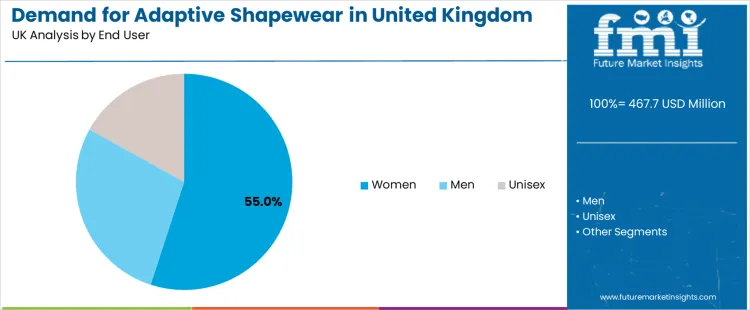
The end-user segment for adaptive shapewear in the United Kingdom is led by women, who account for 55% of the industry share. The growing demand for adaptive shapewear among men is driven by increased awareness of body shaping products and their role in enhancing comfort, posture, and confidence. Men’s shapewear is often designed to provide abdominal compression, improve posture, and shape the chest and waist areas. This segment is particularly growing in categories such as activewear and formal wear, where shapewear can offer both functional and aesthetic benefits. Women's shapewear follows as another key segment, though women currently lead in market share.
Women's shapewear has been a staple in the fashion and personal care industries for years, used to enhance body shape and support. The growing demand for inclusive and comfortable shapewear is expected to increase women's market share, driven by trends towards body positivity and comfort-driven fashion. Unisex shapewear, while representing a smaller share of the industry, is becoming more popular as consumers seek versatile, inclusive options that can be worn by a broader range of body types. Unisex designs are particularly appealing in a market that is increasingly focused on inclusivity, offering flexible sizing and adjustable features. The demand for adaptive shapewear reflects the ongoing shift toward comfort and self-expression, catering to a diverse range of consumer needs.
What Is the Sales Channel Segment of Demand for Adaptive Shapewear in the United Kingdom?
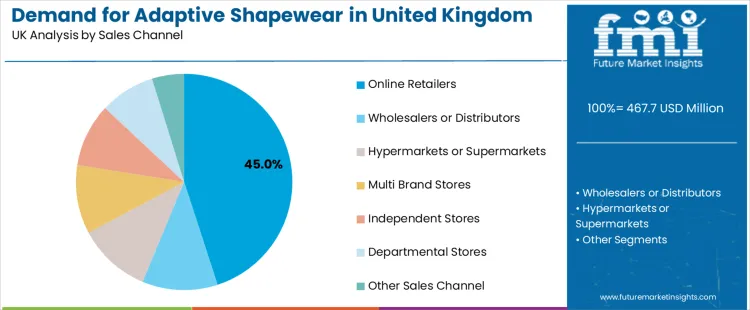
The sales channel segment for adaptive shapewear in the United Kingdom is dominated by online retailers, which capture 45% of the industry share. Online sales have surged as consumers seek convenience, variety, and personalized options when shopping for shapewear. E-commerce platforms allow shoppers to compare different brands, styles, and sizes, making it easier to find the perfect fit without leaving home. The rise of direct-to-consumer brands and subscription services also contributes to the dominance of online sales in the adaptive shapewear market. Wholesalers and distributors follow as a significant segment, supplying shapewear to retail outlets, such as hypermarkets, supermarkets, multi-brand stores, and independent stores. These sales channels play a crucial role in reaching mass-market consumers who prefer in-store shopping and are seeking value-oriented products.
Hypermarkets and supermarkets, though smaller segments in this market, provide wide access to affordable shapewear for everyday use. Multi-brand stores and independent stores also offer consumers a curated selection of shapewear brands, often targeting more niche or premium customers. Department stores represent another key channel, offering a broader selection of adaptive shapewear as part of their fashion or personal care sections. As the demand for adaptive shapewear continues to grow, both online and offline channels will play an integral role, with online retail expected to remain dominant due to its convenience and wider product range.
What are the Key Dynamics in the Demand for Adaptive Shapewear in the United Kingdom?
Demand for adaptive shapewear in the United Kingdom is growing as the apparel market responds to evolving consumer expectations for both comfort and functional design. Adaptive shapewear refers to garments engineered to offer body shaping and support while accommodating variability in body type, mobility, and comfort preference. Demand is influenced by the rise of inclusive sizing, lifestyle shifts toward athleisure and everyday wear, and increased consumer emphasis on garments that blend functionality with fit. Retail channels, including online direct to consumer and specialised fashion outlets, play a central role in making adaptive shapewear more accessible to a broader audience.
What are the Key Drivers for Adaptive Shapewear Demand in the United Kingdom?
Several factors are driving demand for adaptive shapewear in the United Kingdom. Consumer preference for apparel that supports confidence, posture, and comfort encourages investment in garments that balance compression with flexibility. Demographic trends-such as an ageing population and increased participation in fitness activities-expand the use case for supportive apparel that can scale from everyday wear to active use. Brands that emphasise inclusive sizing and fit diversity attract wider segments of the population. Marketing and community engagement around body positivity and self expression have also boosted visibility and acceptance of adaptive shapewear as a wardrobe staple. Retailers that offer virtual fitting tools and personalised size recommendations see enhanced conversion and repeat purchasing.
What are the Restraints on Adaptive Shapewear Demand in the United Kingdom?
Despite growth potential, adaptive shapewear demand in the United Kingdom faces several restraints. Price sensitivity among consumers can limit purchase frequency, particularly when premium materials and engineered designs command higher retail prices. Product differentiation challenges occur when shapewear alternatives-such as compression leggings, supportive undergarments, and standard intimates-compete for the same spending. Consumer confusion about sizing, fit, and functional claims can slow uptake, prompting higher return rates in online retail channels. Supply chain constraints, including access to specialised fabrics and manufacturing capacity for engineered garments, may delay product launches and constrain range expansion for smaller brands. Additionally, regulatory nuances in textile labelling and fibre content disclosure require compliance resources that can burden emerging suppliers.
What are the Key Trends in Adaptive Shapewear Demand in the United Kingdom?
Key trends shaping adaptive shapewear demand in the United Kingdom include the integration of technical fabrics that offer moisture management, breathable support, and stretch recovery that enhances comfort without compromising shaping performance. Brands are broadening size portfolios and fit profiles to serve diverse body types, supported by data driven sizing systems and fit recommendations. Retailers and suppliers are leveraging digital tools-such as virtual try ons, fit quizzes, and 3D body scans-to reduce returns and improve customer satisfaction. Collaboration between fashion designers, textile engineers, and physiotherapists is emerging to inform product innovation that addresses posture support and functional movement. Sustainability in materials and production processes is also gaining priority, as buyers increasingly value adaptive shapewear with lower environmental impact and transparent supply chains.
What is the Country-Wise Demand for Adaptive Shapewear in the United Kingdom?
The country-wise demand for adaptive shapewear in the United Kingdom shows significant regional variation, with England leading the industry. The demand in England is primarily driven by growing consumer awareness of comfort, inclusivity, and fashion in the apparel industry, particularly among those seeking functional yet stylish clothing solutions. Scotland, Wales, and Northern Ireland also show notable demand growth, supported by an increasing preference for adaptive clothing that promotes mobility, comfort, and confidence. As inclusivity in fashion continues to gain momentum, the demand for adaptive shapewear is expected to rise across all regions, with England remaining the dominant market due to its larger population and extensive retail infrastructure.
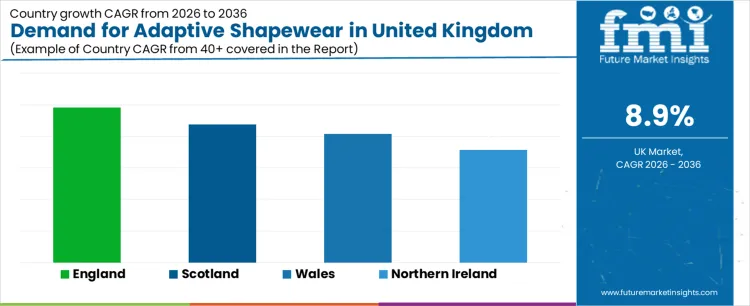
| Country | CAGR (2026 to 2036) |
|---|---|
| England | 9.8% |
| Scotland | 8.8% |
| Wales | 8.1% |
| Northern Ireland | 7.2% |
What is Driving the Demand for Adaptive Shapewear in England?
The demand for adaptive shapewear in England is projected to grow at a CAGR of 9.8% from 2026 to 2036. The driving forces behind this growth are the increasing demand for comfort, inclusivity, and functionality in everyday fashion. England’s fashion-forward market is seeing more diverse consumer needs, including adaptive clothing designed for comfort and convenience without compromising on style. Adaptive shapewear, which provides flexibility, support, and ease of movement, is increasingly popular among those with varying body types and mobility challenges. Moreover, the growing trend toward body positivity, inclusivity in fashion, and the rise of disability-friendly clothing lines are fueling the demand for shapewear that fits different physical requirements. England's extensive retail landscape, combined with a growing e-commerce sector, further supports the increasing adoption of adaptive shapewear in the country.
How is the Demand for Adaptive Shapewear Performing in Scotland?
In Scotland, the demand for adaptive shapewear is expected to grow at a CAGR of 8.8% from 2026 to 2036. Scotland’s fashion market is embracing inclusivity and functionality, which is contributing to the growing demand for adaptive shapewear. The increasing awareness of body positivity and the demand for clothing that accommodates various body types and mobility needs are driving this growth. As consumers in Scotland seek products that provide both comfort and confidence, adaptive shapewear has become an essential item. Additionally, Scotland's expanding retail and online fashion industries are increasingly incorporating adaptive clothing lines, making them more accessible to the public. As adaptive shapewear continues to gain popularity, Scotland’s market is expected to see steady growth, fueled by the demand for clothing that meets both aesthetic and functional needs.
What Are the Growth Drivers for Adaptive Shapewear in Wales?
The demand for adaptive shapewear in Wales is projected to grow at a CAGR of 8.1% through 2036. As in other regions, the growing awareness and demand for inclusivity and comfort in fashion are the primary growth drivers. Welsh consumers are increasingly prioritizing clothing that provides both style and functionality, especially those that offer adaptability and support for different body types. The rise in disability-friendly fashion and the growing trend toward versatile, comfortable, and supportive shapewear are helping to drive this demand. Wales’ retail industry, alongside the increasing focus on fashion innovation, is further contributing to the growth of adaptive shapewear. As more brands offer inclusive clothing options, the industry for adaptive shapewear in Wales is expected to grow, supporting the shift toward more diverse and accessible fashion choices.
What is the Outlook for Adaptive Shapewear Demand in Northern Ireland?
Northern Ireland’s demand for adaptive shapewear is expected to grow at a CAGR of 7.2% from 2026 to 2036. Although Northern Ireland represents the smallest market for adaptive shapewear in the United Kingdom, the demand is steadily increasing, particularly within the retail and e-commerce sectors. As more consumers in Northern Ireland embrace adaptive fashion for both comfort and functionality, the demand for shapewear designed to enhance mobility and provide support is rising. This demand is further supported by the growing focus on inclusivity and body positivity in the fashion industry. Northern Ireland’s fashion market, although smaller compared to other regions, is beginning to see an increase in retailers offering adaptive shapewear options, and as awareness continues to spread, the industry for these products is expected to expand steadily.
What is the Competitive Landscape for Demand for Adaptive Shapewear in the United Kingdom?

Demand for adaptive shapewear in the United Kingdom is advancing as apparel buyers look to combine comfort, fit performance, and functional design for diverse body types. Brands and retailers specify products based on documented fabric stretch recovery, compression gradation, and durability under repeated wear. Technical brochures supplied by Adaptivewear Co. outline material compositions, garment pressure mapping, and documented fit performance data, which are used by product developers and buyers when aligning selection with target consumer segments.
ComfortFit Innovations competes with documented product lines that include fabric performance metrics, moisture management values, and recommended care protocols. Retail purchasing teams consult these materials to assess how product attributes will perform across expected use conditions. FlexShaper Apparel supports its offerings with documentation on engineered panel designs, documented elasticity ranges, and graded size charts that assist category managers in matching inventory to demographic demand patterns.
EmbraceWear provides adaptive shapewear documented for inclusive sizing and ease of wear, with specification sheets that list measured compression classes and construction details relevant to end use comfort and functional support. Documentation from EmbraceWear is referenced during assortment planning to ensure compliance with retailer quality standards. BodyEase Solutions supplies product materials that include recorded fabric test results, garment assembly specifications, and documented strain tolerance values, aiding buyers when reconciling quality with cost models. In the United Kingdom, procurement cycles integrate documented supply terms and documented performance data to align orders with seasonal peaks and promotional calendars. Buyers compare documented wash fastness values, documented return rates, and documented supplier lead times during tender reviews.
Technical teams review the documented dimensional stability and documented shape retention figures to ensure that products meet specified performance expectations under typical wear conditions. Competitive activity is grounded in documented technical specifications and documented supply commitments provided by each supplier, enabling apparel category planners, merchandisers, and specifiers to make informed decisions based on measurable product attributes and documented production reliability.
Key Players of the Demand for Adaptive Shapewear in the United Kingdom
- Adaptivewear Co.
- ComfortFit Innovations
- FlexShaper Apparel
- EmbraceWear
- BodyEase Solutions
Scope of the Report
| Items | Values |
|---|---|
| Quantitative Units (2026) | USD Million |
| Product Type | Adaptive Dresses, Adaptive Tops, Adaptive Pants, Others |
| End User | Men, Women, Unisex, Others |
| Fastening Type | Zipper, Hooks, Pull-on/Slip-on |
| Sales Channel | Wholesalers/Distributors, Hypermarkets/Supermarkets, Multi Brand Stores, Independent Stores, Departmental Stores, Online Retailers, Other Sales Channel |
| Companies | Adaptivewear Co., ComfortFit Innovations, FlexShaper Apparel, EmbraceWear, BodyEase Solutions |
| Regions Covered | United Kingdom |
| Countries Covered | England, Scotland, Wales, Northern Ireland |
| Additional Attributes | Dollar by sales by product type, end user, fastening type, sales channel, and region. Includes market trends towards inclusivity, comfort, and the growing demand for adaptive shapewear in the UK market. |
Key Segments of Demand for Adaptive Shapewear in United Kingdom
Product Type
- Adaptive Dresses
- Adaptive Tops
- Adaptive Pants
- Others
End User
- Men
- Women
- Unisex
- Others
Fastening Type
- Zipper
- Hooks
- Pull-on/ Slip-on
- Others
Sales Channel
- Wholesalers/ Distributors
- Hypermarkets/ Supermarkets
- Multi Brand Stores
- Independent Stores
- Departmental Stores
- Online Retailers
- Other Sales Channel
Countries
- England
- Scotland
- Wales
- Northern Ireland
Bibliography
- Department for Business and Trade. (2024). UK apparel and textiles sector: Consumer demand, inclusivity, and design innovation. UK Government.
- Office for National Statistics. (2024). Disability, long-term health conditions, and consumer expenditure patterns in the United Kingdom. ONS.
- Organisation for Economic Co-operation and Development. (2024). Inclusive consumer goods, ageing populations, and apparel demand in advanced economies. OECD Publishing.
Frequently Asked Questions
How big is the demand for adaptive shapewear in united kingdom in 2026?
The demand for adaptive shapewear in united kingdom is estimated to be valued at USD 467.7 million in 2026.
What will be the size of adaptive shapewear in united kingdom in 2036?
The market size for the adaptive shapewear in united kingdom is projected to reach USD 1,101.9 million by 2036.
How much will be the demand for adaptive shapewear in united kingdom growth between 2026 and 2036?
The demand for adaptive shapewear in united kingdom is expected to grow at a 8.9% CAGR between 2026 and 2036.
What are the key product types in the adaptive shapewear in united kingdom?
The key product types in adaptive shapewear in united kingdom are adaptive dresses, adaptive tops, adaptive pants and others.
Which end user segment is expected to contribute significant share in the adaptive shapewear in united kingdom in 2026?
In terms of end user, women segment is expected to command 55.0% share in the adaptive shapewear in united kingdom in 2026.
Preview the report firsthand - request a free sample
Get SampleGet the brochure for pricing and purchase details.
Get PDFTable of Content
- Executive Summary
- UK Market Outlook
- Demand-side Trends
- Supply-side Trends
- Technology Roadmap Analysis
- Analysis and Recommendations
- Market Overview
- Market Coverage / Taxonomy
- Market Definition / Scope / Limitations
- Market Background
- Market Dynamics
- Drivers
- Restraints
- Opportunity
- Trends
- Scenario Forecast
- Demand in Optimistic Scenario
- Demand in Likely Scenario
- Demand in Conservative Scenario
- Opportunity Map Analysis
- Product Life Cycle Analysis
- Supply Chain Analysis
- Investment Feasibility Matrix
- Value Chain Analysis
- PESTLE and Porter’s Analysis
- Regulatory Landscape
- Regional Parent Market Outlook
- Production and Consumption Statistics
- Import and Export Statistics
- Market Dynamics
- UK Market Analysis 2021 to 2025 and Forecast, 2026 to 2036
- Historical Market Size Value (USD Million) Analysis, 2021 to 2025
- Current and Future Market Size Value (USD Million) Projections, 2026 to 2036
- Y-o-Y Growth Trend Analysis
- Absolute $ Opportunity Analysis
- UK Market Pricing Analysis 2021 to 2025 and Forecast 2026 to 2036
- UK Market Analysis 2021 to 2025 and Forecast 2026 to 2036, By Product Type
- Introduction / Key Findings
- Historical Market Size Value (USD Million) Analysis By Product Type , 2021 to 2025
- Current and Future Market Size Value (USD Million) Analysis and Forecast By Product Type , 2026 to 2036
- Adaptive Dresses
- Adaptive Tops
- Adaptive Pants
- Others
- Adaptive Dresses
- Y-o-Y Growth Trend Analysis By Product Type , 2021 to 2025
- Absolute $ Opportunity Analysis By Product Type , 2026 to 2036
- UK Market Analysis 2021 to 2025 and Forecast 2026 to 2036, By End User
- Introduction / Key Findings
- Historical Market Size Value (USD Million) Analysis By End User, 2021 to 2025
- Current and Future Market Size Value (USD Million) Analysis and Forecast By End User, 2026 to 2036
- Women
- Men
- Unisex
- Women
- Y-o-Y Growth Trend Analysis By End User, 2021 to 2025
- Absolute $ Opportunity Analysis By End User, 2026 to 2036
- UK Market Analysis 2021 to 2025 and Forecast 2026 to 2036, By Fastening Type
- Introduction / Key Findings
- Historical Market Size Value (USD Million) Analysis By Fastening Type, 2021 to 2025
- Current and Future Market Size Value (USD Million) Analysis and Forecast By Fastening Type, 2026 to 2036
- Zipper
- Hooks
- Pull-on/ Slip-on
- Others
- Zipper
- Y-o-Y Growth Trend Analysis By Fastening Type, 2021 to 2025
- Absolute $ Opportunity Analysis By Fastening Type, 2026 to 2036
- UK Market Analysis 2021 to 2025 and Forecast 2026 to 2036, By Sales Channel
- Introduction / Key Findings
- Historical Market Size Value (USD Million) Analysis By Sales Channel, 2021 to 2025
- Current and Future Market Size Value (USD Million) Analysis and Forecast By Sales Channel, 2026 to 2036
- Online Retailers
- Wholesalers or Distributors
- Hypermarkets or Supermarkets
- Multi Brand Stores
- Independent Stores
- Departmental Stores
- Other Sales Channel
- Online Retailers
- Y-o-Y Growth Trend Analysis By Sales Channel, 2021 to 2025
- Absolute $ Opportunity Analysis By Sales Channel, 2026 to 2036
- Market Structure Analysis
- Competition Dashboard
- Competition Benchmarking
- Market Share Analysis of Top Players
- By Regional
- By Product Type
- By End User
- By Fastening Type
- By Sales Channel
- Competition Analysis
- Competition Deep Dive
- Adaptivewear Co.
- Overview
- Product Portfolio
- Profitability by Market Segments (Product/Age /Sales Channel/Region)
- Sales Footprint
- Strategy Overview
- Marketing Strategy
- Product Strategy
- Channel Strategy
- ComfortFit Innovations
- FlexShaper Apparel
- EmbraceWear
- BodyEase Solutions
- Adaptivewear Co.
- Competition Deep Dive
- Assumptions & Acronyms Used
- Research Methodology


