

- Industry Size (2026)
- USD 130.1 Mn
- Forecast (2036)
- USD 200.5 Mn
- CAGR (2026 to 2036)
- 4.4%
Demand for Caramel Malt in United Kingdom Forecast and Outlook 2026 to 2036
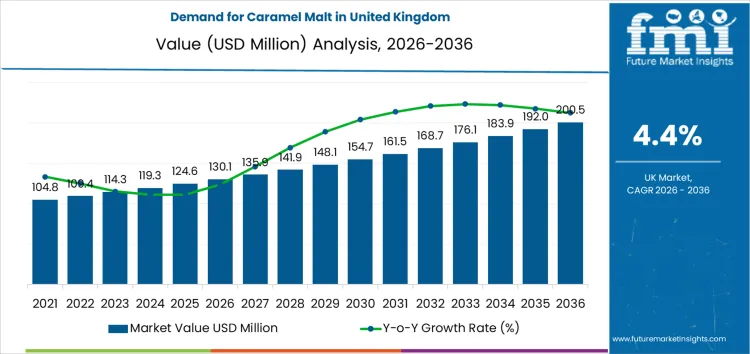
The caramel malt market in the United Kingdom is forecast to grow from USD 130.1 million in 2026 to USD 200.5 million by 2036, at a CAGR of 4.4%. These figures signal a steady and consistent demand for caramel malt, driven by its importance in the food and beverage industry, particularly in brewing and confectionery. The gradual growth indicates that buyers are making long-term, stable purchasing decisions, with a preference for trusted suppliers who can provide quality consistency and reliable delivery.
This trend suggests that suppliers will likely gain confidence in the market, as demand remains stable. The steady pace of growth also signals that purchasing decisions will be driven by factors beyond volume, such as price stability and product innovation. As the market matures, long-term commitments to established suppliers are expected to continue, reinforcing the ongoing demand for high-quality caramel malt.
Quick Stats for the Demand for Caramel Malt in United Kingdom:
- Caramel Malt in United Kingdom Value (2026): USD 130.1 million
- Caramel Malt in United Kingdom Forecast Value (2036): USD 200.5 million
- Caramel Malt in United Kingdom Global Forecast CAGR (2026 to 2036): 4.4%
- Caramel Malt in United Kingdom Leading Segment: Beer (56% share)
- Key Growth Regions of Caramel Malt in United Kingdom: England
- Top Players of Caramel Malt in United Kingdom: Bairds Malt Limited, Weyermann, Castle Malting, Thomas Fawcett Malting, Great Western Malting
What is the Growth Forecast for Caramel Malt in United Kingdom through 2036?
The demand for caramel malt in the United Kingdom is projected to increase from USD 130.1 million in 2026 to USD 200.5 million by 2036, reflecting a compound annual growth rate (CAGR) of 4.4%. Between 2026 and 2031, the market will experience steady growth, with values rising from USD 130.1 million to USD 161.5 million. From 2031 to 2036, the growth will continue, reaching USD 200.5 million by the end of the forecast period.
The seasonality or cyclicality detection suggests that while the overall demand for caramel malt will follow a consistent growth trajectory, there may be minor seasonal fluctuations driven by consumer demand during specific periods, such as the holiday season or summer months when beverage consumption is higher. However, the market is expected to show a stable long-term growth pattern with minor cyclical variations due to the broader food and beverage industry's dynamics.
Key Takeaways for Demand for Caramel Malt in United Kingdom
| Metric | Value |
|---|---|
| Industry Sales Value (2026) | USD 130.1 million |
| Industry Forecast Value (2036) | USD 200.5 million |
| Industry Forecast CAGR (2026 to 2036) | 4.4% |
Why is Demand for Caramel Malt in United Kingdom Growing?
Demand for caramel malt in the United Kingdom has increased from earlier levels as the brewing and food processing sectors adapted to changing product requirements and flavour trends. Historically, caramel malt was used mainly in traditional beer styles to contribute colour and sweetness. In the UK, brewers of ales and specialty beers incorporated caramel malt to balance bitterness and enhance mouthfeel. Over recent years, experimentation with craft and specialty beers broadened the range of styles produced, with caramel malt used to achieve specific colour profiles and flavour characteristics that appeal to diverse consumer preferences. At the same time, non beer applications in baked goods and confectionery gained traction, where caramel malt offered a natural ingredient to support flavour development and colour enhancement without synthetic additives. Food formulators valued the ingredient for its ability to deliver distinct sensory attributes while contributing to ingredient portfolios that resonate with end users looking for familiar and authentic components. Availability of diverse malt grades also supported uptake, enabling producers to tailor product formulations with precision.
Looking ahead, demand for caramel malt in the United Kingdom is expected to continue rising as beverage and food manufacturers explore product differentiation and functionality. Continued growth in craft brewing will sustain interest in malt varieties that support a broad spectrum of beer styles and flavour expressions. Demand will also be influenced by shifts in consumer taste toward products with rich, nuanced profiles, including those that resonate with traditional and modern culinary applications. Expansion of artisanal food products in retail and foodservice could reinforce use of caramel malt in baked goods, snacks, and specialty recipes. Regulatory frameworks around ingredient labelling and quality may encourage formulators to adopt recognizable grain derived inputs, supporting ongoing integration of caramel malt. As innovation in product development continues, the versatility and functional attributes of caramel malt are likely to strengthen its role across UK brewing and food manufacturing segments.
What Are the Key Segments in the Demand for Caramel Malt in the United Kingdom?
Demand for caramel malt in the United Kingdom is primarily driven by application and drying method. Beer leads the application segment with 56%, while kilned caramel malt dominates the drying method segment with 54.2%. Other applications, such as food, dairy, frozen products, and bakery & confectionery, as well as roasted caramel malt, also contribute to the market. These segments reflect the diverse use of caramel malt in the food and beverage industry, where its flavor and color-enhancing properties are highly valued.
What Is the Application Segment of Demand for Caramel Malt in the United Kingdom?
The application segment for caramel malt in the United Kingdom is predominantly led by beer, which accounts for 56% of the market share. Caramel malt plays a crucial role in the brewing process, where it is used to add flavor, color, and body to beers, particularly in darker styles such as stouts, porters, and brown ales. The use of caramel malt in beer brewing enhances the drink's richness, contributing a slightly sweet, toasty flavor with varying degrees of color depending on the level of roasting. The growth of craft beer and the increasing popularity of flavored and specialty beers have further driven demand for caramel malt in the United Kingdom.
In the food sector, caramel malt is used as a flavor enhancer in a range of products, including sauces, soups, and seasonings, to provide a rich, deep color and a slightly caramelized, sweet taste. Dairy and frozen products also utilize caramel malt, particularly in the production of ice cream, yogurt, and dairy desserts, where its color and flavor boost the appeal of these products. Bakery and confectionery products also benefit from caramel malt, as it provides a unique color and flavor that complements baked goods such as cookies, cakes, and breads, as well as confectionery items like chocolates and caramels. Other applications, including in non-alcoholic beverages and functional foods, also contribute to the market, where caramel malt serves to enhance both flavor and aesthetic appeal. The diverse applications of caramel malt reflect its versatility and wide acceptance across different sectors of the food and beverage industry in the UK.
What Is the Drying Method Segment of Demand for Caramel Malt in the United Kingdom?
The drying method segment for caramel malt in the United Kingdom is led by kilned caramel malt, which captures 54.2% of the market share. Kilned caramel malt is produced through a controlled roasting process that enhances the malt’s color and flavor while maintaining its stability and consistency. This type of caramel malt is favored for its ability to provide a wide range of flavors, from light, mild sweetness to deeper, more robust caramel notes.
It is widely used in the production of beers and food products, where its ability to impart a golden to amber hue and a subtle caramelized flavor is highly valued. Roasted caramel malt, while representing a smaller portion of the market, is used in applications requiring more intense flavors and darker colors. Roasted caramel malt is typically used in darker beers, such as stouts and porters, as well as in certain baked goods and desserts where a deep, roasted flavor profile is desired. The demand for kilned caramel malt is higher due to its versatility and broader applications across both brewing and food production. As the UK market continues to explore new flavors and color enhancements in both alcoholic and non-alcoholic beverages, the demand for caramel malt in both kilned and roasted forms is expected to grow, with kilned varieties maintaining their dominance.
What are the Key Dynamics in the Demand for Caramel Malt in the United Kingdom?
Demand for caramel malt in the United Kingdom is tied to its use as a specialty ingredient in brewing, distilling, and selected food applications. Caramel malt contributes colour, sweetness, and flavour complexity in beers and spirits and is used by craft and mainstream brewers alike. Purchase volumes reflect activity in the alcoholic beverage sector, particularly beer production, where caramel malt remains a core grain choice for specific styles. Demand also aligns with trends in product innovation, seasonal and limited edition brews, and recipe reformulation that emphasises unique flavour profiles. Ingredient sourcing patterns respond to crop yields, import supplies, and brewery production cycles.
What are the Key Drivers for Caramel Malt Demand in the United Kingdom?
Several factors support demand for caramel malt in the United Kingdom. Growth in craft brewing and microbrewery operations stimulates use of diverse malt types, including caramel varieties that influence colour and body in finished beers. Brewers seeking to develop flavour distinct products value caramel malt for its contribution to caramel, toffee, and roasted notes. Seasonal beer releases and specialty brews sustain cyclical procurement, with breweries planning grain purchases aligned to production schedules. Innovation in beer styles and consumer interest in premium and flavourful beverages reinforce demand for malt varieties beyond base malts. Supply chain reliability of quality malting barley and processing capacity also underpin consistent availability.
What are the Restraints on Caramel Malt Demand in the United Kingdom?
Despite steady utilisation, demand for caramel malt in the United Kingdom faces restraints. Cost considerations, including price fluctuations for malting barley and processing premiums for specialty malts, can limit procurement by smaller breweries with tight margins. Competition from imported malt varieties and alternative adjuncts may temper domestic demand where cost or availability favours substitutes. Brewing formulation trends that prioritise lighter, low alcohol, or minimal flavour profiles can reduce the use of intensely flavoured malts. Additionally, seasonal and cyclical demand patterns mean that breweries may only stock specialty malts intermittently, affecting sustained volume ordering.
What are the Key Trends in Caramel Malt Demand in the United Kingdom?
Key trends influencing demand for caramel malt in the United Kingdom include continued diversification of beer styles, with craft and independent breweries experimenting with grain bills to deliver distinct sensory experiences. There is also a shift toward transparency in ingredient sourcing, where brewers prioritise traceability and quality in malting barley and processed malt products. Collaboration between maltsters and brewers to develop tailored malt profiles for specific beer categories is becoming more common. Seasonal and limited edition beer releases continue to drive periodic spikes in caramel malt procurement. Sustainability considerations, including local sourcing and reduced transport impact, are increasingly factored into ingredient decisions in the brewing supply chain.
What is the Country-Wise Demand for Caramel Malt in the United Kingdom?
The country-wise demand for caramel malt in the United Kingdom shows regional variations, with England leading the market. The demand in England is primarily driven by the brewing, food, and confectionery industries, where caramel malt is used to provide flavor, color, and texture to a variety of products. Scotland, Wales, and Northern Ireland follow with steady demand growth, supported by the increasing adoption of caramel malt in brewing and food manufacturing. As consumer preferences shift towards more natural ingredients and premium products, the demand for caramel malt is expected to rise across all regions. While England remains the dominant market, other regions are also experiencing gradual growth, driven by increasing consumption in brewing and the food industry.
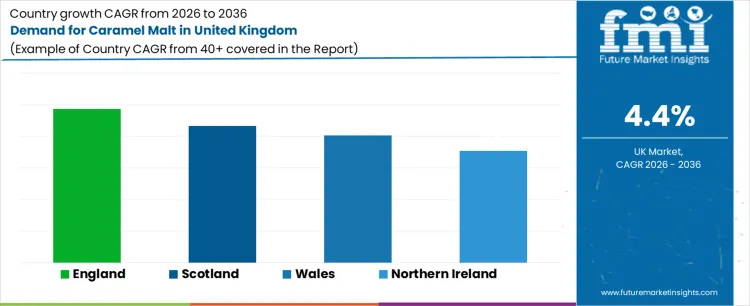
| Country | CAGR (2026 to 2036) |
|---|---|
| England | 4.9% |
| Scotland | 4.3% |
| Wales | 4.0% |
| Northern Ireland | 3.5% |
What is Driving the Demand for Caramel Malt in England?
The demand for caramel malt in England is projected to grow at a CAGR of 4.9% from 2026 to 2036. England’s large brewing and food industries are key drivers of this demand, as caramel malt is used to enhance the flavor, color, and texture of various food and beverage products. Caramel malt is particularly popular in the brewing industry, where it adds sweetness, color, and complexity to beers, particularly darker brews. The growing popularity of craft beers and premium beverages is further boosting the demand for caramel malt in England. Additionally, the increasing consumer demand for natural and high-quality ingredients in food and confectionery is driving the adoption of caramel malt as a key ingredient. As England continues to prioritize innovation in brewing and food production, the demand for caramel malt is expected to maintain strong growth.
How is the Demand for Caramel Malt Performing in Scotland?
In Scotland, the demand for caramel malt is expected to grow at a CAGR of 4.3% from 2026 to 2036. The demand in Scotland is driven by the strong presence of the brewing industry, where caramel malt is used to produce a wide range of beers, especially those with darker colors and richer flavors. The rise of the craft beer movement in Scotland is contributing significantly to the growth of caramel malt demand. Additionally, the food industry in Scotland uses caramel malt to enhance the flavor and color of bakery products, sauces, and confectionery. As consumers continue to seek premium and natural products, the adoption of caramel malt in food and beverage production is expected to increase, driving steady market growth in Scotland.
What Are the Growth Drivers for Caramel Malt in Wales?
The demand for caramel malt in Wales is projected to grow at a CAGR of 4.0% through 2036. The key drivers of this demand are the growing craft beer industry, which uses caramel malt to create rich, complex flavors and colors in its brews, and the expanding food manufacturing sector, where caramel malt is used to improve the taste and appearance of various products. As Welsh consumers increasingly opt for high-quality, artisanal products, the demand for caramel malt in both the brewing and food industries is expected to rise. The adoption of more natural ingredients and the push for cleaner labels in food products are also contributing to the growing popularity of caramel malt. As the craft beer industry continues to thrive and demand for premium products increases, the market for caramel malt in Wales is expected to grow steadily over the next decade.
What is the Outlook for Caramel Malt Demand in Northern Ireland?
Northern Ireland’s demand for caramel malt is expected to grow at a CAGR of 3.5% from 2026 to 2036. While Northern Ireland represents the smallest market for caramel malt in the United Kingdom, the demand is steadily increasing, particularly in the brewing and food industries. The growth of the craft beer sector in Northern Ireland is driving the adoption of caramel malt, as brewers seek to create unique and flavorful beers. Additionally, the food industry in Northern Ireland uses caramel malt to enhance the color and taste of a variety of products, including baked goods and sauces. While the market size remains smaller than in England and Scotland, the increasing focus on natural, high-quality ingredients in both brewing and food production is expected to fuel steady growth in the demand for caramel malt in Northern Ireland.
What is the Competitive Landscape for Demand for Caramel Malt in the United Kingdom?
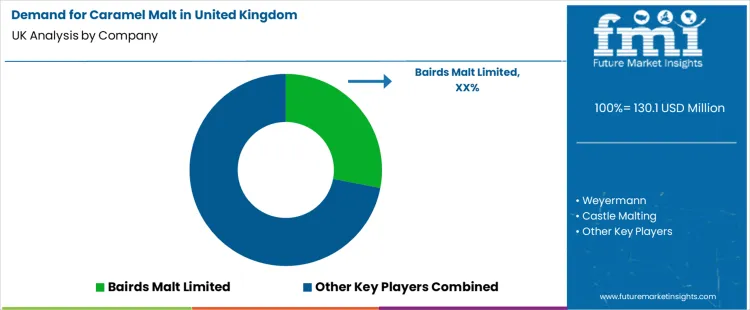
Demand for caramel malt in the United Kingdom is influenced by requirements from craft breweries, distilleries, and specialty malt users that seek color, body, and flavor complexity in recipes. Procurement teams review technical brochures to compare documented color ratings (EBC/Lovibond), diastatic activity, and moisture content. Bairds Malt Limited is regarded as a leading supplier, with product literature that lists grade ranges, documented sensory profiles, and processing recommendations. These materials are referenced by brewers and distillers when aligning malt selection with target style profiles. Weyermann’s documented offerings include a range of caramel malt variants, with specification sheets that present detailed color values and flavor descriptors used during formulation planning.
Buyers in the United Kingdom examine these documents when matching ingredient attributes to production goals. Castle Malting’s brochures outline caramel malt grades along with documented friability and modification levels, supporting specification alignment for mash tun performance. Thomas Fawcett Malting supplies caramel malt with documented data on extract potential and recommended mash regimes, giving technical teams measurable values to assess during material comparison. Great Western Malting’s documentation focuses on customer guidance for color and body contributions, with recorded parameters that inform selection in brewery and distillery applications.
Selection decisions in the United Kingdom are made with reference to documented material attributes and supply terms supplied by each company. Demand patterns reflect production plans in craft brewing and small batch distilling sectors where consistency and traceability are critical. Buyers compare documented moisture and extract values to ensure compliance with process conditions and finished product criteria. Lead times, minimum order quantities, and distribution capabilities are outlined in supplier brochures and technical literature, and these data points shape procurement activities.
Regulatory compliance notes and food safety certifications appear in official materials and are considered during specification alignment. Competitive activity is grounded in documented performance metrics and documented supply commitments that are captured in technical guides. Maltsters’ product brochures serve as reference artifacts during tender evaluations and formulation reviews, and these materials are used to ensure that selected caramel malt grades meet application requirements consistently across diverse brewing and distilling environments. Decisions are anchored in measurable specifications and documented attributes rather than subjective assessments.
Key Players of the Demand for Caramel Malt in United Kingdom
- Bairds Malt Limited
- Weyermann
- Castle Malting
- Thomas Fawcett Malting
- Great Western Malting
Scope of the Report
| Items | Values |
|---|---|
| Quantitative Units (2026) | USD Million |
| Color | Light, Medium, Dark, Very Dark |
| Source | Wheat, Rye, Others |
| Drying | Kilned Caramel Malt, Roasted |
| Application | Beer, Food, Dairy and Frozen Products, Bakery and Confectionery, Others |
| End Use | Microbreweries, Large Breweries, Regional Breweries, Brewpubs, Home Brewers |
| Flavor | Candy Like, Caramel, Toffee, Raisiny, Slight Burnt Sugar |
| Companies | Bairds Malt Limited, Weyermann, Castle Malting, Thomas Fawcett Malting, Great Western Malting |
| Regions Covered | United Kingdom |
| Countries Covered | England, Scotland, Wales, Northern Ireland |
| Additional Attributes | Dollar by sales by color, source, drying, application, end use, and flavor. Includes market trends towards craft brewing, cost-effectiveness, and the role of caramel malt in enhancing the flavor profiles of various beverages and food products. |
Demand for Caramel Malt in United Kingdom
Color:
- Light
- Medium
- Dark
- Very Dark
Source:
- Wheat
- Rye
- Others
Drying:
- Kilned Caramel Malt
- Roasted
Application:
- Beer
- Food
- Dairy and Frozen Products
- Bakery and Confectionery
- Others
End Use:
- Microbreweries
- Large Breweries
- Regional Breweries
- Brewpubs
- Home Brewers
Flavor:
- Candy Like
- Caramel
- Toffee
- Raisiny
- Slight Burnt Sugar
Countries
- England
- Scotland
- Wales
- Northern Ireland
Bibliography
- Food Standards Agency. (2023). Food and feed safety guidance and grain‑based ingredient standards.
- National Institute of Standards and Technology. (2023). Food composition and cereal grain chemistry reference data.
- Agriculture and Horticulture Development Board. (2023). Malting barley quality and UK cereal market reports.
- Brewers Association. (2023). Malt ingredient guidelines and brewing quality standards.
- Brewers of Europe. (2023). European brewing raw materials and malt specification guidelines.
- Institute of Food Technologists. (2023). Cereal grain ingredient functionality and food processing research.
Frequently Asked Questions
How big is the demand for caramel malt in United Kingdom in 2026?
The demand for caramel malt in United Kingdom is estimated to be valued at USD 130.1 million in 2026.
What will be the size of caramel malt in United Kingdom in 2036?
The market size for the caramel malt in United Kingdom is projected to reach USD 200.5 million by 2036.
How much will be the demand for caramel malt in United Kingdom growth between 2026 and 2036?
The demand for caramel malt in United Kingdom is expected to grow at a 4.4% CAGR between 2026 and 2036.
What are the key product types in the caramel malt in United Kingdom?
The key product types in caramel malt in United Kingdom are light, medium, dark and very dark.
Which source segment is expected to contribute significant share in the caramel malt in United Kingdom in 2026?
In terms of source, wheat segment is expected to command 45.0% share in the caramel malt in United Kingdom in 2026.
Preview the report firsthand - request a free sample
Get SampleGet the brochure for pricing and purchase details.
Get PDFTable of Content
- Executive Summary
- UK Market Outlook
- Demand-side Trends
- Supply-side Trends
- Technology Roadmap Analysis
- Analysis and Recommendations
- Market Overview
- Market Coverage / Taxonomy
- Market Definition / Scope / Limitations
- Market Background
- Market Dynamics
- Drivers
- Restraints
- Opportunity
- Trends
- Scenario Forecast
- Demand in Optimistic Scenario
- Demand in Likely Scenario
- Demand in Conservative Scenario
- Opportunity Map Analysis
- Product Life Cycle Analysis
- Supply Chain Analysis
- Investment Feasibility Matrix
- Value Chain Analysis
- PESTLE and Porter’s Analysis
- Regulatory Landscape
- Regional Parent Market Outlook
- Production and Consumption Statistics
- Import and Export Statistics
- Market Dynamics
- UK Market Analysis 2021 to 2025 and Forecast, 2026 to 2036
- Historical Market Size Value (USD Million) Analysis, 2021 to 2025
- Current and Future Market Size Value (USD Million) Projections, 2026 to 2036
- Y-o-Y Growth Trend Analysis
- Absolute $ Opportunity Analysis
- UK Market Pricing Analysis 2021 to 2025 and Forecast 2026 to 2036
- UK Market Analysis 2021 to 2025 and Forecast 2026 to 2036, By Color
- Introduction / Key Findings
- Historical Market Size Value (USD Million) Analysis By Color , 2021 to 2025
- Current and Future Market Size Value (USD Million) Analysis and Forecast By Color , 2026 to 2036
- Light
- Medium
- Dark
- Very Dark
- Light
- Y-o-Y Growth Trend Analysis By Color , 2021 to 2025
- Absolute $ Opportunity Analysis By Color , 2026 to 2036
- UK Market Analysis 2021 to 2025 and Forecast 2026 to 2036, By Source
- Introduction / Key Findings
- Historical Market Size Value (USD Million) Analysis By Source, 2021 to 2025
- Current and Future Market Size Value (USD Million) Analysis and Forecast By Source, 2026 to 2036
- Wheat
- Rye
- Others
- Wheat
- Y-o-Y Growth Trend Analysis By Source, 2021 to 2025
- Absolute $ Opportunity Analysis By Source, 2026 to 2036
- UK Market Analysis 2021 to 2025 and Forecast 2026 to 2036, By Drying
- Introduction / Key Findings
- Historical Market Size Value (USD Million) Analysis By Drying, 2021 to 2025
- Current and Future Market Size Value (USD Million) Analysis and Forecast By Drying, 2026 to 2036
- Kilned Caramel malt
- Roasted
- Kilned Caramel malt
- Y-o-Y Growth Trend Analysis By Drying, 2021 to 2025
- Absolute $ Opportunity Analysis By Drying, 2026 to 2036
- UK Market Analysis 2021 to 2025 and Forecast 2026 to 2036, By Application
- Introduction / Key Findings
- Historical Market Size Value (USD Million) Analysis By Application, 2021 to 2025
- Current and Future Market Size Value (USD Million) Analysis and Forecast By Application, 2026 to 2036
- Beer
- Food
- Dairy and Frozen Products
- Bakery and Confectionery
- Others
- Beer
- Y-o-Y Growth Trend Analysis By Application, 2021 to 2025
- Absolute $ Opportunity Analysis By Application, 2026 to 2036
- UK Market Analysis 2021 to 2025 and Forecast 2026 to 2036, By End Use
- Introduction / Key Findings
- Historical Market Size Value (USD Million) Analysis By End Use, 2021 to 2025
- Current and Future Market Size Value (USD Million) Analysis and Forecast By End Use, 2026 to 2036
- Microbreweries
- Large Breweries
- Regional Breweries
- Brewpubs
- Home Brewers
- Microbreweries
- Y-o-Y Growth Trend Analysis By End Use, 2021 to 2025
- Absolute $ Opportunity Analysis By End Use, 2026 to 2036
- UK Market Analysis 2021 to 2025 and Forecast 2026 to 2036, By Flavor
- Introduction / Key Findings
- Historical Market Size Value (USD Million) Analysis By Flavor, 2021 to 2025
- Current and Future Market Size Value (USD Million) Analysis and Forecast By Flavor, 2026 to 2036
- Candy Like
- Caramel
- Toffee
- Raisiny
- Slight Burnt Sugar
- Candy Like
- Y-o-Y Growth Trend Analysis By Flavor, 2021 to 2025
- Absolute $ Opportunity Analysis By Flavor, 2026 to 2036
- Market Structure Analysis
- Competition Dashboard
- Competition Benchmarking
- Market Share Analysis of Top Players
- By Regional
- By Color
- By Source
- By Drying
- By Application
- By End Use
- By Flavor
- Competition Analysis
- Competition Deep Dive
- Bairds Malt Limited
- Overview
- Product Portfolio
- Profitability by Market Segments (Product/Age /Sales Channel/Region)
- Sales Footprint
- Strategy Overview
- Marketing Strategy
- Product Strategy
- Channel Strategy
- Weyermann
- Castle Malting
- Thomas Fawcett Malting
- Great Western Malting
- Bairds Malt Limited
- Competition Deep Dive
- Assumptions & Acronyms Used
- Research Methodology


